

Generative data augmentation, explainable machine learning, and uncertainty analysis for compressive strength prediction of sustainable UHPC
Open accessThe DOI matches its Crossref record; 47 of the 47 references it cites were found in a registry or an index; none of the 2 sources its claims cite is checked for support yet.
Abstract
Recent interest in ultra-high-performance concrete (UHPC) has been on the use of construction and demolition waste (CDW) due to the growing need to use sustainable construction materials. Recycled concrete powder (RCP), a product of CDW, is a promising way to reduce cement use, lower CO 2 emissions, and make green construction more cost-effective. This research establishes a data-based machine learning framework to predict the compressive strength of UHPC incorporating RCP. To build simplified models, a Variational Autoencoder (VAE) was employed to produce a synthetic dataset. This resulted in the development of three models: M1 (experimental data only), M2 (synthetic data only), and M3 (merged dataset). M3 served as the basis for training three different machine learning models: Extreme Learning Machine (ELM), Extreme Gradient Boosting (XGBoost), and Categorical Boosting (CatBoost). CatBoost was selected from the three because it performed best in the initial class and, across all cross-validated systems, was selected as the default for the group. CatBoost_M3 outperformed the others, with an R 2 of 0.95 and the lowest mean and root-mean-square errors. Analysis of the mean and root-mean errors identified CatBoost_M3 and its performance as optimal. A SHapley Additive exPlanations (SHAP) analysis was conducted to meet the explainable AI requirement; the dominant explanatory variables for the predicted values were cement, steel fibers, and water content. At a conceptual level, performance predictions for UHPC and the explanatory AI serve as complementary support for reducing experimental work and enabling the rapid adoption of eco-efficient recycled UHPC.
Overview
CoChat Summary
TL;DR
The paper develops an explainable machine-learning framework to predict compressive strength of recycled-concrete-powder UHPC, using a VAE to generate synthetic data and comparing experimental-only, synthetic-only, and combined datasets. CatBoost trained on the combined dataset (M3) performed best overall, and SHAP identified cement, steel fibers, and water as dominant predictors.
Key findings
- CatBoost_M3 was the best model. Table 5 reports testing R² = 0.968, MAE = 1.940 MPa, RMSE = 3.310 MPa, MAPE = 1.426%, and a20 = 100%; the Conclusions state testing R² = 0.968, MAE = 2.79 MPa, RMSE = 4.85 MPa, MAPE = 2.13%, and a20 = 100%.
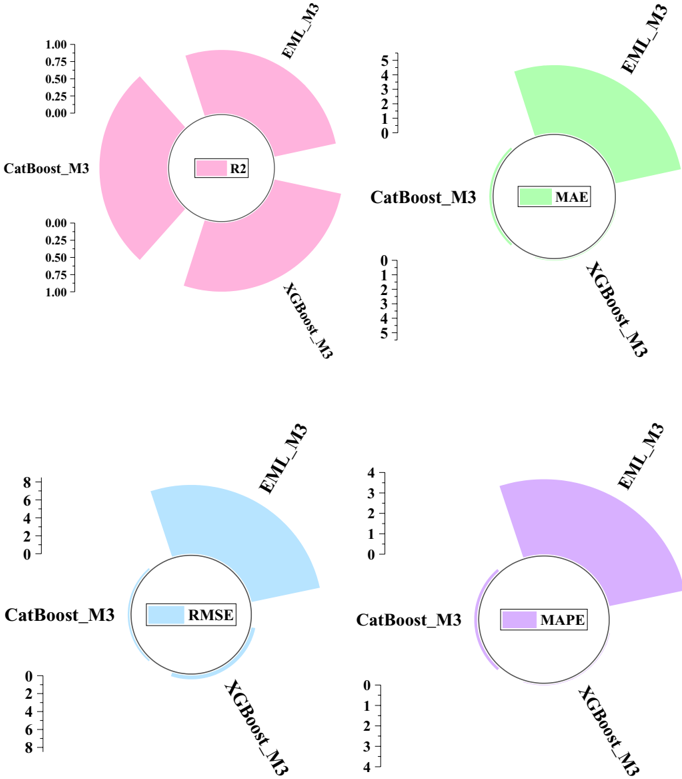
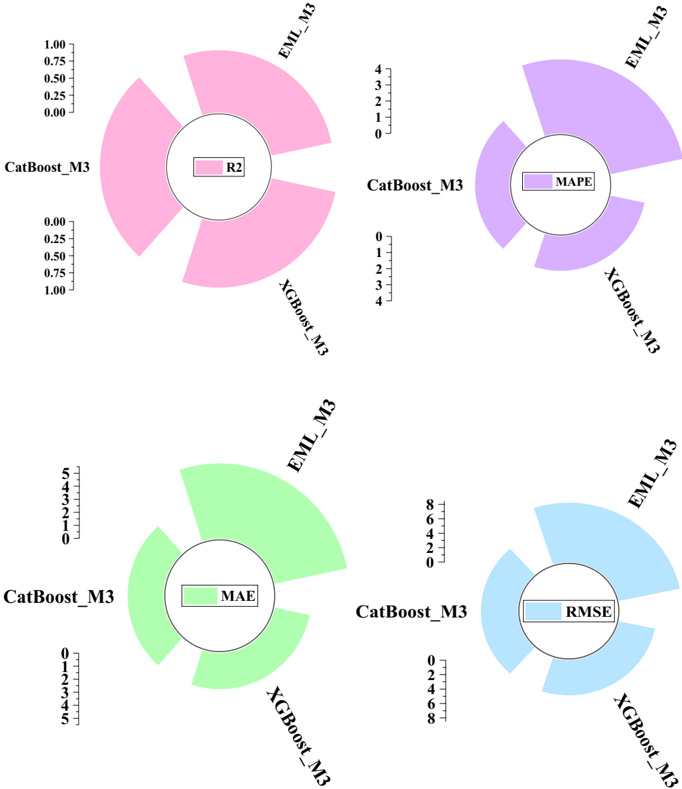
- The combined dataset (M3) consistently improved model stability and predictive capability compared with single-source models; CatBoost_M3 showed statistically significant improvements over XGBoost_M3 and ELM_M3 in MAE and RMSE (p = 0.012/0.018 vs XGBoost; p = 0.004/0.006 vs ELM, Table 6).
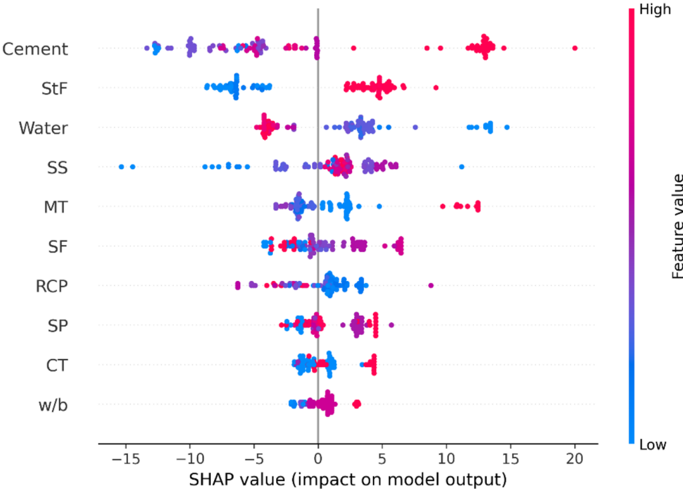
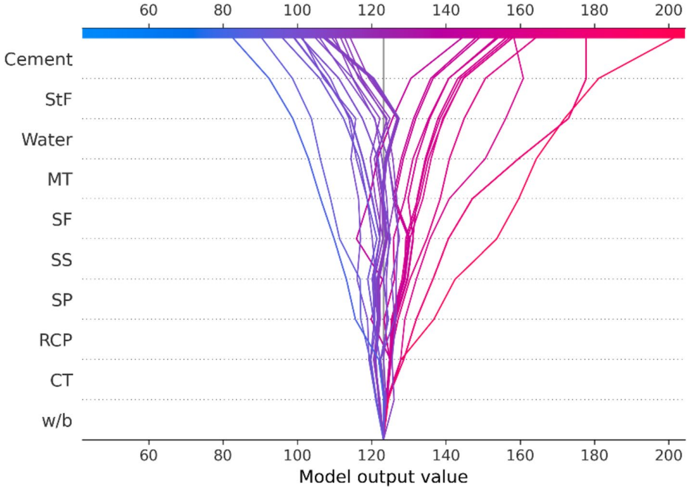
- SHAP analysis identified cement, steel fiber content, and water content as the most influential variables; higher cement, steel fibers, silica fume, and MT generally increased predicted compressive strength, while high water and SS content had negative effects, and high RCP content could lower compressive strength.
- Uncertainty analysis in Table 7 reports CatBoost_M3 mean error = −0.404 MPa, standard deviation = 3.285 MPa, 95% PEI = −6.03 to 6.03 MPa, and uncertainty band width = 12.88 MPa; the text also states CatBoost_M3 had the lowest uncertainty band width of 0.77, ē = −0.003, and PEI95% of ±0.38 and ±0.39, which conflicts with Table 7.
Methods
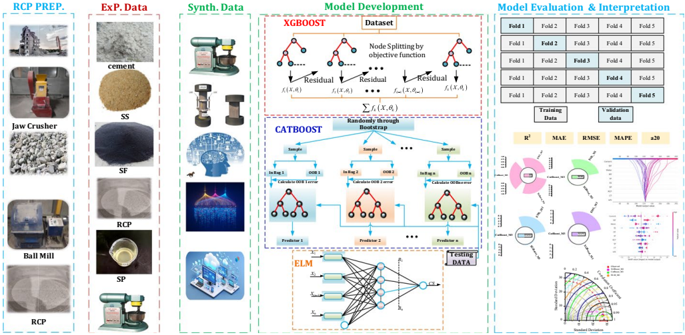
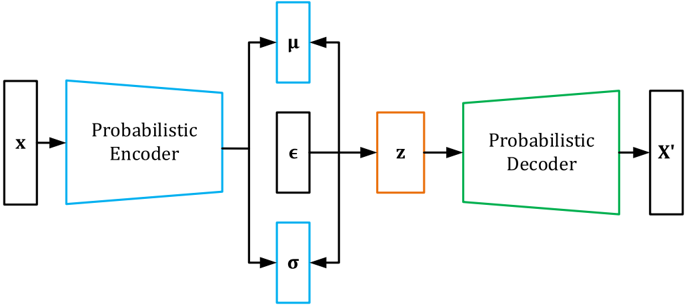
- Data: 80 experimental RCP-UHPC cases compiled from literature plus 300 synthetic cases generated by a Variational Autoencoder (VAE); three scenarios were evaluated: M1 (experimental only), M2 (synthetic only), and M3 (combined experimental + synthetic, 380 total).
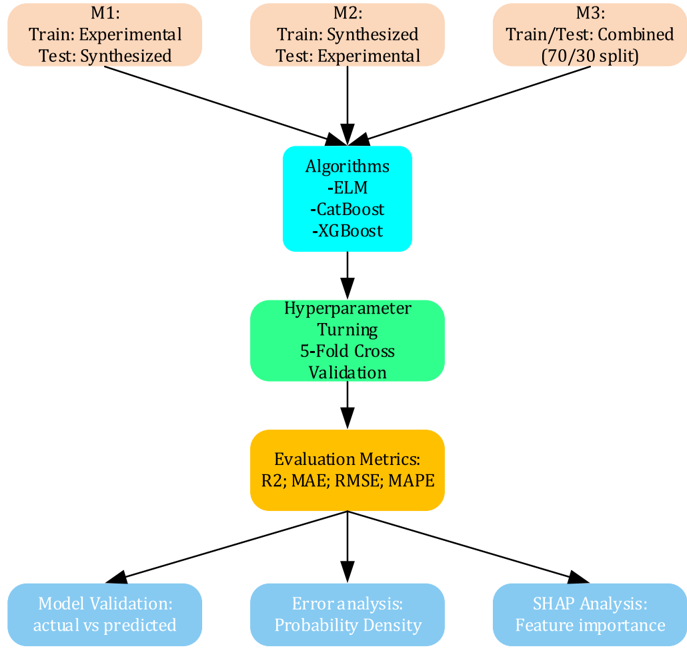
- Models and validation: ELM, XGBoost, and CatBoost were trained with a 70/30 train-test split, 5-fold cross-validation, grid-search hyperparameter tuning, and standard normalization; performance was assessed with R², MAE, RMSE, MAPE, and A20, with Wilcoxon signed-rank and t-tests for M3 comparisons, SHAP for explainability, and uncertainty analysis.
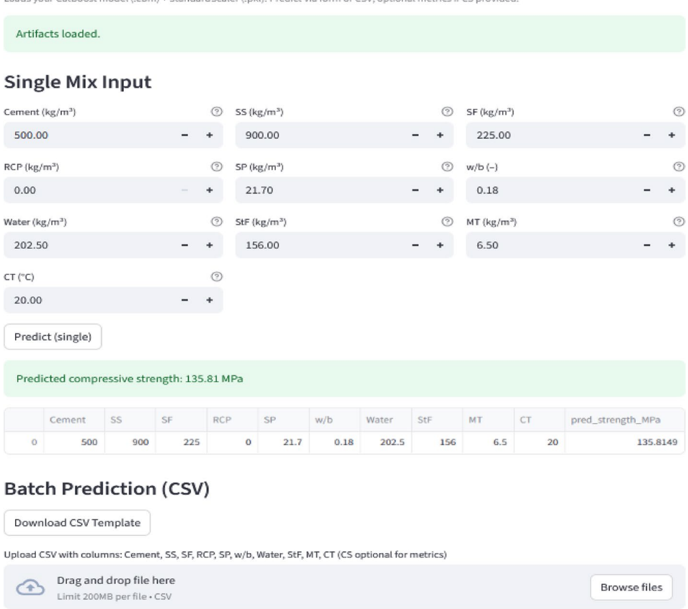
- Implementation: models were implemented in Python 3.10 with scikit-learn, XGBoost, CatBoost, hpelm, TensorFlow, and SHAP; a web-based GUI was deployed for single-input and batch CSV compressive-strength predictions.
Limitations
- The paper states the original experimental dataset was relatively small and compiled from multiple literature sources, which may introduce variability from differences in materials, testing procedures, and reporting practices; external validation using an independent laboratory dataset was not performed, and predictions should be applied within the range of variables represented in the training data.
- Evident from the text: reported performance and uncertainty values are inconsistent across the Abstract, Highlights, Conclusions, and tables (e.g., CatBoost_M3 MAE/RMSE/MAPE and uncertainty band width/PEI), and the synthetic data statistics include negative minima for RCP, SP, and StF, which are physically implausible for mix quantities.
Model-written summary. Check it against the paper before relying on it.
Integrity signals
Registry
Cites
Statistics
Figures
Verification
Claims the paper makes
0 Valid · 0 Not valid · 1 Not checked · 66 Own results and interpretations
A result the paper reports from its own data — it cites no other source for it, so there is none to check. The quote shows it is in the paper.
In the paper
“Uncertainty analysis also indicated that CatBoost_M3 provided the most reliable overall predictions, exhibiting a narrow 95% prediction error interval (-6.84 to 6.03 MPa) and the smallest uncertainty band width (12.88 MPa), thereby confirming its robustness and suitability for RCP-UHPC compressive-strength prediction.”
§ Generative data augmentation, explainable machine learning, and uncertainty analysis for compressive strength prediction of sustainable UHPC > 6 Conclusions
hedgedstates an association- Asserted: passes — The authors put it forward as true.
- Checkable: passes — It can be checked against evidence.
- Load-bearing: passes — The paper’s conclusions depend on it.
- Based: passes — The paper gives a reason why it holds.
A result the paper reports from its own data — it cites no other source for it, so there is none to check. The quote shows it is in the paper.
In the paper
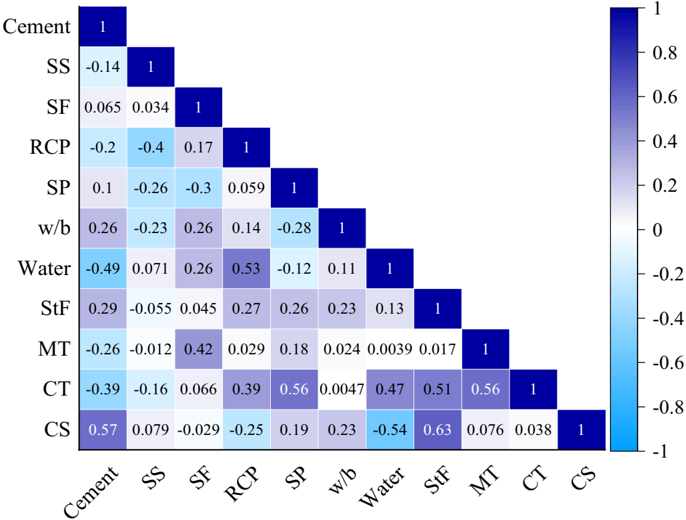
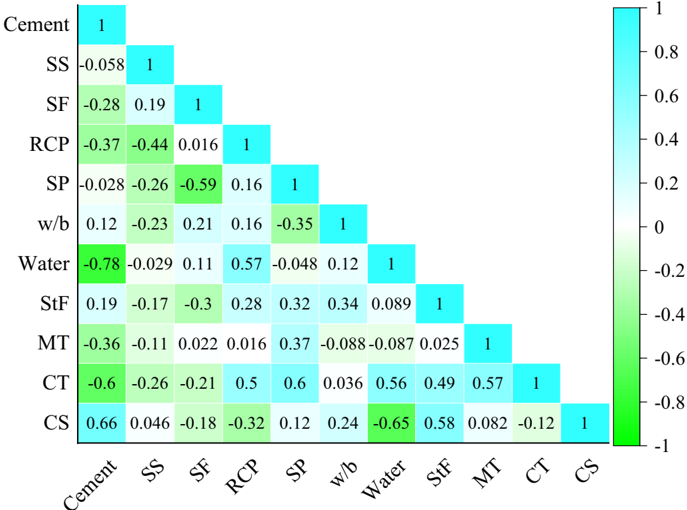
“In contrast, water exhibits the strongest negative correlation (r = -0.54),suggesting that higher water content generally reduces compressive strength.”
§ Generative data augmentation, explainable machine learning, and uncertainty analysis for compressive strength prediction of sustainable UHPC > 3.2 Experimental data development
plainstates an associationn = 80- Asserted: passes — The authors put it forward as true.
- Checkable: passes — It can be checked against evidence.
- Load-bearing: unclear — It is unclear whether the paper’s conclusions depend on it.
- Based: passes — The paper gives a reason why it holds.
A result the paper reports from its own data — it cites no other source for it, so there is none to check. The quote shows it is in the paper.
In the paper
“On the other hand, high levels of water and SS content were found to have a negative effect.”
§ Generative data augmentation, explainable machine learning, and uncertainty analysis for compressive strength prediction of sustainable UHPC > 5.4.1 Global interpretations
plainstates a cause- Asserted: passes — The authors put it forward as true.
- Checkable: passes — It can be checked against evidence.
- Load-bearing: passes — The paper’s conclusions depend on it.
- Based: passes — The paper gives a reason why it holds.
A result the paper reports from its own data — it cites no other source for it, so there is none to check. The quote shows it is in the paper.
In the paper
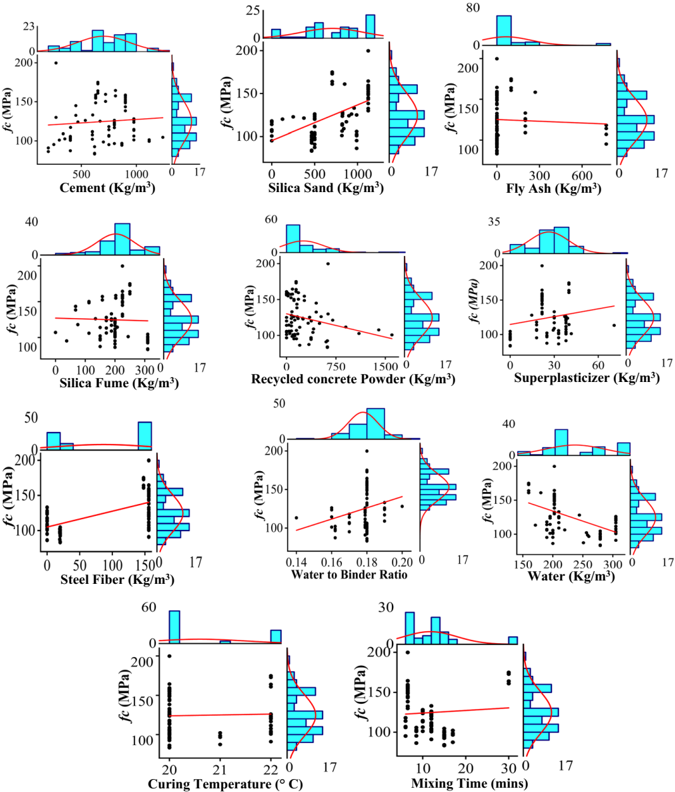
“These data points maintain statistical fidelity to the original experimental dataset, as shown in Table 3 and Fig. 5”
§ Generative data augmentation, explainable machine learning, and uncertainty analysis for compressive strength prediction of sustainable UHPC > 3.3 Synthetic data generation
plainstates an associationn = 80- Asserted: passes — The authors put it forward as true.
- Checkable: passes — It can be checked against evidence.
- Load-bearing: passes — The paper’s conclusions depend on it.
- Based: passes — The paper gives a reason why it holds.
A result the paper reports from its own data — it cites no other source for it, so there is none to check. The quote shows it is in the paper.
In the paper
“RCP also shows a moderate negative correlation (r = -0.25),whereas SP, w/b, CT, MT, SS, and SF have only weak correlations with CS.”
§ Generative data augmentation, explainable machine learning, and uncertainty analysis for compressive strength prediction of sustainable UHPC > 3.2 Experimental data development
plainstates an associationn = 80- Asserted: passes — The authors put it forward as true.
- Checkable: passes — It can be checked against evidence.
- Load-bearing: unclear — It is unclear whether the paper’s conclusions depend on it.
- Based: passes — The paper gives a reason why it holds.
24 more claims
Create a free account to see all 67 claims and to verify the 2 references still open.
- The quote only partly states this claim. 2
- It may state two separate claims as one. 29
- Probably not a substantial claim. 10
Self-check
Percentages, sums and reported differences re-computed from the paper’s own numbers.
Each contradiction between two passages listed here was confirmed by an independent check.
Rated major: it would touch a result — a value a result rests on, reported and recomputed p-values on opposite sides of the significance level, two passages that conflict with no sign which is right, or a cited work retracted before this paper was published.
In the paper
§ Generative data augmentation, explainable machine learning, and uncertainty analysis for compressive strength prediction of sustainable UHPC > 4.5 Model establishment
“The first model (M1) was trained on experimental data and subsequently tested on synthesized data.”
§ Generative data augmentation, explainable machine learning, and uncertainty analysis for compressive strength prediction of sustainable UHPC > 4.5 Model establishment
“M1 (experimental only) establishes a baseline using real lab data for training and testing.”
Rated major: it would touch a result — a value a result rests on, reported and recomputed p-values on opposite sides of the significance level, two passages that conflict with no sign which is right, or a cited work retracted before this paper was published.
In the paper
§ Generative data augmentation, explainable machine learning, and uncertainty analysis for compressive strength prediction of sustainable UHPC > 6 Conclusions
“the smallest uncertainty band width (12.88 MPa)”
§ Generative data augmentation, explainable machine learning, and uncertainty analysis for compressive strength prediction of sustainable UHPC > 6 Conclusions
“| XGBoost_M3 | -0.018 | 0.410 | -0.82 | 0.79 | 1.61 |”
Rated major: it would touch a result — a value a result rests on, reported and recomputed p-values on opposite sides of the significance level, two passages that conflict with no sign which is right, or a cited work retracted before this paper was published.
In the paper
§ Generative data augmentation, explainable machine learning, and uncertainty analysis for compressive strength prediction of sustainable UHPC > 5.3 Uncertainty analysis
“CatBoost_M3 has the lowest uncertainty band width of 0.77, ē = -0.003,and PEI95% of ±0.38 and ±0.39.”
§ Generative data augmentation, explainable machine learning, and uncertainty analysis for compressive strength prediction of sustainable UHPC > 6 Conclusions
“| CatBoost_M3 | -0.404 | 3.285 | -6.03 | 6.03 | 12.88 |”
Rated minor: it would not touch a result — a value no result rests on, a p-value that stays on the same side of the significance level, or a conflict that is clerical, resolved elsewhere in the paper, or outside its own findings.
In the paper
§ Generative data augmentation, explainable machine learning, and uncertainty analysis for compressive strength prediction of sustainable UHPC > 5.2.1 Effect of dataset source on the developed models
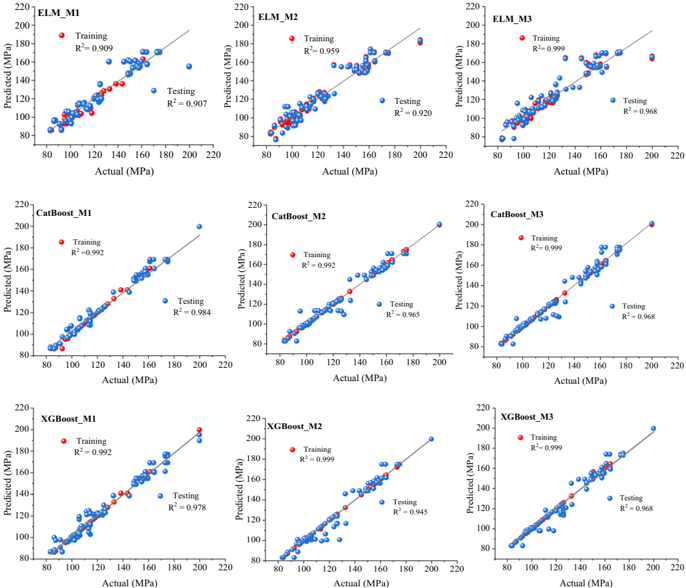
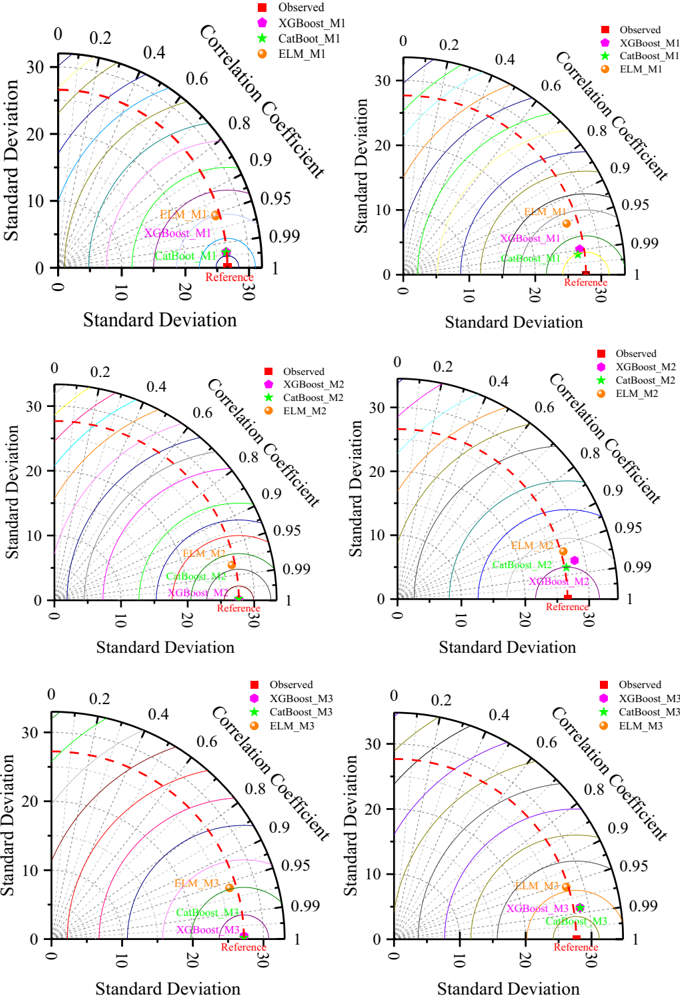
“As noted for all models, the combined dataset, M3, provided the highest and most consistent results.”
§ Generative data augmentation, explainable machine learning, and uncertainty analysis for compressive strength prediction of sustainable UHPC > 6 Conclusions
“| CatBoost_M1 0.992 | 1.280 | 2.288 | 0.939 | 100 | 0.984 | 2.179 | 3.413 | 1.818 | 100 | |”
Rated minor: it would not touch a result — a value no result rests on, a p-value that stays on the same side of the significance level, or a conflict that is clerical, resolved elsewhere in the paper, or outside its own findings.
In the paper
§ Generative data augmentation, explainable machine learning, and uncertainty analysis for compressive strength prediction of sustainable UHPC > 5.2.1 Effect of dataset source on the developed models
“ELM_1 was recorded as having the highest A20 index of 97.1%, implying that all other models had lower A20 indices.”
§ Generative data augmentation, explainable machine learning, and uncertainty analysis for compressive strength prediction of sustainable UHPC > 6 Conclusions
“| EML_M2 | 0.959 | 4.071 | 5.535 | 3.219 | 100 | 0.920 | 5.866 | 7.477 | 4.926 | 100 |”
4 more findings
Create a free account to see every finding of this check.
Citations
Cites
Yu, K.-Q., Zhu, W.-J., Ding, Y., Lu, Z.-D., Yu, J.-T., & Xiao, J.-Z. (2019) · Cement and Concrete Research · doi:10.1016/j.cemconres.2019.105813 · Cited by 295
Abuodeh, O. R., Abdalla, J. A., & Hawileh, R. A. (2020) · Applied Soft Computing · doi:10.1016/j.asoc.2020.106552 · Cited by 248 · cited 1×
“Deep neural networks with sequential feature selection by Abuodeh, Abdalla, and Hawileh [13] have reduced complexity and improved the accuracy of predicting the compressive strength of UHPC.”
He, Z., Han, X., Zhang, M., Yuan, Q., Shi, J., & Zhan, P. (2021) · Powder Technology · doi:10.1016/j.powtec.2021.117075 · Cited by 203 · cited 2×
“The literature and the cases of experimental tests were the source of data for this study [5–7 , 28– 33 ].”
Qian, D., Yu, R., Shui, Z., Sun, Y., Jiang, C., Zhou, F., Ding, M., Tong, X., & He, Y. (2020) · Journal of Cleaner Production · doi:10.1016/j.jclepro.2020.121231 · Cited by 192
Wang, X., Yu, R., Shui, Z., Song, Q., Liu, Z., bao, M., Liu, Z., & Wu, S. (2019) · Journal of Cleaner Production · doi:10.1016/j.jclepro.2019.02.201 · Cited by 180
Reinforcement learning-assisted evolutionary algorithm: A survey and research opportunities
Song, Y., Wu, Y., Guo, Y., Yan, R., Suganthan, P. N., Zhang, Y., Pedrycz, W., Das, S., Mallipeddi, R., Ajani, O. S., et al. (2024) · Swarm and Evolutionary Computation · doi:10.1016/j.swevo.2024.101517 · Cited by 168
Kashem, A. M., Karim, R., Malo, S. C., Das, P., Datta, S. D., & Alharthai, M. (2024) · Case Studies in Construction Materials · doi:10.1016/j.cscm.2024.e02991 · Cited by 157 · cited 1×
“Das and Kashem [17] proposed a hybrid LightGBM framework on 626 compressive and 317 flexural strength samples of UHPC.”
Learning to Accelerate Evolutionary Search for Large-Scale Multiobjective Optimization
Liu, S., Li, J., Lin, Q., Tian, Y., & Tan, K. C. (2022) · IEEE Transactions on Evolutionary Computation · doi:10.1109/tevc.2022.3155593 · Cited by 148 · cited 1×
“The ELM is a single-hidden-layer feedforward neural network (SLFN) that is made to train quickly and generalize well [37].”
Das, P., & Kashem, A. M. (2023) · Case Studies in Construction Materials · doi:10.1016/j.cscm.2023.e02723 · Cited by 114 · cited 2×
“These models have recently been used in regression analyses to predict the compressive strength of UHPC [19, 23].”
Model interpretability of financial fraud detection by group SHAP
Lin, K., & Gao, Y. (2022) · Expert Systems with Applications · doi:10.1016/j.eswa.2022.118354 · Cited by 108 · cited 1×
“In SHAP, the summary and force plots clarify feature contributions [43].”
Liu, X., Liang, C., Zhang, Z., Zhang, Y., Xu, J., & Ma, Z. (2024) · Journal of Building Engineering · doi:10.1016/j.jobe.2024.109153 · Cited by 104
Katlav, M., & Ergen, F. (2024) · Structural Concrete · doi:10.1002/suco.202400163 · Cited by 91 · cited 1×
“These models have recently been used in regression analyses to predict the compressive strength of UHPC [19, 23].”
Wu, H., Liu, C., Zhao, Y., Chen, G., & Gao, J. (2024) · Construction and Building Materials · doi:10.1016/j.conbuildmat.2024.137520 · Cited by 77 · cited 2×
“The literature and the cases of experimental tests were the source of data for this study [5–7 , 28– 33 ].”
Farouk, A., & Zhu, J. (2022) · Arabian Journal for Science and Engineering · doi:10.1007/s13369-021-06433-6 · Cited by 74
Self-citationFarouk, A., Zhu, J., Ding, J., & Haruna, S. I. (2022) · Construction and Building Materials · doi:10.1016/j.conbuildmat.2022.128360 · Cited by 71 · cited 1×
“Recent developments indicate that machine learning (ML) has made considerable advances in predicting various characteristics of ultra-high-performance concrete (UHPC) [10–12].”
Self-citationYang, B., Zhang, Y., Zhang, W., Sun, H., Wang, Q., & Han, D. (2024) · Journal of Building Engineering · doi:10.1016/j.jobe.2024.109563 · Cited by 68 · cited 1×
“These products are important for strength, which results in stronger concrete [47, 48].”
Samadi, M., Sarkardeh, H., & Jabbari, E. (2020) · Stochastic Environmental Research and Risk Assessment · doi:10.1007/s00477-020-01794-0 · Cited by 55 · cited 1×
“The mean (ē) and standard deviation (S e ) of the prediction error are calculated according to [44].”
Katlav, M., Ergen, F., & Dönmez, İ. (2024) · Materials Today Communications · doi:10.1016/j.mtcomm.2024.109915 · Cited by 54 · cited 1×
“Katlav et al. [16] applied ensemble machine learning models (RF, XGBoost, LightGBM, AdaBoost) to 181 datasets on ultra-high-performance geopolymer concrete (UHPGC).”
Yao, P., Yang, D., Wang, C., & Ma, Z. (2022) · Construction and Building Materials · doi:10.1016/j.conbuildmat.2022.128789 · Cited by 51
Zeng, S., Wang, X., Hua, L., Altayeb, M., Wu, Z., & Niu, F. (2024) · Journal of Building Engineering · doi:10.1016/j.jobe.2024.109918 · Cited by 48 · cited 1×
“On the tabular side, GAN-based augmentation has improved compressive-strength prediction under limited data, including UHPC and FRP-confined concrete strength, with adversarial learning strategies that reduce overfitting and enhance generalization [24, 25].”
Ansari, H., Tabish, M., & Zaheer, M. M. (2024) · Next Sustainability · doi:10.1016/j.nxsust.2024.100075 · Cited by 46 · cited 1×
“Although making concrete is extremely detrimental to the environment, releasing carbon and using up finite resources, construction and demolition (C&D) waste has previously been viewed as valueless [1, 2].”
Yuan, C., Leng, Y., Ziao, C., Yin, T., & Yu, R. (2024) · Journal of Building Engineering · doi:10.1016/j.jobe.2024.110038 · Cited by 46 · cited 1×
“The literature and the cases of experimental tests were the source of data for this study [5–7 , 28– 33 ].”
Ghasemi, M., Samadi, M., Soleimanian, E., & Chau, K. (2023) · Environmental Monitoring and Assessment · doi:10.1007/s10661-023-11462-9 · Cited by 46 · cited 1×
“White-box models, such as MARS and GMDH, provide explicit mathematical formulations and enhanced interpretability, making them attractive for engineering applications [20–22].”
Li, X., Ma, W., Li, S., Hou, S., Chen, Y., Wen, X., Dan, J., Huang, J., & Lv, Y. (2024) · Construction and Building Materials · doi:10.1016/j.conbuildmat.2024.137542 · Cited by 46
Luan, C., Liu, J., Zhao, S., Li, Y., & Yang, Y. (2024) · Construction and Building Materials · doi:10.1016/j.conbuildmat.2024.138769 · Cited by 44
Contrastive Learning: An Alternative Surrogate for Offline Data-Driven Evolutionary Computation
Huang, H.-G., & Gong, Y. (2022) · IEEE Transactions on Evolutionary Computation · doi:10.1109/tevc.2022.3170638 · Cited by 43 · cited 2×
“While analyzing features helps determine how each feature explains a model and influences the target variable, feature importance analysis does not indicate whether the impact on the target variable is positive or negative [42].”
Cheng, S., Chen, K., Wu, Q., Chen, X., Zhao, C. B., & Wu, Z. (2024) · Construction and Building Materials · doi:10.1016/j.conbuildmat.2024.135427 · Cited by 37 · cited 1×
“The literature and the cases of experimental tests were the source of data for this study [5–7 , 28– 33 ].”
Samadi, M., Afshar, M. H., Jabbari, E., & Sarkardeh, H. (2020) · Iranian Journal of Science and Technology Transactions of Civil Engineering · doi:10.1007/s40996-020-00364-2 · Cited by 34 · cited 1×
“White-box models, such as MARS and GMDH, provide explicit mathematical formulations and enhanced interpretability, making them attractive for engineering applications [20–22].”
Zhou, R., Tang, Y., Li, H., & Liu, Z. (2024) · Journal of Engineering and Applied Science · doi:10.1186/s44147-023-00350-1 · Cited by 33 · cited 1×
“Given the extreme conditions UHPC will be subjected to, such as in the construction of skyscrapers, bridges, and other precast components, compressive strength is definitely one of the primary parameters [8, 9].”
Poyatos, J., Molina, D., Martínez-Seras, A., Ser, J. D., & Herrera, F. (2023) · Applied Soft Computing · doi:10.1016/j.asoc.2023.110757 · Cited by 29 · cited 2×
“2𝑗𝑗 regularizes complexity [36].”
Li, Z., Zhan, J.-Y.-Y., Wang, Y., He, Z., & Xie, Y. (2024) · Journal of Building Engineering · doi:10.1016/j.jobe.2024.109833 · Cited by 28 · cited 1×
“Given the extreme conditions UHPC will be subjected to, such as in the construction of skyscrapers, bridges, and other precast components, compressive strength is definitely one of the primary parameters [8, 9].”
Zhu, J., & Farouk, A. (2023) · Structures · doi:10.1016/j.istruc.2023.02.040 · Cited by 28 · cited 1×
“Recent developments indicate that machine learning (ML) has made considerable advances in predicting various characteristics of ultra-high-performance concrete (UHPC) [10–12].”
Self-citationKhan, A. Q., Muhammad, S. G., Raza, A., Chaimahawan, P., & Pimanmas, A. (2025) · Frontiers of Structural and Civil Engineering · doi:10.1007/s11709-025-1169-4 · Cited by 27 · cited 1×
“Khan et al. [15] concluded that XGBoost is the best model after evaluating various ML models on • The combined dataset strategy yielded the highest predictive performance across all models.”
Wahab, S., Salami, B. A., Danish, H., Nisar, S., AlAteah, A. H., & Alsubeai, A. (2025) · Engineering Applications of Artificial Intelligence · doi:10.1016/j.engappai.2025.110458 · Cited by 24 · cited 1×
“Its optimization objective is: ∑ 𝜆𝜆𝜆𝜆 where 𝑙𝑙𝑙𝑙𝑙𝑙𝑙𝑙 𝑙𝑙𝑙𝑙𝑙𝑙𝑙𝑙𝑙 is the pointwise loss and is a regularization term [40]. ordered boosting (𝑓𝑓𝑓 By employing and robust regularization, CatBoost achieves strong generalization and reduced overfitting [41].”
Feature selection approach for failure mode detection of reinforced concrete bridge columns
Ali, N. M., Farouk, A. I. B., Haruna, S. I., Alanazi, H., Adamu, M., & Ibrahim, Y. E. (2022) · Case Studies in Construction Materials · doi:10.1016/j.cscm.2022.e01383 · Cited by 24 · cited 1×
“Generally, to develop dependable, widely applicable models, a dataset should have a sample size of at least 10 to 20 times the number of independent variables used to construct the regression model [26, 27].”
Self-citationGong, N., & Zhang, N. (2023) · Journal of Engineering and Applied Science · doi:10.1186/s44147-023-00274-w · Cited by 23 · cited 1×
“Gong et al. [18] developed a hybrid ANFIS system incorporating optimization techniques such as Generalized Normal Distribution Optimization, COOT optimization, and the Honey Badger Algorithm.”
Farouk, A., Abdulrahman, S., Al-Osta, M. A., Malami, S. I., & Abba, S. I. (2025) · Innovative Infrastructure Solutions · doi:10.1007/s41062-025-02083-x · Cited by 22 · cited 1×
“The detailed architecture and how the convergence and overfitting were monitored can be obtained in [34].”
Self-citationFang, Z. D., Xiong, G., Shao, Z., Zhou, S., Ou, G., Liu, L., Suzuki, M., Wang, C., & Sakai, Y. (2024) · Resources Environment and Sustainability · doi:10.1016/j.resenv.2024.100182 · Cited by 16
Zhi, T., Liu, X., Luo, Z., Song, Y., Liu, L., Yin, K., Pan, H., Gao, M., Yang, Y., Ge, M., et al. (2023) · Journal of Building Engineering · doi:10.1016/j.jobe.2023.108203 · Cited by 15 · cited 1×
“These products are important for strength, which results in stronger concrete [47, 48].”
Yosri, A. M., Farouk, A., Haruna, S. I., Deifalla, A. F., & Shaaban, W. M. (2023) · Case Studies in Construction Materials · doi:10.1016/j.cscm.2023.e02096 · Cited by 15 · cited 1×
“Generally, to develop dependable, widely applicable models, a dataset should have a sample size of at least 10 to 20 times the number of independent variables used to construct the regression model [26, 27].”
Self-citationSafieh, H., Hawileh, R. A., Assad, M., Hajjar, R., Shaw, S. K., & Abdalla, J. A. (2024) · Infrastructures · doi:10.3390/infrastructures9060092 · Cited by 14 · cited 1×
“Safieh et al. [14] found that Random Forest is the most consistent method after testing more than 50 ML models.”
Novel computational methods to predict the compressive strength of hydrothermally solidified clay
Shishegaran, A., Samadi, M., & Torabi, M. (2025) · ENGINEERING Structure and Civil Engineering · doi:10.1007/s11709-025-1237-9 · Cited by 14
Ensemble Learning Through Evolutionary Multitasking: A Formulation and Case Study
Liaw, R.-T., & Wen, Y.-W. (2024) · IEEE Transactions on Emerging Topics in Computational Intelligence · doi:10.1109/tetci.2024.3369949 · Cited by 12 · cited 1×
“CatBoost is a gradient boosting framework that efficiently handles categorical features and prevents target leakage [39].”
Optimizing compressive strength prediction using adversarial learning and hybrid regularization
Aziz, T., Aziz, H., Mahapakulchai, S., & Charoenlarpnopparut, C. (2024) · Scientific Reports · doi:10.1038/s41598-024-69434-z · Cited by 10 · cited 1×
“On the tabular side, GAN-based augmentation has improved compressive-strength prediction under limited data, including UHPC and FRP-confined concrete strength, with adversarial learning strategies that reduce overfitting and enhance generalization [24, 25].”
Comparative Study of Evolutionary Algorithms
Khera, V. (2023) · International Journal of Science and Research (IJSR) · doi:10.21275/sr23610122607 · Cited by 5 · cited 1×
“Therefore, while cement and water are treated as independent input variables during data generation, the XGBoost is an optimized gradient boosting algorithm known for scalability and accuracy [35].”
Evolutionary Optimization of Multi-step Dynamic Systems Learning
Perez, E. A. M., & Iba, H. (2022) · International Conference on Mechatronics and Robotics Engineering (ICMRE) · doi:10.1109/icmre54455.2022.9734110 · Cited by 2 · cited 1×
“Hidden weights and biases are assigned at random, and output weights are calculated mathematically: where 𝐻𝐻 𝐻 𝐻𝐻𝐻𝐻𝐻𝐻𝐻 𝐻 𝐻𝐻𝐻 is the hidden layer output matrix is H + , its Moore–Penrose pseudo-inverse is H + , and the targets are Y [38].”
Wahab, S., Salami, B., Danish, H., Nisar, S., AlAteah, A. H., & Alsubeai, A. (2024) · doi:10.2139/ssrn.5055231 · Cited by 1
Research works printed but not linked: 1
- Montgomery DC, Runger GC. Applied statistics and probability for engineers. New York: Wiley; 2019.
Metadata
- Authors
- Farouk, A. I. B., Abdulrahman, S., Al-Osta, M. A., Al-Dulaijan, S. U., Mohaisen, K. O., Haruna, S. I., Ibrahim, Y. E., & Abba, S. I.
- Affiliations
- King Fahd University of Petroleum and Minerals (SA)
- Prince Sultan University (SA)
- Prince Mohammad bin Fahd University (SA)
- Corresponding author
- Farouk, A. I. B.
- Al-Osta, Mohammed A.
- ORCID
- Venue
- Discover Concrete and Cement
- Published
- 2026-09-20
- Volume
- 2
- Issue
- 1
- Pages
- 77
- ISSN
- 3059-2674 (ISSN-L)
- OpenAlex
- W7213742803
- Cited by
- 0
- References
- 46
- FWCI
- 0.00
- Type
- journal article
- Language
- en
- Open access
- diamond
- doi.org
- Licence
- cc-by-nc-nd
- creativecommons.org/licenses/by-nc-nd/4.0 (tdm)
- creativecommons.org/licenses/by-nc-nd/4.0 (vor)
- Locations
- Discover Concrete and Cement (publishedVersion, cc-by-nc-nd)
- DOAJ (DOAJ: Directory of Open Access Journals) (submittedVersion)
- Funders
- Interdisciplinary Research Center for Construction and Building Materials (INCB2526)
- Topics
- Physical Sciences › Engineering › Civil and Structural Engineering › Innovative concrete reinforcement materials
- Physical Sciences › Engineering › Building and Construction › Recycled Aggregate Concrete Performance
- Physical Sciences › Materials Science › Materials Chemistry › Machine Learning in Materials Science
- Keywords
- ultra-high performance concrete, compressive strength prediction, recycled concrete powder, construction and demolition waste, synthetic data generation, variational autoencoder, CatBoost, SHAP, uncertainty analysis, sustainable construction materials, steel fibers, cement content, moisture content
About these checks
Registry, retraction, Cites and statistics results are computed, not judged, with one exception: a printed reference that no index lists is read once by a model before it counts as a citation error. Claims are extracted by a model and kept only when their quote appears verbatim in the text; each cited source is then checked, with a model’s help, for whether it says what the claim relies on. Those verdicts can be wrong — read the claim’s quote and the cited source before relying on one.
A language model drew the claims from the paper on 2026-11-27, under version 3 of the claim definition (model deepseek-v4.1-flash, prompt extract-v3).
A second model labelled each claim on 2026-11-27 (model jev-1.13-20260917, definition revision gold-guideline-v0.2).
Statistics and arithmetic are recomputed, not judged.
Confidence bands are shown only for fields calibrated on our annotated test set. None is calibrated yet, so no band is shown.
What counts as a claim ›How we measure confidence ›How we check this ›
Are you an author, or do you see a problem with this page? Request a review
Data sources
Bibliographic data: Semantic Scholar, OpenAlex, Crossref.
Contains information from the Semantic Scholar Academic Graph Datasets, made available under the ODC Attribution License (ODC-BY 1.0).
Semantic Scholar’s data is described in: Kinney, R., et al. (2023). The Semantic Scholar Open Data Platform. arXiv:2301.10140.
