

The DOI matches its Crossref record; 49 of the 49 references it cites were found in a registry or an index.
Small sample sizes in high-throughput miRNA screens: A common pitfall for the identification of miRNA biomarkers
Open accessAbstract
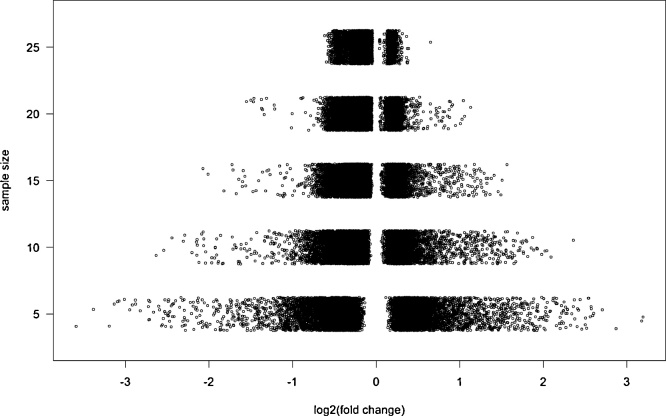
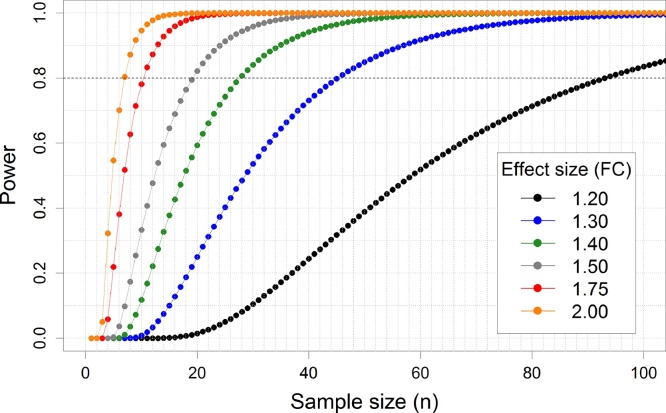
Since the discovery of microRNAs (miRNAs), circulating miRNAs have been proposed as biomarkers for disease. Consequently, many groups have tried to identify circulating miRNA biomarkers for various types of diseases including cardiovascular disease and cancer. However, the replicability of these experiments has been disappointingly low. In order to identify circulating miRNA candidate biomarkers, in general, first an unbiased high-throughput screen is performed in which a large number of miRNAs is detected and quantified in the circulation. Because these are costly experiments, many of such studies have been performed using a low number of study subjects (small sample size). Due to lack of power in small sample size experiments, true effects are often missed and many of the detected effects are wrong. Therefore, it is important to have a good estimate of the appropriate sample size for a miRNA high-throughput screen. In this review, we discuss the effects of small sample sizes in high-throughput screens for circulating miRNAs. Using data from a miRNA high-throughput experiment on isolated monocytes, we illustrate that the implementation of power calculations in a high-throughput miRNA discovery experiment will avoid unnecessarily large and expensive experiments, while still having enough power to be able to detect clinically important differences.
Overview
The claims and statistics of this paper haven’t been checked yet.
Run the check — free, no account needed. It reads the open-access text and checks the sources it cites.
Integrity signals
Registry
Cites
Statistics
Figures

Verification
Claims the paper makes
The claims and statistics of this paper haven’t been checked yet.
Run the check — free, no account needed. It reads the open-access text and checks the sources it cites.
Claims other papers make about this one
Each is checked against this paper’s own text: does it say what the citing paper says it does?
In the citing paper
“Kok et al. (2018) notes, for example, that one may need around 19 samples per group to detect a fold change of 1.5 in microRNA data at 80% power and false discovery rate <10%.”
From Missing data in multi-omics integration: Recent advances through artificial intelligence (2023) · cites this paper as Kok et al., 2018
Self-check
Percentages, sums and reported differences re-computed from the paper’s own numbers.
The self-check needs the paper’s full text.
Citations
Cites
Bartel (2004) · doi:10.1016/s0092-8674(04)00045-5 · Cited by 34,714
Valadi, H., Ekström, K., Bossios, A., Sjöstrand, M., Lee, J. J., & Lötvall, J. O. (2007) · Nature Cell Biology · doi:10.1038/ncb1596 · Cited by 12,834
MicroRNA signatures in human cancers
Calin, G. A., & Croce, C. M. (2006) · Nature reviews. Cancer · doi:10.1038/nrc1997 · Cited by 7,668
The Versatile Role of microRNA-30a in Human Cancer
Wang, C., Yang, X., Chen, Y., & Chen, L. (2017) · Cellular Physiology and Biochemistry · doi:10.1159/000471111 · Cited by 3,414
MicroRNA profiling: approaches and considerations
Pritchard, C. C., Cheng, H. H., & Tewari, M. (2012) · Nature Reviews Genetics · doi:10.1038/nrg3198 · Cited by 1,765
Jia, Q.-W., Chen, Z.-H., Ding, X.-Q., Liu, J.-Y., Ge, P.-C., An, F.-H., Li, L.-H., Wang, L.-S., Ma, W.-Z., Yang, Z.-J., et al. (2017) · Cellular Physiology and Biochemistry · doi:10.1159/000478071 · Cited by 1,694
Morin, R. D., O’Connor, M. D., Griffith, M., Kuchenbauer, F., Delaney, A., Prabhu, A.-L., Zhao, Y., McDonald, H., Zeng, T., Hirst, M., et al. (2008) · Genome Research · doi:10.1101/gr.7179508 · Cited by 1,110
Creemers, E. E., Tijsen, A. J., & Pinto, Y. M. (2012) · Circulation Research · doi:10.1161/circresaha.111.247452 · Cited by 1,035
Git, A., Dvinge, H., Salmon-Divon, M., Osborne, M., Kutter, C., Hadfield, J., Bertone, P., & Caldas, C. (2010) · RNA · doi:10.1261/rna.1947110 · Cited by 689
Repeatability of published microarray gene expression analyses
Ioannidis, J. P. A., Allison, D. B., Ball, C. A., Coulibaly, I., Cui, X., Culhane, A. C., Falchi, M., Furlanello, C., Game, L., Jurman, G., et al. (2009) · Nature Genetics · doi:10.1038/ng.295 · Cited by 551
Cited by
Sorted by citations
State of the field in multi-omics research: from computational needs to data mining and sharing
Krassowski, M., Das, V., Sahu, S. K., & Misra, B. B. (2020) · Frontiers in Genetics · doi:10.3389/fgene.2020.610798 · Cited by 351
Missing data in multi-omics integration: Recent advances through artificial intelligence
Flores, J. E., Claborne, D. M., Weller, Z. D., Webb-Robertson, B.-J. M., Waters, K. M., & Bramer, L. M. (2023) · Frontiers in Artificial Intelligence · doi:10.3389/frai.2023.1098308 · Cited by 181
Exploiting Circulating MicroRNAs as Biomarkers in Psychiatric Disorders
Roy, B., Yoshino, Y., McKibben, L. A., Prall, K., Schell, G., & Dwivedi, Y. (2020) · Molecular Diagnosis & Therapy · doi:10.1007/s40291-020-00464-9 · Cited by 101
Non-Coding RNAs in Human Breast Milk: A Systematic Review
Tingö, L., Ahlberg, E., Johansson, L. E., Pedersen, S. A., Chawla, K., Sætrom, P., Cione, E., & Simpson, M. R. (2021) · Frontiers in Immunology · doi:10.3389/fimmu.2021.725323 · Cited by 86
Pasquali, L., Svedbom, A., Srivastava, A., Rosén, E., Lindqvist, U. R. C., Ståhle, M., Pivarcsi, A., & Sonkoly, E. (2020) · Journal of the European Academy of Dermatology and Venereology · doi:10.1111/jdv.16203 · Cited by 74
Metadata
- Authors
- Kok, M. G. M., de Ronde, M. W. J., Moerland, P. D., Ruijter, J. M., Creemers, E. E., & Pinto-Sietsma, S. J.
- Affiliations
- University of Amsterdam (NL)
- Amsterdam UMC Location University of Amsterdam (NL)
- Venue
- Biomolecular Detection and Quantification
- Publisher
- Elsevier BV
- Published
- 2018-05
- Volume
- 15
- Pages
- 1-5
- ISSN
- 2214-7535 (ISSN-L)
- PMC
- PMC5737945
- OpenAlex
- W2776332611
- Cited by
- 105
- References
- 49
- Citations by year
- 2026: 5 · 2025: 15 · 2024: 18 · 2023: 9 · 2022: 17 · 2021: 13 · 2020: 16 · 2019: 7 · 2018: 5
- FWCI
- 2.57
- Type
- journal article
- Language
- en
- Open access
- hybrid
- doi.org
- Licence
- Locations
- Biomolecular Detection and Quantification (publishedVersion, cc-by-nc-nd)
- PubMed Central (publishedVersion, cc-by-nc-nd)
- PubMed (publishedVersion)
- Data Archiving and Networked Services (DANS) (submittedVersion)
- DOAJ (DOAJ: Directory of Open Access Journals) (submittedVersion)
- Pure Amsterdam UMC (submittedVersion)
- Topics
- Life Sciences › Biochemistry, Genetics and Molecular Biology › Cancer Research › MicroRNA in disease regulation
- Life Sciences › Biochemistry, Genetics and Molecular Biology › Molecular Biology › Gene expression and cancer classification
- Physical Sciences › Mathematics › Statistics and Probability › Statistical Methods in Epidemiology
- Keywords
- microRNA biomarkers, circulating microRNAs, small sample size, statistical power, sample size determination, power analysis, replicability, microRNA discovery
About these checks
Registry, retraction, Cites and statistics results are computed, not judged, with one exception: a printed reference that no index lists is read once by a model before it counts as a citation error. Claims are extracted by a model and kept only when their quote appears verbatim in the text; each cited source is then checked, with a model’s help, for whether it says what the claim relies on. Those verdicts can be wrong — read the claim’s quote and the cited source before relying on one.
Statistics and arithmetic are recomputed, not judged.
Confidence bands are shown only for fields calibrated on our annotated test set. None is calibrated yet, so no band is shown.
What counts as a claim ›How we measure confidence ›How we check this ›
Are you an author, or do you see a problem with this page? Request a review
