

The DOI matches its Crossref record; 96 of the 98 references it cites were found in a registry or an index.
A frontal-vagal network theory for Major Depressive Disorder: Implications for optimizing neuromodulation techniques
Open accessAbstract
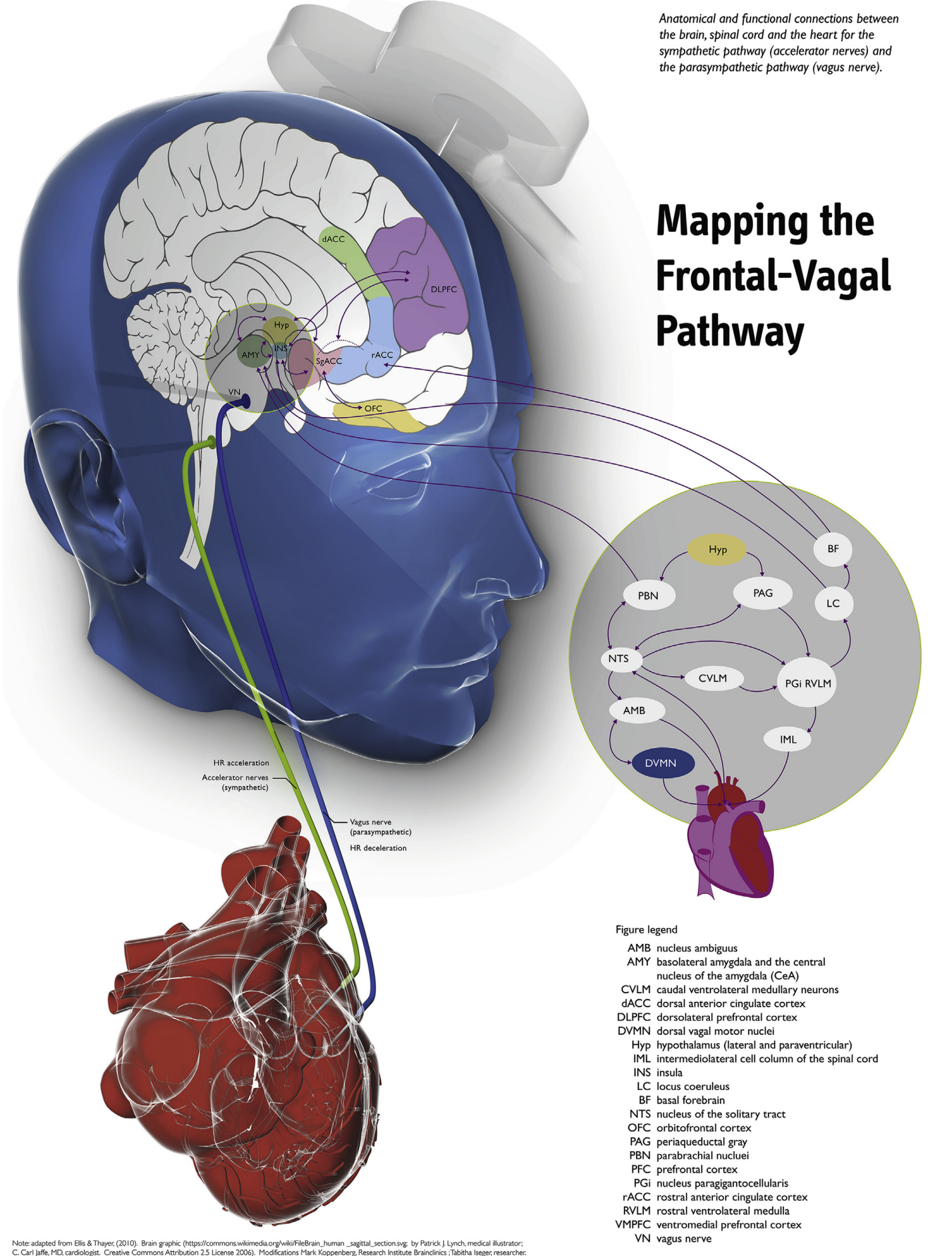
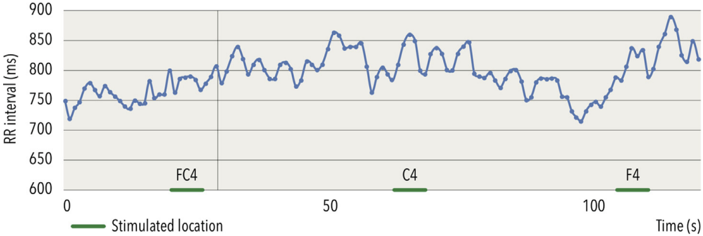
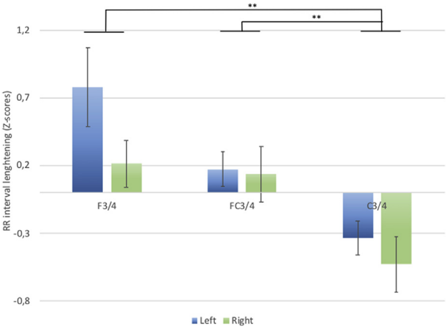
Major Depressive Disorder (MDD) is a psychiatric disorder characterized by high comorbidity with cardiovascular disease. Furthermore, a combination of high heart rate (HR) and low heart rate variability (HRV) has been frequently reported in depressed patients. The present review proposes a frontal-vagal (brain-heart) network that overlaps with functional nodes of the depression network. Moreover, we summarize neuromodulation studies that have targeted key nodes in this depression network, with subsequent impact on heart rate (HR) or heart-rate-variability (HRV), such as the dorsolateral prefrontal cortex (DLPFC), subgenual anterior cingulate cortex (sgACC), and the vagus nerve (VN). Based on the interplay of this frontal-vagal network, we emphasize the importance of including HR and HRV measurements in human depression studies, in particular those that conduct neuromodulation, in order to obtain a better understanding of the pathways that are affected, and we explore the possibilities of using this frontal-vagal interplay as a method for target engagement in neuromodulation treatments. This frontal-vagal network theory opens-up the possibility for individualizing neuromodulation treatments such as rTMS. A recent development called Neuro-Cardiac-Guided TMS (NCG-TMS), was developed based on this theory, and an individual-participant meta-analysis is presented. Four studies provide consistent and replicable support for NCG-TMS as a target engagement method, with consistent HR deceleration during frontal TMS and HR acceleration during motor strip TMS.
Overview
The claims and statistics of this paper haven’t been checked yet.
Run the check — free, no account needed. It reads the open-access text and checks the sources it cites.
Integrity signals
Registry
Cites
Statistics
Figures
Verification
Claims the paper makes
The claims and statistics of this paper haven’t been checked yet.
Run the check — free, no account needed. It reads the open-access text and checks the sources it cites.
Claims other papers make about this one
Each is checked against this paper’s own text: does it say what the citing paper says it does?
The source backs part of the claim, not all of it — or backs it for a different population, condition or comparison.
In the citing paper
“ANS function is purportedly modulated by the core-ICNs and one of the most robust ANS disturbances found in IDs is cardiac dysautonomia in the form of reduced HRV [52, 96, 103, 280, 282–293].”
From Infraslow closed-loop brain training for anxiety and depression (ISAD): a protocol for a randomized, double-blind, sham-controlled pilot trial in adult females with internalizing disorders (2022) · cites this paper as [283]
Experimental — accuracy not yet measuredThe source backs part of the claim, not all of it — or backs it for a different population, condition or comparison.
In the citing paper
“A frontal-vagal brain network – including the medulla of brainstem, hypothalamus, amygdala, insula, as well as dorsolateral prefrontal, anterior cingulate and orbitofrontal cortex – has been proposed to link cardiovascular diseases, metabolic diseases and MDD, because of its influence on the cardiovascular system, mood, appetite and sleep265.”
From Comorbidity between major depressive disorder and physical diseases: a comprehensive review of epidemiology, mechanisms and management (2023) · cites this paper as [265]
Experimental — accuracy not yet measured
Self-check
Percentages, sums and reported differences re-computed from the paper’s own numbers.
The self-check needs the paper’s full text.
Citations
Cites
Heart Rate Variability: Standards of Measurement, Physiological Interpretation, and Clinical Use
Electrophysiology, T. F. O. T. E. S. O. C. T. N. A. (1996) · Circulation · doi:10.1161/01.cir.93.5.1043 · Cited by 17,159
Gross, J. J. (1998) · Journal of Personality and Social Psychology · doi:10.1037//0022-3514.74.1.224 · Cited by 4,671 · cited 1×
“Higher HRV is also related to an adaptive and increased top-down and bottom up modulation of cognitive emotional processing and to effective processing of negative stimuli [29].”
Deep Brain Stimulation for Treatment-Resistant Depression
Mayberg, H. S., Lozano, A. M., Voon, V., McNeely, H. E., Seminowicz, D., Hamani, C., Schwalb, J. M., & Kennedy, S. H. (2005) · Neuron · doi:10.1016/j.neuron.2005.02.014 · Cited by 4,059
Thayer, J. F., Åhs, F., Fredrikson, M., Sollers, J. J., & Wager, T. D. (2012) · Neuroscience & Biobehavioral Reviews · doi:10.1016/j.neubiorev.2011.11.009 · Cited by 3,224
A model of neurovisceral integration in emotion regulation and dysregulation
Thayer, J. F., & Lane, R. D. (2000) · Journal of Affective Disorders · doi:10.1016/s0165-0327(00)00338-4 · Cited by 3,092
Heart rate variability: A review
Rajendra Acharya, U., Paul Joseph, K., Kannathal, N., Lim, C. M., & Suri, J. S. (2006) · Medical & Biological Engineering & Computing · doi:10.1007/s11517-006-0119-0 · Cited by 2,820
The Epidemiology of Depression Across Cultures
Kessler, R. C., & Bromet, E. J. (2013) · Annual Review of Public Health · doi:10.1146/annurev-publhealth-031912-114409 · Cited by 2,657
Shaffer, F., McCraty, R., & Zerr, C. L. (2014) · Frontiers in Psychology · doi:10.3389/fpsyg.2014.01040 · Cited by 1,866
The Relationship of Depression to Cardiovascular Disease: Epidemiology, Biology, and Treatment
Musselman, D. L., Evans, D. L., & Nemeroff, C. B. (1998) · Archives of General Psychiatry · doi:10.1001/archpsyc.55.7.580 · Cited by 1,532
Kemp, A. H., Quintana, D. S., Gray, M. A., Felmingham, K. L., Brown, K., & Gatt, J. M. (2010) · Biological Psychiatry · doi:10.1016/j.biopsych.2009.12.012 · Cited by 1,286
Research works printed but not linked: 1
- T.A. Iseger, F. Padberg, J.L. Kenemans, H. van Dijk & M. Arns. Neuro-cardiac-guided TMS: a validation study (under review at NeuroImage).
Cited by
Sorted by citations
Farmer, A. D., Strzelczyk, A., Finisguerra, A., Gourine, A. V., Gharabaghi, A., Hasan, A., Burger, A. M., Jaramillo, A. M., Mertens, A., Majid, A., et al. (2021) · Frontiers in Human Neuroscience · doi:10.3389/fnhum.2020.568051 · Cited by 375
Berk, M., Köhler‐Forsberg, O., Turner, M., Penninx, B. W. J. H., Wrobel, A., Firth, J., Loughman, A., Reavley, N. J., McGrath, J. J., Momen, N. C., et al. (2023) · World Psychiatry · doi:10.1002/wps.21110 · Cited by 336
Fitzgerald, P. B. (2021) · Brain Stimulation · doi:10.1016/j.brs.2021.04.018 · Cited by 126
Cash, R. F. H., & Zalesky, A. (2023) · Biological Psychiatry · doi:10.1016/j.biopsych.2023.11.013 · Cited by 128
Sack, A. T., Paneva, J., Küthe, T. T., Dijkstra, E., Zwienenberg, L., Arns, M., & Schuhmann, T. (2023) · Biological Psychiatry · doi:10.1016/j.biopsych.2023.09.011 · Cited by 126
Self-citationBrain-heart interactions in the neurobiology of consciousness
Candia‐Rivera, D. (2022) · Current Research in Neurobiology · doi:10.1016/j.crneur.2022.100050 · Cited by 114
Transcranial magnetic stimulation (TMS) for geriatric depression
Cappon, D., den Boer, T., Jordan, C., Yu, W., Metzger, E., & Pascual-Leone, A. (2022) · Ageing Research Reviews · doi:10.1016/j.arr.2021.101531 · Cited by 97
Non-invasive vagus nerve stimulation boosts mood recovery after effort exertion
Ferstl, M., Teckentrup, V., Lin, W. M., Kräutlein, F., Kühnel, A., Klaus, J., Walter, M., & Kroemer, N. B. (2021) · Psychological Medicine · doi:10.1017/s0033291720005073 · Cited by 79
Matisz, C. E., & Gruber, A. J. (2021) · Neuroscience & Biobehavioral Reviews · doi:10.1016/j.neubiorev.2021.12.020 · Cited by 71
Applications of Non-invasive Neuromodulation for the Management of Disorders Related to COVID-19
Baptista, A. F., Baltar, A., Okano, A. H., Moreira, A., Campos, A. C. P., Fernandes, A. M., Brunoni, A. R., Badran, B. W., Tanaka, C., de Andrade, D. C., et al. (2020) · Frontiers in Neurology · doi:10.3389/fneur.2020.573718 · Cited by 62
Schmaußer, M., Hoffmann, S., Raab, M., & Laborde, S. (2022) · Journal of Neuroscience Research · doi:10.1002/jnr.25062 · Cited by 59
Suen, P. J. C., Doll, S., Batistuzzo, M. C., Busatto, G. F., Razza, L. B., Padberg, F., Mezger, E., Bulubas, L., Keeser, D., Deng, Z., et al. (2020) · European Archives of Psychiatry and Clinical Neuroscience · doi:10.1007/s00406-020-01127-w · Cited by 59
Dedoncker, J., Baeken, C., Raedt, R. D., & Vanderhasselt, M. (2020) · Biological Psychology · doi:10.1016/j.biopsycho.2020.107991 · Cited by 64
Investigating high- and low-frequency neuro-cardiac-guided TMS for probing the frontal vagal pathway
Kaur, M., Michael, J. A., Hoy, K. E., Fitzgibbon, B. M., Ross, M. S., Iseger, T. A., Arns, M., Hudaib, A., & Fitzgerald, P. B. (2020) · Brain stimulation · doi:10.1016/j.brs.2020.03.002 · Cited by 48
Self-citationInteroception, network physiology and the emergence of bodily self-awareness
Candia‐Rivera, D., Engelen, T., Babo-Rebelo, M., & Salamone, P. (2024) · Neuroscience & Biobehavioral Reviews · doi:10.1016/j.neubiorev.2024.105864 · Cited by 59
Hödl, S., Carrette, S., Meurs, A., Carrette, E., Mertens, A., Gadeyne, S., Goossens, L., Dewaele, F., Bouckaert, C., Dauwe, I., et al. (2020) · European Journal of Neurology · doi:10.1111/ene.14270 · Cited by 45
Depression and cardiovascular autonomic control: a matter of vagus and sex paradox
Tobaldini, E., Carandina, A., Toschi‐Dias, E., Erba, L., Furlan, L., Sgoifo, A., & Montano, N. (2020) · Neuroscience & Biobehavioral Reviews · doi:10.1016/j.neubiorev.2020.06.029 · Cited by 48
Neuro-Cardiac-Guided TMS (NCG TMS): A replication and extension study
Iseger, T. A., Padberg, F., Kenemans, J. L., van Dijk, H., & Arns, M. (2021) · Biological Psychology · doi:10.1016/j.biopsycho.2021.108097 · Cited by 41
Self-citationHe, J., Jia, B., Wang, Y., Li, S., Zhao, B., Zhou, Z.-G., Bi, Y., Wu, M., Li, L., Zhang, J., et al. (2022) · Frontiers in Neurology · doi:10.3389/fneur.2022.827749 · Cited by 45
Autonomic Nervous System Function in Anorexia Nervosa: A Systematic Review
Jenkins, Z., Eikelis, N., Phillipou, A., Castle, D. J., Wilding, H., & Lambert, É. (2021) · Frontiers in Neuroscience · doi:10.3389/fnins.2021.682208 · Cited by 42
Lin, Y., Chang, C.-C., Huang, C. C., Tzeng, N., Kao, Y., & Chang, H. (2020) · Journal of Affective Disorders · doi:10.1016/j.jad.2020.11.030 · Cited by 36
Combining top-down and bottom-up interventions targeting the vagus nerve to increase resilience
Vanderhasselt, M.-A., & Ottaviani, C. (2022) · Neuroscience & Biobehavioral Reviews · doi:10.1016/j.neubiorev.2021.11.018 · Cited by 34
Dijkstra, E., van Dijk, H., Vila-Rodriguez, F., Zwienenberg, L., Rouwhorst, R., Coetzee, J. P., Blumberger, D. M., Downar, J., Williams, N., Sack, A. T., et al. (2023) · Biological Psychiatry Global Open Science · doi:10.1016/j.bpsgos.2023.01.003 · Cited by 31
Self-citationIntrinsic Connectivity Networks of Glutamate-Mediated Antidepressant Response: A Neuroimaging Review
Demchenko, I., Tassone, V. K., Kennedy, S. H., Dunlop, K., & Bhat, V. (2022) · Frontiers in Psychiatry · doi:10.3389/fpsyt.2022.864902 · Cited by 29
“A relatively “new” ICN incorporated into the network model is the CAN, which involves the HPT, AMYG, insula, and brainstem nuclei responsible for the control of bodily autonomic responses (61, 89).”
BackgroundDeng, Z., Robins, P. L., Dannhauer, M., Haugen, L. M., Port, J. D., & Croarkin, P. E. (2023) · Biomedicines · doi:10.3390/biomedicines11082320 · Cited by 31
Lee, H., Lee, J. H., Hwang, M.-H., & Kang, N. (2023) · Journal of Affective Disorders · doi:10.1016/j.jad.2023.07.039 · Cited by 25
He, H., Sun, X., Doose, J., Faller, J., McIntosh, J. R., Saber, G. T., Huffman, S. M., Hong, L., Pantazatos, S. P., Yuan, H., et al. (2025) · Brain stimulation · doi:10.1016/j.brs.2025.10.013 · Cited by 31
Pilloni, G., Bikson, M., Badran, B. W., George, M. S., Kautz, S. A., Okano, A. H., Baptista, A. F., & Charvet, L. E. (2020) · Frontiers in Human Neuroscience · doi:10.3389/fnhum.2020.595567 · Cited by 26
Dynamic fluctuations in ascending heart-to-brain communication under mental stress
Candia‐Rivera, D., Norouzi, K., Ramsøy, T. Z., & Valenza, G. (2023) · American Journal of Physiology-Regulatory, Integrative and Comparative Physiology · doi:10.1152/ajpregu.00251.2022 · Cited by 29
Goffi, F., Maggioni, E., Bianchi, A. M., Brambilla, P., & Delvecchio, G. (2025) · Translational Psychiatry · doi:10.1038/s41398-025-03430-3 · Cited by 28
Chang, C.-C., Lin, Y., Tzeng, N., Kao, Y., & Chang, H. (2020) · Journal of Psychiatric Research · doi:10.1016/j.jpsychires.2020.10.008 · Cited by 23
Klírová, M., Adamová, A., Biačková, N., Laskov, O., Renková, V., Stuchlíková, Z., Odnohová, K., & Novák, T. (2024) · Scientific Reports · doi:10.1038/s41598-024-52763-4 · Cited by 22
Kao, Y., Tzeng, N., Chao, C.-Y., Chang, C.-C., & Chang, H. (2020) · Clinical Neurophysiology · doi:10.1016/j.clinph.2020.02.029 · Cited by 20
Chen, S., Wang, H., Yue, J., Guan, N., & Wang, X. (2022) · Comprehensive Psychiatry · doi:10.1016/j.comppsych.2022.152347 · Cited by 19
Distinct Neural Processing of Acute Stress in Major Depression and Borderline Personality Disorder
Villarreal, M. F., Wainsztein, A., Mercè, R. Á., Goldberg, X., Castro, M. N., Brusco, L. I., de Guevara, S. L., Bodurka, J., Paulus, M. P., Menchón, J. M., et al. (2021) · Journal of Affective Disorders · doi:10.1016/j.jad.2021.02.055 · Cited by 19
Tateishi, H., Setoyama, D., Kang, D., Matsushima, J., Kojima, R., Fujii, Y., Mawatari, S., Kikuchi, J., Sakemura, Y., Ohishi‐Fukuchi, J., et al. (2021) · Journal of Psychiatric Research · doi:10.1016/j.jpsychires.2021.04.009 · Cited by 19
Probing prefrontal-sgACC connectivity using TMS-induced heart–brain coupling
Dijkstra, E., Frandsen, S. B., van Dijk, H., Duecker, F., Taylor, J. J., Sack, A. T., Arns, M., & Siddiqi, S. (2024) · Nature Mental Health · doi:10.1038/s44220-024-00248-8 · Cited by 17
Self-citationChen, Y., Zou, H., Hou, X., Lan, C., Wang, J., Qing, Y., Chen, W., Yao, S., & Kendrick, K. M. (2023) · eLife · doi:10.7554/elife.85847 · Cited by 18
Vagal nerve stimulation for the management of long COVID symptoms
Khan, M. W. Z., Ahmad, M., Qudrat, S., Afridi, F., Khan, N. A., Afridi, Z., Fahad, ., Azeem, T., & Ikram, J. (2024) · Infectious Medicine · doi:10.1016/j.imj.2024.100149 · Cited by 18
Czura, C. J., Bikson, M., Charvet, L. E., Chen, J. D. Z., Franke, M., Fudim, M., Grigsby, E. J., Hamner, S. R., Huston, J. M., Khodaparast, N., et al. (2022) · Frontiers in Neurology · doi:10.3389/fneur.2022.897124 · Cited by 17
Yeh, T., Lin, Y., Tzeng, N., Kao, Y., Chung, Y., Chang, C.-C., Fang, H., & Chang, H. (2024) · Psychiatry and Clinical Neurosciences · doi:10.1111/pcn.13745 · Cited by 16
Chang, C.-C., Kao, Y., Chao, C.-Y., Tzeng, N., & Chang, H. (2020) · The International Journal of Neuropsychopharmacology · doi:10.1093/ijnp/pyaa063 · Cited by 16
A review of clinical studies of electrodermal activity and transcranial magnetic stimulation
Cox, O. D., Munjal, A., McCall, W. V., Miller, B. J., Baeken, C., & Rosenquist, P. B. (2023) · Psychiatry Research · doi:10.1016/j.psychres.2023.115535 · Cited by 15
Meijs, H., Prentice, A., Lin, B. D., Wilde, B. D., Hecke, J. V., Niemegeers, P., van Eijk, K. R., Luykx, J. J., & Arns, M. (2022) · European Neuropsychopharmacology · doi:10.1016/j.euroneuro.2022.07.006 · Cited by 13
Self-citationSmet, S. D., Baeken, C., Raedt, R. D., Pulopulos, M. M., Razza, L. B., Damme, S. V., Witte, S. D., Brunoni, A. R., & Vanderhasselt, M. (2021) · Clinical Neurophysiology · doi:10.1016/j.clinph.2021.01.025 · Cited by 13
Michael, J. A., & Kaur, M. (2021) · Neuroscience & Biobehavioral Reviews · doi:10.1016/j.neubiorev.2021.04.016 · Cited by 15
Colzato, L. S., Elmers, J., Beste, C., & Hommel, B. (2023) · Journal of Clinical Medicine · doi:10.3390/jcm12031198 · Cited by 15
Jiao, Y., Cheng, C., Jia, M., Chu, Z., Song, X., Zhang, M., Xu, H., Zeng, X., Sun, J., Qin, W., et al. (2024) · Psychophysiology · doi:10.1111/psyp.14631 · Cited by 12
Vasovagal syncope as a specific side effect of DLPFC-rTMS: A frontal-vagal dose-finding study
Rouwhorst, R., van Oostrom, I., Dijkstra, E., Zwienenberg, L., van Dijk, H., & Arns, M. (2022) · Brain Stimulation · doi:10.1016/j.brs.2022.08.015 · Cited by 13
Self-citationMapping human brain topography to heart rhythms: an SEEG study
Wang, X., Yang, H., Cheng, Y., Liu, S., Jin, G., Qiao, Z., Qi, L., Wang, S., Ge, J., Hu, D., et al. (2025) · Cardiovascular Research · doi:10.1093/cvr/cvaf099 · Cited by 13
Brain–body states as a link between cardiovascular and mental health
Villringer, A., Nikulin, V. V., & Gaebler, M. (2025) · Trends in Neurosciences · doi:10.1016/j.tins.2025.08.004 · Cited by 18
Prefrontal tDCS modulates autonomic responses in COVID-19 inpatients
Pinto, T. P., Inácio, J. C., de Aguiar, E., Ferreira, A. S., Sudo, F. K., Tovar-Moll, F., & Rodrigues, E. C. (2023) · Brain Stimulation · doi:10.1016/j.brs.2023.03.001 · Cited by 11
Zwienenberg, L., Iseger, T. A., Dijkstra, E., Rouwhorst, R., van Dijk, H., Sack, A. T., & Arns, M. (2021) · Brain stimulation · doi:10.1016/j.brs.2021.07.005 · Cited by 11
Self-citationYu, L., Shen, Z., Wei, W., Dou, Z., Luo, Y., Hu, D., Lin, W., Zhao, G., Hong, X., & Yu, S. (2025) · BMC Medicine · doi:10.1186/s12916-025-04089-9 · Cited by 11
Transcranial magnetic stimulation induces heart rate decelerations independent of treatment outcome
Alario, A. A., Pace, B., Niciu, M. J., & Trapp, N. T. (2023) · Brain stimulation · doi:10.1016/j.brs.2023.06.005 · Cited by 10
Babelyuk, V., Tserkovniuk, R., Babelyuk, N., Żukow, X., Ruzhylo, S., Dubkova, G. I., Korolyshyn, T. A., Hubyts’kyi, V. Y., Kikhtan, V., Гоженко, А. І., et al. (2021) · Journal of Education Health and Sport · doi:10.12775/jehs.2021.11.12.030 · Cited by 10
Sheen, J., Miron, J., Mansouri, F., Dunlop, K., Russell, T., Zhou, R., Hyde, M., Fox, L., Voetterl, H., Daskalakis, Z. J., et al. (2022) · Journal of Affective Disorders · doi:10.1016/j.jad.2022.08.105 · Cited by 10
Perez, T. M., Glue, P., Adhia, D. B., Navid, M. S., Zeng, J., Dillingham, P., Smith, M., Niazi, I. K., Young, C. K., & De Ridder, D. (2022) · Trials · doi:10.1186/s13063-022-06863-z · Cited by 8
Wainsztein, A., Castro, M. N., Goldberg, X., Camacho-Téllez, V., Vulcano, M., Abulafia, C., Ladrón‐de‐Guevara, S., Cardoner, N., Nemeroff, C. B., Menchón, J. M., et al. (2021) · Psychiatry Research Neuroimaging · doi:10.1016/j.pscychresns.2021.111394 · Cited by 8
Bombushkar, I., Гоженко, А. І., Korda, M., Żukow, X., & Popovych, I. L. (2022) · Journal of Education Health and Sport · doi:10.12775/jehs.2022.12.06.036 · Cited by 8
Guerriero, G., Liljedahl, S. I., Carlsen, H. K., Muñoz, M. L., Daros, A. R., Ruocco, A. C., & Steingrímsson, S. (2024) · Trials · doi:10.1186/s13063-024-08230-6 · Cited by 7
Brain‑heart axis: Neurostimulation techniques in ischemic heart disease (Review)
Liu, Y., Yang, H., Xiong, J., Wei, Y., Chen, Y., Zheng, Q., & Liang, F. (2025) · International Journal of Molecular Medicine · doi:10.3892/ijmm.2025.5589 · Cited by 9
Scott, B. G., Fike, E. A., & McCullen, J. R. (2020) · Developmental Psychobiology · doi:10.1002/dev.22056 · Cited by 7
Sexual dimorphism in some psycho-neuro-endocrine parameters at human
Kozyavkina, N., Popovych, I. L., Popovych, D., Żukow, W., & Bombushkar, I. (2021) · Journal of Education Health and Sport · doi:10.12775/jehs.2021.11.05.039 · Cited by 7
Wilkening, J., Jungeblut, H. M., Adamovic, I., Belov, V., Dechent, P., Eicke, L., Hansen, N., Kozyrev, V., Marten, L. E., Muschke, Y., et al. (2025) · Brain medicine : · doi:10.61373/bm025a.0113 · Cited by 6
Onyilo, C. V., McCall, W. V., & Rosenquist, P. B. (2022) · Journal of Ect · doi:10.1097/yct.0000000000000823 · Cited by 6
Huang, W., Liao, S., Wu, C., & Chiu, Y. (2023) · Journal of Affective Disorders · doi:10.1016/j.jad.2023.08.046 · Cited by 6
Arns, M., Williams, N., Downar, J. H., Dojnov, A., Coetzee, J. P., & Goya‐Maldonado, R. (2025) · Brain stimulation · doi:10.1016/j.brs.2025.07.004 · Cited by 5
Self-citationStange, J. P. (2024) · Psychophysiology · doi:10.1111/psyp.14630 · Cited by 6
Cheng, C., Jiao, Y., Jia, M., Jin, J., Peng, X., Zhang, M., Song, X., Chu, Z., Zeng, X., Sun, J., et al. (2024) · Brain stimulation · doi:10.1016/j.brs.2024.09.007 · Cited by 5
Individualized rTMS Treatment for Depression using an fMRI-Based Targeting Method
Luo, X., Hu, Y., Wang, R., Zhang, M., Zhong, X., & Zhang, B. (2021) · Journal of Visualized Experiments · doi:10.3791/62687 · Cited by 5
Huang, C.-C., Liang, C., Chu, H., Chang, H., & Yeh, T. (2022) · Asian Journal of Psychiatry · doi:10.1016/j.ajp.2022.103212 · Cited by 5
Giron, C. G., Lin, T. T. Z., Kan, R. L. D., Zhang, B. B. B., Yau, S., & Kranz, G. S. (2022) · International Journal of Molecular Sciences · doi:10.3390/ijms23179692 · Cited by 5
Clinical development and guiding theory of transcranial magnetic stimulation: a literature review
Lin, Z., Cheng, J.-L., Tan, C., Liu, Z., & Han, D. (2025) · Annals of Medicine · doi:10.1080/07853890.2025.2581921 · Cited by 4
Jiang, L., Fung, C. W., & Cheng, C. P. W. (2026) · Frontiers in Neuroimaging · doi:10.3389/fnimg.2025.1703198 · Cited by 4
Nassehi, F., Zupan, A., Eken, A., Yetki̇n, S., & Eroğul, O. (2026) · Brain Sciences · doi:10.3390/brainsci16020139 · Cited by 4
The Dorsolateral Prefrontal Cortex: A High-level Hub for Allostatic Cardiovascular Control
Marcinkowska, A. B., Kucewicz, M. T., Szarmach, A., & Winklewski, P. J. (2025) · Current Neuropharmacology · doi:10.2174/011570159x340612241121072233 · Cited by 4
Immediate effects of Ukrainian phytocomposition on biophotonics (GDV), EEG and HRV parameters
Fihura, O., Ruzhylo, S., Żukow, X., & Popovych, I. L. (2021) · Journal of Education Health and Sport · doi:10.12775/jehs.2021.11.07.035 · Cited by 4
Schmidt, N., Menéndez-Granda, M., Münger, R., Hatzipanayioti, A., Kliegel, M., Orth, M., & Peter, J. (2024) · Scientific Reports · doi:10.1038/s41598-024-74029-9 · Cited by 4
Ma, C.-C., Kao, Y., Tzeng, N., Chao, C.-Y., Chang, C.-C., & Chang, H. (2020) · Asian Journal of Psychiatry · doi:10.1016/j.ajp.2020.102171 · Cited by 4
Miron, J., Sheen, J., Panzarella, T., Hyde, M., Mansouri, F., Fox, L., Voetterl, H., Jodoin, V. D., Lespérance, P., Longpré-Poirier, C., et al. (2021) · Journal of Affective Disorders Reports · doi:10.1016/j.jadr.2021.100270 · Cited by 4
Localization and Targeting of rTMS Treatment of Depression
Fitzgerald, P. B., & Daskalakis, Z. J. (2022) · Springer eBooks · doi:10.1007/978-3-030-91519-3_11 · Cited by 4
Neurophysiological Perspective on Allostasis and Homeostasis: Dynamic Adaptation in Viable Systems
Mushiake, H. (2022) · Journal of Robotics and Mechatronics · doi:10.20965/jrm.2022.p0710 · Cited by 4
Campana, M., Wagner, E. M., Wobrock, T., Langguth, B., Landgrebe, M., Eichhammer, P., Frank, E., Cordes, J., Wölwer, W., Winterer, G., et al. (2021) · Journal of Psychiatric Research · doi:10.1016/j.jpsychires.2021.06.010 · Cited by 4
Philippi, C. L., Weible, E., Ehlers, A., Walsh, E. C., Hoks, R. M., Birn, R. M., & Abercrombie, H. C. (2024) · Behavioural Brain Research · doi:10.1016/j.bbr.2024.114923 · Cited by 4
Alario, A. A., Pace, B., Niciu, M. J., & Trapp, N. T. (2024) · Brain stimulation · doi:10.1016/j.brs.2024.09.011 · Cited by 3
Segarra, A. B., Prieto, I., Banegas, I., Martínez‐Cañamero, M., Marc De Gasparo, B., & Ramírez‐Sánchez, M. (2021) · Symmetry · doi:10.3390/sym13010105 · Cited by 3
Idrobo-Ávila, E., Correa, H. L., Muñoz-Bolaños, F., van Noorden, L., & Vargas-Cañas, R. (2021) · Heliyon · doi:10.1016/j.heliyon.2021.e07565 · Cited by 3
Perez, T. M., Glue, P., Adhia, D. B., Smith, M. J., Ridder, D. D., Zeng, J., Dillingham, P. W., & Niazi, I. K. (2021) · Research Square · doi:10.21203/rs.3.rs-173667/v1 · Cited by 3
Sun, L., Qi, X., Luo, X., Wang, Y., Che, X., & Shen, Y. (2025) · Frontiers in Psychiatry · doi:10.3389/fpsyt.2025.1461758 · Cited by 2
TMS-induced heart-brain coupling associated with early clinical response in depression
Dijkstra, E., Rouwhorst, R., Zwienenberg, L., van Oostrom, I., van Dijk, H., Sack, A. T., & Arns, M. (2025) · Brain stimulation · doi:10.1016/j.brs.2025.09.013 · Cited by 2
Self-citationProkopchuk, E., Aleksandrova, A. I., & Kravchenko, I. (2020) · Pharmacology and Drug Toxicology · doi:10.33250/14.05.308 · Cited by 2
Sex Determines Anterior Cingulate Cortex Cortical Thickness in the Course of Depression
Wu, G., & Baeken, C. (2023) · Biological Psychiatry Global Open Science · doi:10.1016/j.bpsgos.2023.08.003 · Cited by 2
TMS Pulse Waveform and Direction
Sommer, M., Hannah, R., Peterchev, A. V., & Paulus, W. (2023) · Oxford University Press eBooks · doi:10.1093/oxfordhb/9780198832256.013.5 · Cited by 2
Theta-tACS modulates brain-heart interplay to enhance sleep in insomnia disorder
Shao, Z., Wang, Z., Li, Q., Du, Z., Liu, J., Li, Y., Zhao, X., Yu, D., Sheng, X., Zhu, Y., et al. (2025) · Sleep Medicine · doi:10.1016/j.sleep.2025.106606 · Cited by 2
Heart rate variability and depression
Fráguas, R., & de Souza, B. P. F. (2021) · Elsevier eBooks · doi:10.1016/b978-0-12-817933-8.00038-4 · Cited by 2
Is Non-invasive Brain Stimulation the Low-Hanging Fruit?
de Graaf, T. A., Janssens, S. E. W., & Sack, A. T. (2021) · Springer eBooks · doi:10.1007/978-3-030-62351-7_8 · Cited by 2
Heart rate as a predictor of ketamine’s fast-acting antidepressant response
Arns, M., & van Dijk, H. (2021) · Clinical Neurophysiology · doi:10.1016/j.clinph.2021.03.011 · Cited by 2
Self-citationThe Neural Basis of AgingPreprint
Jackson, B. (2025) · doi:10.33774/coe-2025-fcg76-v3 · Cited by 1
The Vegetative Receptor-Vascular Reflex (VRVR) – A New Key to Regeneration
Ofner, M., & Walach, H. (2020) · Frontiers in Physiology · doi:10.3389/fphys.2020.547526 · Cited by 2
Metadata
- Authors
- Iseger, T. A., van Bueren, N. E. R., Kenemans, J. L., Gevirtz, R., & Arns, M.
- Affiliations
- Utrecht University (NL)
- Alliant University (US)
- Corresponding author
- Arns, Martijn
- Venue
- Brain Stimulation
- Publisher
- Elsevier BV
- Published
- 2020-01
- Volume
- 13
- Issue
- 1
- Pages
- 1-9
- ISSN
- 1876-4754 (ISSN-L)
- 1935-861X
- OpenAlex
- W2979927084
- Cited by
- 142
- References
- 98
- Citations by year
- 2026: 17 · 2025: 26 · 2024: 17 · 2023: 18 · 2022: 18 · 2021: 31 · 2020: 15
- FWCI
- 1.67
- Type
- journal article
- Language
- en
- Open access
- hybrid
- doi.org
- Licence
- Locations
- Brain stimulation (publishedVersion, cc-by)
- PubMed (publishedVersion)
- Research Publications (Maastricht University) (publishedVersion, cc-by)
- DOAJ (DOAJ: Directory of Open Access Journals) (submittedVersion, cc-by-sa)
- Utrecht University Repository (Utrecht University) (submittedVersion, other-oa)
- Radboud Repository (Radboud University) (submittedVersion)
- Radboud Repository (Radboud University) (submittedVersion, other-oa)
- Research Publications (Maastricht University) (submittedVersion, cc-by)
- Topics
- Life Sciences › Neuroscience › Neurology › Transcranial Magnetic Stimulation Studies
- Life Sciences › Neuroscience › Neurology › Vagus Nerve Stimulation Research
- Health Sciences › Medicine › Pharmacology (medical) › Treatment of Major Depression
- Keywords
- major depressive disorder, heart rate variability, heart rate, vagus nerve, neuromodulation, repetitive transcranial magnetic stimulation, dorsolateral prefrontal cortex, subgenual anterior cingulate cortex, heart-brain interaction, cardiovascular comorbidity
- MeSH terms
- Depressive Disorder, Major, Major Depressive Disorder, Gyrus Cinguli, Heart Rate, Humans, Motor Cortex, Vagus Nerve, Prefrontal Cortex, Transcranial Magnetic Stimulation
About these checks
Registry, retraction, Cites and statistics results are computed, not judged, with one exception: a printed reference that no index lists is read once by a model before it counts as a citation error. Claims are extracted by a model and kept only when their quote appears verbatim in the text; each cited source is then checked, with a model’s help, for whether it says what the claim relies on. Those verdicts can be wrong — read the claim’s quote and the cited source before relying on one.
Statistics and arithmetic are recomputed, not judged.
Confidence bands are shown only for fields calibrated on our annotated test set. None is calibrated yet, so no band is shown.
What counts as a claim ›How we measure confidence ›How we check this ›
Are you an author, or do you see a problem with this page? Request a review
