

Synergistic enhancement of sulfate resistance in recycled aggregate concrete through multi-pathway blocking via carbonation treatment and fly ash incorporation
Open accessThe DOI matches its Crossref record; 52 of the 52 references it cites were found in a registry or an index; none of the 41 sources its claims cite is checked for support yet.
Abstract
Due to the large amount of construction waste generated, the use of recycled aggregates from waste concrete as a substitute for natural aggregates in concrete production has become a hot research topic. However, the poor durability, particularly the inadequate sulfate resistance, limits the widespread use of recycled aggregate concrete. This study aims to investigate the synergistic effect of recycled aggregate carbonation and fly ash incorporation on the sulfate resistance of recycled aggregate concrete. In this work, a sulfate wet-dry cycle test was employed to assess the sulfate resistance of recycled aggregate concrete with varying carbonation pressures of the aggregate (0.1, 0.3, and 0.5 MPa) and fly ash contents (10 %, 20 %, and 30 %). Additionally, a novel experimental approach was applied to analyse the sulfate ion transport pathways in recycled aggregate concrete. The results indicate that both recycled aggregate carbonation and fly ash incorporation effectively enhance the sulfate resistance of recycled aggregate concrete. Carbonation treatment improves sulfate resistance in pathways involving old mortar, with an optimal pressure of 0.5 MPa. Fly ash enhances resistance in pathways involving new mortar, with an optimal content of 20 %. These methods show good compatibility. In sulfate wet-dry cycle test, the treated group (0.5 MPa carbonation and 20 % fly ash) exhibited a 146.9 % lower mass loss rate, a 2487 % higher relative compressive strength, and fewer harmful pores, similar to natural aggregate concrete. These findings confirm the effectiveness of multi-path synergistic blocking and provide important theoretical support for the engineering application of recycled aggregate concrete.
Overview
CoChat Summary
TL;DR
Carbonation treatment of recycled aggregate and fly ash incorporation synergistically improve the sulfate resistance of recycled aggregate concrete by blocking different sulfate transport pathways, with optimal 0.5 MPa carbonation and 20% fly ash. The combined FCRAC-20% group approached natural aggregate concrete performance under sulfate wet-dry cycling.
Key findings
- Carbonation treatment improved recycled aggregate properties, increasing density by up to 1.3%, decreasing water absorption by up to 17.7%, and reducing the crushing index by up to 18%; 0.5 MPa was optimal.
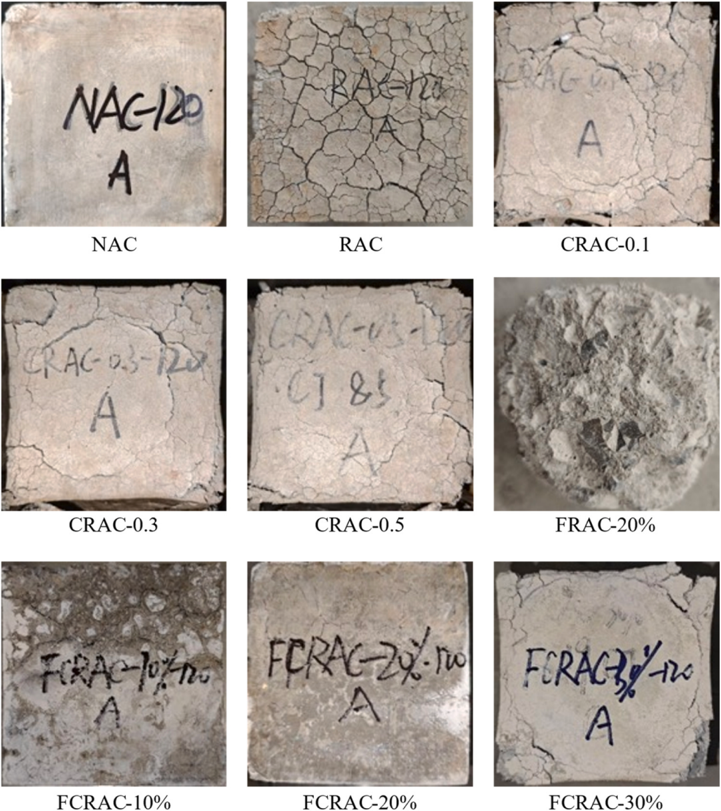
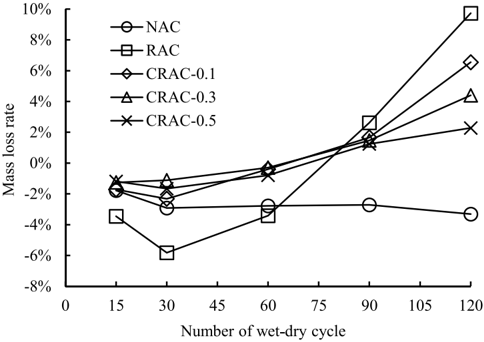
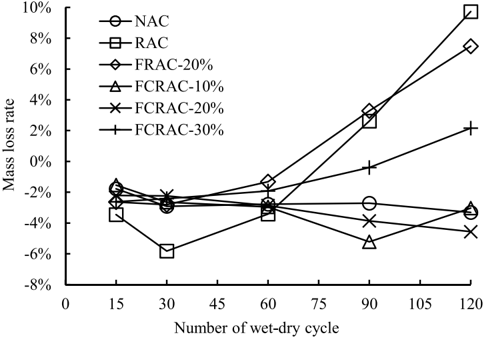
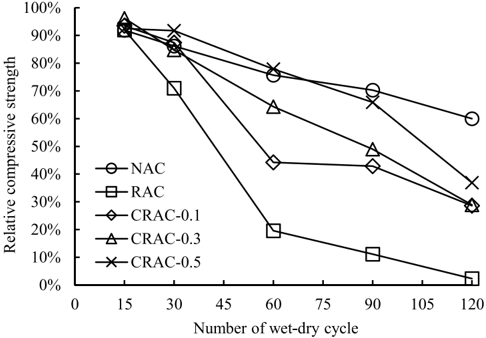
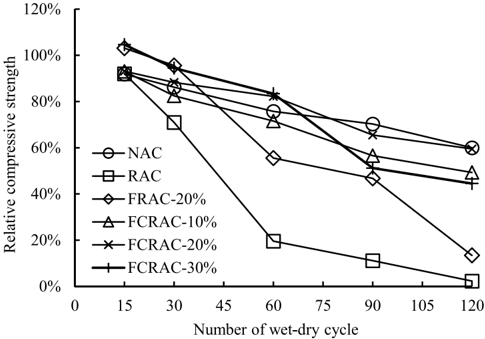
- After 120 sulfate wet-dry cycles, CRAC-0.5 showed a 76.6% lower mass loss rate and 1504% higher relative compressive strength than RAC; FRAC-20% showed 22% lower mass loss rate and 483% higher relative compressive strength than RAC.
- The combined FCRAC-20% group showed a 146.9% lower mass loss rate (from 9.73% to −4.56%) and 2487% higher relative compressive strength than RAC, with fewer harmful and highly harmful pores, similar to NAC.
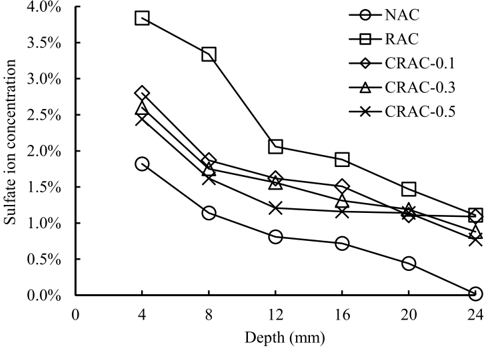
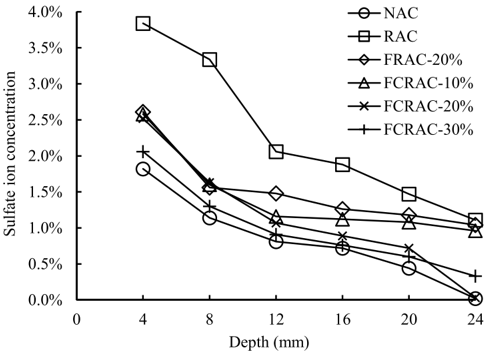
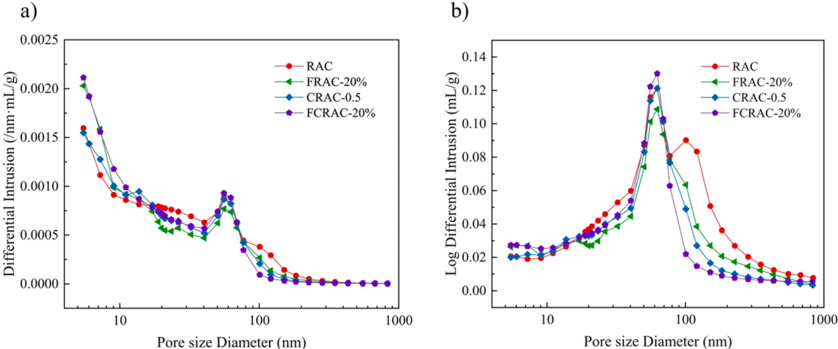
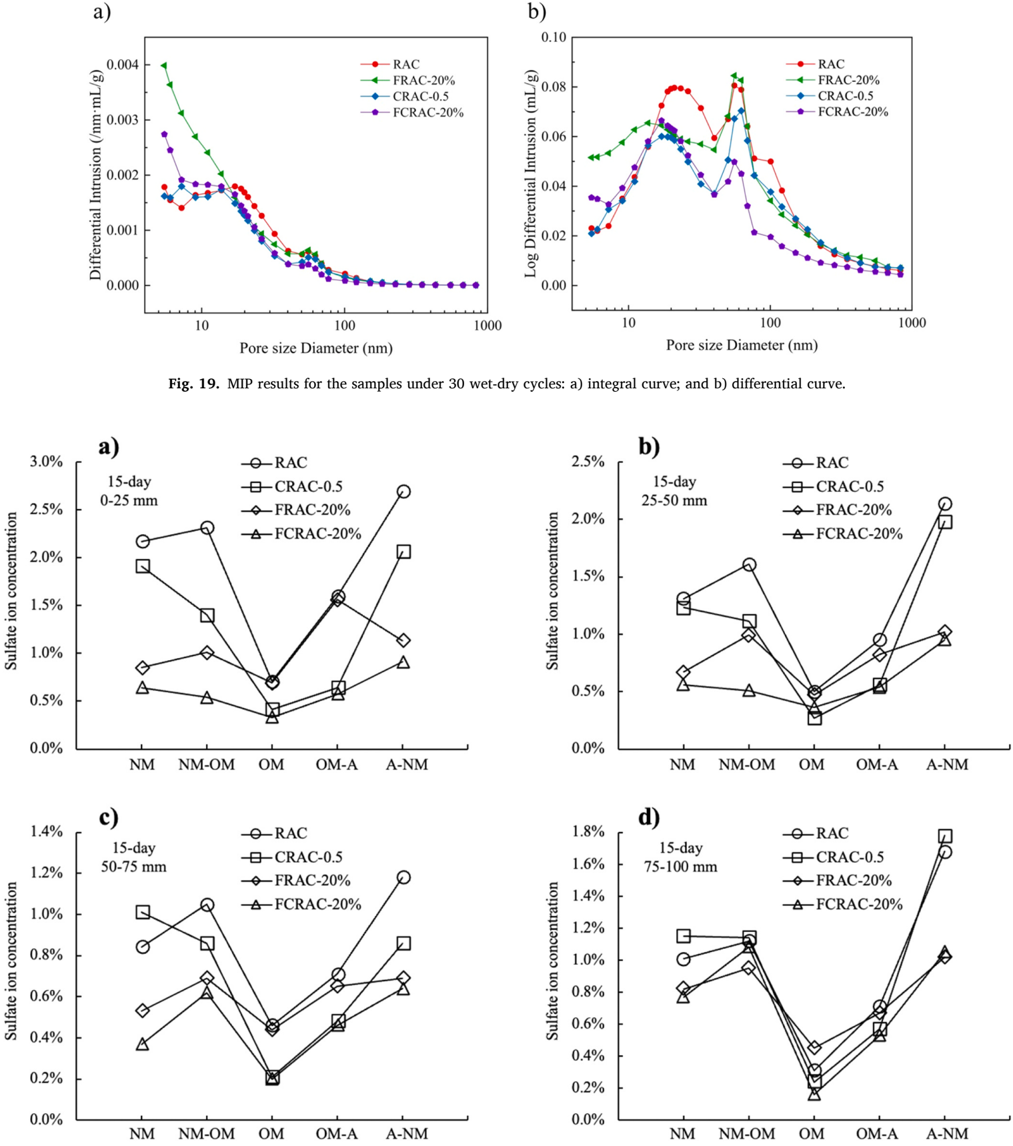
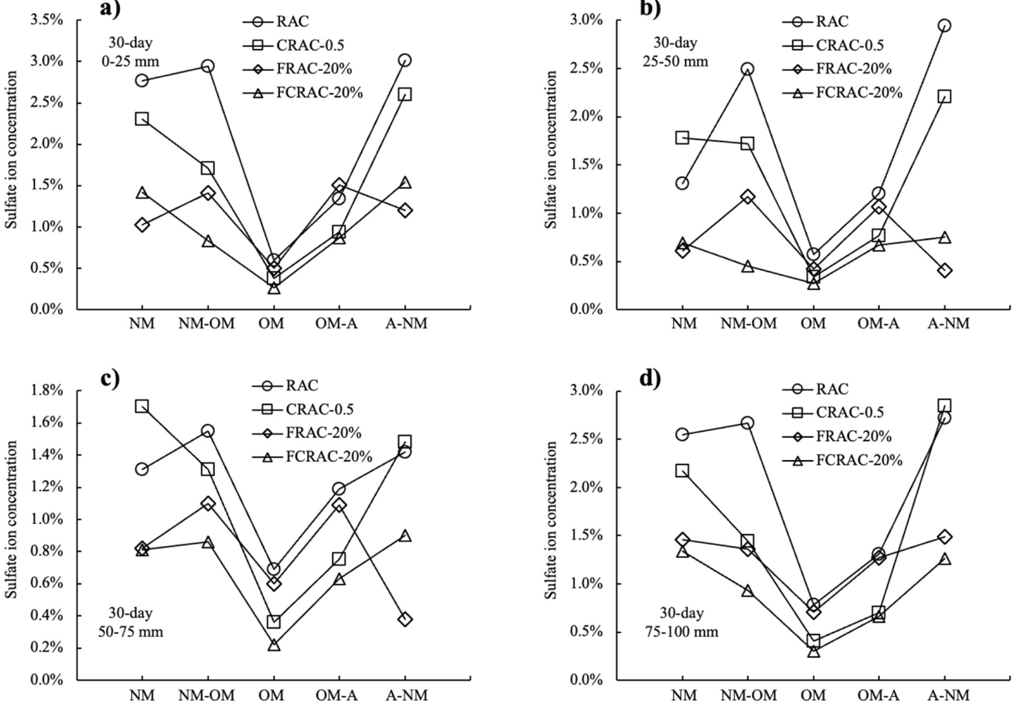
- Sulfate ion transport was reduced across all five pathways in FCRAC-20%; after 30 wet-dry cycles at 24 mm depth, sulfate ion concentration decreased by 97.3% compared with RAC. Carbonation mainly improved old-mortar-containing pathways, while fly ash mainly improved new-mortar-containing pathways.
Methods
- Nine concrete groups (297 samples) were tested with recycled aggregate substitution of 0% or 100%, carbonation pressures of 0.1, 0.3, and 0.5 MPa, and fly ash contents of 10%, 20%, and 30%.
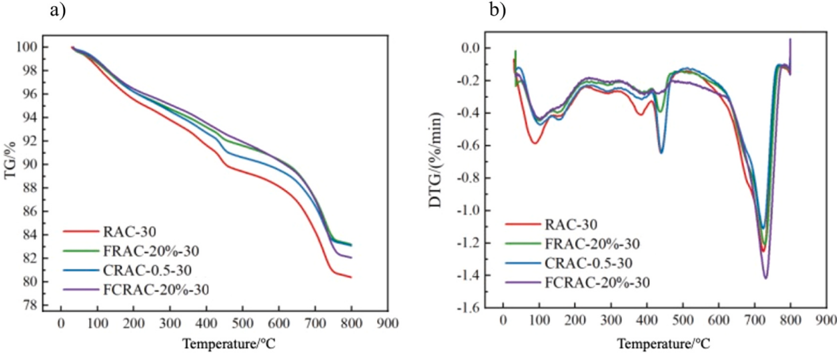
- Sulfate resistance was assessed by a sulfate wet-dry cycle test using 5% Na₂SO₄ solution for up to 120 cycles, measuring mass loss rate, relative compressive strength, sulfate ion concentration by barium sulfate weight method, TGA, and MIP.
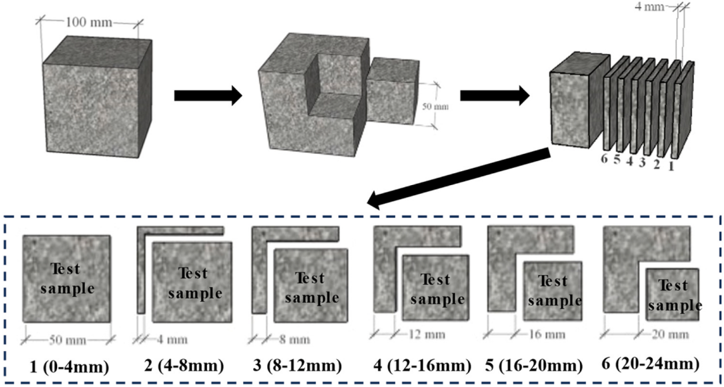
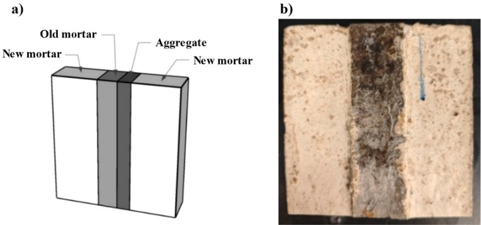
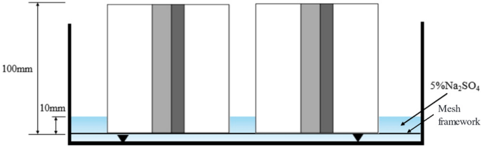
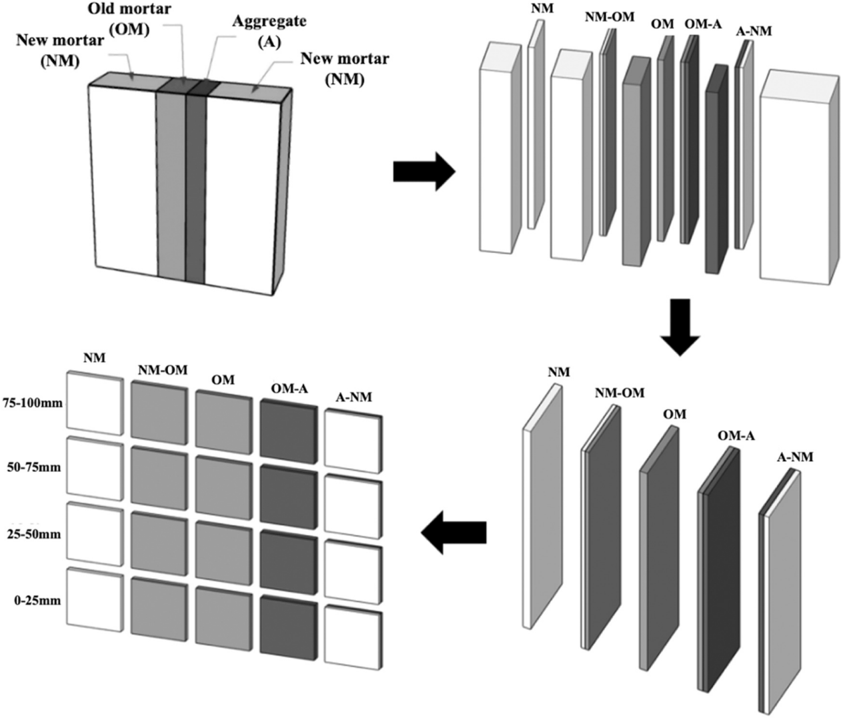
- A novel sulfate ion transport experiment adapted from capillary water absorption used 5% Na₂SO₄ solution and specimens containing new mortar, old mortar, and ITZs (NM-OM, OM-A, A-NM), tested after 15 and 30 days.
Limitations
- Stated: in the sulfate ion transport test, the limited specimen height caused sulfate ions to accumulate near the top; the authors recommend taller specimens with vapor sealing in future studies.
- Stated: sulfate ion concentration in the wet-dry cycle test focused on samples after 30 cycles because significant expansion and cracking after 60 cycles hindered slicing.
- Evident from the text: the study used one recycled aggregate source (laboratory C30 concrete), one carbonation duration (24 h), one sulfate solution concentration (5% Na₂SO₄), and no long-term field validation; raw compressive strength data are in supplementary materials.
Model-written summary. Check it against the paper before relying on it.
Integrity signals
Registry
Cites
Statistics
Figures


Verification
Claims the paper makes
0 Valid · 2 Not valid · 25 Not checked · 107 Own results and interpretations
A result the paper reports from its own data — it cites no other source for it, so there is none to check. The quote shows it is in the paper.
In the paper
“The results indicate that although longer carbonation times and higher pressures continuously enhanced the carbonation degree, the rate of improvement significantly decreased when the carbonation time exceeded 24 h or the pressure exceeded 0.5 MPa.”
§ Synergistic enhancement of sulfate resistance in recycled aggregate concrete through multi-pathway blocking via carbonation treatment and fly ash incorporation > 2. Materials and experiment design
hedgedstates a cause- Asserted: passes — The authors put it forward as true.
- Checkable: passes — It can be checked against evidence.
- Load-bearing: passes — The paper’s conclusions depend on it.
- Based: passes — The paper gives a reason why it holds.
A result the paper reports from its own data — it cites no other source for it, so there is none to check. The quote shows it is in the paper.
In the paper
“Compared to natural aggregate, recycled aggregate exhibited slightly lower density, significantly higher water absorption, and a higher crushing index.”
§ Synergistic enhancement of sulfate resistance in recycled aggregate concrete through multi-pathway blocking via carbonation treatment and fly ash incorporation > 4.1. Aggregate properties
plainstates an association- Asserted: passes — The authors put it forward as true.
- Checkable: passes — It can be checked against evidence.
- Load-bearing: unclear — It is unclear whether the paper’s conclusions depend on it.
- Based: passes — The paper gives a reason why it holds.
A result the paper reports from its own data — it cites no other source for it, so there is none to check. The quote shows it is in the paper.
In the paper
“Compared to RAC, the mass loss rate of FCRAC-20 % after 120 wet-dry cycles decreased from 9.73 % to -4.56 %, by 146.9 %.”
§ Synergistic enhancement of sulfate resistance in recycled aggregate concrete through multi-pathway blocking via carbonation treatment and fly ash incorporation > 4.3. Sulfate wet-dry cycle test 4.3.1. Mass loss rate
plainstates a cause- Asserted: passes — The authors put it forward as true.
- Checkable: passes — It can be checked against evidence.
- Load-bearing: passes — The paper’s conclusions depend on it.
- Based: passes — The paper gives a reason why it holds.
- Rests on an assumption not shown here.
A result the paper reports from its own data — it cites no other source for it, so there is none to check. The quote shows it is in the paper.
In the paper
“It is evident that NAC exhibited the highest compressive strength.”
§ Synergistic enhancement of sulfate resistance in recycled aggregate concrete through multi-pathway blocking via carbonation treatment and fly ash incorporation > 4.2. Compressive strength
plain- Asserted: passes — The authors put it forward as true.
- Checkable: passes — It can be checked against evidence.
- Load-bearing: unclear — It is unclear whether the paper’s conclusions depend on it.
- Based: passes — The paper gives a reason why it holds.
67 more claims
Create a free account to see all 134 claims and to verify the 41 references still open.
- Probably not a substantial claim. 6
- It may state two separate claims as one. 57
Self-check
Percentages, sums and reported differences re-computed from the paper’s own numbers.
Each contradiction between two passages listed here was confirmed by an independent check.
Rated minor: it would not touch a result — a value no result rests on, a p-value that stays on the same side of the significance level, or a conflict that is clerical, resolved elsewhere in the paper, or outside its own findings.
In the paper
§ Synergistic enhancement of sulfate resistance in recycled aggregate concrete through multi-pathway blocking via carbonation treatment and fly ash incorporation > 6. Conclusion
“The carbonation of recycled aggregates contributed to the improvement of the compressive strength of recycled aggregate concrete, with higher carbonation pressure yielding better enhancement effects.”
§ Synergistic enhancement of sulfate resistance in recycled aggregate concrete through multi-pathway blocking via carbonation treatment and fly ash incorporation > 6. Conclusion
“| CRAC-0.3 | 34.85 | 0.43 | 44.7 | 1.86 | | CRAC-0.5 | 31.88 | 0.57 | 47.5 | 1.3 |”
Rated minor: it would not touch a result — a value no result rests on, a p-value that stays on the same side of the significance level, or a conflict that is clerical, resolved elsewhere in the paper, or outside its own findings.
In the paper
§ Synergistic enhancement of sulfate resistance in recycled aggregate concrete through multi-pathway blocking via carbonation treatment and fly ash incorporation > 4.3. Sulfate wet-dry cycle test 4.3.1. Mass loss rate
“Initially, all samples experienced an increase in mass during the first 15-30 cycles, followed by a gradual decrease in mass as the number of wet-dry cycles increased.”
§ Synergistic enhancement of sulfate resistance in recycled aggregate concrete through multi-pathway blocking via carbonation treatment and fly ash incorporation > 6. Conclusion
“| FCRAC-20 % | -2.21 % | -2.24 % | -2.86 % | -3.86 % | -4.56 % |”
Rated minor: it would not touch a result — a value no result rests on, a p-value that stays on the same side of the significance level, or a conflict that is clerical, resolved elsewhere in the paper, or outside its own findings.
In the paper
§ Synergistic enhancement of sulfate resistance in recycled aggregate concrete through multi-pathway blocking via carbonation treatment and fly ash incorporation > 4.3.2. Relative compressive strength
“Notably, the NAC exhibited the lowest relative compressive strength, while the RAC demonstrated the highest relative strength loss.”
§ Synergistic enhancement of sulfate resistance in recycled aggregate concrete through multi-pathway blocking via carbonation treatment and fly ash incorporation > 4.3.2. Relative compressive strength
“A lower value indicates a higher strength loss.”
Citations
Cites
Effect of ground fly ash and ground bagasse ash on the durability of recycled aggregate concrete
Somna, R., Jaturapitakkul, C., & Amde, A. M. (2012) · Cement and Concrete Composites · doi:10.1016/j.cemconcomp.2012.03.003 · Cited by 167
Li, Y., Wang, R., Li, S., Zhao, Y., & Qin, Y. (2018) · Construction and Building Materials · doi:10.1016/j.conbuildmat.2018.01.084 · Cited by 142
Wu, K., Luo, S., Zheng, J., Yan, J., & Xiao, J. (2022) · Cement and Concrete Composites · doi:10.1016/j.cemconcomp.2021.104402 · Cited by 138
Kazmi, S. M. S., Munir, M. J., Wu, Y.-F., Patnaikuni, I., Zhou, Y., & Xing, F. (2020) · Cold Regions Science and Technology · doi:10.1016/j.coldregions.2020.103126 · Cited by 133
Gao, Y., Jiang, Y., Tao, Y., Shen, P., & Poon, C. S. (2024) · Cement and Concrete Research · doi:10.1016/j.cemconres.2024.107486 · Cited by 125
Mechanism and Performance Control Methods of Sulfate Attack on Concrete: A Review
Zhang, C., Li, J., Yu, M., Lu, Y., & Liu, S. (2024) · Materials · doi:10.3390/ma17194836 · Cited by 124
Self-citationWang, L., Yi, S., Yu, Y., Gao, C., & Samali, B. (2024) · Mechanical Systems and Signal Processing · doi:10.1016/j.ymssp.2024.111719 · Cited by 122
Self-citationKhankhaje, E., Kim, T., Jang, H., Kim, C.-S., Kim, J., & Rafieizonooz, M. (2024) · Heliyon · doi:10.1016/j.heliyon.2024.e26188 · Cited by 100
Fang, X., Zhan, B., & Poon, C. S. (2021) · Construction and Building Materials · doi:10.1016/j.conbuildmat.2020.122202 · Cited by 92
Effect of dry–wet ratio on sulfate transport-reaction mechanism in concrete
Wang, K., Guo, J., & Yang, L. (2021) · Construction and Building Materials · doi:10.1016/j.conbuildmat.2021.124418 · Cited by 84
Ground penetrating radar-based automated defect identification of bridge decks: a hybrid approach
Yu, Y., Rashidi, M., Dorafshan, S., Samali, B., Farsangi, E. N., Yi, S., & Ding, Z. (2025) · Journal of Civil Structural Health Monitoring · doi:10.1007/s13349-024-00895-6 · Cited by 81
Self-citationMa, W., Hao, J. L., Zhang, C., Sarno, L. D., & Mannis, A. (2022) · Environmental Science and Pollution Research · doi:10.1007/s11356-021-18188-6 · Cited by 74
Liang, C., Bao, J., Gu, F., Lu, J., Ma, Z., Hou, S., & Duan, Z. (2025) · Cement and Concrete Composites · doi:10.1016/j.cemconcomp.2025.106118 · Cited by 64
Water transport mechanisms in concretes bearing mixed recycled aggregates
Cantero, B., del Bosque, I. F. S., Matías, A., de Rojas, M. I. S., & Medina, C. (2019) · Cement and Concrete Composites · doi:10.1016/j.cemconcomp.2019.103486 · Cited by 62
Environmental feasibility of recycling construction and demolition waste
Atta, I., & Bakhoum, E. S. (2023) · International Journal of Environmental Science and Technology · doi:10.1007/s13762-023-05036-y · Cited by 58
Zhang, H., Ji, T., Liu, H., & Su, S. (2021) · Construction and Building Materials · doi:10.1016/j.conbuildmat.2021.123535 · Cited by 57
Şimşek, O., Pourghadri Sefidehkhan, H., & Gökçe, H. S. (2022) · Construction and Building Materials · doi:10.1016/j.conbuildmat.2022.129431 · Cited by 51
Ghafoori, N., Najimi, M., Diawara, H., & Islam, M. S. (2015) · Construction and Building Materials · doi:10.1016/j.conbuildmat.2015.01.004 · Cited by 49
Quantifying and spatializing building material stock and renovation flow for circular economy
Mohammadiziazi, R., & Bilec, M. M. (2023) · Journal of Cleaner Production · doi:10.1016/j.jclepro.2022.135765 · Cited by 43
Quantifying urban mass gain and loss by a GIS‐based material stocks and flows analysis
Liu, Y., Li, J., Chen, W., Song, L., & Dai, S. (2022) · Journal of Industrial Ecology · doi:10.1111/jiec.13252 · Cited by 42
Self-citationEffect of Dry–Wet Cycle Periods on Properties of Concrete under Sulfate Attack
Guo, J.-J., Liu, P.-Q., Wu, C.-L., & Wang, K. (2021) · Applied Sciences · doi:10.3390/app11020888 · Cited by 36
Oikonomopoulou, K., Ioannou, S., Savva, P., Spanou, M., Nicolaides, D., & Petrou, M. F. (2022) · Materials · doi:10.3390/ma15082871 · Cited by 32
Duan, Y., Wang, Q., Long, Z., & Wang, X. (2023) · Materials · doi:10.3390/ma16041326 · Cited by 32
Barragán-Ramos, A., Ríos-Fresneda, C., Lizarazo-Marriaga, J., & Hernández-Romero, N. (2022) · Construction and Building Materials · doi:10.1016/j.conbuildmat.2022.128759 · Cited by 27
Bilgili, L., & Çetinkaya, A. Y. (2023) · Environment Systems & Decisions · doi:10.1007/s10669-023-09947-6 · Cited by 24
Zhang, Y., Tang, Z., Liu, X., Zhou, X., He, W., & Zhou, X. (2024) · Materials · doi:10.3390/ma17143388 · Cited by 20
Ding, Y., Wu, J., Zhang, X., Xu, P., Ning, W., & Li, Y. (2023) · Journal of Wuhan University of Technology-Mater. Sci. Ed. · doi:10.1007/s11595-023-2738-9 · Cited by 19
Damage-based ion transport in recycled aggregate concrete under external sulfate attack
Jin, L., Wang, Z., Wu, T., Xie, Z., & Xue, P. (2024) · Construction and Building Materials · doi:10.1016/j.conbuildmat.2024.137944 · Cited by 18
Leichter, M. Z., Dodoo, A., & Piccardo, C. (2024) · Clean Technologies and Environmental Policy · doi:10.1007/s10098-024-03054-z · Cited by 17
Yu, Z., Gao, G., Bao, J., Zhang, P., Song, Q., Sun, J., Qin, L., & Cui, Y. (2024) · The Science of The Total Environment · doi:10.1016/j.scitotenv.2024.173724 · Cited by 17
Sun, D., Shen, S., Huang, W., Liu, K., Wang, A., & Chen, J. (2022) · Materials Express · doi:10.1166/mex.2022.2311 · Cited by 15
Self-citationEffect of carbonation duration on properties of recycled aggregate concrete
Li, L., Ziyabek, N., Jiang, Y., Xiao, J., & Poon, C. S. (2023) · Case Studies in Construction Materials · doi:10.1016/j.cscm.2023.e02640 · Cited by 13
Current Knowledge and Pending Research on Sulfate Resistance of Recycled Aggregate Concrete
Santillán, L. R., Zega, C. J., & Irassar, E. F. (2024) · Sustainability · doi:10.3390/su16031310 · Cited by 9
Bonifazi, G., Capobianco, G., Serranti, S., & Trotta, O. (2023) · Photonic Instrumentation Engineering · doi:10.1117/12.2648405 · Cited by 9
Application of Environmentally Friendly Building Materials in Urban Construction
Wang, X. (2025) · Applied and Computational Engineering · doi:10.54254/2755-2721/2025.20030 · Cited by 8
Karanafti, A., Tsikaloudaki, K., & Theodosiou, T. G. (2022) · IOP Conference Series Earth and Environmental Science · doi:10.1088/1755-1315/1123/1/012024 · Cited by 7
Evaluating the Possibility of Replacing Natural Fine Aggregates in Concrete with Recycled Aggregates
Nguyen, D., Nguyen, D. T. A., Cao, T., & Phan, V.-T. (2021) · Engineering Technology & Applied Science Research · doi:10.48084/etasr.4449 · Cited by 7
Yun, H.-D., Park, W.-S., Jang, Y., & Kim, S.-W. (2024) · Magazine of Concrete Research · doi:10.1680/jmacr.24.00002 · Cited by 6
Mechanical and Durability Properties of Recycled Aggregate Concretes Containing Fly Ash
Mei, Y. J., Wu, J. H., & Zheng, J. H. (2011) · Applied Mechanics and Materials · doi:10.4028/www.scientific.net/amm.99-100.654 · Cited by 5
Review on Properties of Recycled Construction Waste Concrete Aggregate
Cao, X. (2022) · Academic Journal of Environment & Earth Science · doi:10.25236/ajee.2022.040404 · Cited by 4
Investigations on Strength and Durability Properties of Recycle Aggregate and Fly Ash in Concrete
Reddy, L. S., Srikrishna, T. C., & Praveen, G. V. (2023) · IOP Conference Series: Earth and Environmental Science · doi:10.1088/1755-1315/1280/1/012004 · Cited by 3
PRODUCTION OF RECYCLED AGGREGATE FOR STRUCTURAL CONCRETE
Reddy, T. C. V. (2024) · INTERANTIONAL JOURNAL OF SCIENTIFIC RESEARCH IN ENGINEERING AND MANAGEMENT · doi:10.55041/ijsrem36168 · Cited by 3
A Study of Environmental Management of Construction and Demolition Waste
Sabareeshwaran, P., Tharanyaa, S., Mahalingam, B., & Kavitha, M. S. (2021) · Lecture notes in civil engineering · doi:10.1007/978-981-16-5041-3_18 · Cited by 3
Lei, B., Yu, L., Lu, D., Wang, M., Li, N., & Qu, F. (2025) · Journal of Building Engineering · doi:10.1016/j.jobe.2025.112221 · Cited by 2
Experimental Investigation on Partial Replacement of Cement with Fly Ash and Glass Powder
Devu, K., & Sreerath, S. (2020) · Lecture Notes in Civil Engineering · doi:10.1007/978-3-030-26365-2_7 · Cited by 2
Meshram, A., & Goyal, A. (2023) · International Journal of Science and Research (IJSR) · doi:10.21275/sr23921105259 · Cited by 2
Effect of incorporating hydrated lime on strength gain of high-volume fly ash lightweight concrete
Mohammed, M. E., Al-Shathr, B. S., & al-Attar, T. S. (2020) · IOP Conference Series: Materials Science and Engineering · doi:10.1088/1757-899x/737/1/012058 · Cited by 2
Gao, S., Qin, Z., Long, W., Guo, X., Ji, Y., Zhang, H., Xing, F., Wang, S., & Liu, A. (2024) · Case Studies in Construction Materials · doi:10.1016/j.cscm.2023.e02774 · Cited by 1
EXPLORING CRUSHED CONCRETE WASTE AS RECYCLED FINE AGGREGATE IN CONCRETE PRODUCTION
Muleya, F., Tembo, C. K., Kaunda, C., & Ngoma, G. (2022) · Proceedings of International Structural Engineering and Construction · doi:10.14455/isec.2022.9(2).mat-17 · Cited by 1
Swaroop, B. (2024) · INTERANTIONAL JOURNAL OF SCIENTIFIC RESEARCH IN ENGINEERING AND MANAGEMENT · doi:10.55041/ijsrem34187 · Cited by 1
Proportioning Study for Low-carbon Sulfate-resistant Concrete by Microbial Corrosion Testing
Wang, T., Taniguchi, O., Shibano, T., Araki, T., & Koh Yong Jun, B. (2024) · Journal of Asian Concrete Federation · doi:10.18702/acf.2023.10.1.7 · Cited by 1
Hamza, M. M., Kasem, O. H., & Gharbiya, A. Z. (2024) · Journal of Progress in Civil Engineering · doi:10.53469/jpce.2024.06(12).07 · Cited by 1
Research works printed but not linked: 1
- S.M.S. Kazmi, M.J. Munir, Y.-F. Wu, I. Patnaikuni, Y. Zhou, F. Xing, Effect of different aggregate treatment techniques on the freeze-thaw and sulfate resistance of recycled aggregate concrete, Cold Reg. Sci. Technol. 178 (2020). · DOI · Paper page
Cited by
Xu, Z., Li, S., & Xu, H. (2025) · Mechanics of Time-Dependent Materials · doi:10.1007/s11043-025-09844-2 · Cited by 7
“This can be attributed to the higher porosity of N-RAC, which absorbed more sulfate ions that reacted with the hydration products, causing the expansion of ettringite and the loss of the bonding ability of C-S-H gel (Wang et al. 2023a; Li et al. 2025).”
Microstructural and durability assessment of carbonated calcium silicate cement under sulfate attack
Bersisa, A., Kim, S., Kim, N., Seo, J., Moon, K.-Y., Kim, G. M., Cho, J.-S., & Park, S. (2025) · Journal of Building Engineering · doi:10.1016/j.jobe.2025.114269 · Cited by 6
Wang, C., Liu, J., Zhang, Y., & Ma, Z. (2025) · Construction and Building Materials · doi:10.1016/j.conbuildmat.2025.144219 · Cited by 6
Highly Effective Injection Composites with Fly Ash and Microsilica for Soil Stabilization
Özkılıç, Y. O., Beskopylny, A. N., Aksoylu, C., Stel’makh, S. A., Shcherban’, E. M., Madenci, E., Shakhalieva, D. M., Chernil'nik, A. A., & Kosykh, A. (2025) · Journal of Composites Science · doi:10.3390/jcs9120675 · Cited by 5
“[78] Concrete with 20% Reduced sulfate penetration and increased compressive strength.”
Hussein, R. A., Haq, M., Al-Dulaijan, S. U., Al-Osta, M. A., & Rahman, M. K. (2026) · Discover Concrete and Cement · doi:10.1007/s44416-026-00046-8 · Cited by 4
“[ 57 ] F r ee z e – t h a w r e s i s t a n c e -”
Metadata
- Authors
- Li, J., Chen, J., Bu, C., Zhang, M., Yu, J., Yu, X., Sun, Y., & Yu, Y.
- Affiliations
- Chongqing University of Science and Technology (CN)
- Corresponding author
- Sun, Yi
- Venue
- Construction and Building Materials
- Publisher
- Elsevier BV
- Published
- 2025-09
- Volume
- 491
- Pages
- 142685
- ISSN
- 0950-0618 (ISSN-L)
- OpenAlex
- W4412484859
- Cited by
- 34
- References
- 52
- Citations by year
- 2026: 26 · 2025: 8
- FWCI
- 9.60
- Type
- journal article
- Language
- en
- Open access
- hybrid
- doi.org
- Licence
- cc-by
- www.elsevier.com/tdm/userlicense/1.0/ (tdm)
- www.elsevier.com/legal/tdmrep-license (tdm)
- creativecommons.org/licenses/by/4.0/ (vor)
- Locations
- Construction and Building Materials (publishedVersion, cc-by)
- OPUS - Open Publications of UTS Scholars (University of Technology Sydney) (submittedVersion, cc-by)
- Funders
- Chongqing University of Science and Technology
- Chongqing Construction Science and Technology Plan Project
- Chongqing Municipal Education Commission (KJQN202401510)
- Topics
- Physical Sciences › Engineering › Building and Construction › Recycled Aggregate Concrete Performance
- Physical Sciences › Engineering › Civil and Structural Engineering › Concrete and Cement Materials Research
- Physical Sciences › Engineering › Civil and Structural Engineering › Concrete Corrosion and Durability
- Keywords
- recycled aggregate concrete, sulfate resistance, fly ash, construction waste, compressive strength, pore structure, durability
About these checks
Registry, retraction, Cites and statistics results are computed, not judged, with one exception: a printed reference that no index lists is read once by a model before it counts as a citation error. Claims are extracted by a model and kept only when their quote appears verbatim in the text; each cited source is then checked, with a model’s help, for whether it says what the claim relies on. Those verdicts can be wrong — read the claim’s quote and the cited source before relying on one.
A language model drew the claims from the paper on 2026-11-27, under version 3 of the claim definition (model deepseek-v4.1-flash, prompt extract-v3).
A second model labelled each claim on 2026-11-27 (model jev-1.13-20260917, definition revision gold-guideline-v0.2).
Statistics and arithmetic are recomputed, not judged.
Confidence bands are shown only for fields calibrated on our annotated test set. None is calibrated yet, so no band is shown.
What counts as a claim ›How we measure confidence ›How we check this ›
Are you an author, or do you see a problem with this page? Request a review
Data sources
Bibliographic data: Semantic Scholar, OpenAlex, Crossref.
Contains information from the Semantic Scholar Academic Graph Datasets, made available under the ODC Attribution License (ODC-BY 1.0).
Semantic Scholar’s data is described in: Kinney, R., et al. (2023). The Semantic Scholar Open Data Platform. arXiv:2301.10140.
