

Sulfate attack mechanism and service life prediction of concrete under drying-wetting cycles synergistically regulated by hybrid fibers and CaO-MgO-based expansive agent
Open accessThe DOI matches its Crossref record; 76 of the 76 references it cites were found in a registry or an index; none of the 121 sources its claims cite is checked for support yet.
Abstract
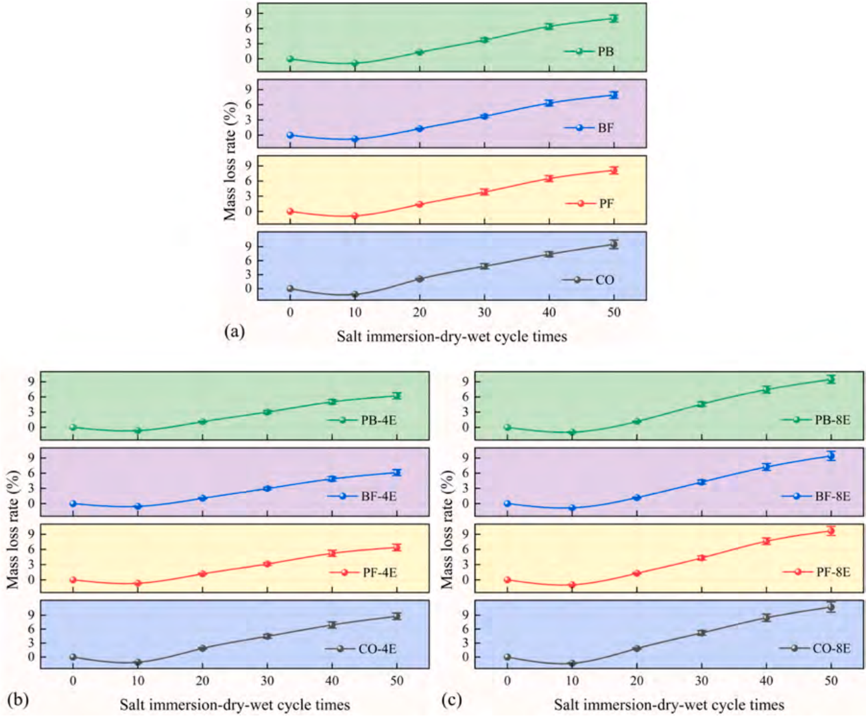
To address the durability degradation of concrete exposed to sulfate-rich dry-wet environments, this study investigated the synergistic effects of modified polyester fibers (PF), basalt fibers (BF), and their hybrid system (PB) combined with a calcium-magnesium composite expansive agent (CMEA). Damage evolution during exposure to a 15% Na 2 SO 4 solution was characterized in terms of, electrical response, phase assemblage, pore structure (PS), and microstructure. Layered damage and service-life prediction models were also developed. The mechanical performance (MP) and mass changes of the specimens exhibited three distinct stages: early enhancement, intermediate deterioration, and gradual late-stage degradation. The composite containing BF and 4% CMEA (BF-4E) exhibited the best overall durability, with a compressive strength retention ratio of 54.17% after 50 cycles. Although the composite containing PB and PB-4E provided a more balanced improvement in splitting tensile resistance and resistance to surface spalling. Its splitting tensile strength (STS) retention ratio was 72.60% after 40 cycles, while its mass loss (ML) rate was only 6.21% after50 cycles. Increasing the CMEA dosage to 8% intensified late-stage crack propagation due to excessive expansion and consequently reduced durability. The R 2 values of all developed models exceeded 0.96. At a critical damage depth of 30 mm, the model-predicted life of BF-4E under the adopted accelerated exposure conditions was 122 cycles, representing a 33.60% improvement over the reference mixture. These findings provide a basis for the mixture design and model-based durability assessment of fiber-CMEA reinforced concrete (FERC) exposed to sulfate environments.
Overview
CoChat Summary
TL;DR
This study examined hybrid polyester/basalt fibers and a CaO-MgO expansive agent (CMEA) in concrete under sulfate drying-wetting cycles, showing that 4% CMEA plus fibers best delays damage while 8% CMEA worsens it. A layered damage model was developed to compare sulfate resistance and estimate equivalent critical cycles.
Key findings
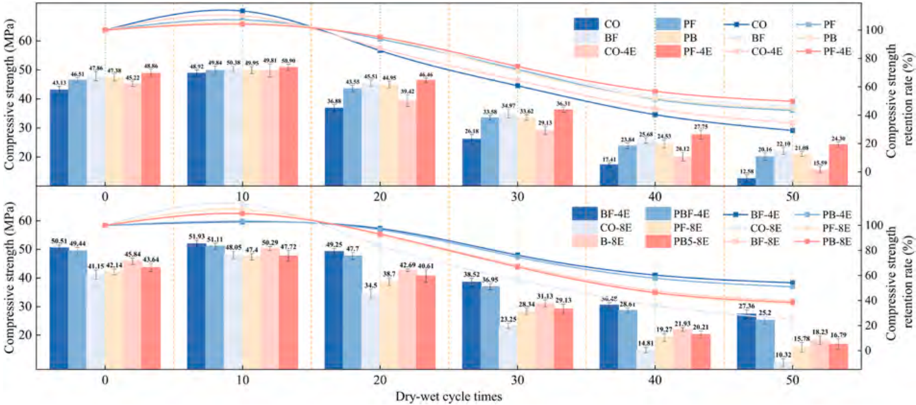
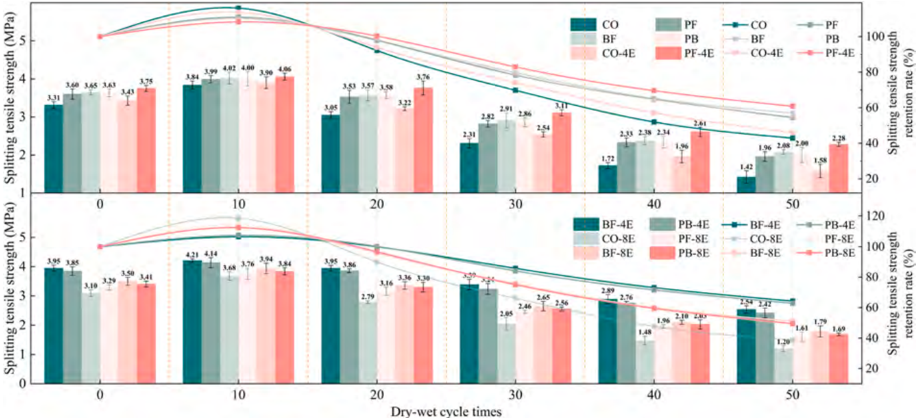
- After 50 drying-wetting cycles (DWCs), BF-4E had the best compressive performance: 27.36 MPa and 54.17% strength retention; PB-4E had 72.60% splitting tensile strength retention at 40 cycles and only 6.21% mass loss at 50 cycles, 34.77% lower than CO. CO-8E retained only 25.08% compressive strength, and PB-8E had 9.47% mass loss.
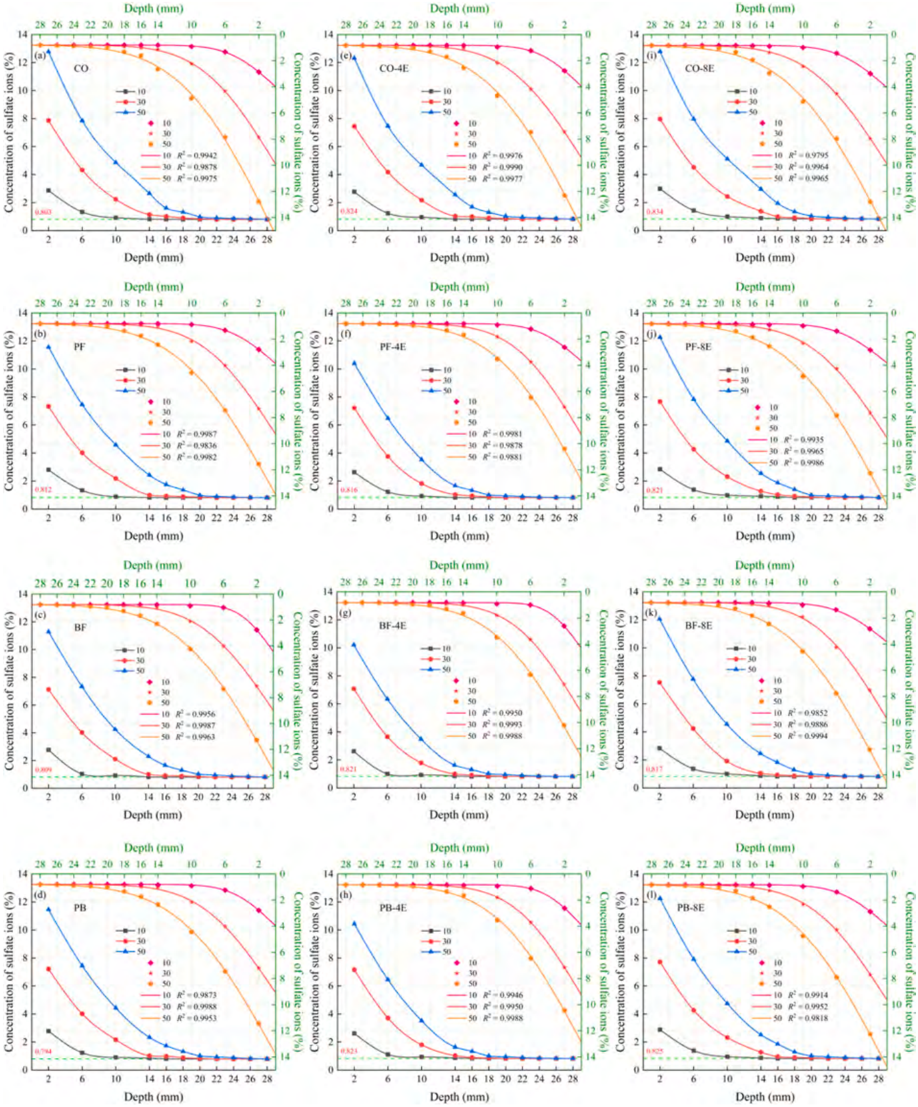
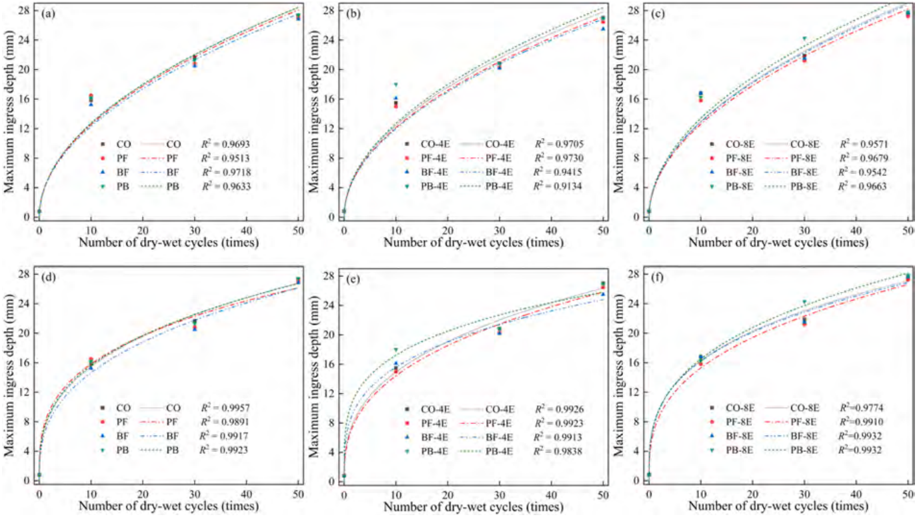
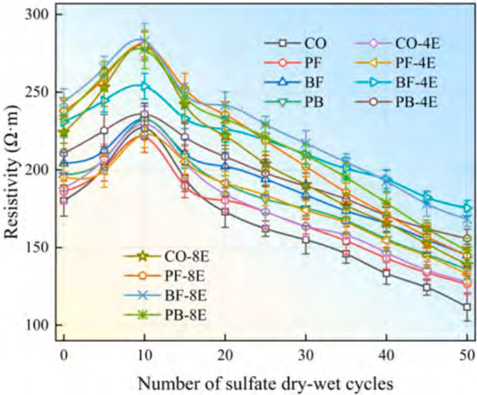
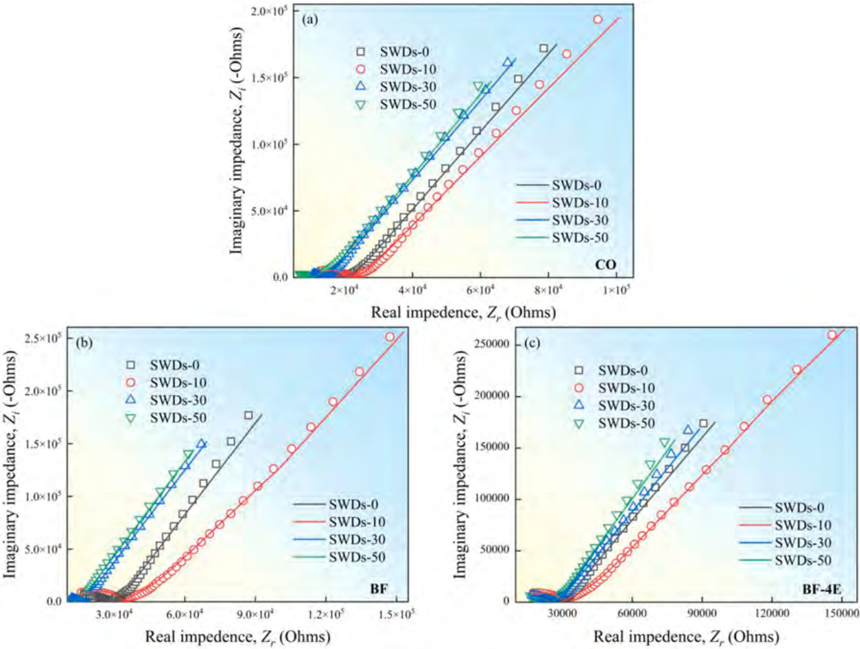
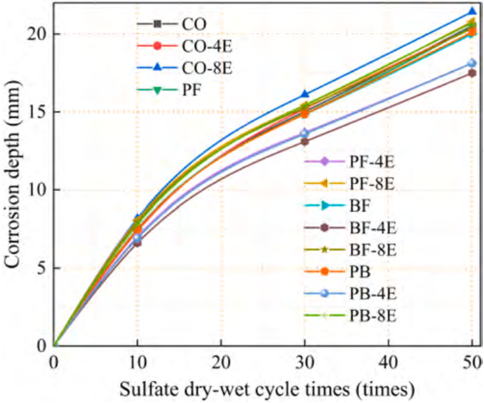
- Sulfate ingress was non-steady: after 50 cycles, CO penetration depth exceeded 26 mm and surface SO₄²⁻ mass fraction reached 12.77%; fiber-reinforced mixtures had surface SO₄²⁻ mass fractions about 10% lower than CO. The time-dependent power-law model fit with R² > 0.97. BF-4E retained ER of 175.39 Ω·m, R₁ of 9350 Ω, and R_ct of 23,898 Ω after 50 cycles.
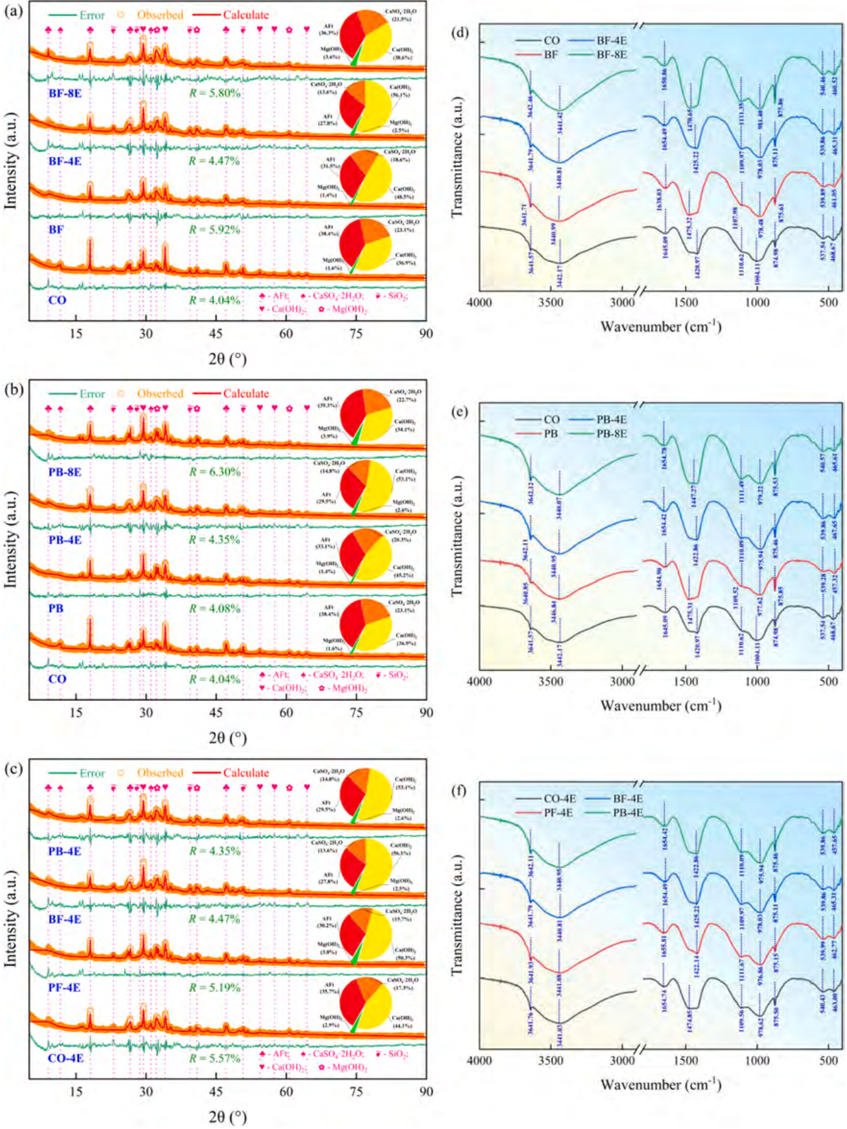
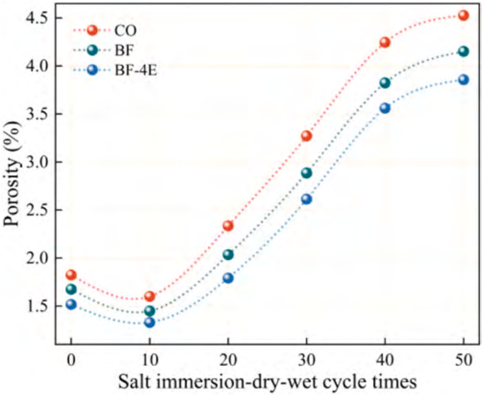
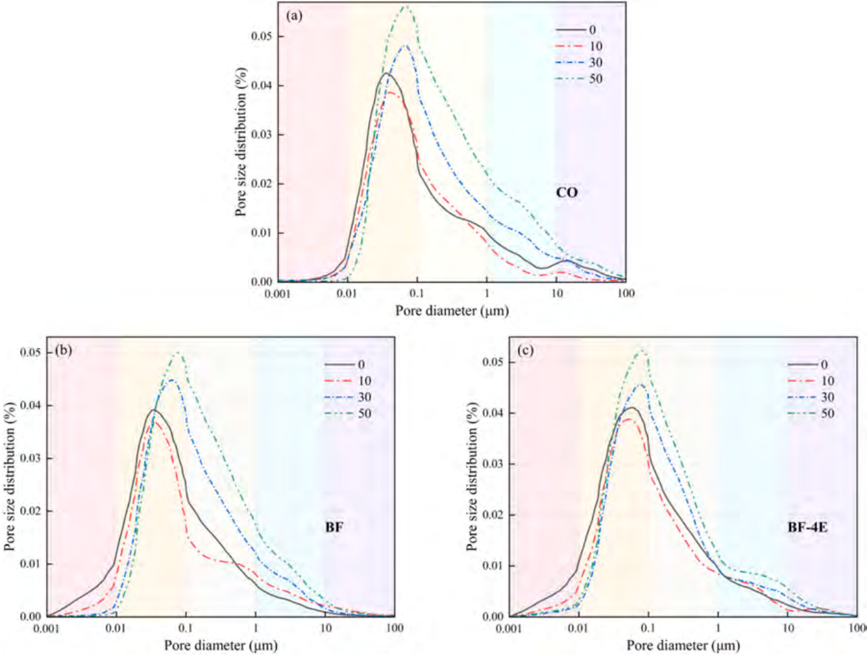
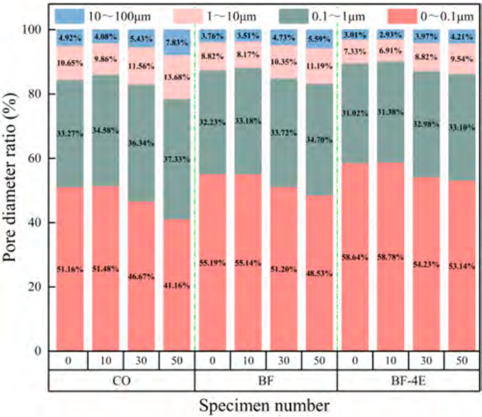
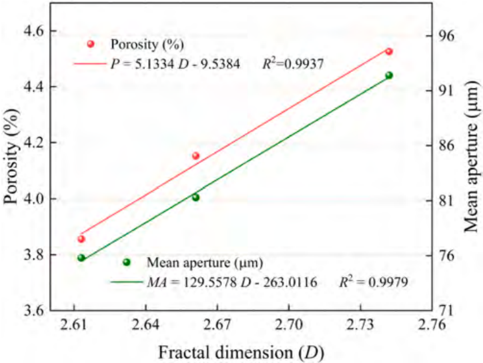
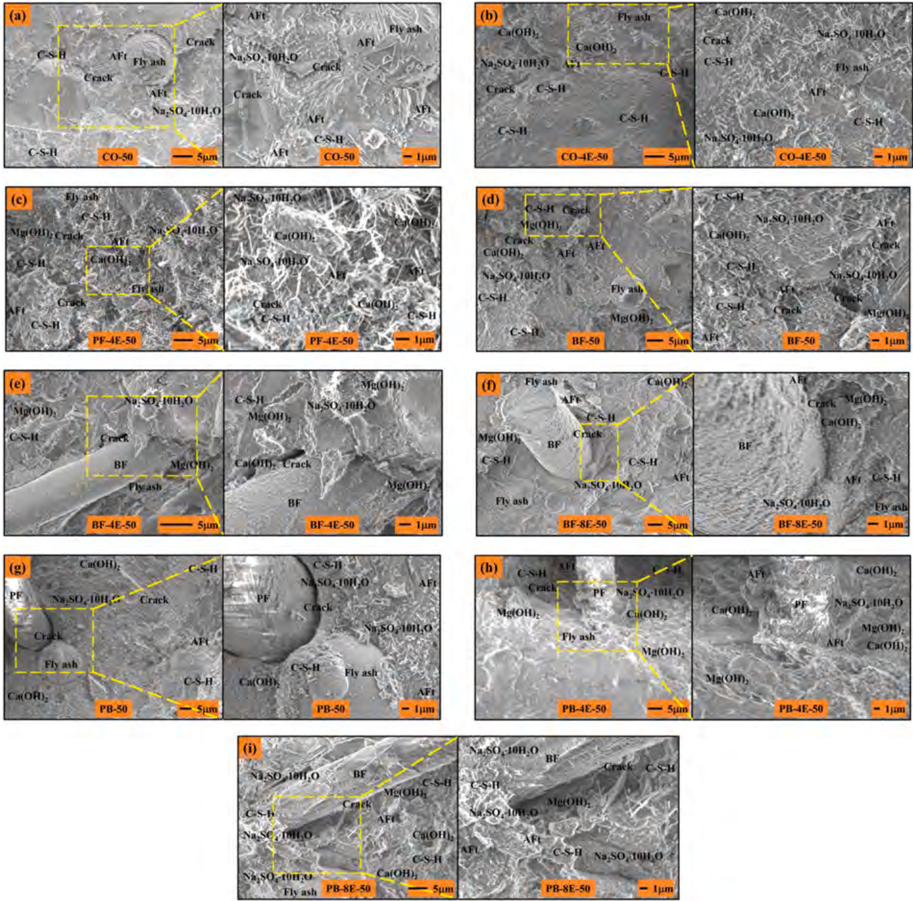
- Normalized semi-quantitative XRD showed 4% CMEA reduced combined AFt + gypsum from 50.1% to 41.4% in BF and from 53.4% to 44.3% in PB; 8% CMEA increased these to 57.8% (BF-8E) and 62.0% (PB-8E). BF-4E had total porosity 3.86%, 14.79% lower than CO, with 53.14% harmless pores, 4.21% seriously harmful pores, and fractal dimension 2.61.
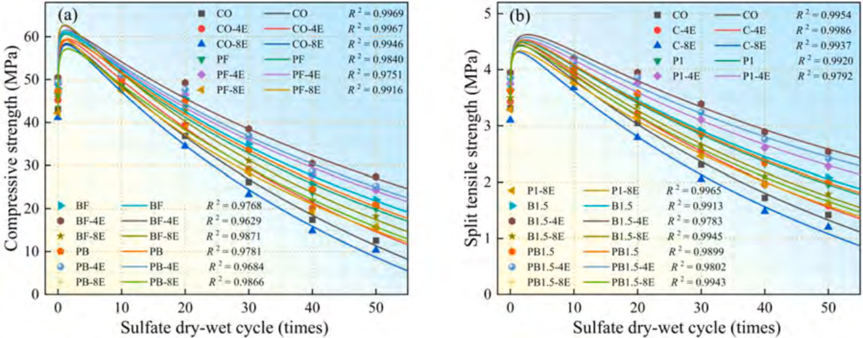
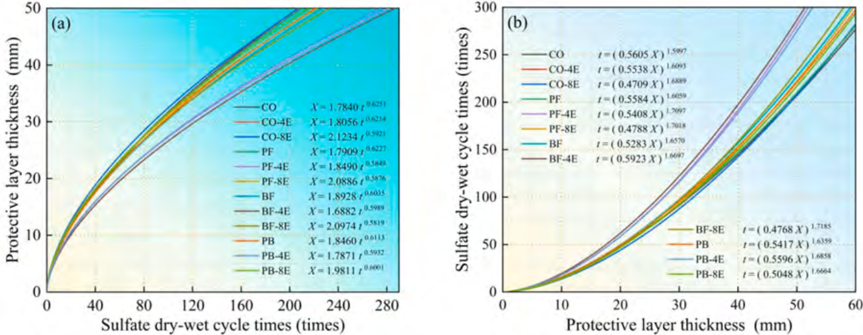
- The layered damage model reproduced compressive and splitting tensile strength evolution with R² > 0.96. Under the baseline condition, critical SO₄²⁻ mass fraction was 1.085%; at a prescribed damage depth of 30 mm, equivalent critical cycles were 91.38 for CO and 122.08 for BF-4E, a 33.60% increase.
Methods
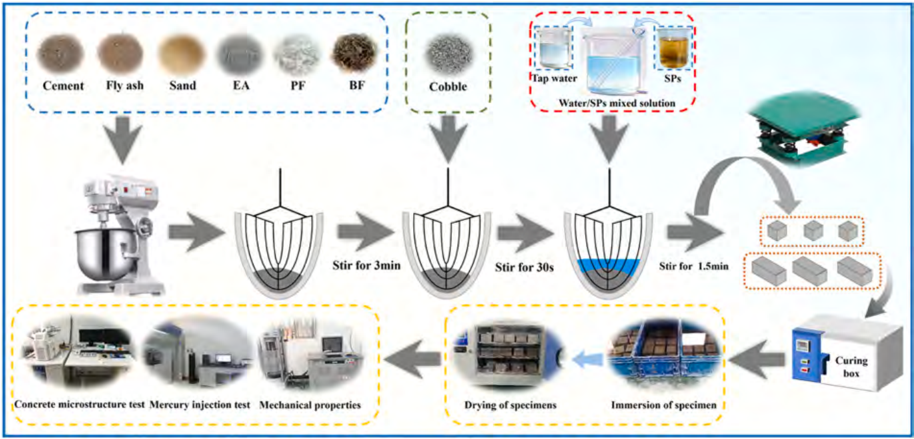
- C40 concrete with W/B 0.43, OPC and fly ash, CMEA at 0%, 4%, and 8%, and fibers: PF at 0.10%, BF at 0.15%, and hybrid PB at 0.15% total (0.075% PF + 0.075% BF). Specimens were 100 mm cubes, cured 26 d, predried at 60°C for 48 h, then exposed to 15% Na₂SO₄ solution for 50 DWCs of 24 h each (15 h immersion, 1 h air drying, 6 h oven drying at 60°C, 2 h cooling).
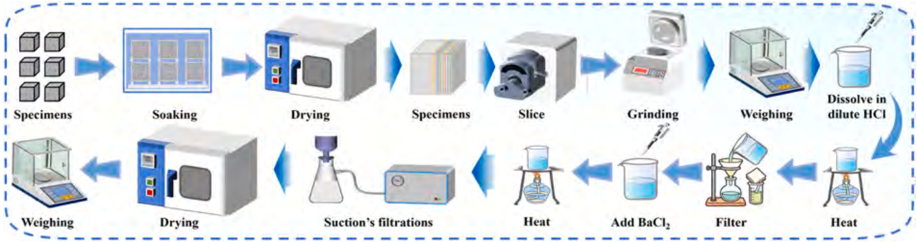
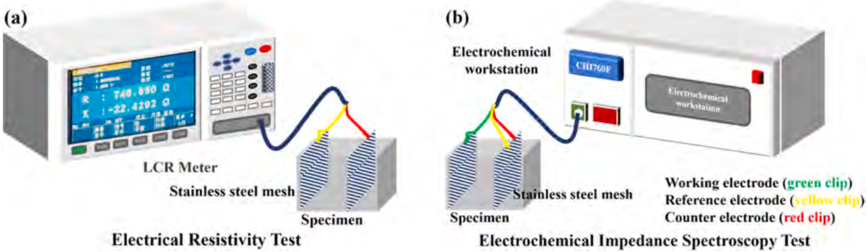
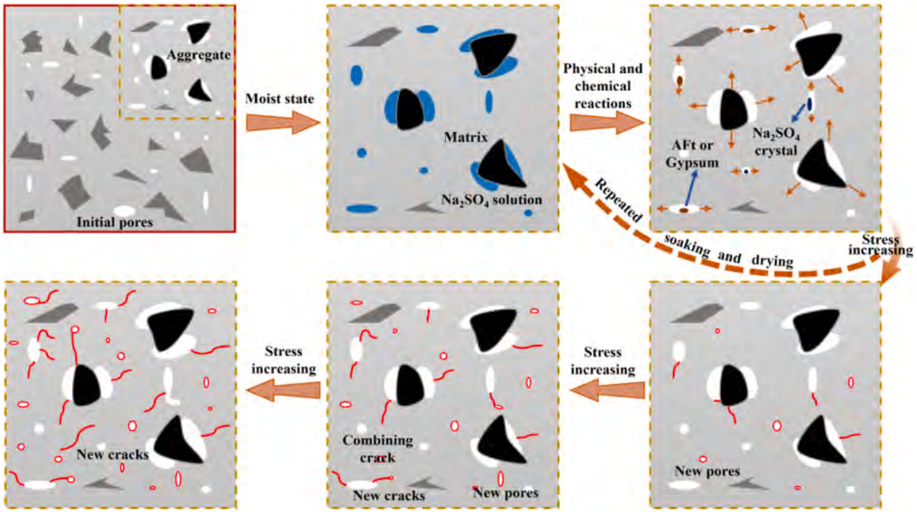
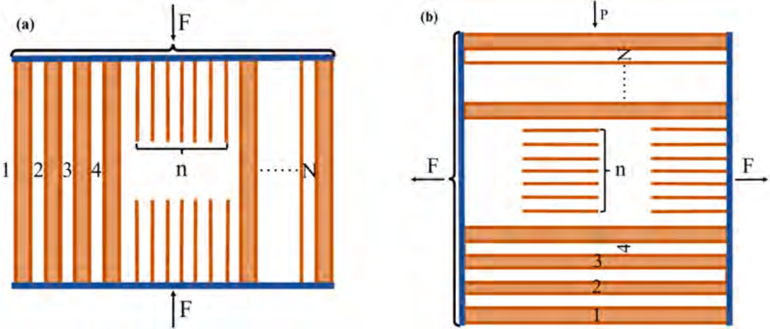
- Measured compressive and splitting tensile strength, SO₄²⁻ penetration depth by BaSO₄ gravimetric method, mass loss, electrical resistivity, EIS, XRD, FTIR, MIP, and SEM. Sulfate diffusion was fitted with Fick’s second law and a time-dependent power-law model; a layered damage mechanics model using nonsteady-state diffusion and a parallel-bar system estimated sulfate resistance life/equivalent critical cycles.
Limitations
- The paper states that conclusions are based on accelerated tests in 15% Na₂SO₄, 60°C drying, a 24 h cycling protocol, and 0–50 DWCs; XRD results are normalized semi-quantitative comparisons without an internal standard, not absolute phase contents, and cannot distinguish internal from external SO₄²⁻ sources. The layered model assumes one-dimensional non-steady diffusion and an equivalent relationship between physical crystallization strain and chemical expansion strain; equivalent critical cycle counts were extrapolated from limited-cycle data and not independently validated by long-term exposure tests, so they are conditional estimates rather than deterministic service lives.
- Evident from the text: the model was calibrated only over 0–50 cycles, and its predictive performance beyond that range requires independent validation. The baseline physical-to-chemical strain ratio (ε_p = 2ε_c) is a simplifying assumption for model closure, and the sensitivity coefficient λ changes absolute critical concentration and damage-layer thickness but not the relative ranking of mixtures.
Model-written summary. Check it against the paper before relying on it.
Integrity signals
Registry
Cites
Statistics
Figures

Verification
Claims the paper makes
0 Valid · 0 Not valid · 79 Not checked · 202 Own results and interpretations
A result the paper reports from its own data — it cites no other source for it, so there is none to check. The quote shows it is in the paper.
In the paper
“The PB group exhibits a significantly lower permeability coefficient compared to both mono-fiber systems and the reference group.”
§ Sulfate attack mechanism and service life prediction of concrete under drying-wetting cycles synergistically regulated by hybrid fibers and CaO > 3.2.3. Erosion kinetics models and applicability evaluation
plainstates an association- Asserted: passes — The authors put it forward as true.
- Checkable: passes — It can be checked against evidence.
- Load-bearing: passes — The paper’s conclusions depend on it.
- Based: passes — The paper gives a reason why it holds.
A result the paper reports from its own data — it cites no other source for it, so there is none to check. The quote shows it is in the paper.
In the paper
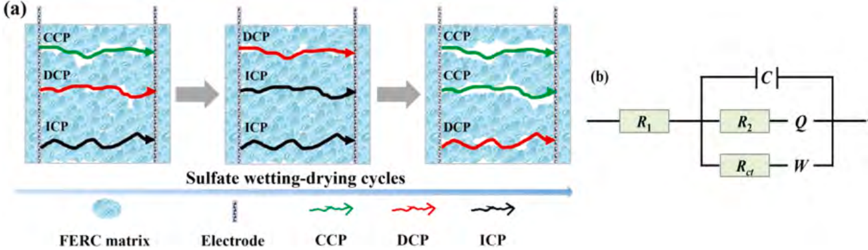
“The impedance spectra of all groups consist of a depressed capacitive arc in the high-frequency region and an inclined diffusion tail in the low-frequency region.”
§ Sulfate attack mechanism and service life prediction of concrete under drying-wetting cycles synergistically regulated by hybrid fibers and CaO > 3.4.2. Damage characterization based on impedance characteristics
plain- Asserted: passes — The authors put it forward as true.
- Checkable: passes — It can be checked against evidence.
- Load-bearing: unclear — It is unclear whether the paper’s conclusions depend on it.
- Based: passes — The paper gives a reason why it holds.
A result the paper states — it cites no source for it, so there is none to check. The quote shows it is in the paper.
In the paper
“With further exposure (10-40 DWs), a pronounced deterioration stage emerges.”
§ Sulfate attack mechanism and service life prediction of concrete under drying-wetting cycles synergistically regulated by hybrid fibers and CaO > 3.1.1. CS
plainstates a cause- Asserted: passes — The authors put it forward as true.
- Checkable: passes — It can be checked against evidence.
- Load-bearing: passes — The paper’s conclusions depend on it.
- Based: passes — The paper gives a reason why it holds.
A result the paper reports from its own data — it cites no other source for it, so there is none to check. The quote shows it is in the paper.
In the paper
“Specifically, by the 30th DW cycle, the CS of the CO group recedes to 26.18 MPa, representing a retention ratio of merely 60.70%.”
§ Sulfate attack mechanism and service life prediction of concrete under drying-wetting cycles synergistically regulated by hybrid fibers and CaO > 3.1.1. CS
plainstates a cause- Asserted: passes — The authors put it forward as true.
- Checkable: passes — It can be checked against evidence.
- Load-bearing: passes — The paper’s conclusions depend on it.
- Based: passes — The paper gives a reason why it holds.
None of the sources cited for this claim have been checked yet.
In the paper
“Further improvement is achieved when the CMEA is incorporated [15,49].”
§ Sulfate attack mechanism and service life prediction of concrete under drying-wetting cycles synergistically regulated by hybrid fibers and CaO > 3.1.1. CS
What the sources say
- Not checked yetcites [15] S. Lu, J. Liu, Z. Tian, Y. Lu, Z. Li, G. Liang, J. Zhang, Multiscale evaluation and mechanistic insight into the synergistic regulation of early-age volume stability in concrete by hybrid fibers and expansive agent, Constr. Build. Mater. 502 (2025) 144304, https://doi.org/10.1016/j.conbuildmat.2025.144304. source
- Not checked yetcites [49] L. Mo, M. Deng, M. Tang, A. Al-Tabbaa, MgO expansive cement and concrete in China: Past, present and future, Cem. Concr. Res. 57 (2014) 1-12, https://doi. org/10.1016/j.cemconres.2013.12.007. source
plainstates a cause- Asserted: passes — The authors put it forward as true.
- Checkable: passes — It can be checked against evidence.
- Load-bearing: passes — The paper’s conclusions depend on it.
- Based: passes — The paper gives a reason why it holds.
158 more claims
Create a free account to see all 281 claims and to verify the 120 references still open.
- It may state two separate claims as one. 106
- Probably not a substantial claim. 18
Self-check
Percentages, sums and reported differences re-computed from the paper’s own numbers.
Each contradiction between two passages listed here was confirmed by an independent check.
Rated minor: it would not touch a result — a value no result rests on, a p-value that stays on the same side of the significance level, or a conflict that is clerical, resolved elsewhere in the paper, or outside its own findings.
In the paper
§ Sulfate attack mechanism and service life prediction of concrete under drying-wetting cycles synergistically regulated by hybrid fibers and CaO > 5. Conclusions
“Its proportions of harmless and harmful pores were 53.14% and 4.21%, respectively”
§ Sulfate attack mechanism and service life prediction of concrete under drying-wetting cycles synergistically regulated by hybrid fibers and CaO > 3.6. Evolution of the PS and microstructure of FERC under sulfate DWs 3.6.1. Dynamic evolution of porosity and PS
“After 50 DWs, harmless pores still account for 53.14%, while seriously harmful pores are limited to 4.21%.”
Rated minor: it would not touch a result — a value no result rests on, a p-value that stays on the same side of the significance level, or a conflict that is clerical, resolved elsewhere in the paper, or outside its own findings.
In the paper
§ Sulfate attack mechanism and service life prediction of concrete under drying-wetting cycles synergistically regulated by hybrid fibers and CaO > 1. Introduction
“In contrast, basalt fibers (BF) have a higher E and TS.”
§ Sulfate attack mechanism and service life prediction of concrete under drying-wetting cycles synergistically regulated by hybrid fibers and CaO > 5. Conclusions
“| PF | 1861 | 96.3 | 12 | 26.6 | 28.22 | 265 | 1.31 | 13 | | BF | 1556 | 86 | 12 | 95.6 | 17 | 1050 | 2.65 | 3 |”
Citations
Cites
High-performance fiber-reinforced concrete: a review
Afroughsabet, V., Biolzi, L., & Ozbakkaloglu, T. (2016) · Journal of Materials Science · doi:10.1007/s10853-016-9917-4 · Cited by 579 · cited 1×
“Their effect on pore connectivity also depends on fiber dosage, dispersion, and fiber-matrix interfacial quality [18].”
MgO expansive cement and concrete in China: Past, present and future
Mo, L., Deng, M., Tang, M., & Al-Tabbaa, A. (2014) · Cement and Concrete Research · doi:10.1016/j.cemconres.2013.12.007 · Cited by 383 · cited 1×
“Further improvement is achieved when the CMEA is incorporated [15,49].”
Durability of concrete coupled with life cycle assessment: Review and perspective
Li, C., Li, J., Ren, Q., Zheng, Q., & Jiang, Z. (2023) · Cement and Concrete Composites · doi:10.1016/j.cemconcomp.2023.105041 · Cited by 197 · cited 1×
“When fibers are unevenly distributed or insufficiently bonded to the matrix, pores and interfacial defects around the fibers may provide additional pathways for aggressive-medium transport [20].”
A chemo-transport-damage model for concrete under external sulfate attack
Qin, S., Zou, D., Liu, T., & Jivkov, A. (2020) · Cement and Concrete Research · doi:10.1016/j.cemconres.2020.106048 · Cited by 191 · cited 5×
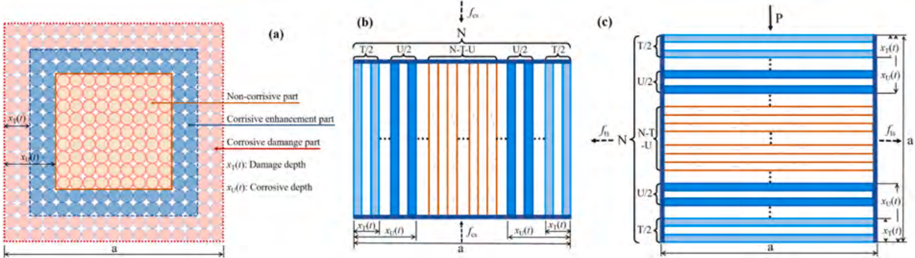
“Along the penetration direction, the material can be conceptually partitioned into three zones: a deteriorated layer, a densified layer, and an unaffected core [78,80], as illustrated in Fig.”
InfluentialChemo-mechanical modelling of the external sulfate attack in concrete
Cefis, N., & Comi, C. (2017) · Cement and Concrete Research · doi:10.1016/j.cemconres.2016.12.003 · Cited by 188
Influence of basalt-polypropylene fibres on fracture properties of high performance concrete
Smarzewski, P. (2019) · Composite Structures · doi:10.1016/j.compstruct.2018.10.070 · Cited by 149 · cited 1×
“The HF (PB) further enhances performance through rigid-flexible coupling, enabling coordinated control of microcrack initiation and macro-scale fracture resistance [48].”
Liu, L., Fang, Z., Huang, Z., & Wu, Y. (2022) · Composites Part B: Engineering · doi:10.1016/j.compositesb.2021.109503 · Cited by 124 · cited 1×
“CaO hydrates relatively rapidly to form Ca(OH) 2 , providing early-age volume compensation and partially filling the pore space [23].”
Mechanism and Performance Control Methods of Sulfate Attack on Concrete: A Review
Zhang, C., Li, J., Yu, M., Lu, Y., & Liu, S. (2024) · Materials · doi:10.3390/ma17194836 · Cited by 124 · cited 2×
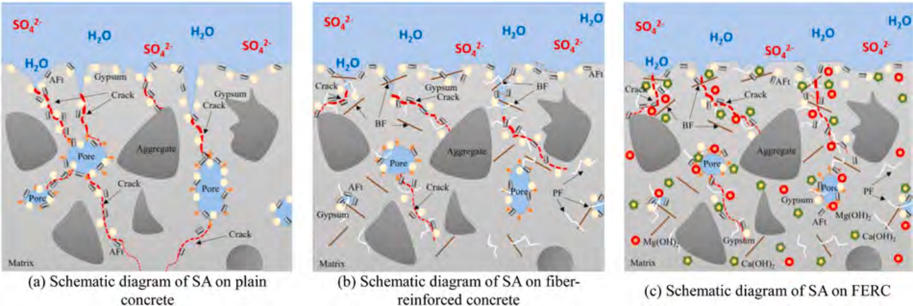
“Meanwhile, the substantial accumulation of corrosion products in localized regions results in a secondary filling effect [3,14,42], which partially delays further crack propagation.”
Self-citationChang, S., Gao, F., Wang, L., Jin, Q., Liu, S., & Wan, L. (2024) · Construction and Building Materials · doi:10.1016/j.conbuildmat.2024.134978 · Cited by 90 · cited 6×
“All specimens exhibited a composite absorption envelope within approximately 900 – 1200 cm (cid:0) 1 , arising from overlapping vibrations of sulfate and silicate structures [59].”
InfluentialEffect of dry–wet ratio on sulfate transport-reaction mechanism in concrete
Wang, K., Guo, J., & Yang, L. (2021) · Construction and Building Materials · doi:10.1016/j.conbuildmat.2021.124418 · Cited by 84
Research works printed but not linked: 7
- GB 50119-2013, Code for concrete admixture application, China Architecture & Building Press, Beijing, 2013.
- GB/T 50082-2009, Standard for test methods of long-term performance and durability of ordinary concrete, China Architecture & Building Press (CABP), Beijing, 2009.
- L. Gan, J. Wu, Z. Shen, X. Feng, Deterioration law of basalt fiber reinforced concrete under sulfate attack and dry-wet cycle, China Civil. Eng. J. 54 (11) (2021) 37-46, https://doi.org/10.15951/j.tmgcxb.2021.11.001. · doi:10.15951/j.tmgcxb.2021.11.001
- L. Gan, X. Feng, Z. Shen, G. Zheng, Strength evolution model of basalt fiber reinforced concrete under dry-wet cycles of sulfate solutions, J. Southeast Univ. (Nat. Sci. Ed.) 52 (4) (2022) 720-729, https://doi.org/10.3969/j.issn.1001-0505.2022.04.013. · doi:10.3969/j.issn.1001-0505.2022.04.013
- GB/T 50081-2019, Standard for test methods of concrete physical and mechanical properties, China Architecture & Building Press, Beijing, 2019.
- GB/T 50476-2019, Standard for design of concrete structure durability, China Architecture & Building Press, Beijing, 2019.
- GB/T 11899-1989 Water quality-Determination of sulfate-Gravimetric method, China Architecture & Building Press, Beijing, 1989.
Metadata
- Authors
- Lu, S., Liu, J., Fantilli, A. P., Sun, X., Gan, L., Lacidogna, G., Tang, J., Ma, Y., Wang, T., Lu, Y., & Tian, Z.
- Affiliations
- Hohai University (CN)
- Politecnico di Torino (IT)
- Corresponding author
- Lu, Yang
- Venue
- Case Studies in Construction Materials
- Publisher
- Elsevier BV
- Published
- 2026-12
- Volume
- 25
- Pages
- e06462
- ISSN
- 2214-5095 (ISSN-L)
- OpenAlex
- W7204258100
- Cited by
- 0
- References
- 76
- FWCI
- 0.00
- Type
- journal article
- Language
- en
- Open access
- gold
- doi.org
- Licence
- cc-by-nc-nd
- www.elsevier.com/tdm/userlicense/1.0/ (tdm)
- www.elsevier.com/legal/tdmrep-license (tdm)
- creativecommons.org/licenses/by-nc-nd/4.0/ (vor)
- Locations
- Case Studies in Construction Materials (publishedVersion, cc-by-nc-nd)
- PORTO@Iris (submittedVersion, cc-by-nc-nd)
- Funders
- China Scholarship Council (202506710074, 202506710073)
- Fundamental Research Funds for the Central Universities (B250205014)
- National Key Research and Development Program of China (2024YFC3210602)
- Qinglan Project of Jiangsu Province of China
- National Natural Science Foundation of China (52109123, 52379123, 52279099, 52279131)
- Yalong River Joint Fund (U25B20223)
- Topics
- Physical Sciences › Engineering › Civil and Structural Engineering › Innovative concrete reinforcement materials
- Physical Sciences › Engineering › Civil and Structural Engineering › Concrete Corrosion and Durability
- Physical Sciences › Engineering › Civil and Structural Engineering › Concrete Properties and Behavior
- Keywords
- sulfate attack, concrete durability, wetting-drying cycles, basalt fiber, polyester fibers, hybrid fiber reinforcement, service life prediction, sodium sulfate, pore structure, splitting tensile strength, mass loss, damage evolution, fiber-reinforced concrete
About these checks
Registry, retraction, Cites and statistics results are computed, not judged, with one exception: a printed reference that no index lists is read once by a model before it counts as a citation error. Claims are extracted by a model and kept only when their quote appears verbatim in the text; each cited source is then checked, with a model’s help, for whether it says what the claim relies on. Those verdicts can be wrong — read the claim’s quote and the cited source before relying on one.
A language model drew the claims from the paper on 2026-11-27, under version 3 of the claim definition (model deepseek-v4.1-flash, prompt extract-v3).
A second model labelled each claim on 2026-11-27 (model jev-1.13-20260917, definition revision gold-guideline-v0.2).
Statistics and arithmetic are recomputed, not judged.
Confidence bands are shown only for fields calibrated on our annotated test set. None is calibrated yet, so no band is shown.
What counts as a claim ›How we measure confidence ›How we check this ›
Are you an author, or do you see a problem with this page? Request a review
Data sources
Bibliographic data: Semantic Scholar, OpenAlex, Crossref.
Contains information from the Semantic Scholar Academic Graph Datasets, made available under the ODC Attribution License (ODC-BY 1.0).
Semantic Scholar’s data is described in: Kinney, R., et al. (2023). The Semantic Scholar Open Data Platform. arXiv:2301.10140.
