

The DOI matches its Crossref record; 45 of the 46 references it cites were found in a registry or an index.
Multi-organ involvement in preterm neonatal encephalopathy
Open accessAbstract
BACKGROUND: Hypoxic-ischemic encephalopathy (HIE) is a complex condition resulting from oxygen deprivation at birth. As the body redirects cardiac output to protect the brain, this can lead to multiorgan dysfunction (MOD). While most previous studies traditionally focused on term neonates with HIE, our goal was to focus on preterm neonates to study the effect on organs during critical periods of brain development. We aim to assess the incidence and severity of MOD in relation to brain magnetic resonance imaging (MRI) findings and electroencephalogram (EEG) abnormalities in this vulnerable population. METHODS: Retrospective cohort review of preterm neonates (<35 weeks' gestation) with a diagnosis of neonatal encephalopathy (NE) admitted to the Neonatal Intensive Care Unit (NICU) at Parkland Hospital in Dallas between 2009 and 2023. MOD diagnosis of cardiac, renal, and liver function using clinical and laboratory markers, including echocardiography, serial troponin T, creatinine, urine output, as well as AST and ALT levels during the perinatal period. RESULTS: During the study period, 54 preterm neonates (incidence 0.4/1000) were diagnosed with HIE. All of them had one or more organ injuries and the majority suffered from MOD: 67 % had liver injury (AST 277.0 [68.0, 686.8] IU/L), 55 % had cardiac injury (Troponin T 0.3 [0.2, 0.6] Ng/mL), and 37 % had renal injury (oliguria and creatinine 1.0 [0.8, 1.3]). Those values significantly decreased from Day 1 compared to Day 3 and 6 of life. Additionally, 35 % of newborns had electrographic seizures, 68 % had a discontinuous EEG background, and 83 % had brain MRI/MRS abnormalities supporting HIE. Death occurred in 10 (19 %) due to complications from MOD. CONCLUSIONS: By revealing the significant burden of MOD in preterm infants, this study highlights the need to refine screening and management strategies. Greater vigilance of MOD is crucial for future neuroprotective strategies in this vulnerable population.
Overview
The claims and statistics of this paper haven’t been checked yet.
Run the check — free, no account needed. It reads the open-access text and checks the sources it cites.
Integrity signals
Registry
Cites
Statistics
Figures
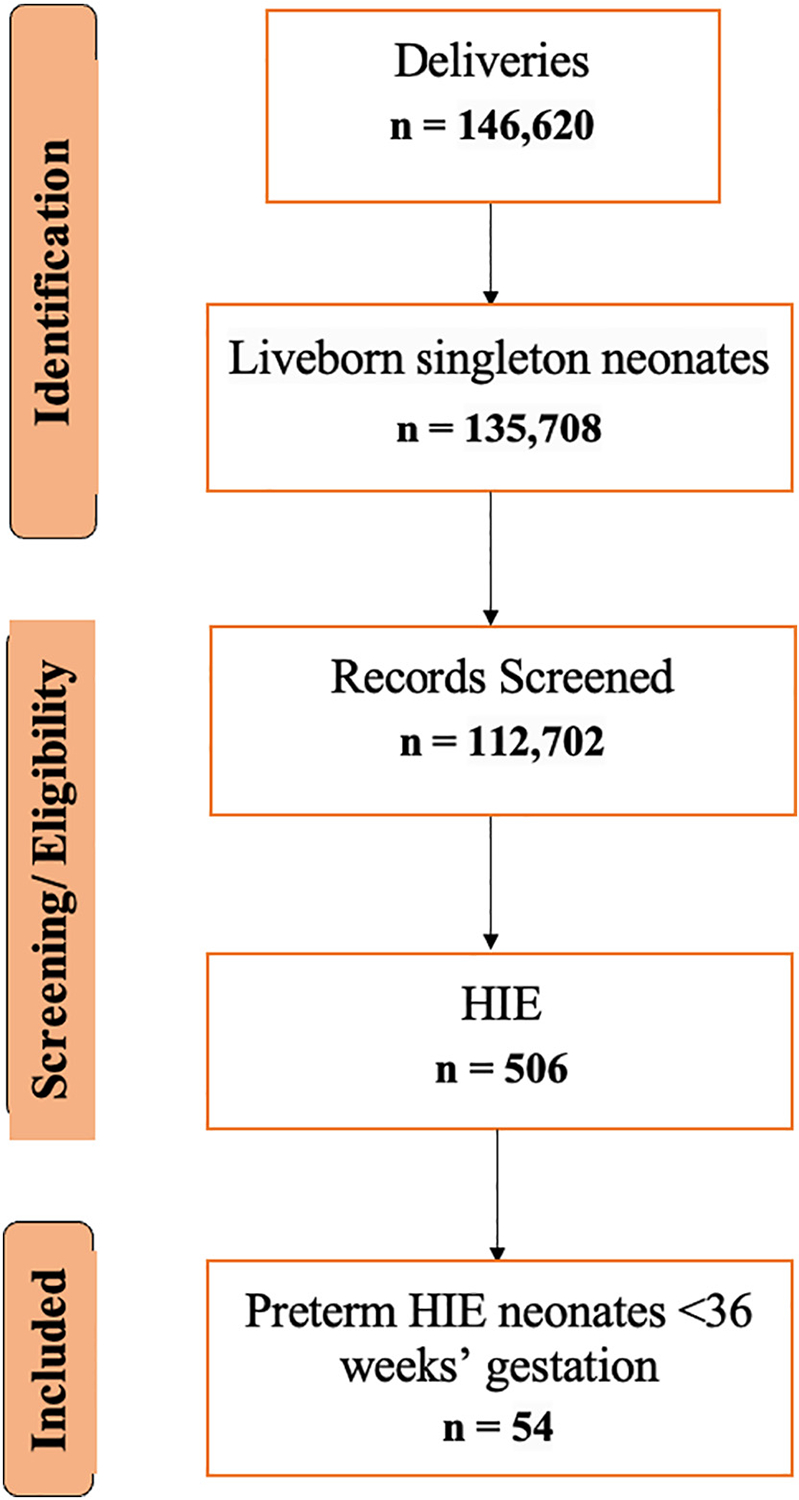
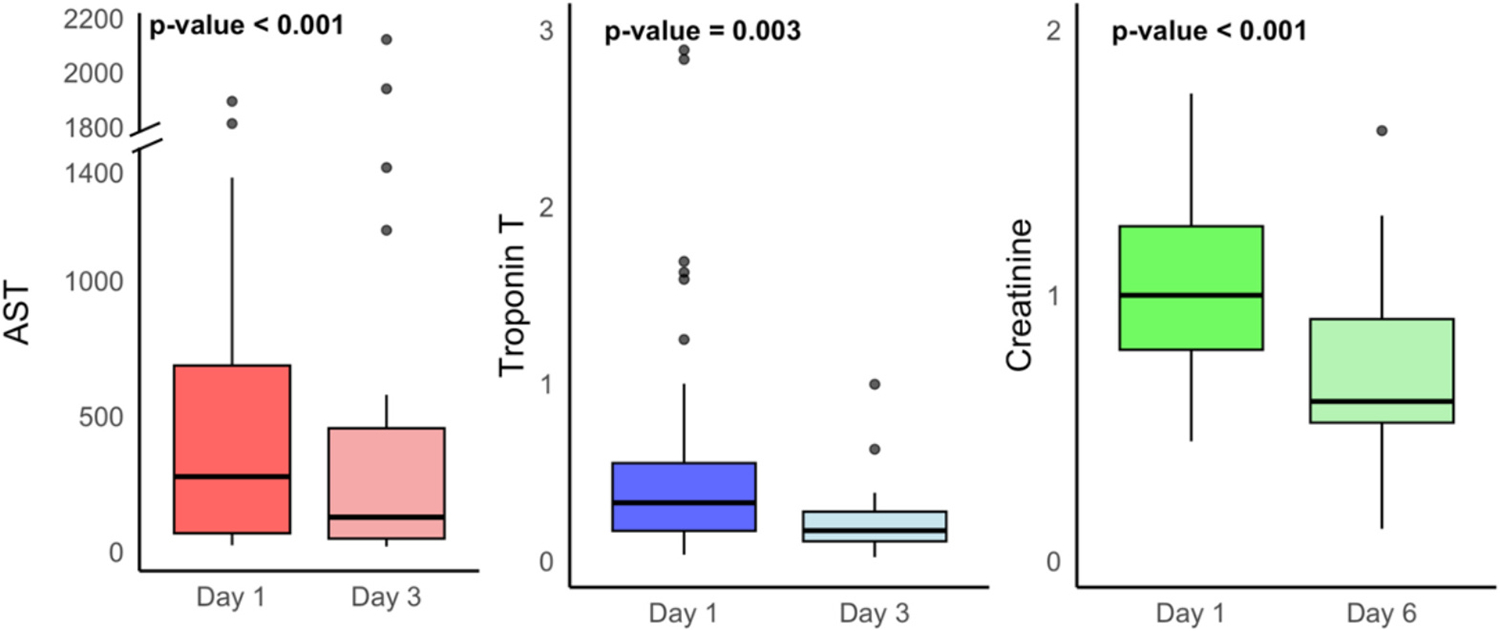
Verification
Claims the paper makes
The claims and statistics of this paper haven’t been checked yet.
Run the check — free, no account needed. It reads the open-access text and checks the sources it cites.
Claims other papers make about this one
Each is checked against this paper’s own text: does it say what the citing paper says it does?
The cited source says what the claim attributes to it.
In the citing paper
“Newborns with HIE often exhibit a spectrum of organ dysfunction (9).”
Self-check
Percentages, sums and reported differences re-computed from the paper’s own numbers.
The self-check needs the paper’s full text.
Citations
Cites
Neonatal Encephalopathy Following Fetal Distress
Sarnat, H. B. (1976) · Archives of Neurology · doi:10.1001/archneur.1976.00500100030012 · Cited by 2,691
The worldwide incidence of preterm birth: a systematic review of maternal mortality and morbidity
Beck, S., WOJDYLA, D. M., Say, L., Betrán, A. P., Meraldi, M., Requejo, J. H., Rubens, C. E., Menon, R., & Look, P. V. (2009) · Bulletin of the World Health Organization · doi:10.2471/blt.08.062554 · Cited by 2,190
Moore, T., Hennessy, E., Myles, J. P., Johnson, S. J., Draper, E. S., Costeloe, K., & Marlow, N. (2012) · BMJ · doi:10.1136/bmj.e7961 · Cited by 777
Neurodevelopmental outcomes of preterm infants
Allen, M. C. (2008) · Current Opinion in Neurology · doi:10.1097/wco.0b013e3282f88bb4 · Cited by 371
Hypoxic Ischemic Encephalopathy: Pathophysiology and Experimental Treatments
Allen, K. A., & Brandon, D. (2011) · Newborn and Infant Nursing Reviews · doi:10.1053/j.nainr.2011.07.004 · Cited by 296
Hintz, S. R., Kendrick, D. E., Vohr, B. R., Poole, W. K., & Higgins, R. D. (2005) · PEDIATRICS · doi:10.1542/peds.2004-2215 · Cited by 277
Hypoxic-Ischemic Encephalopathy in the Term Infant
Fatemi, A. S., Wilson, M. A., & Johnston, M. V. (2009) · Clinics in Perinatology · doi:10.1016/j.clp.2009.07.011 · Cited by 267
Object working memory deficits predicted by early brain injury and development in the preterm infant
Woodward, L. J., Edgin, J. O., Thompson, D. K., & Inder, T. E. (2005) · Brain · doi:10.1093/brain/awh618 · Cited by 267
Renal failure in asphyxiated neonates.
Gupta, B. D., Sharma, P. K., Bagla, J., Parakh, M., & Soni, J. P. (2005) · PubMed · Cited by 219
Preterm Hypoxic–Ischemic Encephalopathy
Gopagondanahalli, K. R., Li, J., Fahey, M. C., Hunt, R. W., Jenkin, G., Miller, S., & Malhotra, A. K. (2016) · Frontiers in Pediatrics · doi:10.3389/fped.2016.00114 · Cited by 172
Coleman, C., Perez, A. T., Selewski, D. T., & Steflik, H. J. (2022) · Frontiers in Pediatrics · doi:10.3389/fped.2022.842544 · Cited by 133
Acute Kidney Injury Post Neonatal Asphyxia
Durkan, A. M., & Alexander, R. T. (2011) · The Journal of Pediatrics · doi:10.1016/j.jpeds.2010.11.010 · Cited by 128
Myocardial ischaemia in neonates with perinatal asphyxia
Barberi, I., Calabrò, M. P., Cordaro, S., Gitto, E., Sottile, A., Prudente, D., Bertuccio, G., & Consolo, S. (1999) · European Journal of Pediatrics · doi:10.1007/s004310051192 · Cited by 113
Cardiovascular Alterations and Multiorgan Dysfunction After Birth Asphyxia
Polglase, G. R., Ong, T., & Hillman, N. H. (2016) · Clinics in Perinatology · doi:10.1016/j.clp.2016.04.006 · Cited by 106
Prevalence and outcomes of acute kidney injury in term neonates with perinatal asphyxia
Dan, A., Bashir, A., Musoke, R., & Wanaiana, L. (2014) · African Health Sciences · doi:10.4314/ahs.v14i3.26 · Cited by 103
Golubnitschaja, O., Yeghiazaryan, K., Cebioglu, M., Morelli, M., & Herrera‐Marschitz, M. (2011) · The EPMA Journal · doi:10.1007/s13167-011-0087-9 · Cited by 100
Is serum troponin T a useful marker of myocardial damage in newborn infants with perinatal asphyxia?
Costa, S., Zecca, E., Rosa, G. D., Luca, D. D., Barbato, G., Pardeo, M., & Romagnoli, C. (2007) · Acta Paediatrica · doi:10.1111/j.1651-2227.2007.00104.x · Cited by 90
Neonatal Seizures: Impact on Neurodevelopmental Outcomes
Kang, S. K., & Kadam, S. D. (2015) · Frontiers in Pediatrics · doi:10.3389/fped.2015.00101 · Cited by 87
Wu, Y. W., Monsell, S. E., Glass, H. C., Wisnowski, J. L., Mathur, A. M., McKinstry, R. C., Bluml, S., Gonzalez, F. F., Comstock, B. A., Heagerty, P. J., et al. (2023) · Pediatric Research · doi:10.1038/s41390-023-02510-8 · Cited by 80
Chalak, L. F., Rollins, N. K., Morriss, M. C., Brion, L. P., Heyne, R. J., & Sánchez, P. J. (2011) · The Journal of Pediatrics · doi:10.1016/j.jpeds.2011.09.001 · Cited by 74
Self-citationHepatic Dysfunction in Asphyxiated Neonates: Prospective Case-Controlled Study
Choudhary, M., Sharma, D. K., Dabi, D., Lamba, M., Pandita, A., & Shastri, S. (2015) · Clinical Medicine Insights Pediatrics · doi:10.4137/cmped.s21426 · Cited by 74
Acun, C., Karnati, S., Padiyar, S., Puthuraya, S., Aly, H. Z., & Mohamed, M. (2022) · American Journal of Obstetrics and Gynecology · doi:10.1016/j.ajog.2022.06.002 · Cited by 74
Management of Multi Organ Dysfunction in Neonatal Encephalopathy
O'Dea, M., Sweetman, D., Bonifacio, S., Eldib, M., Austin, T., & Molloy, E. (2020) · Frontiers in Pediatrics · doi:10.3389/fped.2020.00239 · Cited by 68
Infection markers and early signs of neonatal encephalopathy in the term infant
Shalak, L. F., & Perlman, J. M. (2002) · Mental Retardation and Developmental Disabilities Research Reviews · doi:10.1002/mrdd.10006 · Cited by 60
Treating Seizures after Hypoxic-Ischemic Encephalopathy—Current Controversies and Future Directions
Zhou, K. Q., McDouall, A., Drury, P. P., Lear, C. A., Cho, K. H. T., Bennet, L., Gunn, A. J., & Davidson, J. O. (2021) · International Journal of Molecular Sciences · doi:10.3390/ijms22137121 · Cited by 51
Cardiac enzyme levels in myocardial dysfunction in newborns with perinatal asphyxia
Rajakumar, P. S., Bhat, B. V., Sridhar, M. G., Balachander, J., Konar, B. C., Parameswaran, N., & Chetan, G. (2008) · The Indian Journal of Pediatrics · doi:10.1007/s12098-008-0242-z · Cited by 48
Chalak, L. F., Ferriero, D. M., Gressèns, P., Molloy, E. J., & Bearer, C. F. (2019) · Pediatric Research · doi:10.1038/s41390-019-0547-9 · Cited by 34
Self-citationHepatic Injury in Neonates with Perinatal Asphyxia
Elsadek, A. E., FathyBarseem, N., Suliman, H. A., Elshorbagy, H. H., Kamal, N. M., Talaat, I. M., Al-shokary, A. H., Maksoud, Y. H. A., Ibrahim, A. O., Attia, A. M., et al. (2021) · Global Pediatric Health · doi:10.1177/2333794x20987781 · Cited by 32
Pavageau, L., Sánchez, P. J., Brown, L. S., & Chalak, L. F. (2019) · Pediatric Research · doi:10.1038/s41390-019-0562-x · Cited by 29
Self-citationCardiac Troponin T: A Useful Early Marker for Cardiac and Respiratory Dysfunction in Neonates
Awada, H., Al-Tannir, M. A., Ziade, M. F., Alameh, J., & Rajab, M. E. (2007) · Neonatology · doi:10.1159/000100964 · Cited by 28
Ahn, H. C., Frymoyer, A. R., Boothroyd, D. B., Bonifacio, S. L., Sutherland, S. M., & Chock, V. Y. (2024) · Pediatric Nephrology · doi:10.1007/s00467-024-06287-8 · Cited by 22
Pergolizzi, J. V., Kraus, A., Magnusson, P., Breve, F., Mitchell, K., Raffa, R. B., LeQuang, J. A., & Varrassi, G. (2022) · Cureus · doi:10.7759/cureus.21783 · Cited by 22
Power, B., McGinley, J., Sweetman, D., & Murphy, J. (2019) · PubMed · Cited by 20
The impact of preterm adversity on cardiorespiratory function
McDonald, F. B., Dempsey, E. M., & O’Halloran, K. D. (2019) · Experimental Physiology · doi:10.1113/ep087490 · Cited by 17
Evaluation of the role of ischemia modified albumin in neonatal hypoxic-ischemic encephalopathy
Talat, M. A., Saleh, R. M., Shehab, M. M., Khalifa, N., Sakr, M. M. H., & Elmesalamy, W. M. (2020) · Korean Journal of Pediatrics · doi:10.3345/cep.2019.01410 · Cited by 11
Advances in Neuroimaging Biomarkers and Scoring
Machie, M., de Vries, L. S., & Inder, T. E. (2024) · Clinics in Perinatology · doi:10.1016/j.clp.2024.04.005 · Cited by 9
Self-citationMashat, S., Bitar, L., Mir, I. N., León, R. L., Brown, L. S., & Chalak, L. F. (2024) · Early Human Development · doi:10.1016/j.earlhumdev.2024.106179 · Cited by 9
Self-citationMulti-organ dysfunction across the neonatal encephalopathy spectrum
Bitar, L., León, R. L., Liu, Y., Kota, S., & Chalak, L. F. (2025) · Pediatric Research · doi:10.1038/s41390-025-03978-2 · Cited by 9
Self-citationBitar, L., Stonestreet, B. S., Lim, Y., Qiu, J., Chen, X. F., Mir, I. N., & Chalak, L. F. (2024) · Early Human Development · doi:10.1016/j.earlhumdev.2024.106036 · Cited by 7
Self-citationPerinatal Hypoxic-Ischemic Encephalopathy Among a Large Public Hospital Population
Chalak, L. F., Bitar, L., & Kota, S. (2024) · JAMA Network Open · doi:10.1001/jamanetworkopen.2024.44448 · Cited by 7
Self-citationRamesh Bhat, Y., & Rajamanickam, D. (2022) · World Journal of Clinical Pediatrics · doi:10.5409/wjcp.v11.i1.85 · Cited by 5
Kota, S., Liu, Y.-L., Bitar, L., & Chalak, L. F. (2024) · Annual International Conference of the IEEE Engineering in Medicine and Biology Society (EMBC) · doi:10.1109/embc53108.2024.10782342 · Cited by 3
Self-citationKota, S., Bitar, L., Sepulveda, P., Norasteh, S., Liu, H., & Chalak, L. F. (2025) · Developmental Neuroscience · doi:10.1159/000545599 · Cited by 2
Self-citationAbdi, K. M., Adams, E., Agarwal, S., Aliyu, M. H., Altamimi, T., Andescavage, N. N., Aral, A., Arfi, H., Armour, E. A., Armstrong, L., et al. (2024) · Journal of Neonatal-Perinatal Medicine · doi:10.3233/npm-249001 · Cited by 1
Self-citation
Research works printed but not linked: 1
- Bitar, 2024, Key inflammatory biomarkers in perinatal asphyxia: a comprehensive review, Clin. Perinatol., 0
Cited by
Sorted by citations
Boscarino, G., Esposito, S., & Terrin, G. (2026) · Journal of Personalized Medicine · doi:10.3390/jpm16010026 · Cited by 1
Lagnese, K., Sheth, S., Vice, S., Rajderkar, D., Roig, J. C., Weiss, M., & Wynn, J. L. (2026) · Frontiers in Pediatrics · doi:10.3389/fped.2026.1844058
“Newborns with HIE often exhibit a spectrum of organ dysfunction (9).”
Multiorgan impact of neonatal encephalopathy: higher burden in preterm infants
Chalak, L. F., Bitar, L., Baghal, P., Nawaz, K., & Kota, S. (2025) · Pediatric Research · doi:10.1038/s41390-025-04617-6
Self-citation
Metadata
- Authors
- Bitar, L., Kota, S., Machie, M., Mashat, S., Liu, Y.-L., & Chalak, L. F.
- Affiliations
- Children's Medical Center (US)
- Corresponding author
- Chalak, Lina F.
- Venue
- Early Human Development
- Publisher
- Elsevier BV
- Published
- 2025-09
- Volume
- 208
- Pages
- 106317
- ISSN
- 0378-3782 (ISSN-L)
- PMC
- PMC12248653
- OpenAlex
- W4411137514
- Cited by
- 4
- References
- 46
- Citations by year
- 2026: 3 · 2025: 1
- FWCI
- 6.03
- Type
- journal article
- Language
- en
- Open access
- hybrid
- doi.org
- Licence
- Locations
- Early Human Development (publishedVersion, cc-by)
- SSRN Electronic Journal (acceptedVersion)
- PubMed (publishedVersion)
- PubMed Central (acceptedVersion, cc-by)
- Funders
- Patient-Centered Outcomes Research Institute (CER-2021C3-24763)
- National Institute of Neurological Disorders and Stroke
- Topics
- Health Sciences › Medicine › Pediatrics, Perinatology and Child Health › Neonatal and fetal brain pathology
- Health Sciences › Medicine › Pediatrics, Perinatology and Child Health › Infant Development and Preterm Care
- Health Sciences › Medicine › Pediatrics, Perinatology and Child Health › Neonatal and Maternal Infections
- Keywords
- hypoxic-ischemic encephalopathy, preterm infants, multiple organ failure, neonatal encephalopathy, liver injury, cardiac injury, kidney injury, electrographic seizures, brain MRI abnormalities, troponin T, creatinine, neonatal mortality, neuroprotection
- MeSH terms
- Electroencephalography, Female, Humans, Infant, Newborn, Infant, Premature, Infant, Premature, Diseases, Magnetic Resonance Imaging, Male, Multiple Organ Failure, Retrospective Studies, Hypoxia-Ischemia, Brain
About these checks
Registry, retraction, Cites and statistics results are computed, not judged, with one exception: a printed reference that no index lists is read once by a model before it counts as a citation error. Claims are extracted by a model and kept only when their quote appears verbatim in the text; each cited source is then checked, with a model’s help, for whether it says what the claim relies on. Those verdicts can be wrong — read the claim’s quote and the cited source before relying on one.
Statistics and arithmetic are recomputed, not judged.
Confidence bands are shown only for fields calibrated on our annotated test set. None is calibrated yet, so no band is shown.
What counts as a claim ›How we measure confidence ›How we check this ›
Are you an author, or do you see a problem with this page? Request a review
