

The DOI matches its Crossref record; 5 of the 5 references it cites were found in a registry or an index.
Dynamic Insulation Systems: Experimental Analysis on a Parietodynamic Wall
Open accessAbstract
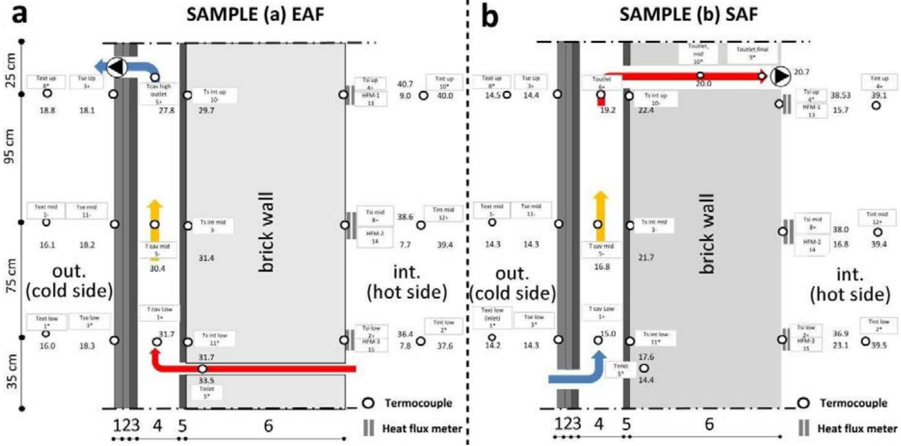
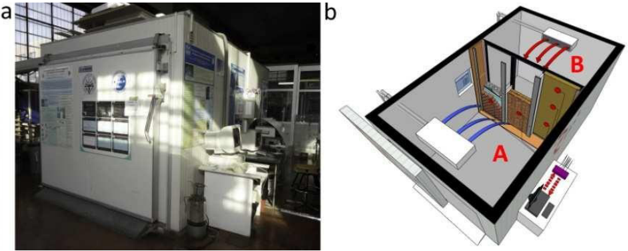
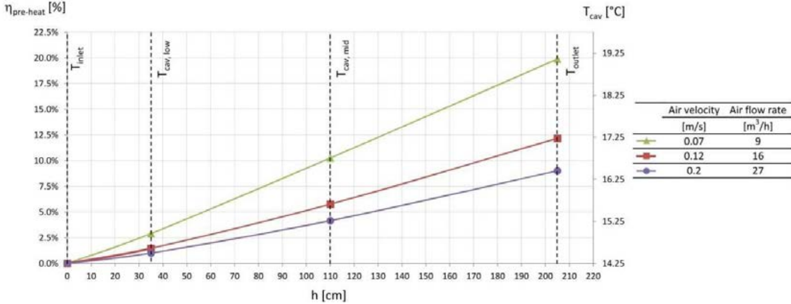
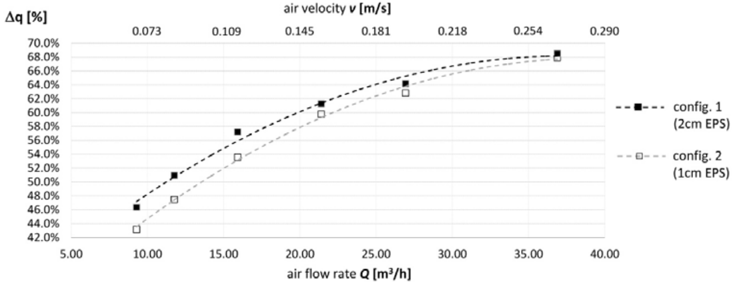
This paper shows the results of an extensive experimental campaign on a ventilated opaque double skin façade based on hollow clay bricks. The winter thermal performances of the dynamic insulated systems were investigated on two different full scale façade configurations through an experimental campaign in double climatic chamber and guarded heat flow meter apparatus. The laboratory tests on dynamic insulated façade (DIF) in both exhaust and supply configurations show respectively an effective reduction of heat losses and the capability of pre-heat the supply air passing across the ventilated external channel. The results confirm the extra insulation offered by the ventilated gap, which allows for a reduction of the wall insulation thickness, providing heat loss reduction and high level of indoor air quality in thin wall construction.
Overview
The claims and statistics of this paper haven’t been checked yet.
Run the check — free, no account needed. It reads the open-access text and checks the sources it cites.
Integrity signals
Registry
Cites
Statistics
Figures
Verification
Claims the paper makes
The claims and statistics of this paper haven’t been checked yet.
Run the check — free, no account needed. It reads the open-access text and checks the sources it cites.
Claims other papers make about this one
Each is checked against this paper’s own text: does it say what the citing paper says it does?
In the citing paper
“The indoor ventilation can be designed with air outlets through the roof [152] or the wall (Fig. 2b,e), which can be efficient for air-conditioned buildings even in extreme hot climates.”
From Resilient cooling strategies – A critical review and qualitative assessment (2021) · cites this paper as [152]
Self-check
Percentages, sums and reported differences re-computed from the paper’s own numbers.
The self-check needs the paper’s full text.
Citations
Cites
Experimental evaluation of a climate façade: Energy efficiency and thermal comfort performance
Serra, V., Zanghirella, F., & Perino, M. (2009) · Energy and Buildings · doi:10.1016/j.enbuild.2009.07.010 · Cited by 104
Self-citationFavoino, F., Goia, F., Perino, M., & Serra, V. (2013) · Energy and Buildings · doi:10.1016/j.enbuild.2013.08.066 · Cited by 72
Self-citationA passive–active dynamic insulation system for all climates
Imbabi, M. S. (2012) · International Journal of Sustainable Built Environment · doi:10.1016/j.ijsbe.2013.03.002 · Cited by 64
The building envelope as an air filter
Taylor, B., Webster, R., & Imbabi, M. S. (1998) · Building and Environment · doi:10.1016/s0360-1323(98)00017-1 · Cited by 62
The application of dynamic insulation in buildings
Taylor, B., & Imbabi, M. S. (1998) · Renewable Energy · doi:10.1016/s0960-1481(98)00190-6 · Cited by 62
Research works printed but not linked: 1
- Perino M. – Annex 44-State of the art review. Responsive building elements, Oyvind Aschehoug: Norwegian of science and technology (NTNU), Trondheim, Norway, Marco Perino, Politecnico di Torino, Dipartimento di Energia (Torino), 2010; vol. 2A.
Cited by
Sorted by citations
Exploring the advantages and challenges of double-skin façades (DSFs)
GhaffarianHoseini, A., Ghaffarianhoseini, A., Berardi, U., Tookey, J., Li, D. H. W., & Kariminia, S. (2016) · Renewable and Sustainable Energy Reviews · doi:10.1016/j.rser.2016.01.130 · Cited by 232
Resilient cooling strategies – A critical review and qualitative assessment
Zhang, C., Kazanci, O. B., Levinson, R., Heiselberg, P., Olesen, B. W., Chiesa, G., Sodagar, B., Ai, Z., Selkowitz, S., Zinzi, M., et al. (2021) · Energy and Buildings · doi:10.1016/j.enbuild.2021.111312 · Cited by 180
Dynamic insulation systems of building envelopes: A review
Fawaier, M., & Bokor, B. (2022) · Energy and Buildings · doi:10.1016/j.enbuild.2022.112268 · Cited by 109
Assessment of buildings’ dynamic thermal insulation technologies-A review
Karanafti, A., Theodosiou, T. G., & Tsikaloudaki, K. (2022) · Applied Energy · doi:10.1016/j.apenergy.2022.119985 · Cited by 89
Sun, K., Zhang, W., Zeng, Z., Levinson, R., Wei, M., & Hong, T. (2021) · Energy and Buildings · doi:10.1016/j.enbuild.2021.111383 · Cited by 86
Metadata
- Authors
- Fantucci, S., Serra, V., & Perino, M.
- Affiliations
- Politecnico di Torino (IT)
- Corresponding author
- Fantucci, Stefano
- Venue
- Energy Procedia
- Publisher
- Elsevier BV
- Published
- 2015-11
- Volume
- 78
- Pages
- 549-554
- ISSN
- 1876-6102 (ISSN-L)
- OpenAlex
- W2226910722
- Cited by
- 40
- References
- 5
- Citations by year
- 2026: 1 · 2025: 2 · 2024: 5 · 2023: 3 · 2022: 10 · 2021: 6 · 2020: 7 · 2019: 1 · 2018: 2 · 2017: 2 · 2016: 1
- FWCI
- 4.49
- Type
- conference paper
- Language
- en
- Open access
- diamond
- doi.org
- Licence
- Locations
- Energy Procedia (publishedVersion, cc-by-nc-nd)
- PORTO@Iris (submittedVersion, cc-by-nc-nd)
- PORTO Publications Open Repository TOrino (Politecnico di Torino) (submittedVersion, cc-by-nc-nd)
- Topics
- Physical Sciences › Engineering › Building and Construction › Solar Energy Systems and Technologies
- Physical Sciences › Engineering › Building and Construction › Building energy efficiency and sustainability
- Physical Sciences › Engineering › Building and Construction › Building Energy and Comfort Optimization
- Keywords
- hollow clay bricks, winter thermal performance, heat loss reduction, indoor air quality
About these checks
Registry, retraction, Cites and statistics results are computed, not judged, with one exception: a printed reference that no index lists is read once by a model before it counts as a citation error. Claims are extracted by a model and kept only when their quote appears verbatim in the text; each cited source is then checked, with a model’s help, for whether it says what the claim relies on. Those verdicts can be wrong — read the claim’s quote and the cited source before relying on one.
Statistics and arithmetic are recomputed, not judged.
Confidence bands are shown only for fields calibrated on our annotated test set. None is calibrated yet, so no band is shown.
What counts as a claim ›How we measure confidence ›How we check this ›
Are you an author, or do you see a problem with this page? Request a review
