

pH-responsive imine-chitosan-based intelligent controlled-release packaging films with transformable antimicrobial modes from defense to attack
Open accessThe DOI matches its Crossref record; 48 of the 48 references it cites were found in a registry or an index; none of the 42 sources its claims cite is checked for support yet.
Abstract
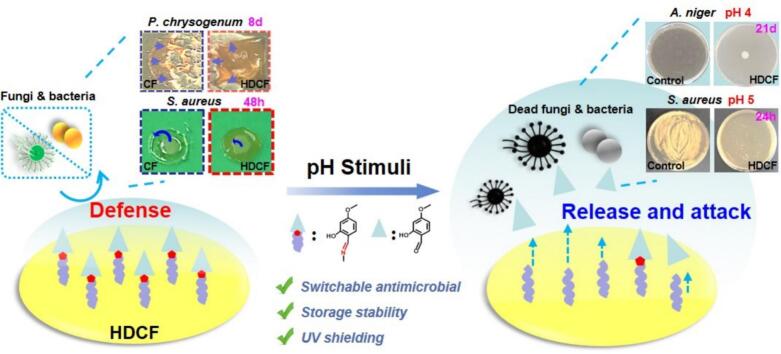
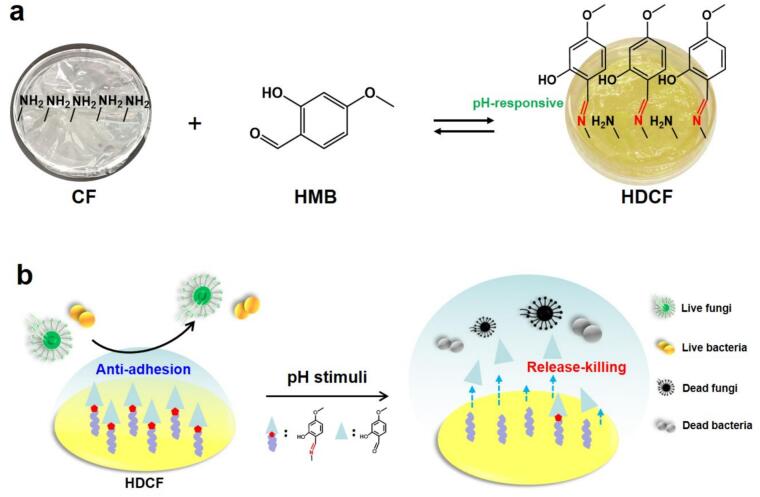
Antimicrobial active packing has demonstrated great potential in extending food shelf life. However, developing new intelligent and responsive antimicrobial strategies is still desirable. Here, a 2-hydroxy-4-methoxybenzaldehyde (HMB)-decorated chitosan film (HDCF) via surface Schiff-base coupling is designed. HDCF shows excellent storage stability and pH-responsive release, enabling a switch in antimicrobial mode from “defense” to “attack” under acid conditions. Before HMB release, HDCF exhibits broad spectrum antifungal adhesion capabilities against Penicillium citrinum , Penicillium chrysogenum and Aspergillus niger , and antibacterial adhesion capabilities against Staphylococcus aureus . Under acidic conditions, with HMB release, HDCF displays enhanced release-antifungal performance against A. niger , P. citrinum and Candida albicans and release-antibacterial performance against S. aureus . In addition, HDCF is effective in food preservation for cherry tomatoes and tomato juice and has good UV barrier properties. Therefore, this HDCF provides a new path for diversiform antimicrobial designs in the new generation of food packaging.
Overview
CoChat Summary
TL;DR
A chitosan film surface-grafted with 2-hydroxy-4-methoxybenzaldehyde (HMB) via Schiff-base imine bonds (HDCF) provides pH-responsive HMB release and switches antimicrobial action from anti-adhesion “defense” to release-killing “attack” under acidic conditions. HDCF inhibited selected fungi and S. aureus, preserved cherry tomatoes and tomato juice, and showed strong UV barrier and storage stability.
Key findings
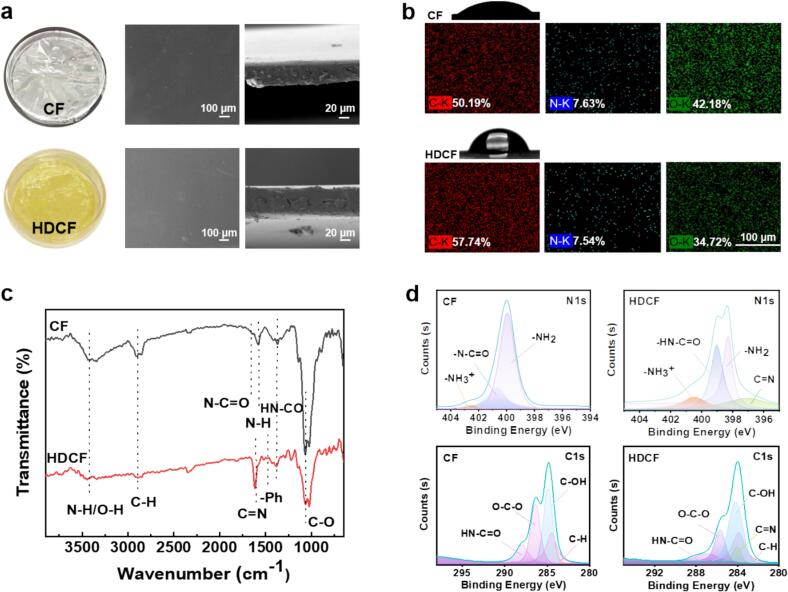
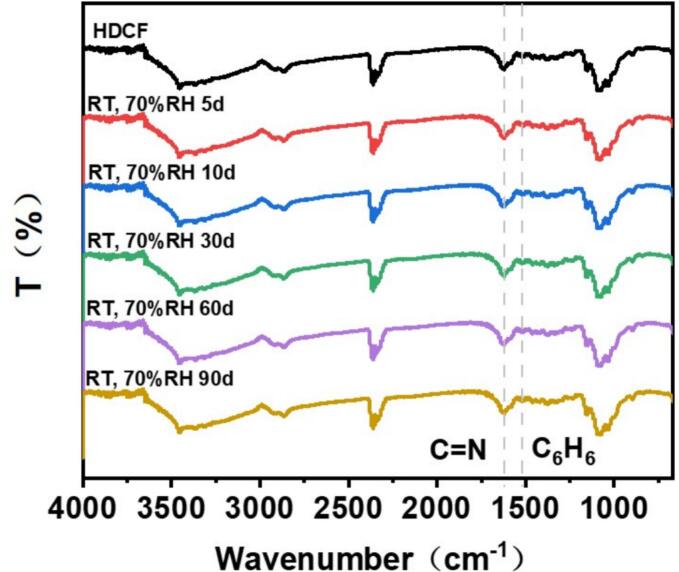
- HDCF was successfully formed by grafting HMB onto chitosan film: C/N ratio increased from 6.58 to 7.66, grafting degree was 19 %, thickness increased from 42.54 ± 0.76 μm to 58.64 ± 0.48 μm, water contact angle increased from 39.34° to 69.11°, and ATR-FTIR/XPS confirmed imine (C=N) bonds.
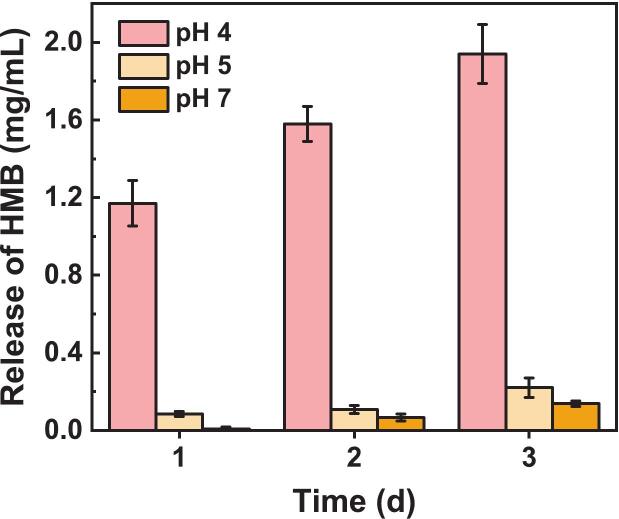
- HMB release was pH-dependent: after 3 days, release reached 1.94 ± 0.15 mg/mL at pH 4, 0.22 ± 0.05 mg/mL at pH 5, and 0.14 ± 0.01 mg/mL at pH 7.
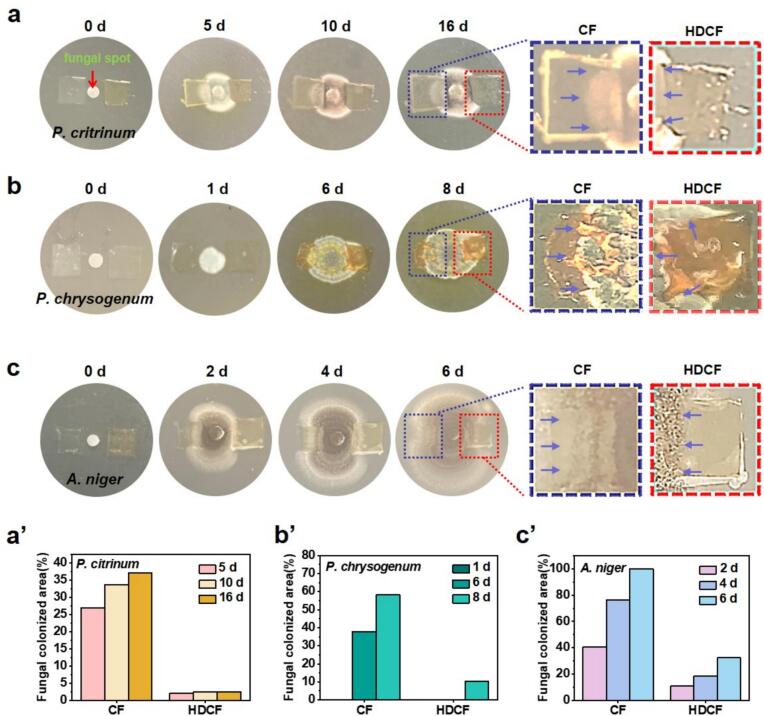
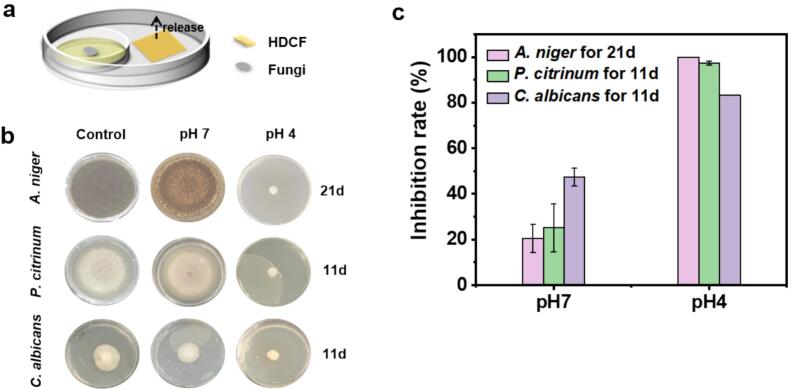
- Before release, HDCF reduced fungal colonization versus raw CF: P. citrinum 2.5 % vs 37.14 %, P. chrysogenum 5.26 % vs 58.33 %, and A. niger 32.4 % vs 100 %. Under pH 4 release conditions, inhibition reached 100 % for A. niger after 21 days, 97.36 % for P. citrinum after 11 days, and 83.42 % for C. albicans after 11 days.
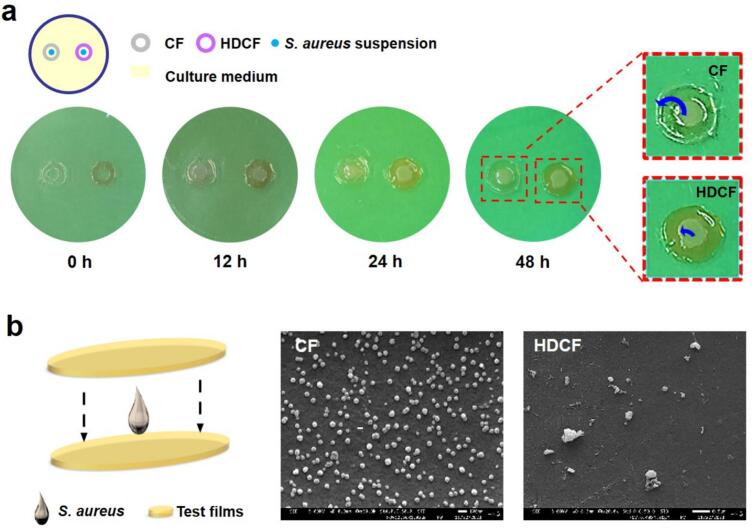
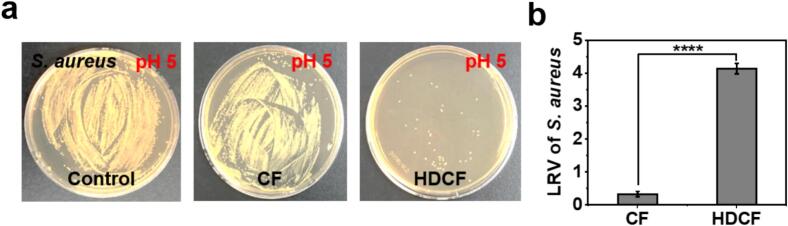
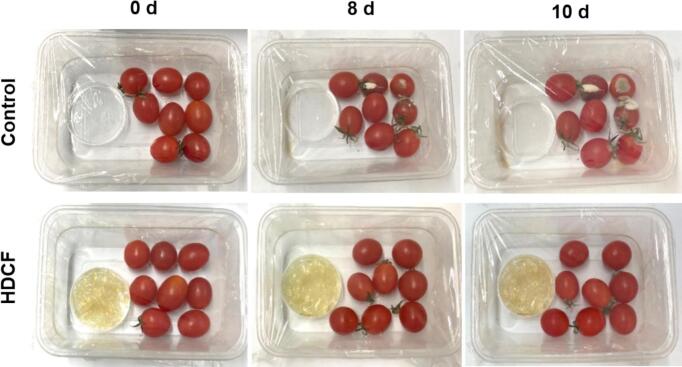
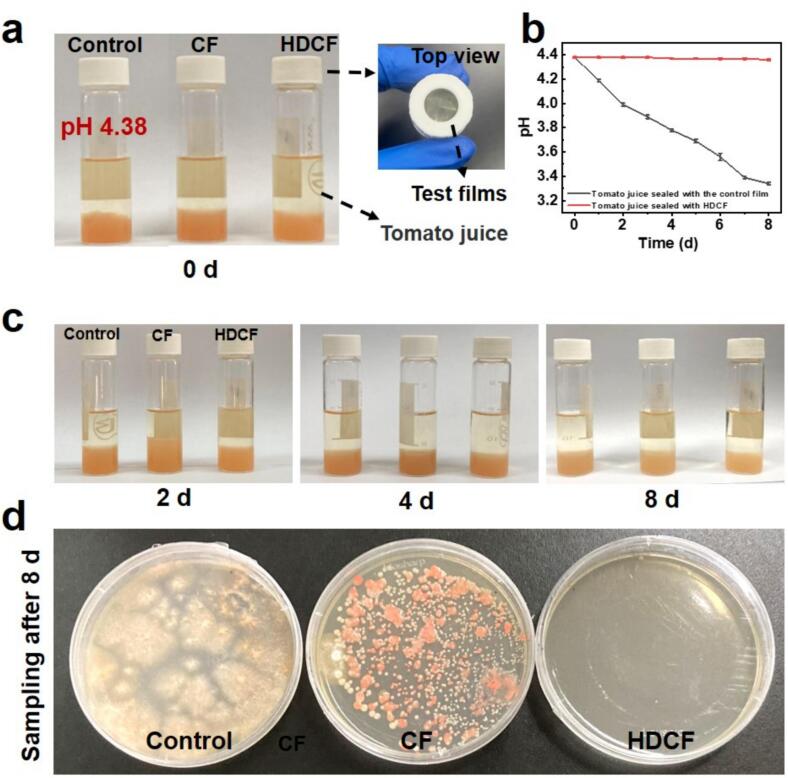
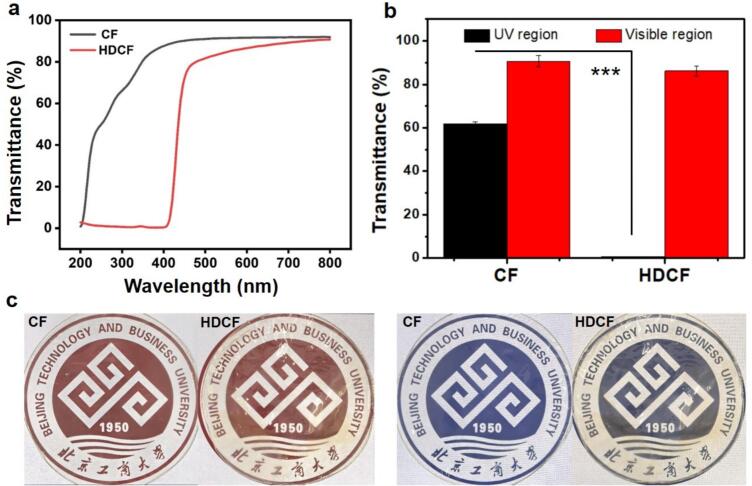
- Against S. aureus, HDCF showed no inhibition zone before acid release; at pH 5 after 24 h, LRV was 4.13 ± 0.16 for HDCF versus 0.33 ± 0.08 for CF, while at pH 7 only about a 0.66-log decrease occurred. In food tests, cherry tomato fungal contamination was delayed by 4 days, and tomato juice sealed with HDCF changed pH only from 4.38 ± 0.01 to 4.36 ± 0.01 after 8 days versus 4.38 ± 0.01 to 3.34 ± 0.02 for the control; HDCF also showed average UV transmittance of 0.73 % versus 61.74 % for CF.
Methods
- CF was prepared by solvent casting chitosan; HDCF was prepared by immersing CF in 5 wt% HMB in ethanol at 50 °C for 8 h, then washing with ethanol. Films were characterized by SEM, EDS, ATR-FTIR, XPS, thickness, tensile testing, water contact angle, and color measurements.
- pH-responsive HMB release was measured by UV–vis at 277.5 nm in buffers at pH 4, 5, and 7 over 3 days, and in 10 % and 50 % ethanol food simulants at 4 °C over 10 days.
- Antimicrobial assays used P. citrinum, P. chrysogenum, A. niger, C. albicans, and S. aureus. Tests included fungal “landing” adhesion, double-plate pH-responsive release-antifungal assays at pH 4 and 7, antibacterial “prison break” and sandwich adhesion assays, zone of inhibition, and pH 5/7 release-bactericidal LRV assays. Food preservation used cherry tomatoes and tomato juice; storage stability was tracked by ATR-FTIR over 90 days at 70 ± 5 % RH, and UV–vis transmittance was measured from 200–800 nm. Tests were performed at least in triplicate with two-tailed t-tests, P < 0.05.
Limitations
- The paper does not state a formal limitations section.
- Evident from the text: antimicrobial testing is limited to selected fungal and bacterial strains and in vitro assays, with no broad-spectrum panel, mechanistic toxicity, or safety assessment reported.
- Evident from the text: food preservation is demonstrated only for cherry tomatoes and tomato juice using simple visual, pH, and microbial plating endpoints, without quantified sensory, nutritional, or long-term real-food shelf-life data.
Model-written summary. Check it against the paper before relying on it.
Integrity signals
Registry
Cites
Statistics
Figures
Verification
Claims the paper makes
0 Valid · 1 Not valid · 28 Not checked · 91 Own results and interpretations
A result the paper states — it cites no source for it, so there is none to check. The quote shows it is in the paper.
In the paper
“Under acidic conditions, with HMB release, HDCF displays enhanced release-antifungal performance against A. niger, P. citrinum and Candida albicans”
§ pH-responsive imine-chitosan-based intelligent controlled-release packaging films with transformable antimicrobial modes from defense to attack > Abstract
plainstates a cause- Asserted: passes — The authors put it forward as true.
- Checkable: passes — It can be checked against evidence.
- Load-bearing: passes — The paper’s conclusions depend on it.
- Based: passes — The paper gives a reason why it holds.
A result the paper states — it cites no source for it, so there is none to check. The quote shows it is in the paper.
In the paper
“and antibacterial adhesion capabilities against Staphylococcus aureus.”
§ pH-responsive imine-chitosan-based intelligent controlled-release packaging films with transformable antimicrobial modes from defense to attack > Abstract
plain- Asserted: passes — The authors put it forward as true.
- Checkable: passes — It can be checked against evidence.
- Load-bearing: passes — The paper’s conclusions depend on it.
- Based: passes — The paper gives a reason why it holds.
A result the paper states — it cites no source for it, so there is none to check. The quote shows it is in the paper.
In the paper
“In addition, HDCF is effective in food preservation for cherry tomatoes and tomato juice”
§ pH-responsive imine-chitosan-based intelligent controlled-release packaging films with transformable antimicrobial modes from defense to attack > Abstract
plainstates a cause- Asserted: passes — The authors put it forward as true.
- Checkable: passes — It can be checked against evidence.
- Load-bearing: passes — The paper’s conclusions depend on it.
- Based: passes — The paper gives a reason why it holds.
The paper states this without a source or data behind it here, so there is nothing to check it against. The quote shows it is in the paper.
In the paper
“HDCF shows excellent storage stability and pH-responsive release”
§ pH-responsive imine-chitosan-based intelligent controlled-release packaging films with transformable antimicrobial modes from defense to attack > Abstract
plain- Asserted: passes — The authors put it forward as true.
- Checkable: passes — It can be checked against evidence.
- Load-bearing: unclear — It is unclear whether the paper’s conclusions depend on it.
- Based: unclear — It is unclear why the paper says it holds.
A result the paper reports from its own data — it cites no other source for it, so there is none to check. The quote shows it is in the paper.
In the paper
“Before HMB release, HDCF exhibits broad spectrum antifungal adhesion capabilities against Penicillium citrinum, Penicillium chrysogenum and Aspergillus niger”
- Also stated in: § Antimicrobial assays · plain
“In contrast, the fungal invasion areas of P. citrinum, P. chrysogenum and A. niger on HDCF were significantly lower, at only 2.5 %, 5.26 % and 32.4 %, respectively.”
§ pH-responsive imine-chitosan-based intelligent controlled-release packaging films with transformable antimicrobial modes from defense to attack > Abstract
plainstates a cause- Asserted: passes — The authors put it forward as true.
- Checkable: passes — It can be checked against evidence.
- Load-bearing: passes — The paper’s conclusions depend on it.
- Based: passes — The paper gives a reason why it holds.
- Also stated in: § Antimicrobial assays · plain
76 more claims
Create a free account to see all 120 claims and to verify the 31 references still open.
- Probably not a substantial claim. 11
- It may state two separate claims as one. 32
- The quote only partly states this claim. 1
Self-check
Percentages, sums and reported differences re-computed from the paper’s own numbers.
Each contradiction between two passages listed here was confirmed by an independent check.
Rated minor: it would not touch a result — a value no result rests on, a p-value that stays on the same side of the significance level, or a conflict that is clerical, resolved elsewhere in the paper, or outside its own findings.
In the paper
§ pH-responsive imine-chitosan-based intelligent controlled-release packaging films with transformable antimicrobial modes from defense to attack > Materials and methods > Release of HMB in food simulants
“In addition, release studies were conducted using the selected food simulants adjusted to pH 5 with a citrate buffer to mimic the pH of mildly acid liquid food matrices, such as fruit and vegetable juices (Heras-Mozos et al., 2023).”
§ pH-responsive imine-chitosan-based intelligent controlled-release packaging films with transformable antimicrobial modes from defense to attack > Results and discussion > HMB release behavior analysis in food simulants
“A higher concentration of HMB was detected in the four food simulants acidified to pH 4 and pH 5, indicating that protons from the acidic catalyst promoted the hydrolysis of imine bonds, resulting in HMB release.”
Rated minor: it would not touch a result — a value no result rests on, a p-value that stays on the same side of the significance level, or a conflict that is clerical, resolved elsewhere in the paper, or outside its own findings.
In the paper
§ pH-responsive imine-chitosan-based intelligent controlled-release packaging films with transformable antimicrobial modes from defense to attack > Results and discussion > Application performances
“In this experiment, HDCF was placed on a plate containing a buffered solution at pH 4, which acted as the triggering agent, and then stored with cherry tomatoes at room temperature for 10 days.”
§ pH-responsive imine-chitosan-based intelligent controlled-release packaging films with transformable antimicrobial modes from defense to attack > Results and discussion > Application performances
“Figure: Fig. 7 Fungal contamination of cherry tomato samples stored at room temperature for 0, 8 and 12 days in control trays and trays incorporated with HDCF triggered at pH 4.”
Citations
Cites
Emerging Chitosan-Based Films for Food Packaging Applications
Wang, H., Qian, J., & Ding, F. (2018) · Journal of Agricultural and Food Chemistry · doi:10.1021/acs.jafc.7b04528 · Cited by 859
Self-citationSynthesis and characterization of Schiff bases from chitosan and salicylaldehyde derivatives
dos Santos, J. E., Dockal, E. R., & Cavalheiro, É. T. G. (2005) · Carbohydrate Polymers · doi:10.1016/j.carbpol.2004.12.008 · Cited by 242
Responsive Food Packaging: Recent Progress and Technological Prospects
Brockgreitens, J., & Abbas, A. (2016) · Comprehensive Reviews in Food Science and Food Safety · doi:10.1111/1541-4337.12174 · Cited by 218
Fan, S., Wang, D., Wen, X., Li, X., Fang, F., Richel, A., Xiao, N., Fauconnier, M.-L., Hou, C., & Zhang, D. (2023) · Food Hydrocolloids · doi:10.1016/j.foodhyd.2022.108438 · Cited by 218
Zhang, X., Liu, D., Jin, T. Z., Chen, W., He, Q., Zou, Z., Zhao, H., Ye, X., & Guo, M. (2021) · Food Hydrocolloids · doi:10.1016/j.foodhyd.2020.106570 · Cited by 175
Synthesis and antimicrobial activity of the Schiff base from chitosan and citral
Jin, X., Wang, J., & Bai, J. (2009) · Carbohydrate Research · doi:10.1016/j.carres.2009.01.022 · Cited by 162
Microbial Flora and Storage quality of partially processed lettuce
KING, A. D., MAGNUSON, J. A., TÖRÖK, T., & GOODMAN, N. (1991) · Journal of Food Science · doi:10.1111/j.1365-2621.1991.tb05303.x · Cited by 143
Marin, L., Simionescu, B., & Barboiu, M. (2012) · Chemical Communications · doi:10.1039/c2cc34337a · Cited by 138
Hou, T., Ma, S., Wang, F., & Wang, L. (2023) · Food Science and Biotechnology · doi:10.1007/s10068-023-01344-8 · Cited by 114
Heras-Mozos, R., Gavara, R., & Hernández‐Muñoz, P. (2022) · Carbohydrate Polymers · doi:10.1016/j.carbpol.2022.119137 · Cited by 108
Shen, Y., Seidi, F., Ahmad, M., Liu, Y., Saeb, M. R., Akbari, A., & Xiao, H. (2023) · Journal of Agricultural and Food Chemistry · doi:10.1021/acs.jafc.3c06004 · Cited by 100
Chen, H., Zhao, R., Hu, J., Wei, Z., McClements, D. J., Liu, S., Li, B., & Li, Y. (2020) · Journal of Agricultural and Food Chemistry · doi:10.1021/acs.jafc.9b08301 · Cited by 91
Self-citationWicochea-Rodríguez, J. D., Chalier, P., Ruiz, T., & Gastaldi, E. (2019) · Frontiers in Chemistry · doi:10.3389/fchem.2019.00398 · Cited by 89
Ailincai, D., Marin, L., Morariu, S., Mares, M., Bostanaru, A.-C., Pinteala, M., Simionescu, B. C., & Barboiu, M. (2016) · Carbohydrate Polymers · doi:10.1016/j.carbpol.2016.07.007 · Cited by 82
Antifungal vanillin-Imino-chitosan Biodynameric films
Marin, L., Stoica, I., Mares, M., Dinu, V., Simionescu, B. C., & Barboiu, M. (2013) · Journal of Materials Chemistry B · doi:10.1039/c3tb20558d · Cited by 80
Dong, J., Yu, D., Zhang, L., Wang, G., Zhang, P., You, Y., Xu, Y., & Xia, W. (2023) · Food Hydrocolloids · doi:10.1016/j.foodhyd.2023.109413 · Cited by 78
Hasanin, M. S., Hashem, A. H., Al-Askar, A. A., Haponiuk, J. T., & Saied, E. (2023) · Electronic Journal of Biotechnology · doi:10.1016/j.ejbt.2023.05.001 · Cited by 68
Heras-Mozos, R., Hernández, R., Gavara, R., & Hernández‐Muñoz, P. (2021) · Food Hydrocolloids · doi:10.1016/j.foodhyd.2021.107326 · Cited by 67
Electrohydrodynamic processing of natural polymers for active food packaging: A comprehensive review
Charles, A. P. R., Jin, T. Z., Mu, R., & Wu, Y. (2021) · Comprehensive Reviews in Food Science and Food Safety · doi:10.1111/1541-4337.12827 · Cited by 63
Fragrant chitosan Nanospheres: Controlled release systems with physical and chemical barriers
Tree-udom, T., Wanichwecharungruang, S. P., Seemork, J., & Arayachukeat, S. (2011) · Carbohydrate Polymers · doi:10.1016/j.carbpol.2011.06.074 · Cited by 61
Xin, Y., Zhao, H., Xu, J., Xie, Z., Li, G., Gan, Z., & Wang, X. (2020) · Carbohydrate Polymers · doi:10.1016/j.carbpol.2019.115378 · Cited by 61
Self-citationHashem, A. H., Al-Askar, A. A., Haponiuk, J. T., Abd-Elsalam, K. A., & Hasanin, M. S. (2023) · Microorganisms · doi:10.3390/microorganisms11061380 · Cited by 60
Nano-amino acid cellulose derivatives: Eco-synthesis, characterization, and antimicrobial properties
Hasanin, M. S., Elhenawy, A. A., Eisa, W. H., El-Saied, H., & Sameeh, M. Y. (2019) · International Journal of Biological Macromolecules · doi:10.1016/j.ijbiomac.2019.04.024 · Cited by 59
The use of intense femtosecond laser pulses for the fragmentation of chitosan
Kasaai, M. R., Arul, J., Chin, S. L., & Charlet, G. (1999) · Journal of Photochemistry and Photobiology A Chemistry · doi:10.1016/s1010-6030(98)00432-8 · Cited by 56
Zhang, D., Zhu, J., Ye, F., & Zhao, G. (2017) · International Journal of Biological Macromolecules · doi:10.1016/j.ijbiomac.2017.05.053 · Cited by 55
Wang, Q., Wang, H., Zhang, T., Hu, Z., Xia, L., Li, L., Chen, J., & Jiang, S. (2021) · Journal of Agricultural and Food Chemistry · doi:10.1021/acs.jafc.0c06961 · Cited by 53
Self-citationPackaging-related mechanical and barrier properties of pulp-Fiber-chitosan sheets
Gällstedt, M., & Hedenqvist, M. S. (2006) · Carbohydrate Polymers · doi:10.1016/j.carbpol.2005.07.024 · Cited by 51
Liu, F., Kuai, L., Chen, L., Chen, M., Chen, X., Zhong, F., & Wang, T. (2023) · Advanced Science · doi:10.1002/advs.202306056 · Cited by 50
Luo, L., Wang, M., Su, W., Zhuo, J., Zhang, L., Zhu, W., Zhang, W., Wang, R., & Wang, J. (2024) · Journal of Agricultural and Food Chemistry · doi:10.1021/acs.jafc.3c07572 · Cited by 49
Heras-Mozos, R., López-Carballo, G., Hernández, R., Gavara, R., & Hernández Muñoz, P. (2023) · Food Chemistry · doi:10.1016/j.foodchem.2022.134292 · Cited by 48
Stereochemical Strategy Advances Microbially Antiadhesive Cotton Textile in Safeguarding Skin Flora
Xu, J., Zhao, H., Xie, Z., Ruppel, S. S., Zhou, X., Chen, S., Liang, J. F., & Wang, X. (2019) · Advanced Healthcare Materials · doi:10.1002/adhm.201900232 · Cited by 45
Self-citationChabbi, J., Jennah, O., Katir, N., Lahcini, M., Bousmina, M., & El Kadib, A. (2018) · Carbohydrate Polymers · doi:10.1016/j.carbpol.2017.12.036 · Cited by 44
Chen, H., Duan, X., He, X., Che, W., Zhang, Z., Xuan, X., Wang, L., Wang, B., Xu, J., & Wang, X. (2024) · Carbohydrate Polymers · doi:10.1016/j.carbpol.2023.121705 · Cited by 42
Self-citationHeras-Mozos, R., Gavara, R., & Hernández‐Muñoz, P. (2022) · Food Hydrocolloids · doi:10.1016/j.foodhyd.2022.107968 · Cited by 41
Qiu, C., Chen, B., Yin, W., McClements, D. J., Jin, Z., & Ji, H. (2025) · Food Hydrocolloids · doi:10.1016/j.foodhyd.2024.110881 · Cited by 41
Hasanin, M. S., Abdelraof, M., Fikry, M., Shaker, Y. M., Sweed, A. M. K., & Senge, M. O. (2021) · Molecules · doi:10.3390/molecules26123551 · Cited by 40
One-step anti-superbug finishing of cotton textiles with dopamine-menthol
Xu, J., Xie, Z., Du, F., & Wang, X. (2020) · Journal of Material Science and Technology · doi:10.1016/j.jmst.2020.08.007 · Cited by 38
Self-citationZhang, P., Chen, X., Bu, F., Chen, C., Huang, L., Xie, Z., Li, G., & Wang, X. (2023) · ACS Applied Materials & Interfaces · doi:10.1021/acsami.2c19323 · Cited by 36
Li, Q., & Zhu, X. (2021) · Grain & Oil Science and Technology · doi:10.1016/j.gaost.2021.03.002 · Cited by 35
Chabbi, J., Aqil, A., Katir, N., Vertruyen, B., Jerôme, C., Lahcini, M., & El Kadib, A. (2020) · Carbohydrate Polymers · doi:10.1016/j.carbpol.2019.115634 · Cited by 32
Durgadevi, R., Abirami, G., Alexpandi, R., Nandhini, K., Kumar, P., Prakash, S., & Veera Ravi, A. (2019) · Frontiers in Microbiology · doi:10.3389/fmicb.2019.02804 · Cited by 32
Yu, W., You, H., Li, X., Wang, H., Xu, J., Chen, H., Sun, B., & Wang, X. (2024) · Food Hydrocolloids · doi:10.1016/j.foodhyd.2024.110260 · Cited by 32
Self-citationTheerawitayaart, W., Prodpran, T., Benjakul, S., Nilsuwan, K., & de la Caba, K. (2020) · Food Hydrocolloids · doi:10.1016/j.foodhyd.2020.106481 · Cited by 31
Chen, L., Shi, Q., Dong, Q., Du, Y., Peng, Z., Zeng, Q., Lin, Z., Qiu, J., Zhao, Y., & Wang, J. J. (2022) · Journal of Agricultural and Food Chemistry · doi:10.1021/acs.jafc.2c08340 · Cited by 28
Antifungal Paper Based on a Polyborneolacrylate Coating
Xu, J., Bai, Y., Wan, M., Liu, Y., Tao, L., & Wang, X. (2018) · Polymers · doi:10.3390/polym10040448 · Cited by 23
Self-citationKim, M. J., Park, H. R., & Lee, S. J. (2016) · Food Science and Biotechnology · doi:10.1007/s10068-016-0124-5 · Cited by 21
Quality of tomato juice as influenced by non-thermal air plasma treatment
Starek-Wójcicka, A., Sagan, A., Terebun, P., Kwiatkowski, M., Osmólska, E., Krajewska, M., Grządka, E., Matsuyama, N., Hayashi, N., & Pawlat, J. (2022) · Applied Sciences · doi:10.3390/app13010578 · Cited by 12
Durable anti-superbug adhesion cotton textiles decorated with natural borneol-based finishing agent
Xu, J., Li, X., Yu, W., Wang, X., & Ma, J. (2022) · Cellulose · doi:10.1007/s10570-021-04347-y · Cited by 11
Self-citation
Cited by
Zhang, Y., Liu, H., Wang, Q., Zhang, J., Liu, C., Wang, C., Lu, L., & Qiao, Y. (2026) · Trends in Food Science & Technology · doi:10.1016/j.tifs.2026.105554 · Cited by 12
Singh, T., Verma, P., Deol, P., Kumar, A., Si, C., Dhiman, P., & Lai, C. W. (2026) · Comprehensive Reviews in Food Science and Food Safety · doi:10.1111/1541-4337.70492 · Cited by 8
Gupta, R. K., Rajasekaran, B., Pipliya, S., Gill, A., Singh, S. K., Singh, D., Pan, M., & Srivastav, P. P. (2026) · Frontiers in Sustainable Food Systems · doi:10.3389/fsufs.2026.1849828 · Cited by 8
Bagherzadehsurbagh, E., & Azizoğlu, R. O. (2025) · Food Packaging and Shelf Life · doi:10.1016/j.fpsl.2025.101689 · Cited by 7
Saleem, F., & Hosseinvand, A. (2026) · Nano-Structures & Nano-Objects · doi:10.1016/j.nanoso.2026.101698 · Cited by 1
Metadata
- Authors
- Wang, H., Wu, J., Yu, W., You, H., Xu, J., Chen, H., & Sun, B.
- Affiliations
- Beijing Technology and Business University (CN)
- Corresponding author
- Xu, Jiangqi
- Venue
- Food Chemistry: X
- Publisher
- Elsevier BV
- Published
- 2025-10
- Volume
- 31
- Pages
- 103087
- ISSN
- 2590-1575 (ISSN-L)
- PMC
- PMC12513189
- OpenAlex
- W4414572099
- Cited by
- 13
- References
- 48
- Citations by year
- 2026: 12 · 2025: 1
- FWCI
- 1.89
- Type
- journal article
- Language
- en
- Open access
- gold
- doi.org
- Licence
- cc-by-nc-nd
- www.elsevier.com/tdm/userlicense/1.0/ (tdm)
- www.elsevier.com/legal/tdmrep-license (tdm)
- creativecommons.org/licenses/by-nc-nd/4.0/ (vor)
- Locations
- Food Chemistry X (publishedVersion, cc-by-nc-nd)
- PubMed Central (publishedVersion, cc-by-nc-nd)
- Europe PMC (PubMed Central) (publishedVersion, cc-by-nc-nd)
- PubMed (publishedVersion)
- DOAJ (DOAJ: Directory of Open Access Journals) (submittedVersion)
- Funders
- National Natural Science Foundation of China (32201944)
- Topics
- Physical Sciences › Materials Science › Biomaterials › Nanocomposite Films for Food Packaging
- Life Sciences › Immunology and Microbiology › Applied Microbiology and Biotechnology › Antimicrobial agents and applications
- Life Sciences › Agricultural and Biological Sciences › Agronomy and Crop Science › Polymer-Based Agricultural Enhancements
- Keywords
- pH-responsive drug release, chitosan films, Schiff base coupling, 2-hydroxy-4-methoxybenzaldehyde, imines, antimicrobial packaging, antifungal activity, antibacterial activity, Staphylococcus aureus, Aspergillus niger, Penicillium, Candida albicans, food preservation, UV barrier, tomato juice, cherry tomato, controlled release
About these checks
Registry, retraction, Cites and statistics results are computed, not judged, with one exception: a printed reference that no index lists is read once by a model before it counts as a citation error. Claims are extracted by a model and kept only when their quote appears verbatim in the text; each cited source is then checked, with a model’s help, for whether it says what the claim relies on. Those verdicts can be wrong — read the claim’s quote and the cited source before relying on one.
A language model drew the claims from the paper on 2026-11-17, under version 3 of the claim definition (model deepseek-v4.1-flash, prompt extract-v3).
A second model labelled each claim on 2026-11-17 (model jev-1.13-20260917, definition revision gold-guideline-v0.2).
Statistics and arithmetic are recomputed, not judged.
Confidence bands are shown only for fields calibrated on our annotated test set. None is calibrated yet, so no band is shown.
What counts as a claim ›How we measure confidence ›How we check this ›
Are you an author, or do you see a problem with this page? Request a review
Data sources
Bibliographic data: Semantic Scholar, OpenAlex, Crossref.
Contains information from the Semantic Scholar Academic Graph Datasets, made available under the ODC Attribution License (ODC-BY 1.0).
Semantic Scholar’s data is described in: Kinney, R., et al. (2023). The Semantic Scholar Open Data Platform. arXiv:2301.10140.
