

The DOI matches its Crossref record.
Wastewater treatment using a natural coagulant (Moringa oleifera seeds): optimization through response surface methodology
Open accessAbstract
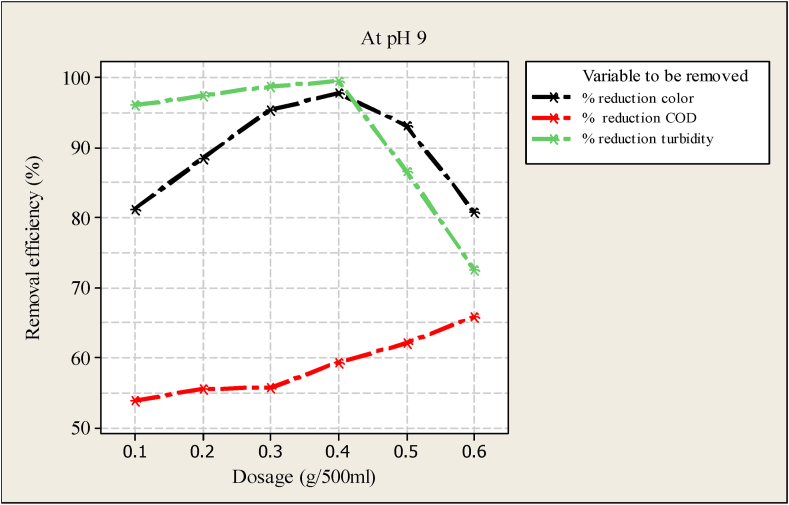
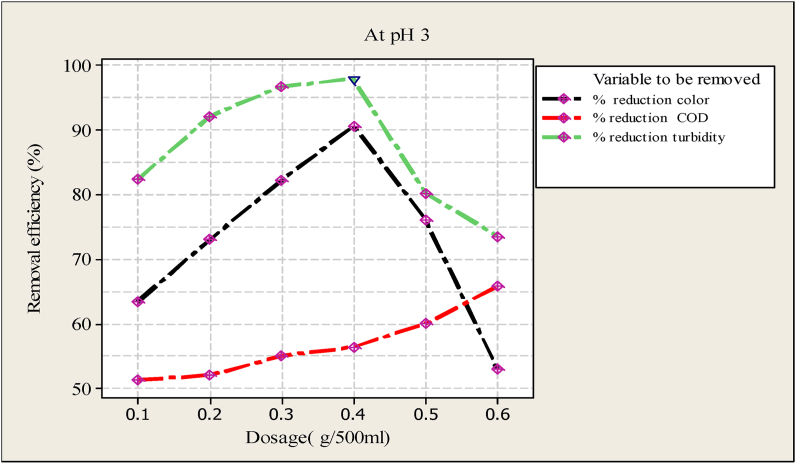
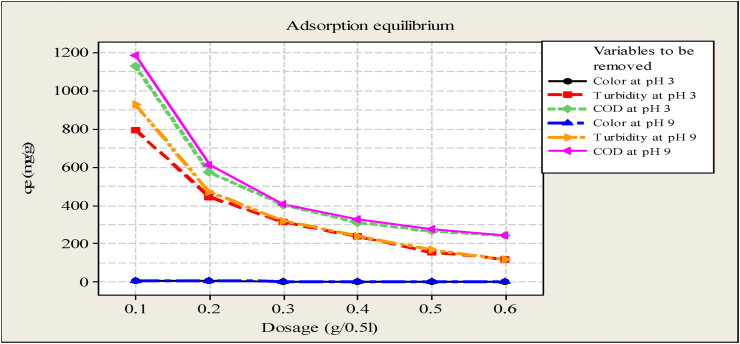
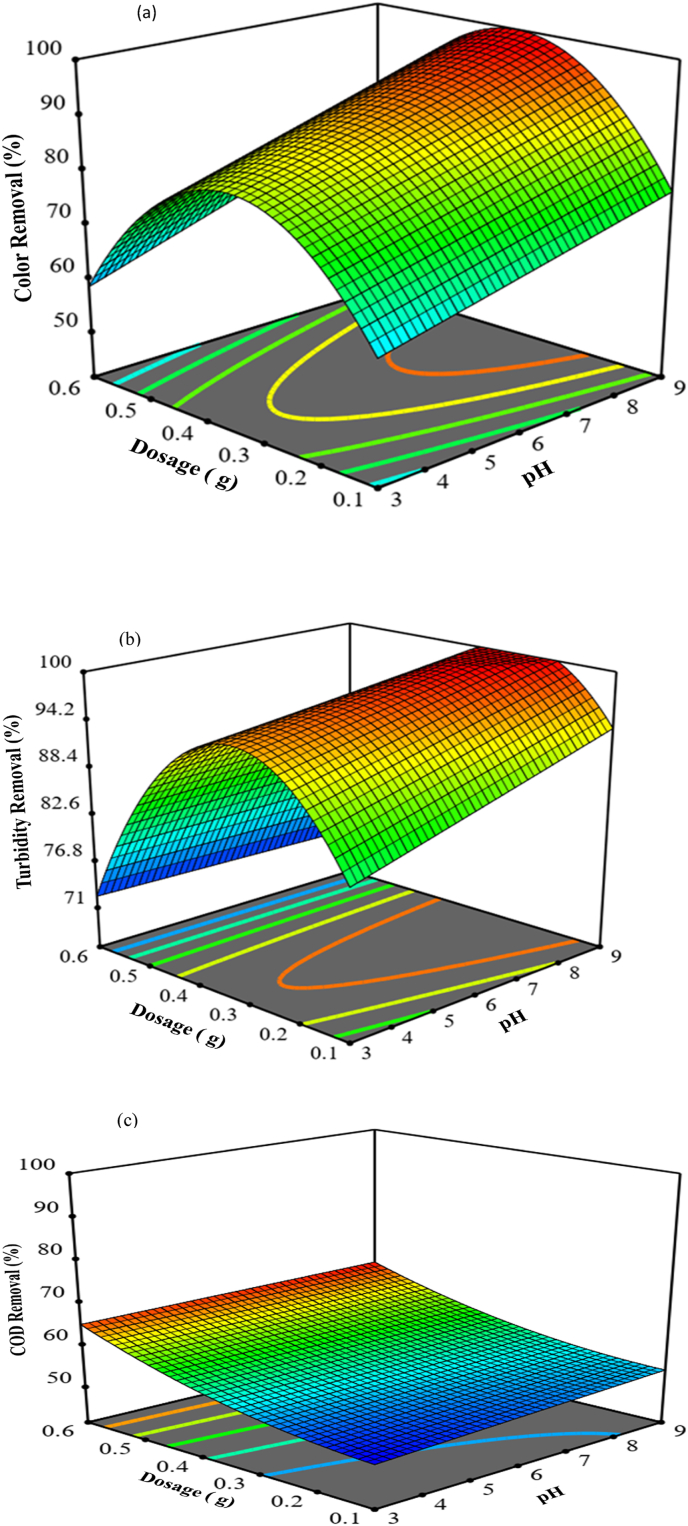
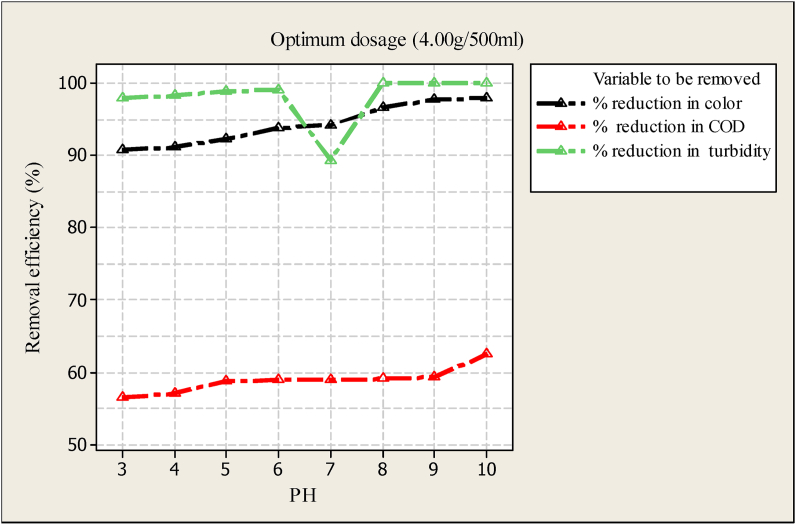
The high expense of chemical coagulant-treated water forces most people in rural regions rely on easily available sources, which are usually of poor quality and expose them to waterborne infections. According to this statement, the purpose of this study was to confirm the efficacy of extracting powder Moringa oleifera seeds, which are widely available in rural regions. The experiment was done based on random design load of 0.1, 0.2, 0.3, 0.4, 0.5, and 0.6g/500ml of powder extracted from Moringa seeds. Chemical oxygen demand (COD), color and turbidity were determined for both acidic and basic characteristics of wastewater. The optimum dosage of Moringa oleifera was 0.4g/500ml in both characteristics of waste water in case of color and turbidity. Moringa airfare maximum reduction in turbidity, color and COD in acidic waste water was 98%, 90.76% and 65.8% respectively. And maximum reduction turbidity, color and COD in basic waste water were 99.5%, 97.7% and 65.82% respectively. The study was demonstrated that, the application of RSM for seeking optimum condition in the coagulation process for treatment of wastewater. Moringa seed powder works best with 7-9 pH range. All the results showed that, Moringa Oliver seeds were very effective for the removal of impurities. So, the researcher and the respective body give attention use of these trees in a wide application area.
Overview
The claims and statistics of this paper haven’t been checked yet.
Run the check — free, no account needed. It reads the open-access text and checks the sources it cites.
Integrity signals
Registry
Cites
Statistics
Figures
Verification
Claims the paper makes
The claims and statistics of this paper haven’t been checked yet.
Run the check — free, no account needed. It reads the open-access text and checks the sources it cites.
Claims other papers make about this one
Each is checked against this paper’s own text: does it say what the citing paper says it does?
The source backs part of the claim, not all of it — or backs it for a different population, condition or comparison.
In the citing paper
“Previous studies (Arnoldsson et al., 2008;Desta and Bote, 2021;Taiwo et al., 2020) have reported that the optimal dosage of MO-associated proteins for wastewater treatment is between 0.05 and 0.5 mg L -1 .”
From Use of biochar and Moringa oleifera in greywater treatment to remove heavy metals and contaminants of emerging concern (2023) · cites this paper as Desta and Bote, 2021
Experimental — accuracy not yet measured
Self-check
Percentages, sums and reported differences re-computed from the paper’s own numbers.
The self-check needs the paper’s full text.
Citations
Cites
No references could be resolved yet.
Research works printed but not linked: 33
- Abiyu, 2018, Wastewater treatment potential of Moringa stenopetala over Moringa olifera as a natural coagulant, antimicrobial agent and heavy metal removals, Cogent Environ. Sci., 4, 10.1080/23311843.2018.1433507 · DOI
- Agbovi, 2019, Optimisation of orthophosphate and turbidity removal using an amphoteric chitosan-based flocculant-ferric chloride coagulant system, Environ. Chem., 16, 599, 10.1071/EN19100 · DOI
- Alo, 2012, Coagulation and antimicrobial activities of Moringa oleifera seed storage at 3°C temperature in turbid water, Adv. Appl. Sci. Res., 3, 887
- Asaithambi, 2016, Integrated ozone—electrocoagulation process for the removal of pollutant from industrial effluent: optimization through response surface methodology, Chem. Eng. Process: Process Intens., 105, 92, 10.1016/j.cep.2016.03.013 · DOI
- Atchudan, 2020, Hydrophilic nitrogen-doped carbon dots from biowaste using dwarf banana peel for environmental and biological applications, Fuel, 275, 117821, 10.1016/j.fuel.2020.117821 · DOI
- Baptista, 2017, Protein fractionation of seeds of Moringa oleifera lam and its application in superficial water treatment, Separ. Purif. Technol., 180, 114, 10.1016/j.seppur.2017.02.040 · DOI
- Bina, 2010, Effectiveness of Moringa oleifera Coagulant Protein as natural coagulant aid in removal of turbidity and bacteria from turbid waters, World Acad. Sci. Eng. Tech., 43, 618
- Chaouki, 2021, Treatment of a landfill leachate from Casablanca city by a coagulation-flocculation and adsorption process using a palm bark powder (PBP), Sci. Afr., 12
- Chitra, 2019, Performance of natural coagulants on greywater treatment, Recent Innov. Chem. Eng. Formerly Recent Patents Chem. Eng., 13, 81
- David, 2016, Performance evaluation of Moringa oleifera seed extract (MOSE) in conjunction with chemical coagulants for treating distillery spent wash, Indian Chem. Eng., 58, 189, 10.1080/00194506.2015.1006147 · DOI
- Eman, 2014, Impact of Moringa oleifera cake residue application on wastewater treatment: a case study, J. Water Resour. Protect., 6, 677, 10.4236/jwarp.2014.67065 · DOI
- Garde, 2017, Application of Moringa oleifera seed extract to treat coffee fermentation wastewater, J. Hazard Mater., 329, 102, 10.1016/j.jhazmat.2017.01.006 · DOI
- Ghebremichael, 2005, A simple purification and activity assay of the coagulant protein from Moringa oleifera seed, Water Res., 39, 2338, 10.1016/j.watres.2005.04.012 · DOI
- Govindan, 2018, Use of Moringa (Moringa stenopetala) seed extract for removal of some anionic dyes (direct and reactive dyes) in textile wastewater, Curr. Trends Fashion Tech. Textile Eng., 4, 10.19080/CTFTTE.2018.04.555642 · DOI
- Leite, 2017, Isolation and characterization of cellulose nanofibers from cassava root bagasse and peelings, Carbohydr. Polym., 157, 962, 10.1016/j.carbpol.2016.10.048 · DOI
- Leone, 2015, Cultivation, genetic, ethnopharmacology, phytochemistry and pharmacology of Moringa oleifera leaves: an overview, Int. J. Mol. Sci., 16, 12791, 10.3390/ijms160612791 · DOI
- Manhokwe, 2019, Post-treatment of yeast processing effluent from a bioreactor using aluminium chlorohydrate polydadmac as a coagulant, Sci. Afr., 6, 4
- Naceradska, 2019, On the importance of pH value in coagulation, J. Water Supply Res. Technol. - Aqua, 68, 222, 10.2166/aqua.2019.155 · DOI
- Nand, 2012, Water purification using Moringa oleifera and other locally available seeds in Fiji for heavy metal removal, Int. J. Appl. Sci. Tech., 2, 125
- Narmatha, 2017, Effluent treatment of sago wastewater by using natural coagulants, Imperial J. Interdiscipl. Res., 3
- Okey-Onyesolu, 2020, Response Surface Methodology optimization of chito-protein synthesized from crab shell in treatment of abattoir wastewater, Heliyon, 6, 10.1016/j.heliyon.2020.e05186 · DOI
- Rani, 2018, Moringa genus: a review of phytochemistry and pharmacology, Front. Pharmacol., 9, 1
- Rocha, 2020, Clarification of high-turbidity waters: a comparison of Moringa oleifera and virgin and recovered aluminum sulfate-based coagulants, Environ. Dev. Sustain., 22, 4551, 10.1007/s10668-019-00397-2 · DOI
- Saleem, 2019, A contemporary review on plant-based coagulants for applications in water treatment, J. Ind. Eng. Chem., 72, 281, 10.1016/j.jiec.2018.12.029 · DOI
- Scholes, 2020, Heliyon Ef fi cacy of a natural coagulant protein from Moringa oleifera ( Lam ) seeds in treatment of Opa reservoir water, Ile-Ife, Nigeria, Heliyon, 6, e03335
- Sengupta, 2012, Use of Moringa oleifera seed extracts to reduce helminth egg numbers and turbidity in irrigation water, Water Res., 46, 3646, 10.1016/j.watres.2012.04.011 · DOI
- Shan, 2017, The use of Moringa oleifera seed as a natural coagulant for wastewater treatment and heavy metals removal, Appl. Water Sci., 7, 1369, 10.1007/s13201-016-0499-8 · DOI · Paper page
- Srinu Naik, 2014, Optimization of parameters using response surface methodology and genetic algorithm for biological denitrification of wastewater, Int. J. Environ. Sci. Technol., 11, 823, 10.1007/s13762-013-0266-4 · DOI
- Subramonian, 2015, An application of response surface methodology for optimizing coagulation process of raw industrial effluent using Cassia obtusifolia seed gum together with alum, Ind. Crop. Prod., 70, 107, 10.1016/j.indcrop.2015.02.026 · DOI
- Trinh, 2011, Response surface methodological approach to optimize the coagulation-flocculation process in drinking water treatment, Chem. Eng. Res. Des., 89, 1126, 10.1016/j.cherd.2010.12.004 · DOI
- Ugwu, 2017, Comparative study of the use of natural and artificial coagulants for the treatment of sullage (domestic wastewater), Cogent Eng., 4, 1, 10.1080/23311916.2017.1365676 · DOI
- Vigneshwaran, 2020, Optimization of sustainable chitosan/Moringa. oleifera as coagulant aid for the treatment of synthetic turbid water – a systemic study, Environ. Chem. Ecotoxicol., 2, 132, 10.1016/j.enceco.2020.08.002 · DOI
- Wang, 2014, Optimization of coagulation-flocculation process for papermaking-reconstituted tobacco slice wastewater treatment using response surface methodology, J. Ind. Eng. Chem., 20, 391, 10.1016/j.jiec.2013.04.033 · DOI
Cited by
Sorted by citations
Kozyatnyk, I., & Njenga, M. (2023) · Bioresource Technology Reports · doi:10.1016/j.biteb.2023.101615 · Cited by 19
“Previous studies (Arnoldsson et al., 2008; Desta and Bote, 2021; Taiwo et al., 2020) have reported that the optimal dosage of MO -asso- ciated proteins for wastewater treatment is between 0.05 and 0.5 mg L (cid:0) 1 .”
BackgroundInfluential
Metadata
- Authors
- Desta, W. M., & Bote, M. E.
- Affiliations
- Jimma University (ET)
- Corresponding author
- Desta, Wendesen Mekonin
- Venue
- Heliyon
- Publisher
- Elsevier BV
- Published
- 2021-11
- Volume
- 7
- Issue
- 11
- Pages
- e08451
- ISSN
- 2405-8440 (ISSN-L)
- PMC
- PMC8637492
- OpenAlex
- W3216982155
- Cited by
- 129
- References
- 0
- Citations by year
- 2026: 26 · 2025: 26 · 2024: 32 · 2023: 35 · 2022: 10
- FWCI
- 5.73
- Type
- journal article
- Language
- en
- Open access
- gold
- doi.org
- Licence
- Locations
- Heliyon (publishedVersion, cc-by-nc-nd)
- SSRN Electronic Journal (acceptedVersion)
- PubMed Central (publishedVersion, cc-by-nc-nd)
- PubMed (publishedVersion)
- DOAJ (DOAJ: Directory of Open Access Journals) (submittedVersion, cc-by-sa)
- Topics
- Physical Sciences › Environmental Science › Water Science and Technology › Coagulation and Flocculation Studies
- Physical Sciences › Environmental Science › Waste Management and Disposal › Wastewater Treatment and Reuse
- Physical Sciences › Environmental Science › Water Science and Technology › Water and Wastewater Treatment
- Keywords
- Moringa oleifera seeds, natural coagulants, wastewater treatment, coagulation, COD removal, color removal, turbidity removal, pH effect, adsorption, rural water supply, response surface methodology
About these checks
Registry, retraction, Cites and statistics results are computed, not judged, with one exception: a printed reference that no index lists is read once by a model before it counts as a citation error. Claims are extracted by a model and kept only when their quote appears verbatim in the text; each cited source is then checked, with a model’s help, for whether it says what the claim relies on. Those verdicts can be wrong — read the claim’s quote and the cited source before relying on one.
Statistics and arithmetic are recomputed, not judged.
Confidence bands are shown only for fields calibrated on our annotated test set. None is calibrated yet, so no band is shown.
What counts as a claim ›How we measure confidence ›How we check this ›
Are you an author, or do you see a problem with this page? Request a review
