

The DOI matches its Crossref record; 50 of the 50 references it cites were found in a registry or an index.
Warfarin analogs target disulfide bond-forming enzymes and suggest a residue important for quinone and coumarin binding
Open accessPublished version of a preprint
Abstract
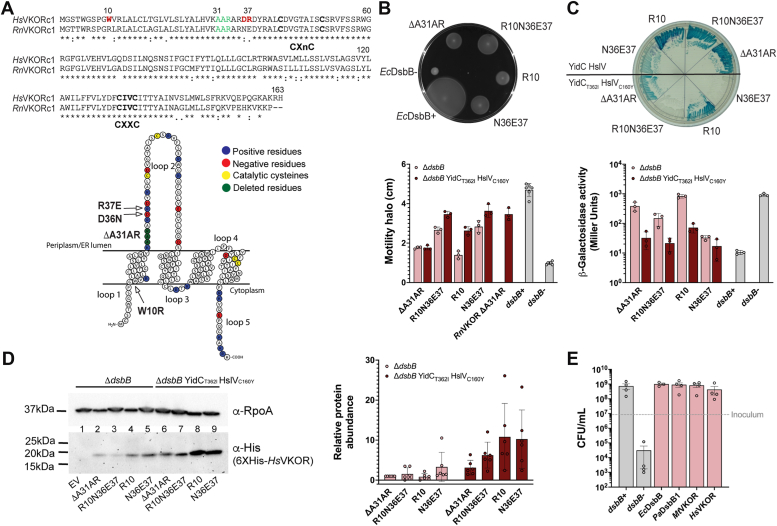
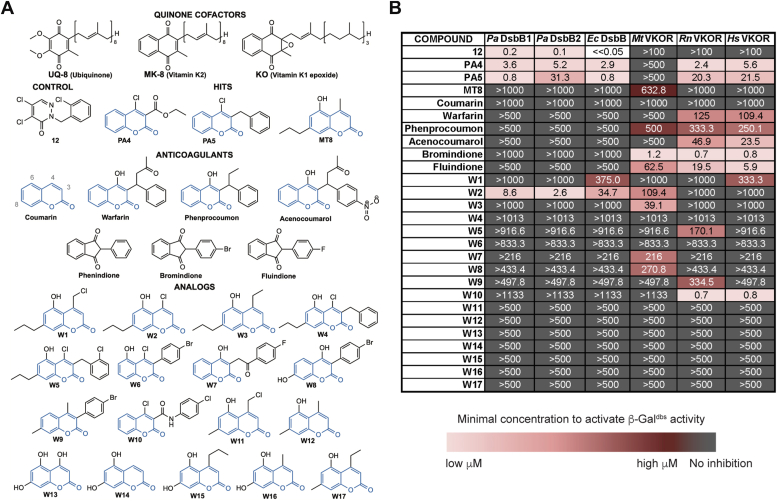
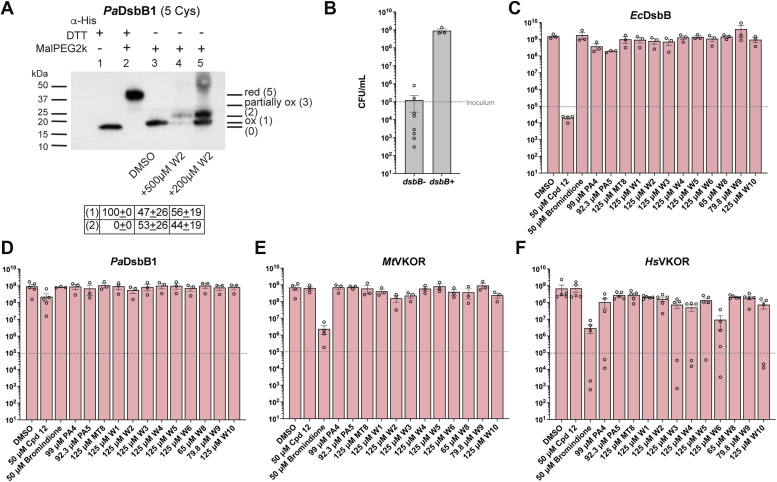
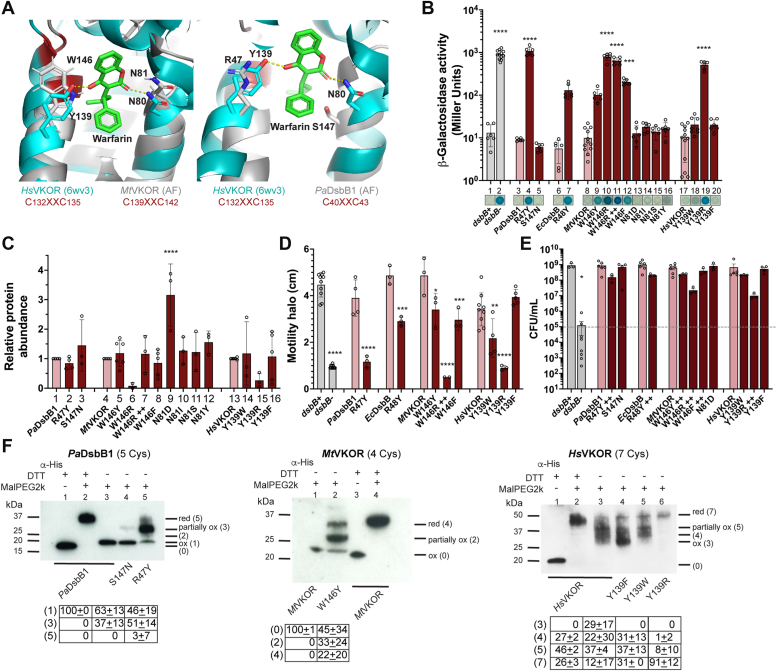
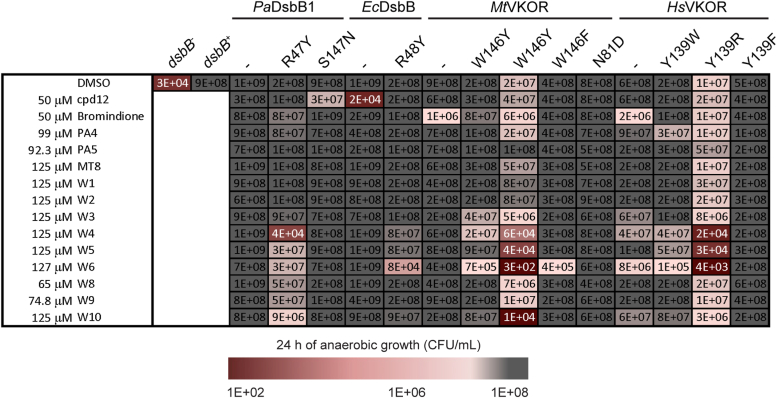
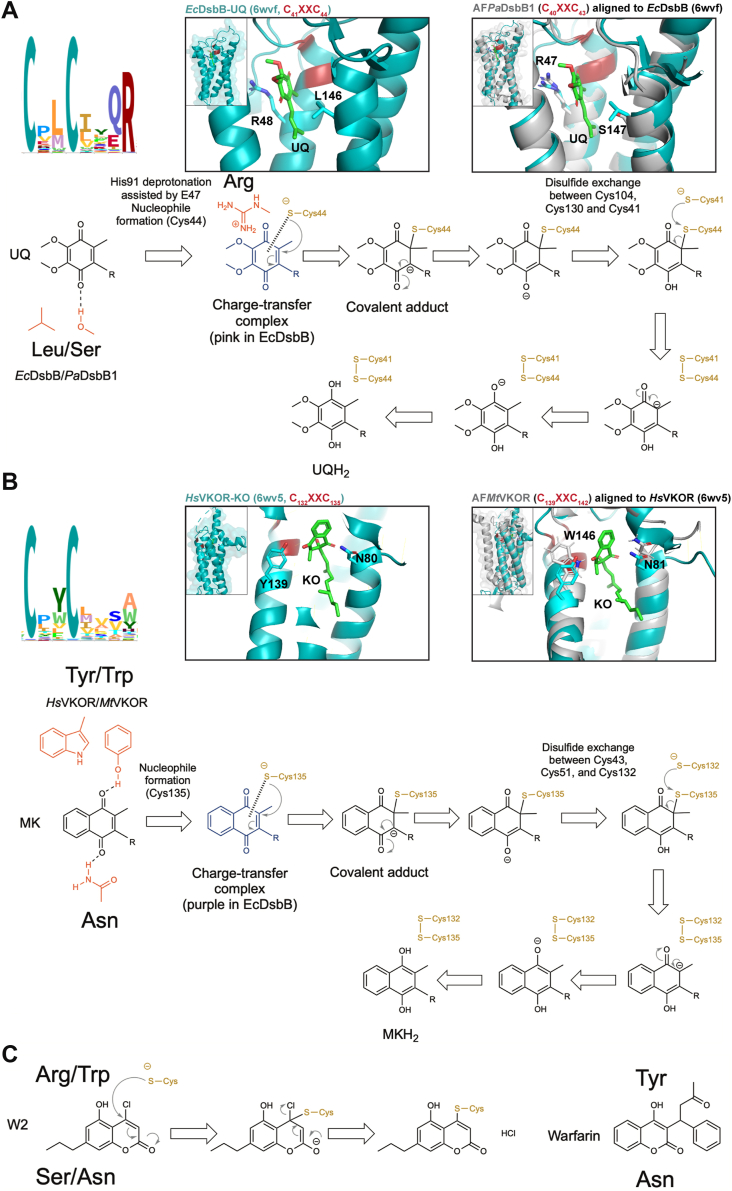
Disulfide bond formation has a central role in protein folding of both eukaryotes and prokaryotes. In bacteria, disulfide bonds are catalyzed by DsbA and DsbB/VKOR enzymes. First, DsbA, a periplasmic disulfide oxidoreductase, introduces disulfide bonds into substrate proteins. Then, the membrane enzyme, either DsbB or VKOR, regenerate DsbA's activity by the formation of de novo disulfide bonds which reduce quinone. We have previously performed a high-throughput chemical screen and identified a family of warfarin analogs that target either bacterial DsbB or VKOR. In this work, we expressed functional human VKORc1 in Escherichia coli and performed a structure-activity-relationship analysis to study drug selectivity between bacterial and mammalian enzymes. We found that human VKORc1 can function in E. coli by removing two positive residues, allowing the search for novel anticoagulants using bacteria. We also found one warfarin analog capable of inhibiting both bacterial DsbB and VKOR and a second one antagonized only the mammalian enzymes when expressed in E. coli. The difference in the warfarin structure suggests that substituents at positions three and six in the coumarin ring can provide selectivity between the bacterial and mammalian enzymes. Finally, we identified the two amino acid residues responsible for drug binding. One of these is also essential for de novo disulfide bond formation in both DsbB and VKOR enzymes. Our studies highlight a conserved role of this residue in de novo disulfide-generating enzymes and enable the design of novel anticoagulants or antibacterials using coumarin as a scaffold.
Overview
The claims and statistics of this paper haven’t been checked yet.
Run the check — free, no account needed. It reads the open-access text and checks the sources it cites.
Integrity signals
Registry
Cites
Statistics
Figures
Verification
Claims the paper makes
The claims and statistics of this paper haven’t been checked yet.
Run the check — free, no account needed. It reads the open-access text and checks the sources it cites.
Self-check
Percentages, sums and reported differences re-computed from the paper’s own numbers.
The self-check needs the paper’s full text.
Citations
Cites
Highly accurate protein structure prediction with AlphaFold
Jumper, J., Evans, R., Pritzel, A., Green, T., Figurnov, M., Ronneberger, O., Tunyasuvunakool, K., Bates, R., Žídek, A., Potapenko, A., et al. (2021) · Nature · doi:10.1038/s41586-021-03819-2 · Cited by 43,764
Paysan-Lafosse, T., Blum, M., Chuguransky, S., Grego, T., Pinto, B. L., Salazar, G. A., Bileschi, M. L., Bork, P., Bridge, A., Colwell, L., et al. (2023) · Nucleic Acids Research · doi:10.1093/nar/gkac993 · Cited by 2,399
The molecular basis of blood coagulation
Furie, B., & Furie, B. C. (1988) · Cell · doi:10.1016/0092-8674(88)90567-3 · Cited by 1,247
Mutations in VKORC1 cause warfarin resistance and multiple coagulation factor deficiency type 2
Rost, S., Fregin, A., Ivaskevicius, V., Conzelmann, E., Hörtnagel, K., Pelz, H.-J., Lappegard, K., Seifried, E., Scharrer, I., Tuddenham, E. G. D., et al. (2004) · Nature · doi:10.1038/nature02214 · Cited by 1,134
Amann, E., Ochs, B., & Abel, K.-J. (1988) · Gene · doi:10.1016/0378-1119(88)90440-4 · Cited by 1,061
Identification of a protein required for disulfide bond formation in vivo
Bardwell, J. C. A., McGovern, K., & Beckwith, J. (1991) · Cell · doi:10.1016/0092-8674(91)90532-4 · Cited by 979
Identification of the gene for vitamin K epoxide reductase
Li, T., Chang, C.-Y., Jin, D.-Y., Lin, P.-J., Khvorova, A., & Stafford, D. W. (2004) · Nature · doi:10.1038/nature02254 · Cited by 707
vonHeijne, G. (1989) · Nature · doi:10.1038/341456a0 · Cited by 591
A pathway for disulfide bond formation in vivo.
Bardwell, J. C., Lee, J. O., Jander, G., Martin, N., Belin, D., & Beckwith, J. (1993) · Proceedings of the National Academy of Sciences · doi:10.1073/pnas.90.3.1038 · Cited by 408
Weiss, D. S., Chen, J. C., Ghigo, J.-M., Boyd, D., & Beckwith, J. (1999) · Journal of Bacteriology · doi:10.1128/jb.181.2.508-520.1999 · Cited by 386
Oxidative Protein Folding Is Driven by the Electron Transport System
Bader, M., Muse, W., Ballou, D. P., Gassner, C., & Bardwell, J. C. A. (1999) · Cell · doi:10.1016/s0092-8674(00)81016-8 · Cited by 385
DSB proteins and bacterial pathogenicity
Heras, B., Shouldice, S. R., Totsika, M., Scanlon, M. J., Schembri, M. A., & Martin, J. L. (2009) · Nature Reviews Microbiology · doi:10.1038/nrmicro2087 · Cited by 297
Crystal Structure of the DsbB-DsbA Complex Reveals a Mechanism of Disulfide Bond Generation
Inaba, K., Murakami, S., Suzuki, M., Nakagawa, A., Yamashita, E., Okada, K., & Ito, K. (2006) · Cell · doi:10.1016/j.cell.2006.10.034 · Cited by 258
Mutants in disulfide bond formation that disrupt flagellar assembly in Escherichia coli.
Dailey, F. E., & Berg, H. C. (1993) · Proceedings of the National Academy of Sciences · doi:10.1073/pnas.90.3.1043 · Cited by 255
Dutton, R. J., Boyd, D. H., Berkmen, M., & Beckwith, J. (2008) · Proceedings of the National Academy of Sciences · doi:10.1073/pnas.0804621105 · Cited by 239
Wallace, B. J., & Young, I. G. (1977) · Biochimica et Biophysica Acta (BBA) - Bioenergetics · doi:10.1016/0005-2728(77)90071-8 · Cited by 239
Missiakas, D. M., Georgopoulos, C. P., & Raina, S. (1993) · Proceedings of the National Academy of Sciences · doi:10.1073/pnas.90.15.7084 · Cited by 237
Structure of a bacterial homologue of vitamin K epoxide reductase
Li, W., Schulman, S., Dutton, R. J., Boyd, D. H., Beckwith, J., & Rapoport, T. A. (2010) · Nature · doi:10.1038/nature08720 · Cited by 189
Froshauer, S. A., Green, G., McGovern, D. B. K., & Beckwith, J. (1988) · Journal of Molecular Biology · doi:10.1016/0022-2836(88)90539-6 · Cited by 173
Disulfide bond formation in prokaryotes
Landeta, C., Boyd, D. H., & Beckwith, J. (2018) · Nature Microbiology · doi:10.1038/s41564-017-0106-2 · Cited by 168
Self-citationVitamin K epoxide reductase: homology, active site and catalytic mechanism
Goodstadt, L. (2004) · Trends in Biochemical Sciences · doi:10.1016/j.tibs.2004.04.004 · Cited by 161
Zirlik, A., & Bode, C. (2016) · Journal of Thrombosis and Thrombolysis · doi:10.1007/s11239-016-1446-0 · Cited by 157
Mechanisms of Oxidative Protein Folding in the Bacterial Cell Envelope
Kadokura, H., & Beckwith, J. (2010) · Antioxidants and Redox Signaling · doi:10.1089/ars.2010.3187 · Cited by 144
Cousins, K. R. (2005) · Journal of the American Chemical Society · doi:10.1021/ja0410237 · Cited by 124
High-throughput β-galactosidase assay for bacterial cell-based reporter systems
Thibodeau, S. A., Fang, R., & Joung, J. K. (2004) · BioTechniques · doi:10.2144/04363bm07 · Cited by 115
Kobayashi, T., & Ito, K. (1999) · The EMBO Journal · doi:10.1093/emboj/18.5.1192 · Cited by 111
Four cysteines of the membrane protein DsbB act in concert to oxidize its substrate DsbA
Kadokura, H., & Beckwith, J. (2002) · The EMBO Journal · doi:10.1093/emboj/21.10.2354 · Cited by 109
Structural basis of antagonizing the vitamin K catalytic cycle for anticoagulation
Liu, S., Li, S., Shen, G., Sukumar, N., Krezel, A. M., & Li, W. (2020) · Science · doi:10.1126/science.abc5667 · Cited by 81
Warfarin traps human vitamin K epoxide reductase in an intermediate state during electron transfer
Shen, G., Cui, W., Zhang, H., Zhou, F., Huang, W., Liu, Q., Yang, Y., Li, S., Bowman, G. R., Sadler, J. E., et al. (2016) · Nature Structural & Molecular Biology · doi:10.1038/nsmb.3333 · Cited by 80
Dynamic nature of disulphide bond formation catalysts revealed by crystal structures of DsbB
Inaba, K., Murakami, S., Nakagawa, A., Iida, H., Kinjo, M., Ito, K., & Suzuki, M. (2009) · The EMBO Journal · doi:10.1038/emboj.2009.21 · Cited by 79
Sadler, J. E. (2004) · Nature · doi:10.1038/427493a · Cited by 71
Kadokura, H., Bader, M. W., Tian, H., Bardwell, J. C. A., & Beckwith, J. (2000) · Proceedings of the National Academy of Sciences · doi:10.1073/pnas.97.20.10884 · Cited by 69
Compounds targeting disulfide bond forming enzyme DsbB of Gram-negative bacteria
Landeta, C., Blazyk, J. L., Hatahet, F., Meehan, B. M., Eser, M., Myrick, A., Bronstain, L., Minami, S., Arnold, H. K., Ke, N., et al. (2015) · Nature Chemical Biology · doi:10.1038/nchembio.1752 · Cited by 61
Self-citationDsbB Elicits a Red-shift of Bound Ubiquinone during the Catalysis of DsbA Oxidation
Inaba, K., Takahashi, Y., & Ito, K. (2004) · Journal of Biological Chemistry · doi:10.1074/jbc.m310765200 · Cited by 60
Wang, X.-Y., Dutton, R. J., Beckwith, J., & Boyd, D. H. (2010) · Antioxidants and Redox Signaling · doi:10.1089/ars.2010.3558 · Cited by 54
Breaking antimicrobial resistance by disrupting extracytoplasmic protein folding
Furniss, R. C. D., Kadeřábková, N., Barker, D., Bernal, P., Maslova, E., Antwi, A. A., McNeil, H. E., Pugh, H. L., Dortet, L., Blair, J. M. A., et al. (2022) · eLife · doi:10.7554/elife.57974 · Cited by 46
Sevier, C. S., Kadokura, H., Tam, V. C., et al. (2005) · Protein Science · doi:10.1110/ps.051355705 · Cited by 44
Characterization of the Menaquinone-dependent Disulfide Bond Formation Pathway of Escherichia coli
Takahashi, Y.-H., Inaba, K., & Ito, K. (2004) · Journal of Biological Chemistry · doi:10.1074/jbc.m407153200 · Cited by 41
Matagrin, B., Hodroge, A., Montagut-Romans, A., Andru, J., Fourel, I., Besse, S., Benoît, E., & Lattard, V. (2013) · FEBS Open Bio · doi:10.1016/j.fob.2013.02.001 · Cited by 34
The Disulfide Bond Formation Pathway Is Essential for Anaerobic Growth of Escherichia coli
Meehan, B. M., Landeta, C., Boyd, D. H., & Beckwith, J. R. (2017) · Journal of Bacteriology · doi:10.1128/jb.00120-17 · Cited by 34
Self-citationVo, C.-D.-T., Michaud, J., Elsen, S., Faivre, B., Bouveret, E., Barras, F., Fontecave, M., Pierrel, F., Lombard, M., & Pélosi, L. (2020) · Journal of Biological Chemistry · doi:10.1074/jbc.ra120.013748 · Cited by 34
Liu, S., Li, S., Yang, Y., & Li, W. (2020) · Science Advances · doi:10.1126/sciadv.abe3717 · Cited by 27
Identification of a segment of DsbB essential for its respiration‐coupled oxidation
Kobayashi, T., Takahashi, Y., & Ito, K. (2001) · Molecular Microbiology · doi:10.1046/j.1365-2958.2001.02229.x · Cited by 24
Inhibition of Pseudomonas aeruginosa and Mycobacterium tuberculosis disulfide bond forming enzymes
Landeta, C., McPartland, L., Tran, N. Q., Meehan, B. M., Zhang, Y., Tanweer, Z., Wakabayashi, S., Rock, J. M., Kim, T. H., Balasubramanian, D., et al. (2018) · Molecular Microbiology · doi:10.1111/mmi.14185 · Cited by 22
Self-citationLandeta, C., Meehan, B. M., McPartland, L., Ingendahl, L., Hatahet, F., Tran, N. Q., Boyd, D. H., & Beckwith, J. (2017) · Journal of Biological Chemistry · doi:10.1074/jbc.m116.770891 · Cited by 21
Self-citationHatahet, F., Blazyk, J. L., Martineau, E., Mandela, E., Zhao, Y., Campbell, R. E., Beckwith, J. R., & Boyd, D. H. (2015) · Proceedings of the National Academy of Sciences · doi:10.1073/pnas.1521260112 · Cited by 19
Kadeřábková, N., Furniss, R. C. D., Maslova, E., Potter, K. E., Eisaiankhongi, L., Bernal, P., Filloux, A., Landeta, C., González, D., McCarthy, R. R., et al. (2026) · eLife · doi:10.7554/elife.91082.3 · Cited by 7
Self-citationDistinct enzymatic strategies forde novogeneration of disulfide bonds in membranes
Li, W. (2023) · Critical Reviews in Biochemistry and Molecular Biology · doi:10.1080/10409238.2023.2201404 · Cited by 3
p-Bromindione: A New, Potent, Long-Acting Oral Anticoagulant Drug
Seaman, A. J. (1961) · JAMA · doi:10.1001/jama.1961.73040360017012c · Cited by 2
Kadokura, H., Bader, M., Tian, H., Bardwell, J. C. A., Beckwith, J., 門倉広, & Kadokura, H. (2023) · Tokyo Tech Research Repository (Tokyo Institute of Technology) · Cited by 2
Metadata
- Authors
- Chavez, D., Amarquaye, G. N., Mejia-Santana, A., Dyotima, Ryan, K., Zeng, L., & Landeta, C.
- Affiliations
- Indiana University Bloomington (US)
- Corresponding author
- Landeta, Cristina
- ORCID
- Venue
- Journal of Biological Chemistry
- Publisher
- Elsevier BV
- Published
- 2024-06
- Volume
- 300
- Issue
- 6
- Pages
- 107383
- ISSN
- 0021-9258 (ISSN-L)
- PMC
- PMC11208910
- OpenAlex
- W4396979285
- Cited by
- 4
- References
- 50
- Citations by year
- 2026: 1 · 2025: 3
- FWCI
- 0.54
- Type
- journal article
- Language
- en
- Open access
- gold
- doi.org
- Licence
- www.elsevier.com/tdm/userlicense/1.0/ (tdm)
- www.elsevier.com/legal/tdmrep-license (tdm)
- creativecommons.org/licenses/by/4.0/ (vor)
- Locations
- Journal of Biological Chemistry (publishedVersion)
- bioRxiv (Cold Spring Harbor Laboratory) (acceptedVersion, cc-by-nd)
- PubMed Central (publishedVersion, cc-by)
- PubMed (publishedVersion)
- Funders
- Indiana University Bloomington
- Topics
- Life Sciences › Biochemistry, Genetics and Molecular Biology › Molecular Biology › Redox biology and oxidative stress
- Life Sciences › Biochemistry, Genetics and Molecular Biology › Structural Biology › Enzyme Structure and Function
- Life Sciences › Pharmacology, Toxicology and Pharmaceutics › Toxicology › Bioactive Compounds and Antitumor Agents
- Keywords
- VKORC1, DsbB, DsbA, disulfide bond formation, quinone reduction, structure-activity relationship, enzyme selectivity, anticoagulant drug design, antibiotic design, Escherichia coli, protein folding
- MeSH terms
- Anticoagulants, Bacterial Proteins, Coumarins, Disulfides, Escherichia coli, Humans, Membrane Proteins, Protein Binding, Structure-Activity Relationship, Warfarin, Benzoquinones, Protein Disulfide-Isomerases, Escherichia coli Proteins, Vitamin K Epoxide Reductases
About these checks
Registry, retraction, Cites and statistics results are computed, not judged, with one exception: a printed reference that no index lists is read once by a model before it counts as a citation error. Claims are extracted by a model and kept only when their quote appears verbatim in the text; each cited source is then checked, with a model’s help, for whether it says what the claim relies on. Those verdicts can be wrong — read the claim’s quote and the cited source before relying on one.
Statistics and arithmetic are recomputed, not judged.
Confidence bands are shown only for fields calibrated on our annotated test set. None is calibrated yet, so no band is shown.
What counts as a claim ›How we measure confidence ›How we check this ›
Are you an author, or do you see a problem with this page? Request a review
Data sources
Bibliographic data: Semantic Scholar, OpenAlex, Crossref.
Contains information from the Semantic Scholar Academic Graph Datasets, made available under the ODC Attribution License (ODC-BY 1.0).
Semantic Scholar’s data is described in: Kinney, R., et al. (2023). The Semantic Scholar Open Data Platform. arXiv:2301.10140.
