

The DOI matches its Crossref record; 101 of the 101 references it cites were found in a registry or an index.
Rules of engagement: Determinants of chemokine receptor activation and selectivity by CCL27 and CCL28
Open accessPublished version of a preprint
Abstract
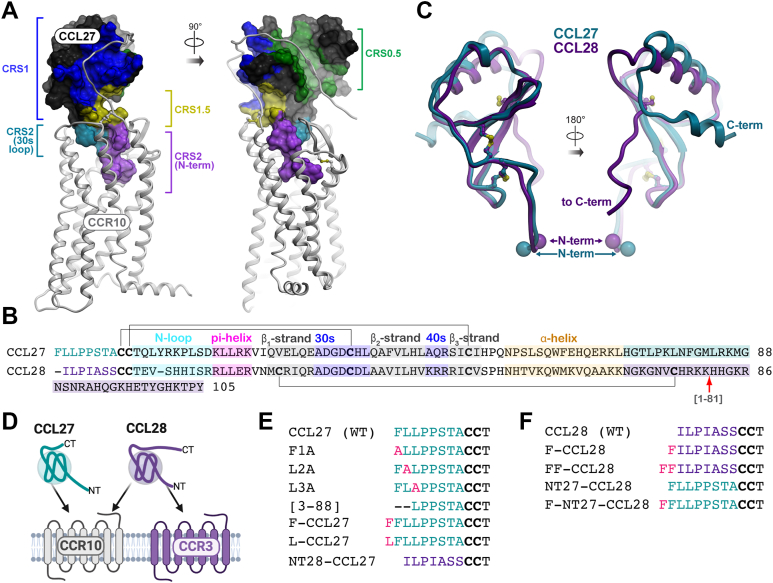
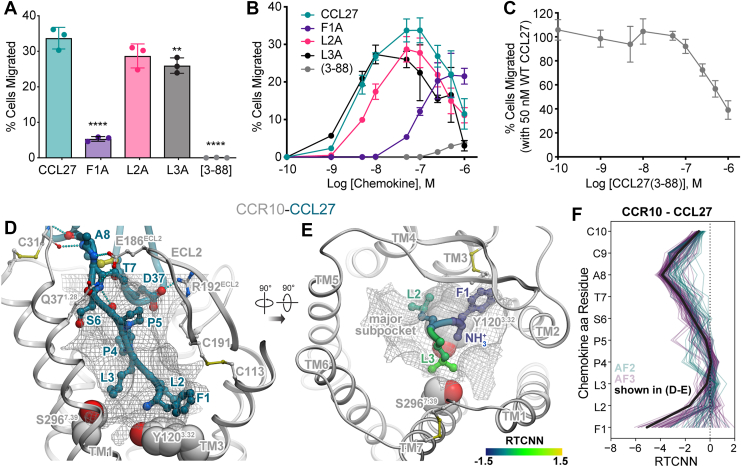
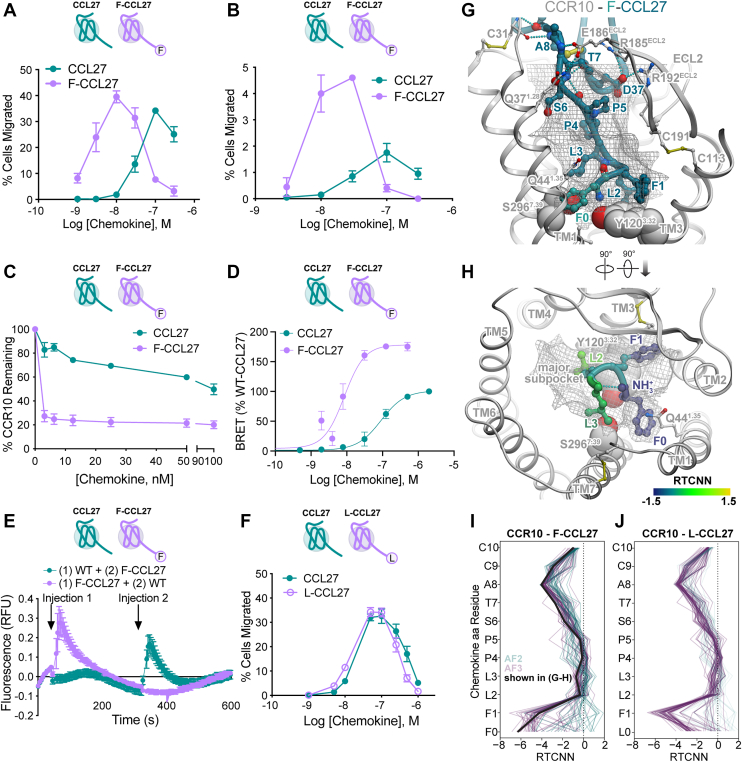
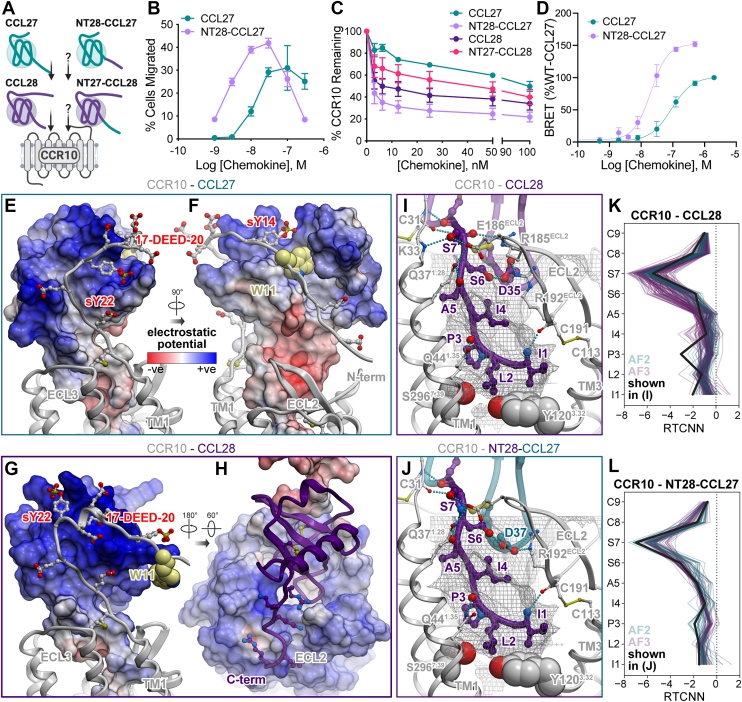
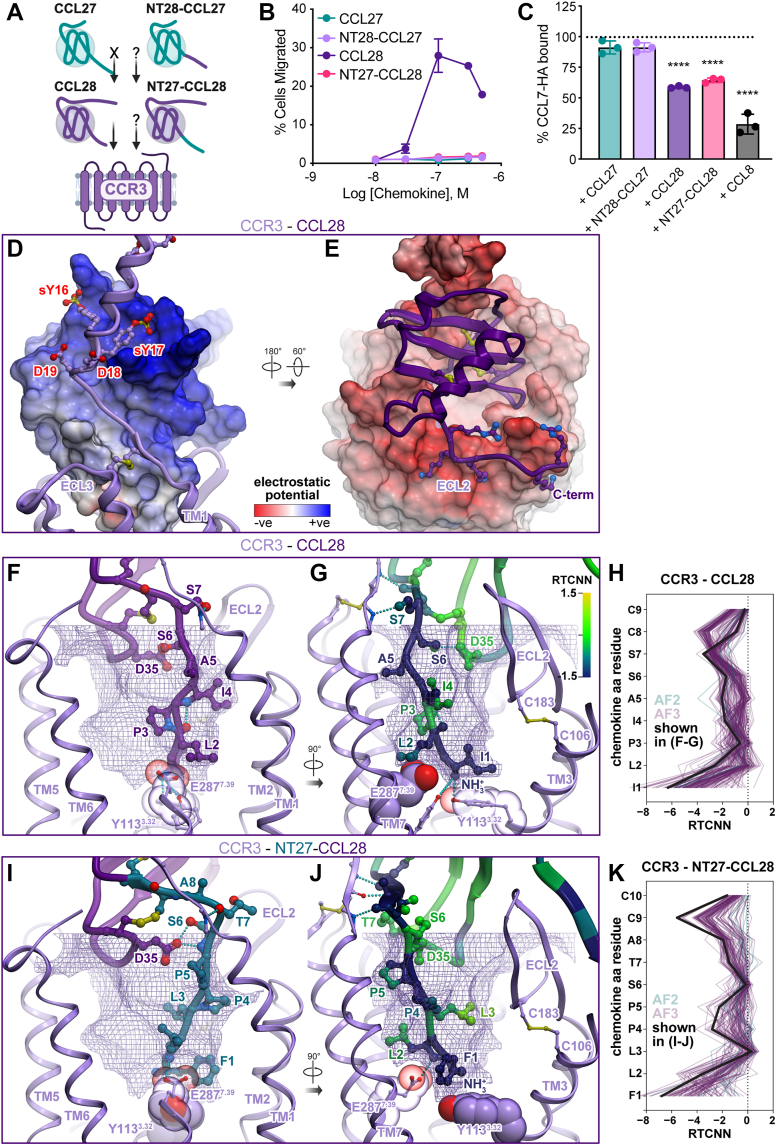
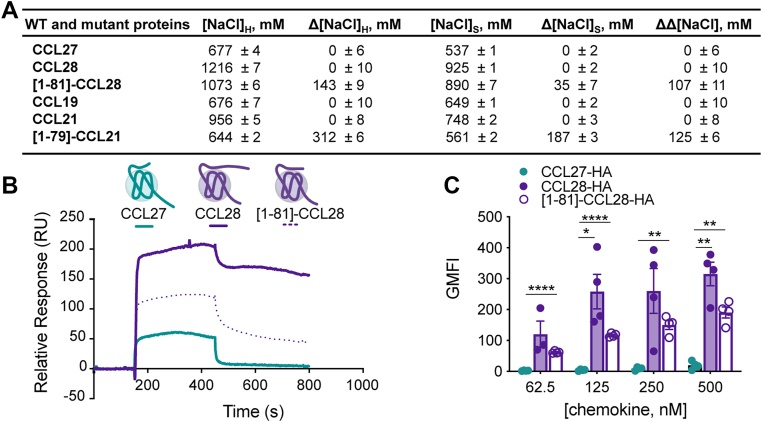
The distinct functional roles of chemokines CCL27 and CCL28 in epithelial immunity of skin and mucosal tissues, respectively, are coordinated by their shared receptor, CCR10, and the CCL28-specific receptor, CCR3. To identify determinants of receptor activation, internalization and binding specificity, we conducted structure-function studies focused on the N termini of these two chemokines. Deletion of two N-terminal residues of CCL27 resulted in a CCR10 antagonist, highlighting the critical roles of these residues in driving receptor pharmacology. Extension with a Phe produced a CCR10 superagonist by occupying a unique subpocket in the receptor. Swapping the CCL28 N terminus onto the CCL27 globular domain (NT28-CCL27) also resulted in a superagonist of CCR10, but the opposite swap (NT27-CCL28) showed equivalent or reduced activity compared to WT CCL28, indicating that the CCL28 N terminus is a stronger driver of CCR10 signaling. The effects of these mutations were rationalized by AlphaFold models of the CCR10 complexes. Modeling also revealed that the reduced size of the binding pocket, and more basic nature of the N terminus and extracellular loops of CCR3 compared to CCR10, contribute to its specificity for CCL28 while CCR10 accommodates both ligands. The basic nature of CCL28 also contributes to its high affinity for glycosaminoglycans and is likely important for its retention in mucosal tissues. These data illustrate how the modular nature of these chemokines enables their overlapping but nonredundant functions, and how this modularity can be exploited to produce engineered chemokines for probing or targeting CCR10 in disease.
Overview
The claims and statistics of this paper haven’t been checked yet.
Run the check — free, no account needed. It reads the open-access text and checks the sources it cites.
Integrity signals
Registry
Cites
Statistics
Figures
Verification
Claims the paper makes
The claims and statistics of this paper haven’t been checked yet.
Run the check — free, no account needed. It reads the open-access text and checks the sources it cites.
Self-check
Percentages, sums and reported differences re-computed from the paper’s own numbers.
The self-check needs the paper’s full text.
Citations
Cites
Highly accurate protein structure prediction with AlphaFold
Jumper, J., Evans, R., Pritzel, A., Green, T., Figurnov, M., Ronneberger, O., Tunyasuvunakool, K., Bates, R., Žídek, A., Potapenko, A., et al. (2021) · Nature · doi:10.1038/s41586-021-03819-2 · Cited by 43,764
Accurate structure prediction of biomolecular interactions with AlphaFold 3
Abramson, J., Adler, J., Dunger, J., Evans, R., Green, T., Pritzel, A., Ronneberger, O., Willmore, L., Ballard, A. J., Bambrick, J., et al. (2024) · Nature · doi:10.1038/s41586-024-07487-w · Cited by 15,861
Protein complex prediction with AlphaFold-Multimer
Evans, R., O’Neill, M., Pritzel, A., Antropova, N., Senior, A., Green, T., Žídek, A., Bates, R., Blackwell, S., Yim, J., et al. (2021) · doi:10.1101/2021.10.04.463034 · Cited by 3,808
A hierarchical approach to all‐atom protein loop prediction
Jacobson, M. P., Pincus, D. L., Rapp, C. S., Day, T., Honig, B. H., Shaw, D. E., & Friesner, R. A. (2004) · Proteins Structure Function and Bioinformatics · doi:10.1002/prot.10613 · Cited by 2,541
Chemokines and Chemokine Receptors: Positioning Cells for Host Defense and Immunity
Griffith, J. W., Sokol, C. L., & Luster, A. D. (2014) · Annual Review of Immunology · doi:10.1146/annurev-immunol-032713-120145 · Cited by 2,141
Tumour hypoxia promotes tolerance and angiogenesis via CCL28 and Treg cells
Facciabene, A., Peng, X., Hagemann, I. S., Balint, K., Barchetti, A., Wang, L.-P., Gimotty, P. A., Gilks, C. B., Lal, P., Zhang, L., et al. (2011) · Nature · doi:10.1038/nature10169 · Cited by 1,376
On the Role of the Crystal Environment in Determining Protein Side-chain Conformations
Jacobson, M. P., Friesner, R. A., Xiang, Z., & Honig, B. H. (2002) · Journal of Molecular Biology · doi:10.1016/s0022-2836(02)00470-9 · Cited by 1,310
The Chemokine Superfamily Revisited
Zlotnik, A., & Yoshie, O. (2012) · Immunity · doi:10.1016/j.immuni.2012.05.008 · Cited by 1,302
The VSGB 2.0 model: A next generation energy model for high resolution protein structure modeling
Li, J., Abel, R., Zhu, K., Cao, Y., Zhao, S., & Friesner, R. A. (2011) · Proteins: Structure, Function, and Bioinformatics · doi:10.1002/prot.23106 · Cited by 1,159
Regulatory T (Treg) cells in cancer: Can Treg cells be a new therapeutic target?
Ohue, Y., & Nishikawa, H. (2019) · Cancer Science · doi:10.1111/cas.14069 · Cited by 1,113
Abagyan, R. A., & Totrov, M. M. (1994) · Journal of Molecular Biology · doi:10.1006/jmbi.1994.1052 · Cited by 982
CCL27–CCR10 interactions regulate T cell–mediated skin inflammation
Homey, B., Alenius, H. T., Müller, A., Soto, H., Bowman, E. P., Yuan, W., McEvoy, L. M., Lauerma, A., Assmann, T., Bünemann, E., et al. (2002) · Nature Medicine · doi:10.1038/nm0202-157 · Cited by 807
Proudfoot, A. E. I., Handel, T. M., Johnson, Z., Lau, E. K., LiWang, P. J., Clark‐Lewis, I., Borlat, F., Wells, T. N. C., & Kosco‐Vilbois, M. H. (2003) · Proceedings of the National Academy of Sciences · doi:10.1073/pnas.0334864100 · Cited by 788
Self-citationRegulation of Receptor Trafficking by GRKs and Arrestins
Moore, C. A. C., Milano, S. K., & Benovic, J. (2006) · Annual Review of Physiology · doi:10.1146/annurev.physiol.69.022405.154712 · Cited by 711
Potent Inhibition of HIV-1 Infectivity in Macrophages and Lymphocytes by a Novel CCR5 Antagonist
Simmons, G., Clapham, P. R., Picard, L., Offord, R. E., Rosenkilde, M. M., Schwartz, T. W., Buser, R., Wells, T. N. C., & Proudfoot, A. E. I. (1997) · Science · doi:10.1126/science.276.5310.276 · Cited by 608
Lint, P. V., & Libert, C. (2007) · Journal of Leukocyte Biology · doi:10.1189/jlb.0607338 · Cited by 576
Kuschert, G. S. V., Coulin, F., Power, C. A., Proudfoot, A. E. I., Hubbard, R. E., Hoogewerf, A. J., & Wells, T. N. C. (1999) · Biochemistry · doi:10.1021/bi990711d · Cited by 575
CTACK, a skin-associated chemokine that preferentially attracts skin-homing memory T cells
Morales, J., Homey, B., Vicari, A. P., Hudak, S. A., Oldham, E. R., Hedrick, J. A., Orozco, R., Copeland, N. G., Jenkins, N. A., McEvoy, L. M., et al. (1999) · Proceedings of the National Academy of Sciences · doi:10.1073/pnas.96.25.14470 · Cited by 513
Glycosaminoglycans Mediate Cell Surface Oligomerization of Chemokines
Hoogewerf, A. J., Kuschert, G. S. V., Proudfoot, A. E. I., Borlat, F., Clark‐Lewis, I., Power, C., & Wells, T. N. C. (1997) · Biochemistry · doi:10.1021/bi971125s · Cited by 511
Clark-Lewis, I., Schumacher, C., Baggiolini, M., & Moser, B. (1991) · Journal of Biological Chemistry · doi:10.1016/s0021-9258(18)54472-0 · Cited by 425
Proudfoot, A. E. I., Power, C. A., Hoogewerf, A. J., Montjovent, M., Borlat, F., Offord, R. E., & Wells, T. N. C. (1996) · Journal of Biological Chemistry · doi:10.1074/jbc.271.5.2599 · Cited by 418
Mack, M., Luckow, B., Nelson, P. J., Cihak, J., Simmons, G., Clapham, P. R., Signoret, N. Y. M., Marsh, M., Stangassinger, M., Borlat, F., et al. (1998) · The Journal of Experimental Medicine · doi:10.1084/jem.187.8.1215 · Cited by 405
Docking and scoring with ICM: the benchmarking results and strategies for improvement
Neves, M. A. C., Totrov, M. M., & Abagyan, R. A. (2012) · Journal of Computer-Aided Molecular Design · doi:10.1007/s10822-012-9547-0 · Cited by 375
Kunkel, E. J., Kim, C. H., Lazarus, N. H., Vierra, M. A., Soler, D., Bowman, E. P., & Butcher, E. C. (2003) · Journal of Clinical Investigation · doi:10.1172/jci17244 · Cited by 347
High-throughput docking for lead generation
Abagyan, R. A., & Totrov, M. M. (2001) · Current Opinion in Chemical Biology · doi:10.1016/s1367-5931(00)00217-9 · Cited by 347
Chemokines and leukocyte traffic
Sallusto, F., & Baggiolini, M. (2008) · Nature Immunology · doi:10.1038/ni.f.214 · Cited by 344
Viral exploitation and subversion of the immune system through chemokine mimicry
Murphy, P. M. (2001) · Nature Immunology · doi:10.1038/84214 · Cited by 336
Homey, B., Wang, W., Soto, H., Buchanan, M. E., Wiesenborn, A., Catron, D., Müller, A., McClanahan, T. K., Dieu‐Nosjean, M., Orozco, R., et al. (2000) · The Journal of Immunology · doi:10.4049/jimmunol.164.7.3465 · Cited by 332
Schumann, K., Lämmermann, T., Bruckner, M., Legler, D. F., Polleux, J., Spatz, J. P., Schuler, G., Förster, R., Lutz, M. B., Sorokin, L., et al. (2010) · Immunity · doi:10.1016/j.immuni.2010.04.017 · Cited by 324
Pan, J., Kunkel, E. J., Gosslar, U., Lazarus, N., Langdon, P., Broadwell, K., Vierra, M. A., Genovese, M. C., Butcher, E. C., & Soler, D. (2000) · The Journal of Immunology · doi:10.4049/jimmunol.165.6.2943 · Cited by 321
LaMontagne, K. R., Littlewood-Evans, A. J., Schnell, C., O’Reilly, T., Wyder, L., Sánchez, T., Probst, B., Butler, J., Wood, A. W., Liau, G., et al. (2006) · Cancer Research · doi:10.1158/0008-5472.can-05-2001 · Cited by 302
Identification of a Novel Chemokine (CCL28), which Binds CCR10 (GPR2)
Wang, W., Soto, H., Oldham, E. R., Buchanan, M. E., Homey, B., Catron, D., Jenkins, N. A., Copeland, N. G., Gilbert, D. J., Nguyen, N. T., et al. (2000) · Journal of Biological Chemistry · doi:10.1074/jbc.m001461200 · Cited by 296
Gong, J.-H., & Clark‐Lewis, I. (1995) · The Journal of Experimental Medicine · doi:10.1084/jem.181.2.631 · Cited by 279
CCL28 Has Dual Roles in Mucosal Immunity as a Chemokine with Broad-Spectrum Antimicrobial Activity
Hieshima, K., Ohtani, H., Shibano, M., Izawa, D., Nakayama, T., Kawasaki, Y., Shiba, F., Shiota, M., Katou, F., Saito, T., et al. (2003) · The Journal of Immunology · doi:10.4049/jimmunol.170.3.1452 · Cited by 261
Lazarus, N. H., Kunkel, E. J., Johnston, B., Wilson, E., Youngman, K. R., & Butcher, E. C. (2003) · The Journal of Immunology · doi:10.4049/jimmunol.170.7.3799 · Cited by 250
Rot, A. (1993) · European Journal of Immunology · doi:10.1002/eji.1830230150 · Cited by 217
Immune Evasion by Murine Melanoma Mediated through CC Chemokine Receptor-10
Murakami, T., Cardones, A. R., Finkelstein, S. E., Restifo, N. P., Klaunberg, B. A., Nestle, F. O., Castillo, S. S., Dennis, P. A., & Hwang, S. T. (2003) · The Journal of Experimental Medicine · doi:10.1084/jem.20030593 · Cited by 190
Zheng, Y., Han, G. W., Abagyan, R. A., Wu, B., Stevens, R. C., Cherezov, V., Kufareva, I., & Handel, T. M. (2017) · Immunity · doi:10.1016/j.immuni.2017.05.002 · Cited by 168
Self-citationProfiling Heparin–Chemokine Interactions Using Synthetic Tools
de Paz, J. L., Moseman, E. A., Noti, C., Polito, L., von Andrian, U. H., & Seeberger, P. H. (2007) · ACS Chemical Biology · doi:10.1021/cb700159m · Cited by 167
Hartley, O., Gaertner, H., Wilken, J., Thompson, D. A., Fish, R., Ramos, A. G., Pastore, C., Dufour, B., Cerini, F., Melotti, A., et al. (2004) · Proceedings of the National Academy of Sciences · doi:10.1073/pnas.0404802101 · Cited by 156
Hypoxia-induced CCL28 promotes recruitment of regulatory T cells and tumor growth in liver cancer
Ren, L., Yu, Y., Wang, L., Zhu, Z., Lu, R., & Yao, Z. (2016) · Oncotarget · doi:10.18632/oncotarget.12409 · Cited by 149
Biased Agonism as a Mechanism for Differential Signaling by Chemokine Receptors
Rajagopal, S., Bassoni, D. L., Campbell, J. J., Gerard, N. P., Gerard, C. J., & Wehrman, T. S. (2013) · Journal of Biological Chemistry · doi:10.1074/jbc.m113.479113 · Cited by 144
Ferguson, I., Patiño-Escobar, B., Tuomivaara, S. T., Lin, Y.-H. T., Nix, M. A., Leung, K., Kasap, C., Ramos, E., Vasquez, W. N., Talbot, A., et al. (2022) · Nature Communications · doi:10.1038/s41467-022-31810-6 · Cited by 127
CCR10 and its ligands in regulation of epithelial immunity and diseases
Xiong, N., Fu, Y., Hu, S., Xia, M., & Yang, J. (2012) · Protein & Cell · doi:10.1007/s13238-012-2927-3 · Cited by 124
Laguri, C., Sadir, R., Rueda, P., Baleux, F., Gans, P., Arenzana‐Seisdedos, F., & Lortat‐Jacob, H. (2007) · PLoS ONE · doi:10.1371/journal.pone.0001110 · Cited by 118
The dependence of chemokine–glycosaminoglycan interactions on chemokine oligomerization
Dyer, D. P., Salanga, C. L., Volkman, B. F., Kawamura, T., & Handel, T. M. (2015) · Glycobiology · doi:10.1093/glycob/cwv100 · Cited by 117
Self-citationJarnagin, K., Grunberger, D., Mulkins, M. A., et al. (1999) · Biochemistry · doi:10.1021/bi9912239 · Cited by 116
Pease, J. E., Wang, J., Ponath, P. D., & Murphy, P. M. (1998) · Journal of Biological Chemistry · doi:10.1074/jbc.273.32.19972 · Cited by 114
Structural basis of ligand interaction with atypical chemokine receptor 3
Gustavsson, M., Wang, L., van Gils, N., Stephens, B. S., Zhang, P., Schall, T. J., Yang, S., Abagyan, R. A., Chance, M. R., Kufareva, I., et al. (2017) · Nature Communications · doi:10.1038/ncomms14135 · Cited by 111
Self-citationStructural basis for chemokine recognition and receptor activation of chemokine receptor CCR5
Zhang, H., Chen, K., Tan, Q., Shao, Q., Han, S., Zhang, C., Yi, C., Chu, X., Zhu, Y., Xu, Y., et al. (2021) · Nature Communications · doi:10.1038/s41467-021-24438-5 · Cited by 108
Dyer, D. P., Salanga, C. L., Johns, S. C., Valdambrini, E., Fuster, M. M., Milner, C. M., Day, A. J., & Handel, T. M. (2016) · Journal of Biological Chemistry · doi:10.1074/jbc.m116.720953 · Cited by 104
Self-citationProteolytic processing of chemokines: Implications in physiological and pathological conditions
Wolf, M., Albrecht, S., & Märki, C. (2008) · The International Journal of Biochemistry & Cell Biology · doi:10.1016/j.biocel.2007.12.009 · Cited by 103
Overview of the mechanisms regulating chemokine activity and availability
Mortier, A., Damme, J. V., & Proost, P. (2012) · Immunology Letters · doi:10.1016/j.imlet.2012.04.015 · Cited by 102
Ziarek, J. J., Kleist, A. B., London, N., Raveh, B., Montpas, N., Bonneterre, J., St‐Onge, G., DiCosmo-Ponticello, C. J., Koplinski, C. A., Roy, I., et al. (2017) · Science Signaling · doi:10.1126/scisignal.aah5756 · Cited by 99
CCR5 Revisited: How Mechanisms of HIV Entry Govern AIDS Pathogenesis
Brelot, A., & Chakrabarti, L. A. (2018) · Journal of Molecular Biology · doi:10.1016/j.jmb.2018.06.027 · Cited by 92
Xia, M., Hu, S., Fu, Y., Jin, W., Yi, Q., Matsui, Y., Yang, J., McDowell, M. A., Sarkar, S., Kalia, V., et al. (2014) · Journal of Allergy and Clinical Immunology · doi:10.1016/j.jaci.2014.03.010 · Cited by 85
Structural basis of the activation of the CC chemokine receptor 5 by a chemokine agonist
Isaikina, P., Tsai, C., Dietz, N., Pamula, F., Grahl, A., Goldie, K. N., Guixà-González, R., Branco, C., Paolini‐Bertrand, M., Calo, N., et al. (2021) · Science Advances · doi:10.1126/sciadv.abg8685 · Cited by 83
Structures of atypical chemokine receptor 3 reveal the basis for its promiscuity and signaling bias
Yen, Y., Schafer, C. T., Gustavsson, M. B., Eberle, S. A., Dominik, P. K., Deneka, D., Zhang, P., Schall, T. J., Kossiakoff, A. A., Tesmer, J. J. G., et al. (2022) · Science Advances · doi:10.1126/sciadv.abn8063 · Cited by 79
Self-citationGray, A. L., Karlsson, R. T. G., Roberts, A. R. E., Ridley, A. J. L., Pun, N., Khan, B., Lawless, C., Luís, R., Szpakowska, M., Chevigné, A., et al. (2023) · Cell Reports · doi:10.1016/j.celrep.2022.111930 · Cited by 77
Self-citationKufareva, I., Stephens, B. S., Holden, L. G., Qin, L., Zhao, C., Kawamura, T., Abagyan, R. A., & Handel, T. M. (2014) · Proceedings of the National Academy of Sciences · doi:10.1073/pnas.1417037111 · Cited by 72
Self-citationSzpakowska, M., Nevins, A. M., Meyrath, M., Rhainds, D., D’huys, T., Guité‐Vinet, F., Dupuis, N., Gauthier, P., Counson, M., Kleist, A. B., et al. (2017) · British Journal of Pharmacology · doi:10.1111/bph.14132 · Cited by 72
Cutaneous T-Cell Lymphoma: Roles for Chemokines and Chemokine Receptors
Wu, X.-S., Lonsdorf, A. S., & Hwang, S. T. (2009) · Journal of Investigative Dermatology · doi:10.1038/jid.2009.45 · Cited by 70
Chemokine Receptors as Targets for Cancer Therapy
Wu, X., Lee, V. C., Chevalier, É., & Hwang, S. T. (2009) · Current Pharmaceutical Design · doi:10.2174/138161209787582165 · Cited by 67
Targeting chemokine receptors in allergic disease
Pease, J. E. (2011) · Biochemical Journal · doi:10.1042/bj20101132 · Cited by 66
Kutzler, M. A., Kraynyak, K. A., Nagle, S. J., Parkinson, R. M., Zharikova, D., Chattergoon, M. A., Maguire, H., Muthumani, K., Ugen, K. E., & Weiner, D. B. (2009) · Gene Therapy · doi:10.1038/gt.2009.112 · Cited by 63
Chen, Z., Kim, S.-J., Essani, A. B., Volin, M. V., Vila, O. M., Swedler, W. I., Arami, S., Volkov, S., Sardin, L. V., Sweiss, N., et al. (2014) · Annals of the Rheumatic Diseases · doi:10.1136/annrheumdis-2013-204530 · Cited by 62
Hirose, J., Kawashima, H., Willis, M. S., Springer, T. A., Hasegawa, H., Yoshie, O., & Miyasaka, M. (2002) · Biochimica et Biophysica Acta (BBA) - General Subjects · doi:10.1016/s0304-4165(02)00232-5 · Cited by 61
Recent progress in the development of antagonists to the chemokine receptors CCR3 and CCR4
Pease, J. E., & Horuk, R. (2014) · Expert Opinion on Drug Discovery · doi:10.1517/17460441.2014.897324 · Cited by 59
Chen, L. (2006) · International Immunology · doi:10.1093/intimm/dxl054 · Cited by 58
Jansma, A. L., Kirkpatrick, J., Hsu, A. R., Handel, T. M., & Nietlispach, D. (2010) · Journal of Biological Chemistry · doi:10.1074/jbc.m109.091108 · Cited by 54
Self-citationWu, Q., Chen, J., Chen, Y., Cai, L., Wang, X.-Z., Guo, W.-H., & Zheng, J. (2018) · Cell Death and Disease · doi:10.1038/s41419-018-0267-9 · Cited by 53
Salanga, C. L., Dyer, D. P., Kiselar, J., Gupta, S., Chance, M. R., & Handel, T. M. (2014) · Journal of Biological Chemistry · doi:10.1074/jbc.m114.547737 · Cited by 52
Self-citationKraynyak, K. A., Kutzler, M. A., Cisper, N. J., Khan, A. S., Draghia, R., Sardesal, N. Y., Lewis, M. G., Yan, J., & Weiner, D. B. (2010) · Vaccine · doi:10.1016/j.vaccine.2009.10.095 · Cited by 49
Chemokines as targets for therapy
Garin, A., & Proudfoot, A. E. I. (2011) · Experimental Cell Research · doi:10.1016/j.yexcr.2010.12.021 · Cited by 49
Chapter 4 Interactions of Chemokines with Glycosaminoglycans
Hamel, D. J., Sielaff, I., Proudfoot, A. E. I., & Handel, T. M. (2009) · Methods in enzymology on CD-ROM/Methods in enzymology · doi:10.1016/s0076-6879(09)05404-4 · Cited by 48
Self-citationParadis, J. S., Ly, S., Blondel-Tepaz, É., Galan, J. A., Beautrait, A., Scott, M. G. H., Enslen, H., Marullo, S., Roux, P. P., & Bouvier, M. (2015) · Proceedings of the National Academy of Sciences · doi:10.1073/pnas.1508836112 · Cited by 48
The antimicrobial activity of CCL28 is dependent on C‐terminal positively‐charged amino acids
Liu, B., & Wilson, E. (2009) · European Journal of Immunology · doi:10.1002/eji.200939819 · Cited by 48
Dual Targeting of the Chemokine Receptors CXCR4 and ACKR3 with Novel Engineered Chemokines
Hanes, M. S., Salanga, C. L., Chowdry, A. B., Comerford, I., McColl, S. R., Kufareva, I., & Handel, T. M. (2015) · Journal of Biological Chemistry · doi:10.1074/jbc.m115.675108 · Cited by 47
Self-citationA role for CCL28–CCR3 in T-cell homing to the human upper airway mucosa
Danilova, E., Skrindo, I., Gran, E., Hales, B. J., Smith, W. A., Jahnsen, J., Johansen, F., Jahnsen, F. L., & Bækkevold, E. S. (2014) · Mucosal Immunology · doi:10.1038/mi.2014.46 · Cited by 42
Structural insights into the activation and inhibition of CXC chemokine receptor 3
Jiao, H., Pang, B., Liu, A., Chen, Q., Pan, Q., Wang, X., Xu, Y., Chiang, Y., Ren, R., & Hu, H. (2024) · Nature Structural & Molecular Biology · doi:10.1038/s41594-023-01175-5 · Cited by 40
Structure/Function Relationships of CCR8 Agonists and Antagonists
Fox, J. M., Najarro, P., Smith, G. L., Struyf, S., Proost, P., & Pease, J. E. (2006) · Journal of Biological Chemistry · doi:10.1074/jbc.m605584200 · Cited by 36
CCR10+ epithelial cells from idiopathic pulmonary fibrosis lungs drive remodeling
Habiel, D. M., Espíndola, M. S., Jones, I. C., Coelho, A. L., Stripp, B. R., & Hogaboam, C. M. (2018) · JCI Insight · doi:10.1172/jci.insight.122211 · Cited by 35
Terefe, E. M., Opulencia, M. J. C., Rakhshani, A., Ansari, M. J., Sergeevna, S. E., Awadh, S. A., Polatova, D. S., Abdulkadhim, A. H., Mustafa, Y. F., Kzar, H. H., et al. (2022) · Expert Reviews in Molecular Medicine · doi:10.1017/erm.2022.28 · Cited by 33
Huang, V., Lonsdorf, A. S., Fang, L., Kakinuma, T., Lee, V. C., Cha, E., Zhang, H., Nagao, K., Zaleska, M., Olszewski, W. L., et al. (2008) · The Journal of Immunology · doi:10.4049/jimmunol.180.10.6462 · Cited by 31
Engineering and screening the N-terminus of chemokines for drug discovery
Chevigné, A., Fiévez, V., Schmit, J., & Deroo, S. (2011) · Biochemical Pharmacology · doi:10.1016/j.bcp.2011.07.091 · Cited by 26
Systematic Assessment of Chemokine Signaling at Chemokine Receptors CCR4, CCR7 and CCR10
Lim, H. D., Lane, J. R., Canals, M., et al. (2021) · International Journal of Molecular Sciences · doi:10.3390/ijms22084232 · Cited by 26
Transferring the C-terminus of the chemokine CCL21 to CCL19 confers enhanced heparin binding
Barmore, A. J., Castex, S. M., Gouletas, B. A., Griffith, A. J., Metz, S. W., Muelder, N. G., Populin, M. J., Sackett, D. M., Schuster, A. M., & Veldkamp, C. T. (2016) · Biochemical and Biophysical Research Communications · doi:10.1016/j.bbrc.2016.06.098 · Cited by 22
Thomas, M. A., He, J., Peterson, F. C., Huppler, A. R., & Volkman, B. F. (2018) · Journal of Molecular Biology · doi:10.1016/j.jmb.2018.06.001 · Cited by 20
Nagakubo, D., Yoshie, O., & Hirata, T. (2016) · Cellular Immunology · doi:10.1016/j.cellimm.2016.02.001 · Cited by 19
Gary, E. N., Tursi, N. J., Warner, B. M., Parzych, E. M., Ali, A., Frase, D. M., Moffat, E., Embury‐Hyatt, C., Smith, T. R. F., Broderick, K. E., et al. (2022) · Cell Reports Medicine · doi:10.1016/j.xcrm.2022.100693 · Cited by 18
Jiang, S., Lin, X., Wu, L., Wang, L., Wu, Y., Xu, Z., & Xu, F. (2024) · Science Advances · doi:10.1126/sciadv.adj7500 · Cited by 16
Chapter 16 Phosphoproteomic Analysis of Chemokine Signaling Networks
O’Hayre, M., Salanga, C. L., Dorrestein, P. C., & Handel, T. M. (2009) · Methods in enzymology on CD-ROM/Methods in enzymology · doi:10.1016/s0076-6879(09)05216-1 · Cited by 15
Self-citationGary, E. N., Kathuria, N., Makurumidze, G., Curatola, A., Ramamurthi, A., Bernui, M., Myles, D. J. F., Yan, J., Pankhong, P., Muthumani, K., et al. (2020) · Vaccine · doi:10.1016/j.vaccine.2020.01.023 · Cited by 13
Pinheiro, I., Dawson, J. R. D., Calo, N., Paolini‐Bertrand, M., Akondi, K. B., Tan, G., Handel, T. M., Kufareva, I., & Hartley, O. (2025) · Nature Communications · doi:10.1038/s41467-025-62321-9 · Cited by 13
Self-citationPease, J. E., & Williams, T. J. (2018) · Journal of Allergy and Clinical Immunology · doi:10.1016/j.jaci.2018.10.052 · Cited by 12
CCL28 modulates neutrophil responses during infection with mucosal pathogens
Walker, G. T., Pérez-López, A., Silva, S., Lee, M. H., Bjånes, E., Dillon, N. A., Brandt, S. L., Gerner, R. R., Melchior, K., Norton, G. J., et al. (2024) · eLife · doi:10.7554/elife.78206 · Cited by 10
An optimised faecal microRNA sequencing pipeline reveals fibrosis in Trichuris muris infection
Layton, E., Goldsworthy, S., Yang, E., Ong, W. Y., Sutherland, T. E., Bancroft, A. J., Thompson, S., Au, B. V., Griffiths‐Jones, S., Grencis, R. K., et al. (2025) · Nature Communications · doi:10.1038/s41467-025-56698-w · Cited by 8
Raush, E., Totrov, M. M., Hoop, C. L., Knowlan, K., Bianchi, R., & Tarasova, N. I. (2025) · Journal of Chemical Information and Modeling · doi:10.1021/acs.jcim.5c01335 · Cited by 8
Molecular determinants of antagonist interactions with chemokine receptors CCR2 and CCR5Preprint
Dawson, J. R. D., Wadman, G. M., Zhang, P., Tebben, A. J., Carter, P. H., Gu, S., Shroka, T. M., Roman, L. B., Salanga, C. L., Handel, T. M., et al. (2023) · bioRxiv (Cold Spring Harbor Laboratory) · doi:10.1101/2023.11.15.567150 · Cited by 7
Self-citationLeukocytes have a heparan sulfate glycocalyx that regulates recruitment during inflammationPreprint
Priestley, M. J., Hains, A. K., Mulholland, I. Z., Spijkers‐Shaw, S., Zubkova, O. V., Saunders, A., & Dyer, D. P. (2024) · bioRxiv (Cold Spring Harbor Laboratory) · doi:10.1101/2024.05.21.595098 · Cited by 6
Self-citationGu, S., Maurya, S. R., Lona, A., et al. (2025) · Molecular Pharmacology · doi:10.1016/j.molpha.2025.100020 · Cited by 2
Research works printed but not linked: 1
- Ballesteros, 1995, 10, S1043
Metadata
- Authors
- Huang, M., Celniker, A. F., Chitsazi, R., Dyer, D. P., Jansma, A. L., Kufareva, I., Salanga, C. L., & Handel, T. M.
- Affiliations
- University of California San Diego (US)
- Manchester Academic Health Science Centre (GB)
- Corresponding author
- Kufareva, Irina
- Salanga, Catherina L.
- Handel, Tracy M.
- ORCID
- Venue
- Journal of Biological Chemistry
- Publisher
- Elsevier BV
- Published
- 2025-11
- Volume
- 301
- Issue
- 11
- Pages
- 110736
- ISSN
- 0021-9258 (ISSN-L)
- PMC
- PMC12556802
- OpenAlex
- W4414366111
- Cited by
- 1
- References
- 101
- Citations by year
- 2026: 1
- FWCI
- 0.41
- Type
- journal article
- Language
- en
- Open access
- gold
- doi.org
- Licence
- Locations
- Journal of Biological Chemistry (publishedVersion, cc-by)
- bioRxiv (Cold Spring Harbor Laboratory) (acceptedVersion)
- Europe PMC (PubMed Central) (publishedVersion, cc-by)
- PubMed (publishedVersion)
- Research Explorer (The University of Manchester) (publishedVersion, other-oa)
- PubMed Central (submittedVersion)
- Research Explorer (The University of Manchester) (submittedVersion)
- Funders
- National Institutes of Health (R01 GM136202)
- University of California San Diego
- Topics
- Health Sciences › Medicine › Oncology › Chemokine receptors and signaling
- Life Sciences › Biochemistry, Genetics and Molecular Biology › Molecular Biology › Receptor Mechanisms and Signaling
- Life Sciences › Immunology and Microbiology › Immunology › Cytokine Signaling Pathways and Interactions
- Keywords
- CCL27, CCL28, CCR10, CCR3, receptor activation, N-terminal residues, receptor internalization, binding specificity, glycosaminoglycan binding, epithelial immunity, mucosal immunity, structure functions
About these checks
Registry, retraction, Cites and statistics results are computed, not judged, with one exception: a printed reference that no index lists is read once by a model before it counts as a citation error. Claims are extracted by a model and kept only when their quote appears verbatim in the text; each cited source is then checked, with a model’s help, for whether it says what the claim relies on. Those verdicts can be wrong — read the claim’s quote and the cited source before relying on one.
Statistics and arithmetic are recomputed, not judged.
Confidence bands are shown only for fields calibrated on our annotated test set. None is calibrated yet, so no band is shown.
What counts as a claim ›How we measure confidence ›How we check this ›
Are you an author, or do you see a problem with this page? Request a review
Data sources
Bibliographic data: Semantic Scholar, OpenAlex, Crossref.
Contains information from the Semantic Scholar Academic Graph Datasets, made available under the ODC Attribution License (ODC-BY 1.0).
Semantic Scholar’s data is described in: Kinney, R., et al. (2023). The Semantic Scholar Open Data Platform. arXiv:2301.10140.
