

Meteorological linkage of Malaria cases in the eastern state of India
The DOI matches its Crossref record; 4 of the 4 references it cites were found in a registry or an index.
Abstract
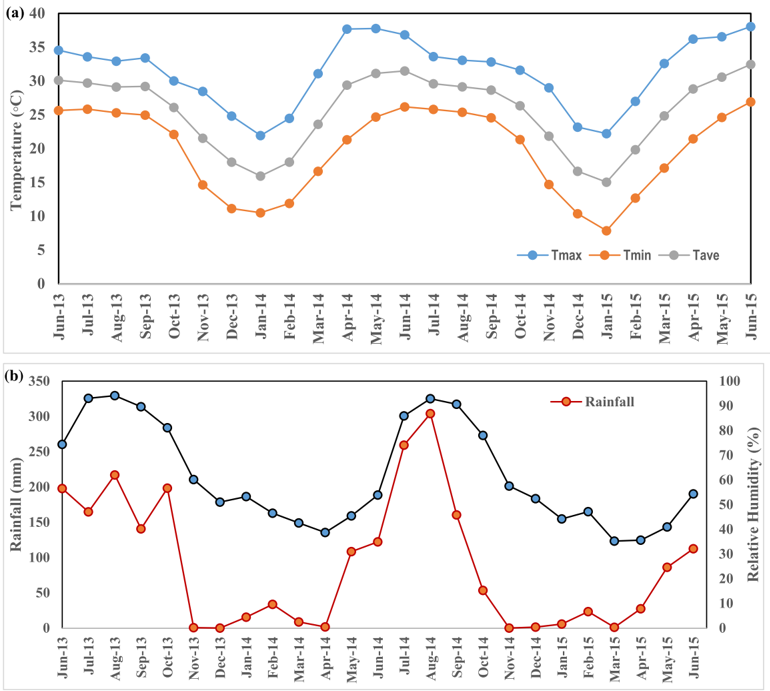
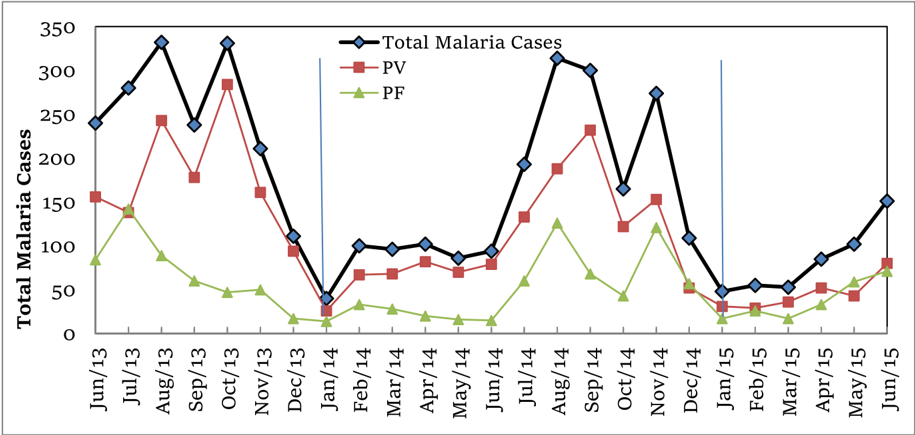
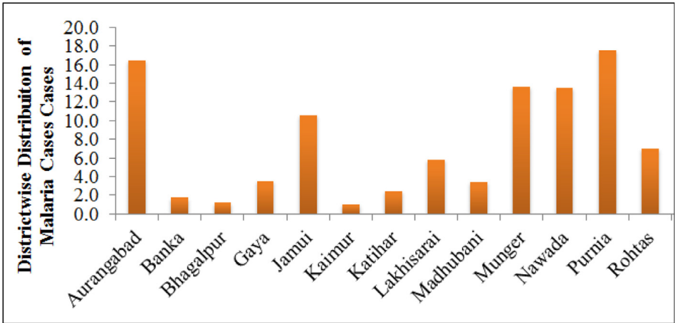
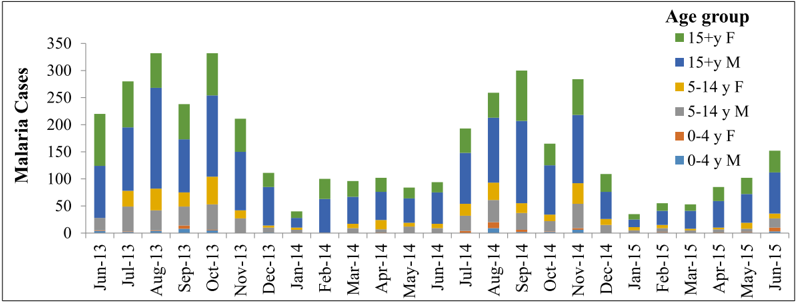
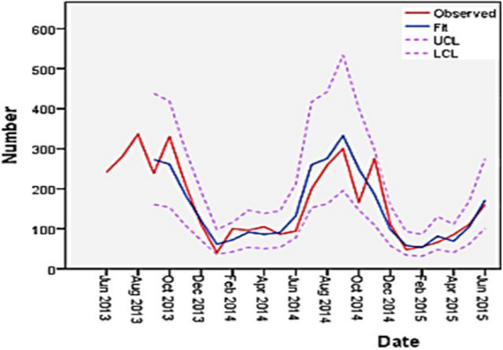
Changing climate patterns impact sectors such as agriculture, hydrology, health, and others. Malaria is a vector-borne disease significantly associated with changing climate, rampant in Bihar State, India. Hence, the current study aimed to analyse the status and trends of malaria in Bihar with meteorological covariates. It is observed that the maximum cases are reported in the monsoon and post-monsoon phases of the year. Purnia district shows the maximum load. Males of more than 15 years of age are commonly affected. The monthly maximal, minimal, and average temperature, relative humidity, and rainfall were associated with malaria cases with a significant lag effect of 3, 1, 2, 0, and 1 month, respectively. It is depicted that one month before rainfall (i.e. lag 1), two months before (i.e. lag 2) average temperature and the current month for humidity predicts the incidence of malaria occurrence.
Overview
The claims and statistics of this paper haven’t been checked yet.
Free: it reads the open-access text and checks the first 5 claims that cite a source we can check. Create a free account to check every claim.
Integrity signals
Registry
Cites
Statistics
Figures
Verification
Claims the paper makes
The claims and statistics of this paper haven’t been checked yet.
Free: it reads the open-access text and checks the first 5 claims that cite a source we can check. Create a free account to check every claim.
Claims other papers make about this one
Each is checked against this paper’s own text: does it say what the citing paper says it does?
The cited source says what the claim attributes to it.
In the citing paper
“Additionally, many existing studies use modeling frameworks that assume a Poisson distribution without formally testing the equidispersion assumption [18][19][20].”
From Modeling the association between lagged climatic factors and malaria incidence in Ghana (2026) · cites this paper as [19]
Self-check
Percentages, sums and reported differences re-computed from the paper’s own numbers.
The self-check needs the paper’s full text.
Citations
Cites
Pai, D. S., Rajeevan, M., Sreejith, O. P., Mukhopadhyay, B., & Satbha, N. S. (2014) · MAUSAM · doi:10.54302/mausam.v65i1.851 · Cited by 2,072
Association between climate variability and malaria epidemics in the East African highlands
Zhou, G., Minakawa, N., Githeko, A. K., & Yan, G. (2004) · Proceedings of the National Academy of Sciences · doi:10.1073/pnas.0308714100 · Cited by 498
Climate change and malaria: analysis of the SRES climate and socio-economic scenarios
van Lieshout, M., Kovats, R. S., Livermore, M. T. J., & Martens, P. (2004) · Global Environmental Change · doi:10.1016/j.gloenvcha.2003.10.009 · Cited by 254
Space-time variation of malaria incidence in Yunnan province, China
Clements, A. C., Barnett, A. G., Cheng, Z. W., Snow, R. W., & Zhou, H. N. (2009) · Malaria Journal · doi:10.1186/1475-2875-8-180 · Cited by 4
Research works printed but not linked: 38
- Martens P, Hall L. Malaria on the move : human population movement and malaria transmission. Malaria on the move : human population movement and malaria transmission. Emerg Infect Dis 2000;103(April):1-7. doi: 10.3201/ eid0602.000202. · DOI · Paper page
- Kant R. Global malaria burden and achieving universal coverage of interventions: a glimpse on progress and impact. Curr Sci 2011;101(3):286-92 [Online]. Avail- able: http://www.jstor.org/stable/24078506.
- Who -World Health Organization. The world health report 2013: research for universal health coverage. World Heal. Organ. Press; 2013. p. 146.
- Lal S, Sonal GS, Phukan PK. Status of Malaria in India. J Indian Acad Clin Med 2000;5:19-23.
- Varun T, Sharma A, Yadav R, Agrawal OP, Sukumaran D, Vijay V. Characteristics of the larval breeding sites of Anopheles culicifacies sibling species in Madhya Pra- desh, India. JMal Res Rev 2013;1(5):47-53.
- S.M. Ahmed, R. Haque, U. Haque, and A. Hossain, "Knowledge on the transmis- sion, prevention and treatment of malaria among two endemic populations of Bangladesh and their health-seeking behaviour," vol. 11, pp. 1-11, 2009, doi: 10.1186/1475-2875-8-173. · DOI
- R.W. Sutherst, "AMB 2004 -Global change and human vulnerability... -Sutherst - Clin Microbiol Rev.pdf," vol. 17, no. 1, pp. 136-173, 2004, doi: 10.1128/ CMR.17.1.136-173.2004. · DOI · Paper page
- Lindblade KA, Walker ED, Onapa AW, Katungu J, Wilson ML. Highland malaria in Uganda: prospective analysis of an epidemic associated with El Niño. Trans R Soc Trop Med Hyg 1999;93(5):480-7. · DOI · Paper page
- O.J.T. Bri€ et, P. Vounatsou, D.M. Gunawardena, G.N.L. Galappaththy, and P.H. Amer- asinghe, "Temporal correlation between malaria and rainfall in Sri Lanka," vol. 14, pp. 1-14, 2008, doi: 10.1186/1475-2875-7-77. · DOI · Paper page
- Solomon S, Qin D, Manning M, Averyt K, Marquis M. Climate change 2007-the physical science basis: working group i contribution to the fourth assessment report of the ipcc, 4. Cambridge university press; 2007.
- Gould EA, Higgs S. Impact of climate change and other factors on emerging arbo- virus diseases. Trans R Soc Trop Med Hyg Feb. 2009;103(2):109-21. doi: 10.1016/ j.trstmh.2008.07.025. · DOI · Paper page
- Gillies MT. Anopheline mosquitoes: vector bahaviour and bionomics. Malaria, Princ. Pract. Malariol. 1988;1:453-83.
- Dhiman RC, Pillai CR, Subbarao SK. Investigation of malaria outbreak in Bahraich district, Uttar Pradesh. Indian J Med Res 2001;113(MAY):186-91.
- Tesfaye K, et al. Climate variability and change in Bihar, India: challenges and opportunities for sustainable crop production. Sustain 2017;9(11):1-22. doi: 10.3390/su9111998. · DOI
- Macdonald G. The epidemiology and control of malaria. Epidemiol. Control Malaria. 1957.
- Martens WJM, Niessen LW, Rotmans J, Jetten TH, McMichael AJ. Potential impact of global climate change on malaria risk. Environ Health Perspect 1995;103 (5):458-64. doi: 10.1289/ehp.95103458. · DOI · Paper page
- Kumar V, et al. Forecasting malaria cases using climatic factors in Delhi, India: a time series analysis. Malar. Res. Treat. 2014;2014:482851. doi: 10.1155/2014/ 482851. · DOI
- Sarkar S, Singh P, Lingala MAL, Verma P, Dhiman RC. Malaria risk map for India based on climate, ecology and geographical modelling. Geospat. Health 2019;14 (2):281-92. doi: 10.4081/gh.2019.767. · doi:10.4081/gh.2019.767
- Caminade C, et al. Impact of climate change on global malaria distribution. Proc Natl Acad Sci U S A 2014;111(9):3286-91. doi: 10.1073/pnas.1302089111. · DOI · Paper page
- R.S. Parihar, P.K. Bal, V. Kumar, and S.K. Mishra, "Numerical modeling of the dynamics of malaria transmission in a highly endemic region of India," no. July, pp. 1-9, 2019, doi: 10.1038/s41598-019-47212-6. · DOI
- Pisudde PM, Kumar P, Sarthi PP, Deshmukh PR. Climatic Determinants of Japanese Encephalitis in Bihar State of India : a time-series poisson regression analysis. J Commun Dis 2017;49(4):13-8. doi: 10.24321/0019.5138.201729. · DOI
- Parth Sarthi P, Kumar P, Ghosh S. Possible future rainfall over Gangetic Plains (GP), India, in multi-model simulations of CMIP3 and CMIP5. Theor Appl Climatol 2015. doi: 10.1007/s00704-015-1447-5. · DOI
- Parth Sarthi P, Kumar P, Ghosh S. Possible future rainfall over Gangetic Plains (GP), India, in multi-model simulations of CMIP3 and CMIP5. Theor Appl Climatol 2016;124(3-4):691-701. doi: 10.1007/s00704-015-1447-5. · DOI
- Kumar, P., Sarthi, P.P. Surface Temperature Evaluation and Future Projections Over India Using CMIP5 Models. Pure Appl. Geophys. 2019;176:5177-5201. https://doi.org/10.1007/s00024-019-02203-6 · DOI
- Kalnay E, et al. The NCEP/NCAR 40-year reanalysis project. Bull Am Meteorol Soc 1996;77(3):437-71 doi: 10.1175/1520-0477(1996)077<0437:TNYRP>2.0.CO;2. · DOI · Paper page
- Lingala MAL. Journal of Infection and Public Health Effect of meteorological varia- bles on Plasmodium vivax and Plasmodium falciparum malaria in outbreak prone districts of. J. Infect. Public Health 2017;10(6):875-80. doi: 10.1016/j.jiph.2017. 02.007. · doi:10.1016/j.jiph.2017
- Imai C, et al. Associations between malaria and local and global climate variability in five regions in Papua New Guinea. Trop. Med. Health 2016;44(1):1-9. doi: 10.1186/s41182-016-0021-x. · DOI
- Huang F, Zhou S, Zhang S, Wang H, Tang L. Temporal correlation analysis between malaria and meteorological factors in Motuo County, Tibet. Malar J 2011;10:1-8. doi: 10.1186/1475-2875-10-54. · DOI · Paper page
- Imai C, Hashizume M. A systematic review of methodology: time series regression analysis for environmental factors and infectious diseases. Trop. Med. Health 2015;43(1):1-9. doi: 10.2149/tmh.2014-21. · DOI
- Mukhopadhyay S, Tiwari R, Shetty P, Gogtay NJ, Thatte UM. Modeling and Fore- casting Indian Malaria Incidence Using Generalized Time Series Models. Commun. Stat. Case Stud. Data Anal. Appl. 2019;5(2):111-20. doi: 10.1080/ 23737484.2019.1580629. · DOI
- Zhao X, Chen F, Feng Z, Li X, Zhou X-H. The temporal lagged association between meteorological factors and malaria in 30 counties in south-west China: a multi- level distributed lag non-linear analysis. Malar J 2014;13(1):57. doi: 10.1186/ 1475-2875-13-57. · DOI
- Das PK, Gunasekaran K, Sahu SS, Sadanandane C, Jambulingam P. Seasonal preva- lence and resting behaviour of malaria vectors in Koraput district, Orissa. Indian J Malariol Sep. 1990;27(3):173-81 [Online]. Available http://europepmc.org/ abstract/MED/2292322.
- Prakash A, Bhattacharyya DR, Mohapatra PK, Mahanta J. Seasonal prevalence of Anopheles dirus and malaria transmission in a forest fringed village of Assam, India. Indian J Malariol Sep. 1997;34(3):117-25 [Online]. Available http:// europepmc.org/abstract/MED/9519567.
- Dutta P, Khan AM, Mahanta J. Problem of malaria in relation to socio-cultural diversity in some ethnic communities of Assam and Arunachal Pradesh. J. Parasit. Dis. 1999;23(2):101-4 [Online]. Available http://ovidsp.ovid.com/ovidweb.cgi? T=JS&NEWS=N&PAGE=fulltext&AN=20000809050&D=cagh3.
- Shukla RP, Pandey AC, Mathur A. Investigation of malaria outbreak in Rajasthan. Indian J Malariol Sep. 1995;32(3):119-28 [Online]. Available http://europepmc. org/abstract/MED/8936294.
- Prakash A, Mohapatra PK, Bhattacharyya DR, Doloi P, Mahanta J. Changing malaria endemicity-a village based study in Sonitpur, Assam. J Commun Dis Jun. 1997;29 (2):175-8 [Online]. Available: http://europepmc.org/abstract/MED/9282520.
- Huang F, Zhou S, Zhang S, Wang H, Tang L. Temporal correlation analysis between malaria and meteorological factors in Motuo County, Tibet. Malar J 2011;10(1):54. doi: 10.1186/1475-2875-10-54. · DOI · Paper page
- Kumar P, Vatsa R, Sarthi PP, Kumar M, Gangare V. Modeling an association between malaria cases and climate variables for Keonjhar district of Odisha, India: a Bayesian approach. J. Parasit. Dis. 2020. doi: 10.1007/s12639-020-01210- y. · DOI
Cited by
Modeling the association between lagged climatic factors and malaria incidence in Ghana
Antwi, P., Muhua, G., & Nyarko, E. (2026) · Scientific African · doi:10.1016/j.sciaf.2026.e03554
Metadata
- Authors
- Kumar, P., Pisudde, P., & Parth Sarthi, P.
- Venue
- The Journal of Climate Change and Health
- Publisher
- Elsevier BV
- Published
- 2022-02
- Volume
- 5
- Pages
- 100064
- ISSN
- 2667-2782
- Cited by
- 16
- References
- 4
- Language
- en
- Licence
- www.elsevier.com/tdm/userlicense/1.0/ (tdm)
- www.elsevier.com/legal/tdmrep-license (tdm)
- creativecommons.org/licenses/by-nc-nd/4.0/ (vor)
About these checks
Registry, retraction, Cites and statistics results are computed, not judged, with one exception: a printed reference that no index lists is read once by a model before it counts as a citation error. Claims are extracted by a model and kept only when their quote appears verbatim in the text; each cited source is then checked, with a model’s help, for whether it says what the claim relies on. Those verdicts can be wrong — read the claim’s quote and the cited source before relying on one.
Statistics and arithmetic are recomputed, not judged.
Confidence bands are shown only for fields calibrated on our annotated test set. None is calibrated yet, so no band is shown.
What counts as a claim ›How we measure confidence ›How we check this ›
Are you an author, or do you see a problem with this page? Request a review
Data sources
Bibliographic data: Semantic Scholar, OpenAlex, Crossref.
Contains information from the Semantic Scholar Academic Graph Datasets, made available under the ODC Attribution License (ODC-BY 1.0).
Semantic Scholar’s data is described in: Kinney, R., et al. (2023). The Semantic Scholar Open Data Platform. arXiv:2301.10140.
