

The DOI matches its Crossref record.
Evaluation of cytotoxicity, cell cycle arrest and apoptosis induced by Anethum graveolens L. essential oil in human hepatocellular carcinoma cell line
Overview
The claims and statistics of this paper haven’t been checked yet.
Run the check — free, no account needed. It reads the open-access text and checks the sources it cites.
Integrity signals
Registry
Cites
Statistics
Figures
Verification
Claims the paper makes
The claims and statistics of this paper haven’t been checked yet.
Run the check — free, no account needed. It reads the open-access text and checks the sources it cites.
Claims other papers make about this one
Each is checked against this paper’s own text: does it say what the citing paper says it does?
In the citing paper
“However, although the cytotoxic effects of A. graveolens products have been previously reported [20,22,23,24], these effects were usually described without the investigation of the underlying mechanisms of action.”
From Maceration, Soxhlet Extraction, and Steam Hydrodistillation of Anethum graveolens Seeds: Phytochemical Profiles and Cytotoxic Effects (2026) · cites this paper as [23]
In the citing paper
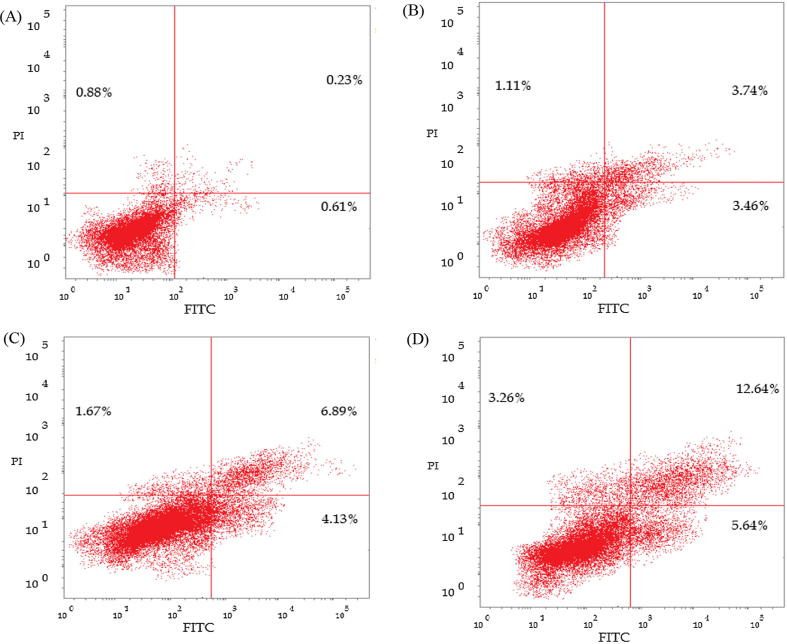
“Meanwhile, A. graveolens EO led to an apoptosis-driven reduction in cell viability in the hepatocellular carcinoma line [23] and cytotoxic effects in colon carcinoma [24].”
From Maceration, Soxhlet Extraction, and Steam Hydrodistillation of Anethum graveolens Seeds: Phytochemical Profiles and Cytotoxic Effects (2026) · cites this paper as [23]
In the citing paper
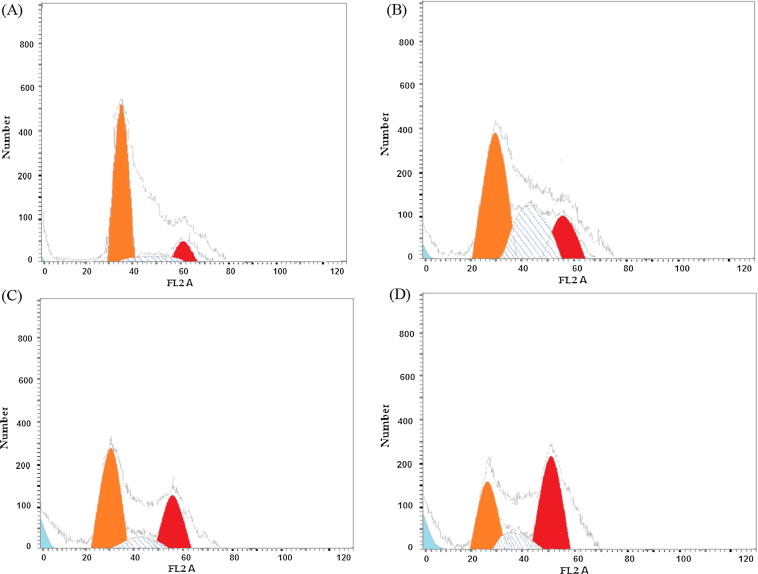
“Similarly, it was reported that overall, A. graveolens essential oil exhibited cytotoxic effects in HepG2 cells in a concentration-dependent manner by promoting G2/M and pre-G1 cell cycle arrest together with apoptotic cell death [23].”
From Maceration, Soxhlet Extraction, and Steam Hydrodistillation of Anethum graveolens Seeds: Phytochemical Profiles and Cytotoxic Effects (2026) · cites this paper as [23]
In the citing paper
“As mentioned previously, both AGEO and A. graveolens L. extracts have shown promising cytotoxic effects in multiple cell lines [20,22,23,24].”
From Maceration, Soxhlet Extraction, and Steam Hydrodistillation of Anethum graveolens Seeds: Phytochemical Profiles and Cytotoxic Effects (2026) · cites this paper as [23]
Self-check
Percentages, sums and reported differences re-computed from the paper’s own numbers.
The self-check needs the paper’s full text.
Citations
Cites
No references could be resolved yet.
Research works printed but not linked: 48
- Abed, 2007, Antimicrobial activity of essential oils of some medicinal plants from Saudi Arabia, Saudi J. Biol. Sci., 14, 53
- Al-Asmari, 2014, A review of hepatoprotective plants used in saudi traditional medicine, Evid. Based Complement. Altern. Med., 2014, 890842, 10.1155/2014/890842 · DOI
- Al-Oqail, 2013, In vitro cytotoxic activity of seed oil of fenugreek against various cancer cell lines, Asian Pac. J. Cancer Prev., 14, 1829, 10.7314/APJCP.2013.14.3.1829 · DOI
- Al-Sheddi, 2015, Novel all trans-retinoic acid derivatives: cytotoxicity, inhibition of cell cycle progression and induction of apoptosis in human cancer cell lines, Molecules, 20, 8181, 10.3390/molecules20058181 · DOI
- Asraf, 1977, Studies on the essential oils of the Pakistani species of the family Umbelliferae. Part VI. Anethum graveolens (Dill, Sowa) seed oil, Pakistan J. Sci. Ind. Res., 20, 52
- Babri, 2012, Chemical composition and insecticidal activity of the essential oil of Anethum graveolens L., Sci. Int., 24, 453
- Badar, 2008, Characteristics of Anethum graveolens (Umbelliferae) seed oil: extraction, composition, and antimicrobial activity, Int. J. Agri. Biol., 10, 329
- Chahal, 2016, Antifungal potential of dill seed essential oil and its constituents, Indian J. Ecol., 43, 903
- Chahal, 2017, Chemistry and biological activities of Anethum graveolens L. (dill) essential oil: a review, J. Pharmacogn Phytochem., 6, 295
- Chang, 2017, Cinnamomum cassia essential oil and its major constituent cinnamaldehyde induced cell cycle arrest and apoptosis in human oral squamous cell carcinoma HSC-3 cells, Environ. Toxicol., 32, 456, 10.1002/tox.22250 · DOI
- Dahiya, 2012, Phytochemical analysis and antibacterial efficacy of dill seed oil against multi-drug resistant clinical isolates, Asian J. Pharm. Clin. Res., 5, 62
- El Mansouri, 2016, Antioxidant activity of aqueous seed extract of Anethum graveolens L., Int. J. Pharm. Sci. Res., 7, 1219
- Elmore, 2007, Apoptosis: a review of programmed cell death, Toxicol. Pathol., 35, 495, 10.1080/01926230701320337 · DOI · Paper page
- El-Sayed, 2015, In vitro evaluation of cytotoxic activities of essential oil from Moringa oleifera seeds on HeLa, HepG2, MCF-7, CACO-2 and L929 cell lines, Asian Pac. J. Cancer Prev., 16, 4671, 10.7314/APJCP.2015.16.11.4671 · DOI
- Ferreira, 2002, Apoptosis: target of cancer therapy, Clin. Cancer Res., 8, 2024
- Goodarzi, 2016, The role of Anethum graveolens L. (Dill) in the management of diabetes, J Trop. Med., 1–11, 1098916
- Goun, 2002, Anticancer and antithrombin activity of Russian plants, J. Ethnopharmacol., 81, 337, 10.1016/S0378-8741(02)00116-2 · DOI
- Heamalatha, 2011, Pharmacognostical, pharmacological, investigation on Anethum graveolens linn: a review, Res. J. Pharm. Biol. Chem. Sci., 2, 564
- Hussein, 2015, Essential oils of Anethum graveolens L. Chemical composition and their antimicrobial activities at vegetative, flowering and fruiting stages of development, Int. J. Plant Sci. Ecol., 1, 98
- Ishikawa, 2002, Water-soluble constituents of dill, Chem. Pharm. Bull., 50, 501, 10.1248/cpb.50.501 · DOI
- Jamali, 2018, In-vitro evaluation of apoptotic effect of OEO and thymol in 2D and 3D cell cultures and the study of their interaction mode with DNA, Sci. Rep., 8, 15787, 10.1038/s41598-018-34055-w · DOI
- Joe, 2002, Resveratrol induces growth inhibition, S-phase arrest, apoptosis, and changes in biomarker expression in several human cancer cell lines, Clin. Cancer Res., 8, 893
- Kaur, 2010, Bioactive potential of Anethum graveolens, Foeniculum vulgare and Trachyspermum ammi belonging to the family Umbelliferae –Current status, J. Med. Plants Res., 4, 87
- Keyvani-Ghamsari, 2017, Effect of irinotecan on HMGB1, MMP9 expression, cell cycle, and cell growth in breast cancer (MCF-7) cells, Tumor Biol., 39, 10.1177/1010428317698354 · DOI
- Khaldi, 2015, Chemical composition and antifungal activity of essential oil of Anethum graveolens L. from Southwestern Algeria (Bechar), J. Chem. Pharm. Res., 7, 615
- Khani, 2013, Chemical composition and insecticide activity of essential oil from dill seeds, Int. J. Agric., 3, 489
- Lahlou, 2013, The success of natural products in drug discovery, Pharmacol. Pharm., 4, 17, 10.4236/pp.2013.43A003 · DOI
- Lazutka, 2001, Genotoxicity of dill (Anethum graveolens L.), peppermint (Mentha× piperita L.) and pine (Pinus sylvestris L.) essential oils in human lymphocytes and Drosophila melanogaster, Food Chem. Toxicol., 39, 485, 10.1016/S0278-6915(00)00157-5 · DOI
- Maioli, 2009, Critical appraisal of the MTT assay in the presence of rottlerin and uncouplers, Biol. Proced. Online., 11, 227, 10.1007/s12575-009-9020-1 · DOI
- Mohammed, 2018, Anethum graveolens (dill) – A medicinal herb induces apoptosis and cell cycle arrest in HepG2 cell line, J. Ethnopharmacol., 219, 15, 10.1016/j.jep.2018.03.008 · DOI · Paper page
- Mosmann, 1983, Rapid colorimetric assay for cellular growth and survival: application to proliferation and cytotoxicity assays, J. Immunol. Methods, 65, 55, 10.1016/0022-1759(83)90303-4 · DOI · Paper page
- Nakano, 1998, Antiproliferative constituents in Umbelliferae plants II. Screening for polyacetylenes in some Umbelliferae plants and isolation of panaxynol and falcarindiol from the root of Heracleum moellendorffii, Biol. Pharm. Bull., 21, 257, 10.1248/bpb.21.257 · DOI
- Naseri, 2012, The study of anti-inflammatory activity of oil-based dill (Anethum graveolens L.) extract used topically in formalin-induced inflammation male rat paw, Iranian J. Pharm. Res., 11, 1169
- Oliveira, 2015, Cytotoxicity screening of essential oils in cancer cell lines, Rev. Bras. Farmacogn., 25, 183, 10.1016/j.bjp.2015.02.009 · DOI
- Opdyke, 1982, Dill seed oil Indian. Fragrance raw materials monographs, Food Chem. Toxicol., 20, 673
- Palchaudhuri, 2007, DNA as a target for anticancer compounds: methods to determine the mode of binding and the mechanism of action, Curr. Opin. Biotechnol., 18, 497, 10.1016/j.copbio.2007.09.006 · DOI
- Ravi, 2010, 5-Isopropylidene-3-ethyl rhodanine induce growth inhibition followed by apoptosis in leukemia cells, Eur. J. Med. Chem., 45, 2748, 10.1016/j.ejmech.2010.02.054 · DOI
- Sahib, 2012, Effects of Anethum graveolens leave powder on lipid profile in hyperlipidemic patients, Spatula DD, 2, 153, 10.5455/spatula.20120907123553 · DOI
- Sathya, 2013, Virtual screening of potential drug-like inhibitors from medicinal plants against hbxip of hepatocellular carcinoma, Int. J. Pharm. Pharm. Sci., 5, 535
- Seal, 2012, Vapor of volatile oils from Litsea cubeba seed induces apoptosis and causes cell cycle arrest in lung cancer cells, PLoS One, 7, e47014, 10.1371/journal.pone.0047014 · DOI
- Sharopov, 2013, Composition and bioactivity of the essential oil of Anethum graveolens L. from Tajikistan, Int. J. Med. Arom. Plants, 3, 125
- Singh, 2005, Chemical constituents, antimicrobial investigations, and antioxidative potentials of Anethum graveolens L. essential oil and acetone extract, J. Food Sci., 70, 208, 10.1111/j.1365-2621.2005.tb07190.x · DOI
- Srivastava, 2016, Quercetin, a natural flavonoid interacts with DNA, arrests cell cycle and causes tumor regression by activating mitochondrial pathway of apoptosis, Sci. Rep., 6, 24049, 10.1038/srep24049 · DOI
- Tariq, 2017, A systematic review on ethnomedicine of anti-cancer plants, Phytother. Res., 31, 202, 10.1002/ptr.5751 · DOI
- Tian, 2011, In vitro and in vivo activity of essential oil from dill (Anethum graveolens L.) against fungal spoilage of cherry tomatoes, Food Cont., 22, 1992, 10.1016/j.foodcont.2011.05.018 · DOI
- Yili, 2009, Chemical composition and antimicrobial activity of essential oil from seeds of Anethum graveolens growing in Uzbekistan, Chem. Nat. Comp., 45, 280, 10.1007/s10600-009-9275-4 · DOI
- Youssef, 2013, Medicinal and non-medicinal uses of some plants found in the middle region of Saudi Arabia, J. Med. Plants Res., 7, 2501
- Zheng, 1992, Anethofuran, carvone, and limonene: potential cancer chemoprotective agents from dill weed oil and caraway oil, Planta Med., 58, 338, 10.1055/s-2006-961480 · DOI
Cited by
Goldiș, C., Racoviceanu, R., Negrea-Ghiulai, R., Mioc, A., Prodea, A., Atyim, E., Maksimovic, T., Lukinich-Gruia, A. T., Pricop, M.-A., & Șoica, C. (2026) · Molecules · doi:10.3390/molecules31183337
Metadata
- Authors
- Al-Sheddi, E. S., Al-Zaid, N. A., Al-Oqail, M. M., Al-Massarani, S. M., El-Gamal, A. A., & Farshori, N. N.
- Venue
- Saudi Pharmaceutical Journal
- Published
- 2019-11
- Volume
- 27
- Issue
- 7
- Pages
- 1053-1060
- ISSN
- 1319-0164
- PMC
- PMC6978617
- Cited by
- 41
- References
- 0
- Language
- en
- Funders
- Deanship of Scientific Research, King Saud University
About these checks
Registry, retraction, Cites and statistics results are computed, not judged, with one exception: a printed reference that no index lists is read once by a model before it counts as a citation error. Claims are extracted by a model and kept only when their quote appears verbatim in the text; each cited source is then checked, with a model’s help, for whether it says what the claim relies on. Those verdicts can be wrong — read the claim’s quote and the cited source before relying on one.
Statistics and arithmetic are recomputed, not judged.
Confidence bands are shown only for fields calibrated on our annotated test set. None is calibrated yet, so no band is shown.
What counts as a claim ›How we measure confidence ›How we check this ›
Are you an author, or do you see a problem with this page? Request a review
Data sources
Bibliographic data: Semantic Scholar, OpenAlex, Crossref.
Contains information from the Semantic Scholar Academic Graph Datasets, made available under the ODC Attribution License (ODC-BY 1.0).
Semantic Scholar’s data is described in: Kinney, R., et al. (2023). The Semantic Scholar Open Data Platform. arXiv:2301.10140.
