

The DOI matches its Crossref record; 1 of the 1 references it cites were found in a registry or an index.
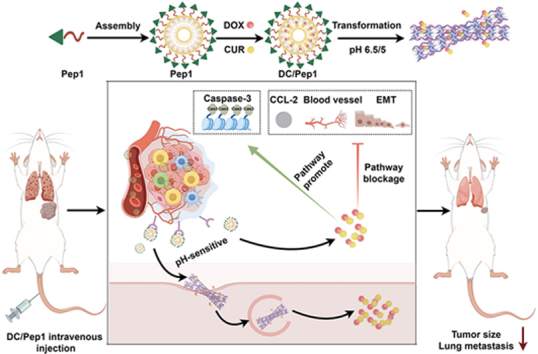
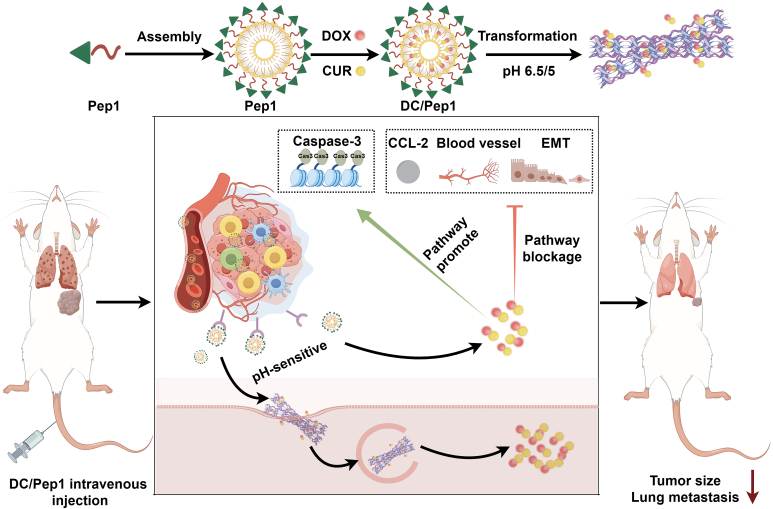
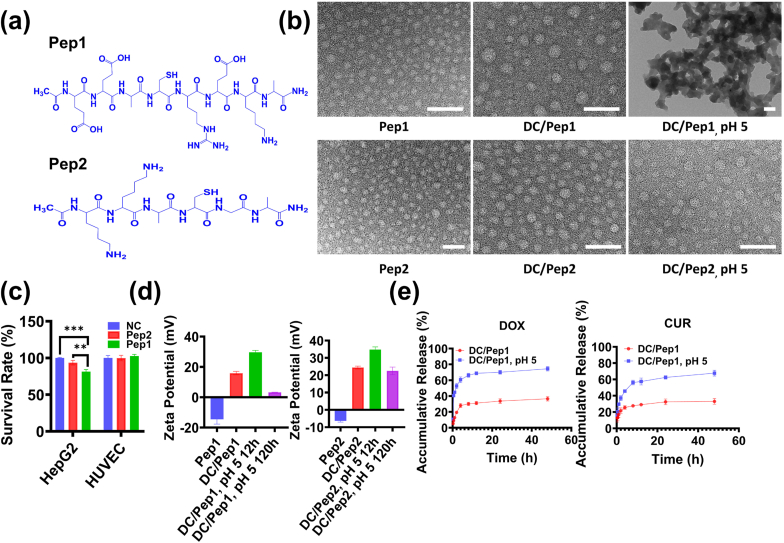
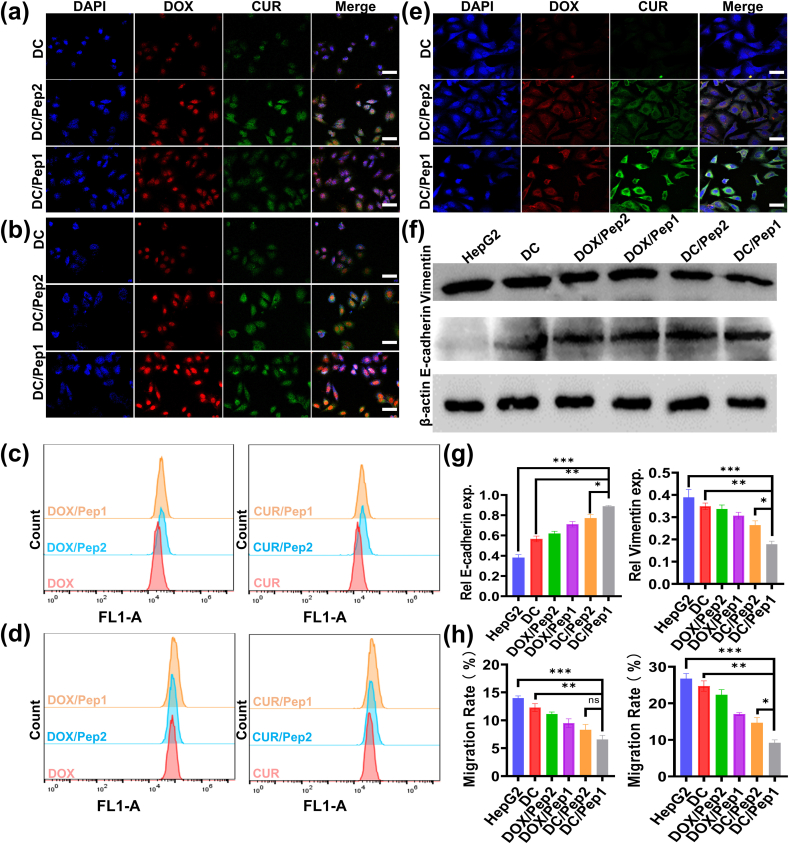
Morphologically transformable peptide nanocarriers coloaded with doxorubicin and curcumin inhibit the growth and metastasis of hepatocellular carcinoma
Overview
The claims and statistics of this paper haven’t been checked yet.
Run the check — free, no account needed. It reads the open-access text and checks the sources it cites.
Integrity signals
Registry
Cites
Statistics
Figures
Verification
Claims the paper makes
The claims and statistics of this paper haven’t been checked yet.
Run the check — free, no account needed. It reads the open-access text and checks the sources it cites.
Claims other papers make about this one
Each is checked against this paper’s own text: does it say what the citing paper says it does?
In the citing paper
“Acid-induced sphere-to-fiber assemblies | Acidic pH | Dual-drug supramolecular assembly | Long circulation; sphere-to-fiber transition at tumor; prolonged residence and synchronized exposure”
From Overcoming tumor microenvironment barriers: transformable and bioinspired nanomedicine strategies for deep tumor penetration (2026) · cites this paper as [106]
In the citing paper
“acid-induced sphere-to-fiber transitions prolong residence and synchronize dual-drug exposure [106].”
From Overcoming tumor microenvironment barriers: transformable and bioinspired nanomedicine strategies for deep tumor penetration (2026) · cites this paper as [106]
Self-check
Percentages, sums and reported differences re-computed from the paper’s own numbers.
The self-check needs the paper’s full text.
Citations
Cites
Normalizing Function of Tumor Vessels: Progress, Opportunities, and Challenges
Martin, J. D., Seano, G., & Jain, R. K. (2019) · Annual Review of Physiology · doi:10.1146/annurev-physiol-020518-114700 · Cited by 530
Research works printed but not linked: 65
- Rumgay, 2022, Global burden of primary liver cancer in 2020 and predictions to 2040, J. Hepatol., 77, 1598, 10.1016/j.jhep.2022.08.021 · DOI · Paper page
- Anwanwan, 2020, Challenges in liver cancer and possible treatment approaches, Biochim. Biophys. Acta, Rev. Cancer., 1873, 10.1016/j.bbcan.2019.188314 · DOI
- Larionova, 2019, 2026P - the clearance of EGF by tumor-associated macrophages is suppressed by chemotherapeutic agent cisplatin, Ann. Oncol., 30, v810, 10.1093/annonc/mdz269.043 · DOI
- Zhang, 2023, Polysaccharide-based nanocarriers for efficient transvascular drug delivery, J. Controlled Release, 354, 167, 10.1016/j.jconrel.2022.12.051 · DOI
- Tahmasbi Rad, 2019, Combinational effects of active targeting, shape, and enhanced permeability and retention for cancer theranostic nanocarriers, ACS Appl. Mater. Interfaces, 11, 10505, 10.1021/acsami.8b21609 · DOI
- Sun, 2014, Integration of nanoassembly functions for an effective delivery cascade for cancer drugs, Adv. Mater., 26, 7615, 10.1002/adma.201401554 · DOI
- Xu, 2022, pH-Sensitive nanoparticles based on amphiphilic imidazole/cholesterol modified hydroxyethyl starch for tumor chemotherapy, Carbohydr. Polym., 277, 10.1016/j.carbpol.2021.118827 · DOI
- Jia, 2019, Construction of dually responsive nanotransformers with nanosphere-nanofiber-nanosphere transition for overcoming the size paradox of anticancer nanodrugs, ACS Nano, 13, 11781, 10.1021/acsnano.9b05749 · DOI
- Hinde, 2017, Pair correlation microscopy reveals the role of nanoparticle shape in intracellular transport and site of drug release, Nat. Nanotechnol., 12, 81, 10.1038/nnano.2016.160 · DOI
- Jia, 2022, Dual-responsive nanoparticles with transformable shape and reversible charge for amplified chemo-photodynamic therapy of breast cancer, Acta Pharm. Sin. B, 12, 3354, 10.1016/j.apsb.2022.03.010 · DOI
- Farzin, 2021, Self-oxygenation of tissues orchestrates full-thickness vascularization of living implants, Adv. Funct. Mater., 31
- Jia, 2021, Shape transformable strategies for drug delivery, Adv. Funct. Mater., 31, 10.1002/adfm.202009765 · DOI
- Lin, 2020, GSH-responsive SN38 dimer-loaded shape-transformable nanoparticles with iRGD for enhancing chemo-photodynamic therapy, Acta Pharm. Sin. B, 10, 2348, 10.1016/j.apsb.2020.10.009 · DOI
- Liu, 2020, Macrophage-mimic shape changeable nanomedicine retained in tumor for multimodal therapy of breast cancer, J. Controlled Release, 321, 589, 10.1016/j.jconrel.2020.02.043 · DOI
- Gong, 2020, Plasma amine oxidase-induced nanoparticle-to-nanofiber geometric transformation of an peptide for drug encapsulation and enhanced bactericidal activity, ACS Appl. Mater. Interfaces, 12, 4323, 10.1021/acsami.9b21296 · DOI
- Gong, 2021, Enzyme-induced transformable peptide nanocarriers with enhanced drug permeability and retention to improve tumor nanotherapy efficacy, ACS Appl. Mater. Interfaces, 13, 55913, 10.1021/acsami.1c17917 · DOI
- Boedtkjer, 2020, The acidic tumor microenvironment as a driver of cancer, Annu. Rev. Physiol., 82, 103, 10.1146/annurev-physiol-021119-034627 · DOI
- Feng, 2018, The acidic tumor microenvironment: a target for smart cancer nano-theranostics, Natl. Sci. Rev., 5, 269, 10.1093/nsr/nwx062 · DOI
- Meng, 2022, Self-enhanced acoustic impedance difference strategy for detecting the acidic tumor microenvironment, ACS Nano, 16, 4217, 10.1021/acsnano.1c10173 · DOI
- Yang, 2020, Multi-transformable nanocarrier with tumor extracellular acidity-activated charge reversal, size reduction and ligand reemergence for in vitro efficient doxorubicin loading and delivery, Mater. Sci. Eng. C, 116, 10.1016/j.msec.2020.111250 · DOI
- Wu, 2023, A transcriptomic pan-cancer signature for survival prognostication and prediction of immunotherapy response based on endothelial senescence, J. Biomed. Sci., 30, 21, 10.1186/s12929-023-00915-5 · DOI
- Li, 2023, Recent progress in advanced hydrogel-based embolic agents: from rational design strategies to improved endovascular embolization, Adv. Healthcare Mater., 12
- Hong, 2022, Vascular disrupting agent-induced amplification of tumor targeting and prodrug activation boosts anti-tumor efficacy, Sci. China: Chem., 65, 1994, 10.1007/s11426-022-1347-9 · DOI
- Nowak-Sliwinska, 2023, Proinflammatory activity of VEGF-targeted treatment through reversal of tumor endothelial cell anergy, Angiogenesis, 26, 279, 10.1007/s10456-022-09863-4 · DOI
- Agemy, 2010, Nanoparticle-induced vascular blockade in human prostate cancer, Blood, 116, 2847, 10.1182/blood-2010-03-274258 · DOI
- Zhang, 2023, Recent advances of CREKA peptide-based nanoplatforms in biomedical applications, J. Nanobiotechnol., 21, 77, 10.1186/s12951-023-01827-0 · DOI
- Li, 2020, A bioinspired nanoprobe with multilevel responsive T (1) -weighted MR signal-amplification illuminates ultrasmall metastases, Adv. Mater., 32
- Ashrafizadeh, 2021, Hyaluronic acid-based nanoplatforms for Doxorubicin: a review of stimuli-responsive carriers, co-delivery and resistance suppression, Carbohydr. Polym., 272, 10.1016/j.carbpol.2021.118491 · DOI
- Mohammad, 2023, Nanocomplexes of doxorubicin and DNA fragments for efficient and safe cancer chemotherapy, J. Controlled Release, 354, 91, 10.1016/j.jconrel.2022.12.048 · DOI
- Li, 2023, A micelle-based stage-by-stage impelled system for efficient doxorubicin delivery, Bioact. Mater., 25, 783
- Zhang, 2021, An efficient carbon-based drug delivery system for cancer therapy through the nucleus targeting and mitochondria mediated apoptotic pathway, Small Methods, 5, 10.1002/smtd.202100539 · DOI
- Zeien, 2022, Clinical implications of chemotherapeutic agent organ toxicity on perioperative care, Biomed. Pharmacother., 146, 10.1016/j.biopha.2021.112503 · DOI
- Gao, 2022, Opportunities and challenges for co-delivery nanomedicines based on combination of phytochemicals with chemotherapeutic drugs in cancer treatment, Adv. Drug Delivery Rev., 188, 10.1016/j.addr.2022.114445 · DOI
- Araveti, 2019, Curcumin induced oxidative stress causes autophagy and apoptosis in bovine leucocytes transformed by Theileria annulata, Cell Death Discovery, 5, 100, 10.1038/s41420-019-0180-8 · DOI
- Daya, 2022, Angiogenic hyaluronic acid hydrogels with curcumin-coated magnetic nanoparticles for tissue repair, ACS Appl. Mater. Interfaces., 14, 11051, 10.1021/acsami.1c19889 · DOI
- Yang, 2018, A modular coassembly approach to all-in-one multifunctional nanoplatform for synergistic codelivery of doxorubicin and curcumin, Nanomaterials, 8, 167, 10.3390/nano8030167 · DOI
- Jin, 2019, Rational design of cancer nanomedicine for simultaneous stealth surface and enhanced cellular uptake, ACS Nano, 13, 954
- Zhang, 2021, Nanoparticulation of prodrug into medicines for cancer therapy, Adv. Sci., 8, 10.1002/advs.202101454 · DOI
- Cao, 2023, Enzyme-induced morphological transformation of self-assembled peptide nanovehicles potentiates intratumoral aggregation and inhibits tumour immunosuppression, Chem. Eng. J., 454, 10.1016/j.cej.2022.140466 · DOI
- Cao, 2023, Matrix metalloproteinase-2-induced morphologic transformation of self-assembled peptide nanocarriers inhibits tumor growth and metastasis, ACS Mater. Lett., 5, 900, 10.1021/acsmaterialslett.2c01093 · DOI
- Hao, 2022, Rational design of ibuprofen-based redox-responsive anti-cancer polymeric drug delivery systems, J. Mater. Sci., 57, 11317, 10.1007/s10853-022-07347-w · DOI
- Lin, 2022, Preparation, characterization and antioxidant properties of curcumin encapsulated chitosan/lignosulfonate micelles, Carbohydr. Polym., 281, 10.1016/j.carbpol.2021.119080 · DOI
- Korenchan, 2019, Spatiotemporal pH heterogeneity as a promoter of cancer progression and therapeutic resistance, Cancers, 11, 1026, 10.3390/cancers11071026 · DOI
- Li, 2015, Enzyme-instructed intracellular molecular self-assembly to boost activity of cisplatin against drug-resistant ovarian cancer cells, Angew. Chem., 54, 13307, 10.1002/anie.201507157 · DOI
- Ingato, 2018, Cancer cell-derived, drug-loaded nanovesicles induced by sulfhydryl-blocking for effective and safe cancer therapy, ACS Nano, 12, 9568, 10.1021/acsnano.8b05377 · DOI
- Sasaki, 2019, Engineered collagen-binding serum albumin as a drug conjugate carrier for cancer therapy, Sci. Adv., 5, 10.1126/sciadv.aaw6081 · DOI
- Teo, 2016, Co-delivery of drugs and plasmid DNA for cancer therapy, Adv. Drug Delivery Rev., 98, 41, 10.1016/j.addr.2015.10.014 · DOI
- Cho, 2009, Understanding the role of surface charges in cellular adsorption versus internalization by selectively removing gold nanoparticles on the cell surface with a I2/KI etchant, Nano Lett., 9, 1080, 10.1021/nl803487r · DOI
- Tao, 2016, Cholesterol-Modified amino-pullulan nanoparticles as a drug carrier: comparative study of cholesterol-modified carboxyethyl pullulan and pullulan nanoparticles, Nanomaterials, 6, 165, 10.3390/nano6090165 · DOI
- Chen, 2011, The role of surface charge on the uptake and biocompatibility of hydroxyapatite nanoparticles with osteoblast cells, Nanotechnology, 22
- Baoum, 2010, Cationic surface modification of PLG nanoparticles offers sustained gene delivery to pulmonary epithelial cells, J. Pharmaceut. Sci., 99, 2413, 10.1002/jps.21994 · DOI
- Lu, 2022, CRPC membrane-camouflaged, biomimetic nanosystem for overcoming castration-resistant prostate cancer by cellular vehicle-aided tumor targeting, Int. J. Mol. Sci., 23, 3623, 10.3390/ijms23073623 · DOI
- Ang, 2023, Mechanism of epithelial-mesenchymal transition in cancer and its regulation by natural compounds, Med. Res. Rev., 43, 1141, 10.1002/med.21948 · DOI
- Hsu, 2007, KCl cotransporter-3 down-regulates E-cadherin/beta-catenin complex to promote epithelial-mesenchymal transition, Cancer Res., 67, 11064, 10.1158/0008-5472.CAN-07-2443 · DOI
- Bock, 2021, Apoptotic stress-induced FGF signalling promotes non-cell autonomous resistance to cell death, Nat. Commun., 12, 6572, 10.1038/s41467-021-26613-0 · DOI
- Bertheloot, 2021, Necroptosis, pyroptosis and apoptosis: an intricate game of cell death, Cell. Mol. Immunol., 18, 1106, 10.1038/s41423-020-00630-3 · DOI
- Rogers, 2019, Gasdermin pores permeabilize mitochondria to augment caspase-3 activation during apoptosis and inflammasome activation, Nat. Commun., 10, 1689, 10.1038/s41467-019-09397-2 · DOI
- Abedi, 2021, An improved method in fabrication of smart dual-responsive nanogels for controlled release of doxorubicin and curcumin in HT-29 colon cancer cells, J. Nanobiotechnol., 19, 18, 10.1186/s12951-020-00764-6 · DOI · Paper page
- Tavora, 2020, Tumoural activation of TLR3-SLIT2 axis in endothelium drives metastasis, Nature, 586, 299, 10.1038/s41586-020-2774-y · DOI
- Jhaveri, 2016, Intracellular delivery of nanocarriers and targeting to subcellular organelles, Expet Opin. Drug Delivery, 13, 49, 10.1517/17425247.2015.1086745 · DOI
- Meng, 2017, Hsp90β promoted endothelial cell-dependent tumor angiogenesis in hepatocellular carcinoma, Mol. Cancer, 16, 72, 10.1186/s12943-017-0640-9 · DOI
- Wang, 2020, Fluorescence-guided fiber-optic micronavigation using microscopic identification of vascular boundary of liver segment and tumors, Theranostics, 10, 6136, 10.7150/thno.45973 · DOI
- Wang, 2019, Extracellular vesicles (EVs) from lung adenocarcinoma cells promote human umbilical vein endothelial cell (HUVEC) angiogenesis through yes kinase-associated protein (YAP) transport, Int. J. Biol. Sci., 15, 2110, 10.7150/ijbs.31605 · DOI
- Charpin, 2004, Tumor neoangiogenesis by CD31 and CD105 expression evaluation in breast carcinoma tissue microarrays, Clin. Cancer Res., 10, 5815, 10.1158/1078-0432.CCR-04-0021 · DOI
- Gening, 2021, IL-17A and CCL2 in blood serum and circulating neutrophils in patients with ovarian tumors, J. Clin. Oncol., 39, 10.1200/JCO.2021.39.15_suppl.e17536 · DOI
Cited by
Sorted by citations
Sheng, J., Yuan, W., Zhang, M., Chen, Z., Qi, Y., Zhao, Y., & Zhang, S. (2026) · Journal of Nanobiotechnology · doi:10.1186/s12951-026-04028-7 · Cited by 35
Metadata
- Authors
- Liu, Y., Liu, Y., Sun, X., Wang, Y., Du, C., & Bai, J.
- Venue
- Materials Today Bio
- Publisher
- Elsevier BV
- Published
- 2024-02
- Volume
- 24
- Pages
- 100903
- ISSN
- 2590-0064
- PMC
- PMC10733681
- Cited by
- 19
- References
- 1
- Language
- en
- Licence
- Funders
- Natural Science Foundation of Shandong Province (ZR2023MC122)
About these checks
Registry, retraction, Cites and statistics results are computed, not judged, with one exception: a printed reference that no index lists is read once by a model before it counts as a citation error. Claims are extracted by a model and kept only when their quote appears verbatim in the text; each cited source is then checked, with a model’s help, for whether it says what the claim relies on. Those verdicts can be wrong — read the claim’s quote and the cited source before relying on one.
Statistics and arithmetic are recomputed, not judged.
Confidence bands are shown only for fields calibrated on our annotated test set. None is calibrated yet, so no band is shown.
What counts as a claim ›How we measure confidence ›How we check this ›
Are you an author, or do you see a problem with this page? Request a review
How to cite
Cite CoChat for the checks on this page, and the paper for its own findings.
- This page
- CoChat. (2026). Citation check: Morphologically transformable peptide nanocarriers coloaded with doxorubicin and curcumin inhibit the growth and metastasis of hepatocellular carcinoma. https://app.cochat.ai/papers/10.1016/j.mtbio.2023.100903
- The paper
- Liu, Y., Liu, Y., Sun, X., Wang, Y., Du, C., & Bai, J. (2024). Morphologically transformable peptide nanocarriers coloaded with doxorubicin and curcumin inhibit the growth and metastasis of hepatocellular carcinoma. Materials Today Bio. https://doi.org/10.1016/j.mtbio.2023.100903
