

The DOI matches its Crossref record.
Numerical Study on Aerodynamic Drag Reduction of Racing Cars
Open accessAbstract
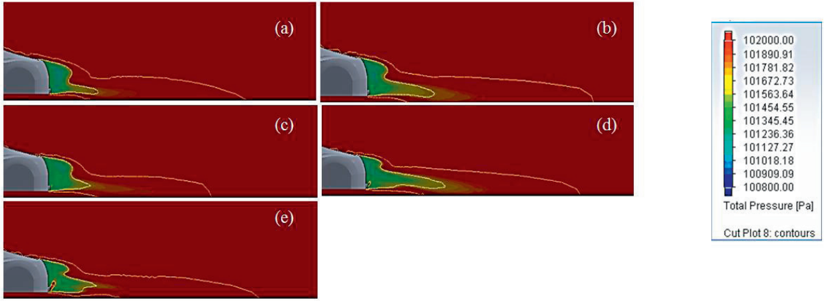
Aerodynamic drag is one of the main obstacles to accelerate a solid body when it moves in the air. When a racing car or road vehicle burns fuel to accelerate, drag force pulls it from back to reduce the speed and hence the fuel efficiency is adversely affected. About 50 to 60% of total fuel energy is lost only to overcome this adverse aerodynamic force. To win a race, which may be decided by fraction of second, the racing cars need a faster acceleration, which is possible by reducing the drag force by optimizing its shape to ensure stream-lining or reducing the separation. Reduction of aerodynamic drag has become one of the prime concerns in vehicle aerodynamics. This article is concentrated on different aspects analysis of aerodynamic drag of racing cars and different drag reduction techniques such as rear under body modification and exhaust gas redirection towards the rear separation zones. Through a numerical process (Finite Volume Method) of solving the Favre-averaged Navier-Stokes equations backed by k–epsilon turbulence model, the drag coefficient of the car under analysis is found to be 0.3233 and it is evident that the drag can be reduced up to 22.13% by different rear under-body modifications and up to 9.5% by exhaust gas redirection towards the separated region at the rear of the car. It is also evident that if somehow the negative pressure area and its intensity at the rear of the car can be minimized, the separation pressure drag is subsequently reduced.
Overview
The claims and statistics of this paper haven’t been checked yet.
Run the check — free, no account needed. It reads the open-access text and checks the sources it cites.
Integrity signals
Registry
Cites
Statistics
Figures

Verification
Claims the paper makes
The claims and statistics of this paper haven’t been checked yet.
Run the check — free, no account needed. It reads the open-access text and checks the sources it cites.
Claims other papers make about this one
Each is checked against this paper’s own text: does it say what the citing paper says it does?
The cited source doesn’t support the claim as written.
In the citing paper
“About 30 % to 50 % of fuel energy is lost due to aerodynamic force. Rakibul Hassan et al. (2014).”
From Reduction of Aerodynamic Drag Force for Reducing Fuel Consumption in Road Vehicle using Basebleed (2018) · cites this paper as Rakibul Hassan et al. (2014)
Checked by a reasoning model — may be wrong.
Experimental — accuracy not yet measured
Self-check
Percentages, sums and reported differences re-computed from the paper’s own numbers.
The self-check needs the paper’s full text.
Citations
Cites
Still being checked.
Research works printed but not linked: 9
- Dan Barbut, Eugen Mihai Negrus, CFD analysis for road vehicles - case study, Incas Bulletin, 3(2011) 15-22. · DOI
- M. Rouméas, P. Gilliéron and A. Kourta, Drag Reduction by Flow Separation Control on a Car after Body, International Journal for Numerical Methods in Fluids, 60(2009) 1222-1240. · DOI
- Emmanuel Guilmineau, Computational Study of Flow around a Simplified Car Body, Journal of Wind Engineering and Industrial Aerodynamics, 96(2008) 1207-1217. · DOI
- Md. MunirIslam, M. Mamun, Computational Drag Analysis over a Car Body, International Conference on Marine Technology, Dhaka, Bangladesh, 2010.
- PramodNariKrishnani,CFD study of drag reduction of a generic sport utility vehicle, Thesis for M. Sc. Mechanical Engineering, California State University, Sacramento, 2009. · DOI
- Feysal AhmedAdem, Drag Reduction of Pickup Truck Using Add-on Devices, Thesis for M. Sc. in Mechanical Engineering, California State University, Sacramento, 2009.
- Toukir Islam, S.M. Rakibul Hassan and Dr. M. Ali, Aerodynamic Drag of Racing Cars, Global Engineering, Science and Technology Conference, Dhaka, Bangladesh, 2012.
- BhaviniBijlani, Dr. Pravin P. Rathod, Prof. Arvind S. Sorthiya, Experimental and Computational Drag Analysis of Sedan and Square-Back Car, International Journal of Advanced Engineering Technology, 4(2013) 63-65.
- C. Hirsch, Numerical computation of internal and external flows, John Wiley and Sons, Chichester, England, 1988.
Cited by
Sorted by citations
Reduction of Aerodynamic Drag Force for Reducing Fuel Consumption in Road Vehicle using Basebleed
Sivaraj, G., Department of Aeronautical Engineering, B. A. I. O. T., Parammasivam, K. M., Department of Aerospace Engineering, A. U. M. C., Suganya, G., & Department of Aeronautical Engineering, B. A. I. O. T. (2018) · Journal of Applied Fluid Mechanics · doi:10.29252/jafm.11.06.29115 · Cited by 46
Metadata
- Authors
- Hassan, S. M. R., Islam, T., Ali, M., & Islam, M. Q.
- Affiliations
- Bangladesh University of Engineering and Technology (BD)
- Corresponding author
- Hassan, S.M. Rakibul
- ORCID
- Ali, Mohammad
- Venue
- Procedia Engineering
- Publisher
- Elsevier BV
- Published
- 2014
- Volume
- 90
- Pages
- 308-313
- ISSN
- 1877-7058 (ISSN-L)
- OpenAlex
- W2040344525
- Cited by
- 90
- References
- 0
- Citations by year
- 2026: 6 · 2025: 5 · 2024: 4 · 2023: 12 · 2022: 7 · 2021: 15 · 2020: 18 · 2019: 13 · 2018: 6 · 2017: 3 · 2015: 1
- FWCI
- 2.24
- Type
- conference paper
- Language
- en
- Open access
- diamond
- doi.org
- Licence
- Locations
- Procedia Engineering (publishedVersion, cc-by-nc-nd)
- Topics
- Physical Sciences › Engineering › Aerospace Engineering › Aerodynamics and Fluid Dynamics Research
- Physical Sciences › Engineering › Computational Mechanics › Computational Fluid Dynamics and Aerodynamics
- Physical Sciences › Engineering › Computational Mechanics › Fluid Dynamics and Vibration Analysis
- Keywords
- aerodynamic drag reduction, racing cars, drag coefficient, flow separation, pressure drag, vehicle aerodynamics, fuel economy, streamlining
About these checks
Registry, retraction, Cites and statistics results are computed, not judged, with one exception: a printed reference that no index lists is read once by a model before it counts as a citation error. Claims are extracted by a model and kept only when their quote appears verbatim in the text; each cited source is then checked, with a model’s help, for whether it says what the claim relies on. Those verdicts can be wrong — read the claim’s quote and the cited source before relying on one.
Statistics and arithmetic are recomputed, not judged.
Confidence bands are shown only for fields calibrated on our annotated test set. None is calibrated yet, so no band is shown.
What counts as a claim ›How we measure confidence ›How we check this ›
Are you an author, or do you see a problem with this page? Request a review
