

The DOI matches its Crossref record; 2 of the 2 references it cites were found in a registry or an index.
Sex differences in alcohol dehydrogenase levels (ADH) and blood ethanol concentration (BEC) in Japanese quail
Open accessAbstract
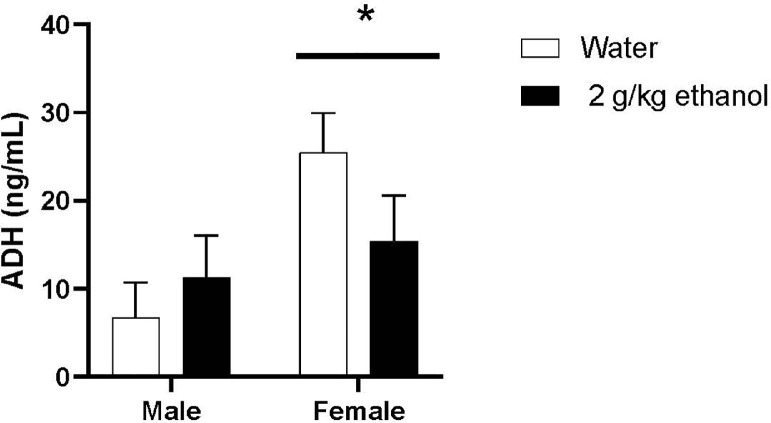
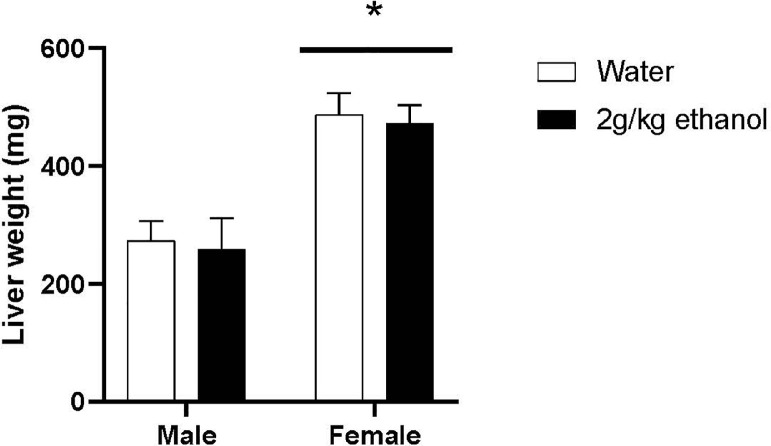
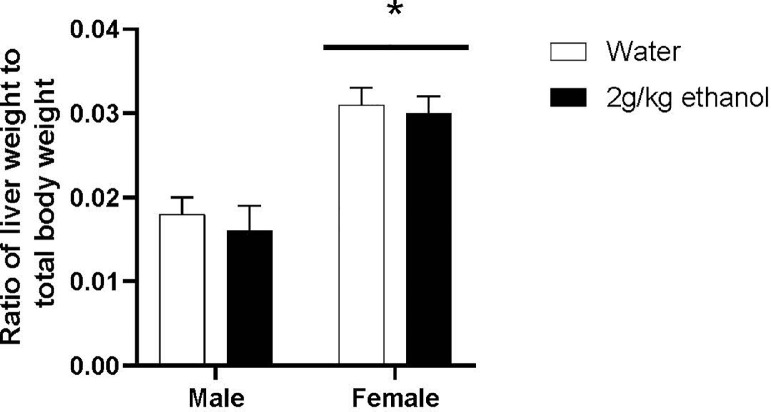
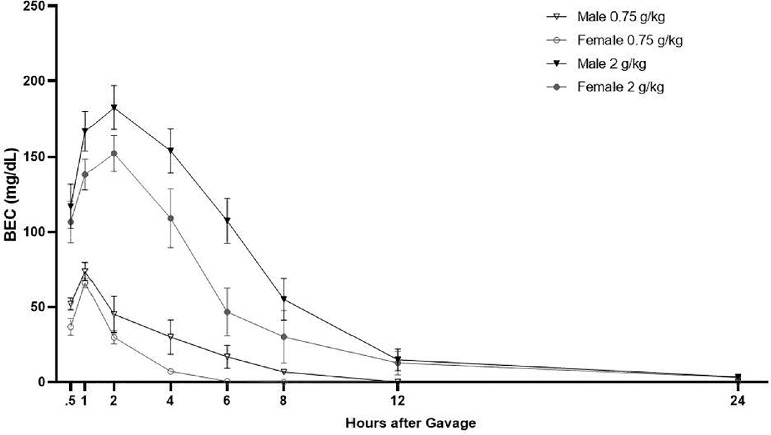
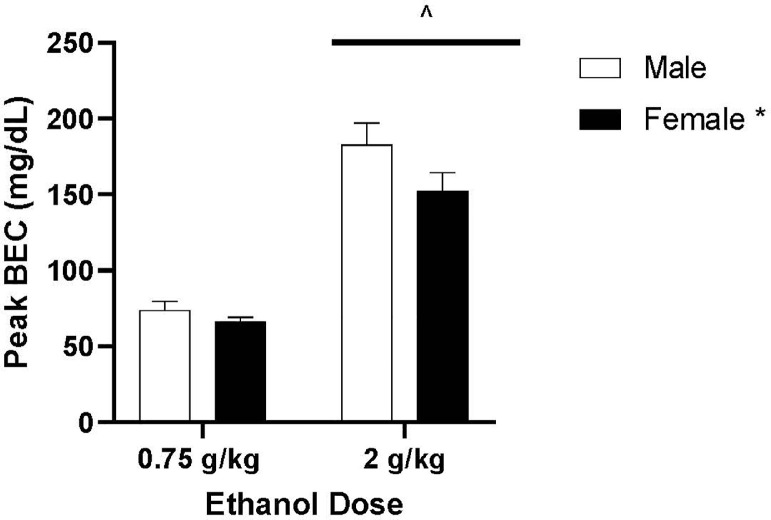
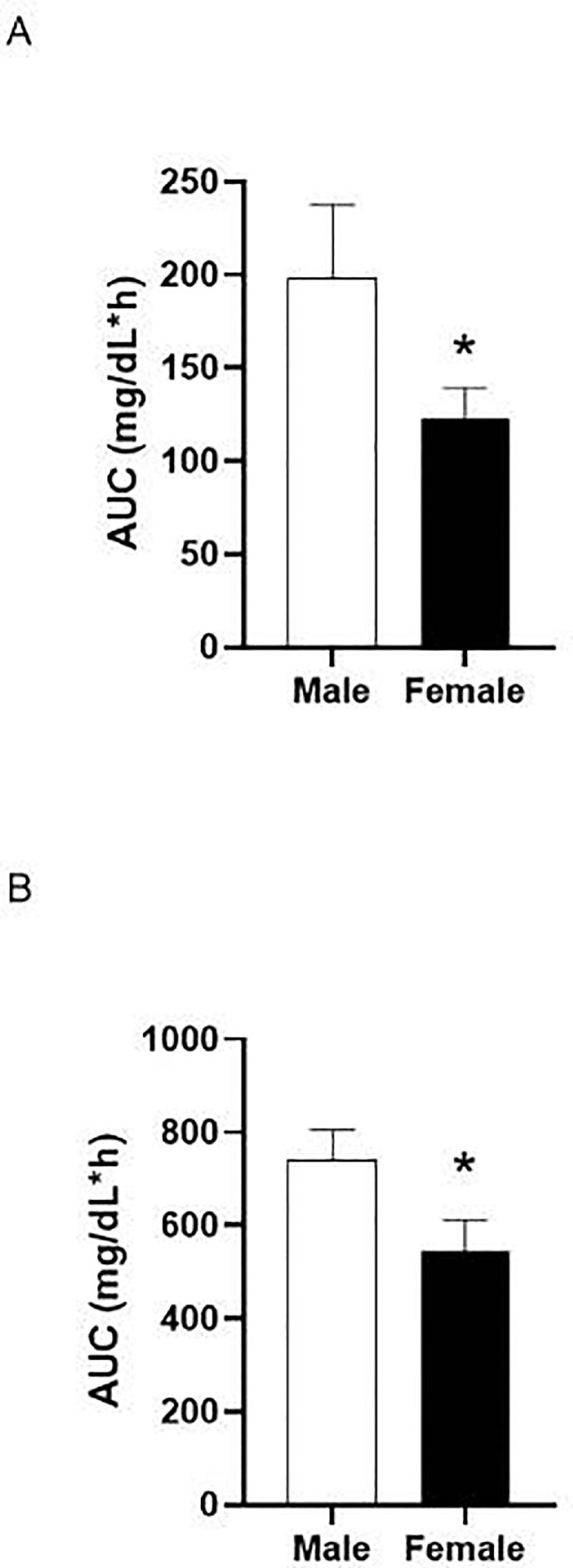
Ethanol is one of the most widely used and abused drugs. Following ethanol consumption, ethanol enters the bloodstream from the small intestine where it gets distributed to peripheral tissues. In the bloodstream, ethanol is cleared from the system by the liver. The primary metabolism of ethanol uses alcohol dehydrogenase (ADH). In mammals, females appear to have higher ADH activity in liver samples than males. The purpose of the first experiment was to analyze sex differences in ADH levels following 12 d of ethanol administration (i.e., water or 2 g/kg) in male and female quail. Following the last daily treatment of ethanol, quail were euthanized, their livers were extracted, and ADH was analyzed in liver homogenate samples. Results showed that female quail had higher ADH levels, heavier livers, and a greater liver to body weight ratio than male quail. In a second experiment, we aimed to develop a blood ethanol concentration (BEC) profile for both male and female quail. Quail were administered 0.75 or 2 g/kg of ethanol and blood was collected at 0.5, 1, 2, 4, 6, 8, 12, 24 h after gavage administration. Blood ethanol concentration was analyzed using an Analox. We found that quail had a fairly rapid increase in BECs followed by a steady and slow disappearance of ethanol from the blood samples. Female quail had a lower peak of ethanol concentration and a smaller area under the curve (AUC) than male quail. The current research suggests that higher ADH levels in female quail may be responsible for increased metabolism of ethanol. In general, quail appear to eliminate ethanol more slowly than rodents. Thus, as a model, they may allow for a prolonged window with which to investigate the effects of ethanol.
Overview
The claims and statistics of this paper haven’t been checked yet.
Run the check — free, no account needed. It reads the open-access text and checks the sources it cites.
Integrity signals
Registry
Cites
Statistics
Figures
Verification
Claims the paper makes
The claims and statistics of this paper haven’t been checked yet.
Run the check — free, no account needed. It reads the open-access text and checks the sources it cites.
Self-check
Percentages, sums and reported differences re-computed from the paper’s own numbers.
The self-check needs the paper’s full text.
Citations
Cites
Frezza, M., di Padova, C., Pozzato, G., Terpin, M., Baraona, E., & Lieber, C. S. (1990) · New England Journal of Medicine · doi:10.1056/nejm199001113220205 · Cited by 1,328
Age-and sex-related differences in alcohol and nicotine effects in C57BL/6J mice
Lopez, M., Simpson, D., White, N., & Randall, C. (2003) · Addiction Biology · doi:10.1080/13556210310001648176 · Cited by 51
Research works printed but not linked: 44
- Akins, 2008, Cocaine-induced behavioral sensitization and conditioning in male Japanese quail, Pharmacol. Biochem. Behav., 88, 432, 10.1016/j.pbb.2007.09.020 · DOI
- Boleda, 1989, Role of extrahepatic alcohol dehydrogenase in rat ethanol metabolism, Arc. Biochem. Biophys., 274, 74, 10.1016/0003-9861(89)90416-5 · DOI
- Bolin, 2012, Nicotine induces a conditioned place preference in male Japanese quail (Coturnix japonica), Physiol. Behav., 107, 364, 10.1016/j.physbeh.2012.08.005 · DOI
- Cederbaum, 2012, Alcohol metabolism, Clin. Liver Dis., 16, 667, 10.1016/j.cld.2012.08.002 · DOI · Paper page
- Cole-Harding, 1987, Ethanol metabolism in men and women, J. Stud. Alcoh, 48, 380, 10.15288/jsa.1987.48.380 · DOI
- Crabb, 1987, Ethanol metabolism, Pharmacol. Therapeut., 34, 59, 10.1016/0163-7258(87)90092-1 · DOI
- Crippens, 1999, Gender differences in blood levels, but not brain levels, of ethanol in rats, Alcohol. Clin. Exper. Res., 23, 414, 10.1111/j.1530-0277.1999.tb04131.x · DOI
- Dajani, 1963, The alcohol-acetaldehyde dehydrogenase systems in the livers of alcohol-treated rats, J. Nutri., 80, 196, 10.1093/jn/80.2.196 · DOI
- Davies, 1999, Total body water and peak slcohol concentration: a comparative study of young, middle-age, and older females, Alcohol. Clin. Exper. Res., 23, 969
- Desroches, 1995, Sex-and strain-related differences in first-pass alcohol metabolism in mice, Alcoh, 12, 221, 10.1016/0741-8329(94)00098-X · DOI
- Dettling, 2007, Ethanol elimination rates in men and women in consideration of the calculated liver weight, Alcoh, 41, 415, 10.1016/j.alcohol.2007.05.003 · DOI
- Eriksson, 1982, Alcohol accumulation from ingested berries and alcohol metabolism in passerine birds, Ornis Fenn, 60, 2
- Gauvin, 2000, Differential development of behavioral tolerance and the subsequent hedonic effects of alcohol in AA and ANA rats, Psychopharm, 151, 335, 10.1007/s002130000477 · DOI
- Haseba, 2012, Dose-dependent change in elimination kinetics of ethanol due to shift of dominant metabolizing enzyme from ADH 1 (Class I) to ADH 3 (Class III) in mouse, Int. J. Hepatol, 2012, 1, 10.1155/2012/408190 · DOI
- Hendler, 2011, Stimulant and sedative effects of alcohol, Curr. Top. Behav. Neurosci., 13, 489, 10.1007/978-3-642-28720-6_135 · DOI
- Holdstock, 1998, Individual differences in the biphasic effects of ethanol, Alcohol. Clinic. Exper. Res., 22, 1903, 10.1111/j.1530-0277.1998.tb05897.x · DOI
- Holt, 1981, Observations on the relation between alcohol absorption and the rate of gastric emptying, Can. Med. Assoc. J., 124, 267
- Kaiser, 1990, Avian alcohol dehydrogenase. Characterization of the quail enzyme, functional interpretations, and relationships to the different classes of mammalian alcohol dehydrogenase, Biochem, 29, 8365, 10.1021/bi00488a024 · DOI
- Kishimoto, 2002, Gender-related differences in mouse hepatic ethanol metabolism, J. Nutr. Sci. Vit., 48, 216, 10.3177/jnsv.48.216 · DOI
- LeBlanc, 1975, Acute tolerance to ethanol in the rat, Psychopharmacologia, 41, 43, 10.1007/BF00421304 · DOI
- Levitt, 1997, Use of measurements of ethanol absorption from stomach and intestine to assess human ethanol metabolism, Am. J. Physiol-Gastroint. Liver Physiol., 273, G951, 10.1152/ajpgi.1997.273.4.G951 · DOI
- Livy, 2003, Blood ethanol concentration profiles: a comparison between rats and mice, Alcoh, 29, 165, 10.1016/S0741-8329(03)00025-9 · DOI
- Lucey, 1999, The influences of age and gender on blood ethanol concentrations in healthy humans, J. Stud. Alcohol., 60, 103, 10.15288/jsa.1999.60.103 · DOI
- Lumeng, 1979, Quantitative correlation of ethanol elimination rates in vivo with liver alcohol dehydrogenase activities in fed, fasted and food-restricted rats, Biochem. Pharmacol., 28, 1547, 10.1016/0006-2952(79)90471-4 · DOI
- Martin, 1993, Measurement of acute tolerance to alcohol in human subjects, Alcohol. Clin. Exp. Res., 17, 211, 10.1111/j.1530-0277.1993.tb00751.x · DOI
- McKechnie, 1984, Regulation of alcohol dehydrogenase in Drosophila melanogaster by dietary alcohol and carbohydrate, Insect Biochem, 14, 231, 10.1016/0020-1790(84)90034-9 · DOI
- Mezey, 2000, Influence of sex hormones on alcohol metabolism, Alcohol. Clin. Exp. Res., 24, 421, 10.1111/j.1530-0277.2000.tb02005.x · DOI
- Mills, 1997, The behavior of the Japanese or domestic quail Coturnix japonica, Neurosci. Biobehav. Rev., 21, 261, 10.1016/S0149-7634(96)00028-0 · DOI
- Mirone, 1965, Effect of prolonged ethanol intake on body weight, liver weight and liver nitrogen, glycogen, ADH, NAD and NADH of mice, Life Sci, 4, 1195, 10.1016/0024-3205(65)90332-2 · DOI
- Mouton, 2016, Alcohol vapor inhalation as a model of alcohol-induced organ disease, Alcoh. Clin. Exper. Res., 40, 1671, 10.1111/acer.13133 · DOI
- Mumenthaler, 1999, Gender differences in moderate drinking effects, Alcoh. Res. Health, 23, 55
- Nussrallah, 1989, Characterization of Coturnix quail liver alcohol dehydrogenase enzymes, Biochem, 28, 6245, 10.1021/bi00441a016 · DOI
- Okuda, 2018, Metabolic pharmacokinetics of early chronic alcohol consumption mediated by liver alcohol dehydrogenases 1 and 3 in mice, J. Gastroenter. Hepatol., 33, 1912, 10.1111/jgh.14260 · DOI
- Olson, 2014, Drinking songs: alcohol effects on learned song of zebra finches, PLoS One, 9, 10.1371/journal.pone.0115427 · DOI
- Quintanilla, 2007, Sex differences, alcohol dehydrogenase, acetaldehyde burst, and aversion to ethanol in the rat: a systems perspective, Am. J. Physiol-Endocrinol. Met., 293, E531, 10.1152/ajpendo.00187.2007 · DOI
- Robinson, 2002, Effect of gender and estrous cycle on the pharmacokinetics of ethanol in the rat brain, Alcohol. Clin. Exp. Res., 26, 165, 10.1111/j.1530-0277.2002.tb02521.x · DOI
- Rosine, 2009, Chronic preexposure to methylphenidate cross-sensitizes methamphetamine in male Japanese quail, Behav. Pharmacol., 20, 352, 10.1097/FBP.0b013e32832ec615 · DOI
- Seitz, 1993, Human gastric alcohol dehydrogenase activity: effect of age, sex, and alcoholism, Gut, 34, 1433, 10.1136/gut.34.10.1433 · DOI
- Selim, 2006, Effect of separate and mixed rearing according to sex on tattering performance and carcass characteristics in Japanese quails. (Coturnix coturnix Japonica), Arch. Tierz. Dummerstort, 49, 607
- Simon, 2002, Sexual dimorphic expression of ADH in rat liver: importance of the hypothalamic-pituitary-liver axis, Am. J. Physiol-Gastroint. Liver Physiol., 283, G646, 10.1152/ajpgi.00438.2001 · DOI
- Toelle, 1991, Genetic and phenotypic relationships in Japanese quail.: 1. Body weight, carcass, and organ measurements, Poult. Sci., 70, 1679, 10.3382/ps.0701679 · DOI
- Tran, 2015, Acute and chronic ethanol exposure differentially alters alcohol dehydrogenase and aldehyde dehydrogenase activity in the zebrafish liver, Prog. Neuro-Psychopharm. Biol. Psych., 56, 221, 10.1016/j.pnpbp.2014.09.011 · DOI
- Tserveni-Gousi, 1986, Carcase characteristics of Japanese quail at 42 days of age, Br. Poult. Sci., 27, 123, 10.1080/00071668608416863 · DOI
- Vidal, 1990, Hepatic alcohol dehydrogenase activity in alcoholic subjects with and without liver disease, Gut, 31, 707, 10.1136/gut.31.6.707 · DOI
Metadata
- Authors
- Eaton, S. E., Jagielo-Miller, J. E., Prendergast, M. A., & Akins, C. K.
- Affiliations
- Arizona State University (US)
- University of Kentucky (US)
- Corresponding author
- Akins, Chana K.
- Venue
- Poultry Science
- Publisher
- Elsevier BV
- Published
- 2022-05
- Volume
- 101
- Issue
- 5
- Pages
- 101790
- ISSN
- 0032-5791 (ISSN-L)
- PMC
- PMC8943298
- OpenAlex
- W4213316768
- Cited by
- 8
- References
- 2
- Citations by year
- 2025: 1 · 2024: 4 · 2023: 2 · 2022: 1
- FWCI
- 1.35
- Type
- journal article
- Language
- en
- Open access
- gold
- doi.org
- Licence
- Locations
- Poultry Science (publishedVersion, cc-by)
- PubMed Central (publishedVersion, cc-by)
- PubMed (publishedVersion)
- DOAJ (DOAJ: Directory of Open Access Journals) (submittedVersion, cc-by-sa)
- Funders
- National Institute on Alcohol Abuse and Alcoholism (T32AA027488)
- Topics
- Health Sciences › Medicine › Pathology and Forensic Medicine › Alcohol Consumption and Health Effects
- Life Sciences › Pharmacology, Toxicology and Pharmaceutics › Pharmacology › Pharmacogenetics and Drug Metabolism
- Health Sciences › Medicine › Pediatrics, Perinatology and Child Health › Prenatal Substance Exposure Effects
- Keywords
- sex differences, alcohol dehydrogenase, blood alcohol concentration, alcohol metabolism, Japanese quail, liver, ethanol pharmacokinetics, ethanol clearance
- MeSH terms
- Blood Alcohol Content, Alcohol Dehydrogenase, Ethanol, Animals, Chickens, Coturnix, Female, Liver, Male, Mammals, Sex Characteristics
About these checks
Registry, retraction, Cites and statistics results are computed, not judged, with one exception: a printed reference that no index lists is read once by a model before it counts as a citation error. Claims are extracted by a model and kept only when their quote appears verbatim in the text; each cited source is then checked, with a model’s help, for whether it says what the claim relies on. Those verdicts can be wrong — read the claim’s quote and the cited source before relying on one.
Statistics and arithmetic are recomputed, not judged.
Confidence bands are shown only for fields calibrated on our annotated test set. None is calibrated yet, so no band is shown.
What counts as a claim ›How we measure confidence ›How we check this ›
Are you an author, or do you see a problem with this page? Request a review
How to cite
Cite CoChat for the checks on this page, and the paper for its own findings.
- This page
- CoChat. (2026). Citation check: Sex differences in alcohol dehydrogenase levels (ADH) and blood ethanol concentration (BEC) in Japanese quail. https://app.cochat.ai/papers/10.1016/j.psj.2022.101790
- The paper
- Eaton, S. E., Jagielo-Miller, J. E., Prendergast, M. A., & Akins, C. K. (2022). Sex differences in alcohol dehydrogenase levels (ADH) and blood ethanol concentration (BEC) in Japanese quail. Poultry Science. https://doi.org/10.1016/j.psj.2022.101790
