

The DOI matches its Crossref record; 61 of the 64 references it cites were found in a registry or an index.
Machine learning and SHAP value interpretation for predicting comorbidity of cardiovascular disease and cancer with dietary antioxidants
Open accessAbstract
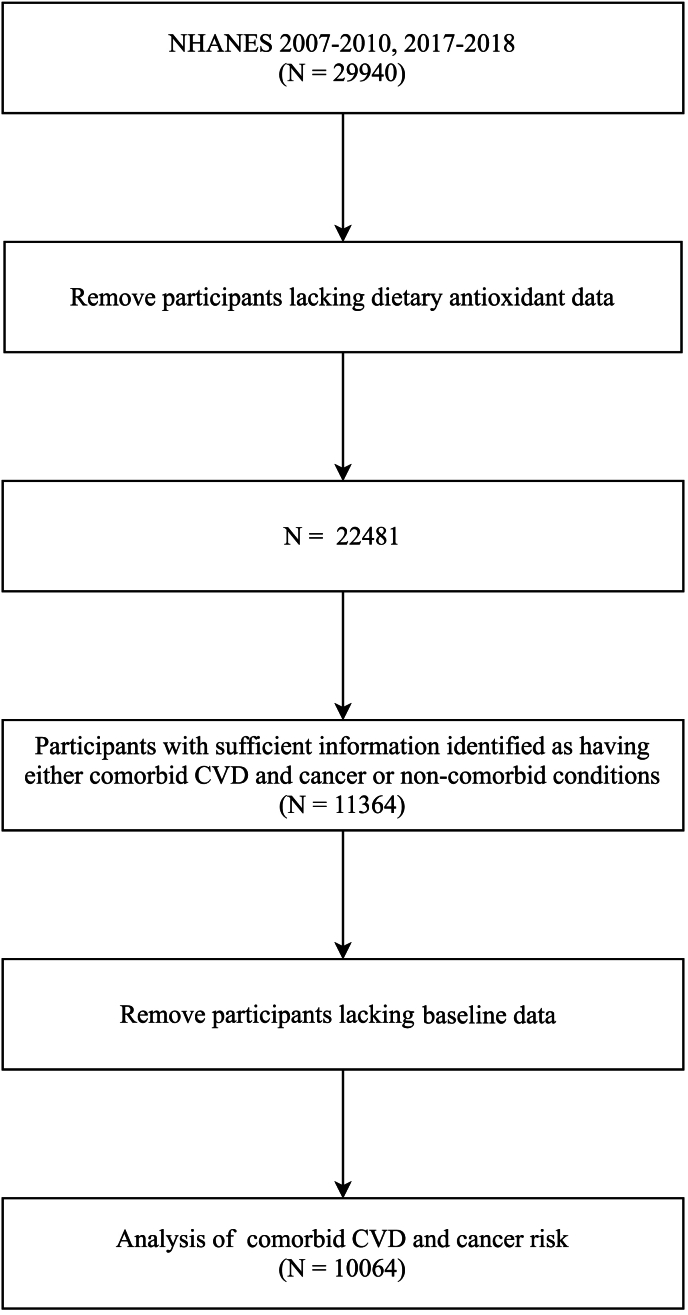
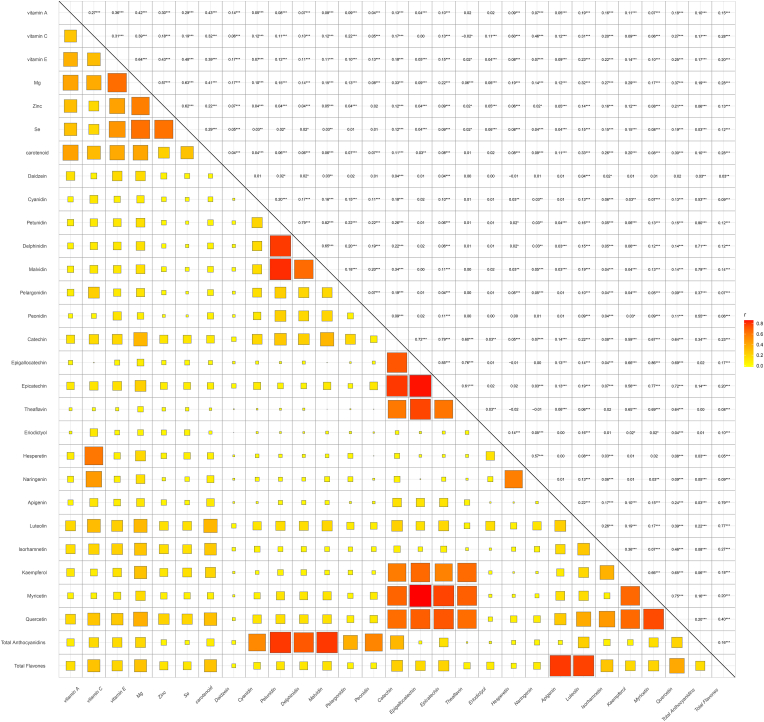
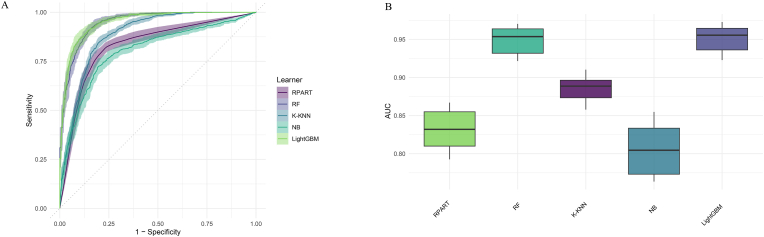
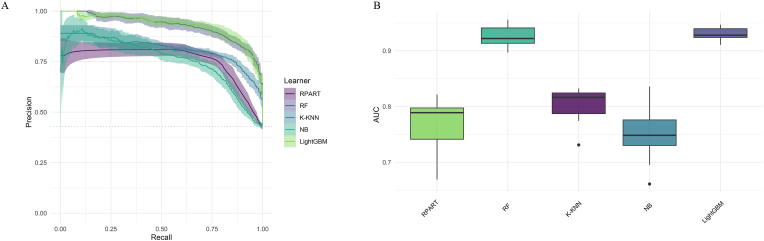
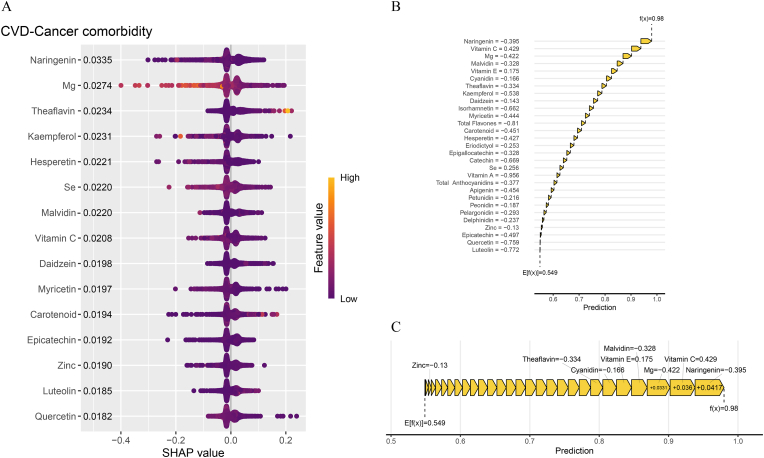
OBJECTIVE: To develop and validate a machine learning model incorporating dietary antioxidants to predict cardiovascular disease (CVD)-cancer comorbidity and to elucidate the role of antioxidants in disease prediction. METHODS: Data were sourced from the National Health and Nutrition Examination Survey. Antioxidants, including vitamins, minerals, and polyphenols, were selected as key features. Additionally, demographic, lifestyle, and health condition features were incorporated to improve model accuracy. Feature preprocessing included removing collinear features, addressing class imbalance, and normalizing data. Models constructed within the mlr3 framework included recursive partitioning and regression trees, random forest, kernel k-nearest neighbors, naïve bayes, and light gradient boosting machine (LightGBM). Benchmarking provided a systematic approach to evaluating and comparing model performance. SHapley Additive exPlanation (SHAP) values were calculated to determine the prediction role of each feature in the model with the highest predictive performance. RESULTS: This analysis included 10,064 participants, with 353 identified as having comorbid CVD and cancer. After excluding collinear features, the machine learning model retained 29 dietary antioxidant features and 9 baseline features. LightGBM achieved the highest predictive accuracy at 87.9 %, a classification error rate of 12.1 %, and the top area under the receiver operating characteristic curve (0.951) and the precision-recall curve (0.930). LightGBM also demonstrated balanced sensitivity and specificity, both close to 88 %. SHAP analysis indicated that naringenin, magnesium, theaflavin, kaempferol, hesperetin, selenium, malvidin, and vitamin C were the most influential contributors. CONCLUSION: LightGBM exhibited the best performance for predicting CVD-cancer comorbidity. SHAP values highlighted the importance of antioxidants, with naringenin and magnesium emerging as primary factors in this model.
Overview
The claims and statistics of this paper haven’t been checked yet.
Run the check — free, no account needed. It reads the open-access text and checks the sources it cites.
Integrity signals
Registry
Cites
Statistics
Figures
Verification
Claims the paper makes
The claims and statistics of this paper haven’t been checked yet.
Run the check — free, no account needed. It reads the open-access text and checks the sources it cites.
Claims other papers make about this one
Each is checked against this paper’s own text: does it say what the citing paper says it does?
The source backs part of the claim, not all of it — or backs it for a different population, condition or comparison.
In the citing paper
“SHAP values provide a consistent and locally accurate assessment of the contribution of each feature to the model’s predictions, enabling a more transparent understanding of the relationships between input variables and outcomes [37, 38].”
From Machine learning-driven prediction model for successful weaning of patients from mechanical ventilation in ICU (2026) · cites this paper as [37]
Experimental — accuracy not yet measuredThe cited source says what the claim attributes to it.
In the citing paper
“One key advantage of LGB is its ability to handle mixed-type features, this helps preserve the true distribution of these variables within the model.”
From Machine learning-driven prediction model for successful weaning of patients from mechanical ventilation in ICU (2026) · cites this paper as [37]
The cited source says what the claim attributes to it.
In the citing paper
“Additionally, LGB uses a histogram-based decision tree approach, discretizing continuous features during the data-splitting process, and thereby allowing for effective management of sparse data.”
From Machine learning-driven prediction model for successful weaning of patients from mechanical ventilation in ICU (2026) · cites this paper as [37]
The cited source says what the claim attributes to it.
In the citing paper
“Furthermore, this model is particularly well equipped to address the challenges posed by imbalanced datasets.”
From Machine learning-driven prediction model for successful weaning of patients from mechanical ventilation in ICU (2026) · cites this paper as [37]
Self-check
Percentages, sums and reported differences re-computed from the paper’s own numbers.
The self-check needs the paper’s full text.
Citations
Cites
LightGBM: A Highly Efficient Gradient Boosting Decision Tree
(2017) · HAL · Cited by 10,512
Panche, A. N., Diwan, A. D., & Chandra, S. (2016) · Journal of Nutritional Science · doi:10.1017/jns.2016.41 · Cited by 5,953
Sies, H., Berndt, C., & Jones, D. P. (2017) · Annual Review of Biochemistry · doi:10.1146/annurev-biochem-061516-045037 · Cited by 3,520
Targeting oxidative stress in disease: Promise and limitations of antioxidant therapy
Forman, H. J., & Zhang, H. (2021) · Nature Reviews Drug Discovery · doi:10.1038/s41573-021-00233-1 · Cited by 2,900
Strobl, C., Malley, J., & Tutz, G. (2009) · Psychological Methods · doi:10.1037/a0016973 · Cited by 2,583
Magnesium in man: implications for health and disease
de Baaij, J. H. F., Hoenderop, J. G. J., & Bindels, R. J. M. (2015) · Physiological Reviews · doi:10.1152/physrev.00012.2014 · Cited by 1,726
A population-based study of cardiovascular disease mortality risk in US cancer patients
Sturgeon, K. M., Deng, L., Bluethmann, S. M., Zhou, S., Trifiletti, D. M., Jiang, C., Kelly, S. P., & Zaorsky, N. G. (2019) · European Heart Journal · doi:10.1093/eurheartj/ehz766 · Cited by 970
Signaling Functions of Reactive Oxygen Species
Forman, H. J., Maiorino, M., & Ursini, F. (2010) · Biochemistry · doi:10.1021/bi9020378 · Cited by 827
Role of vitamin E as a lipid-soluble peroxyl radical scavenger: in vitro and in vivo evidence
Niki, E. (2013) · Free Radical Biology and Medicine · doi:10.1016/j.freeradbiomed.2013.03.022 · Cited by 699
Zinc and Oxidative Stress: Current Mechanisms
Marreiro, D., Cruz, K., Morais, J., Beserra, J., Severo, J., & De Oliveira, A. (2017) · Antioxidants · doi:10.3390/antiox6020024 · Cited by 679
Research works printed but not linked: 1
- Lin, 2020, Naringin induces endoplasmic reticulum stress-mediated apoptosis, inhibits β-catenin pathway and arrests cell cycle in cervical cancer cells, Acta Biochim. Pol., 67, 181
Cited by
Sorted by citations
Yuan, Q., Ye, R., Qian, Y., Hao, Y., Zhou, Y., Cui, X., Liu, F., & Niu, M. (2025) · Annals of Medicine · doi:10.1080/07853890.2025.2541316 · Cited by 38
Li, Z., Qiao, W., Yu, S., Fan, B., Yang, M., Wu, M., Qiu, F., & Wang, J. (2025) · International Journal of Surgery · doi:10.1097/js9.0000000000002639 · Cited by 21
Liu, C., Shi, J., Wang, F., Li, D., Luo, Y., Yang, B., Zhao, Y., Zhang, L., Yang, D., Jin, H., et al. (2025) · EClinicalMedicine · doi:10.1016/j.eclinm.2025.103438 · Cited by 23
Scuto, M. C., Lombardo, C. M. G., Sasso, B. L., Fatta, E. D., Ferri, R., & Salinaro, A. T. (2025) · Toxics · doi:10.3390/toxics13060438 · Cited by 18
Wei, L., Wu, B., Guo, T., Ru, D., Chen, G., Wu, J., Wu, A., Hong, Y., Hu, J., Wei, L., et al. (2025) · EClinicalMedicine · doi:10.1016/j.eclinm.2025.103507 · Cited by 16
Zheng, Z., Xu, Y., Kang, N., Dong, Y., Wang, X., Zhang, L., Bian, H., & Zeng, Q. (2025) · The Science of The Total Environment · doi:10.1016/j.scitotenv.2025.180003 · Cited by 14
Wu, Z., Yao, S., Jin, L., Wu, X., Zhang, R., Wang, O., & Xia, E. (2025) · iMetaMed · doi:10.1002/imm3.70010 · Cited by 16
Zhao, Z., Wang, M., Wei, J., Cen, X., Du, S., Wu, Z., Liu, H., & Wang, W. (2025) · Energies · doi:10.3390/en18071624 · Cited by 14
Shen, L., Hu, M., Xu, X., Zhou, Y., Wu, W., Ge, X., Wang, G., Wang, Y., & Li, Z. (2025) · Frontiers in Pharmacology · doi:10.3389/fphar.2025.1671652 · Cited by 13
Hou, L., Li, Y., & Liu, Q. (2025) · Annals of Medicine · doi:10.1080/07853890.2025.2584308 · Cited by 12
Shen, N., Zhang, Y., Ding, Z., Li, R., Quan, X., Liu, X., Zhang, Y., Xiang, T., Zhang, Y., Yin, C., et al. (2025) · International Journal of Surgery · doi:10.1097/js9.0000000000002730 · Cited by 12
Zhang, X., Lin, S., Zeng, Q., Peng, L., & Yan, C. (2025) · Frontiers in Nutrition · doi:10.3389/fnut.2025.1612369 · Cited by 12
Patil, P. B., Rashmi, M., Natesha, B. V., & Shetty, R. D. (2025) · International Journal of Information Technology · doi:10.1007/s41870-025-03044-4 · Cited by 11
Ge, Q., Wang, Z., Wang, Y., Chu, T., Wang, Z., Zhu, W., Zhang, Y., Chen, Y., Ye, D., Xu, W., et al. (2026) · npj Digital Medicine · doi:10.1038/s41746-025-02297-4 · Cited by 11
He, J., Chen, Y., Xu, S., Hou, P., Cui, Y., Su, K., Guo, X., Wang, M., & Zhang, M. (2025) · International Journal of Surgery · doi:10.1097/js9.0000000000002544 · Cited by 11
Ge, J., Zhu, L., Jiang, S., Li, W., Lin, R., Wu, J., Dong, F., Deng, J., & Lu, Y. (2025) · Nutrition Journal · doi:10.1186/s12937-025-01175-9 · Cited by 11
Waqar, M., Shahnawaz, M. B., Saleem, S., Dawood, H., Muhammad, U., & Dawood, H. (2025) · Algorithms · doi:10.3390/a18060333 · Cited by 10
Wang, Z., Li, X., Wang, J., Yu, H., Zhao, D., Xu, Y., Zhou, S., & Men, W. (2025) · npj Precision Oncology · doi:10.1038/s41698-025-01177-0 · Cited by 10
Liu, H., Wu, M., Wei, P., Fan, H., & Hou, M. (2025) · Food Science & Nutrition · doi:10.1002/fsn3.71401 · Cited by 10
Wu, Y., Zhu, J., Zhang, J., Zhang, Y., Tang, J., Miao, J., Sun, Y., & Zou, J. (2025) · Horticulture Research · doi:10.1093/hr/uhaf227 · Cited by 9
Zhao, H.-F., Han, S.-Y., Xiao, L., Yu, B.-K., Xia, N., & Zhang, Y. (2025) · Ultrasonics Sonochemistry · doi:10.1016/j.ultsonch.2025.107420 · Cited by 8
NeoTImmuML: a machine learning-based prediction model for human tumor neoantigen immunogenicity
Shao, Y., Ge, S., Dong, R., Ji, W., Qin, C., & Wen, P. (2025) · Frontiers in Immunology · doi:10.3389/fimmu.2025.1681396 · Cited by 8
Wang, M. (2025) · Archives of cardiovascular diseases · doi:10.1016/j.acvd.2025.09.005 · Cited by 8
Yu, W. C., Chen, Y., Cheng, A.-L., Zheng, Z.-Y., Wang, J., Liu, X.-B., & Zhou, J.-X. (2025) · Journal of Translational Medicine · doi:10.1186/s12967-025-07223-6 · Cited by 8
Shangguan, Y., Ji, K., Lin, Z., He, C., Sim, Y.-J., Liu, H., Huang, K., Wu, K., Yan, L., Xu, K., et al. (2025) · Frontiers in Nutrition · doi:10.3389/fnut.2025.1666477 · Cited by 8
Alam, A., Siddiqui, M. F., Hamoudi, R., Kishore, U., Fernández-Cabezudo, M. J., & al-Ramadi, B. K. (2025) · Computational and Structural Biotechnology Journal · doi:10.1016/j.csbj.2025.11.061 · Cited by 9
Bai, X., Chen, W., Li, F., Bu, Z., Dai, Q., & Dai, J. (2025) · Ecological Engineering · doi:10.1016/j.ecoleng.2025.107846 · Cited by 8
Zhou, X., Qu, Y., Xu, C., Wang, H., Lang, D., Jia, B., & Jiang, N. (2026) · Animals · doi:10.3390/ani16020204 · Cited by 8
Xia, T., & Han, K. (2025) · BMC Pulmonary Medicine · doi:10.1186/s12890-025-03724-8 · Cited by 7
Lei, C., Ding, Z., Wang, Q., Tao, S., Zhou, Q., Yin, P., Luo, Y., Yang, F., Chen, X., Cai, Y., et al. (2025) · Clinical and Experimental Medicine · doi:10.1007/s10238-025-01744-6 · Cited by 7
Machine learning uncovers dominant fractions of heavy metal(loid)s in global soils
Hu, T., Wu, M., Chen, Q., Chai, L., & Qi, C. (2026) · Communications Earth & Environment · doi:10.1038/s43247-026-03221-8 · Cited by 7
Zhang, M., Chen, D., Yang, S., Xie, J., Li, X., Sha, Y., Yu, H. M., Lin, Z., You, W., Huang, Z., et al. (2026) · Surgical Oncology · doi:10.1016/j.suronc.2026.102455 · Cited by 7
Sun, H., Li-jin, Z., Wang, P., Yuan, K., Nawrin, S. S., Cui, Y., & Li, L. (2025) · Frontiers in Nutrition · doi:10.3389/fnut.2025.1705683 · Cited by 6
Chen, K., An, Y., Wang, Z., & Nie, F. (2026) · Frontiers in Cardiovascular Medicine · doi:10.3389/fcvm.2025.1707889 · Cited by 6
Huang, R., Jin, X., Liu, Q., Bai, X., Karako, K., Tang, W., Wang, L., & Zhu, W. (2025) · BioScience Trends · doi:10.5582/bst.2025.01045 · Cited by 7
Wang, Z., Zheng, Q., Chen, X., & Wang, H. (2025) · Archives of Gerontology and Geriatrics · doi:10.1016/j.archger.2025.105861 · Cited by 6
Shangguan, Y., Lin, Z., Wu, K., Sim, Y.-J., & Xuan, W. (2025) · Redox Biology · doi:10.1016/j.redox.2025.103849 · Cited by 6
Li, W., Yan, D., Hu, W., Su, X., & Zhang, Z. (2025) · Frontiers in Artificial Intelligence · doi:10.3389/frai.2025.1618492 · Cited by 5
Meng, Q., Mi, Y., Wang, F., Guo, H., Yang, Y., Liu, Y., He, D., Huang, Y., & Hou, Y. (2025) · Pharmacological Research · doi:10.1016/j.phrs.2025.107953 · Cited by 5
Zhang, T., Ide, H., Lü, J., Lü, Y., China, T., Nagata, M., Hachiya, T., & Horie, S. (2025) · Journal of Clinical Medicine · doi:10.3390/jcm14197079 · Cited by 5
Zhang, G., Yang, Y., An, R., & Tan, Z. (2025) · International Journal of Women s Health · doi:10.2147/ijwh.s560693 · Cited by 5
Ye, C., Liu, H., Liu, J., Wang, H., Ge, R., Chen, X., Wang, Y., Wang, C. N., & Zhu, J. (2026) · Journal of environmental chemical engineering · doi:10.1016/j.jece.2026.121063 · Cited by 4
Xie, M., Zhang, Z., Yu, Y., Zhang, L., Zhang, J., & Wu, D. (2025) · Health and Quality of Life Outcomes · doi:10.1186/s12955-025-02398-4 · Cited by 5
Zhao, W., He, Z., Wu, Z., Zhou, Y., Ding, Z., Chen, H., & Zhou, Y. (2025) · ACS Applied Polymer Materials · doi:10.1021/acsapm.5c02996 · Cited by 4
Ardahanlı, İ., Aslan, R., Akdoğan, M., Akgün, O., & Ardahanlı, A. (2025) · Journal of Electrocardiology · doi:10.1016/j.jelectrocard.2025.153926 · Cited by 4
Li, M., Su, X., Liao, W., Huang, L., Yang, Y., Wu, X., Fan, Y., Liu, J., Yang, X., Zeng, Z., et al. (2025) · Reproductive Sciences · doi:10.1007/s43032-025-01937-0 · Cited by 4
Machine learning models predict coagulopathy in traumatic brain injury patients in ER
Wang, H., Cao, W., Huang, J., Feng, Y., & Li, C. (2025) · Frontiers in Neurology · doi:10.3389/fneur.2025.1649869 · Cited by 4
Wu, Z., Li, M., Xu, Z., & Liu, G. (2025) · BMC Medical Informatics and Decision Making · doi:10.1186/s12911-025-03172-8 · Cited by 4
Henna, F., Batool, S. K., Siddiqui, H. T., Riaz, A., Javed, A., Kamran, A., Faisal, F., Shadab, H. A., Qamar, A., Mehboob, J., et al. (2025) · Cardiology in Review · doi:10.1097/crd.0000000000001071 · Cited by 4
He, N., Xu, X., Wang, H., & He, F. (2025) · Scientific Reports · doi:10.1038/s41598-025-24154-w · Cited by 5
Gan, C., Feng, X., Yang, K., Sun, G., Luo, W., Yang, Q., Zhang, W., Shi, Y., Wang, L., Xiong, M., et al. (2025) · Environmental Pollution · doi:10.1016/j.envpol.2025.127465 · Cited by 4
Liu, F., Luo, H., Huang, Y., Sun, Y., Yang, X., & Zhu, X. (2025) · BMC Geriatrics · doi:10.1186/s12877-025-06652-8 · Cited by 4
Wu, L., Su, S., Salama, E., Ma, X., Chen, L., & Wang, Y. (2025) · BMC Oral Health · doi:10.1186/s12903-025-07245-y · Cited by 4
Zhang, G., Tang, Y., Gao, L., Zeng, X., & He, R. (2026) · European Food Research and Technology · doi:10.1007/s00217-025-05032-1 · Cited by 4
Wang, Z., Xu, Q., Yu, S., Sun, J., Lv, J., Huang, Q., Huang, C., & Sun, Y. (2026) · BMC Psychiatry · doi:10.1186/s12888-025-07763-7 · Cited by 4
Zhang, Y., Ren, X., Liu, L., Zha, J., Gu, Y., & YE, H. (2026) · JMIR Medical Informatics · doi:10.2196/80969 · Cited by 4
Hu, Y., He, Z., Li, S., Han, B., Yang, X., & Chen, X. (2026) · Environmental Pollution · doi:10.1016/j.envpol.2026.128275 · Cited by 4
Wu, B., Yu, W., Zhang, G., Jiang, H., Chen, Y., & Wu, N. (2025) · Journal of Affective Disorders · doi:10.1016/j.jad.2025.119671 · Cited by 4
Shi, Z., Guo, R. Z., Yao, F., Liu, Z., & Zhang, J. (2025) · Journal of Hazardous Materials · doi:10.1016/j.jhazmat.2025.139178 · Cited by 4
Hua, Y., Zhang, Y., Wu, R., Lv, J., Zhang, Y., Chen, Y., Ding, Y., & Chen, J. (2025) · Frontiers in Oncology · doi:10.3389/fonc.2025.1617207 · Cited by 3
Zhang, X., Shao, W., Qiu, M., Xiao, C., & Ma, L. (2025) · Europe PMC (PubMed Central) · doi:10.7717/peerj-cs.2951 · Cited by 3
Zhao, H., Liu, S., Wei, M., Wang, Y., Xiao, T., & Tian, Y. (2025) · Frontiers in Public Health · doi:10.3389/fpubh.2025.1688708 · Cited by 3
Liu, Y., Ding, K., Qiu, Y., Wang, P., Wang, R., Zeng, X. Y., & Yin, C. (2025) · Frontiers in Medicine · doi:10.3389/fmed.2025.1686005 · Cited by 3
Chen, J., Pang, H., Wang, J., Guo, J., Huang, T., & Zhou, H. (2026) · Frontiers in Cell and Developmental Biology · doi:10.3389/fcell.2026.1769023 · Cited by 3
Wang, H., Yang, C., Zhao, M., Ren, F.-G., Wang, X., Yan, H., QIN, W., Tian, F., & Li, L. (2026) · Microbiology Spectrum · doi:10.1128/spectrum.03713-25 · Cited by 3
Qing, Z., Meile, W., Yueling, X., Wen, S., Jin, W., & Xi, L. (2026) · LWT · doi:10.1016/j.lwt.2026.119152 · Cited by 3
Kong, W., Jiang, J., Wang, Y., Chen, J., Wang, B., Wang, K., Liang, Y., Wang, J., Li, C., Lin, Y., et al. (2026) · Frontiers in Psychiatry · doi:10.3389/fpsyt.2026.1780056 · Cited by 3
Liu, L., Wang, H., Wei, Y., Kong, D., Xue, Z., & Liu, Y. (2026) · BMC Medical Research Methodology · doi:10.1186/s12874-026-02845-w · Cited by 3
Diet, the protective bridge connecting nutrition and cardiovascular health: A review
Feng, T., Wei, Y., Wang, Z., Sun, J., & Zhu, R. (2026) · Food Chemistry X · doi:10.1016/j.fochx.2026.103856 · Cited by 3
Physics-guided residual learning and SHAP attribution for explainable robotic fault diagnosis
Kim, H. (2026) · Journal of Intelligent Manufacturing · doi:10.1007/s10845-026-02865-9 · Cited by 3
Adıgüzel, F., Tabar, M. E., Yetiş, C., Karadeniz, E., Xi, W., & Zhang, M. (2026) · Process Safety and Environmental Protection · doi:10.1016/j.psep.2026.108991 · Cited by 3
Association between life’s crucial 9 and lung health: a population-based study
Shi, H., & Ma, X. (2025) · BMC Pulmonary Medicine · doi:10.1186/s12890-025-03684-z · Cited by 3
Lin, Z., Sim, Y.-J., & Shangguan, Y. (2025) · Journal of Affective Disorders · doi:10.1016/j.jad.2025.119966 · Cited by 3
Zeng, Y., Zhao, C., Ma, D., Bin, L., Chen, W., Li, P., & Tang, B. (2025) · Journal of Environmental Management · doi:10.1016/j.jenvman.2025.125527 · Cited by 2
Kang, B., Qiao, Y., Song, J., Zhang, Z., Wang, Q., Zhu, J., & Li, J. (2025) · European Journal of Surgical Oncology · doi:10.1016/j.ejso.2025.110365 · Cited by 2
Zhou, Z., Lee, H., Jiang, Y., Qian, J., Li, K., & Zhu, X. (2025) · Food Science & Nutrition · doi:10.1002/fsn3.70798 · Cited by 2
Radiotherapy for glioma in the AI era: current applications and future prospects
Wang, X., Qi, Z., Zeng, Q., Gu, D., & Li, T. (2025) · Frontiers in Oncology · doi:10.3389/fonc.2025.1673752 · Cited by 2
Wang, T., Zhang, H., Wang, K., Liu, C., Kong, N., Zhou, L., & Qu, L. (2025) · Frontiers in Immunology · doi:10.3389/fimmu.2025.1698740 · Cited by 2
Kamble, P., Sharma, A., Banerjee, A., Pandey, S., & Garg, P. (2025) · Computational Toxicology · doi:10.1016/j.comtox.2025.100390 · Cited by 2
Protective predictors of cardiovascular disease: an explainable AI approach
Minh, L. H. N., Kha, H. Q., Huynh, P. K., Huynh, P. K., Nguyen, P. K., Nguyen, D., Trang, L. D. T., Tran, V. N., Bui, Q. V. P., Pham, H. T., et al. (2025) · Public Health · doi:10.1016/j.puhe.2025.106050 · Cited by 2
Fault Diagnosis in Robot Drive Systems Using Data-Driven Dynamics Learning
Kim, H. (2025) · Actuators · doi:10.3390/act14120583 · Cited by 2
Chai, L., Shi, X., Wang, X., Zhu, X., Lin, C., & Li, C. (2025) · International Journal of Cardiology · doi:10.1016/j.ijcard.2025.134075 · Cited by 2
Artificial intelligence in radiobiology: Bridging mechanisms and data analysis
Wang, Y., Li, W., Xu, N., Xie, D., Huang, X., & Zhou, P. (2025) · Radiation Medicine and Protection · doi:10.1016/j.radmp.2025.12.005 · Cited by 2
Meng, H., Li, S., Xing, X., Fu, R., Yang, L., Liu, Q., & Wang, X. (2025) · Frontiers in Psychiatry · doi:10.3389/fpsyt.2025.1724359 · Cited by 2
Liu, F., Wang, J., Si-ao, W. E. N., Peng, S. Y., Jiang, Y. W., Liu, Z.-Y., & You, Y. (2026) · Journal of Health Population and Nutrition · doi:10.1186/s41043-025-01213-6 · Cited by 2
Zhang, X., He, M., Zhang, J., Zhao, L., & Liu, D. (2026) · International Journal of COPD · doi:10.2147/copd.s557298 · Cited by 2
Investigation on magnetic properties of Sm2Co17-type permanent magnets based on machine learning
Ma, X., Lin, P., Jiang, S., Feng, X., Chen, J., Bai, X., & Kong, P. (2026) · Journal of Alloys and Compounds · doi:10.1016/j.jallcom.2026.186133 · Cited by 2
Shui, H., Wu, W., Xie, Z., Yang, B. X., Deng, J., & Tang, D. (2026) · Journal of Medical Internet Research · doi:10.2196/82839 · Cited by 2
Raghuwanshi, M. S. B., & Suryawanshi, N. A. (2026) · Intelligence-Based Medicine · doi:10.1016/j.ibmed.2026.100351 · Cited by 2
Chen, Q., Qian, X., Xiao, H., Xia, L., & Deng, S. (2026) · Microchemical Journal · doi:10.1016/j.microc.2026.117263 · Cited by 2
Ding, Z.-R., Chen, J.-W., Xiao, L.-J., Gao, M.-Y., Chandrapala, J., Pan, L., Lin, Y., Hui-rong, W., Liu, N., Zhang, K.-Y., et al. (2026) · Food Bioscience · doi:10.1016/j.fbio.2026.108624 · Cited by 2
Abubakar, M. L., Ahmed, M. S., Mohammed, H. I., Baba, B. M., Mustapha, M., & Abdussalam, A. F. (2026) · Physical Geography · doi:10.1080/02723646.2026.2677525 · Cited by 2
Duan, N., Guan, W., Wang, X., & Li, L. (2026) · Ocean Engineering · doi:10.1016/j.oceaneng.2026.126776 · Cited by 2
Muthukumaran, M., Selvam, P., Dhandapani, P. B., Veeramani, N., Nalule, R. M., Vetrivel, G., Mahmoud, S. R., & Alwabli, A. S. (2026) · BMC Cancer · doi:10.1186/s12885-026-16632-9 · Cited by 2
Qiu, C., Tang, L., Zhuang, Y., Chi, C., Zheng, K., & Zhu, X. (2026) · Intensive Care Medicine Experimental · doi:10.1186/s40635-026-00859-8 · Cited by 1
“SHAP values provide a consistent and locally accurate assessment of the contribution of each feature to the model’s predictions, enabling a more transparent understanding of the relationships between input variables and outcomes [37, 38].”
Liu, G., Yang, N., Qu, Y., Chen, G., Wen, G., Li, G., Deng, L., & Mai, Y. (2025) · European Radiology · doi:10.1007/s00330-025-11777-w · Cited by 1
Yan, Z., Xu, Y., Peng, T., & Du, X. (2025) · Journal of Food Science · doi:10.1111/1750-3841.70334 · Cited by 1
Ahammad, K., Fouladzadeh, A., Wardill, H. R., Abbott, D., & Dorraki, M. (2025) · IEEE Access · doi:10.1109/access.2025.3607285 · Cited by 1
Ye, F., Xiao, F., Zhan, A., Chu, Y., Tian, S., & Zhang, X. (2025) · Environmental Research · doi:10.1016/j.envres.2025.123126 · Cited by 1
Ku, Y. S., Lee, G. W., Seo, H., Gil, J. Y., Min, K. H., Kim, J. H., Park, J. H., Kim, W., & Lee, K. E. (2025) · Clinical and Translational Science · doi:10.1111/cts.70403 · Cited by 1
Metadata
- Authors
- Qi, X., Wang, S., Fang, C., Jia, J., Lin, L., & Yuan, T.
- Affiliations
- Guangzhou University of Chinese Medicine (CN)
- National University of Singapore (SG)
- The University of Sydney (AU)
- First Affiliated Hospital of Guangzhou University of Chinese Medicine (CN)
- Corresponding author
- Lin, Lizhu
- Yuan, Tianhui
- Venue
- Redox Biology
- Publisher
- Elsevier BV
- Published
- 2025-02
- Volume
- 79
- Pages
- 103470
- ISSN
- 2213-2317 (ISSN-L)
- PMC
- PMC11729017
- OpenAlex
- W4405439214
- Cited by
- 271
- References
- 64
- Citations by year
- 2026: 170 · 2025: 101
- FWCI
- 82.81
- Type
- journal article
- Language
- en
- Open access
- gold
- doi.org
- Licence
- Locations
- Redox Biology (publishedVersion, cc-by)
- PubMed Central (publishedVersion, cc-by)
- PubMed (publishedVersion)
- DOAJ (DOAJ: Directory of Open Access Journals) (submittedVersion, cc-by-sa)
- Funders
- National Natural Science Foundation of China
- Guangzhou Municipal Science and Technology Bureau (SL2022B01J10007)
- National Key Research and Development Program of China
- Guangdong Special Support Plan
- Basic and Applied Basic Research Foundation of Guangdong Province
- Topics
- Health Sciences › Health Professions › Health Information Management › Artificial Intelligence in Healthcare
- Health Sciences › Medicine › Public Health, Environmental and Occupational Health › Nutritional Studies and Diet
- Health Sciences › Medicine › Biochemistry (medical) › Antioxidant Activity and Oxidative Stress
- Keywords
- cardiovascular disease, cancer, comorbidity prediction, dietary antioxidants, polyphenols, LightGBM, SHAP values, naringenin, magnesium, vitamin C, selenium, theaflavins, kaempferol, hesperetin, malvidin, minerals
- MeSH terms
- Machine Learning, Adult, Aged, Antioxidants, Cardiovascular Diseases, Female, Humans, Male, Middle Aged, Neoplasms, Nutrition Surveys, ROC Curve, Comorbidity, Dietary Supplements
About these checks
Registry, retraction, Cites and statistics results are computed, not judged, with one exception: a printed reference that no index lists is read once by a model before it counts as a citation error. Claims are extracted by a model and kept only when their quote appears verbatim in the text; each cited source is then checked, with a model’s help, for whether it says what the claim relies on. Those verdicts can be wrong — read the claim’s quote and the cited source before relying on one.
Statistics and arithmetic are recomputed, not judged.
Confidence bands are shown only for fields calibrated on our annotated test set. None is calibrated yet, so no band is shown.
What counts as a claim ›How we measure confidence ›How we check this ›
Are you an author, or do you see a problem with this page? Request a review
