

The DOI matches its Crossref record.
Measuring the effect of environmental education for sustainable development at elementary schools: A case study in Da Nang city, Vietnam
Open accessAbstract
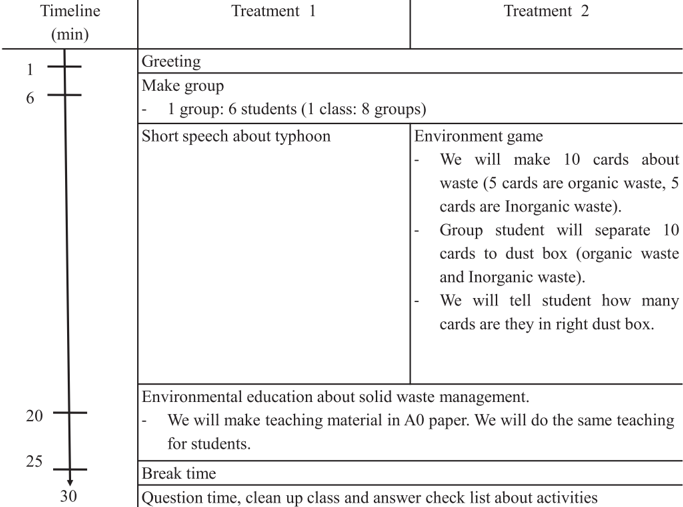
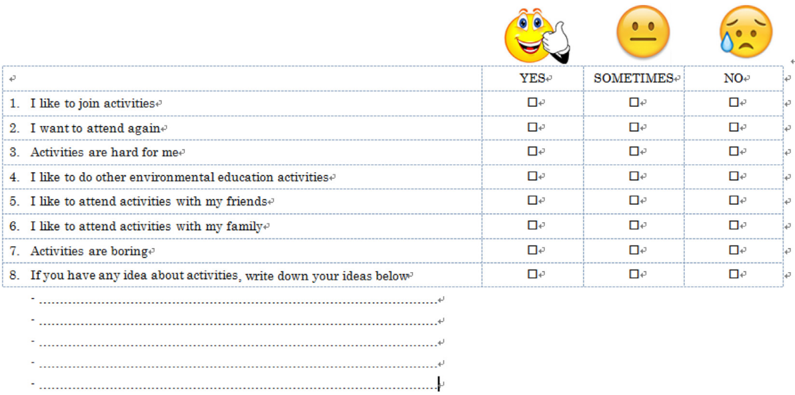
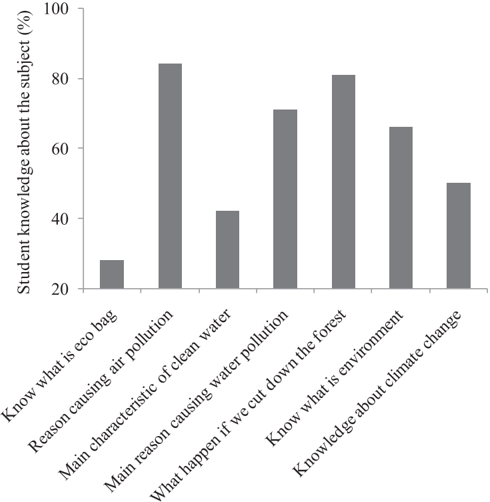
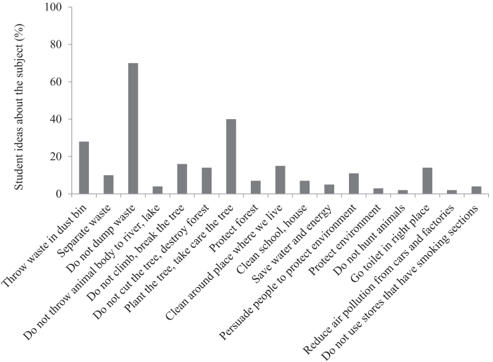
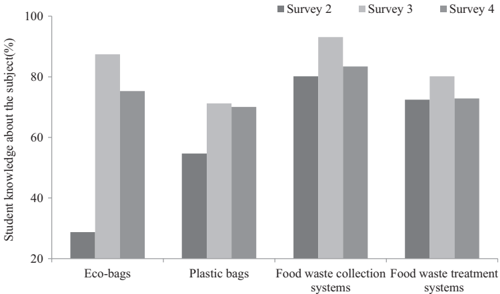
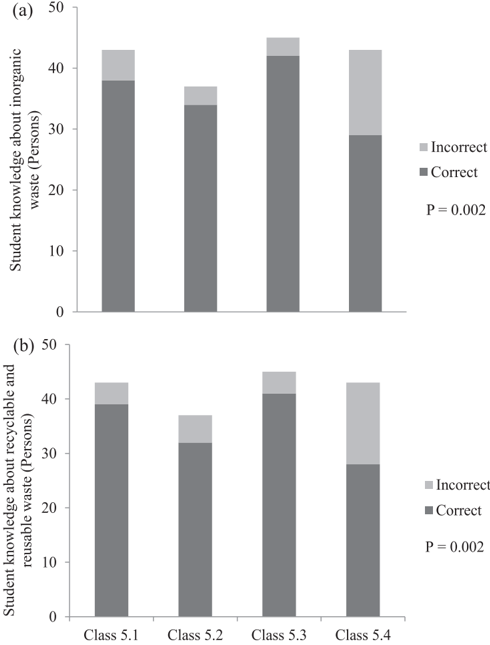
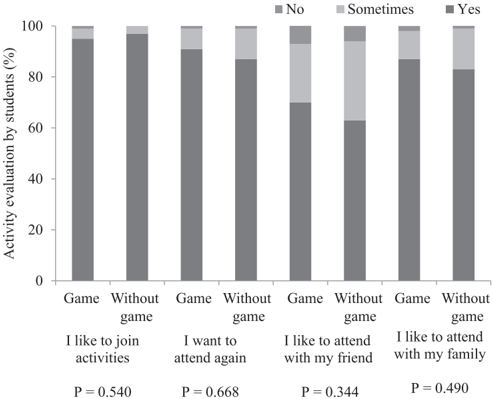
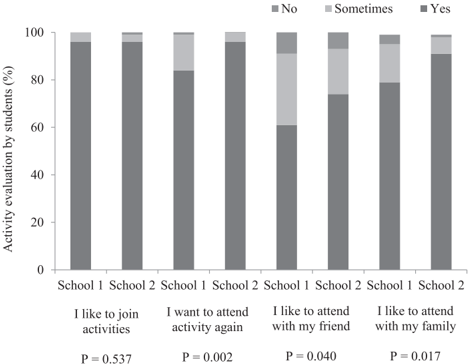
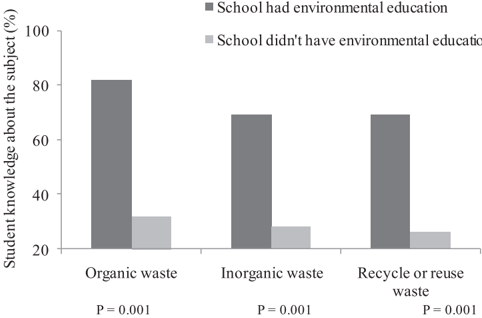
This study provides a detailed description of the environmental education of elementary school students in Da Nang city, Vietnam. In January 2014, the study surveyed 247 students in two elementary schools. An evaluation of the students' knowledge of solid waste management was conducted. Students had basic knowledge about the environment, but their knowledge was limited with regard to solid waste management. In February 2015, an environmental education workshop was conducted for the students. The result showed that 96% of the students were interested in solid waste management activities. In addition, the study found that there were changes in the students' knowledge before and after environmental education activities. Before the activity 29% of the students said that they knew about eco-bags, and 55% of the students said that they knew “that plastic bags are difficult to decompose naturally.” After environmental education 87% of the students answered that they knew about eco-bags, and 71% of the students said that they knew “that plastic bags are difficult to decompose naturally.” Given these results, this study was successful in increasing students' knowledge about solid waste management.
Overview
The claims and statistics of this paper haven’t been checked yet.
Run the check — free, no account needed. It reads the open-access text and checks the sources it cites.
Integrity signals
Registry
Cites
Statistics
Figures
Verification
Claims the paper makes
The claims and statistics of this paper haven’t been checked yet.
Run the check — free, no account needed. It reads the open-access text and checks the sources it cites.
Claims other papers make about this one
Each is checked against this paper’s own text: does it say what the citing paper says it does?
In the citing paper
“Most of the analysed studies [108,112-114,119,122] found low knowledge of SWM, while others [79,106,110,126] indicated a high knowledge level of SWM or environmental education.”
From Raising Awareness on Solid Waste Management through Formal Education for Sustainability: A Developing Countries Evidence Review (2021) · cites this paper as [113]
Self-check
Percentages, sums and reported differences re-computed from the paper’s own numbers.
The self-check needs the paper’s full text.
Citations
Cites
No references could be resolved yet.
Research works printed but not linked: 9
- Wang, 2009, Landfill site selection using spatial information technologies and AHP: a case study in Beijing, China, J Environ Manage, 90, 2414
- Thanh, 2011, Municipal solid waste management in Vietnam: status and the strategic actions, Int J Env Res, 5, 285
- Le, 2009, Legal and institutional framework for solid waste management in Vietnam, Asian J Energ Environ, 10, 261
- Kato, 2012, Food residue recycling by swine breeders in a developing economy: a case study in Da Nang, Viet Nam, Waste Manage, 32, 2431, 10.1016/j.wasman.2012.07.015 · DOI
- Kato, 2015, Factors affecting voluntary participation in food residue recycling: a case study in Da Nang, Viet Nam, Sustain Environ Res, 25, 93
- Kato, 2016, Waste generation in traditional organized bazaars: a case study of organic waste sources in Da Nang City, Viet Nam, J Mater Cycles Waste, 18, 1
- Lutz, 2004, Connecting cognitive development and constructivism: implications from theory for instruction and assessment, J Constr Hum Sci, 9, 67
- Karpicke, 2007, Repeated retrieval during learning is the key to long-term retention, J Mem Lang, 57, 151, 10.1016/j.jml.2006.09.004 · DOI
- Mangione, 1997, Mail surveys: improving the quality, Public Opin Quart, 61, 394, 10.1086/297804 · DOI
Cited by
Sorted by citations
Debrah, J. K., Vidal, D. G., & Dinis, M. A. P. (2021) · Recycling · doi:10.3390/recycling6010006 · Cited by 552
Metadata
- Authors
- Phan Hoang, T. T., & Kato, T.
- Affiliations
- The University of Kitakyushu (JP)
- Corresponding author
- Kato, Takaaki
- ORCID
- Kato, Takaaki
- Venue
- Sustainable Environment Research
- Published
- 2016-11
- Volume
- 26
- Issue
- 6
- Pages
- 274-286
- ISSN
- 2468-2039 (ISSN-L)
- OpenAlex
- W2516836808
- Cited by
- 85
- References
- 0
- Citations by year
- 2026: 6 · 2025: 7 · 2024: 8 · 2023: 12 · 2022: 9 · 2021: 20 · 2020: 11 · 2019: 7 · 2018: 2 · 2017: 3
- FWCI
- 9.38
- Type
- journal article
- Language
- en
- Open access
- gold
- doi.org
- Licence
- Locations
- Sustainable Environment Research (publishedVersion, cc-by-nc-nd)
- DOAJ (DOAJ: Directory of Open Access Journals) (submittedVersion, cc-by-sa)
- Funders
- KAKENHI (25303006)
- Topics
- Physical Sciences › Environmental Science › Management, Monitoring, Policy and Law › Environmental Education in Latin America
- Social Sciences › Education › Environmental and sustainability education
- Physical Sciences › Environmental Science › Management, Monitoring, Policy and Law › Pro-Environmental Behavior and Attitudes
- Keywords
- environmental education, sustainable development, elementary school students, solid waste management, student knowledge, eco-bags, plastic bags, environmental education workshops, Da Nang
About these checks
Registry, retraction, Cites and statistics results are computed, not judged, with one exception: a printed reference that no index lists is read once by a model before it counts as a citation error. Claims are extracted by a model and kept only when their quote appears verbatim in the text; each cited source is then checked, with a model’s help, for whether it says what the claim relies on. Those verdicts can be wrong — read the claim’s quote and the cited source before relying on one.
Statistics and arithmetic are recomputed, not judged.
Confidence bands are shown only for fields calibrated on our annotated test set. None is calibrated yet, so no band is shown.
What counts as a claim ›How we measure confidence ›How we check this ›
Are you an author, or do you see a problem with this page? Request a review
