

Nivolumab plus ipilimumab versus lenvatinib or sorafenib as first-line treatment for unresectable hepatocellular carcinoma (CheckMate 9DW): an open-label, randomised, phase 3 trial
Open accessThe DOI matches its Crossref record; 27 of the 27 references it cites were found in a registry or an index; 21 of the 30 sources its claims cite were checked for support.
Abstract
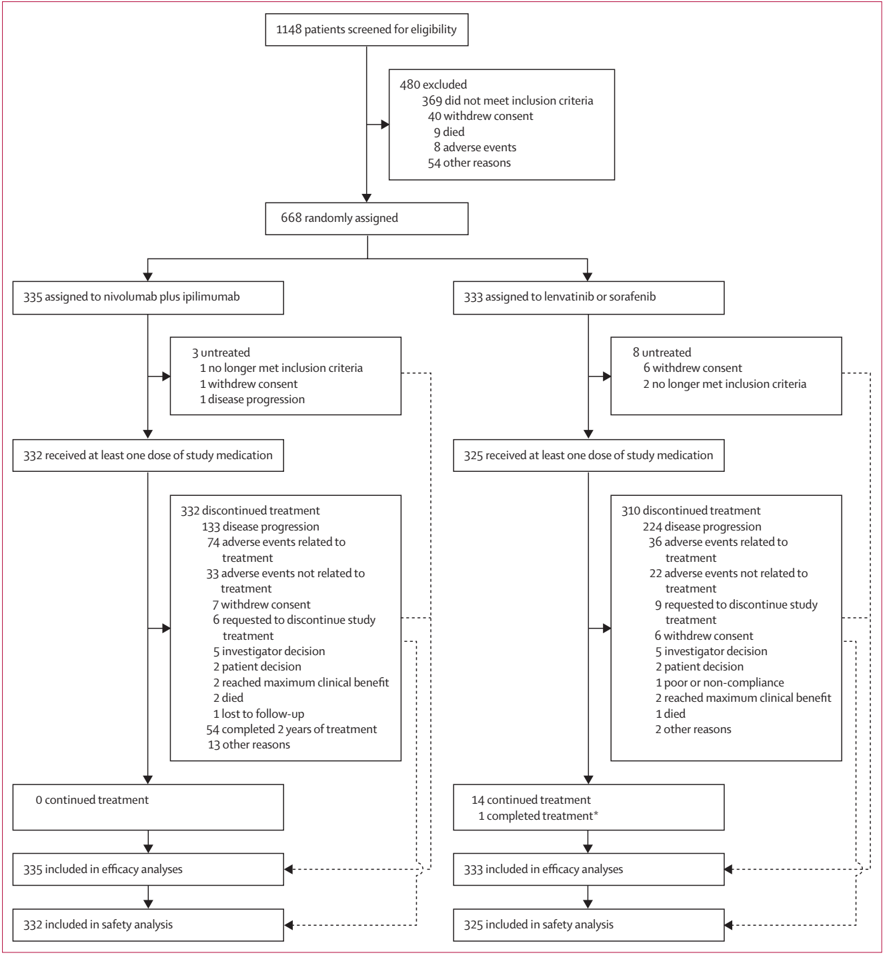
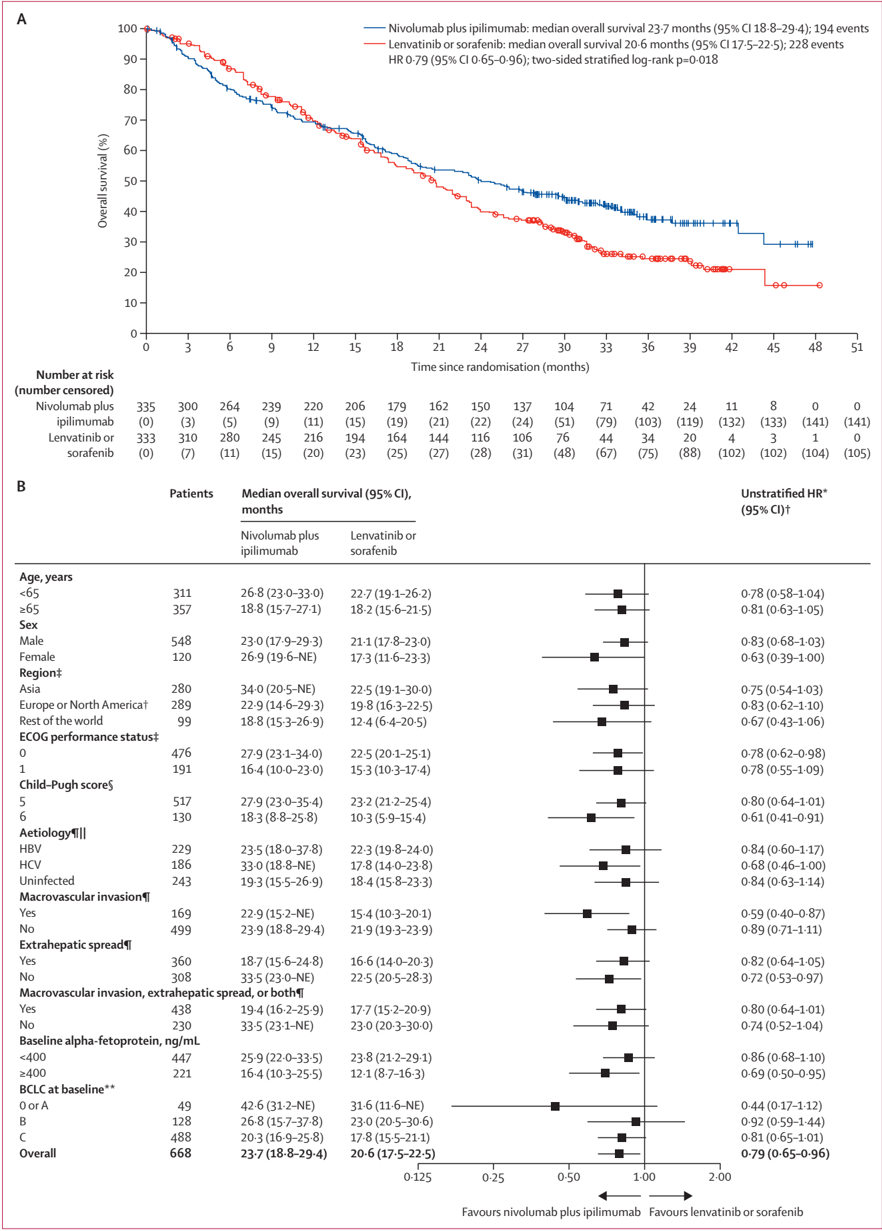
BACKGROUND: Patients with unresectable hepatocellular carcinoma have a poor prognosis, and treatments with long-term benefits are needed. We report results from the preplanned interim analysis of the CheckMate 9DW trial assessing nivolumab plus ipilimumab versus lenvatinib or sorafenib for unresectable hepatocellular carcinoma in the first-line setting. METHODS: This open-label, randomised, phase 3 trial enrolled patients aged 18 years or older with unresectable hepatocellular carcinoma without previous systemic therapy at 163 hospitals and cancer centres across 25 countries in Asia, Australia, Europe, North America, and South America. Patients had at least one measurable untreated lesion per Response Evaluation Criteria in Solid Tumours (RECIST) version 1.1, a Child-Pugh score of 5 or 6, and an Eastern Cooperative Oncology Group performance status of 0 or 1. Patients were randomly assigned (1:1) via an interactive response technology system to receive nivolumab (1 mg/kg) plus ipilimumab (3 mg/kg) intravenously every 3 weeks for up to four doses, followed by nivolumab 480 mg every 4 weeks or investigator's choice of either oral lenvatinib (8 mg or 12 mg mg daily depending on bodyweight) or oral sorafenib (400 mg twice daily). Randomisation was stratified by aetiology; the presence of macrovascular invasion, extrahepatic spread, or both; and baseline alpha-fetoprotein concentration. The primary endpoint was overall survival, which was assessed in all randomly assigned patients; safety was an exploratory endpoint and was assessed in all randomly assigned patients who received at least one dose of study medication. This trial is registered with ClinicalTrials.gov, NCT04039607 (ongoing). FINDINGS: Between Jan 6, 2020, and Nov 8, 2021, 668 patients were randomly assigned to nivolumab plus ipilimumab (n=335) or lenvatinib or sorafenib (n=333). Early crossing of the overall survival Kaplan-Meier curves reflected a higher number of deaths during the first 6 months after randomisation with nivolumab plus ipilimumab (hazard ratio 1·65 [95% CI 1·12-2·43]) but was followed by a sustained separation of the curves thereafter in favour of nivolumab plus ipilimumab (0·61 [0·48-0·77]). After a median follow-up of 35·2 months (IQR 31·1-39·9), overall survival was significantly improved with nivolumab plus ipilimumab versus lenvatinib or sorafenib (median 23·7 months [95% CI 18·8-29·4] vs 20·6 months [17·5-22·5]; hazard ratio 0·79 [0·65-0·96]; two-sided stratified log-rank p=0·018); respective overall survival rates were 49% (95% CI 44-55) versus 39% (34-45) at 24 months and 38% (32-43) versus 24% (19-30) at 36 months. Overall, 137 (41%) of 332 patients receiving nivolumab plus ipilimumab and 138 (42%) of 325 patients receiving lenvatinib or sorafenib had grade 3-4 treatment-related adverse events. 12 deaths were attributed to treatment with nivolumab plus ipilimumab and three were attributed to treatment with lenvatinib or sorafenib. INTERPRETATION: Nivolumab plus ipilimumab showed a significant overall survival benefit versus lenvatinib or sorafenib and manageable safety in patients with previously untreated unresectable hepatocellular carcinoma. These results support nivolumab plus ipilimumab as a first-line treatment in this setting. FUNDING: Bristol Myers Squibb.
Overview
CoChat Summary
TL;DR
In CheckMate 9DW, first-line nivolumab plus ipilimumab significantly improved overall survival versus lenvatinib or sorafenib in unresectable hepatocellular carcinoma, with median overall survival 23.7 vs 20.6 months. The regimen also produced higher objective response rates and durable responses, with a manageable safety profile despite an early survival crossing.
Key findings
- The primary endpoint was met: median overall survival was 23.7 months (95% CI 18.8–29.4) with nivolumab plus ipilimumab vs 20.6 months (17.5–22.5) with lenvatinib or sorafenib; HR 0.79 (95% CI 0.65–0.96), two-sided stratified log-rank p=0.018. Overall survival rates were 49% vs 39% at 24 months and 38% vs 24% at 36 months.
- Early crossing of the overall survival curves reflected more deaths in the first 6 months with nivolumab plus ipilimumab (HR 1.65 [95% CI 1.12–2.43]), followed by sustained separation favouring nivolumab plus ipilimumab thereafter (HR 0.61 [0.48–0.77]). A competing risk analysis suggested this was substantially driven by an imbalance in deaths attributed to adverse events unrelated to study treatment.
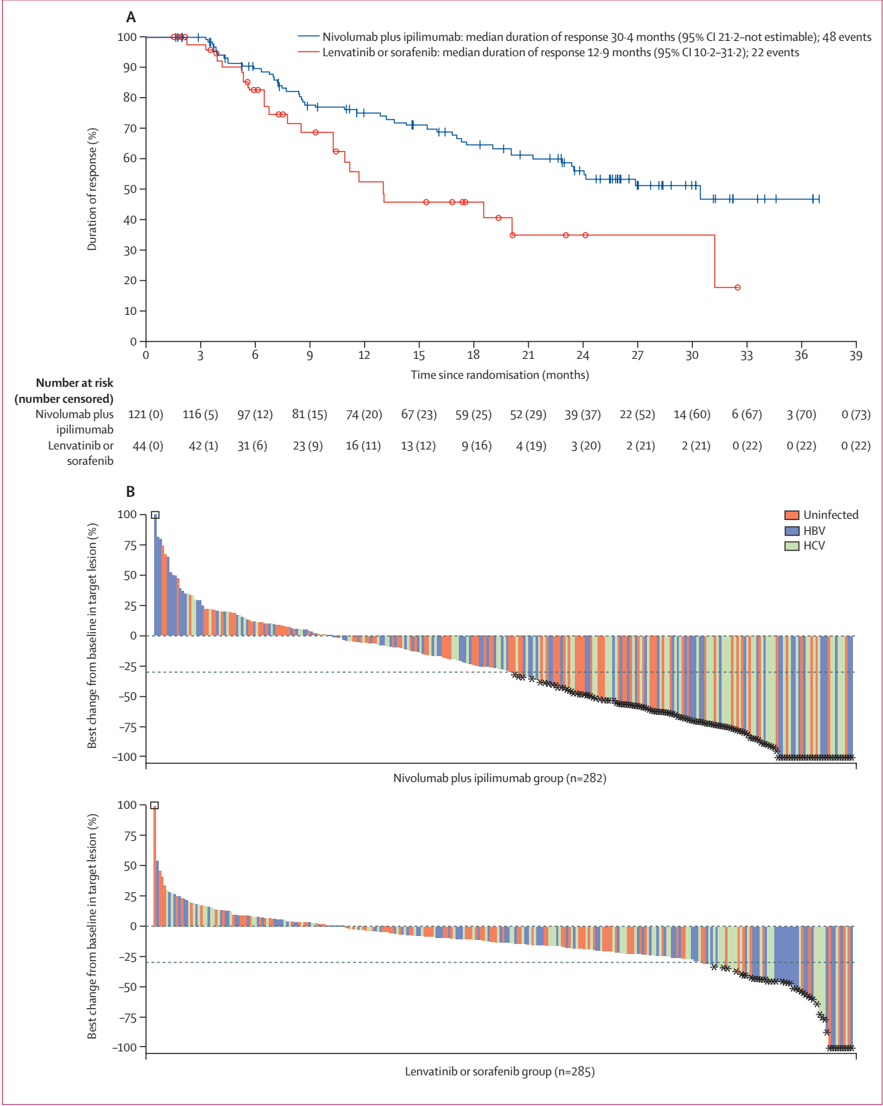
- Objective response rate by blinded independent central review was 36% (121/335; 95% CI 31–42) vs 13% (44/333; 10–17), p<0.0001; complete responses occurred in 7% vs 2%. Median duration of response was 30.4 months (21.2–not estimable) vs 12.9 months (10.2–31.2), and 47% of responders in the nivolumab plus ipilimumab group had an ongoing response at 36 months.
- Grade 3–4 treatment-related adverse events occurred in 41% vs 42%; treatment-related deaths were reported in 12 patients vs 3 patients.
Methods
- Open-label, randomised, phase 3 trial at 163 hospitals and cancer centres across 25 countries. Patients were adults aged ≥18 years with unresectable hepatocellular carcinoma without previous systemic therapy, at least one measurable untreated lesion per RECIST v1.1, Child-Pugh score 5 or 6, and ECOG performance status 0 or 1.
- Patients were randomly assigned 1:1 via interactive response technology to nivolumab 1 mg/kg plus ipilimumab 3 mg/kg intravenously every 3 weeks for up to four doses followed by nivolumab 480 mg every 4 weeks, or investigator’s choice of oral lenvatinib (8 mg or 12 mg daily by bodyweight) or oral sorafenib 400 mg twice daily. Randomisation was stratified by aetiology, macrovascular invasion/extrahepatic spread, and baseline alpha-fetoprotein.
- The primary endpoint was overall survival, assessed in all randomly assigned patients. Analysis used stratified log-rank tests and stratified Cox proportional hazards models; because the proportional hazards assumption was violated, supporting analyses included restricted mean survival time, piecewise HRs, and the MaxCombo test. Median follow-up was 35.2 months (IQR 31.1–39.9).
Limitations
- The paper states that limitations include exclusion of patients with Vp4 portal vein thrombosis and the open-label design; adverse event causality and health-related quality of life might have been influenced by awareness of treatment received, although BICR mitigated bias for objective response rate and progression-free survival.
- The text makes evident that the proportional hazards assumption was violated due to early crossing of the overall survival curves, so the treatment effect required interpretation through supporting analyses such as restricted mean survival time, piecewise HRs, and MaxCombo.
- The comparator was investigator’s choice, and 85% of treated comparator patients received lenvatinib while 15% received sorafenib; separate comparisons against lenvatinib or sorafenib were post hoc.
Model-written summary. Check it against the paper before relying on it.
Integrity signals
Registry
Cites
Statistics
Figures
Verification
Claims the paper makes
8 Valid · 4 Not valid · 3 Not checked · 76 Own results and interpretations
Some cited sources support this claim and some don’t — read each source’s verdict below.
In the paper
“PD-L1 inhibitor-based regimens received approvals in 2020 (atezolizumab plus bevacizumab) and 2022 (tremelimumab plus durvalumab) as first-line treatment options for unresectable hepatocellular carcinoma after showing improved outcomes over sorafenib, with median overall survival ranging from 16 months to 19 months.”
§ Nivolumab plus ipilimumab versus lenvatinib or sorafenib as first-line treatment for unresectable hepatocellular carcinoma (CheckMate 9DW): an open-label, randomised, phase 3 trial > Introduction
What the sources say
- Partly supportedcites [7] 8. Abou-Alfa GK, Lau G, Kudo M, et al. Tremelimumab plus durvalumab in unresectable hepatocellular carcinoma. NEJM Evid 2022; 1: EVIDoa2100070. sourceExperimental — accuracy not yet measured
The Introduction says atezolizumab plus bevacizumab improved overall survival versus sorafenib, and the trial’s Abstract reports median overall survival of 16.43 months with tremelimumab plus durvalumab versus 13.77 months with sorafenib. Our copy does not establish a 19-month median for atezolizumab plus bevacizumab or the stated approval years. (LLM, conf=0.88)
- Not checked — no full text of the sourcecites [8] 9. Sangro B, Chan SL, Kelley RK, et al. Four-year overall survival update from the phase III HIMALAYA study of tremelimumab plus durvalumab in unresectable hepatocellular carcinoma. Ann Oncol 2024; 35: 448-57. source
- Disputedcites [9] 10. Finn RS, Qin S, Ikeda M, et al. Atezolizumab plus bevacizumab in unresectable hepatocellular carcinoma. N Engl J Med 2020; 382: 1894-905. sourceExperimental — accuracy not yet measured
Split into 2 atoms — 0 confirmed, 1 partially supported, 1 disputed, 0 misattributed, 0 unverifiable. Expand the claim to see per-atom verdicts.
Checked by a reasoning model — may be wrong.
plainstates a cause- Asserted: passes — The authors put it forward as true.
- Checkable: passes — It can be checked against evidence.
- Load-bearing: passes — The paper’s conclusions depend on it.
- Based: passes — The paper gives a reason why it holds.
- Partly supported
Every source the paper cites for this claim was checked and supports it.
In the paper
“Additionally, results from CheckMate 9DW further support the clinical benefits of nivolumab plus ipilimumab shown in the phase 2 CheckMate 040 trial in patients with advanced hepatocellular carcinoma previously treated with sorafenib.14,15”
§ Nivolumab plus ipilimumab versus lenvatinib or sorafenib as first-line treatment for unresectable hepatocellular carcinoma (CheckMate 9DW): an open-label, randomised, phase 3 trial > Discussion
What the sources say
- Supportedcites [14] 15. Yau T, Kang YK, Kim TY, et al. Efficacy and safety of nivolumab plus ipilimumab in patients with advanced hepatocellular carcinoma previously treated with sorafenib: the CheckMate 040 randomized clinical trial. JAMA Oncol 2020; 6: e204564. source
The Methods (Study Design) identify CheckMate 040 as a phase 1/2 trial. The Discussion reports robust clinical benefit from nivolumab plus ipilimumab in patients with advanced hepatocellular carcinoma previously treated with sorafenib. This source supports the CheckMate 040 finding; the citing authors’ statement about CheckMate 9DW is not attributed to it. (LLM, conf=0.93)
- Supportedcites [15] 16. Melero I, Yau T, Kang YK, et al. Nivolumab plus ipilimumab combination therapy in patients with advanced hepatocellular carcinoma previously treated with sorafenib: 5-year results from CheckMate 040. Ann Oncol 2024; 35: 537-48. source
The discussion reports that the phase II CheckMate 040 study found durable, clinically meaningful responses and long-term survival benefits with nivolumab plus ipilimumab in patients with advanced HCC previously treated with sorafenib. The statement that CheckMate 9DW further supports those results is the citing authors’ interpretation, not a result attributed to this source. (LLM, conf=0.92)
plainstates a cause- Asserted: passes — The authors put it forward as true.
- Checkable: passes — It can be checked against evidence.
- Load-bearing: unclear — It is unclear whether the paper’s conclusions depend on it.
- Based: passes — The paper gives a reason why it holds.
- Supported
A result the paper reports from its own data — it cites no other source for it, so there is none to check. The quote shows it is in the paper.
In the paper
“Median duration of response was 30•4 months (95% CI 21•2-not estimable) with nivolumab plus ipilimumab versus 12•9 months (10•2-31•2) with lenvatinib or sorafenib”
§ Nivolumab plus ipilimumab versus lenvatinib or sorafenib as first-line treatment for unresectable hepatocellular carcinoma (CheckMate 9DW): an open-label, randomised, phase 3 trial > Results
plain- Asserted: passes — The authors put it forward as true.
- Checkable: passes — It can be checked against evidence.
- Load-bearing: passes — The paper’s conclusions depend on it.
- Based: passes — The paper gives a reason why it holds.
A result the paper reports from its own data — it cites no other source for it, so there is none to check. The quote shows it is in the paper.
In the paper
“In a post-hoc analysis, reductions in the sum of the longest diameters of tumour target lesions seemed to occur independent of aetiology”
§ Nivolumab plus ipilimumab versus lenvatinib or sorafenib as first-line treatment for unresectable hepatocellular carcinoma (CheckMate 9DW): an open-label, randomised, phase 3 trial > Results
hedged- Asserted: passes — The authors put it forward as true.
- Checkable: passes — It can be checked against evidence.
- Load-bearing: unclear — It is unclear whether the paper’s conclusions depend on it.
- Based: passes — The paper gives a reason why it holds.
A result the paper reports from its own data — it cites no other source for it, so there is none to check. The quote shows it is in the paper.
In the paper
“complete responses were observed in 23 (7%) versus six (2%) patients (table 2).”
§ Nivolumab plus ipilimumab versus lenvatinib or sorafenib as first-line treatment for unresectable hepatocellular carcinoma (CheckMate 9DW): an open-label, randomised, phase 3 trial > Results
plain- Asserted: passes — The authors put it forward as true.
- Checkable: passes — It can be checked against evidence.
- Load-bearing: unclear — It is unclear whether the paper’s conclusions depend on it.
- Based: passes — The paper gives a reason why it holds.
29 more claims
Create a free account to see all 91 claims and to verify the 3 references still open.
- It may state two separate claims as one. 42
- Probably not a substantial claim. 23
Claims other papers make about this one
Each is checked against this paper’s own text: does it say what the citing paper says it does?
The check wasn’t confident either way, so it gives no verdict — never disputed.
In the citing paper
“Exploratory analysis using a more strictly defined non-viral etiology (no active viral hepatitis or prior HBV infection) also showed an OS benefit of HR 0.62 (0.47–0.81) [44].”
From Etiology-Based Treatment for Unresectable/Advanced Hepatocellular Carcinoma: Focus on Viral Hepatitis and Metabolic Dysfunction-Associated Steatohepatitis (2025) · cites this paper as [44]
Experimental — accuracy not yet measured
Citations
Cites
Bray, F., Laversanne, M., Sung, H., Ferlay, J., Siegel, R. L., Soerjomataram, I., & Jemal, A. (2024) · CA: a cancer journal for clinicians · doi:10.3322/caac.21834 · Cited by 27,064
Sorafenib in advanced hepatocellular carcinoma
Llovet, J. M., Ricci, S., Mazzaferro, V., Hilgard, P., Gane, E., Blanc, J.-F., de Oliveira, A. C., Santoro, A., Raoul, J.-L., Forner, A., et al. (2008) · New England Journal of Medicine · doi:10.1056/nejmoa0708857 · Cited by 13,097 · cited 1×
“5,6 Although lenvatinib showed non-inferiority in overall survival versus sorafenib in the global, phase 3, multicentre REFLECT trial, lenvatinib showed significant improvements over sorafenib in progression-free survival, median time to progression, and objective response rate, in both global and…”
Self-citationAtezolizumab plus bevacizumab in unresectable hepatocellular carcinoma
Finn, R. S., Qin, S., Ikeda, M., Galle, P. R., Ducreux, M., Kim, T.-Y., Kudo, M., Breder, V., Merle, P., Kaseb, A. O., et al. (2020) · New England Journal of Medicine · doi:10.1056/nejmoa1915745 · Cited by 7,470
Self-citationKudo, M., Finn, R. S., Qin, S., Han, K.-H., Ikeda, K., Piscaglia, F., Baron, A., Park, J.-W., Han, G., Jassem, J., et al. (2018) · The Lancet · doi:10.1016/s0140-6736(18)30207-1 · Cited by 5,497
Self-citationNivolumab plus Ipilimumab versus Sunitinib in Advanced Renal-Cell Carcinoma
Motzer, R. J., Tannir, N. M., McDermott, D. F., Arén Frontera, O., Melichar, B., Choueiri, T. K., Plimack, E. R., Barthélémy, P., Porta, C., George, S., et al. (2018) · New England Journal of Medicine · doi:10.1056/nejmoa1712126 · Cited by 4,656 · cited 2×
“Additional details of the statistical analysis, including those related to the prespecified hierarchical testing procedures and boundaries for statistical significance, are provided in the appendix (pp 22–23, the protocol [pp 163–167], and the statistical analysis plan [pp 230–304]).”
Five-Year Survival with Combined Nivolumab and Ipilimumab in Advanced Melanoma
Larkin, J., Chiarion-Sileni, V., Gonzalez, R., Grob, J.-J., Rutkowski, P., Lao, C. D., Cowey, C. L., Schadendorf, D., Wagstaff, J., Dummer, R., et al. (2019) · New England Journal of Medicine · doi:10.1056/nejmoa1910836 · Cited by 3,723
Nivolumab plus ipilimumab in advanced non-small-cell lung cancer
Hellmann, M. D., Paz-Ares, L., Bernabe Caro, R., Zurawski, B., Kim, S.-W., Carcereny Costa, E., Park, K., Alexandru, A., Lupinacci, L., de la Mora Jimenez, E., et al. (2019) · New England Journal of Medicine · doi:10.1056/nejmoa1910231 · Cited by 2,823
Global burden of primary liver cancer in 2020 and predictions to 2040
Rumgay, H., Arnold, M., Ferlay, J., Lesi, O., Cabasag, C. J., Vignat, J., Laversanne, M., McGlynn, K. A., & Soerjomataram, I. (2022) · Journal of Hepatology · doi:10.1016/j.jhep.2022.08.021 · Cited by 2,197
Cheng, A.-L., Qin, S., Ikeda, M., Galle, P. R., Ducreux, M., Kim, T.-Y., Lim, H. Y., Kudo, M., Breder, V., Merle, P., et al. (2022) · Journal of Hepatology · doi:10.1016/j.jhep.2021.11.030 · Cited by 1,743
Self-citationTremelimumab plus durvalumab in unresectable hepatocellular carcinoma
Abou-Alfa, G. K., Lau, G., Kudo, M., Chan, S. L., Kelley, R. K., Furuse, J., Sukeepaisarnjaroen, W., Kang, Y.-K., Van Dao, T., De Toni, E. N., et al. (2022) · NEJM Evidence · doi:10.1056/evidoa2100070 · Cited by 1,576
Self-citation
Cited by
BCLC strategy for prognosis prediction and treatment recommendations: The 2026 update
Reig, M., Sanduzzi-Zamparelli, M., Forner, A., Rimola, J., Ferrer-Fàbrega, J., Burrel, M., Garcia-Criado, Á., Díaz, A., Llarch, N., Iserte, G., et al. (2026) · Journal of Hepatology · doi:10.1016/j.jhep.2025.10.020 · Cited by 220
Self-citationChan, S. L., Sun, H.-C., Xu, Y., Zeng, H., El-Serag, H. B., Lee, J. M., Schwartz, M. E., Finn, R. S., Seong, J., Wang, X. W., et al. (2025) · The Lancet · doi:10.1016/s0140-6736(25)01042-6 · Cited by 215
Self-citationHepatocellular carcinoma: Epidemiology, diagnosis and treatment
Mauro, E., de Castro, T., Zeitlhoefler, M., Sung, M. W., Villanueva, A., Mazzaferro, V., & Llovet, J. M. (2025) · JHEP Reports · doi:10.1016/j.jhepr.2025.101571 · Cited by 150
Advances in Locoregional and Systemic Treatments for Hepatocellular Carcinoma
Singal, A. G., Salem, R., Pinato, D. J., & Pillai, A. A. (2025) · Gastroenterology · doi:10.1053/j.gastro.2025.03.047 · Cited by 66
Dai, S., Chen, Y., Cai, W., Dong, S., Zhao, J., Chen, L., & Cheng, C. (2025) · Journal of Hematology & Oncology · doi:10.1186/s13045-025-01739-6 · Cited by 74
Combination of PD-1/PD-L1 and CTLA-4 inhibitors in the treatment of cancer – a brief update
Park, J., & Skålhegg, B. S. (2025) · Frontiers in Immunology · doi:10.3389/fimmu.2025.1680838 · Cited by 69
Self-citationQin, S., Gu, S., Chan, S. L., Bai, Y., Ren, Z., Lin, X., Chen, Z., Jia, W., Jin, Y., Guo, Y., et al. (2025) · The Lancet Oncology · doi:10.1016/s1470-2045(25)00543-1 · Cited by 51
Self-citationHuang, L., Zhu, H., & Shi, Y. (2025) · Journal of Hematology & Oncology · doi:10.1186/s13045-025-01734-x · Cited by 52
Lin, Y., Ou, D., Su, Y., Hsu, C., Hsiao, C., Ko, B., Chen, S., Wang, H.-W., Wang, J., Wu, Y., et al. (2025) · Journal of Hepatology · doi:10.1016/j.jhep.2025.08.035 · Cited by 41
Self-citationCabibbo, G., Celsa, C., Bhoori, S., Reiberger, T., Pinato, D. J., & Cammà, C. (2025) · Journal of Hepatology · doi:10.1016/j.jhep.2025.07.020 · Cited by 33
Kim, H., Sym, S. J., Chon, H. J., Kim, M., Kang, J. H., Ryoo, B., Lee, C., Hong, J.-H., Ryu, H., Bae, W. K., et al. (2025) · Journal of Hepatology · doi:10.1016/j.jhep.2025.08.020 · Cited by 37
Self-citationSteatotic liver disease and cancer: from pathogenesis to therapeutic targets
Yang, Z., Liu, Z., Liu, W., & Dong, X. C. (2025) · eGastroenterology · doi:10.1136/egastro-2025-100218 · Cited by 33
The present and the future of immunotherapy in hepatocellular carcinoma and biliary tract cancers
Cabibbo, G., Rimassa, L., Lamarca, Á., Masi, G., Daniele, B., Pinato, D. J., & Gardini, A. C. (2025) · Cancer Treatment Reviews · doi:10.1016/j.ctrv.2025.102955 · Cited by 24
Mauro, E., de Castro, T., Zeitlhoefler, M., Hackshaw, A. K., Lee, M., Meyer, T., Singal, A. G., & Llovet, J. M. (2025) · Journal of Hepatology · doi:10.1016/j.jhep.2025.08.042 · Cited by 19
Liu, D., & Imai, N. (2025) · Cancers · doi:10.3390/cancers17193105 · Cited by 15
Hallmarks of liver cancer: Therapeutic implications
Llovet, J. M., Pinyol, R., Affò, S., Yarchoan, M. M., Gores, G. J., Kelley, R. K., Lowe, S. W., Sia, D., & Villanueva, A. (2026) · Cell · doi:10.1016/j.cell.2026.03.001 · Cited by 23
Sidali, S., Campani, C., An, J., Shim, J. H., & Nault, J. (2025) · Clinical and Molecular Hepatology · doi:10.3350/cmh.2025.0746 · Cited by 18
Zavareh, M. S. R., Hwang, S. Y., Kim, N., Adetyan, H., Tran, N. H., & Yang, J. D. (2025) · Discover Oncology · doi:10.1007/s12672-025-03226-3 · Cited by 15
Qin, H., Hashem, A. F., Hanif, M. F., & Fiidow, O. A. (2025) · Scientific Reports · doi:10.1038/s41598-025-14175-w · Cited by 11
Trial design and end points in hepatocellular carcinoma: an EASL–AASLD–ILCA consensus statement
Llovet, J. M., Mauro, E., Rimassa, L., Mazzaferro, V., Pinter, M., Kelley, R. K., Chan, S. L., Kulik, L., Pillai, A. A., Roberts, L. R., et al. (2026) · Nature Reviews Clinical Oncology · doi:10.1038/s41571-026-01160-z · Cited by 16
Self-citationMesropian, A., Gris‐Oliver, A., Balaseviciute, U., Potdar, A. A., Kimura, T., Shen, J., Torres-Marcén, M., Abril‐Fornaguera, J., Piqué‐Gili, M., Camell-Raventos, D., et al. (2025) · Clinical Cancer Research · doi:10.1158/1078-0432.ccr-25-0725 · Cited by 14
Self-citationAoyama, S., Noda, T., Akita, H., Mukai, Y., Sasaki, K., Hasegawa, S., Yamada, D., Tomimaru, Y., Asaoka, T., Takahashi, H., et al. (2025) · Cancer Immunology Immunotherapy · doi:10.1007/s00262-025-04265-z · Cited by 10
Navigating second-line therapy after immunotherapy in advanced HCC☆
Vogel, A., Saborowski, A. L., Rimassa, L., & El-Khoueiry, A. B. (2025) · JHEP Reports · doi:10.1016/j.jhepr.2025.101630 · Cited by 18
Tang, J. P., Yang, Y., Liu, D., Wang, B., Lin, Z., Wu, Z., Zhang, J., Zhang, D., Liu, Y., Ge, M., et al. (2025) · Nature Communications · doi:10.1038/s41467-025-67528-4 · Cited by 13
Breaking Barriers for Intensive Care Admission in Patients With Advanced HCC on Immunotherapy
Fortuny, M., da Fonseca, L. G., Allaire, M., Sánchez, R., Nault, J., Iavarone, M. A., Ridolfo, S., Pascual, S., Jimeno, R., Calvo, M., et al. (2025) · Liver International · doi:10.1111/liv.70264 · Cited by 8
Self-citationEnnin, E., Mallepally, N., Ali, M., Shojaie, L., Dewberry, S., Trieu, M., Torres, E. T. R., Zhou, K., Kahn, J. A., Dodge, J. L., et al. (2025) · Liver International · doi:10.1111/liv.70255 · Cited by 8
Chen, Y., Chen, D., Liang, Z., Yu, H., Sun, H., Hu, Y., Jiang, P., Zhang, M., Ye, L., & Li, H. (2025) · Cancer Drug Resistance · doi:10.20517/cdr.2025.120 · Cited by 16
Chan, S. L., Kudo, M., Sangro, B., Kelley, R. K., Kim, J. H., Pham, B. V., Hong, J. Y., Waldschmidt, D., Marino, D., Lee, J. J. X., et al. (2025) · Liver Cancer · doi:10.1159/000549955 · Cited by 15
Self-citationKim, J. H., Wong, J. S. L., Chen, S., Tai, D., Yang, H., Kim, Y., Kang, B., Kim, I. H., Kim, H., An, C., et al. (2025) · Liver International · doi:10.1111/liv.70493 · Cited by 11
Self-citationGlobal Advances in Hepatocellular Carcinoma Research and Therapy in 2025
Hu, B., & Gao, Q. (2026) · Cancer Innovation · doi:10.1002/cai2.70059 · Cited by 8
Dai, X.-Y., Yang, X.-J., Wu, H. M., Lv, Y., & Lan, T. (2025) · Cancers · doi:10.3390/cancers18010039 · Cited by 11
Ascari, S., Chen, R., Sinno, A. D., Stefanini, B., Cescon, M., Serenari, M., Mosconi, C., & Tovoli, F. (2026) · World Journal of Gastroenterology · doi:10.3748/wjg.v32.i3.111528 · Cited by 6
Fortuny, M., Rosa, A. D., Roca, I., Ouchi, D., Suárez, E., Cadiz, A., Matute‐González, M., Moon, A. M., Rimola, J., Torres, F., et al. (2025) · Hepatology · doi:10.1097/hep.0000000000001630 · Cited by 6
Kawczak, P., Feszak, I. J., & Bączek, T. (2025) · Cancers · doi:10.3390/cancers17172805 · Cited by 9
Wang, X., Lü, X. Q., Liu, C., Cheng, H., & Tan, X. (2025) · International Journal of Molecular Sciences · doi:10.3390/ijms26178649 · Cited by 9
Guiu, B., Bailly, C., Vibert, É., Tlili, G., Mariano‐Goulart, D., Edeline, J., Touchefeu, Y., Durand, E., Blanc, J. F., Chalaye, J., et al. (2026) · EClinicalMedicine · doi:10.1016/j.eclinm.2026.103884 · Cited by 10
Self-citationPonziani, F. R., Giannelli, V., Marrone, G., Martini, S., Morelli, M. C., Pagano, D., Svegliati‐Baroni, G., Germani, G., Burra, P., & Toniutto, P. (2026) · American Journal of Transplantation · doi:10.1016/j.ajt.2026.02.024 · Cited by 10
Chen, J., Zhi-Cheng, J. I. N., Zhou, J.-W., Ding, R., Tie, J., Xin, Y., Zhang, L., Huang, M., Zhu, X.-L., Zhou, G.-H., et al. (2026) · EClinicalMedicine · doi:10.1016/j.eclinm.2026.103766 · Cited by 13
Self-citationChan, L. L., Chan, K. O. K., & Chan, S. L. (2026) · Journal of Gastroenterology and Hepatology · doi:10.1111/jgh.70354 · Cited by 10
Lin, Q., Peng, W., Yu, X., Xie, F., Wang, X., Song, Z., Luo, M., Yang, Z., Hu, Z., Fu, Y., et al. (2025) · Liver Cancer · doi:10.1159/000549793 · Cited by 7
Sasaki, R., Shimose, S., Saeki, I., Ito, T., Takeuchi, Y., Tani, J., Tomonari, T., Sasaki, K., Kakizaki, S., Hatanaka, T., et al. (2025) · Liver International · doi:10.1111/liv.70466 · Cited by 8
Balsano, R., Pino, M., Bocchero, E., Valenzi, E., Pressiani, T., Bozzarelli, S., & Rimassa, L. (2025) · Expert Opinion on Biological Therapy · doi:10.1080/14712598.2025.2557625 · Cited by 6
Mo, N., Hu, K., Zeng, Z.-M., Yang, L.-H., Fang, Y., Zeng, J., Li, Y., Yang, Z.-D., Tang, J., Zhang, T., et al. (2025) · Frontiers in Immunology · doi:10.3389/fimmu.2025.1687344 · Cited by 6
Nivolumab plus ipilimumab for hepatocellular carcinoma: a game-changer?
Marco, L. D., Valerio, F., Maculan, Y., Medici, B., Spallanzani, A., Dominici, M., Ricci, A. D., Rizzo, A., & Salati, M. (2026) · Expert Opinion on Biological Therapy · doi:10.1080/14712598.2026.2642273 · Cited by 5
Lee, Y., Wang, J. J., Danpanichkul, P., Kim, H.-S., Kuo, A., Ayoub, W. S., Trivedi, H. D., Wang, Y. F., Vipani, A., Martin, P., et al. (2025) · Clinical Gastroenterology and Hepatology · doi:10.1016/j.cgh.2025.10.012 · Cited by 4
Wu, D., Fan, Y., Zhang, M., Wang, X., He, X., Guo, X., Liu, Y., Cao, C., & Deng, Z. (2025) · Frontiers in Immunology · doi:10.3389/fimmu.2025.1598436 · Cited by 9
Kuzuya, T., Muto, H., Tachi, Y., Kobayashi, M., Sugiyama, H., Ariga, M., Morisaki, S., Komura, G., Nakano, T., Tanaka, H., et al. (2025) · Cancers · doi:10.3390/cancers17243891 · Cited by 4
Yuan, C., Ding, Z., Chen, X., Qin, L., & Zhang, B. (2025) · Oncology and Translational Medicine · doi:10.1097/ot9.0000000000000123 · Cited by 5
Gorgulho, J., Masood, R., Buescher, G., Giehren, F., Salié, H., David, D., Pagani, F., Kocheise, L., Schmidt, C., Waldmann, M., et al. (2026) · Gut · doi:10.1136/gutjnl-2025-337617 · Cited by 4
Self-citationChen, C.-T., Feng, Y., Yen, C., Chen, S., Hsu, C., & Shao, Y. (2025) · Journal of the Formosan Medical Association · doi:10.1016/j.jfma.2025.11.006 · Cited by 5
Ishii, T., Shindoh, J., Nakamura, I., Hirono, S., Wakasugi, M., Ichida, A., Hamada, T., Matsushima, H., Nishio, T., Tokumitsu, Y., et al. (2025) · Hepatology Research · doi:10.1111/hepr.70027 · Cited by 3
Shen, Y., Pinato, D. J., Liu, T., Lu, L., Chuang, C.-H., Chen, P.-Y., Shao, Y., Lin, Z., & Cheng, A. (2026) · Journal of Hepatology · doi:10.1016/j.jhep.2026.01.009 · Cited by 4
Yan, J., Wang, J., Jian, F., Cui, X., Zhang, Y., Yang, X., Gao, Q., Ding, Z., 汤钊猷, Fan, J., et al. (2026) · Portal hypertension & cirrhosis · doi:10.1002/poh2.70033 · Cited by 7
Pan, X., Liao, B., Hu, Z., & Xiong, Y. (2026) · Biology · doi:10.3390/biology15010095 · Cited by 5
Hepatocellular carcinoma and liver transplant: What about neo- and adjuvant immunotherapy
Khalaf, M. H., Tran, B. V., Krendl, F. J., Doan, T., Rachko, J., Marino, R., & Tabrizian, P. (2025) · Hepatobiliary & pancreatic diseases international · doi:10.1016/j.hbpd.2025.10.004 · Cited by 8
Kim, J. S., Kim, Y., Kang, B., Kim, I. H., Kim, H., Lee, W. S., Hong, J. Y., Lim, H. Y., Kim, H. S., Kim, C. G., et al. (2025) · Cancer Medicine · doi:10.1002/cam4.70997 · Cited by 3
Self-citationKudo, M., Hiraoka, A., Numata, K., Yamashita, T., Kurosaki, M., Namisaki, T., Hige, S., Itoh, Y., Mochida, S., Hosaka, T., et al. (2025) · Liver Cancer · doi:10.1159/000548300 · Cited by 5
Self-citationMerle, P., Blanc, J.-F., Malicot, K. L., Peron, J.-M., Bourgeois, V., Bouattour, M., Touchefeu, Y., Vitellius, C., Akouz, F. K., Heurgué, A., et al. (2026) · The Lancet. Gastroenterology & hepatology · doi:10.1016/s2468-1253(26)00115-9 · Cited by 6
Self-citationFazlollahi, F., Carfora, A. D., King, M., Wrasman, E. S., & Makary, M. S. (2026) · Current Oncology · doi:10.3390/curroncol33030172 · Cited by 5
Clinical guideline for the diagnosis and treatment of fibrolamellar carcinoma
O’Neill, A. F., Zeme, E. L., Abou‐Alfa, G. K., Baretti, M., Bondoc, A. J., Church, A. J., Ferrone, C. R., Fitzgerald, M., Geller, J. I., Gill, A. E., et al. (2026) · Hepatology · doi:10.1097/hep.0000000000001700 · Cited by 6
Lin, S. H., Wu, J., Tsai, Y., Tseng, C., Chen, P., & Hsu, Y. (2026) · Journal of Gastroenterology and Hepatology · doi:10.1111/jgh.70555 · Cited by 3
Tameda, M., Tanaka, H., Toyomasu, Y., Kawachi, M., Owa, H., Tsukimoto, M., Tamai, Y., Fujiwara, N., Shigefuku, R., Ogura, S., et al. (2025) · Hepatology Research · doi:10.1111/hepr.70051 · Cited by 4
Ma, L., Yang, D., Zhong, T.-M., Pang, Q., Luo, M., Li, W., Yan, Y.-H., Chen, K., Wang, G.-D., Yang, F., et al. (2025) · Liver Cancer · doi:10.1159/000549844 · Cited by 7
Novel Therapeutics for Hepatocellular Carcinoma
Elsaid, M. I., & Manne, A. (2025) · Clinics in Liver Disease · doi:10.1016/j.cld.2025.06.009 · Cited by 3
Yi, J., Xu, J., Zeng, J., Song, Y., Zhang, Y.-N., Huang, C., Li, L., Ding, K., Zhu, Z., Yuan, D.-Z., et al. (2025) · Frontiers in Immunology · doi:10.3389/fimmu.2025.1680015 · Cited by 6
Tounkara, F., Sherpally, D., Mumtaz, K., Makary, M. S., Palm, R. F., & Manne, A. (2025) · Cancers · doi:10.3390/cancers17183034 · Cited by 2
Tovoli, F., Iavarone, M. A., Cabibbo, G., Marra, F., Vivaldi, C., Dalbeni, A., Ponziani, F. R., Palloni, A., Bergamo, F., Rimassa, L., et al. (2026) · Hepatology · doi:10.1097/hep.0000000000001725 · Cited by 5
Recent advancements in radiotherapy for hepatocellular carcinoma
Chan, L. L., Chok, K., Ip, A. Y. H., Poon, D. M. C., & Chan, S. L. (2026) · ESMO Gastrointestinal Oncology · doi:10.1016/j.esmogo.2026.100308 · Cited by 4
Sun, F. S. K., Wong, J. S. L., Mak, L.-Y., Wong, C. C.-L., Chew, V., Li, B. C. W., Leung, R., Cheung, T. T., & Yau, T. (2025) · Liver Cancer · doi:10.1159/000548536 · Cited by 3
Self-citationDhyani, A., & Harding, J. J. (2025) · Journal for ImmunoTherapy of Cancer · doi:10.1136/jitc-2025-012658 · Cited by 4
Li, Y., Tan, X., Fang, S., & So, C. (2026) · Clinical Oncology · doi:10.1016/j.clon.2026.104075 · Cited by 5
From Theory to Practice: Which Biomarkers Are Ready for Predicting Response in Advanced HCC ?
Decraecker, M., Blanc, J., Amintas, S., & Manaud, G. (2026) · Liver International · doi:10.1111/liv.70684 · Cited by 8
Self-citationCelsa, C., Pressiani, T., Nishida, N., Chamseddine, S., Arvind, A., Li, M., Fortuny, M., Khaled, N. B., Iavarone, M. A., Toyoda, H., et al. (2025) · JHEP Reports · doi:10.1016/j.jhepr.2025.101685 · Cited by 5
Self-citationHatanaka, T., Shimose, S., Ito, T., Tani, J., Tomonari, T., Saeki, I., Takeuchi, Y., Sasaki, K., Honma, Y., Sasaki, R., et al. (2025) · Hepatology Research · doi:10.1111/hepr.70023 · Cited by 3
Llovet, J. M. (2025) · Nature Reviews Clinical Oncology · doi:10.1038/s41571-025-01055-5 · Cited by 6
He, Y., Dai, X.-Y., Lv, Y., Yang, X.-J., Xie, Q., Xie, S., Cai, Y., Gao, F., & Lan, T. (2025) · Frontiers in Oncology · doi:10.3389/fonc.2025.1670818 · Cited by 3
Sayadi, A., Campani, C., Laurent-Bellue, A., Ziol, M., Tommaso, L. D., Becht, É., Terris, B., Caldéraro, J., Messerini, L., Albuquerque, M., et al. (2026) · JHEP Reports · doi:10.1016/j.jhepr.2026.101874 · Cited by 5
Repurposing Resmetirom to Suppress MASLD/MASH-HCC in the Dysmetabolic Era
Lonardo, A., Zheng, M., & Weiskirchen, R. (2026) · Oncology and Therapy · doi:10.1007/s40487-026-00442-x · Cited by 4
Koustas, E., Trifylli, E.-M., Sarantis, P., & Karamouzis, M. V. (2025) · Biomedicines · doi:10.3390/biomedicines13102439 · Cited by 4
Hepatocellular Carcinoma – from Immunobiology to Immunotherapy
Roehlen, N., Bengsch, B., Rennert, C., Schultheiß, M., & Thimme, R. (2026) · Zeitschrift für Gastroenterologie · doi:10.1055/a-2722-5684 · Cited by 3
Riechelmann, R. P., Felismino, T. C., Müller, B., Peixoto, R. D., & Goldstein, D. A. (2025) · ESMO Gastrointestinal Oncology · doi:10.1016/j.esmogo.2025.100239 · Cited by 4
Odent, A. V., Campani, C., Bouattour, M., Touchefeu, Y., Delhoume, V., Rosmorduc, O., Pascale, A., An, J., Lee, H. C., Regnault, H., et al. (2026) · JHEP Reports · doi:10.1016/j.jhepr.2026.101915 · Cited by 2
Synergistic Strategies in Systemic Therapy for Advanced Hepatocellular Carcinoma
Yu, Y., Jiang, Y., Yang, Y., Glandorff, C., Fang, W., & Sun, M. (2025) · Global Challenges · doi:10.1002/gch2.202500247 · Cited by 7
Nivolumab plus ipilimumab in hepatocellular carcinoma
Vithayathil, M. K., & Sharma, R. (2025) · The Lancet · doi:10.1016/s0140-6736(25)00417-9 · Cited by 3
Roles of neutrophil extracellular traps in cancer immunotherapy resistance and therapeutic targeting
Li, X., Shan, D., Zhou, L., Zuo, C., Zheng, L., Li, J., & Yan, M. (2026) · Biomarker Research · doi:10.1186/s40364-026-00949-5 · Cited by 3
Wang, L., Luo, B., Zhao, M., & Shen, J. (2025) · Therapeutic Advances in Gastroenterology · doi:10.1177/17562848251396424 · Cited by 5
Agrawal, D., Jothimani, D. K., Bhoori, S., Reddy, G. N., Saigal, S., Rela, M., & Mazzaferro, V. (2026) · Hepatology International · doi:10.1007/s12072-026-11097-1 · Cited by 3
Lee, P.-C., Cortellini, A., Stefanini, B., Yoo, C., Chon, H. J., Cheon, J., Kudo, M., Nishida, N., Scheiner, B., Pinter, M., et al. (2026) · European Journal of Cancer · doi:10.1016/j.ejca.2026.116749 · Cited by 2
Self-citationSasaki, A., Kimura, R., & Okamoto, R. (2025) · Cureus · doi:10.7759/cureus.97530 · Cited by 2
Yum, S., Rodríguez-García, A., Castellsagué, J., Giménez-Alejandre, M., Colell, G., Colell, S., Lobo‐Jarne, T., LaRue, M. A., Minnier, M. A., Yazicioglu, M. N., et al. (2026) · JCI Insight · doi:10.1172/jci.insight.197404 · Cited by 3
Civan, J. M., Force, M., Shaikh, A. R., Bodzin, A. S., & Lin, D. (2026) · Cancers · doi:10.3390/cancers18050721 · Cited by 2
Takahashi, M., Takahashi, K., Uchida‐Kobayashi, S., Sasa, Y., Yamase, H., Fujiwara, D., Yoshikawa, T., Komatsu, Y., Shibano, M., Arie, H., et al. (2025) · International Journal of Clinical Oncology · doi:10.1007/s10147-025-02922-y · Cited by 4
Wang, N., Liu, L., Xu, B., Wang, F., Sun, L., & Ye, Q. (2026) · Critical Reviews in Oncology/Hematology · doi:10.1016/j.critrevonc.2026.105305 · Cited by 3
Hatanaka, T., Yata, Y., Hiraoka, A., Tada, T., Hirooka, M., Kariyama, K., Tani, J., Atsukawa, M., Takaguchi, K., Itobayashi, E., et al. (2025) · Hepatology Research · doi:10.1111/hepr.70033 · Cited by 3
Self-citationImmune Checkpoint-Based Therapies in Colorectal Cancer—Current Approaches and Future Perspectives
Nakielska, K., Plewka, J., & Lenart, M. (2026) · International Journal of Molecular Sciences · doi:10.3390/ijms27104628 · Cited by 2
Li, M., Song, W., Wu, Y., Lin, H., Liu, W., & Chi, J. (2026) · Hepatoma Research · doi:10.20517/2394-5079.2025.57 · Cited by 2
Huang, X., Zhang, S., Li, J., & Chen, S. (2025) · Biochimica et Biophysica Acta (BBA) - Reviews on Cancer · doi:10.1016/j.bbcan.2025.189496 · Cited by 3
Akahoshi, K., Kaneko, S., Tanaka, S., Tanabe, M., & Ban, D. (2025) · Annals of Gastroenterological Surgery · doi:10.1002/ags3.70153 · Cited by 3
Metadata
- Authors
- Yau, T., Galle, P. R., Decaens, T., Sangro, B., Qin, S., da Fonseca, L. G., Karachiwala, H., Blanc, J.-F., Park, J.-W., Gane, E., Pinter, M., Peña, A. M., Ikeda, M., Tai, D., Santoro, A., Pizarro, G., Chiu, C.-F., Schenker, M., He, A., Chon, H. J., Wojcik-Tomaszewska, J., Verset, G., Wang, Q. Q., Stromko, C., Neely, J., Singh, P., Jimenez Exposito, M. J., & Kudo, M.
- Affiliations
- University of Hong Kong (HK)
- University Medical Center of the Johannes Gutenberg University Mainz (DE)
- Centre National de la Recherche Scientifique (FR)
- Clinica Universidad de Navarra (ES)
- China Pharmaceutical University (CN)
- Cross Cancer Institute (CA)
- National Cancer Center (KR)
- University of Auckland (NZ)
- Medical University of Vienna (AT)
- National Cancer Center Hospital East (JP)
- National Cancer Centre Singapore (SG)
- Humanitas University (IT)
- China Medical University Hospital (TW)
- MedStar Georgetown University Hospital (US)
- CHA University Bundang Medical Center (KR)
- Université Libre de Bruxelles (BE)
- Bristol-Myers Squibb (United States) (US)
- Kindai University (JP)
- Corresponding author
- Galle, Peter R
- ORCID
- Venue
- The Lancet
- Publisher
- Elsevier BV
- Published
- 2025-05
- Volume
- 405
- Issue
- 10492
- Pages
- 1851-1864
- ISSN
- 0099-5355 (ISSN-L)
- 0140-6736
- OpenAlex
- W4410206247
- Cited by
- 390
- References
- 25
- Citations by year
- 2026: 277 · 2025: 113
- FWCI
- 216.23
- Type
- journal article
- Language
- en
- Open access
- hybrid
- doi.org
- Licence
- cc-by-nc-nd
- www.elsevier.com/tdm/userlicense/1.0/ (tdm)
- www.elsevier.com/legal/tdmrep-license (tdm)
- creativecommons.org/licenses/by-nc-nd/4.0/ (vor)
- Locations
- The Lancet (publishedVersion, cc-by-nc-nd)
- PubMed (publishedVersion)
- Gutenberg Open Science (submittedVersion, cc-by-nc-nd)
- The HKU Scholars Hub (University of Hong Kong) (submittedVersion)
- Gutenberg Open Science
- Funders
- Bristol-Myers Squibb Company
- Topics
- Health Sciences › Medicine › Hepatology › Hepatocellular Carcinoma Treatment and Prognosis
- Health Sciences › Medicine › Oncology › Cancer Immunotherapy and Biomarkers
- Health Sciences › Medicine › Oncology › Colorectal Cancer Treatments and Studies
- Keywords
- hepatocellular carcinoma, unresectable liver cancer, nivolumab, ipilimumab, lenvatinib, sorafenib, immune checkpoint inhibitors, first-line therapy, overall survival, immune-related adverse events, alpha-fetoprotein, macrovascular invasion, extrahepatic spread, treatment safety
- MeSH terms
- Ipilimumab, Sorafenib, Nivolumab, Adult, Aged, Antineoplastic Combined Chemotherapy Protocols, Female, Carcinoma, Hepatocellular, Humans, Liver Neoplasms, Male, Middle Aged, Phenylurea Compounds, Quinolines, Treatment Outcome
About these checks
Registry, retraction, Cites and statistics results are computed, not judged, with one exception: a printed reference that no index lists is read once by a model before it counts as a citation error. Claims are extracted by a model and kept only when their quote appears verbatim in the text; each cited source is then checked, with a model’s help, for whether it says what the claim relies on. Those verdicts can be wrong — read the claim’s quote and the cited source before relying on one.
The claim verdicts this report counts are experimental: their accuracy is not yet measured.
A language model drew the claims from the paper on 2026-10-10, under version 3 of the claim definition (model deepseek-v4.1-flash, prompt extract-v3).
A second model labelled each claim on 2026-10-10 (model jev-1.13-20260917, definition revision gold-guideline-v0.2).
Cited sources are checked with a language model’s help (gpt-6-sol).
Statistics and arithmetic are recomputed, not judged.
Confidence bands are shown only for fields calibrated on our annotated test set. None is calibrated yet, so no band is shown.
What counts as a claim ›How we measure confidence ›How we check this ›
Are you an author, or do you see a problem with this page? Request a review
Data sources
Bibliographic data: Semantic Scholar, OpenAlex, Crossref.
Contains information from the Semantic Scholar Academic Graph Datasets, made available under the ODC Attribution License (ODC-BY 1.0).
Semantic Scholar’s data is described in: Kinney, R., et al. (2023). The Semantic Scholar Open Data Platform. arXiv:2301.10140.
