

Friction force microscopy
Open accessThe DOI matches its Crossref record; 97 of the 97 references it cites were found in a registry or an index.
Abstract
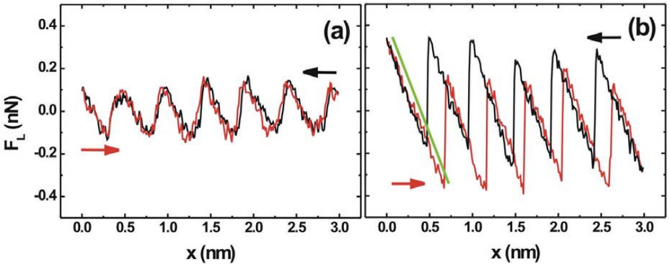
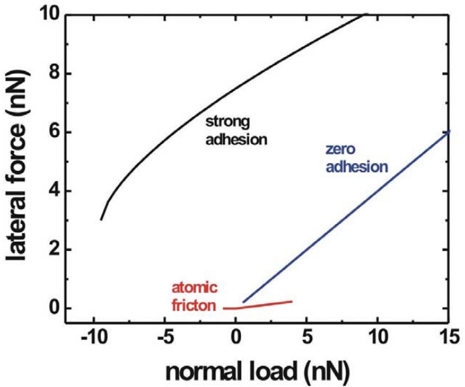
Friction force microscopy (FFM) can detect lateral force variations on the atomic scale when sliding a sharp tip over a flat surface. The sliding often takes the form of a stick-slip movement with the same periodicity as the atomic lattice. Here, I discuss how the occurrence of stick-slip instabilities is related to the onset of dissipation. The velocity and load dependence of atomic friction on various materials are discussed in the light of simple classical laws of friction.
Overview
The claims and statistics of this paper haven’t been checked yet.
Free: it reads the open-access text and checks the first 5 claims that cite a source we can check. Create a free account to check every claim.
Integrity signals
Registry
Cites
Statistics
Figures
Verification
Claims the paper makes
The claims and statistics of this paper haven’t been checked yet.
Free: it reads the open-access text and checks the first 5 claims that cite a source we can check. Create a free account to check every claim.
Self-check
Percentages, sums and reported differences re-computed from the paper’s own numbers.
The self-check needs the paper’s full text.
Citations
Cites
The Friction and Lubrication of Solids
Bowden, F. P., Tabor, D., & Palmer, F. (1951) · American Journal of Physics · doi:10.1119/1.1933017 · Cited by 5,890
Contact of nominally flat surfaces
Greenwood, J. A., & Williamson, J. B. P. (1966) · Proceedings of the Royal Society of London. Series A. Mathematical and Physical Sciences · doi:10.1098/rspa.1966.0242 · Cited by 5,692
Direct measurement of colloidal forces using an atomic force microscope
Ducker, W. A., Senden, T. J., & Pashley, R. M. (1991) · Nature · doi:10.1038/353239a0 · Cited by 2,075
Atomic-scale friction of a tungsten tip on a graphite surface
Mate, C. M., McClelland, G. M., Erlandsson, R., & Chiang, S. (1987) · Physical Review Letters · doi:10.1103/physrevlett.59.1942 · Cited by 1,763
Dienwiebel, M., Verhoeven, G. S., Pradeep, N., Frenken, J. W. M., Heimberg, J. A., & Zandbergen, H. W. (2004) · Physical Review Letters · doi:10.1103/physrevlett.92.126101 · Cited by 1,428
Functional Group Imaging by Chemical Force Microscopy
Frisbie, C. D., Rozsnyai, L. F., Noy, A., Wrighton, M. S., & Lieber, C. M. (1994) · Science · doi:10.1126/science.265.5181.2071 · Cited by 1,009
The nonlinear nature of friction
Urbakh, M., Klafter, J., Gourdon, D., & Israelachvili, J. (2004) · Nature · doi:10.1038/nature02750 · Cited by 696
Velocity Dependence of Atomic Friction
Gnecco, E., Bennewitz, R., Gyalog, T., Loppacher, C., Bammerlin, M., Meyer, E., & Güntherodt, H.-J. (2000) · Physical Review Letters · doi:10.1103/physrevlett.84.1172 · Cited by 649
Self-citationCalibration of frictional forces in atomic force microscopy
Ogletree, D. F., Carpick, R. W., & Salmeron, M. (1996) · Review of Scientific Instruments · doi:10.1063/1.1147411 · Cited by 604
Socoliuc, A., Bennewitz, R., Gnecco, E., & Meyer, E. (2004) · Physical Review Letters · doi:10.1103/physrevlett.92.134301 · Cited by 595
Self-citation
Research works printed but not linked: 2
- 2004, 19, 1
- Zwoerner, 1998, Appl. Phys. A, 66, S263
Cited by
Mechanistic Studies in Friction and Wear of Bulk Materials
Sawyer, W. G., Argibay, N., Burris, D. L., & Krick, B. A. (2014) · Annual Review of Materials Research · doi:10.1146/annurev-matsci-070813-113533 · Cited by 146
“With the advent of friction force microscopy (218), tribological interactions between materials can be made at the atomic scale, revealing new frictional and wear behaviors (219–228).”
BackgroundFriction behaviors of two-dimensional materials at the nanoscale
Zhang, D., Li, Z., Klausen, L. H., Li, Q., & Dong, M. (2022) · Materials Today Physics · doi:10.1016/j.mtphys.2022.100771 · Cited by 108
Carstens, T., Gustus, R., Höfft, O., Borisenko, N., Endres, F., Li, H., Wood, R. J., Page, A. J., & Atkin, R. (2014) · The Journal of Physical Chemistry C · doi:10.1021/jp501260t · Cited by 81
Progress in Superlubricity Across Different Media and Material Systems—A Review
Ayyagari, A. V., Alam, K. I., Berman, D., & Erdemir, A. (2022) · Frontiers in Mechanical Engineering · doi:10.3389/fmech.2022.908497 · Cited by 73
“…have been able to show how atoms interact with one another under static and sliding contacts to produce friction (Hirano and Shinjo, 1990; Sokoloff, 1990; Meyer et al., 1995; Krim, 1996; Robbins and Krim, 1998; Bhushan, 2000; Bennewitz, 2005; Hirano, 2006; Mo et al., 2009; Urbakh and Meyer, 2010).”
BackgroundSchumacher, Z., Spielhofer, A., Miyahara, Y., & Grutter, P. (2017) · Applied Physics Letters · doi:10.1063/1.4975629 · Cited by 59
Metadata
- Authors
- Bennewitz, R.
- Affiliations
- Leibniz-Institute for New Materials (DE)
- Corresponding author
- Bennewitz, Roland
- ORCID
- Bennewitz, Roland
- Venue
- Materials Today
- Publisher
- Elsevier BV
- Published
- 2005-05
- Volume
- 8
- Issue
- 5
- Pages
- 42-48
- ISSN
- 1369-7021 (ISSN-L)
- OpenAlex
- W1979385890
- Cited by
- 60
- References
- 97
- Citations by year
- 2026: 3 · 2025: 3 · 2024: 2 · 2023: 1 · 2022: 8 · 2021: 5 · 2020: 2 · 2019: 4 · 2018: 4 · 2017: 7 · 2016: 3 · 2015: 1 · 2014: 6 · 2012: 3
- FWCI
- 0.61
- Type
- journal article
- Language
- en
- Open access
- hybrid
- doi.org
- Licence
- cc-by-nc-nd
- www.elsevier.com/tdm/userlicense/1.0/ (tdm)
- creativecommons.org/licenses/by-nc-nd/3.0/ (vor, 2998 d)
- Locations
- Materials Today (publishedVersion, cc-by-nc-nd)
- Funders
- Universität Basel
- Topics
- Physical Sciences › Physics and Astronomy › Atomic and Molecular Physics, and Optics › Force Microscopy Techniques and Applications
- Physical Sciences › Engineering › Mechanics of Materials › Adhesion, Friction, and Surface Interactions
- Physical Sciences › Engineering › Control and Systems Engineering › Piezoelectric Actuators and Control
- Keywords
- friction force microscopy, stick-slip instability, atomic friction, energy dissipation, velocity-dependent friction, load dependence of friction
About these checks
Registry, retraction, Cites and statistics results are computed, not judged, with one exception: a printed reference that no index lists is read once by a model before it counts as a citation error. Claims are extracted by a model and kept only when their quote appears verbatim in the text; each cited source is then checked, with a model’s help, for whether it says what the claim relies on. Those verdicts can be wrong — read the claim’s quote and the cited source before relying on one.
Statistics and arithmetic are recomputed, not judged.
Confidence bands are shown only for fields calibrated on our annotated test set. None is calibrated yet, so no band is shown.
What counts as a claim ›How we measure confidence ›How we check this ›
Are you an author, or do you see a problem with this page? Request a review
How to cite
Cite CoChat for the checks on this page, and the paper for its own findings.
- This page
- CoChat. (2026). Citation check: Friction force microscopy. https://app.cochat.ai/papers/10.1016/s1369-7021(05)00845-x
- The paper
- Bennewitz, R. (2005). Friction force microscopy. Materials Today. https://doi.org/10.1016/s1369-7021(05)00845-x
Data sources
Bibliographic data: Semantic Scholar, OpenAlex, Crossref.
Contains information from the Semantic Scholar Academic Graph Datasets, made available under the ODC Attribution License (ODC-BY 1.0).
Semantic Scholar’s data is described in: Kinney, R., et al. (2023). The Semantic Scholar Open Data Platform. arXiv:2301.10140.
