

The DOI matches its Crossref record; 19 of the 19 references it cites were found in a registry or an index.
Diagnostic accuracy of Xpert MTB/RIF Ultra for tuberculous meningitis in HIV-infected adults: a prospective cohort study
Open accessAbstract
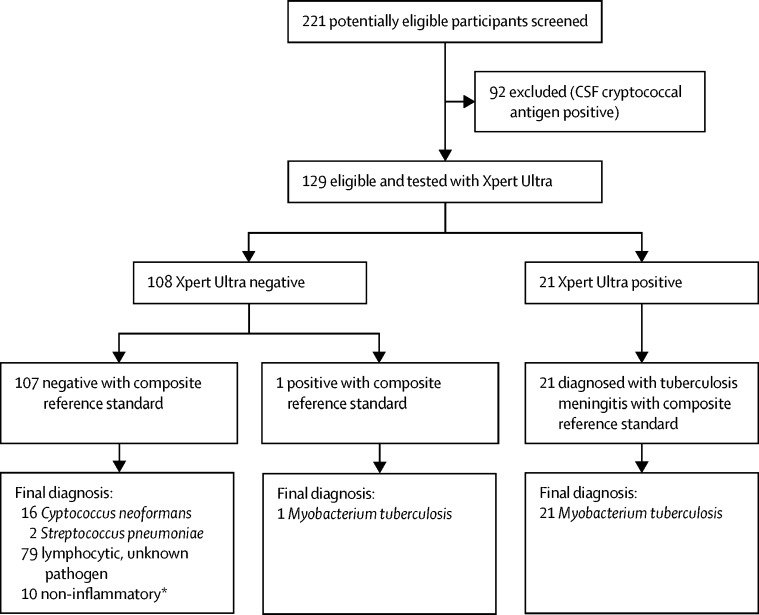
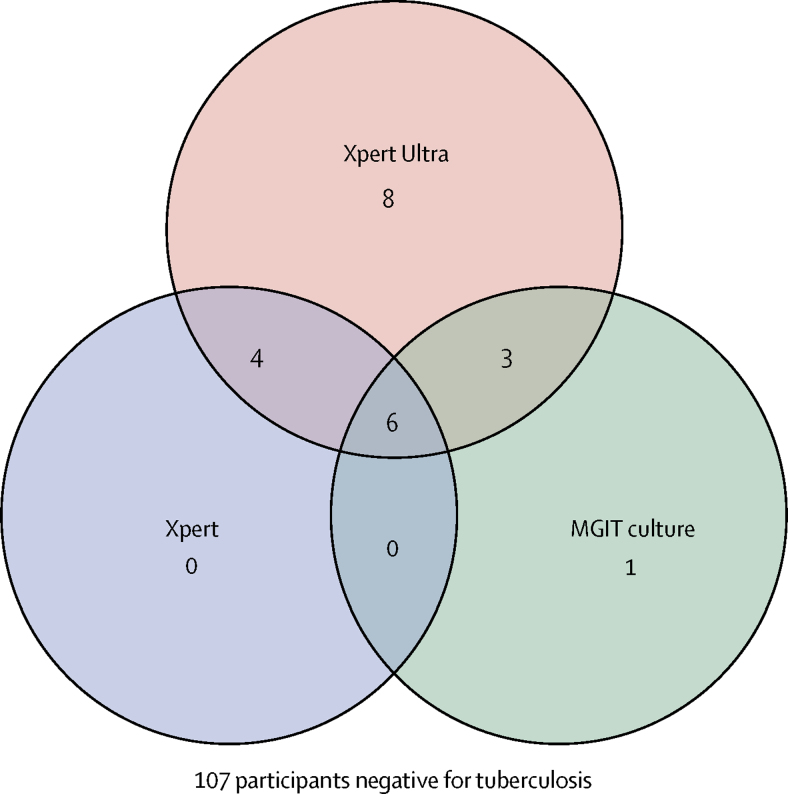
BACKGROUND: WHO recommends Xpert MTB/RIF as initial diagnostic testing for tuberculous meningitis. However, diagnosis remains difficult, with Xpert sensitivity of about 50-70% and culture sensitivity of about 60%. We evaluated the diagnostic performance of the new Xpert MTB/RIF Ultra (Xpert Ultra) for tuberculous meningitis. METHODS: We prospectively obtained diagnostic cerebrospinal fluid (CSF) specimens during screening for a trial on the treatment of HIV-associated cryptococcal meningitis in Mbarara, Uganda. HIV-infected adults with suspected meningitis (eg, headache, nuchal rigidity, altered mental status) were screened consecutively at Mbarara Regional Referral Hospital. We centrifuged CSF, resuspended the pellet in 2 mL of CSF, and tested 0·5 mL with mycobacteria growth indicator tube culture, 1 mL with Xpert, and cryopreserved 0·5 mL, later tested with Xpert Ultra. We assessed diagnostic performance against uniform clinical case definition or a composite reference standard of any positive CSF tuberculous test. FINDINGS: From Feb 27, 2015, to Nov 7, 2016, we prospectively evaluated 129 HIV-infected adults with suspected meningitis for tuberculosis. 23 participants were classified as probable or definite tuberculous meningitis by uniform case definition, excluding Xpert Ultra results. Xpert Ultra sensitivity was 70% (95% CI 47-87; 16 of 23 cases) for probable or definite tuberculous meningitis compared with 43% (23-66; 10/23) for Xpert and 43% (23-66; 10/23) for culture. With composite standard, we detected tuberculous meningitis in 22 (17%) of 129 participants. Xpert Ultra had 95% sensitivity (95% CI 77-99; 21 of 22 cases) for tuberculous meningitis, which was higher than either Xpert (45% [24-68]; 10/22; p=0·0010) or culture (45% [24-68]; 10/22; p=0·0034). Of 21 participants positive by Xpert Ultra, 13 were positive by culture, Xpert, or both, and eight were only positive by Xpert Ultra. Of those eight, three were categorised as probable tuberculous meningitis, three as possible tuberculous meningitis, and two as not tuberculous meningitis. Testing 6 mL or more of CSF was associated with more frequent detection of tuberculosis than with less than 6 mL (26% vs 7%; p=0·014). INTERPRETATION: Xpert Ultra detected significantly more tuberculous meningitis than did either Xpert or culture. WHO now recommends the use of Xpert Ultra as the initial diagnostic test for suspected tuberculous meningitis. FUNDING: National Institute of Neurologic Diseases and Stroke, Fogarty International Center, National Institute of Allergy and Infectious Disease, UK Medical Research Council/DfID/Wellcome Trust Global Health Trials, Doris Duke Charitable Foundation.
Overview
The claims and statistics of this paper haven’t been checked yet.
Run the check — free, no account needed. It reads the open-access text and checks the sources it cites.
Integrity signals
Registry
Cites
Statistics
Figures
Verification
Claims the paper makes
The claims and statistics of this paper haven’t been checked yet.
Run the check — free, no account needed. It reads the open-access text and checks the sources it cites.
Claims other papers make about this one
Each is checked against this paper’s own text: does it say what the citing paper says it does?
The cited source doesn’t support the claim as written.
In the citing paper
“Specificity (95% CI) was 90% (83 to 95) (Bahr 2017) and 92% (86 to 95) (Cresswell 2020) for Xpert Ultra and 97% (95% CI 92 to 99) (Bahr 2017) and 97% (93 to 99) (Cresswell 2020) for Xpert MTB/RIF; Figure 11.”
From Xpert MTB/RIF Ultra and Xpert MTB/RIF assays for extrapulmonary tuberculosis and rifampicin resistance in adults (2021) · cites this paper as Bahr 2017
Checked by a reasoning model — may be wrong.
Experimental — accuracy not yet measuredThe cited source doesn’t support the claim as written.
In the citing paper
“Sensitivity (95% CI) was 90% (55 to 100) (Bahr 2017) and 89% (71 to 98) (Cresswell 2020) for Xpert Ultra and 60% (26 to 88) (Bahr 2017) and 70% (50 to 86) (Cresswell 2020) for Xpert MTB/RIF.”
From Xpert MTB/RIF Ultra and Xpert MTB/RIF assays for extrapulmonary tuberculosis and rifampicin resistance in adults (2021) · cites this paper as Bahr 2017
Checked by a reasoning model — may be wrong.
Experimental — accuracy not yet measuredThe cited source says what the claim attributes to it.
In the citing paper
“Sensitivity (95% CI) was 90% (55 to 100) (Bahr 2017) and 89% (71 to 98) (Cresswell 2020) for Xpert Ultra and 60% (26 to 88) (Bahr 2017) and 70% (50 to 86) (Cresswell 2020) for Xpert MTB/RIF.”
From Xpert MTB/RIF Ultra and Xpert MTB/RIF assays for extrapulmonary tuberculosis and rifampicin resistance in adults (2021) · cites this paper as Bahr 2017
Self-check
Percentages, sums and reported differences re-computed from the paper’s own numbers.
The self-check needs the paper’s full text.
Citations
Cites
Global tuberculosis report (2014)
Gabbasova, L. A., & Who, E. R. E. (2014) · Cited by 12,702
Tuberculous meningitis: a uniform case definition for use in clinical research
Marais, S., Thwaites, G., Schoeman, J. F., Török, M. E., Misra, U. K., Prasad, K., Donald, P. R., Wilkinson, R. J., & Marais, B. J. (2010) · The Lancet Infectious Diseases · doi:10.1016/s1473-3099(10)70138-9 · Cited by 932
Helb, D., Jones, M., Story, E., Boehme, C., Wallace, E., Ho, K., Kop, J., Owens, M. R., Rodgers, R., Banada, P., et al. (2010) · Journal of Clinical Microbiology · doi:10.1128/jcm.01463-09 · Cited by 914
Chakravorty, S., Simmons, A. M., Rowneki, M., Parmar, H., Cao, Y., Ryan, J., Banada, P. P., Deshpande, S., Shenai, S., Gall, A., et al. (2017) · mBio · doi:10.1128/mbio.00812-17 · Cited by 668
Self-citationDenkinger, C. M., Schumacher, S. G., Boehme, C. C., Dendukuri, N., Pai, M., & Steingart, K. R. (2014) · European Respiratory Journal · doi:10.1183/09031936.00007814 · Cited by 527
Self-citationAdult meningitis in a setting of high HIV and TB prevalence: findings from 4961 suspected cases
Jarvis, J. N., Meintjes, G., Williams, A., Brown, Y., Crede, T., & Harrison, T. S. (2010) · BMC Infectious Diseases · doi:10.1186/1471-2334-10-67 · Cited by 266
Evaluation of GeneXpert MTB/RIF for Diagnosis of Tuberculous Meningitis
Nhu, N. T. Q., Heemskerk, D., Thu, D. D. A., Chau, T. T. H., Mai, N. T. H., Nghia, H. D. T., Loc, P. P., Ha, D. T. M., Merson, L., Thinh, T. T. V., et al. (2014) · Journal of Clinical Microbiology · doi:10.1128/jcm.01834-13 · Cited by 244
Patel, V. B., Theron, G., Lenders, L., Matinyena, B., Connolly, C., Singh, R., Coovadia, Y., Ndung'u, T., & Dheda, K. (2013) · PLoS Medicine · doi:10.1371/journal.pmed.1001536 · Cited by 179
Presentation and Outcome of Tuberculous Meningitis in a High HIV Prevalence Setting
Marais, S., Pepper, D. J., Schutz, C., Wilkinson, R. J., & Meintjes, G. (2011) · PLoS ONE · doi:10.1371/journal.pone.0020077 · Cited by 125
GeneXpert MTB/Rif to Diagnose Tuberculous Meningitis: Perhaps the First Test but not the Last
Bahr, N. C., Marais, S., Caws, M., van Crevel, R., Wilkinson, R. J., Tyagi, J. S., Thwaites, G. E., & Boulware, D. R. (2016) · Clinical Infectious Diseases · doi:10.1093/cid/ciw083 · Cited by 120
Self-citation
Cited by
Sorted by citations
Items 101–200 of 310
Schibler, M., Éperon, G., Kenfak-Foguena, A., Lascano, A. M., Vargas, M. I., & Stahl, J. ‐. (2019) · Clinical Microbiology and Infection · doi:10.1016/j.cmi.2018.12.035 · Cited by 26
Yang, Y., Qu, X.-H., Kun-nan, Z., Wu, X., Wang, X., Wen, A., & Li, L. (2020) · Frontiers in Cellular and Infection Microbiology · doi:10.3389/fcimb.2019.00448 · Cited by 24
British HIV Association guidelines for the management of tuberculosis in adults living with HIV 2019
Bracchi, M., van Halsema, C., Post, F. A., Awosusi, F., Barbour, A., Bradley, S., Coyne, K. M., Dixon‐Williams, E., Freedman, A., Jelliman, P., et al. (2019) · HIV Medicine · doi:10.1111/hiv.12748 · Cited by 24
Aksamit, A. J., & Berkowitz, A. L. (2021) · CONTINUUM Lifelong Learning in Neurology · doi:10.1212/con.0000000000001016 · Cited by 31
Slail, M. J., Booq, R. Y., Al-Ahmad, I. H., Alharbi, A. A., Alharbi, S. F., Alotaibi, M. S. H., Aljubran, A. M., Aldossary, A. M., Memish, Z. A., Alyamani, E. J., et al. (2023) · Journal of Epidemiology and Global Health · doi:10.1007/s44197-023-00150-z · Cited by 24
Shi, Y., Zhang, C., Pan, S., Chen, Y., Miao, X., He, G., Wu, Y., Ye, H., Weng, C., Zhang, H., et al. (2023) · Frontiers in Microbiology · doi:10.3389/fmicb.2023.1290746 · Cited by 29
Cresswell, F. V., Bangdiwala, A. S., Bahr, N. C., Trautner, E., Nuwagira, E., Ellis, J. P., Rajasingham, R., Rhein, J., Williams, D. A., Muzoora, C. K., et al. (2018) · Wellcome Open Research · doi:10.12688/wellcomeopenres.14610.2 · Cited by 24
Self-citationKnowledge gaps and research priorities in tuberculous meningitis
Seddon, J. A., Wilkinson, R. J., van Crevel, R., Figaji, A. A., & Thwaites, G. E. (2019) · Wellcome Open Research · doi:10.12688/wellcomeopenres.15573.1 · Cited by 24
Trial of High-Dose Oral Rifampin in Adults with Tuberculous Meningitis
Meya, D. B., Cresswell, F. V., Dai, B., Engen, N. W., Naidoo, K., Ganiem, A. R., Imran, D., Kabahubya, M., Lessells, R. J., Yunivita, V., et al. (2025) · New England Journal of Medicine · doi:10.1056/nejmoa2502866 · Cited by 23
Self-citationThakur, K. T. (2020) · Current Opinion in Infectious Diseases · doi:10.1097/qco.0000000000000652 · Cited by 25
Xiang, Z.-B., Leng, E.-L., Cao, W.-F., Liu, S., Zhou, Y.-L., Luo, C.-Q., Hu, F., & Wen, A. (2023) · Frontiers in Immunology · doi:10.3389/fimmu.2023.1223675 · Cited by 23
Pooled analysis of the Xpert MTB/RIF assay for diagnosing tuberculous meningitis
Chen, Y.-Z., Sun, L., Wen, Y., Li, Z., Fan, S.-J., Tan, H.-K., Qiu, M. R., Pan, Z., Li, Q., Zhao, Y., et al. (2019) · Bioscience Reports · doi:10.1042/bsr20191312 · Cited by 22
Progress on diagnosis and treatment of central nervous system tuberculosis
Chen, W., Huang, L., Tang, Q., Wang, S., Hu, C., & Zhang, X. (2020) · Radiology of Infectious Diseases · doi:10.1016/j.jrid.2020.07.005 · Cited by 24
Shao, L., Qiu, C., Zheng, L., Yang, Y., Yang, X., Liang, Q., Zhang, Y., Che, N., Pang, Y., & Duan, H. (2020) · International Journal of Infectious Diseases · doi:10.1016/j.ijid.2020.06.076 · Cited by 24
Roy, R. B., Bakeera‐Kitaka, S., Chabala, C., Gibb, D. M., Huynh, J., Mujuru, H. A., Sankhyan, N., Seddon, J. A., Sharma, S., Singh, V., et al. (2021) · Microorganisms · doi:10.3390/microorganisms9040857 · Cited by 22
Tracing TB: Are there predictors for active TB disease in patients with Xpert Ultra trace results?
Dowling, W. B., Whitelaw, A. C., & Nel, P. (2021) · International Journal of Infectious Diseases · doi:10.1016/j.ijid.2021.10.056 · Cited by 21
Biswas, S., Uddin, M. K. M., Paul, K. K., Ather, M. F., Ahmed, S., Nasrin, R., Kabir, S., Heysell, S. K., & Banu, S. (2021) · International Journal of Infectious Diseases · doi:10.1016/j.ijid.2021.11.010 · Cited by 21
Kaswala, C., Schmiedel, Y., Kundu, D., George, M. M., Dayanand, D., Devasagayam, E., Abi Manesh, S., Kumar, S. S., Michael, J. S., Ninan, M. M., et al. (2022) · International Journal of Infectious Diseases · doi:10.1016/j.ijid.2022.07.016 · Cited by 21
Diagnostic and therapeutic approach to chronic meningitis in Brazil: a narrative review
Silva, G. D., Guedes, B. F., Junqueira, I. R., Gomes, H. R., & Vidal, J. E. (2022) · Arquivos de Neuro-Psiquiatria · doi:10.1055/s-0042-1758645 · Cited by 23
Neurotuberculosis: A Clinical Review
Chin, J. H. (2019) · Seminars in Neurology · doi:10.1055/s-0039-1687840 · Cited by 21
Advances in tuberculous meningitis diagnosis
Ahlawat, S., Chaudhary, R., Dangi, M., Bala, K., Singh, M., & Chhillar, A. K. (2020) · Expert Review of Molecular Diagnostics · doi:10.1080/14737159.2020.1858805 · Cited by 24
Accurately Detecting Trace‐Level Infectious Agents by an Electro‐Enhanced Graphene Transistor
Dai, C., Yang, Y., Xiong, H., Wang, X., Gou, J., Li, P., Wu, Y., Chen, Y., Kong, D., Yang, Y., et al. (2023) · Advanced Functional Materials · doi:10.1002/adfm.202300151 · Cited by 20
Hodille, E., Maisson, A., Charlet, L., Bauduin, C., Genestet, C., Frédénucci, I., Rasigade, J., Lina, G., & Dumitrescu, O. (2019) · European Journal of Clinical Microbiology & Infectious Diseases · doi:10.1007/s10096-018-03463-1 · Cited by 20
Li, X., Du, W., Wang, Y., Liu, Z., Li, K., Chen, H., Liu, R., Ma, L., Zhang, L., Dong, Y., et al. (2019) · American Journal of Clinical Pathology · doi:10.1093/ajcp/aqz135 · Cited by 21
Huang, M., Wang, G., Sun, Q., Jiang, G., Li, W., Ding, Z., Jia, H., Gao, M., Huang, H., & Li, Q. (2021) · Diagnostic Microbiology and Infectious Disease · doi:10.1016/j.diagmicrobio.2020.115306 · Cited by 20
Value of next-generation sequencing in early diagnosis of patients with tuberculous meningitis
Lin, A., Cheng, B., Han, X., Zhang, H., Liu, X., & Liu, X. (2021) · Journal of the Neurological Sciences · doi:10.1016/j.jns.2021.117310 · Cited by 20
Efficacy of Xpert MTB/RIF Ultra in diagnosing tuberculosis meningitis
Shen, Y., Yu, G., Zhao, W., & Lang, Y. (2021) · Medicine · doi:10.1097/md.0000000000026778 · Cited by 22
Tuberculosis of the spinal cord
Abi Manesh, S., Garg, D., Radhakrishnan, D. M., Agrawal, U., Vanjare, H. A., & Gandham, E. J. (2022) · Annals of Indian Academy of Neurology · doi:10.4103/aian.aian_578_22 · Cited by 19
Bahr, N. C., Halupnick, R., Linder, G., Kiggundu, R., Nabeta, H. W., Williams, D. A., Musubire, A. K., Morawski, B. M., Sreevatsan, S., Meya, D. B., et al. (2018) · Biomarkers in Medicine · doi:10.2217/bmm-2017-0373 · Cited by 18
Self-citationTenforde, M. W., Mokomane, M., Leeme, T. B., Tlhako, N., Tsholo, K., Ramodimoosi, C., Dube, B., Mokobela, K. O., Tawanana, E. O., Chebani, T., et al. (2019) · Journal of Infection · doi:10.1016/j.jinf.2019.06.013 · Cited by 19
Update in Tuberculosis and Nontuberculous Mycobacteria 2017
Abubakar, I., Gupta, R. K., Rangaka, M. X., & Lipman, M. C. I. (2018) · American Journal of Respiratory and Critical Care Medicine · doi:10.1164/rccm.201801-0106up · Cited by 18
New management approaches to tuberculosis in people living with HIV
Mhango, D. V., Mzinza, D. T., Jambo, K., & Mwandumba, H. C. (2020) · Current Opinion in Infectious Diseases · doi:10.1097/qco.0000000000000704 · Cited by 17
Pereira, G. R., Barbosa, M. S., Dias, N. J. D., dos Santos, F. D. F., Rauber, K. A., & Silva, D. R. (2020) · Respiratory Medicine · doi:10.1016/j.rmed.2020.105876 · Cited by 17
Sun, L., Yao, L., Fu, G., Lin, L., Zhu, E., & Huang, J. (2020) · International Journal of Infectious Diseases · doi:10.1016/j.ijid.2020.12.044 · Cited by 16
Xpert MTB/RIF Ultra: a gamechanger for tuberculous meningitis?
Khonga, M., & Nicol, M. P. (2017) · The Lancet Infectious Diseases · doi:10.1016/s1473-3099(17)30536-4 · Cited by 16
Kwizera, R., Cresswell, F. V., Mugumya, G., Okirwoth, M., Kagimu, E., Bangdiwala, A. S., Williams, D. A., Rhein, J., Boulware, D. R., & Meya, D. B. (2019) · Wellcome Open Research · doi:10.12688/wellcomeopenres.15389.1 · Cited by 16
Self-citationGarcia-Grimshaw, M. A., Gutiérrez-Manjarrez, F. A., Navarro-Álvarez, S., & González‐Duarte, A. (2019) · Journal of Epidemiology and Global Health · doi:10.2991/jegh.k.191023.001 · Cited by 16
Cresswell, F. V., Bangdiwala, A. S., Meya, D. B., Bahr, N. C., Vidal, J. E., Török, M. E., Thảo, L. T. P., Thwaites, G. E., & Boulware, D. R. (2018) · International Journal of Infectious Diseases · doi:10.1016/j.ijid.2018.01.014 · Cited by 16
Self-citationSharma, K., Sharma, M., Ayyadurai, N., Dogra, M., Sharma, A., Gupta, V., Singh, R., & Gupta, A. (2022) · Ocular Immunology and Inflammation · doi:10.1080/09273948.2022.2064880 · Cited by 15
Nuwagira, E., Hullsiek, K. H., Jjunju, S., Rutakingirwa, M. K., Kasibante, J., Tadeo, K. K., Kagimu, E., Tugume, L., Ssebambulidde, K., Musubire, A. K., et al. (2022) · Microbiology Spectrum · doi:10.1128/spectrum.01618-22 · Cited by 15
Self-citationA retrospective study on Xpert MTB/RIF for detection of tuberculosis in a teaching hospital in China
Li, S., Lin, L., Zhang, F., Zhao, C., Meng, H., & Wang, H. (2020) · BMC Infectious Diseases · doi:10.1186/s12879-020-05004-8 · Cited by 16
Current updates in diagnosis of male urogenital tuberculosis
Kamra, E., & Mehta, P. K. (2021) · Expert Review of Anti-infective Therapy · doi:10.1080/14787210.2021.1902305 · Cited by 15
Diagnostic tests for tuberculous meningitis
Davis, A., & Wilkinson, R. J. (2020) · The Lancet Infectious Diseases · doi:10.1016/s1473-3099(19)30718-2 · Cited by 15
Neves, C. P., Costa, A. G., Safe, I. P., Brito, A., Jesus, J. S., Kritski, A. L., Lacerda, M., Viveiros, M., & Cordeiro‐Santos, M. (2020) · BMC Infectious Diseases · doi:10.1186/s12879-020-04954-3 · Cited by 15
Antonello, M., Scutari, R., Lauricella, C., Renica, S., Motta, V., Torri, S., Russo, C., Gentile, L., Cento, V., Colagrossi, L., et al. (2021) · Frontiers in Microbiology · doi:10.3389/fmicb.2021.727774 · Cited by 14
The accuracy of tuberculous meningitis diagnostic tests using Bayesian latent class analysis
Ngoc, H. L., Sriplung, H., Chongsuvivatwong, V., Nhung, N. V., & Nguyen, T. H. (2020) · The Journal of Infection in Developing Countries · doi:10.3855/jidc.11862 · Cited by 14
Martyn, E. M., Bangdiwala, A. S., Kagimu, E., Rutakingirwa, M. K., Kasibante, J., Okirwoth, M., Stead, G., Wadda, V., Pullen, M. F., Bold, T. D., et al. (2020) · Clinical Infectious Diseases · doi:10.1093/cid/ciaa1444 · Cited by 14
Self-citationKwon, J., Park, J. H., Kim, J. Y., Cha, H. H., Kim, M., Chong, Y. P., Lee, S., Choi, S., Kim, Y. S., Woo, J. H., et al. (2019) · American Journal of Tropical Medicine and Hygiene · doi:10.4269/ajtmh.18-0947 · Cited by 14
Cao, W.-F., Leng, E.-L., Liu, S., Zhou, Y.-L., Luo, C.-Q., Xiang, Z.-B., Cai, W., Rao, W., Hu, F., Zhang, P., et al. (2023) · Frontiers in Microbiology · doi:10.3389/fmicb.2023.1202752 · Cited by 16
Wang, M.-Q., Zheng, Y.-F., Hu, Y., Huang, J.-X., Yuan, Z.-X., Wu, Z., Huang, L.-F., Tang, C.-T., Zhang, F.-Y., Chen, Y., et al. (2025) · European Journal of Clinical Microbiology & Infectious Diseases · doi:10.1007/s10096-024-05032-1 · Cited by 13
HIV-Tuberculous Meningitis Co-Infection: A Systematic Review and Meta-Analysis
Pormohammad, A., Azimi, T., Nasiri, M. J., Goudarzi, M., Zangiabadian, M., Sedighian, H., & Fooladi, A. A. I. (2020) · Current Pharmaceutical Biotechnology · doi:10.2174/1389201021666200730143906 · Cited by 13
Krishnakumariamma, K., Ellappan, K., Muthaiah, M., Tamilarasu, K., Kumar, S. V., & Joseph, N. M. (2020) · PLoS ONE · doi:10.1371/journal.pone.0240257 · Cited by 13
López-Roa, P., Martín-Higuera, M. C., Ruiz‐Serrano, M. J., Toro, C., Tato, M., Sacristán, M. S., Domingo, D., & Esteban, J. (2020) · Diagnostic Microbiology and Infectious Disease · doi:10.1016/j.diagmicrobio.2020.115235 · Cited by 13
Management of Children with Tuberculosis
Khatami, A., Britton, P. N., & Marais, B. J. (2019) · Clinics in Chest Medicine · doi:10.1016/j.ccm.2019.08.003 · Cited by 14
Rohlwink, U. K., Chow, F. C., Wasserman, S. A., Dian, S., Lai, R., Chaidir, L., Hamers, R. L., Wilkinson, R. J., Boulware, D. R., Cresswell, F. V., et al. (2019) · Wellcome Open Research · doi:10.12688/wellcomeopenres.15497.2 · Cited by 13
Self-citationPradhan, N., Paradkar, M., Kagal, A., Valvi, C., Kinikar, A. A., Khwaja, S., Dhage, R., Chandane, J., Ithape, M., Bendre, M., et al. (2022) · The International Journal of Tuberculosis and Lung Disease · doi:10.5588/ijtld.21.0388 · Cited by 12
Aguilera‐Alonso, D., Solís‐García, G., Noguera‐Julián, A., González-Martín, J., Cobeña, A. R., Baquero‐Artigao, F., Rueda, C. T., Rodríguez-Molino, P., Bloise, I., Vallmanya, T., et al. (2022) · Thorax · doi:10.1136/thorax-2021-218378 · Cited by 12
Chilambi, G. S., Reiss, R., Daivaa, N., Banada, P. P., de Vos, M., Penn‐Nicholson, A., & Alland, D. (2025) · Microbiology Spectrum · doi:10.1128/spectrum.02403-24 · Cited by 11
Yu, X., Zhang, T., Kong, Y., Wang, F., Dong, L., Han, M., & Huang, H. (2022) · International Journal of Infectious Diseases · doi:10.1016/j.ijid.2022.07.039 · Cited by 12
Bottlenecks and recent advancements in detecting Mycobacterium tuberculosis in patients with HIV
Lin, Z., Sun, L., Wang, C., Wang, F., Wang, J., Li, Q., & Lu, H. (2023) · iLABMED · doi:10.1002/ila2.11 · Cited by 11
Huynh, J., Nhat, L. T. H., Bao, N. L. H., Hai, H. T., Thu, D. D. A., Tram, T. T. B., Dung, V. T. M., Vinh, D. D., Ngoc, N. M., Donovan, J., et al. (2024) · The Journal of Infectious Diseases · doi:10.1093/infdis/jiad606 · Cited by 11
Milburn, J., Suresh, R., Doyle, R., & Jarvis, J. N. (2024) · Expert Review of Molecular Diagnostics · doi:10.1080/14737159.2024.2317414 · Cited by 12
de Almeida, S. M., Borges, C. M., Santana, L. B., Golin, G., Correa, L., Kussen, G. M. B., & Nogueira, K. D. S. (2018) · Clinical Chemistry and Laboratory Medicine (CCLM) · doi:10.1515/cclm-2018-0524 · Cited by 11
A Simple Microfluidic Assay for Diagnosing Tuberculous Meningitis in HIV-Uninfected Patients
Park, J. H., Jin, C. E., Koo, B., Kwon, J., Cha, H. H., Kim, J. Y., Noh, G. S., Koo, Y. S., Jeon, S., Lee, S., et al. (2019) · Journal of Clinical Microbiology · doi:10.1128/jcm.01975-18 · Cited by 11
Establishing the cascade of care for patients with tuberculous meningitis
Imran, D., Hill, P. C., McKnight, J., & van Crevel, R. (2019) · Wellcome Open Research · doi:10.12688/wellcomeopenres.15515.1 · Cited by 11
Diagnosis of HIV-associated tuberculosis
Dorman, S. E. (2018) · Current Opinion in HIV and AIDS · doi:10.1097/coh.0000000000000497 · Cited by 11
Chin, J. H., Ssengooba, W., Grossman, S. N., Pellinen, J., & Wadda, V. (2019) · Journal of Clinical Tuberculosis and Other Mycobacterial Diseases · doi:10.1016/j.jctube.2019.01.002 · Cited by 11
Wakode, P., Siddaiah, N., Netravathi, M., & Bahubali, V. K. H. (2022) · Journal of Neurosciences in Rural Practice · doi:10.1055/s-0041-1742138 · Cited by 11
Deng, L., Li, Q., Hu, W., Chen, X., Chen, T., Song, S., Mo, P., Zou, S., Zhang, Y., Gao, S., et al. (2023) · Scientific Reports · doi:10.1038/s41598-023-31974-1 · Cited by 10
Cresswell, F. V., Bangdiwala, A. S., Bahr, N. C., Trautner, E., Nuwagira, E., Ellis, J. P., Rajasingham, R., Rhein, J., Williams, D. A., Muzoora, C. K., et al. (2018) · Wellcome Open Research · doi:10.12688/wellcomeopenres.14610.1 · Cited by 10
Self-citationRahman, S. M. M., Nasrin, R., Kabir, S., Kabir, F., Rahman, M. A., Uddin, M. K. M., Islam, A. S. M. I., Khatun, R., Ahmed, S., Mondal, M. B. A., et al. (2025) · Scientific Reports · doi:10.1038/s41598-025-97664-2 · Cited by 9
Chin, J. H. (2019) · Neurology Clinical Practice · doi:10.1212/cpj.0000000000000606 · Cited by 9
Imam, Y. Z. B., Ahmedullah, H., Chandra, P., AlMaslamani, M. A. R. S., Alkhal, A., & Deleu, D. (2020) · Journal of the Neurological Sciences · doi:10.1016/j.jns.2020.116979 · Cited by 9
Ajbani, K., Kazi, M. I., Agrawal, U., Jatale, R. G., Soman, R. N., Sunavala, A., Shetty, A., & Rodrigues, C. S. (2021) · Tuberculosis · doi:10.1016/j.tube.2020.102048 · Cited by 9
Chapter 7: Extra-pulmonary tuberculosis
Barss, L., Connors, W. J. A., & Fisher, D. (2022) · Canadian Journal of Respiratory Critical Care and Sleep Medicine · doi:10.1080/24745332.2022.2036073 · Cited by 9
Rohlwink, U. K., Chow, F. C., Wasserman, S. A., Dian, S., Lai, R., Chaidir, L., Hamers, R. L., Wilkinson, R. J., Boulware, D. R., Cresswell, F. V., et al. (2019) · Wellcome Open Research · doi:10.12688/wellcomeopenres.15497.1 · Cited by 9
Self-citationKrishnakumariamma, K., Ellappan, K., Muthuraj, M., Tamilarasu, K., Kumar, S. V., & Joseph, N. M. (2023) · Indian Journal of Medical Microbiology · doi:10.1016/j.ijmmb.2022.12.012 · Cited by 8
Predictive signs and symptoms of bacterial meningitis isolates in Northern Ghana
Weyori, E. W., Bernard, N., Abdul-Karim, A., Eleeza, J. B., Abubakari, B. B., Abiwu, H. A. K., Kuugbee, E. D., Yidaana, A., Ziblim, S.-D., Weyori, B. A., et al. (2023) · Scientific Reports · doi:10.1038/s41598-023-38253-z · Cited by 10
Lin, B.-W., Hong, J.-C., Jiang, Z.-J., Zhang, W., Fan, Q.-C., & Yao, X.-P. (2024) · Journal of Medical Microbiology · doi:10.1099/jmm.0.001818 · Cited by 9
Zhou, L., Zou, X., Yong, Y., & Hu, Q. (2024) · BMJ Open · doi:10.1136/bmjopen-2023-080904 · Cited by 9
Sharma, K., Sharma, M., Modi, M., Goyal, M., Sharma, A., & Ray, P. (2020) · Molecular and Cellular Probes · doi:10.1016/j.mcp.2020.101595 · Cited by 8
de Almeida, S. M., Kussen, G. M. B., Cogo, L. L., Carvalho, J. H., & Nogueira, K. D. S. (2020) · Arquivos de Neuro-Psiquiatria · doi:10.1590/0004-282x20200067 · Cited by 8
Development of a clinical prediction rule for tuberculous meningitis in adults in Lima, Peru
Solari, L., Soto, A., & der Stuyft, P. V. (2018) · Tropical Medicine & International Health · doi:10.1111/tmi.13041 · Cited by 8
Zhou, Z. X., Li, C., Zhu, R., Wang, D., Liu, T., Jia, J., Wang, F., Zhao, L., Dong, L., Yu, X., et al. (2020) · Infectious Diseases and Therapy · doi:10.1007/s40121-020-00327-0 · Cited by 8
Establishing the cascade of care for patients with tuberculous meningitis
Imran, D., Hill, P. C., McKnight, J., & van Crevel, R. (2020) · Wellcome Open Research · doi:10.12688/wellcomeopenres.15515.2 · Cited by 8
Xpert Ultra's place in the diagnosis of tuberculous meningitis
Boyles, T. H. (2018) · The Lancet Infectious Diseases · doi:10.1016/s1473-3099(18)30091-4 · Cited by 8
Advancing Diagnosis and Treatment in People Living with HIV and Tuberculosis Meningitis
Kimuda, S., Kasozi, D., Namombwe, S., Gakuru, J., Mugabi, T., Kagimu, E., Rutakingirwa, M. K., Leon, K. E., Chow, F. C., Wasserman, S. A., et al. (2023) · Current HIV/AIDS Reports · doi:10.1007/s11904-023-00678-6 · Cited by 7
Self-citationImproving the diagnosis of tuberculous meningitis: good, but not good enough
Cresswell, F. V., Lange, C. G., & van Crevel, R. (2019) · Clinical Microbiology and Infection · doi:10.1016/j.cmi.2019.10.009 · Cited by 7
Self-citationRevised guidelines for Australian laboratories performing mycobacteriology testing
Bastian, I., Shephard, L., & Lumb, R. (2020) · Communicable Diseases Intelligence · doi:10.33321/cdi.2020.44.2 · Cited by 7
Diagnostic algorithm for low-volume CSF samples in tuberculous meningitis
Singh, S., & Sankar, M. M. (2017) · The Lancet Infectious Diseases · doi:10.1016/s1473-3099(17)30639-4 · Cited by 7
Diagnosis of tuberculous meningitis with invasive pulmonary sampling
Riste, M., Hobden, D., Pollard, C., & Scriven, J. E. (2017) · The Lancet Infectious Diseases · doi:10.1016/s1473-3099(17)30713-2 · Cited by 7
Chen, Y., Zhu, M., Guan, C.-P., Zhang, Y., & Wang, M. (2023) · Frontiers in Public Health · doi:10.3389/fpubh.2023.1228134 · Cited by 7
Kohli, M., Inbaraj, L. R., Salomon, A., Scandrett, K., Korobitsyn, A., Ismail, N. A., Srinivasalu, V. A., Daniel, J., Steingart, K. R., & Takwoingi, Y. (2025) · Cochrane Database of Systematic Reviews · doi:10.1002/14651858.cd012768.pub4 · Cited by 6
Nanomedicine as a future therapeutic approach for treating meningitis
Joseph, S., A, A. M., Thomas, S., & Nair, S. C. (2021) · Journal of Drug Delivery Science and Technology · doi:10.1016/j.jddst.2021.102968 · Cited by 6
Manyelo, C. M., Solomons, R., Snyders, C., Kidd, M., Kooblal, Y., Leukes, V., Claassen, C., Roos, K., Stanley, K., Walzl, G., et al. (2022) · Biomarkers · doi:10.1080/1354750x.2022.2071991 · Cited by 7
Kamra, E., Alam, D., Singh, V., Kumar, M., Chauhan, M. B., & Mehta, P. K. (2022) · Letters in Applied Microbiology · doi:10.1111/lam.13758 · Cited by 6
Infectious ocular motor neuropathies
Gluckstein, J. A., & Prasad, S. (2019) · Current Opinion in Ophthalmology · doi:10.1097/icu.0000000000000615 · Cited by 6
Recent Developments in Tuberculous Meningitis Pathogenesis and Diagnostics
Cresswell, F. V., Davis, A., Sharma, K., Roy, R. B., Ganiem, A. R., Kagimu, E., Solomons, R., Wilkinson, R. J., Bahr, N. C., & Thương, N. T. T. (2020) · Wellcome Open Research · doi:10.12688/wellcomeopenres.15506.2 · Cited by 7
Self-citationXpert implementation in challenging scenarios: a brand-new car running on the same bumpy old roads
Monedero-Recuero, I. (2018) · Public Health Action · doi:10.5588/pha.18.0012 · Cited by 6
Accelerating extrapulmonary tuberculosis diagnosis with a rapid molecular assay
Guillet-Caruba, C., Bénet, C., Jmel, H., Doucet‐Populaire, F., & Bourgeois‐Nicolaos, N. (2025) · Microbiology Spectrum · doi:10.1128/spectrum.00104-25 · Cited by 5
Metadata
- Authors
- Bahr, N. C., Nuwagira, E., Evans, E. E., Cresswell, F. V., Bystrom, P. V., Byamukama, A., Bridge, S. C., Bangdiwala, A. S., Meya, D. B., Denkinger, C. M., Muzoora, C., Boulware, D. R., Williams, D. A., Taseera, K., Nyehangane, D., Ivan, M., Orikiriza, P., Rhein, J., Hullsiek, K. H., Musubire, A., Pastick, K., Nabeta, P., Mwesigye, J., & Rajasingham, R.
- Affiliations
- University of Minnesota (US)
- Mbarara University of Science and Technology (UG)
- London School of Hygiene & Tropical Medicine (GB)
- FIND (CH)
- Corresponding author
- Boulware, David R
- ORCID
- Bahr, Nathan C
- Nuwagira, Edwin
- Evans, Emily E
- Cresswell, Fiona V
- Bystrom, Philip V
- Bangdiwala, Ananta S
- Meya, David B
- Denkinger, Claudia M
- Muzoora, Conrad
- Boulware, David R
- Taseera, Kabanda
- Nyehangane, Dan
- Orikiriza, Patrick
- Rhein, Joshua
- Hullsiek, Kathy Huppler
- Musubire, Abdu
- Pastick, Katelyn
- Nabeta, Pamela
- Mwesigye, James
- Rajasingham, Radha
- Venue
- The Lancet Infectious Diseases
- Publisher
- Elsevier BV
- Published
- 2018-01
- Volume
- 18
- Issue
- 1
- Pages
- 68-75
- ISSN
- 1473-3099 (ISSN-L)
- PMC
- PMC5739874
- OpenAlex
- W2753952100
- Cited by
- 308
- References
- 19
- Citations by year
- 2026: 17 · 2025: 21 · 2024: 21 · 2023: 22 · 2022: 30 · 2021: 22 · 2020: 75 · 2019: 59 · 2018: 34
- FWCI
- 49.88
- Type
- journal article
- Language
- en
- Open access
- hybrid
- doi.org
- Licence
- Locations
- The Lancet Infectious Diseases (publishedVersion, cc-by)
- PubMed Central (publishedVersion, cc-by)
- PubMed (publishedVersion)
- LSHTM Research Online (London School of Hygiene and Tropical Medicine) (acceptedVersion)
- Funders
- Fogarty International Center
- National Institutes of Health (R25TW009345, R01NS086312)
- National Institute of Neurological Disorders and Stroke
- Doris Duke Charitable Foundation
- National Institute of Allergy and Infectious Diseases (T32AI055433)
- Topics
- Health Sciences › Medicine › Infectious Diseases › Infectious Diseases and Tuberculosis
- Health Sciences › Medicine › Infectious Diseases › Tuberculosis Research and Epidemiology
- Life Sciences › Immunology and Microbiology › Microbiology › Bacterial Infections and Vaccines
- Keywords
- tuberculous meningitis, Xpert MTB/RIF Ultra, Xpert MTB/RIF, HIV infection, diagnostic accuracy, cerebrospinal fluid, molecular tuberculosis diagnosis, sensitivity, Uganda, Mbarara, case definition, composite reference standard, HIV-associated tuberculosis
- MeSH terms
- Adult, Cerebrospinal Fluid, Female, Humans, Male, Mycobacterium, Prospective Studies, Sensitivity and Specificity, Tuberculosis, Meningeal, Uganda, HIV Infections, Tuberculosis, Multidrug-Resistant, Molecular Diagnostic Techniques
About these checks
Registry, retraction, Cites and statistics results are computed, not judged, with one exception: a printed reference that no index lists is read once by a model before it counts as a citation error. Claims are extracted by a model and kept only when their quote appears verbatim in the text; each cited source is then checked, with a model’s help, for whether it says what the claim relies on. Those verdicts can be wrong — read the claim’s quote and the cited source before relying on one.
Statistics and arithmetic are recomputed, not judged.
Confidence bands are shown only for fields calibrated on our annotated test set. None is calibrated yet, so no band is shown.
What counts as a claim ›How we measure confidence ›How we check this ›
Are you an author, or do you see a problem with this page? Request a review
