

Microvascular disease and risk of cardiovascular events among individuals with type 2 diabetes: a population-level cohort study
Open accessThe DOI matches its Crossref record; 39 of the 39 references it cites were found in a registry or an index.
Abstract
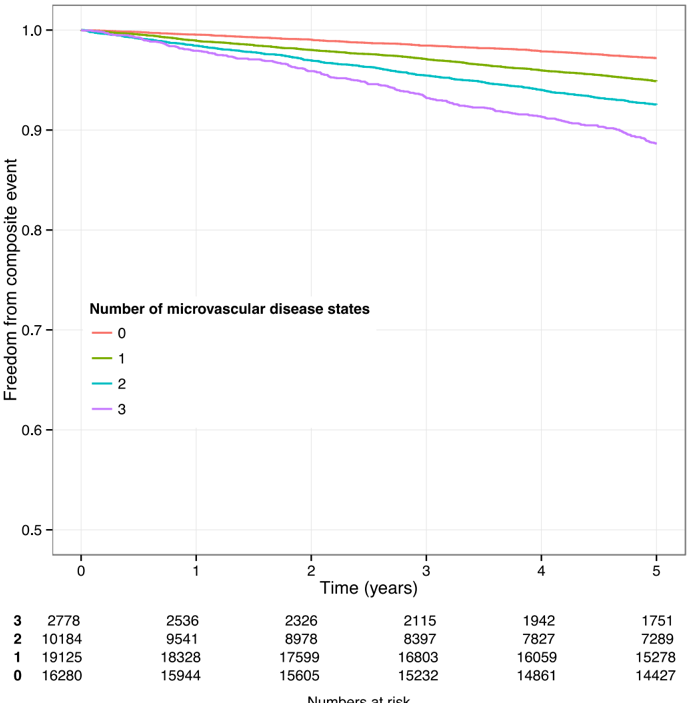
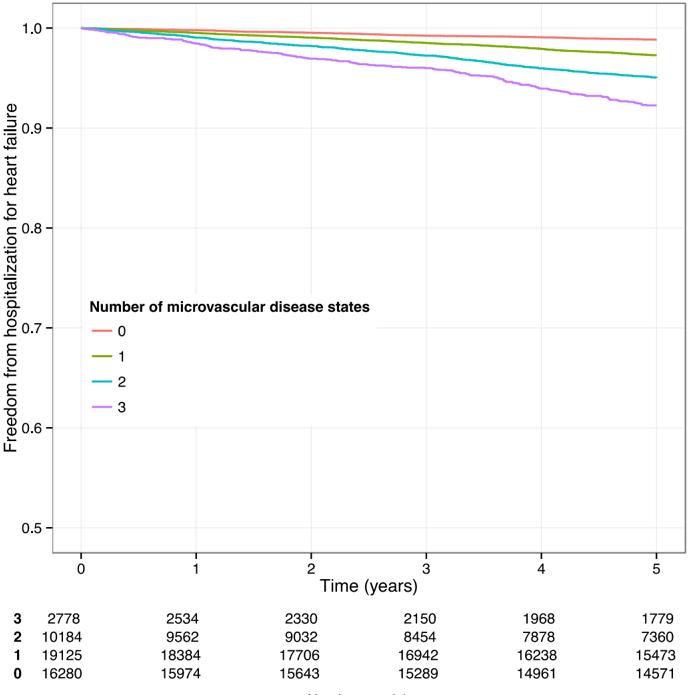
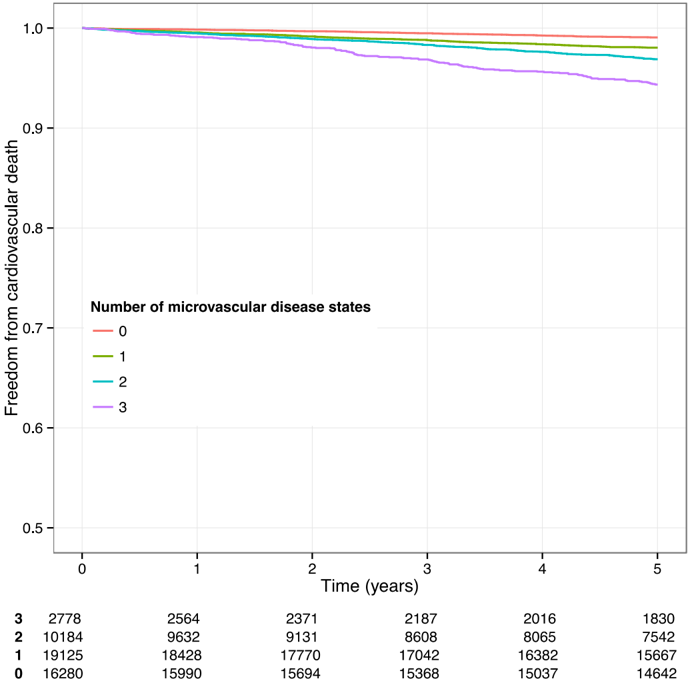
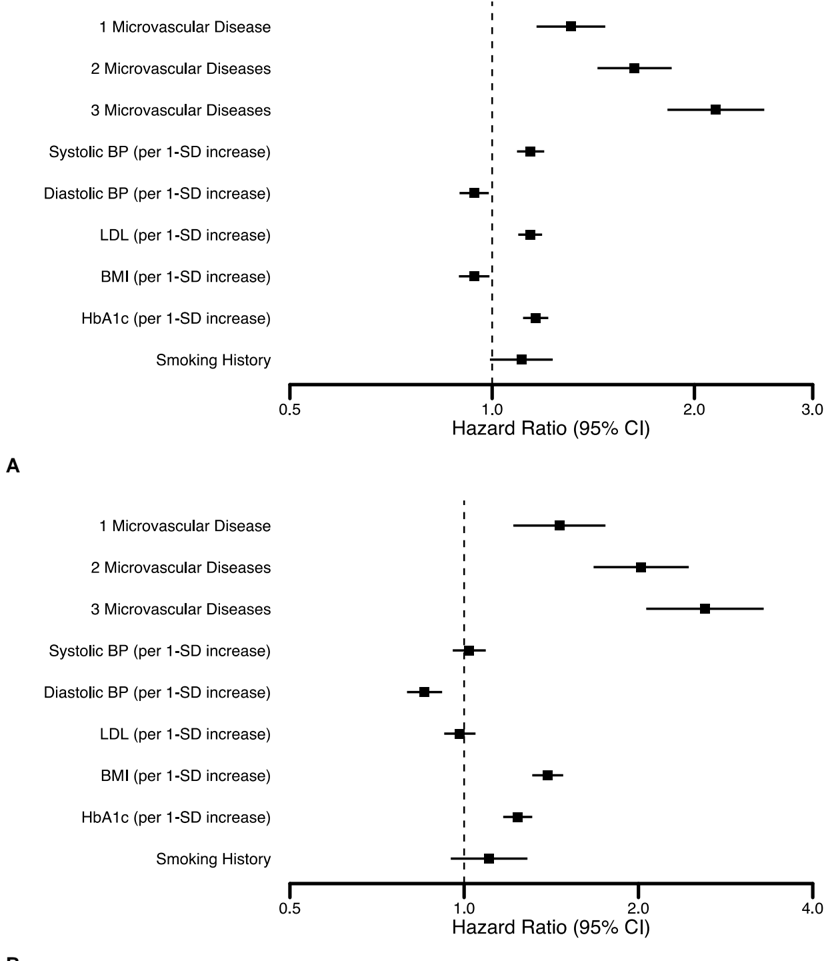
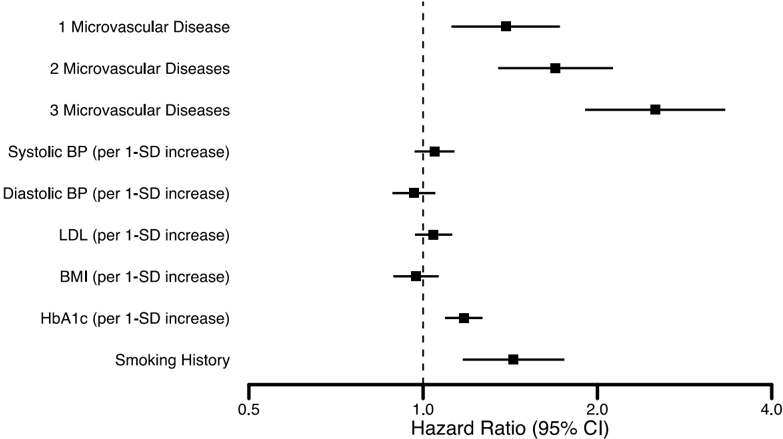
Background Diabetes confers a two times excess risk of cardiovascular disease, yet predicting individual risk remains challenging. The effect of total microvascular disease burden on cardiovascular disease risk among individuals with diabetes is unknown.Methods A population-based cohort of patients with type 2 diabetes from the UK Clinical Practice Research Datalink was studied (n=49 027). We used multivariable Cox models to estimate hazard ratios (HRs) for the primary outcome (the time to first major cardiovascular event, which was a composite of cardiovascular death, non-fatal myocardial infarction, or non-fatal ischaemic stroke) associated with cumulative burden of retinopathy, nephropathy, and peripheral neuropathy among individuals with no history of cardiovascular disease at baseline.Findings During a median follow-up of 5·5 years, 2822 (5·8%) individuals experienced a primary outcome. After adjustment for established risk factors, significant associations were observed for the primary outcome individually for retinopathy (HR 1·39, 95% CI 1·09-1·76), peripheral neuropathy (1·40, 1·19-1·66), and nephropathy (1·35, 1·15-1·58). For individuals with one, two, or three microvascular disease states versus none, the multivariable-adjusted HRs for the primary outcome were 1·32 (95% CI 1·16-1·50), 1·62 (1·42-1·85), and 1·99 (1·70-2·34), respectively. For the primary outcome, measures of risk discrimination showed significant improvement when microvascular disease burden was added to models. In the overall cohort, the net reclassification index for USA and UK guideline risk strata were 0·036 (95% CI 0·017-0·055, p<0·0001) and 0·038 (0·013-0·060, p<0·0001), respectively.Interpretation The cumulative burden of microvascular disease significantly affects the risk of future cardiovascular disease among individuals with type 2 diabetes. Given the prevalence of diabetes globally, further work to understand the mechanisms behind this association and strategies to mitigate this excess risk are warranted.Funding Circulation Foundation.
Overview
The claims and statistics of this paper haven’t been checked yet.
Free: it reads the open-access text and checks the first 5 claims that cite a source we can check. Create a free account to check every claim.
Integrity signals
Registry
Cites
Statistics
Figures
Verification
Claims the paper makes
The claims and statistics of this paper haven’t been checked yet.
Free: it reads the open-access text and checks the first 5 claims that cite a source we can check. Create a free account to check every claim.
Claims other papers make about this one
Each is checked against this paper’s own text: does it say what the citing paper says it does?
The source backs part of the claim, not all of it — or backs it for a different population, condition or comparison.
In the citing paper
“could be an added causal mechanism.55”
From Defining risk factors associated with difficult peripheral venous Cannulation: A systematic review and meta-analysis (2020) · cites this paper as [55]
Experimental — accuracy not yet measuredIn the citing paper
“In the acute setting, plasmapheresis is able to rapidly lower TG levels [384].”
From 2019 ESC/EAS guidelines for the management of dyslipidaemias: lipid modification to reduce cardiovascular risk (2019) · cites this paper as [384]
Self-check
Percentages, sums and reported differences re-computed from the paper’s own numbers.
The self-check needs the paper’s full text.
Citations
Cites
Diagnosis and Classification of Diabetes Mellitus
American Diabetes Association (2011) · Diabetes Care · doi:10.2337/dc11-s062 · Cited by 13,988
Report of the Expert Committee on the Diagnosis and Classification of Diabetes Mellitus
The Expert Committee on the Diagnosis and Classification of Diabetes Mellitus* (2002) · Diabetes Care · doi:10.2337/diacare.25.2007.s5 · Cited by 10,338
General Cardiovascular Risk Profile for Use in Primary Care: The Framingham Heart Study
D’Agostino, R. B., Vasan, R. S., Pencina, M. J., Wolf, P. A., Cobain, M., Massaro, J. M., & Kannel, W. B. (2008) · Circulation · doi:10.1161/circulationaha.107.699579 · Cited by 7,491
Stone, N. J., Robinson, J. G., Lichtenstein, A. H., Bairey Merz, C. N., Blum, C. B., Eckel, R. H., Goldberg, A. C., Gordon, D., Levy, D., Lloyd-Jones, D. M., et al. (2014) · Circulation · doi:10.1161/01.cir.0000437738.63853.7a · Cited by 7,081
Haffner, S. M., Lehto, S., Rönnemaa, T., Pyörälä, K., & Laakso, M. (1998) · New England Journal of Medicine · doi:10.1056/nejm199807233390404 · Cited by 7,000
Pencina, M. J., D' Agostino, R. B., D' Agostino, R. B., & Vasan, R. S. (2008) · Statistics in Medicine · doi:10.1002/sim.2929 · Cited by 6,493
Report of the Expert Committee on the Diagnosis and Classification of Diabetes Mellitus
The Expert Committee on the Diagnosis and Classification of Diabetes Mellitus (1997) · Diabetes Care · doi:10.2337/diacare.20.7.1183 · Cited by 6,220
Diagnosis and classification of diabetes mellitus
American Diabetes Association (2014) · Diabetes Care · doi:10.2337/dc14-s081 · Cited by 5,974
Heart Disease and Stroke Statistics—2013 Update: A Report From the American Heart Association
Go, A. S., Mozaffarian, D., Roger, V. L., Benjamin, E. J., Berry, J. D., Borden, W. B., Bravata, D. M., Dai, S., Ford, E. S., Fox, C. S., et al. (2013) · Circulation · doi:10.1161/cir.0b013e31828124ad · Cited by 5,292
Research works printed but not linked: 1
- Gallagher AM, Puri S, van Staa TP, et al. Linkage of the General Practice Research Database (GPRD) with other data sources. Pharmacoepidemiol Drug Saf 2011;20:S230-367.
Cited by
Mach, F., Baigent, C., Catapano, A. L., Koskinas, K. C., Casula, M., Badimon, L., Chapman, M. J., De Backer, G. G., Delgado, V., Ference, B. A., et al. (2020) · European Heart Journal · doi:10.1093/eurheartj/ehz455 · Cited by 8,961
Self-citation2021 ESC Guidelines on cardiovascular disease prevention in clinical practice
Visseren, F. L. J., Mach, F., Smulders, Y. M., Carballo, D., Koskinas, K. C., Bäck, M., Benetos, A., Biffi, A., Boavida, J.-M., Capodanno, D., et al. (2021) · European Heart Journal · doi:10.1093/eurheartj/ehab484 · Cited by 6,485
Self-citationMach, F., Baigent, C., Catapano, A. L., Koskinas, K. C., Casula, M., Badimon, L., Chapman, M. J., De Backer, G. G., Delgado, V., Ference, B. A., et al. (2019) · Atherosclerosis · doi:10.1016/j.atherosclerosis.2019.08.014 · Cited by 4,854
“In T2DM, the risk of ASCVD is strongly determined by the presence of target organ damage—including nephropathy (microalbuminuria), neuropathy, or retinopathy—with the risks increasing in relation to the number of conditions present.(405) Hypertension, dyslipidaemia, abdominal obesity, and non-alcoholic fatty liver dis…”
Davies, M. J., Aroda, V. R., Collins, B. S., Gabbay, R. A., Green, J., Maruthur, N. M., Rosas, S. E., Del Prato, S., Mathieu, C., Mingrone, G., et al. (2022) · Diabetes Care · doi:10.2337/dci22-0034 · Cited by 2,104
“Moreover, the pathophysiology of micro- and macrovascular damage shares more commonality than usually thought, suggesting that the prevention of microvascular disease may, in the long term, contribute to a reduction in macrovascular complications as well (317).”
Background2023 ESC guidelines for the management of cardiovascular disease in patients with diabetes.
Marx, N., Federici, M., Schütt, K., Müller-Wieland, D., Ajjan, R. A., Antunes, M. J., Christodorescu, R. M., Crawford, C., Di Angelantonio, E., Eliasson, B., et al. (2023) · European Heart Journal · doi:10.1093/eurheartj/ehad192 · Cited by 1,642
Davies, M. J., Aroda, V. R., Collins, B. S., Gabbay, R. A., Green, J., Maruthur, N. M., Rosas, S. E., Del Prato, S., Mathieu, C., Mingrone, G., et al. (2022) · Diabetologia · doi:10.1007/s00125-022-05787-2 · Cited by 1,048
“Moreover, the pathophysiology of micro- and macrovascular damage shares more commonality than usually thought, suggesting that the prevention of microvascular disease may, in the long term, contribute to a reduction in macrovascular complications as well [317].”
Screening for diabetic retinopathy: new perspectives and challenges
Vujosevic, S., Aldington, S. J., Silva, P., Hernández, C., Scanlon, P., Peto, T., & Simó, R. (2020) · The Lancet Diabetes & Endocrinology · doi:10.1016/s2213-8587(19)30411-5 · Cited by 671
Neurodegeneration in diabetic retinopathy: does it really matter?
Simó, R., Stitt, A. W., & Gardner, T. W. (2018) · Diabetologia · doi:10.1007/s00125-018-4692-1 · Cited by 591
2021 ESC Guidelines on cardiovascular disease prevention in clinical practice
Visseren, F. L. J., Mach, F., Smulders, Y. M., Carballo, D., Koskinas, K. C., Bäck, M., Benetos, A., Biffi, A., Boavida, J.-M., Capodanno, D., et al. (2022) · European Journal of Preventive Cardiology · doi:10.1093/eurjpc/zwab154 · Cited by 542
Self-citationPathogenesis, diagnosis and clinical management of diabetic sensorimotor peripheral neuropathy
Sloan, G., Selvarajah, D., & Tesfaye, S. (2021) · Nature Reviews Endocrinology · doi:10.1038/s41574-021-00496-z · Cited by 534
The links between sleep duration, obesity and type 2 diabetes mellitus
Antza, C., Kostopoulos, G., Mostafa, S., Nirantharakumar, K., & Tahrani, A. (2022) · Journal of Endocrinology · doi:10.1530/joe-21-0155 · Cited by 279
He, X., Li, J., Wang, B., Yao, Q., Li, L., Song, R., Shi, X., & Zhang, J.-A. (2017) · Endocrine · doi:10.1007/s12020-016-1168-2 · Cited by 250
From Atherosclerotic Plaque to Myocardial Infarction—The Leading Cause of Coronary Artery Occlusion
Młynarska, E., Czarnik, W., Fularski, P., Hajdys, J., Majchrowicz, G., Stabrawa, M., Rysz, J., & Franczyk, B. (2024) · International Journal of Molecular Sciences · doi:10.3390/ijms25137295 · Cited by 192
“…are considered to be at high ASCVD risk, while patients with additional severe target organ damage (TOD) are at very high CVD risk; however, patients with well-controlled short-standing DM, no evidence of TOD, and no additional ASCVD risk factors may be considered to be at moderate CVD risk [49].”
BackgroundPearce, I., Simó, R., Lövestam‐Adrian, M., Wong, D. T., & Evans, M. (2019) · Diabetes, Obesity and Metabolism · doi:10.1111/dom.13550 · Cited by 180
“In a single-centre observational cohort study by Takagi et al., the pres- ence of DR was a common predictor of both albuminuria onset and decreased estimated GFR (eGFR) in patients with T2DM.33 In earlier research, also involving patients with T2DM, Rossing et al. found a significant correlation between degree and pre…”
BackgroundInfluentialPrevention of Microvascular Complications of Diabetes
Crasto, W., Patel, V., Davies, M. J., & Khunti, K. (2021) · Endocrinology and Metabolism Clinics of North America · doi:10.1016/j.ecl.2021.05.005 · Cited by 169
Foot ulceration and its association with mortality in diabetes mellitus: a meta‐analysis
Saluja, S., Anderson, S. G., Hambleton, I. R., Shoo, H., Livingston, M. A., Jude, E. B., Lunt, M., Dunn, G., & Heald, A. H. (2019) · Diabetic Medicine · doi:10.1111/dme.14151 · Cited by 165
Microvascular complications in diabetes: A growing concern for cardiologists
Avogaro, A., & Fadini, G. P. (2019) · International Journal of Cardiology · doi:10.1016/j.ijcard.2019.02.030 · Cited by 160
Sasso, F. C., Pafundi, P. C., Simeon, V., De Nicola, L., Chiodini, P., Galiero, R., Rinaldi, L., Nevola, R., Salvatore, T., Sardu, C., et al. (2021) · Cardiovascular Diabetology · doi:10.1186/s12933-021-01343-1 · Cited by 129
“These features make our population much closer to the albuminuric T2DM subjects from National Registries, and thus more representative of real-life population with diabetes [24, 32].”
BackgroundDiabetes, hypertension, and cardiovascular disease development
Yen, F., Wei, J. C., Chiu, L., Hsu, C., & Hwu, C. (2022) · Journal of Translational Medicine · doi:10.1186/s12967-021-03217-2 · Cited by 135
“This phenomenon has been reported by previous studies, in which individuals with combined HTN and T2DM had a higher risk of cardiovascular events [6, 7, 24, 25].”
ResultSandesara, P. B., O’Neal, W. T., Kelli, H. M., Samman-Tahhan, A., Hammadah, M., Quyyumi, A. A., & Sperling, L. S. (2018) · Diabetes Care · doi:10.2337/dc17-0755 · Cited by 130
“tonomic and peripheral neuropathy, retinopathy, and nephropathy, and these complications are associated adverse cardiovascular outcomes (4).”
BackgroundIhenacho, U. K., Nolden, K. A., Harwig, M. C., Widlansky, M. E., & Hill, R. B. (2021) · Frontiers in Endocrinology · doi:10.3389/fendo.2021.660095 · Cited by 130
Guía ESC 2021 sobre la prevención de la enfermedad cardiovascular en la práctica clínica
Visseren, F. L. J., Mach, F., Smulders, Y. M., Carballo, D., Koskinas, K. C., Bäck, M., Bénétos, A., Biffi, A., Boavida, J. M., Capodanno, D., et al. (2022) · Revista Española de Cardiología · doi:10.1016/j.recesp.2021.10.016 · Cited by 125
Mohammedi, K., Woodward, M., Marre, M., Colagiuri, S., Cooper, M., Harrap, S., Mancia, G., Poulter, N., Williams, B., Zoungas, S., et al. (2017) · Cardiovascular Diabetology · doi:10.1186/s12933-017-0574-y · Cited by 111
“Microvascular disease and risk of MACE Our findings support previous studies showing that microvascular disease is an important predictor of future macrovascular disease and death [6, 15].”
BackgroundResultWang, B., An, X., Shi, X., & Zhang, J.-A. (2017) · European Journal of Endocrinology · doi:10.1530/eje-16-0952 · Cited by 100
Precision prognostics for the development of complications in diabetes
Schiborn, C., & Schulze, M. B. (2022) · Diabetologia · doi:10.1007/s00125-022-05731-4 · Cited by 108
“As an example, the development of macrovascular complications is accelerated by the presence of microvascular complications in type 2 diabetes [15].”
BackgroundMolière, S., Jaulin, A., Tomasetto, C.-L., & Dali-Youcef, N. (2023) · International Journal of Molecular Sciences · doi:10.3390/ijms241310649 · Cited by 92
Atherogenic dyslipidemia and diabetic nephropathy
Russo, G. T., Piscitelli, P. A., Giandalia, A., Viazzi, F. C., Pontremoli, R., Fioretto, P., & Cosmo, S. D. (2020) · Journal of Nephrology · doi:10.1007/s40620-020-00739-8 · Cited by 102
Diretriz Brasileira de Dislipidemias e Prevenção da Aterosclerose – 2025
Rached, F. H., Miname, M. H., Rocha, V. Z., Zimerman, A., Cesena, F. Y., Sposito, A. C., Santos, R. D., Behr, P. E. B., Bianco, H. T., Alves, R. J., et al. (2025) · Arquivos Brasileiros de Cardiologia · doi:10.36660/abc.20250640 · Cited by 98
Garofolo, M., Gualdani, E., GIANNARELLI, R., Aragona, M., Campi, F., Lucchesi, D., Daniele, G., Miccoli, R., Francesconi, P., Prato, S. D., et al. (2019) · Cardiovascular Diabetology · doi:10.1186/s12933-019-0961-7 · Cited by 93
Glycaemic control is still central in the hierarchy of priorities in type 2 diabetes management
Khunti, K., Zaccardi, F., Amod, A., Aroda, V. R., Montoya, P. A., Colagiuri, S., Mohan, V., & Chan, J. C. N. (2024) · Diabetologia · doi:10.1007/s00125-024-06254-w · Cited by 93
Modjtahedi, B. S., Wu, J., Luong, T. Q., Gandhi, N. K., Fong, D. S., & Chen, W. (2020) · Ophthalmology · doi:10.1016/j.ophtha.2020.12.019 · Cited by 90
Tromp, J., Lim, S. L., Tay, W. T., Teng, T. K., Chandramouli, C., Ouwerkerk, W., Wander, G., Sawhney, J. P. S., Yap, J. J. L., MacDonald, M. R., et al. (2019) · Diabetes Care · doi:10.2337/dc18-2515 · Cited by 88
Yokoyama, H., Oishi, M., Takamura, H., Yamasaki, K., Shirabe, S.-I., Uchida, D., Sugimoto, H., Kurihara, Y., Araki, S.-I., & Maegawa, H. (2016) · BMJ Open Diabetes Research & Care · doi:10.1136/bmjdrc-2016-000294 · Cited by 85
“vascular complications with the onset of CVD in the prospective manner.(40) Endothelial cells, if exposed to chronic hyperglycemia, develop intracellular hyperglycemia, because they cannot downregulate glucose transport.”
BackgroundAhmad, A., Lim, L., Morieri, M. L., Tam, C. H. T., Cheng, F., Chikowore, T., Dudenhöffer‐Pfeifer, M., Fitipaldi, H., Huang, C., Kanbour, S., et al. (2024) · Communications Medicine · doi:10.1038/s43856-023-00429-z · Cited by 85
A role for collagen type IV in cardiovascular disease?
Steffensen, L. B., & Rasmussen, L. M. (2018) · American Journal of Physiology-Heart and Circulatory Physiology · doi:10.1152/ajpheart.00070.2018 · Cited by 72
Rodríguez-Calero, M. A., Blanco-Mavillard, I., Morales-Asencio, J. M., Fernández-Fernández, I., Castro-Sánchez, E., & de Pedro-Gómez, J. E. (2020) · Heart & Lung · doi:10.1016/j.hrtlng.2020.01.009 · Cited by 78
Chen, Y., Ping, Z., Wang, J., Gong, Q., An, Y., Qian, X., Zhang, B., Li, H., Gregg, E. W., Bennett, P. H., et al. (2021) · Diabetologia · doi:10.1007/s00125-021-05401-x · Cited by 73
Zhu, X.-R., Zhang, Y., Bai, L., Zhang, X., Zhou, J., & Yang, J. (2017) · Medicine · doi:10.1097/md.0000000000005894 · Cited by 73
“%) with type 1 diabetes (T1D) have DR.[2] DR has been associated with an increased cardiovascular(CV) events risk in both T2D and T1D.”
BackgroundDiabetes mellitus duration and mortality in patients hospitalized with acute myocardial infarction
Baviera, M., Genovese, S., Colacioppo, P., Cosentino, N., Foresta, A., Tettamanti, M., Fortino, I., Roncaglioni, M. C., & Marenzi, G. (2022) · Cardiovascular Diabetology · doi:10.1186/s12933-022-01655-w · Cited by 70
“This is mainly a function of various factors, including long-term metabolic control, LDL-cholesterol and blood pressure levels, and the number, type, and severity of microvascular and macrovascular complications present in each patient [1, 2, 22].”
BackgroundSauder, K. A., Stafford, J. M., Mayer‐Davis, E. J., Jensen, E. T., Saydah, S., Mottl, A. K., Dolan, L. M., Hamman, R. F., Lawrence, J. M., Pihoker, C., et al. (2018) · The Lancet Child & Adolescent Health · doi:10.1016/s2352-4642(18)30309-2 · Cited by 67
Cardoso, C. R. L., Salles, G. C., Leite, N. C., & Salles, G. F. (2019) · Cardiovascular Diabetology · doi:10.1186/s12933-019-0809-1 · Cited by 64
“This fact might, at least partially, underlie the reported associations between the presence of microvascular complications and higher cardiovascular risk [47–49], which seemed to increase linearly with the number of microvascular complications in a recent cohort study of individuals with type 2 diabetes [50].”
BackgroundYokoyama, H., Araki, S., Kawai, K., Yamazaki, K., Tomonaga, O., Shirabe, S., & Maegawa, H. (2018) · BMJ Open Diabetes Research & Care · doi:10.1136/bmjdrc-2018-000521 · Cited by 61
Lv, Q., Li, Z., Sui, A., Yang, X., Han, Y., & Yao, R. (2022) · Frontiers in Microbiology · doi:10.3389/fmicb.2022.977187 · Cited by 59
“Recent studies showed that T2DM complications are mutually dependent sharing common pathways (Brownrigg et al., 2016; Yousri et al., 2022).”
BackgroundPlatelets as Potent Signaling Entities in Type 2 Diabetes Mellitus
Pretorius, E. (2019) · Trends in Endocrinology and Metabolism · doi:10.1016/j.tem.2019.05.003 · Cited by 57
Mortality in Asian Indians with Charcot’s neuroarthropathy: a nested cohort prospective study
Chaudhary, S., Bhansali, A. K., & Rastogi, A. (2019) · Acta Diabetologica · doi:10.1007/s00592-019-01376-9 · Cited by 55
Sasso, F. C., Pafundi, P. C., Gelso, A., Bono, V., Costagliola, C., Marfella, R., Sardu, C., Rinaldi, L., Galiero, R., Acierno, C., et al. (2019) · Nutrition Metabolism and Cardiovascular Diseases · doi:10.1016/j.numecd.2019.05.065 · Cited by 54
Sanderson, H., Loveman, E., Colquitt, J. L., Royle, P., Waugh, N. R., & Tan, B. K. (2018) · Journal of Clinical Medicine · doi:10.3390/jcm8010004 · Cited by 52
“T2DM can affect a woman’s health if not diagnosed and controlled, with an increased risk of macro and microvascular complications and potentially mortality [18].”
BackgroundYen, F., Wei, J. C., Shih, Y., Hsu, C., & Hwu, C. (2023) · Cardiovascular Diabetology · doi:10.1186/s12933-023-01821-8 · Cited by 51
“Some patients with diabetes mellitus who do not have a high-risk score still develop macrovascular disease, which suggests that there may be important risk factors not considered in the prediction models [6, 7].”
BackgroundInfluentialInfluence of Microvascular Disease on Cardiovascular Events in Type 2 Diabetes
Verma, S., Wanner, C., Zwiener, I., Ofstad, A. P., George, J. T., FITCHETT, D. H., & Zinman, B. (2019) · Journal of the American College of Cardiology · doi:10.1016/j.jacc.2019.03.002 · Cited by 48
Nichols, G. A., Déruaz‐Luyet, A., Hauske, S. J., & Brodovicz, K. G. (2017) · Journal of Diabetes and its Complications · doi:10.1016/j.jdiacomp.2017.12.003 · Cited by 48
Zhang, X., Zhao, S., Huang, Y., Ma, M., Li, B., Li, C., Zhu, X., Xu, X., Chen, H., Zhang, Y. Z., et al. (2024) · Journal of the American Heart Association · doi:10.1161/jaha.123.032626 · Cited by 48
“10,11 18 In a type 2 diabetes (T2D) population, Mohammedi et al demonstrated a positive association between composite MacroVCs or individual peripheral artery disease (PAD) and incident DR but not DKD, 15,16 whereas Zhang et al showed that PAD but not coronary heart disease (CHD) or stroke was…”
BackgroundSacchetta, L., Chiriacò, M., Nesti, L., Leonetti, S., Forotti, G., Natali, A., Solini, A., & Tricò, D. (2022) · Cardiovascular Diabetology · doi:10.1186/s12933-022-01675-6 · Cited by 47
Barlovič, D. P., Harjutsalo, V., Gordin, D., Kallio, M., Forsblom, C. M., King, G. L., & Groop, P. (2018) · Diabetes Care · doi:10.2337/dc18-0476 · Cited by 46
Yokoyama, H., Nagao, A., Watanabe, S., & Honjo, J. (2018) · Journal of Diabetes Investigation · doi:10.1111/jdi.12912 · Cited by 45
Microvascular disease and cardiovascular outcomes among individuals with type 2 diabetes
Kazé, A. D., Santhanam, P., Erqou, S. A., Bertoni, A. G., Ahima, R. S., & Echouffo-Tcheugui, J. B. (2021) · Diabetes Research and Clinical Practice · doi:10.1016/j.diabres.2021.108859 · Cited by 45
Seferović, J. P., Bentley–Lewis, R., Claggett, B. L., Díaz, R., Gerstein, H. C., Køber, L., Lawson, F. C., Lewis, E. F., Maggioni, A. P., McMurray, J. J. V., et al. (2018) · Journal of Diabetes Research · doi:10.1155/2018/1631263 · Cited by 45
“In a recently published study with a large cohort of T2DMpatients without the history of CV diseases, the risk of developing CV death, nonfatal MI, or stroke was about 40% higher in patients with DR and DN [24].”
BackgroundMicrovascular Disease and Incident Heart Failure Among Individuals With Type 2 Diabetes Mellitus
Kazé, A. D., Santhanam, P., Erqou, S. A., Ahima, R. S., Bertoni, A. G., & Echouffo-Tcheugui, J. B. (2021) · Journal of the American Heart Association · doi:10.1161/jaha.120.018998 · Cited by 44
“The association of MVD and HF was mainly driven by nephropathy, although neuropathy was associated with incident HF among White participants.”
Aroda, V. R., & Eckel, R. H. (2022) · Diabetes Obesity and Metabolism · doi:10.1111/dom.14830 · Cited by 43
Lan, N. S. R., Dwivedi, G., Fegan, P. G., Game, F. L., & Hamilton, E. J. (2024) · Cardiovascular Diabetology · doi:10.1186/s12933-024-02527-1 · Cited by 42
Bashir, B., Schofield, J., Downie, P., France, M., Ashcroft, D. M., Wright, A. K., Romeo, S., Gouni-Berthold, I., Maan, A., Durrington, P. N., et al. (2024) · Frontiers in Cardiovascular Medicine · doi:10.3389/fcvm.2024.1389106 · Cited by 40
Invited review. Series: Implications of the recent CVOTs in type 2 diabetes
Dardano, A., Miccoli, R., Bianchi, C., Daniele, G., & Prato, S. D. (2020) · Diabetes Research and Clinical Practice · doi:10.1016/j.diabres.2020.108112 · Cited by 41
Visaria, J., Iyer, N. N., Raval, A. D., Kong, S. X., Hobbs, T. M., Bouchard, J. R., Kern, D. M., & Willey, V. J. (2020) · ClinicoEconomics and Outcomes Research · doi:10.2147/ceor.s247498 · Cited by 38
CD133+Exosome Treatment Improves Cardiac Function after Stroke in Type 2 Diabetic Mice
Venkat, P., Cui, C., Chen, Z., Chopp, M., Zacharek, A., Landschoot‐Ward, J., Culmone, L., Yang, X.-P., Xu, J., & Chen, J. (2020) · Translational Stroke Research · doi:10.1007/s12975-020-00807-y · Cited by 37
Simó, R., Bañeras, J., Hernández, C., Rodríguez-Palomares, J. F., Valente, F. X., Gutiérrez, L., González‐Alujas, T., González, I. F., Aguadé‐Bruix, S., Montaner, J., et al. (2019) · BMJ Open Diabetes Research & Care · doi:10.1136/bmjdrc-2019-000845 · Cited by 38
Tentolouris, A., Eleftheriadou, I., Grigoropoulou, P., Kokkinos, A. D., Siasos, G., Ntanasis‐Stathopoulos, I., & Tentolouris, N. (2017) · Journal of Diabetes and its Complications · doi:10.1016/j.jdiacomp.2017.07.010 · Cited by 36
Multiple long-term conditions as the next transition in the global diabetes epidemic
Gregg, E. W., Holman, N., Sophiea, M. K., Misra, S., Pearson‐Stuttard, J., Valabhji, J., & Khunti, K. (2025) · Communications Medicine · doi:10.1038/s43856-025-00742-9 · Cited by 35
Mather, K. J., Bebu, I., Baker, C., Cohen, R. M., Crandall, J. P., DeSouza, C., Green, J. B., Kirkman, M. S., Krause-Steinrauf, H., Larkin, M., et al. (2020) · Diabetes Research and Clinical Practice · doi:10.1016/j.diabres.2020.108235 · Cited by 34
Nichols, G. A., Amitay, E. L., Chatterjee, S., & Steubl, D. (2023) · Metabolic Syndrome and Related Disorders · doi:10.1089/met.2023.0006 · Cited by 34
Gonna, H., & Ray, K. K. (2019) · Diabetes Obesity and Metabolism · doi:10.1111/dom.13691 · Cited by 33
“each manifestation of microvascular disease (retinopathy, neuropathy, nephropathy).(13) Addition of microvascular disease status would reclassify a substantial proportion of those with diabetes into a higher risk”
BackgroundSelf-citationMelo, L. G. N., Morales, P. H., Drummond, K. R. G., Santos, D. C., Pizarro, M., Barros, B. S. V., Mattos, T. C. L., Pinheiro, A. A., Mallmann, F., Leal, F. S. L., et al. (2019) · Frontiers in Endocrinology · doi:10.3389/fendo.2019.00689 · Cited by 31
Li, F., Hukportie, D. N., Yang, H. J., Yang, H., Chen, G., & Wu, X.-B. (2022) · Diabetes Care · doi:10.2337/dc22-0177 · Cited by 31
Asbaghi, O., Ashtary‐Larky, D., Mousa, A., Kelishadi, M. R., & Moosavian, S. P. (2021) · Advances in Nutrition · doi:10.1093/advances/nmab121 · Cited by 31
Yokoyama, H., Shiraiwa, T., Takahara, M., Iwamoto, M., Kuribayashi, N., Nomura, T., Yamada, M., Sone, H., & Araki, S. (2020) · BMJ Open Diabetes Research & Care · doi:10.1136/bmjdrc-2020-001562 · Cited by 29
Yap, J. J. L., Anbalakan, K., Tay, W. T., Ting, D. S. W., Cheung, C. Y.-L., Sabanayagam, C., Cheng, C., Wong, T. Y., & Yeo, K. K. (2021) · BMJ Open Diabetes Research & Care · doi:10.1136/bmjdrc-2020-001413 · Cited by 28
Machine Learning Models for Prediction of Diabetic Microvascular Complications
Kanbour, S., Harris, C., Lalani, B., Wolf, R. M., Fitipaldi, H., Gomez, M. F., & Mathioudakis, N. N. (2024) · Journal of Diabetes Science and Technology · doi:10.1177/19322968231223726 · Cited by 28
Modern Challenges in Type 2 Diabetes: Balancing New Medications with Multifactorial Care
Caturano, A., Galiero, R., Rocco, M. P., Tagliaferri, G., Piacevole, A., Nilo, D., Lorenzo, G. D., Sardu, C., Vetrano, E., Monda, M., et al. (2024) · Biomedicines · doi:10.3390/biomedicines12092039 · Cited by 28
“According to ESC guidelines, it is recommended to screen patients with diabetes for the presence of severe target organ damage (TOD) [127,128] and for symptoms suggestive of atherosclerotic cardiovascular disease (ASCVD) [129,130].”
BackgroundXue, P., Covassin, N., Ran, X., Zhou, J., Zhang, X., Yan, D., Li, X., Gao, Y., & Tang, X. (2020) · Diabetes Research and Clinical Practice · doi:10.1016/j.diabres.2020.108484 · Cited by 27
Kristensen, S. L., Rørth, R., Jhund, P. S., Shen, L., Lee, M. M. Y., Petrie, M. C., Køber, L., & McMurray, J. J. V. (2018) · European Journal of Heart Failure · doi:10.1002/ejhf.1201 · Cited by 26
Arterial stiffness and microvascular disease in type 2 diabetes
Antonopoulos, A. S., Siasos, G., Oikonomou, E. K., Gouliopoulos, N., Κόνσολα, Θ., Tsigkou, V., Moschos, M. M., Tentolouris, N., Kassi, E. N., Paschou, S. Α., et al. (2020) · European Journal of Clinical Investigation · doi:10.1111/eci.13380 · Cited by 26
Chang, P.-Y., Wang, I.-C., Chiang, C., Chen, C.-H., Yeh, W., Henderson, V. W., Tsai, Y., & Cheng, H. (2021) · Acta Diabetologica · doi:10.1007/s00592-021-01685-y · Cited by 25
Popović, N., Lipovac, M., Radunović, M., Ugarte, J., Isusquiza, E., Beristain, A., Moreno, R., Aranjuelo, N., & Popović, T. (2019) · Microcirculation · doi:10.1111/micc.12531 · Cited by 24
Visaria, J., Iyer, N. N., Raval, A. D., Kong, S. X., Hobbs, T. M., Bouchard, J. R., Kern, D. M., & Willey, V. J. (2019) · Clinical Therapeutics · doi:10.1016/j.clinthera.2019.05.012 · Cited by 24
Glycated hemoglobin and subsequent risk of microvascular and macrovascular complications
Samanta, S. (2020) · Indian Journal of Medical Sciences · doi:10.25259/ijms_16_2020 · Cited by 25
Verma, S., Bain, S. C., Honoré, J. B., Mann, J. F. E., Nauck, M. A., Pratley, R. E., Rasmussen, S., Ripa, M. S., Zinman, B., & Buse, J. B. (2020) · Diabetes Obesity and Metabolism · doi:10.1111/dom.14140 · Cited by 23
“future CV disease, an association shown to be independent of major established CV risk factors.(1,10,11) The association between micro- and macrovascular complications has been reviewed by Laakso,(5) highlighting an association between the severity of diabetic retinopathy and occurrence of CV events, including CV deat…”
BackgroundMordi, I. R., Tee, A., Palmer, C. N., McCrimmon, R. J., Doney, A. S. F., & Lang, C. C. (2020) · ESC Heart Failure · doi:10.1002/ehf2.12669 · Cited by 23
“Our finding that the increased burden of MiVD is associated with a stepwise increase in risk of HF also mirrors the findings from a large cohort study published recently.(16) In this study of almost 50 000 individuals with over 2000 events,”
ResultLiu, Y., Ning, X., Zhang, L., Long, J., Liang, R., Peng, S., Wang, H., Li, Y., Chen, W., & Xiao, H. (2022) · BMJ Open Diabetes Research & Care · doi:10.1136/bmjdrc-2021-002720 · Cited by 23
Foussard, N., Saulnier, P., Potier, L., Ragot, S., Schneider, F. M., Gand, E., Monlun, M., Baillet‐Blanco, L., Velho, G., Marre, M., et al. (2020) · Diabetes Care · doi:10.2337/dc20-1085 · Cited by 23
Montone, R. A., Pitocco, D., Gurgoglione, F. L., Rinaldi, R., Buono, M. G. D., Camilli, M., Rizzi, A., Tartaglione, L., Rizzo, G. E., Leo, M. A. S. D., et al. (2022) · Cardiovascular Diabetology · doi:10.1186/s12933-022-01637-y · Cited by 22
“Previous studies demonstrated that patients with T2DM and diabetic microvascular complications (DMC) are at higher risk of adverse CV events [3, 4], and such risk persists even after taking into account traditional CV risk factors, suggesting that at least some mechanisms underlying diabetic microvascular disease are…”
BackgroundResultDrinkwater, J. J., Davis, T. M. E., Hellbusch, V., Turner, A. W., Bruce, D. G., & Davis, W. A. (2020) · Cardiovascular Diabetology · doi:10.1186/s12933-020-01018-3 · Cited by 22
Prato, S. D., & CHILTON, R. J. (2017) · Diabetes Obesity and Metabolism · doi:10.1111/dom.13169 · Cited by 23
“Brownrigg et al.60 by using a population-based cohort of T2DM patients, observed significant associations for a composite of CV events and retinopathy (Hazard Ratio (HR), 1.39; 95% CI, 1.09-1.76), neuropathy (HR, 1.40; 95% CI, 1.19-1.66) and nephropathy (HR, 1.35; 95% CI, 1.15–1.58).”
MethodInfluentialZhang, C., Wang, S., Li, M., & Wu, Y. (2020) · Diabetes Metabolic Syndrome and Obesity · doi:10.2147/dmso.s246497 · Cited by 21
Popović, N., Vujosevic, S., Radunović, M., Radunović, M., & Popović, T. (2021) · PLoS ONE · doi:10.1371/journal.pone.0254918 · Cited by 20
Bakke, Å., Tran, A. T., Dalen, I., Cooper, J. G., Løvaas, K. F., Jenum, A. K., Berg, T. J., Madsen, T. V., Nøkleby, K., Gjelsvik, B., et al. (2018) · Diabetic Medicine · doi:10.1111/dme.13842 · Cited by 20
Visseren, F. L. J., Mach, F., Smulders, Y. M., Carballo, D., Koskinas, K. C., Bäck, M., Bénétos, A., Biffi, A., Boavida, J.-M., Capodanno, D., et al. (2022) · Giornale Ialiano di Cardiologia · doi:10.1714/3808.37926 · Cited by 20
Impacts of Physical Inactivity Models on Endothelial Function: A Systematic Review
Harden, J. E., Branch, J. D., & Reynolds, L. J. (2025) · Sports Medicine · doi:10.1007/s40279-025-02238-x · Cited by 19
“Additionally, physical inactivity can lead to microvascular dysfunction [13], which can contribute to CVD [14, 15].”
Semenkovich, C. F. (2017) · Diabetes · doi:10.2337/db17-0093 · Cited by 19
“In a very large (more than 49,000 subjects) population-based cohort of people with type 2 diabetes, the cumulative burden of microvascular disease was associated with major adverse cardiovascular events (MACE) (5).”
BackgroundTuraihi, A. H., Bakker, W., van Hinsbergh, V. W. M., Serné, E. H., Smulders, Y. M., Niessen, H. W. M., & Eringa, E. C. (2018) · Frontiers in Physiology · doi:10.3389/fphys.2018.00245 · Cited by 19
“Insulin resistance, obesity and type 2 diabetes (DM2) are increasingly common risk factors for cardiovascular disease (Brownrigg et al., 2016).”
BackgroundMicrovascular burden and long-term risk of stroke and dementia in type 2 diabetes mellitus
Liu, Y., Zhao, J., Han, W.-W., Yang, H., Wu, X.-B., Xie, F., Wang, H., Wang, J., Zhao, X., Wan, Z., et al. (2024) · Journal of Affective Disorders · doi:10.1016/j.jad.2024.03.053 · Cited by 18
Zhao, M., Dong, Y., Chen, L., & Shen, H. (2024) · PLoS ONE · doi:10.1371/journal.pone.0305954 · Cited by 18
Canto, E. D., Elders, P. J. M., van der Heijden, A. A. W. A., van Ballegooijen, A. J., Lissenberg-Witte, B. I., Rutters, F., & Beulens, J. W. J. (2022) · Diabetologia · doi:10.1007/s00125-022-05826-y · Cited by 17
“Overall, our findings are consistent with previous studies that established kidney disease as a strong independent risk factor for CVD in diabetes [11, 13, 14, 25, 26].”
BackgroundResult
Metadata
- Authors
- Brownrigg, J. R. W., Hughes, C. O., Burleigh, D., Karthikesalingam, A., Patterson, B. O., Holt, P. J., Thompson, M. M., de Lusignan, S., Ray, K. K., & Hinchliffe, R. J.
- Affiliations
- St George's, University of London (GB)
- University of Surrey (GB)
- Imperial College London (GB)
- University of Bristol (GB)
- Corresponding author
- Brownrigg, Jack R W
- Venue
- The Lancet Diabetes & Endocrinology
- Publisher
- Elsevier BV
- Published
- 2016-07
- Volume
- 4
- Issue
- 7
- Pages
- 588-597
- ISSN
- 2213-8587 (ISSN-L)
- OpenAlex
- W2405585158
- Cited by
- 242
- References
- 39
- Citations by year
- 2026: 13 · 2025: 21 · 2024: 29 · 2023: 21 · 2022: 30 · 2021: 30 · 2020: 31 · 2019: 26 · 2018: 21 · 2017: 13 · 2016: 6
- FWCI
- 22.09
- Type
- journal article
- Language
- en
- Open access
- Licence
- cc-by-nc-nd
- www.elsevier.com/tdm/userlicense/1.0/ (tdm)
- Locations
- The Lancet Diabetes & Endocrinology (publishedVersion)
- PubMed (publishedVersion)
- St George's Online Research Archive (St George's University of London) (acceptedVersion)
- Surrey Research Insight Open Access (The University of Surrey) (submittedVersion)
- Explore Bristol Research (submittedVersion, cc-by-nc-nd)
- Spiral (Imperial College London) (submittedVersion, cc-by-nc-nd)
- Funders
- National Institute for Health and Care Research (NF-SI-0514-10114, CL-2007-16-002, NIHR-CS-011-008)
- British Heart Foundation (PG/13/98/30490)
- Circulation Foundation
- Medical Research Council (MR/K025643/1)
- Topics
- Health Sciences › Medicine › Endocrinology, Diabetes and Metabolism › Diabetes, Cardiovascular Risks, and Lipoproteins
- Health Sciences › Medicine › Nephrology › Chronic Kidney Disease and Diabetes
- Health Sciences › Medicine › Endocrinology, Diabetes and Metabolism › Diabetes Management and Research
- Keywords
- type 2 diabetes, microangiopathy, cardiovascular risk, retinopathy, diabetic nephropathy, peripheral neuropathy, major adverse cardiovascular events, cardiovascular mortality, myocardial infarction, ischemic stroke, risk prediction, net reclassification improvement, risk discrimination, Clinical Practice Research Datalink, primary prevention of cardiovascular disease
- MeSH terms
- Aged, Aged, 80 and over, Cardiovascular Diseases, Diabetes Mellitus, Type 2, Diabetic Angiopathies, Female, United Kingdom, Heart Failure, Humans, Male, Middle Aged, Cohort Studies
About these checks
Registry, retraction, Cites and statistics results are computed, not judged, with one exception: a printed reference that no index lists is read once by a model before it counts as a citation error. Claims are extracted by a model and kept only when their quote appears verbatim in the text; each cited source is then checked, with a model’s help, for whether it says what the claim relies on. Those verdicts can be wrong — read the claim’s quote and the cited source before relying on one.
Statistics and arithmetic are recomputed, not judged.
Confidence bands are shown only for fields calibrated on our annotated test set. None is calibrated yet, so no band is shown.
What counts as a claim ›How we measure confidence ›How we check this ›
Are you an author, or do you see a problem with this page? Request a review
Data sources
Bibliographic data: Semantic Scholar, OpenAlex, Crossref.
Contains information from the Semantic Scholar Academic Graph Datasets, made available under the ODC Attribution License (ODC-BY 1.0).
Semantic Scholar’s data is described in: Kinney, R., et al. (2023). The Semantic Scholar Open Data Platform. arXiv:2301.10140.
