

Threats to the effectiveness of insecticide-treated bednets for malaria control: thinking beyond insecticide resistance
Open accessThe DOI matches its Crossref record; 55 of the 55 references it cites were found in a registry or an index.
Abstract
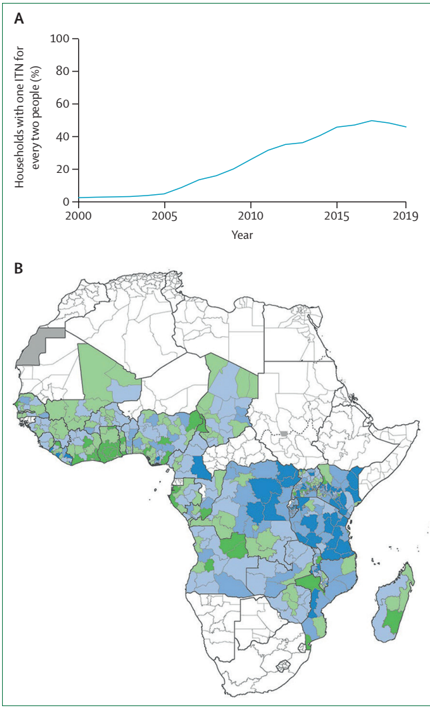
From 2004 to 2019, insecticide-treated bednets (ITNs) have been the most effective tool for reducing malaria morbidity and mortality in sub-Saharan Africa. Recently, however, the decline in malaria cases and deaths has stalled. Some suggest that this inertia is due to increasing resistance in malaria vectors to the pyrethroid insecticides used for treating ITNs. However, there is presently little evidence to reach this conclusion and we therefore recommend that a broader perspective to evaluate ITN effectiveness in terms of access to nets, use of nets, bioefficacy, and durability should be taken. We argue that a single focus on insecticide resistance misses the bigger picture. To improve the effects of ITNs, net coverage should increase by increasing funding for programmes, adopting improved strategies for increasing ITN uptake, and enhancing the longevity of the active ingredients and the physical integrity of nets, while simultaneously accelerating the development and evaluation of novel vector control tools.
Overview
The claims and statistics of this paper haven’t been checked yet.
Free: it reads the open-access text and checks the first 5 claims that cite a source we can check. Create a free account to check every claim.
Integrity signals
Registry
Cites
Statistics
Figures
Verification
Claims the paper makes
The claims and statistics of this paper haven’t been checked yet.
Free: it reads the open-access text and checks the first 5 claims that cite a source we can check. Create a free account to check every claim.
Claims other papers make about this one
Each is checked against this paper’s own text: does it say what the citing paper says it does?
The source backs part of the claim, not all of it — or backs it for a different population, condition or comparison.
In the citing paper
“The success of an IRS intervention depends on several aspects related to the biology of the target vector population, such as mosquito species, seasonal abundance, biting and resting behaviours, susceptibility to insecticides and the quality and coverage of sprays [13].”
From Characterization and abundance of malaria vectors in Sakassou, Central Côte d'Ivoire (2025) · cites this paper as [13]
Experimental — accuracy not yet measured
Self-check
Percentages, sums and reported differences re-computed from the paper’s own numbers.
The self-check needs the paper’s full text.
Citations
Cites
The effect of malaria control on Plasmodium falciparum in Africa between 2000 and 2015
Bhatt, S., Weiss, D. J., Cameron, E., Bisanzio, D., Mappin, B., Dalrymple, U., Battle, K. E., Moyes, C. L., Henry, A., Eckhoff, P. A., et al. (2015) · Nature · doi:10.1038/nature15535 · Cited by 3,225
Insecticide Resistance in Insect Vectors of Human Disease
Hemingway, J., & Ranson, H. (2000) · Annual Review of Entomology · doi:10.1146/annurev.ento.45.1.371 · Cited by 1,558
Ranson, H., & Lissenden, N. (2016) · Trends in Parasitology · doi:10.1016/j.pt.2015.11.010 · Cited by 1,008
Russell, T. L., Govella, N. J., Azizi, S., Drakeley, C. J., Kachur, S. P., & Killeen, G. F. (2011) · Malaria Journal · doi:10.1186/1475-2875-10-80 · Cited by 698
HAWLEY, W. A., PHILLIPS-HOWARD, P. A., TER KUILE, F. O., TERLOUW, D. J., VULULE, J. M., OMBOK, M., NAHLEN, B. L., GIMNIG, J. E., KARIUKI, S. K., KOLCZAK, M. S., et al. (2003) · The American Journal of Tropical Medicine and Hygiene · doi:10.4269/ajtmh.2003.68.121 · Cited by 613
Fitness costs associated with insecticide resistance
Kliot, A., & Ghanim, M. (2012) · Pest Management Science · doi:10.1002/ps.3395 · Cited by 603
N’Guessan, R., Corbel, V., Akogbéto, M., & Rowland, M. (2007) · Emerging Infectious Diseases · doi:10.3201/eid1302.060631 · Cited by 548
Protopopoff, N., Mosha, J. F., Lukole, E., Charlwood, J. D., Wright, A., Mwalimu, C. D., Manjurano, A., Mosha, F. W., Kisinza, W., Kleinschmidt, I., et al. (2018) · The Lancet · doi:10.1016/s0140-6736(18)30427-6 · Cited by 436
Self-citationChurcher, T. S., Lissenden, N., Griffin, J. T., Worrall, E., & Ranson, H. (2016) · eLife · doi:10.7554/elife.16090 · Cited by 314
Mosquito feeding behavior and how it influences residual malaria transmission across Africa
Sherrard-Smith, E., Skarp, J. E., Beale, A. D., Fornadel, C., Norris, L. C., Moore, S. J., Mihreteab, S., Charlwood, J. D., Bhatt, S., Winskill, P., et al. (2019) · Proceedings of the National Academy of Sciences · doi:10.1073/pnas.1820646116 · Cited by 308
Cited by
Fikadu, M., & Ashenafi, E. (2023) · Infection and Drug Resistance · doi:10.2147/idr.s405668 · Cited by 214
“Pyrethroids, like permethrin and deltamethrin, were the only insecticides used to impregnate bed nets.(58) The emergence of pyrethroid-resistant anopheles necessitates the discovery of pyrethroid–piperonyl butoxide (PBO).”
BackgroundOladipo, H. J., Tajudeen, Y. A., Oladunjoye, I. O., Yusuff, S. I., Yusuf, R. O., Oluwaseyi, E. M., AbdulBasit, M. O., Adebisi, Y. A., & El-Sherbini, M. S. (2022) · Annals of Medicine & Surgery · doi:10.1016/j.amsu.2022.104366 · Cited by 180
Lucas, E. R., Nagi, S. C., Egyir-Yawson, A., Essandoh, J., Dadzie, S., Chabi, J., Djogbénou, L., Medjigbodo, A. A., Edi, C., Ketoh, G. K., et al. (2023) · Nature Communications · doi:10.1038/s41467-023-40693-0 · Cited by 111
“The fi rst, deltamethrin, is a pyrethroid commonly used in insecticide-treatedbednets(ITNs),whicharethecornerstoneofvector control 9 .”
Optimising the deployment of vector control tools against malaria: a data-informed modelling study
Sherrard-Smith, E., Winskill, P., Hamlet, A., Ngufor, C., N’Guessan, R., Guelbeogo, M. W., Sanou, A., Nash, R. K., Hill, A., Russell, E., et al. (2022) · The Lancet Planetary Health · doi:10.1016/s2542-5196(21)00296-5 · Cited by 93
Chanda‐Kapata, P., Ntoumi, F., Kapata, N., Lungu, P., Mucheleng’anga, L. A., Chakaya, J. M., Tembo, J. M., Himwaze, C. M., Ansumana, R., Asogun, D., et al. (2022) · International Journal of Infectious Diseases · doi:10.1016/j.ijid.2022.03.033 · Cited by 92
“Thus, the stagnation in malaria indicators requires further exploration ( Lindsay et al 2021 ).”
Delftia tsuruhatensis TC1 symbiont suppresses malaria transmission by anopheline mosquitoes
Huang, W., Rodrigues, J., Bilgo, E. M., Tormo, J. R., Challenger, J. D., Cozar-Gallardo, C. D., Pérez‐Victoria, I., Reyes, F., Castañeda-Casado, P., Gnambani, E. J., et al. (2023) · Science · doi:10.1126/science.adf8141 · Cited by 70
The fight against malaria: Diminishing gains and growing challenges
Cohen, J. M., Okumu, F. O., & Moonen, B. (2022) · Science Translational Medicine · doi:10.1126/scitranslmed.abn3256 · Cited by 68
“In addition to insecticide resistance, concerns have also been raised that the focus on procuring the cheapest bed nets possible may have compromised their quality, including durability (34); higher quality bed nets may prove more effective but will come at a higher cost.”
BackgroundTairou, F., Nawaz, S., Tahita, M. C., Herrera, S., Faye, B. T., & Tine, R. C. K. (2022) · PLoS ONE · doi:10.1371/journal.pone.0274656 · Cited by 68
What sub-Saharan African countries can learn from malaria elimination in China
Badmos, A. O., Alaran, A. J., Adebisi, Y. A., Bouaddi, O., Onibon, Z. O., Dada, A., Xu, L., & Lucero‐Prisno, D. E. (2021) · Tropical Medicine and Health · doi:10.1186/s41182-021-00379-z · Cited by 67
Oxborough, R. M., Chilito, K. L. F., Tokponnon, F., & Messenger, L. A. (2024) · The Lancet Planetary Health · doi:10.1016/s2542-5196(24)00172-4 · Cited by 67
Chilot, D., Mondelaers, A., Alem, A. Z., Asres, M. S., Yimer, M. A., Toni, A. T., & Ayele, T. A. (2023) · PLoS ONE · doi:10.1371/journal.pone.0285265 · Cited by 62
“Additionally, a lack of political commitment and limited international and domestic funding for malaria elimination will slow the fight against the disease [41,42].”
BackgroundArtemisinin-resistant malaria in Africa demands urgent action
Dhorda, M., Kaneko, A., Komatsu, R., KC, A., Mshamu, S., Gesase, S., Kapologwe, N., Assefa, A., Opigo, J., Adoke, Y., et al. (2024) · Science · doi:10.1126/science.adp5137 · Cited by 62
Epstein, A., Maiteki‐Sebuguzi, C., Namuganga, J. F., Nankabirwa, J. I., Gonahasa, S., Opigo, J., Staedke, S. G., Rutazaana, D., Arinaitwe, E., Kamya, M. R., et al. (2022) · PLOS Global Public Health · doi:10.1371/journal.pgph.0000676 · Cited by 59
Sherrard-Smith, E., Ngufor, C., Sanou, A., Guelbeogo, M. W., N’Guessan, R., Elobolobo, E., Saúte, F., Varela, K., Chaccour, C., Zulliger, R., et al. (2022) · Nature Communications · doi:10.1038/s41467-022-30700-1 · Cited by 50
Brake, S., Gomez‐Maldonado, D., Hummel, M., Zohdy, S., & Peresin, M. S. (2022) · Current Research in Parasitology and Vector-Borne Diseases · doi:10.1016/j.crpvbd.2022.100101 · Cited by 46
Global warming and mosquito-borne diseases in Africa: a narrative review
Khezzani, B., Baymakova, M. P., Khechekhouche, A., & Tsachev, I. (2023) · Pan African Medical Journal · doi:10.11604/pamj.2023.44.70.37318 · Cited by 45
“Third, several studies have proven the effectiveness of bed nets, especially insecticide-impregnated bed nets, in combating mosquitoes; however, governments and health authorities must provide them permanently, free of charge, or at nominal prices, particularly during mosquito peak spread [88,89].”
BackgroundHobbs, N. P., Weetman, D., & Hastings, I. M. (2023) · Evolutionary Applications · doi:10.1111/eva.13546 · Cited by 44
Maternal Malaria and the Risk of Subsequent Pregnancy Complications
Obeagu, E. I., & Obeagu, G. U. (2024) · International Journal of Medical Sciences and Pharma Research · doi:10.22270/ijmspr.v10i2.95 · Cited by 42
Popillia japonica – Italian outbreak management
Gotta, P., Ciampitti, M., Cavagna, B., Bosio, G., Gilioli, G., Alma, A., Battisti, A., Mori, N., Mazza, G., Torrini, G., et al. (2023) · Frontiers in Insect Science · doi:10.3389/finsc.2023.1175138 · Cited by 39
Mbwambo, S. G., Bubun, N., Mbuba, E., Moore, J., Mbina, K., Kamande, D. S., Laman, M., Mpolya, E. A., Odufuwa, O. G., Freeman, T., et al. (2022) · Malaria Journal · doi:10.1186/s12936-022-04217-3 · Cited by 36
“To guarantee the effectiveness of ITNs distributed in malaria-endemic countries, it is necessary to conduct independent predelivery quality assurance (QA) and post-delivery operational monitoring of ITN quality [7].”
BackgroundGichuki, P. M., Kamau, L., Njagi, K., Karoki, S., Muigai, N., Matoke-Muhia, D., Bayoh, N. M., Mathenge, E. M., & Yadav, R. S. (2021) · Infectious Diseases of Poverty · doi:10.1186/s40249-021-00916-2 · Cited by 36
“There is also a view that at present there is limited evidence that recent reduction in the impact on malaria in sub-Saharan Africa was due to increasing resistance in malaria vectors to the pyrethroid insecticides used in treating nets [24].”
BackgroundRecent Advances in Prodigiosin as a Bioactive Compound in Nanocomposite Applications
Araújo, R. G., Zavala, N. R., Castillo-Zacarías, C., Barocio, M. E., Hidalgo-Vázquez, E., Parra-Arroyo, L., Rodríguez-Hernández, J. A., Martínez-Prado, M. A., Sosa‐Hernández, J. E., Martínez-Ruiz, M., et al. (2022) · Molecules · doi:10.3390/molecules27154982 · Cited by 36
Martin, J., Lukole, E., Messenger, L. A., Aziz, T., Mallya, E., Bernard, E., Matowo, N. S., Mosha, J. F., Rowland, M., Mosha, F. W., et al. (2024) · Insects · doi:10.3390/insects15020108 · Cited by 34
“Formerly, the presence of LLINs with intact fabric (i.e., undamaged) provided a physical barrier that prevented human-vector contact and reduced human blood-feeding [2,3]; treating the nets with pyrethroid provided additional protection by adding a toxic, repellent barrier [1].”
BackgroundBarreaux, P., Koella, J. C., N’Guessan, R., & Thomas, M. B. (2022) · Parasites & Vectors · doi:10.1186/s13071-022-05220-y · Cited by 33
Self-citationYaro, J. B., Tiono, A. B., Ouédraogo, A., Lambert, B. C., Ouedraogo, Z. A., Diarra, A., Traoré, A., Lankouande, M., Soulama, I., Sanou, A., et al. (2022) · Scientific Reports · doi:10.1038/s41598-022-05056-7 · Cited by 33
Self-citationMalaria: a problem to be solved and a time to be bold
Alonso, P. L. (2021) · Nature Medicine · doi:10.1038/s41591-021-01492-6 · Cited by 32
Kouassi, B. L., Edi, C., Ouattara, A. F., Ekra, A. K., Bellai, L. G., Gouaméné, J., Kacou, Y. A. K., Kouamé, J. K. I., Beke, O. A.-H., Yokoly, F. N., et al. (2023) · Malaria Journal · doi:10.1186/s12936-023-04439-z · Cited by 33
“It is important to note that only pyrethroid-only ITNs had been distributed in Côte d’Ivoire prior to 2021, and no efforts were made to correlate ITN distributions and malaria vector resistance in each of the recipient districts, while the effectiveness of vector control using pyrethroid treated tools is now being thr…”
BackgroundZheng, J., Liu, Y., Guan, S., Guo, Z.-Y., Duan, L., Lv, S., Zhang, S.-X., Li, S., Zhou, X., & Feng, X. (2025) · Journal of Advanced Research · doi:10.1016/j.jare.2025.04.004 · Cited by 30
“For instance, a 2021 study published in The Lancet noted an increase in malaria cases in specific areas due to resistance to treatment and insecticides [18], which corroborates our observations of a slow but ongoing rise in incidence rates despite broad reductions in prevalence and DALYs.”
Messenger, L. A., Furnival-Adams, J., Chan, K., Pelloquin, B., Paris, L., & Rowland, M. (2022) · The Lancet Global Health · doi:10.1016/s2214-109x(23)00044-x · Cited by 29
Protopopoff, N., Mosha, J. F., Messenger, L. A., Lukole, E., Charlwood, J. D., Wright, A., Kessy, E., Manjurano, A. M., Mosha, F. W., Kleinschmidt, I., et al. (2023) · Malaria Journal · doi:10.1186/s12936-023-04727-8 · Cited by 26
Self-citationChurcher, T. S., Stopard, I. J., Hamlet, A., Dee, D. P., Sanou, A., Rowland, M., Guelbeogo, M. W., Emidi, B., Mosha, J. F., Challenger, J. D., et al. (2024) · The Lancet Global Health · doi:10.1016/s2214-109x(24)00329-2 · Cited by 26
Accrombessi, M., Akogbeto, M. C., Dangbénon, E., Akpovi, H., Sovi, A., Yovogan, B., Adoha, C. J., Assongba, L., Ogouyèmi-Hounto, A., Padonou, G. G., et al. (2022) · American Journal of Tropical Medicine and Hygiene · doi:10.4269/ajtmh.22-0190 · Cited by 25
Ngonghala, C. N. (2022) · Journal of Theoretical Biology · doi:10.1016/j.jtbi.2022.111281 · Cited by 25
Aung, P. L., Win, K. M., & Show, K. L. (2022) · PLoS ONE · doi:10.1371/journal.pone.0265262 · Cited by 27
Mbewe, R. B., Keven, J. B., Mzilahowa, T., Mathanga, D. P., Wilson, M. L., Cohee, L. M., Laufer, M. K., & Walker, E. D. (2022) · Malaria Journal · doi:10.1186/s12936-022-04089-7 · Cited by 24
“[40] have suggested that the underlying mechanism of PBO-containing LLINs may simply be that they are more toxic, rather than merely overcoming insecticide resistance.”
BackgroundHigh vector diversity and malaria transmission dynamics in five sentinel sites in Cameroon
Fondjo, É., Toto, J.-C., Tchouakui, M., Eyisap, W. E., Patchoké, S., Menze, B. D., Njeambosay, B., Zeukeng, F., Tabue, R. N., Mandeng, S. E., et al. (2023) · Malaria Journal · doi:10.1186/s12936-023-04552-z · Cited by 24
“The use of insecticide-treated nets (ITNs) has contributed to the drastic reduction of the disease burden [3, 4].”
BackgroundInfluentialOruni, A., Tchouakui, M., Tagne, C. S. D., Hearn, J., Kayondo, J., & Wondji, C. S. (2024) · Scientific Reports · doi:10.1038/s41598-024-83689-6 · Cited by 23
Topazian, H. M., Schmit, N., Gerard-Ursin, I. C. G., Charles, G. D., Thompson, H. A., Ghani, A. C., & Winskill, P. (2023) · Vaccine · doi:10.1016/j.vaccine.2023.04.011 · Cited by 22
Ladu, H. I., Shuaibu, U., & Pulford, J. (2024) · Tropical Medicine & International Health · doi:10.1111/tmi.14006 · Cited by 22
“…with access to an insecticide-treated net within their household ’ , may have improved in malaria-endemic countries over this time, this does not imply increased use (where use is defined as ‘ the proportion of the population that slept under an insecticide-treated net the night before ’ ) [8, 10].”
BackgroundInfluentialElmardi, K. A., Adam, I., Malik, E. M., Kafy, H. T., Abdin, M. S., Kleinschmidt, I., & Kremers, S. (2021) · BMC Infectious Diseases · doi:10.1186/s12879-021-06929-4 · Cited by 21
“Therefore, and before we get rid of these valuable weapons and/or replace it, there is a need to identify where the challenge is [28] and, of similar importance, to identify how our current tools are performing.”
BackgroundSelf-citationPyrethroid-treated bed nets impair blood feeding performance in insecticide resistant mosquitoes
Barreaux, P., Ranson, H., Foster, G. M., & McCall, P. J. (2023) · Scientific Reports · doi:10.1038/s41598-023-35958-z · Cited by 20
“We also measured the first-time mosquitoes (5) entered the arena (including the percentage of mosquitoes entering the arena), (6) landed, (7) probed, and (8) inserted the proboscis, and we counted (9) the total number of landings on the netting and (10) the proportion of mosquitoes leaving the netting post-feeding.”
BackgroundKabula, B. I., Mlacha, Y. P., Serbantez, N., Nhiga, S. L., Mkude, S., Kiware, S. S., Michael, J. L., Mero, V., Ballard, S.-B., Chan, A., et al. (2024) · Malaria Journal · doi:10.1186/s12936-024-05211-7 · Cited by 20
Colina–Vegas, L., Silva, M. D. C. B., Pereira, C. D. S., Barros, A. I., Nóbrega, J. A., Navarro, M., Rottmann, M., D’Alessandro, S., Basilico, N., Batista, A. A., et al. (2023) · Chemistry - A European Journal · doi:10.1002/chem.202301642 · Cited by 19
Martin, J., Messenger, L. A., Rowland, M., Mosha, F. W., Bernard, E., Kisamo, M., Limbe, S., Hape, P., Thickstun, C., Steven, C., et al. (2024) · PLOS Global Public Health · doi:10.1371/journal.pgph.0002586 · Cited by 19
Impacts of climate change on malaria vector control in Africa
Ferguson, H. M., & Govella, N. J. (2023) · Wageningen Academic Publishers eBooks · doi:10.3920/9789004688650_015 · Cited by 19
Alharbi, B. F., & Ahmed, M. (2026) · Biology · doi:10.3390/biology15070575 · Cited by 19
“However, gaps in coverage in several endemic areas, the emergence of resistance to existing drugs, and weak health systems are still obstacles, especially in rural and conflict-affected areas [95].”
Hayes, C. C., & Schal, C. (2022) · Parasites & Vectors · doi:10.1186/s13071-022-05613-z · Cited by 17
“Recent research has sought to address issues of stalled progress in the fight against malaria, with a focus on bio-efficacy and a perspective beyond insecticide resistance [53, 54].”
BackgroundDemissie, D. B., Fetensa, G., Desta, T., & Tiyare, F. T. (2025) · International Journal of Environmental Research and Public Health · doi:10.3390/ijerph22071045 · Cited by 17
Paoli, F., Iovinella, I., Barbieri, F., Sciandra, C., Sabbatini-Peverieri, G., Mazza, G., Torrini, G., Barzanti, G. P., Benvenuti, C., Strangi, A., et al. (2023) · Pest Management Science · doi:10.1002/ps.7504 · Cited by 16
Machani, M. G., Nzioki, I., Onyango, S. A., Onyango, B., Githure, J. I., Atieli, H., Wang, X., Lee, M., Githeko, A. K., Afrane, Y. A., et al. (2024) · PLoS ONE · doi:10.1371/journal.pone.0303921 · Cited by 15
Namango, I. H., Moore, S., Marshall, C., Saddler, A., Kaftan, D. J., Tenywa, F. C., Makungwa, N. O., Limwagu, A. J., Mapua, S. A., Odufuwa, O. G., et al. (2024) · PLOS Global Public Health · doi:10.1371/journal.pgph.0003864 · Cited by 15
Okova, D., Lukwa, A. T., Edusei, M., Bodzo, P., Atta-Obeng, C., Chiwire, P., & Hongoro, C. (2025) · Malaria Journal · doi:10.1186/s12936-025-05512-5 · Cited by 15
“Cost-effective interventions used to reduce malaria in the region since the launch of the Roll Back Malaria (RBM) programme in 1998 include insecticide-treated nets (ITNs) and intermittent preventive treatment for pregnant women (IPTp) [3].”
Gutiérrez-Jara, J. P., Vogt-Geisse, K., & Cabrera, M. (2022) · International Journal of Environmental Research and Public Health · doi:10.3390/ijerph192316327 · Cited by 15
“malaria cases, in combination with other mitigation strategies [1,7,12,14,41].”
BackgroundFinding a Husband: Using Explainable AI to Define Male Mosquito Flight Differences
Qureshi, Y. M., Voloshin, V., Facchinelli, L., McCall, P. J., Chervova, O., Towers, C. E., Covington, J. A., & Towers, D. P. (2023) · Biology · doi:10.3390/biology12040496 · Cited by 15
Quadros, H. C., Çapcı, A., Herrmann, L., D’Alessandro, S., Fontinha, D., de Azevedo, R. S., Villarreal, W., Basilico, N., Prudêncio, M., Tsogoeva, S. B., et al. (2021) · Pharmaceuticals · doi:10.3390/ph14111129 · Cited by 15
“This is most likely due to a combination of factors, including interruption of public health and basic assistance, civil wars, resistance to multiple drug therapies, massive movement of refugees, and changes in climate conditions [2].”
BackgroundKoinari, M., Bubun, N., Amos, B. A., Kiari, K., Lahu, D., & Karl, S. (2022) · Malaria Journal · doi:10.1186/s12936-022-04412-2 · Cited by 14
Ogidan, O. C., Nzoputam, C. I., Barrow, A., & Ekholuenetale, M. (2025) · Malaria Journal · doi:10.1186/s12936-025-05314-9 · Cited by 14
“Lately, however, the decrease in malaria morbidity and mortality has stalled [7, 8].”
Menze, B. D., Mugenzi, L. M. J., Tchouakui, M., Wondji, M. J., Tchoupo, M., & Wondji, C. S. (2022) · Pathogens · doi:10.3390/pathogens11060638 · Cited by 14
“The efficacy of nets observed in this study confirms the loss in efficacy of the pyrethroidonly nets against Anopheles mosquitoes, as observed across the continent [39].”
BackgroundArikawa, S., Tchankoni, M., Gbeasor-Komlanvi, F., Atekpe, S. P., Atcha-Oubou, T., Figueroa-Romero, A., Fombah, A. E., Saúte, F., Samai, M., Menéndez, C., et al. (2023) · Malaria Journal · doi:10.1186/s12936-023-04793-y · Cited by 10
“This might offer partial explanation to the seemingly insufficient effectiveness of the bed nets currently in use in the area; however, evidence of insecticide resistance rendering bed nets ineffective is not conclusive in the literature [38].”
Narrative Review of the Control and Prevention of Knowlesi Malaria
Mohammad, A. H., Naserrudin, N. A., Rahim, S. S. S. A., Jelip, J., Atil, A., Sazali, M. F., Muyou, A. J., Kunasagran, P. D., Kamarudin, N. A., Azhar, Z. I., et al. (2022) · Tropical Medicine and Infectious Disease · doi:10.3390/tropicalmed7080178 · Cited by 14
Pathak, A. K., Shiau, J. C., Freitas, R. C. S., & Kyle, D. E. (2023) · One Health · doi:10.1016/j.onehlt.2023.100582 · Cited by 13
“The emergence of insecticide-resistant Anopheles , as well as selection for altered feeding behavior amongst mosquito species are considered two major contributors to residual transmission [15,17,22].”
BackgroundBoanyah, G. Y., Koekemoer, L. L., Herren, J. K., & Bukhari, T. (2024) · Parasites & Vectors · doi:10.1186/s13071-024-06365-8 · Cited by 13
“However, the combined impact of climate change on mosquito vectors [5], insecticide resistance [6, 7] behavioural changes, such as early biting, and other factors have started to reverse the gains that had been made and are a threat to case burden reduction targets [1, 8, 9].”
BackgroundNawa, M., Mupeyo-Mudala, C., Banda-Tembo, S., & Adetokunboh, O. (2024) · Malaria Journal · doi:10.1186/s12936-024-05059-x · Cited by 13
Global Health Priority Box─Proactive Pandemic Preparedness
Adam, A., Besson, D., Bryant, R., Rees, S., Willis, P. A., Burrows, J. N., van Huijsduijnen, R. H., Laleu, B., Norton, L., Canan, S. S., et al. (2024) · ACS Infectious Diseases · doi:10.1021/acsinfecdis.4c00700 · Cited by 13
Khatib, B. O., Mcha, J. H., Pandu, Z., Haji, M., Hassan, M., Ali, H., Mrisho, R., Abdallah, K., Ali, A., Ali, K., et al. (2025) · Malaria Journal · doi:10.1186/s12936-025-05333-6 · Cited by 13
“A growing body of evidence indicates the effectiveness of ITNs and/ or IRS is being compromised by biting location, biting times of vector [2, 3], human behaviours, particularly outdoor activities that increase biting risk [4, 5], insecticide resistance [6] and low utilization of intervention [7].”
Champagne, C., Lemant, J., Assenga, A. A., Kibondo, U. A., Lekundayo, R. G., Mbuba, E., Moore, J., Muganga, J. B., Ntabaliba, W. S., Odufuwa, O. G., et al. (2025) · Nature Communications · doi:10.1038/s41467-025-66130-y · Cited by 13
“Additional considerations, including population net access,usageanddurability (net beingphysicallyintact and insecticidally active) are key to guarantee ITN effectiveness for malaria control 16 .”
Raji, A. O., Lawal, H. A., Suleiman, Z. A., Olayiwola, A. E., Muiz, W., Tinuke, O. P., Okesanya, O. J., Olaniyi, O. O., Okikiola, L. A., Tajudeen, N. O., et al. (2025) · Journal of Global Health Science · doi:10.35500/jghs.2026.8.e2 · Cited by 13
Moss, S., Pretorius, E., Ceesay, S., Hutchins, H., da Silva, E. T., Ndiath, M. O., Jones, R. G., Vasileva, H., Phelan, J. E., Acford-Palmer, H., et al. (2024) · Parasites & Vectors · doi:10.1186/s13071-023-06085-5 · Cited by 13
“Cover-age, uptake and durability of ITNs, along with longevity of the insecticide, are all important factors which need to be measured [35].”
BackgroundKiam, B. C., Bouopda-Tuedom, A. G., Mbida, J. A. M., Ibrahima, I., White, S. J., Tchuenkam, V. P. K., Popkin-Hall, Z. R., Mbouh, M., Nanssong-Vomo, C. T., Abate, L., et al. (2025) · Malaria Journal · doi:10.1186/s12936-025-05480-w · Cited by 12
Iacovidou, M. A., Barreaux, P., Spencer, S. E. F., Thomas, M. B., Gorsich, E. E., & Rock, K. S. (2022) · PLoS Computational Biology · doi:10.1371/journal.pcbi.1009540 · Cited by 13
Self-citationÁvila, M. I., Vajda, É. A., Gutiérrez, E. J., Gibson, D. A., Renteria, M. M., Presley, N., O’Reilly, D., Tatarsky, A., & Lobo, N. F. (2023) · Malaria Journal · doi:10.1186/s12936-023-04453-1 · Cited by 12
“Susceptibility to insecticides used in LLINs is key to ensure community protection [34], and any indication of insecticide resistance would be a gap in protection.”
BackgroundAlves, G., Troco, A. D., Seixas, G., Pabst, R., Francisco, A., Jorge, C. P., Garcia, L. E. A., Martins, J. F., & Lopes, S. (2024) · Parasites & Vectors · doi:10.1186/s13071-024-06214-8 · Cited by 12
“However, the emergence and spread of insecticide resistance in these main vectors [9, 10] are threating the effectiveness of these interventions.”
BackgroundGolumbeanu, M., Briët, O., Champagne, C., Lemant, J., Winkel, M., Zogo, B., Gerhards, M., Sinka, M. E., Chitnis, N., Penny, M. A., et al. (2024) · PLoS Computational Biology · doi:10.1371/journal.pcbi.1011609 · Cited by 12
“Additionally, the physical and chemical properties of the various interventions, such as the physical integrity and insecticide efficiency of ITNs and how each of these vary over time, also strongly impact the effectiveness of vector control [9–11].”
BackgroundPuerta-Guardo, H. N., & Manrique-Saide, P. C. (2022) · IntechOpen eBooks · doi:10.5772/intechopen.98177 · Cited by 12
Soumaila, H., Hamani, B., Arzika, I. I., Soumana, A., Daouda, A., Daouda, F. A., Iro, S. M., Gouro, S., Zaman-Allah, M. S., Mahamadou, I., et al. (2022) · Malaria Journal · doi:10.1186/s12936-022-04410-4 · Cited by 11
“This presents an obvious challenge for malaria control as it limits the country’s options for efficient insecticide-based vector control interventions [10, 11].”
BackgroundCosta, A. H. L., Bezerra, K. S., Neto, J. X., Oliveira, J. I. N., Galvao, D. S., & Fulco, U. L. (2023) · The Journal of Physical Chemistry B · doi:10.1021/acs.jpcb.3c05738 · Cited by 11
Practical Control of Mosquitoes as Disease Vectors
Charlwood, J. D. (2024) · CABI eBooks · doi:10.1079/9781789248845.0000 · Cited by 11
Odufuwa, O. G., Moore, S., Mboma, Z. M., Mbuba, E., Muganga, J. B., Moore, J., Philipo, R., Rashid, M. A., Bosselmann, R., Skovmand, O., et al. (2022) · Trials · doi:10.1186/s13063-022-06408-4 · Cited by 11
Kabera, M., Mangala, J.-L. N., Soebiyanto, R. P., Mukarugwiro, B., Munguti, K., Mbituyumuremyi, A., Lucchi, N. W., & Hakizimana, E. (2023) · American Journal of Tropical Medicine and Hygiene · doi:10.4269/ajtmh.23-0317 · Cited by 11
“24 Although entomological evidence suggests that these nets become less effective at killing mosquitoes under household conditions when high resistance develops, 25 studies in Benin 26 and Kenya 27 demonstrated that pyrethroid-only ITNs remain protective against malaria infection even in areas of…”
BackgroundAbossie, A., Demissew, A., Getachew, H., Tsegaye, A., Degefa, T., Habtamu, K., Zhong, D., Wang, X., Lee, M., Zhou, G., et al. (2024) · Parasites & Vectors · doi:10.1186/s13071-023-06088-2 · Cited by 11
“Current evidence has also shown that primary malaria vectors are resistant to pyrethroid [14, 15].”
BackgroundSupriyono, S., Soviana, S., Novianto, D., Musyaffa', M. F., Tan, S., & Hadi, U. K. (2022) · Biodiversitas Journal of Biological Diversity · doi:10.13057/biodiv/d230730 · Cited by 11
“Using ITNs alone leads to insecticide resistance regarding chemical component pyrethroid insecticides used in ITNs, but combining both ITNs and IRS reduces the resistance problem (Lindsay et al. 2021).”
Mwebesa, E., Agbi, D. M., Iha, D. T., Agasa, L. O., & Mwangi, A. (2025) · Malaria Journal · doi:10.1186/s12936-025-05629-7 · Cited by 10
“These findings have important implications for malaria control in Uganda, where ITNs can reduce malaria incidence in the general population and children under five [52–55].”
Kont, M. D., Lambert, B. C., Sanou, A., Williams, J., Ranson, H., Foster, G. M., Lees, R. S., & Churcher, T. S. (2023) · Current Research in Parasitology and Vector-Borne Diseases · doi:10.1016/j.crpvbd.2023.100125 · Cited by 10
“Early detection of potential sub-optimal responses to control tools is essential for good insecticide resistance management, but there remains debate as to whether resistance to pyrethroid insecticides used on ITNs will have a significant operational impact in the control of malaria (Thomas and Read, 2016; Kleinschmid…”
BackgroundAdemoyegun, J. K., & Aremu, S. O. (2024) · BMC Public Health · doi:10.1186/s12889-024-20666-8 · Cited by 10
Long-lasting insecticide-treated net use and malaria infections on the Kenyan coast
Kamau, A., Musau, M. M., Mtanje, G., Mataza, C., Bejon, P., & Snow, R. W. (2022) · Transactions of the Royal Society of Tropical Medicine and Hygiene · doi:10.1093/trstmh/trac029 · Cited by 10
Urban malaria vector bionomics and human sleeping behavior in three cities in Senegal
Diop, A., Ndiaye, F., Sturm-Ramirez, K., Konate, L., Senghor, M., Diouf, E. H., Dia, A. K., Diedhiou, S., Samb, B., Sene, D., et al. (2023) · Parasites & Vectors · doi:10.1186/s13071-023-05932-9 · Cited by 9
“High ITN coverage and use may also contribute to a significant reduction in malaria cases and protect the entire population, including non-ITN users [37, 38].”
BackgroundChabi, J., Edi, C. V. A., Kouassi, B. L., Gbalégba, C. G. N., Kouassi, A. E., Kouamé, J. K. I., Kadio, Y. K. A., Yokoly, F. N., Bellai, L. G., Gouaméné, J., et al. (2024) · Current Research in Parasitology and Vector-Borne Diseases · doi:10.1016/j.crpvbd.2024.100223 · Cited by 9
Osei, K. M., Adiak, A. A., & Han, W. M. (2026) · Tropical Medicine and Health · doi:10.1186/s41182-026-00932-8 · Cited by 9
Strategies and Advancements for Control of Vector Borne Diseases of Public Health Concern
(2023) · International Journal of Agriculture and Biosciences · doi:10.47278/book.oht/2023.25 · Cited by 9
Paintsil, E. K., Boadi, E., Dwamena, A., Addo, B. H., Kumi, A., Obiri‐Danso, K., & Ofori, L. A. (2024) · BMC Public Health · doi:10.1186/s12889-023-17590-8 · Cited by 9
“Among the various malaria prevention and control strategies implemented in endemic areas, available evidence suggests that the use of a bed net is the most cost-effective [8].”
BackgroundPaoli, F., Barbieri, F., Iovinella, I., Sciandra, C., Barzanti, G. P., Torrini, G., Sabbatini-Peverieri, G., Mazza, G., Benvenuti, C., Sacco, D., et al. (2024) · Pest Management Science · doi:10.1002/ps.8352 · Cited by 9
Shenton, F. C., Jawara, M., Carrasco-Tenezaca, M., Knudsen, J., D’Alessandro, U., & Lindsay, S. W. (2022) · Malaria Journal · doi:10.1186/s12936-022-04087-9 · Cited by 9
Self-citationAhadji‐Dabla, K. M., Chabi, J., Apetogbo, Y., Koffi, E., Hadi, M. P., & Ketoh, G. K. (2022) · Heliyon · doi:10.1016/j.heliyon.2022.e09770 · Cited by 9
“coluzzii) threatens the large distribution of Long-Lasting Insecticidal Nets (LLINs) and Indoor Residual Spraying (IRS) campaigns [1].”
BackgroundLaxmi, L., Oraby, T. F., Tyshenko, M. G., Danquah, I., & Bhattacharyya, S. K. (2025) · BMC Infectious Diseases · doi:10.1186/s12879-025-12066-z · Cited by 8
“A substantial body of research has examined ITNs through field surveys, modelling, and meta-analyses, addressing their efficacy [28], spatial and temporal coverage across SSA [29], and links to insecticide resistance [30].”
InfluentialImproving the efficiency of aerosolized insecticide testing against mosquitoes
Martins, W. F. S., Reid, E., Tomlinson, S., Evans, G., Gibson, J., Guy, A., Donnelly, M. J., & Weetman, D. (2023) · Scientific Reports · doi:10.1038/s41598-023-33460-0 · Cited by 8
“Widespread reports of insecticide resistance indicate threats to public health anti-vector programmes 1,2 .”
Mrema, S., Okumu, F. O., Schellenberg, J., & Fink, G. (2023) · Malaria Journal · doi:10.1186/s12936-023-04560-z · Cited by 8
“There are both short- and long-term benefits of using ITNs [2, 8].”
BackgroundCecere, M. C., Gaspe, M. S., Macchiaverna, N. P., Enriquez, G. F., Alvedro, A., Laiño, M. A., Alvarado‐Otegui, J. A., Cardinal, M. V., & Gürtler, R. E. (2024) · Parasites & Vectors · doi:10.1186/s13071-024-06366-7 · Cited by 8
“A similar argument has recently been made in the context of malaria control and pyrethroid-resistant mosquitoes [85].”
BackgroundMseti, J. J., Maasayi, M. S., Lugenge, A. G., Mpelepele, A. B., Kibondo, U. A., Tenywa, F. C., Odufuwa, O. G., Tambwe, M. M., & Moore, S. (2024) · Parasites & Vectors · doi:10.1186/s13071-024-06210-y · Cited by 8
“Their widespread distribution and use are integral components of malaria control programs in endemic regions [4, 5].”
BackgroundObembe, A., Oyeniyi, T. A., Oduola, A. O., Asekun, F., Adeogun, A. O., & Awolola, S. (2025) · BMC Infectious Diseases · doi:10.1186/s12879-025-11789-3 · Cited by 7
“Deltamethrin ( p ≥ 0.093) and lambda-cyhalothrin ( p > 0.05) induced percentage mosquito knock down did not reduce significantly ( p > 0.05)”
InfluentialDieng, D., Munga, S., Tompkins, A. M., Zornoza, M. G., Caminade, C., Fersch, B., Arnault, J., Khagayi, S., Schwarz, M., Kariuki, S., et al. (2026) · Scientific Reports · doi:10.1038/s41598-025-33539-w · Cited by 7
Metadata
- Authors
- Lindsay, S. W., Thomas, M. B., & Kleinschmidt, I.
- Affiliations
- Durham University (GB)
- University of York (GB)
- University of the Witwatersrand (ZA)
- Corresponding author
- Lindsay, Steve W
- Venue
- The Lancet Global Health
- Publisher
- Elsevier BV
- Published
- 2021-09
- Volume
- 9
- Issue
- 9
- Pages
- e1325-e1331
- ISSN
- 2214-109X (ISSN-L)
- OpenAlex
- W3176922493
- Semantic Scholar
- 0de93ede702071b01e11c2548e5c0fdf9bedc83f
- Cited by
- 247
- References
- 55
- Citations by year
- 2026: 32 · 2025: 57 · 2024: 63 · 2023: 41 · 2022: 48 · 2021: 6
- FWCI
- 7.44
- Type
- journal article
- Language
- en
- Open access
- gold
- doi.org
- Licence
- cc-by
- www.elsevier.com/tdm/userlicense/1.0/ (tdm)
- www.elsevier.com/legal/tdmrep-license (tdm)
- creativecommons.org/licenses/by/4.0/ (vor)
- Locations
- The Lancet Global Health (publishedVersion, cc-by)
- PubMed (publishedVersion)
- Durham Research Online (Durham University) (publishedVersion, other-oa)
- White Rose Research Online (University of Leeds, The University of Sheffield, University of York) (acceptedVersion)
- Durham Research Online (Durham University) (acceptedVersion, other-oa)
- LSHTM Research Online (London School of Hygiene and Tropical Medicine) (acceptedVersion)
- Funders
- Department for International Development, UK Government
- Medical Research Council (MR/R010161/1)
- European Commission
- Biotechnology and Biological Sciences Research Council (BB/R00532X/1)
- European and Developing Countries Clinical Trials Partnership
- Natural Environment Research Council
- Topics
- Health Sciences › Medicine › Public Health, Environmental and Occupational Health › Malaria Research and Control
- Life Sciences › Agricultural and Biological Sciences › Plant Science › Insect Pest Control Strategies
- Health Sciences › Medicine › Public Health, Environmental and Occupational Health › Dengue and Mosquito Control Research
- Keywords
- insecticide-treated bednets, malaria control, insecticide resistance, pyrethroid insecticides, bioefficacy, vector control, sub-Saharan Africa
- MeSH terms
- Humans, Insecticide Resistance, Malaria, Mosquito Control, Randomized Controlled Trials as Topic, Insecticide-Treated Bednets
About these checks
Registry, retraction, Cites and statistics results are computed, not judged, with one exception: a printed reference that no index lists is read once by a model before it counts as a citation error. Claims are extracted by a model and kept only when their quote appears verbatim in the text; each cited source is then checked, with a model’s help, for whether it says what the claim relies on. Those verdicts can be wrong — read the claim’s quote and the cited source before relying on one.
Statistics and arithmetic are recomputed, not judged.
Confidence bands are shown only for fields calibrated on our annotated test set. None is calibrated yet, so no band is shown.
What counts as a claim ›How we measure confidence ›How we check this ›
Are you an author, or do you see a problem with this page? Request a review
Data sources
Bibliographic data: Semantic Scholar, OpenAlex, Crossref.
Contains information from the Semantic Scholar Academic Graph Datasets, made available under the ODC Attribution License (ODC-BY 1.0).
Semantic Scholar’s data is described in: Kinney, R., et al. (2023). The Semantic Scholar Open Data Platform. arXiv:2301.10140.
