

Global estimates of the number of pregnancies at risk of malaria from 2007 to 2020: a demographic study
Open accessThe DOI matches its Crossref record; 21 of the 21 references it cites were found in a registry or an index.
Abstract
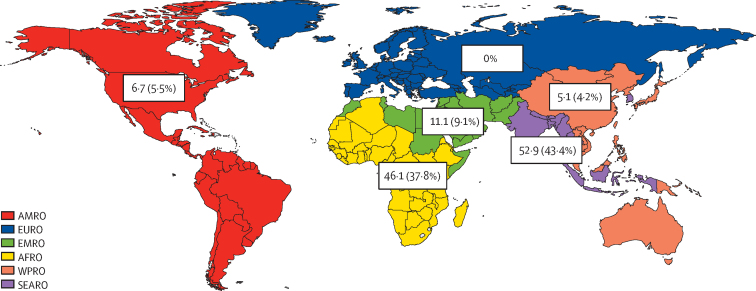
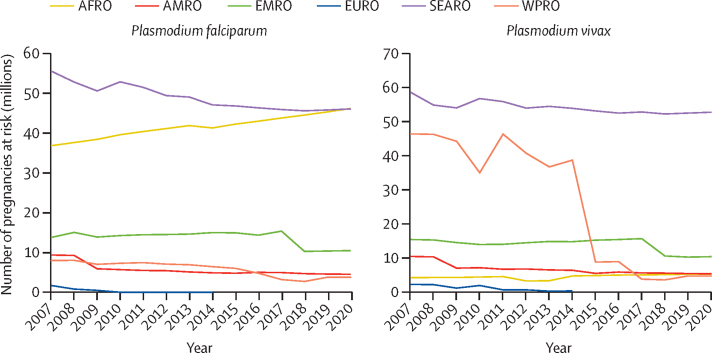
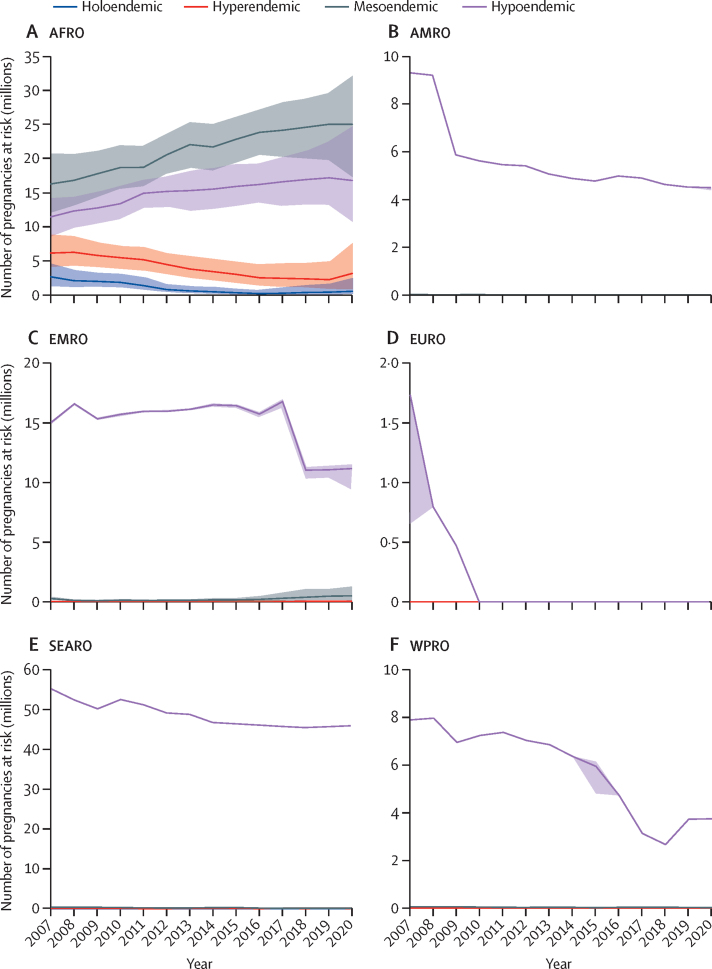
BACKGROUND: The most recent global estimates of the number of pregnancies at risk of Plasmodium falciparum and Plasmodium vivax malaria infection are from 2007. To inform global malaria prevention and control efforts, we aimed to estimate the global distribution of pregnancies at risk of malaria infection from 2007 to 2020. METHODS: We used estimates from the Malaria Atlas Project on the total population living in areas of P falciparum and P vivax transmission, combined with country-specific demographic data on women of reproductive age, fertility rates, induced abortions, and stillbirths, to derive the annual number of pregnancies overall, by parasite species, and by endemicity strata from 2007 to 2020. The definition of endemicity strata was based on the parasite point prevalence in individuals aged 2-10 years for P falciparum and 1-99 years for P vivax. We also did a sensitivity analysis in which we considered most of sub-Saharan Africa endemic for P vivax. FINDINGS: In 2020, 121·9 million pregnancies occurred in malaria transmission areas, resulting in an estimated 70·9 million (58·1%) livebirths. The total number of pregnancies at risk of malaria was 52·9 million in the WHO South-East Asia (SEARO) region, 5·1 million in the Western Pacific (WPRO) region, 46·1 million in the Africa (AFRO) region, 11·1 million in the Eastern Mediterranean (EMRO) region, and 6·7 million in the Americas (AMRO) region. Between 2007 and 2020, pregnancies in areas of P falciparum transmission declined by 11·4% globally, despite an overall 7·0% increase in pregnancies, representing a decrease of 100·0% in the WHO Europe (EURO) region, 52·6% in WPRO, 51·5% in AMRO, 23·9% in EMRO, and 17·2% in SEARO, and a 25·4% increase in AFRO. Pregnancies in P vivax transmission areas fell by 42·8%, representing a decrease of 100·0% in EURO, 89·8% in WPRO, 48·4% in AMRO, 32·4% in EMRO, and 10·0% in SEARO, and a 25·8% increase in AFRO. Our sensitivity analysis suggests that the number of pregnancies at risk of P vivax infection could be seven-fold higher for AFRO if the whole of sub-Saharan Africa was considered endemic for P vivax. INTERPRETATION: Between 2007 and 2020, substantial declines in the number of pregnancies at risk of malaria were seen globally. However, in AFRO, 25·4% more pregnancies were at risk of P falciparum or P vivax malaria than in 2007. This increase in the number at risk in AFRO comes despite the decline in malaria rates due to the rapidly rising population and the corresponding number of pregnancies in endemic areas. These estimates should guide priority setting for resource allocation to control malaria in pregnancy. FUNDING: Bill & Melinda Gates Foundation and Telethon Trust.
Overview
The claims and statistics of this paper haven’t been checked yet.
Free: it reads the open-access text and checks the first 5 claims that cite a source we can check. Create a free account to check every claim.
Integrity signals
Registry
Cites
Statistics
Figures
Verification
Claims the paper makes
The claims and statistics of this paper haven’t been checked yet.
Free: it reads the open-access text and checks the first 5 claims that cite a source we can check. Create a free account to check every claim.
Claims other papers make about this one
Each is checked against this paper’s own text: does it say what the citing paper says it does?
The source backs part of the claim, not all of it — or backs it for a different population, condition or comparison.
In the citing paper
“Likewise, other studies reported that pregnant women, especially those in their first pregnancy (primigravidae), are at a higher risk of severe malaria and its complications [8–11].”
From Current update on malaria in pregnancy: a systematic review (2025) · cites this paper as [8]
Experimental — accuracy not yet measuredThe source backs part of the claim, not all of it — or backs it for a different population, condition or comparison.
In the citing paper
“Pregnant women are particularly susceptible to malaria due to the immunological changes they experience and the presence of a new organ, the placenta, which provides a favorable environment for the most dangerous malaria parasites, P.falciparum and P.vivax [6–8].”
From Current update on malaria in pregnancy: a systematic review (2025) · cites this paper as [8]
Experimental — accuracy not yet measuredThe source backs part of the claim, not all of it — or backs it for a different population, condition or comparison.
In the citing paper
“Similarly, studies have indicated that primigravidae have an increased risk of severe malaria and associated complications [8–11].”
From Current update on malaria in pregnancy: a systematic review (2025) · cites this paper as [8]
Experimental — accuracy not yet measuredThe source backs part of the claim, not all of it — or backs it for a different population, condition or comparison.
In the citing paper
“Malaria-associated stillbirths and low birth weight have been observed in women with low protective immunity, possibly because acute infection causes a shortened pregnancy [179, 180].”
From Current update on malaria in pregnancy: a systematic review (2025) · cites this paper as [180]
Experimental — accuracy not yet measuredThe source backs part of the claim, not all of it — or backs it for a different population, condition or comparison.
In the citing paper
“While the number cases of malaria in pregnancies was decreased globally between 2007 and 2020, the number of cases of malaria in pregnancies in Africa increased by 25.4% [8].”
From Current update on malaria in pregnancy: a systematic review (2025) · cites this paper as [8]
Experimental — accuracy not yet measured
1 more claim about this paper
Create a free account to see every claim other papers make about this one.
Self-check
Percentages, sums and reported differences re-computed from the paper’s own numbers.
The self-check needs the paper’s full text.
Citations
Cites
Wang, H., Abbas, K. M., Abbasifard, M., Abbasi-Kangevari, M., Abbastabar, H., Abd-Allah, F., Abdelalim, A., Abolhassani, H., Abreu, L. G., Abrigo, M. R. M., et al. (2020) · The Lancet · doi:10.1016/s0140-6736(20)30977-6 · Cited by 1,971
Bearak, J., Popinchalk, A., Ganatra, B., Moller, A.-B., Tunçalp, Ö., Beavin, C., Kwok, L., & Alkema, L. (2020) · The Lancet Global Health · doi:10.1016/s2214-109x(20)30315-6 · Cited by 1,263
Quantifying the Number of Pregnancies at Risk of Malaria in 2007: A Demographic Study
Dellicour, S., Tatem, A. J., Guerra, C. A., Snow, R. W., & ter Kuile, F. O. (2010) · PLoS Medicine · doi:10.1371/journal.pmed.1000221 · Cited by 490 · cited 1×
“Therefore, the same method was applied as described previously in our original paper to determine the proportion of pregnancies resulting in miscarriage.(6) In brief, the method uses multipliers to work backwards from the known number live births and induced abortions to recover the unknown underlying number of pregna…”
MethodSelf-citationWeiss, D. J., Lucas, T. C. D., Nguyen, M., Nandi, A. K., Bisanzio, D., Battle, K. E., Cameron, E., Twohig, K. A., Pfeffer, D. A., Rozier, J. A., et al. (2019) · The Lancet · doi:10.1016/s0140-6736(19)31097-9 · Cited by 469
Self-citationGuerra, C. A., Gikandi, P. W., Tatem, A. J., Noor, A. M., Smith, D. L., Hay, S. I., & Snow, R. W. (2008) · PLoS Medicine · doi:10.1371/journal.pmed.0050038 · Cited by 442
Battle, K. E., Lucas, T. C. D., Nguyen, M., Howes, R. E., Nandi, A. K., Twohig, K. A., Pfeffer, D. A., Cameron, E., Rao, P. C., Casey, D., et al. (2019) · The Lancet · doi:10.1016/s0140-6736(19)31096-7 · Cited by 409
Self-citationBurden, pathology, and costs of malaria in pregnancy: new developments for an old problem
Rogerson, S. J., Desai, M., Mayor, A., Sicuri, E., Taylor, S. M., & van Eijk, A. M. (2018) · The Lancet Infectious Diseases · doi:10.1016/s1473-3099(18)30066-5 · Cited by 306
Fried, M., & Duffy, P. E. (2017) · Cold Spring Harbor Perspectives in Medicine · doi:10.1101/cshperspect.a025551 · Cited by 202
Gamble, C., Ekwaru, P. J., Garner, P., & ter Kuile, F. O. (2007) · PLoS Medicine · doi:10.1371/journal.pmed.0040107 · Cited by 190
An overview of malaria in pregnancy
Bauserman, M., Conroy, A. L., North, K., Patterson, J., Bose, C., & Meshnick, S. (2019) · Seminars in Perinatology · doi:10.1053/j.semperi.2019.03.018 · Cited by 167
Cited by
Infections and Acute Kidney Injury: A Global Perspective
Batte, A., Shahrin, L., Granado, R. C., Luyckx, V. A., & Conroy, A. L. (2023) · Seminars in Nephrology · doi:10.1016/j.semnephrol.2023.151466 · Cited by 67
Current update on malaria in pregnancy: a systematic review
Minwuyelet, A., Yewhalaw, D., Siferih, M., & Atenafu, G. (2025) · Tropical Diseases, Travel Medicine and Vaccines · doi:10.1186/s40794-025-00248-1 · Cited by 49
“A brief timeline illustrating the prevalence of malaria in pregnancy, based on WHO malaria reports from 2000 to 2023, along with additional findings from references [8, 60] is shown in Fig.”
Influentialvan Eijk, A. M., Stepniewska, K., Hill, J., Taylor, S. M., Rogerson, S. J., Cottrell, G., Chico, R. M., Gutman, J., Tinto, H., Unger, H. W., et al. (2023) · The Lancet Global Health · doi:10.1016/s2214-109x(23)00194-8 · Cited by 37
“Conversely, among women with fever, the median proportion of participants with submicroscopic malaria was 0·0% (range 0·0–33·3) in the Americas (11 substudies, four [2”
BackgroundAdverse pregnancy outcomes in maternal malarial infection: A systematic review and meta-analysis
Satapathy, P., Khatib, M. N., Gaidhane, S., Zahiruddin, Q. S., Sharma, R. K., Rustagi, S., Al-Jishi, J. M., Albayat, H., Fares, M. A. A., Garout, M. A., et al. (2024) · New Microbes and New Infections · doi:10.1016/j.nmni.2024.101474 · Cited by 41
“Malaria during pregnancy is widely recognized as a significant global health challenge [1,2], presenting substantial risks to the health of both the mother and the fetus, as well as to newborns and the broader community [2,3].”
BackgroundThe effect and control of malaria in pregnancy and lactating women in the Asia-Pacific region
Unger, H. W., Acharya, S., Arnold, L., Wu, C., van Eijk, A. M., Gore‐Langton, G. R., ter Kuile, F. O., Lufele, E., Chico, R. M., Price, R. N., et al. (2023) · The Lancet Global Health · doi:10.1016/s2214-109x(23)00415-1 · Cited by 25
Dwumfour, C. K., Bam, V. B., Owusu, L. B., Poku, C. A., Kpabitey, R. D., Aboagye-Mensah, P., & Ibrahim, A. S. (2023) · PLoS ONE · doi:10.1371/journal.pone.0293420 · Cited by 25
“Global estimates indicate that in 2020, 121.9 million pregnancies were threatened by malaria infection in endemic areas [3].”
BackgroundInfluentialMalaria: a review on its current epidemiological status and management strategies
Okello, G., & Aucamp, M. E. (2026) · Malaria Journal · doi:10.1186/s12936-025-05748-1 · Cited by 29
“Placental malaria, where parasites accumulate in the placenta, disrupts the flow of nutrients and oxygen to the fetus, leading to severe anemia, maternal death, and adverse birth outcomes [16, 17].”
Tshiongo, J. K., Luzolo, F. K., Kabena, M., Kuseke, L., Djimdé, M., Mitashi, P., Lumbala, C., Kayentao, K., Menting, S., Mens, P. F., et al. (2023) · Malaria Journal · doi:10.1186/s12936-023-04749-2 · Cited by 18
“Malaria transmission is perennial in DRC with around 4.3 million pregnancies at risk of P . falciparum infection and 1.35 million births affected by malaria infection yearly [25].”
BackgroundInfluentialAlemayehu, A., Getachew, H., Kedir, A., Abere, M., Zeynudin, A., Beyene, J., & Yewhalaw, D. (2024) · Malaria Journal · doi:10.1186/s12936-024-05201-9 · Cited by 12
Prospective study of malaria in pregnancy, placental and congenital malaria in Northwest Colombia
Cardona-Arias, J. A., & Carmona-Fonseca, J. (2024) · Malaria Journal · doi:10.1186/s12936-024-04948-5 · Cited by 8
“%) spontaneous abortions [6].”
BackgroundResultMtove, G. A., Chico, R. M., Madanitsa, M., Barsosio, H. C., Msemo, O. A., Saidi, Q., Gore‐Langton, G. R., Minja, D. T. R., Mukerebe, C., Gesase, S., et al. (2023) · International Journal of Infectious Diseases · doi:10.1016/j.ijid.2023.07.012 · Cited by 9
Malaria in pregnancy at the frontline: a delicate balance
Kokuhennadige, V., Aitken, E. H., & Rogerson, S. J. (2026) · Current Opinion in Immunology · doi:10.1016/j.coi.2026.102726 · Cited by 8
Kotepui, M., Mahittikorn, A., Masangkay, F. R., & Kotepui, K. U. (2023) · Scientific Reports · doi:10.1038/s41598-023-41659-4 · Cited by 8
Zegeye, A. F., Wassie, M., Tamir, T. T., Tekeba, B., Mekonen, E. G., Zeleke, G. A., & Gebrehana, D. A. (2025) · Infectious Diseases of Poverty · doi:10.1186/s40249-025-01357-x · Cited by 13
“Globally, an estimated 121.9 million pregnancies occurred in malaria transmission areas in 2020, with Sub-Saharan Africa accounting for approximately 46.1 million of these cases [16].”
InfluentialGado, A., Hewitt, P. G., Ballard, P. G., Tornesi, B. M., Baeurle, T. H. H., Oeuvray, C., Spangenberg, T., & Demarta‐Gatsi, C. (2024) · Birth Defects Research · doi:10.1002/bdr2.2389 · Cited by 5
“Worldwide, approximately 120 million pregnancies were at risk of Plasmodium ( P .) falciparum and p. vivax malaria infection in 2020 (Gore-Langton et al., 2022; Reddy et al., 2023).”
Georgakopoulou, V., Taskou, C., Sarantaki, A., Spandidos, D. A., Gourounti, K., Chaniotis, D. I., & Beloukas, A. I. (2025) · Experimental and Therapeutic Medicine · doi:10.3892/etm.2025.12924 · Cited by 8
“From 2007 to 2020, the incidence of pregnancies in areas of Plasmodium falciparum transmission decreased by 11.4% globally, despite an overall increase in the number of pregnancies in these regions (52).”
InfluentialCardona‐Arias, J. A., Gómez-Mejía, N., & Patiño-Ocampo, M. (2024) · Malaria Journal · doi:10.1186/s12936-024-05225-1 · Cited by 4
Lufele, E., Pascoe, S. J. S., Mengi, A., Auwun, A., Neuendorf, N., Bolnga, J. W., Laman, M., Rogerson, S. J., Thriemer, K., & Unger, H. W. (2025) · Malaria Journal · doi:10.1186/s12936-024-05233-1 · Cited by 7
“Millions of pregnant women are at risk of Plasmodium falciparum and Plasmodium vivax infection world-wide [1].”
Malaria in pregnancy: baby steps
Rogerson, S. J., & Aitken, E. H. (2024) · Current Opinion in Infectious Diseases · doi:10.1097/qco.0000000000001037 · Cited by 6
Multi-system dysregulation in placental malaria contributes to adverse perinatal outcomes in mice
Ekregbesi, P., Seibert, B., Parish, M. A., Flores-García, Y., Creisher, P. S., Hoffmann, J. P., Liu, J. A., Brayton, C. F., Zavala, F. P., & Klein, S. L. (2025) · Infection and Immunity · doi:10.1128/iai.00021-25 · Cited by 4
Osoro, C. B., Dellicour, S., Ochodo, E., Young, T., ter Kuile, F. O., Gutman, J., & Hill, J. (2023) · Malaria Journal · doi:10.1186/s12936-023-04698-w · Cited by 5
“Background About 89% of all pregnancies in the World Health Organization (WHO) Africa region (AFRO) were at risk of malaria infection, and 32% had an infection during pregnancy in 2021 [1, 2].”
BackgroundSelf-citationOsoro, C. B., Dellicour, S., Ochodo, E., Young, T., ter Kuile, F. O., Gutman, J., & Hill, J. (2023) · Malaria Journal · doi:10.1186/s12936-023-04692-2 · Cited by 4
“In 2021, 247 million cases were reported, with 89% of all pregnancies in the World Health Organization Africa region (WHO AFRO) at risk of infection [1, 2].”
BackgroundSelf-citationBorrallo-Lopez, L., Guzman, L., Romero, N. G., Sampietro, A., Mallo‐Abreu, A., Guardia-Escote, L., Teixidó, E., Flick, B., Fernàndez‐Busquets, X., Muñoz‐Torrero, D., et al. (2025) · International Journal for Parasitology Drugs and Drug Resistance · doi:10.1016/j.ijpddr.2025.100582 · Cited by 2
“Each year, more than 30 million women become pregnant in malaria endemic areas [Reddy et al., 2023], but the therapeutic options for this population have historically been very limited, especially during the first trimester of pregnancy due to potential adverse effects on embryo-fetal development…”
dos Santos, M. I., Carvalho, A. R., de Oliveira, G. M., Gomes, L. C., Syed, W. A. P., Separovic, E. P. M., Epiphânio, S., Wunderlich, G., Marinho, C. R. F., & Dombrowski, J. G. (2025) · PLOS Global Public Health · doi:10.1371/journal.pgph.0005526 · Cited by 2
“In 2020, an estimated 121 million pregnant women worldwide and 6.7 million women in the Amer-icas were at high risk of acquiring malaria and developing complications [3].”
InfluentialAlemayehu, A., Kiya, G. T., Mogas, S. B., Zeynudin, A., Beyene, J., & Yewhalaw, D. (2025) · Archives of Public Health · doi:10.1186/s13690-025-01772-4 · Cited by 7
“It remained among the major causes of child and maternal morbidity and mortality [1–3].”
Ndayishimiye, J. C., & Tabong, P. T. (2024) · BMC Pregnancy and Childbirth · doi:10.1186/s12884-024-06566-0 · Cited by 4
“…globally, the World Health Organization (WHO) region with the highest number of pregnancies at risk of malaria was Southeast Asia, with 52.9 million pregnancies, followed by the African region with 46.1 million pregnancies, and the Eastern Mediterranean region with 11.1 million pregnancies [2].”
BackgroundInfluentialNew Strides in Prevention of Malaria during Pregnancy Present Multitudinous Opportunities
Gill, J., & Anvikar, A. R. (2024) · ACS Infectious Diseases · doi:10.1021/acsinfecdis.4c00566 · Cited by 5
Chukwuanukwu, R. C., Agu, C. E., Ehiaghe, A. F., Ezeagwuna, D. A., Herrmann, M., & Udigwe, G. O. (2025) · BMC Immunology · doi:10.1186/s12865-025-00709-4 · Cited by 5
“Recently, it has been estimated that globally, 121.9 million women reside in areas where they are likely to contract malaria during their pregnancies [3].”
InfluentialTaremwa, K., Anyamene, E. L., Nwankwo, G. I., Agbontale, M. K., & Isiko, I. (2025) · Malaria Journal · doi:10.1186/s12936-025-05417-3 · Cited by 2
“Although sub-Saharan Africa has the most malaria-associated adverse pregnancy outcomes, it represents only 37 · 8% of pregnancies at risk of P. falciparum or P. vivax [8].”
Allen, C. L., Eddy, K. E., Ginnane, J. F., Cheang, S., Nguyen, R., Scott, N., Vogel, J. P., & McDougall, A. R. A. (2025) · PLOS Global Public Health · doi:10.1371/journal.pgph.0004392 · Cited by 2
“Malaria in particular is an important parasitic cause of haemolytic anaemia throughout sub-Saharan Africa and South-East Asia, where more than 100 million women are estimated to be at risk of infection during pregnancy [10].”
Hafidz, F., Candrawati, F., Hoyt, J., Kenangalem, E., Dodd, J., Lesosky, M., Laksanawati, I. S., Ubra, R. R., Simatupang, M., ter Kuile, F. O., et al. (2025) · The Lancet Primary Care · doi:10.1016/j.lanprc.2025.100011 · Cited by 3
Pregnancy Intentions and Maternal Health Behaviours: Observational Study in 18 African Countries
Olapeju, B., van Eijk, A. M., Bride, M., Passaniti, A., Abdallah, S. A., Hunter, G. C., Mohammed, S., Kaze, L., Nalukwago, J., & Hendrickson, Z. M. (2025) · BJOG An International Journal of Obstetrics & Gynaecology · doi:10.1111/1471-0528.18367 · Cited by 1
“Heterogeneity in effect measures between countries was evaluated using the I [2] statistic.”
Barriers to malaria prevention services in pregnancy: a multi-methods study in rural western Uganda
Horowitz, R. A. C., Ngelese, H., Baguma, E., Nyangoma, G., Bwambale, S., Ntaro, M., Mulogo, E. M., & Boyce, R. M. (2025) · BMC Public Health · doi:10.1186/s12889-025-24314-7 · Cited by 3
“In 2020, for example, more than 120 million pregnancies occurred in malaria-endemic regions of the world, resulting in approximately 70 million live births [1].”
Bhat, N., Knudson, S., AbuShweimeh, R., Nakambale, H. N., Mooney, J., Salts, N., Mehta, U., Sevene, E., Fell, D. B., Lamprianou, S., et al. (2025) · BMJ Open · doi:10.1136/bmjopen-2024-097198 · Cited by 2
Kinoshita, T., Espino, F. E., Bunagan, R., Lim, D. R., Daga, C. M., Parungao, S., Balderian, A., Micu, K., Laborera, R., Basilio, R., et al. (2024) · Tropical Medicine and Health · doi:10.1186/s41182-024-00583-7 · Cited by 3
“These patients can experience severe maternal and fetal outcomes, such as maternal anemia, low birth weight, and preterm delivery [3].”
BackgroundCardona‐Arias, J. A., Higuita‐Gutiérrez, L. F., & Carmona‐Fonseca, J. (2024) · Malaria Journal · doi:10.1186/s12936-024-05046-2 · Cited by 4
“%) spontaneous abortions [25].”
Kueil, B. G., David, O., Majok, J., & Walter, M. O. (2024) · Haematology International Journal · doi:10.23880/hij-16000260
Limaye, R. J., Schue, J. L., Fesshaye, B., Singh, P., Miller, E. A., Souza, R. T., Jessani, S., Temmerman, M., Badzi, C. D., Sauer, M. A., et al. (2025) · medRxiv · doi:10.1101/2025.04.09.25325538 · Cited by 1
Umeanaeto, P. U., Ugbe, R. N., Benjamin, C. O., Okwelogu, I. S., Okechukwu, C. E., & Uduchi, I. O. (2023) · Apollo Medicine · doi:10.4103/am.am_6_23
“[1,2] To increase women’s access to maternal care and public health education on malaria vector control and the use of LLINs, it is essential to establish more health facilities, empower people from all socioeconomic backgrounds, reorient health providers, engage communities, and improve the…”
Osoro, C. B., Dellicour, S., Ochodo, E., Young, T., ter Kuile, F. O., Gutman, J., & Hill, J. (2023) · Research Square · doi:10.21203/rs.3.rs-2832341/v1
Self-citationSynthesis of novel phthalimide-based piperazine conjugated analogs as anti-malarial agents
Bansal, M., Kumar, S., & Rathi, B. (2023) · Chemical Biology Letters · doi:10.62110/sciencein.cbl.2023.v10.627
Ndayishimiye, J. C., & Tabong, P. T. (2024) · Research Square · doi:10.21203/rs.3.rs-3857945/v1
Lusiyana, N., & Rochmah, F. S. N. (2025) · ASPIRATOR - Journal of Vector-borne Disease Studies · doi:10.58623/aspirator.v15i2.82
Antimalarial Drug Resistance: Newer Approaches to Mitigate the Process
Oranusi, S. U., & Sule, Q. E. (2025) · Springer eBooks · doi:10.1007/978-3-031-86002-7_13
Fetomaternal Outcome of Pregnant Women with Malaria
Mehwish, Memon, M., Solangi, B., Erum, Raishem, Farzana, Tosheeba, & Maheshwary, N. (2025) · Pakistan Journal of Health Sciences · doi:10.54393/pjhs.v6i7.3124
Swem, M.-C. M., Wama, E. B., Akwa, V. Y., Swem, C. A., Boursou, D., Eteme, S. E., Houmsou, R. S., Kela, S. L., & Amuta, E. U. (2025) · Research Square · doi:10.21203/rs.3.rs-7442925/v1
Prevalance and risk factors of congenital malaria in Osogbo, Southwestern Nigeria
Odediji, S. A., Surakat, O. A., Olawuyi, A. O., Amoo, K. O., Amoo-Adeboye, B. O., & Adeleke, M. A. (2025) · Europe PMC (PubMed Central) · doi:10.3205/000343
Oguta, O., Mohammed, J., Umer, U., & Solomon, E. T. (2025) · Health Science Reports · doi:10.1002/hsr2.71310 · Cited by 1
Intermittent Preventive Treatment in Pregnancy (IPTp)
Maïga‐Ascofaré, O., May, J., & Kobbe, R. (2025) · Springer eBooks · doi:10.1007/978-1-4614-8326-7_158
Lin, I., Sulaiman, H., Tran, V. K., Basri, S., Pham, C. T., Nguyen, L., Tey, M. Y., Wu, C., Tam, K., & Loh, E. (2025) · Journal of Travel Medicine · doi:10.1093/jtm/taaf112
Nowakowski, A., Elguero, É., Patterson, C., Boissière, A., Degrugillier, F., Sidobre, C., Arnathau, C., Grentzinger, P., Willaume, E., Talman, A. M., et al. (2026) · PLoS Pathogens · doi:10.1371/journal.ppat.1014287
“Because malaria also frequently affects the kidneys and liver in humans, renal (urea, creatinine) and hepatic (ALAT, ASAT, GGT) biochemical markers, along with lipid metabolism markers (cholesterol, triglycerides), were included as key indicators of organ function and metabolic status [30,31].”
Mechanisms of Action of Phytochemicals Against Plasmodium Parasites
Kumar, R. (2025) · IGI Global eBooks · doi:10.4018/979-8-3373-5821-5.ch004 · Cited by 4
Osoro, C. B., Dellicour, S., Ochodo, E., Young, T., ter Kuile, F. O., Gutman, J. R., & Hill, J. (2023) · Figshare · doi:10.6084/m9.figshare.24104336
Self-citationKinoshita, T., Espino, F. E., Bunagan, R., Lim, D. R., Daga, C. M., Parungao, S., Balderian, A., Micu, K., Laborera, R., Basilio, R., et al. (2024) · Figshare · doi:10.6084/m9.figshare.25194777
Nangu, J., Yeka, A., Kitutu, F. E., & Okade, T. (2026) · Research Square · doi:10.21203/rs.3.rs-8435560/v1 · Cited by 1
Limaye, R. J., Schue, J. L., Fesshaye, B., Singh, P., Miller, E. A., Souza, R. T., Jessani, S., Temmerman, M., Badzi, C. D., Sauer, M. A., et al. (2026) · PLOS Global Public Health · doi:10.1371/journal.pgph.0004562 · Cited by 1
“Malaria presents a significant global health challenge for pregnant women as well as their fetuses and newborns [12].”
Nikiéma, A., Ouattara, N. G. M., Ouattara, A., Yaméogo, B., Sanou, A., Ouattara, M., Seynou, M., Konaté, D., Ilboudo, D., Dabourgou, K., et al. (2025) · Sciences de la Santé · doi:10.64707/revstss.v48i2.1933
Hoyt, J., Candrawati, F., Hafidz, F., Mulyadi, A. W. E., Kenangalem, E., Laksanawati, I. S., Ubra, R. R., Poespoprodjo, J. R., & Hill, J. (2026) · BMC Pregnancy and Childbirth · doi:10.1186/s12884-026-09036-x
“Malaria in pregnancy represents a significant public health challenge in South-East Asia, with over 52 million pregnancies at risk [2] and no regional strategy for prevention.”
Dalsuco, J., Bassat, Q., Ahmed, H., Pfeffer, S., Winnips, C., Boulton, C., Otsyula, N., & D’Alessandro, U. (2026) · Tropical Medicine and Health · doi:10.1186/s41182-026-00935-5
“In 2020, an estimated 67.7 million cases among 247.7 million pregnancies were at risk of malaria transmission caused by P. falciparum and P. vivax [4].”
InfluentialA fractional-order SEIAR-SEI model for malaria dynamics incorporating climatic factors
Farah, G. A. M. O., Mukhtar, A. Y. A., & Patidar, K. C. (2026) · Franklin Open · doi:10.1016/j.fraope.2026.100692
Sullivan, D. J. (2026) · Elsevier eBooks · doi:10.1016/b978-0-443-45863-7.00049-4
Intravenous artesunate for imported malaria in pregnancy: two case reports
Liu, X., Hou, J., Mou, Y., Lin, S., Li, Y., Wei, X., Lan, H., Qin, Y., Zeng, W., Xiang, Z., et al. (2026) · Academia Medicine and Health · doi:10.20935/acadmedhealth8398
Bivegete, S., Barsosio, H. C., Gaaloul, M. E., Kayentao, K., Worrall, E., Duparc, S., Kaszubska, W., Valéa, I., Hill, J., ter Kuile, F. O., et al. (2026) · Malaria Journal · doi:10.1186/s12936-026-06045-1
“Malaria in pregnancy is a significant public health concern, with over 120 million pregnancies at risk annually in malaria-endemic areas globally [1].”
Self-citationAlemu, D., Tilahun, T., & Tiruneh, G. (2026) · BMC Infectious Diseases · doi:10.1186/s12879-026-14088-7
“Pregnancy-associated malaria (PAM) imposes adverse consequences on the fetus and newborns [11, 12].”
Maternal and Child Health in the Era of Climate Change: Impacts, Interventions, Research Gaps
Prost, A., Devakumar, D., Sato, P., Nagginda, H. P., Mohamed, M., McGushin, A., & Romanello, M. B. (2026) · Springer eBooks · doi:10.1007/978-1-0716-5436-1_7
Tovar, C., Aparicio, P., & Tovar-Falón, R. (2026) · IJID Regions · doi:10.1016/j.ijregi.2026.100974
“…burden of adverse outcomes associated with malaria in pregnancy, a substantial proportion of pregnancies at risk also occur in Latin America [ 8 ], where P. vivax predominates and transmission foci persist in several territories, including the Colombian Amazon, northwestern Colombia, and the…”
Metadata
- Authors
- Reddy, V., Weiss, D. J., Rozier, J., ter Kuile, F. O., & Dellicour, S.
- Affiliations
- Liverpool School of Tropical Medicine (GB)
- The Kids Research Institute Australia (AU)
- Corresponding author
- Dellicour, Stephanie
- Venue
- The Lancet Global Health
- Publisher
- Elsevier BV
- Published
- 2023-01
- Volume
- 11
- Issue
- 1
- Pages
- e40-e47
- ISSN
- 2214-109X (ISSN-L)
- PMC
- PMC9764451
- OpenAlex
- W4311274467
- Semantic Scholar
- 6adce664ff129a0bc6d3251981a364dd758e874c
- Cited by
- 68
- References
- 21
- Citations by year
- 2026: 14 · 2025: 27 · 2024: 14 · 2023: 13
- FWCI
- 11.92
- Type
- journal article
- Language
- en
- Open access
- gold
- doi.org
- Licence
- cc-by
- www.elsevier.com/tdm/userlicense/1.0/ (tdm)
- www.elsevier.com/legal/tdmrep-license (tdm)
- creativecommons.org/licenses/by/4.0/ (vor)
- Locations
- The Lancet Global Health (publishedVersion, cc-by)
- PubMed Central (publishedVersion, cc-by)
- PubMed (publishedVersion)
- LSTM Online Archive (Liverpool School of Tropical Medicine) (acceptedVersion)
- Funders
- Channel 7 Telethon Trust
- Bill and Melinda Gates Foundation (OPP1152978)
- Topics
- Health Sciences › Medicine › Public Health, Environmental and Occupational Health › Malaria Research and Control
- Health Sciences › Medicine › Pediatrics, Perinatology and Child Health › Global Maternal and Child Health
- Health Sciences › Medicine › Infectious Diseases › HIV/AIDS Research and Interventions
- Keywords
- malaria in pregnancy, Plasmodium falciparum, Plasmodium vivax, women of reproductive age, fertility rate, abortion, stillbirth, live birth, malaria prevention and control, sub-Saharan Africa, WHO regions
- MeSH terms
- Female, Humans, Malaria, Plasmodium falciparum, Pregnancy, Prevalence, Malaria, Falciparum, Malaria, Vivax, Africa South of the Sahara
About these checks
Registry, retraction, Cites and statistics results are computed, not judged, with one exception: a printed reference that no index lists is read once by a model before it counts as a citation error. Claims are extracted by a model and kept only when their quote appears verbatim in the text; each cited source is then checked, with a model’s help, for whether it says what the claim relies on. Those verdicts can be wrong — read the claim’s quote and the cited source before relying on one.
Statistics and arithmetic are recomputed, not judged.
Confidence bands are shown only for fields calibrated on our annotated test set. None is calibrated yet, so no band is shown.
What counts as a claim ›How we measure confidence ›How we check this ›
Are you an author, or do you see a problem with this page? Request a review
Data sources
Bibliographic data: Semantic Scholar, OpenAlex, Crossref.
Contains information from the Semantic Scholar Academic Graph Datasets, made available under the ODC Attribution License (ODC-BY 1.0).
Semantic Scholar’s data is described in: Kinney, R., et al. (2023). The Semantic Scholar Open Data Platform. arXiv:2301.10140.
