

Self-harm in a primary care cohort of older people: incidence, clinical management, and risk of suicide and other causes of death
Open accessThe DOI matches its Crossref record; 24 of the 25 references it cites were found in a registry or an index.
Abstract
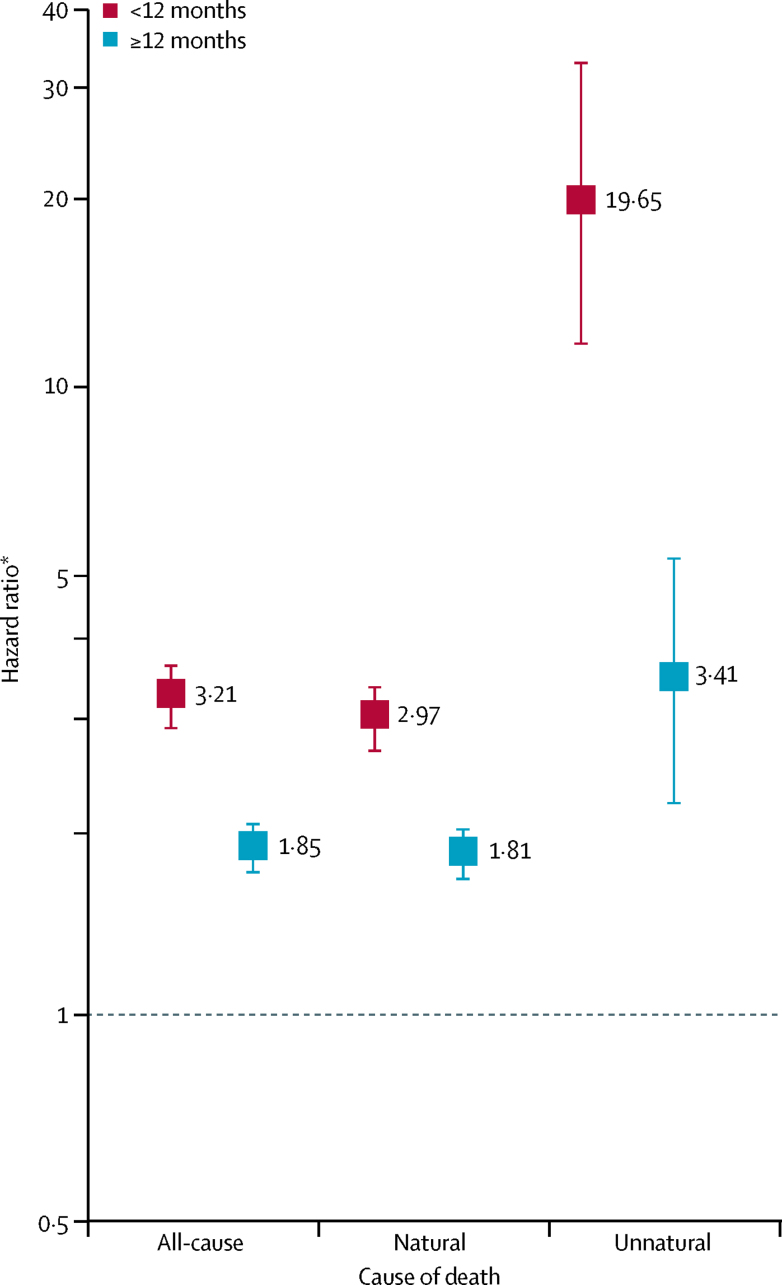
BACKGROUND: Self-harm is a major risk factor for suicide, with older adults (older than 65 years) having reportedly greater suicidal intent than any other age group. With the aging population rising and paucity of research focus in this age group, the extent of the problem of self-harm needs to be established. In a primary care cohort of older adults we aimed to investigate the incidence of self-harm, subsequent clinical management, prevalence of mental and physical diagnoses, and unnatural-cause mortality risk, including suicide. METHODS: The UK Clinical Practice Research Datalink contains anonymised patient records from general practice that routinely capture clinical information pertaining to both primary and secondary care services. We identified 4124 adults aged 65 years and older with a self-harm episode ascertained from Read codes recorded during 2001-14. We calculated standardised incidence and in 2854 adults with at least 12 months follow-up examined the frequency of psychiatric referrals and prescription of psychotropic medication after self-harm. We estimated prevalence of mental and physical illness diagnoses before and after self-harm and, using Cox regression in a matched cohort, we examined cause-specific mortality risks. FINDINGS: Overall incidence of self-harm in older adults aged 65 years and older was 4·1 per 10 000 person-years with stable gender-specific rates observed over the 13-year period. After self-harm, 335 (11·7%) of 2854 adults were referred to mental health services, 1692 (59·3%) were prescribed an antidepressant, and 336 (11·8%) were prescribed a tricyclic antidepressant (TCA). Having a diagnosed previous mental illness was twice as prevalent in the self-harm cohort as in the comparison cohort (prevalence ratio 2·10 [95% CI 2·03-2·17]) and with a previous physical health condition prevalence was 20% higher in the self-harm cohort compared to the comparison cohort (1·20 [1·17-1·23]). Adults from the self-harm cohort (n=2454) died from unnatural causes an estimated 20 times more frequently than the comparison cohort (n=48 921) during the first year. A markedly elevated risk of suicide (hazard ratio 145·4 [95% CI 53·9-392·3]) was observed in the self-harm cohort. INTERPRETATION: Within primary care, we have identified a group of older adults at high risk from unnatural death, particularly within the first year of self-harm. We have highlighted a high frequency of prescription of TCAs, known to be potentially fatally toxic in overdose. We emphasise the need for early intervention, careful alternative prescribing, and increased support when older adults consult after an episode of self-harm and with other health conditions. FUNDING: National Institute for Health Research Greater Manchester Patient Safety Translational Research Centre.
Overview
The claims and statistics of this paper haven’t been checked yet.
Free: it reads the open-access text and checks the first 5 claims that cite a source we can check. Create a free account to check every claim.
Integrity signals
Registry
Cites
Statistics
Figures
Verification
Claims the paper makes
The claims and statistics of this paper haven’t been checked yet.
Free: it reads the open-access text and checks the first 5 claims that cite a source we can check. Create a free account to check every claim.
Claims other papers make about this one
Each is checked against this paper’s own text: does it say what the citing paper says it does?
The source backs part of the claim, not all of it — or backs it for a different population, condition or comparison.
In the citing paper
“Although impulsive-aggressive traits, substance abuse and conduct disorder make proportionally larger contributions to suicide risk in younger people 7,97,109 , depression, physical comorbidity, sleep and pain issues, and cognitive impairment are substantial contributors to suicidal behaviour in older people 110,111 .”
From Suicide and suicide risk (2019) · cites this paper as [111]
Experimental — accuracy not yet measured
Self-check
Percentages, sums and reported differences re-computed from the paper’s own numbers.
The self-check needs the paper’s full text.
Citations
Cites
Validation of a combined comorbidity index
Charlson, M., Szatrowski, T. P., Peterson, J., & Gold, J. (1994) · Journal of Clinical Epidemiology · doi:10.1016/0895-4356(94)90129-5 · Cited by 6,587
Partial residuals for the proportional hazards regression model
SCHOENFELD, D. (1982) · Biometrika · doi:10.1093/biomet/69.1.239 · Cited by 3,111
Data Resource Profile: Clinical Practice Research Datalink (CPRD)
Herrett, E., Gallagher, A. M., Bhaskaran, K., Forbes, H., Mathur, R., van Staa, T., & Smeeth, L. (2015) · International Journal of Epidemiology · doi:10.1093/ije/dyv098 · Cited by 2,667
Competing risks in epidemiology: possibilities and pitfalls
Andersen, P. K., Geskus, R. B., de Witte, T., & Putter, H. (2012) · International Journal of Epidemiology · doi:10.1093/ije/dyr213 · Cited by 985
Bruce, M. L., Ten Have, T. R., Reynolds III, C. F., Katz, I. I., Schulberg, H. C., Mulsant, B. H., Brown, G. K., McAvay, G. J., Pearson, J. L., & Alexopoulos, G. S. (2004) · JAMA · doi:10.1001/jama.291.9.1081 · Cited by 963
Comprehensive mental health action plan 2013–2020
Saxena, S., Funk, M. K., & Chisholm, D. (2015) · Eastern Mediterranean Health Journal · doi:10.26719/2015.21.7.461 · Cited by 834
Fässberg, M. M., Cheung, G., Canetto, S. S., Erlangsen, A., Lapierre, S., Lindner, R., Draper, B., Gallo, J. J., Wong, C., Wu, J., et al. (2016) · Aging & Mental Health · doi:10.1080/13607863.2015.1083945 · Cited by 423
Singhal, A., Ross, J., Seminog, O., Hawton, K., & Goldacre, M. J. (2014) · Journal of the Royal Society of Medicine · doi:10.1177/0141076814522033 · Cited by 289
Open verdict v. suicide – importance to research
Linsley, K. R., Schapira, K., & Kelly, T. P. (2001) · British Journal of Psychiatry · doi:10.1192/bjp.178.5.465 · Cited by 279
Toxicity of antidepressants: rates of suicide relative to prescribing and non-fatal overdose
Hawton, K., Bergen, H., Simkin, S., Cooper, J., Waters, K., Gunnell, D., & Kapur, N. (2010) · British Journal of Psychiatry · doi:10.1192/bjp.bp.109.070219 · Cited by 192
Self-citation
Research works printed but not linked: 2
- ONS Statistical bulletin: suicides in the UK, 2015 registrations 2016 Office of National Statistics London
- NICE Self-harm in over 8s: short-term management and prevention of recurrence. NICE Clinical Guideline CG16 2004 National Institute for Health and Care Excellence London 31891461
Cited by
Turecki, G., Brent, D. A., Gunnell, D., O’Connor, R. C., Oquendo, M. A., Pirkis, J., & Stanley, B. H. (2019) · Nature Reviews Disease Primers · doi:10.1038/s41572-019-0121-0 · Cited by 1,074
Cumulative burden of psychiatric disorders and self-harm across 26 adult cancers
Chang, W. H., & Lai, A. G. (2022) · Nature Medicine · doi:10.1038/s41591-022-01740-3 · Cited by 81
Schmutte, T. J., & Wilkinson, S. T. (2020) · American Journal of Preventive Medicine · doi:10.1016/j.amepre.2019.11.001 · Cited by 72
Role of the GP in the management of patients with self-harm behaviour: a systematic review
Mughal, F., Troya, M. I., Dikomitis, L., Chew-Graham, C. A., & Babatunde, O. O. (2020) · British Journal of General Practice · doi:10.3399/bjgp20x708257 · Cited by 63
Self-citationTroya, M. I., Chew-Graham, C. A., Babatunde, O. O., Bartlam, B., Higginbottom, A., & Dikomitis, L. (2019) · Health Expectations · doi:10.1111/hex.12917 · Cited by 64
Self-citationPinals, D. A. (2019) · FOCUS The Journal of Lifelong Learning in Psychiatry · doi:10.1176/appi.focus.20190023 · Cited by 53
“For example, populations of individuals who may have unique risks and therefore bene fi t from some further nuanced assessments include transgender individuals (17), veterans and people with a history of military service (18), and older adults (19).”
A narrative review: suicide and suicidal behaviour in older adults
Sadek, J. R., Diaz-Piedra, B., Saleh, L., & MacDonald, L. (2024) · Frontiers in Psychiatry · doi:10.3389/fpsyt.2024.1395462 · Cited by 66
“Older adults who are depressed are more likely than those who are not depressed to harm themselves or attempt suicide (4).”
BackgroundUnderstanding self-harm in older adults: A qualitative study
Troya, M. I., Dikomitis, L., Babatunde, O. O., Bartlam, B., & Chew-Graham, C. A. (2019) · EClinicalMedicine · doi:10.1016/j.eclinm.2019.06.002 · Cited by 45
Self-citationCox, J. A., Mills, L., Hermens, D. F., Read, G. J. M., & Salmon, P. M. (2024) · Adolescent Research Review · doi:10.1007/s40894-024-00241-3 · Cited by 43
“Self-harm is prevalent in many populations, including people experiencing homelessness (e.g., Barrett et al., 2018), people from low-and middle-income countries (e.g., Knipe et al., 2019), and older people (e.g., Morgan et al., 2018).”
Self-harm in the very old one year later: has anything changed?
Wand, A. P. F., Draper, B., Brodaty, H., & Peisah, C. (2019) · International Psychogeriatrics · doi:10.1017/s1041610219000632 · Cited by 28
“Previous self-harm regardless of intent (De Leo et al., 2002) is strongly associated with subsequent death by suicide (Morgan et al., 2018; Murphy et al., 2012).”
BackgroundGonda, X., Döme, P., Serafini, G., & Pompili, M. (2023) · Pharmacology & Therapeutics · doi:10.1016/j.pharmthera.2023.108390 · Cited by 22
Wang, J., Qiu, J., Zhu, T., Zeng, Y., Yang, H., Shang, Y., Yin, J. Y., Sun, Y., Qu, Y., Valdimarsdóttir, U. A., et al. (2023) · JMIR Public Health and Surveillance · doi:10.2196/43419 · Cited by 22
“To consider the influence of somatic fitness, we generated time-varying (0 to 1 and 1 to 4 years before the recruitment) dichotomous variables for each subtype of severe somatic diseases [29].”
Schmutte, T. J., Olfson, M., Xie, M., & Marcus, S. C. (2021) · American Journal of Geriatric Psychiatry · doi:10.1016/j.jagp.2021.08.011 · Cited by 18
Role of primary care in supporting older adults who self-harm: a qualitative study in England
Troya, M. I., Chew-Graham, C. A., Babatunde, O. O., Bartlam, B., Mughal, F., & Dikomitis, L. (2019) · British Journal of General Practice · doi:10.3399/bjgp19x706049 · Cited by 20
Self-citationMcCarthy, M., McIntyre, J. C., Nathan, R., & Saini, P. (2023) · Archives of Suicide Research · doi:10.1080/13811118.2023.2173113 · Cited by 17
“The National Institute for Health and Care Excellence (NICE) guidelines high-light the important role EDs have in the treatment, support and management of patients who self-harm (Carr et al., 2016; Morgan et al., 2018).”
BackgroundA systematic review of evidence-based aftercare for older adults following self-harm
Wand, A. P. F., Browne, R., Jessop, T., & Peisah, C. (2022) · Australian & New Zealand Journal of Psychiatry · doi:10.1177/00048674211067165 · Cited by 14
“Notably, more women were referred to services than men and higher self-harm incident rates were observed in the oldest age patient groups (75–84, 85+), compared to a reference group of younger, older adults (65–74) (Morgan et al., 2018).”
BackgroundInfluentialJoseph, R. M., Jack, R. H., Morriss, R. K., Knaggs, R., Butler, D., Hollis, C. P., Hippisley‐Cox, J., & Coupland, C. A. C. (2022) · BMC Medicine · doi:10.1186/s12916-022-02247-x · Cited by 12
Yuen, A. S. C., Chen, B., Chan, A. Y. L., Hayes, J., Osborn, D., Besag, F., Lau, W. C. Y., Wong, I. C. K., Wei, L., & Man, K. K. C. (2025) · BMJ · doi:10.1136/bmj-2024-081627 · Cited by 14
Patel, A., Ness, J., Kelly, S., Waters, K., Townsend, E., Kapur, N., Clements, C., Farooq, B., Geulayov, G., Casey, D., et al. (2023) · International Journal of Geriatric Psychiatry · doi:10.1002/gps.5895 · Cited by 13
“Secondly, given the likely difference in life events across this broad age span, we aimed to identify potential key differences in the clinical characteristics, preceding life problems and clinical management related to subgroups, given the potential impact this may have on treatment needs and outcomes.(5,8,20,21) Thi…”
BackgroundResultInfluentialSelf-citationFradera, M., Ouchi, D., Prat, O., Morros, R., Martín-Fumadó, C., Palao, D. J., Cardoner, N., Campillo, M. T., Pérez, V., & Pontes, C. (2021) · Archives of Suicide Research · doi:10.1080/13811118.2021.1911894 · Cited by 14
“…reporting risk factors either focused on suicidal behavior in specific conditions or in given populations, or used clinical coding from medical or administrative databases to identify cases, which have previously been questioned as unreliable due to under or over reporting (Morgan et al., 2018).”
BackgroundResultImproving the management of self-harm in primary care
Mughal, F., Clarke, L., Connolly, R., Lee, A. Y. T., Quinlivan, L. M., & Kapur, N. (2023) · British Journal of General Practice · doi:10.3399/bjgp23x732297 · Cited by 11
Self-citationMohamad, M. A., Abdullah, M. F. I. L. B., & Shari, N. I. (2024) · BMC Geriatrics · doi:10.1186/s12877-024-04753-4 · Cited by 10
“In most of the studies, the proportion of female subjects ranged from 52.8% to 82.0% [29–31, 33, 34, 36, 38, 40–42, 44–47].”
BackgroundInfluentialNational study of emergency department disposition for high suicide risk geriatric patients
Schmutte, T. J., Olfson, M., Xie, M., & Marcus, S. C. (2019) · General Hospital Psychiatry · doi:10.1016/j.genhosppsych.2019.03.005 · Cited by 9
Suicide Prevention in Primary Care: The Opportunity for Intervention
Mughal, F., Gorton, H. C., Michail, M., Robinson, J., & Saini, P. (2021) · Crisis · doi:10.1027/0227-5910/a000817 · Cited by 9
Kim, H. H., Lee, J. H., Song, I. H., & Park, Y. R. (2023) · Psychiatry Research · doi:10.1016/j.psychres.2023.115613 · Cited by 11
“Compelling evidence suggests that suicide is caused by demographic, clinical, and socioeconomic risk factors (Chai et al., 2020; Garcia de la Garza et al., 2021; Gunak et al., 2021; Mok et al., 2018; Morgan et al., 2018).”
Hafford‐Letchfield, T., Jain, B., Gleeson, H., Roesch, C., & Ellmers, T. J. (2022) · Ageing and Society · doi:10.1017/s0144686x22000642 · Cited by 9
“Risk factors for suicide ideation and suicide-related behaviours in older adults are multifaceted and include: gender (Morgan et al ., 2018), age (Conwell et al ., 1998), mental ill health (particularly major depression) (Conwell et al ., 1996), stressful life events (Van Orden and Conwell, 2011),…”
BackgroundRisk factors for dementia and self‐harm: A linkage study
Walker, A. R., Srasuebkul, P., Trollor, J. N., Wand, A. P. F., Draper, B., Cvejic, R. C., Moxey, A. J., & Reppermund, S. (2023) · Alzheimer s & Dementia · doi:10.1002/alz.13080 · Cited by 9
Self‐harm in an older adult population during the COVID ‐19 pandemic
Obidoa, M., Bello, R., & Hardman, S. (2022) · Progress in Neurology and Psychiatry · doi:10.1002/pnp.747 · Cited by 7
Troya, M. I., Griffin, E., Arensman, E., Cassidy, E., Mughal, F., Lonergan, C., O’Mahony, J., Lovejoy, S. A., Ward, M. D., & Corcoran, P. E. (2023) · International Psychogeriatrics · doi:10.1017/s1041610223000856 · Cited by 7
Leather, J. Z., Keyworth, C., Kapur, N., Campbell, S., & Armitage, C. J. (2023) · BMC Nursing · doi:10.1186/s12912-023-01360-3 · Cited by 7
“Rates of self-harm recorded in primary care have risen over the past decade, particularly in young people and older adults [3, 4].”
BackgroundSelf-citationHensley, S. W., Esie, P., Ta, M., & Matheson, A. I. (2025) · Public Health Reports · doi:10.1177/00333549251350843 · Cited by 7
Skrivankova, V. W., Rabie, S., Tlali, M., Folb, N., Chinogurei, C., Bennett, S., Wesso, A., Ruffieux, Y., Cornell, M., Seedat, S., et al. (2025) · PLoS Medicine · doi:10.1371/journal.pmed.1004765 · Cited by 8
“Individuals with a history of self-harm are at increased risk of unnatural death including suicide and accidental death [14–17].”
Trends in referrals to liaison psychiatry teams from UK emergency departments for patients over 65
Crowther, G. J. E., Chinnasamy, M., Bradbury, S., Shaw, L., Ormerod, S., Wilkinson, A., Chubb, R., Daher, M., Kumar, P., Gaskin, A., et al. (2021) · International Journal of Geriatric Psychiatry · doi:10.1002/gps.5547 · Cited by 6
“presentations are also becoming increasingly prevalent, for example, self‐harm and dementia.(5,15) With these trends one might expect to see comparable rises in older people attending ED with mental health related problems.”
BackgroundChang, W. H., Foster, G. R., Kelly, D. A., & Lai, A. G. (2022) · BJPsych Open · doi:10.1192/bjo.2022.550 · Cited by 7
Feng, Y. R., Valuri, G. M., Morgan, V. A., Preen, D. B., O’Leary, C., Crampin, E. F., & Waterreus, A. J. (2023) · Australian & New Zealand Journal of Psychiatry · doi:10.1177/00048674231172116 · Cited by 7
“For older adults, we found there was a paucity of studies (n = 5), despite evidence that suicide rates in older adults are increasing (Morgan et al., 2018; Wang et al., 2020).”
Hove, L. V., Baetens, I., Hamza, C. A., Dierckx, E., Haekens, A., Fieremans, L., & Vanderstichelen, S. (2023) · Oxford University Press eBooks · doi:10.1093/oxfordhb/9780197611272.013.29 · Cited by 7
The role of primary care in preventing male suicide
Hardy, S. (2019) · Practice Nursing · doi:10.12968/pnur.2019.30.11.538 · Cited by 7
Assessing the Determinants of the Wish to Die among the Elderly Population in Ghana
Simmons, S. S., Maiolo, V., Ahinkorah, B. O., Hagan, J. E., Seidu, A., & Schack, T. (2021) · Geriatrics · doi:10.3390/geriatrics6010032 · Cited by 7
Prabhudev, P., Ramamoorthi, K., & Acharya, R. V. (2023) · Indian Journal of Critical Care Medicine · doi:10.5005/jp-journals-10071-24416 · Cited by 5
Overview and Epidemiology of NSSI in Clinical Samples
Muehlenkamp, J. J., & Tillotson, V. (2023) · Oxford University Press eBooks · doi:10.1093/oxfordhb/9780197611272.013.8 · Cited by 10
Suicidal vulnerability in older adults and the elderly: study based on risk variables
Sánchez‐Teruel, D., Bello, M. A. R., & Sarhani-Robles, A. (2022) · BJPsych Open · doi:10.1192/bjo.2022.42 · Cited by 4
“5,9 In addition, the impact of these repeated behaviours on health services is significant, as longer hospital stays are observed in this clinical subpopulation because of their previous levels of anxiety and the use of various methods of self-harm.”
BackgroundConceptualizing Self-Harm through the Experiences of Psychogeriatric Experts
Hove, L. V., Baetens, I., & Vanderstichelen, S. (2024) · Psychopathology · doi:10.1159/000537809 · Cited by 5
“Despite self-harm being an important precursor to suicide [11 – 13], a paucity of studies have investigated this behaviour in older adults [35].”
Troya, M. I., Lonergan, C., Cassidy, E., Griffin, E., Lovejoy, S. A., Mughal, F., Russell, V., & Arensman, E. (2024) · International Journal of Geriatric Psychiatry · doi:10.1002/gps.6116 · Cited by 5
“4,5 Self ‐ harm, defined in this study as the intentional drug overdose/ self ‐ poisoning or self ‐ injury irrespective of the apparent purpose of the act, is strongly associated with death by suicide.”
Zheng, X., Xu, Z.-W., Zhao, J.-J., Hao, S., Xu, F.-Q., Ding, S., Liu, G.-Q., Yang, S.-F., Otsen, B., Zhu, W., et al. (2025) · BMC Geriatrics · doi:10.1186/s12877-024-05653-3 · Cited by 5
Lee, Y. J., Yuh, M. A., Kim, I. S., Cho, B., Woo, S. H., & Hong, S. (2023) · PLoS ONE · doi:10.1371/journal.pone.0286398 · Cited by 4
“Mental health systems emphasize interventions that promote social connections, and research found that peer connections conferred a level of protection against self-harm in a variety of conditions [14–16].”
Suicidal behavior in persons attended in out-of-hospital emergency services in Spain
Ramos-Martín, J., Sánchez-Lafuente, C. G., Martínez-García, A. I., Castillo-Jiménez, P., Parra, J. G., & Moreno‐Küstner, B. (2023) · Frontiers in Psychiatry · doi:10.3389/fpsyt.2023.1235583 · Cited by 4
Self-harm in older adults: room to improve clinical care
Mitchell, R. J. (2018) · The Lancet Psychiatry · doi:10.1016/s2215-0366(18)30358-4 · Cited by 3
Laflamme, L., Lindholm, E., & Möller, J. (2024) · BMC Geriatrics · doi:10.1186/s12877-024-04717-8 · Cited by 3
“Further, while older people are less prone to deliberate-self harm, there is a greater degree of intent and lethality in the act they pose [7, 10, 15], which most often is a self-poisoning.”
BackgroundResultInfluentialHove, L. V., Baetens, I., & Vanderstichelen, S. (2024) · Qualitative Research in Medicine & Healthcare · doi:10.4081/qrmh.2024.12457 · Cited by 3
Hedna, K., Jonson, M., Sigström, R., Åberg, M., Wilhelmson, K., & Wærn, M. (2023) · Aging & Mental Health · doi:10.1080/13607863.2023.2179974 · Cited by 4
Chapter 20. Suicide in the Elderly Population
Price, M., & Howard, P. (2020) · American Psychiatric Association Publishing eBooks · doi:10.1176/appi.books.9781615375288.lg20 · Cited by 3
Vertebral fracture as a risk factor for self-harm: a retrospective cohort study
Prior, J. A., Manning, F., Whittle, R., Sultan, A. A., Chew-Graham, C. A., Müller, S., Shepherd, T. A., Sumathipala, A., Mallen, C. D., & Paskins, Z. (2021) · BMC Musculoskeletal Disorders · doi:10.1186/s12891-021-04631-9 · Cited by 3
Self-citationPereska, Z., Simonovska, N., Babulovska, A., Berat-Huseini, A., Naumoski, K., & Kostadinoski, K. (2021) · SAGE Open Medical Case Reports · doi:10.1177/2050313x211047717 · Cited by 3
Poisonings in Older People with Dementia: A Systematic Scoping Review and Meta-Analysis
Wojt, I. R., Lau, E. C. Y., Cairns, R. F., & Tan, E. C. K. (2023) · Journal of Alzheimer s Disease · doi:10.3233/jad-230246 · Cited by 2
“As poisoned older adults have poorer health outcomes compared to younger patients, efforts to minimize the potentially harmful medications they are prescribed should be emphasized to reduce access to high-risk medications and their possibly fatal outcomes [51].”
Mormont, E., Jacques, D., de Saint‐Hubert, M., Sourdeau, A., & Beaudart, C. (2025) · Journal of Geriatric Psychiatry and Neurology · doi:10.1177/08919887251366639 · Cited by 3
“26,37,61,67,70 The same research group that conducted the study by Desai et al. 75 performed a third systematic review and meta-analysis on the same dataset.”
Childhood cognitive ability and self-harm and suicide in later life
Iveson, M. H., Ball, E. L., Whalley, H. C., Deary, I. J., Cox, S. R., Batty, G. D., John, A. M., & McIntosh, A. M. (2023) · SSM - Population Health · doi:10.1016/j.ssmph.2023.101592 · Cited by 4
“We observed a higher risk of suicide among middle-aged and older adults experiencing self-harm, consistent with work highlighting self-harm as a major risk factor for suicide (Hawton et al., 2003; Morgan et al., 2018; Murphy et al., 2012).”
BackgroundResultInfluentialComplex emotional needs, overcontrol and death by suicide in older adults
Jordan, L. (2024) · FPOP Bulletin Psychology of Older People · doi:10.53841/bpsfpop.2024.1.166.33 · Cited by 3
Biopsychosocial Profile of Community-Dwelling Older Adults at Risk for Direct and Indirect Self-Harm
Hove, L. V., Nieuwenhuijs, B. M., Vanderstichelen, S., Witte, N. D., Gorus, E., Stas, L., & Baetens, I. (2025) · Clinical Gerontologist · doi:10.1080/07317115.2025.2487003 · Cited by 3
Boulet, S., Gagnon, A.-P., Nadeau, A., Mowbray, F., & Mercier, É. (2022) · Cureus · doi:10.7759/cureus.30428 · Cited by 4
“Non-fatal self-harm is considered the strongest risk factor for subsequent suicide, and prompt intervention might mitigate the escalation to suicide [2, 21].”
BackgroundSaunders, K., Nicholls, W., Kingstone, T., Mughal, F., Chew-Graham, C. A., Southam, J., & Fisher, T. (2025) · Health Expectations · doi:10.1111/hex.70268 · Cited by 5
“Geographical location may heighten the risk of depression linked to social isolation and loneliness; these are important predictors for self ‐ harm behaviours [7 – 9].”
Self-citationHealth justice, resource allocation and age in suicide risk assessment
Hart, J., Lignou, S., & Fazel, S. (2026) · Nature Mental Health · doi:10.1038/s44220-026-00635-3 · Cited by 1
“Despite this, older people are less likely to be referred to specialist services, suggesting that current clinician-led priority-setting is ineffective and unjust 31–33 .”
Jo, A., & Nam, S. (2026) · Archives of Gerontology and Geriatrics · doi:10.1016/j.archger.2026.106312 · Cited by 1
A much-needed focus on self-harm in older adults
Patel, A., Ness, J., & Waters, K. (2024) · International Psychogeriatrics · doi:10.1017/s1041610223004520 · Cited by 1
“In a UK primary care cohort study, prescription rates for psychotropic medications were found to be high within 12 months of a self-harm episode (Morgan et al ., 2018).”
BackgroundResultInfluentialHedna, K., Montuori, C., Forte, A. M., Pompili, M., & Wærn, M. (2021) · Pharmacoepidemiology and Drug Safety · doi:10.1002/pds.5375 · Cited by 1
“Escitalopram 77 (5) 80 (12) 10 (7) 3 (11)”
InfluentialReducing risk following self-harm: the need for careful prescribing
Chew-Graham, C. A., Morgan, C., Webb, R. T., Emery, A., Carr, M., Kontopantelis, E., Yung, A. R., & Ashcroft, D. M. (2019) · British Journal of General Practice · doi:10.3399/bjgp19x702317 · Cited by 1
Self-citationSelf harm attempt in the older population of the UK
Sandooja, S., Kathiresan, P., & Sharan, P. (2019) · The Lancet Psychiatry · doi:10.1016/s2215-0366(18)30473-5
Self harm attempt in the older population of the UK – Author's reply
Morgan, C., Chew-Graham, C. A., Kontopantelis, E., Kapur, N., Webb, R. T., Carr, M., & Ashcroft, D. M. (2019) · The Lancet Psychiatry · doi:10.1016/s2215-0366(19)30003-3
Self-citationExploring student perceptions of self-harming behaviour: a qualitative study
Fox, C., & Flower, R. (2020) · British Journal of Guidance and Counselling · doi:10.1080/03069885.2020.1755951 · Cited by 1
“For example, a study published in the Lancet (Morgan et al., 2018) identified 4124 older adults (aged 65 and above) having an incident of self-harm recorded during a 13-year period (2001–2014).”
BackgroundPsychosocial interventions for suicide prevention in the elderly
Ebo, T., Reich, H., Arslanoglou, E., Heidenreich, C., Monkovic, J., & Kiosses, D. N. (2021) · Elsevier eBooks · doi:10.1016/b978-0-12-818000-6.00041-x
Pinals, D. A., & Ash, P. (2022) · Springer eBooks · doi:10.1007/978-3-030-91975-7_12
Vertebral fracture as risk factors for self-harm: A retrospective cohort studyPreprint
Prior, J. A., Manning, F., Whittle, R., Sultan, A. A., Chew-Graham, C. A., Müller, S., Shepherd, T., Sumathipala, A., Mallen, C. D., & Paskins, Z. (2020) · Research Square · doi:10.21203/rs.3.rs-106349/v1
Self-citationMedicina de urgencias para el médico general Memorias del I Simposio de semilleros Medicina UTP
Márquez, M. L. G., Piedrahita, D. R. E., Giraldo-Diaconeasa, A., Bedoya, J. D. B., Velásquez, B. O., Uribe, S., López, A., Betancourth, J. G. E. M. M., Hernández, F. A. B., Ramírez, J. A., et al. (2022) · Universidad Tecnológica de Pereira eBooks · doi:10.22517/9789587227949
AUTOMUTILAÇÃO EM IDOSOS NO PARANÁ-BRASIL: UM PANORAMA EPIDEMIOLÓGICO
Oku, R. M. G., Lumertz, V. S., dos Santos, J. V. D., Matoso, I. S. V., & Ferreira, D. D. S. (2023) · Revista Enfermagem Atual In Derme · doi:10.31011/reaid-2023-v.97-n.4-art.2034
Adoboi, F., Mohammed, A., Duodu, P. A., Aboagye, R. G., Seidu, A., Wongnaah, F. G., & Ahinkorah, B. O. (2024) · BMC Public Health · doi:10.1186/s12889-024-18516-8
Older Adult Self‐Harm: A Descriptive Study
Waykar, V., Esiwe, C., Asghar, Z. B., & Gussy, M. G. (2024) · Progress in Neurology and Psychiatry · doi:10.1002/pnp.12001
Age equality in mental health: Déjà vu all over again
Kaiser, P., Dykes, K., & Lord, N. (2025) · Psychology and Psychotherapy Theory Research and Practice · doi:10.1111/papt.12594 · Cited by 1
“Referrals are a third less likely for older people in the most deprived areas (Morgan et al., 2018) even though the incidence of self-harm is higher here.”
InfluentialDevelopment of an At-Risk Personality Profile for (In)Direct Self-Harm Engagement in Older Age
Hove, L. V., Facon, M. F., Baetens, I., Vanderstichelen, S., Dierckx, E., van Alphen, S. P. J., Stas, L., & Rossi, G. (2025) · Journal of Personality Disorders · doi:10.1521/pedi.2025.39.3.240
Troya, M. I., Arensman, E., Briggs, R., Griffin, E., Lonergan, C., Lovejoy, S. A., Mughal, F., O’Mahony, J., & Ward, M. D. (2025) · Journal of Public Health · doi:10.1007/s10389-025-02647-2
Mohamad, M. A., Abdullah, M. F. I. L. B., & Shari, N. I. (2024) · Figshare · doi:10.6084/m9.figshare.26693551
Mohamad, M. A., Abdullah, M. F. I. L. B., & Shari, N. I. (2024) · Figshare · doi:10.6084/m9.figshare.25414880
Mohamad, M. A., Abdullah, M. F. I. L. B., & Shari, N. I. (2024) · Figshare · doi:10.6084/m9.figshare.25415015
Cully, G., McElroy, B., Paul, C., Puértolas-Gracia, B., Kelleher, E., Cassidy, E., & Griffin, E. (2026) · BJPsych Open · doi:10.1192/bjo.2026.10978
“Furthermore, the types of drugs involved in self-harm presentations by older people may also contribute to more extensive care, with high prescribing rates of tricyclic antidepressants reported in a large cohort study of older primary care patients in the UK, 40 a drug type that is not recommended for prescription due…”
InfluentialHoare, F., McCarthy, G. M., Kavalidou, K., Russell, V., Norton, M. J., & Doherty, A. M. (2026) · BJPsych Open · doi:10.1192/bjo.2026.12112
Metadata
- Authors
- Morgan, C., Webb, R. T., Carr, M. J., Kontopantelis, E., Chew-Graham, C. A., Kapur, N., & Ashcroft, D. M.
- Affiliations
- Manchester Academic Health Science Centre (GB)
- Keele University (GB)
- Corresponding author
- Morgan, Catharine
- ORCID
- Venue
- The Lancet Psychiatry
- Publisher
- Elsevier BV
- Published
- 2018-11
- Volume
- 5
- Issue
- 11
- Pages
- 905-912
- ISSN
- 2215-0366 (ISSN-L)
- PMC
- PMC6203699
- OpenAlex
- W2895933916
- Cited by
- 83
- References
- 25
- Citations by year
- 2026: 4 · 2025: 10 · 2024: 14 · 2023: 19 · 2022: 10 · 2021: 9 · 2020: 5 · 2019: 11 · 2018: 1
- FWCI
- 7.64
- Type
- journal article
- Language
- en
- Open access
- hybrid
- doi.org
- Licence
- cc-by
- www.elsevier.com/tdm/userlicense/1.0/ (tdm)
- creativecommons.org/licenses/by/4.0/ (vor)
- Locations
- The Lancet Psychiatry (publishedVersion, cc-by)
- Europe PMC (PubMed Central) (publishedVersion, other-oa)
- PubMed Central (publishedVersion, cc-by)
- PubMed (publishedVersion)
- Research Explorer (The University of Manchester) (publishedVersion, cc-by)
- Keele Research Repository (Keele University) (submittedVersion, cc-by)
- Funders
- Medical Research Council (MR/K006665/1)
- Topics
- Social Sciences › Psychology › Clinical Psychology › Suicide and Self-Harm Studies
- Social Sciences › Sociology and Political Science › Homicide, Infanticide, and Child Abuse
- Health Sciences › Medicine › Public Health, Environmental and Occupational Health › Injury Epidemiology and Prevention
- Keywords
- self-harm, older adults, suicide risk, incidence, psychiatric referral, antidepressant prescribing, tricyclic antidepressants, psychotropic drugs, prevalence of mental disorders, somatic comorbidity, primary care, suicide risk factors, Read codes, general practice records
- MeSH terms
- Aged, Aged, 80 and over, Antidepressive Agents, Tricyclic, Mental Disorders, Cause of Death, Female, United Kingdom, Humans, Male, Primary Health Care, Suicide, Cohort Studies, Incidence, Prevalence, Self-Injurious Behavior
About these checks
Registry, retraction, Cites and statistics results are computed, not judged, with one exception: a printed reference that no index lists is read once by a model before it counts as a citation error. Claims are extracted by a model and kept only when their quote appears verbatim in the text; each cited source is then checked, with a model’s help, for whether it says what the claim relies on. Those verdicts can be wrong — read the claim’s quote and the cited source before relying on one.
Statistics and arithmetic are recomputed, not judged.
Confidence bands are shown only for fields calibrated on our annotated test set. None is calibrated yet, so no band is shown.
What counts as a claim ›How we measure confidence ›How we check this ›
Are you an author, or do you see a problem with this page? Request a review
Data sources
Bibliographic data: Semantic Scholar, OpenAlex, Crossref.
Contains information from the Semantic Scholar Academic Graph Datasets, made available under the ODC Attribution License (ODC-BY 1.0).
Semantic Scholar’s data is described in: Kinney, R., et al. (2023). The Semantic Scholar Open Data Platform. arXiv:2301.10140.
