

Evidence of on-going transmission of Shiga toxin-producing Escherichia coli O157:H7 following a foodborne outbreak
Open accessThe DOI matches its Crossref record; 22 of the 25 references it cites were found in a registry or an index.
Abstract
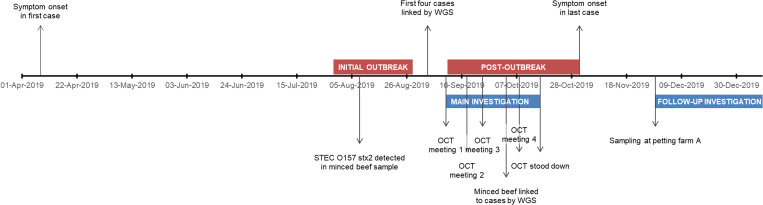
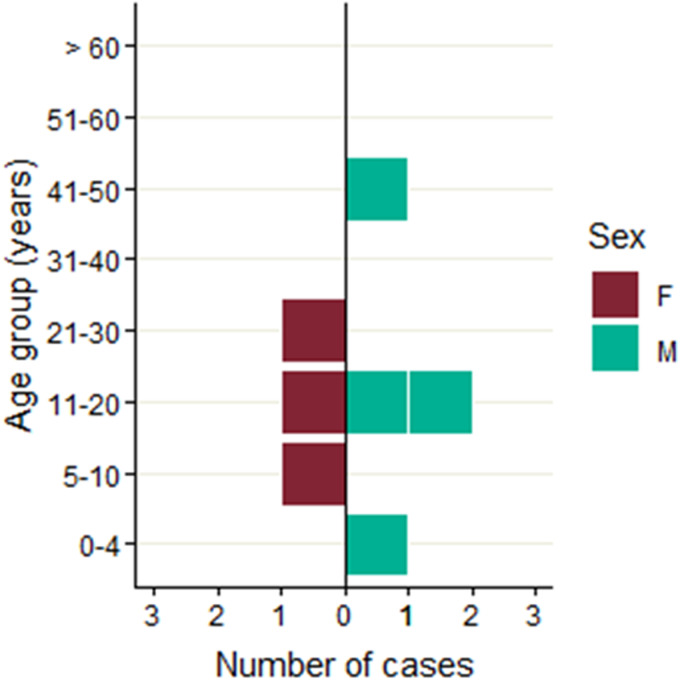
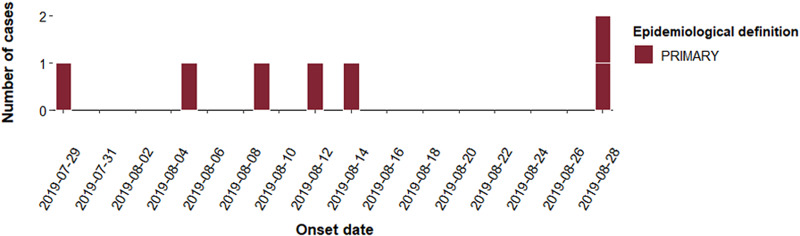
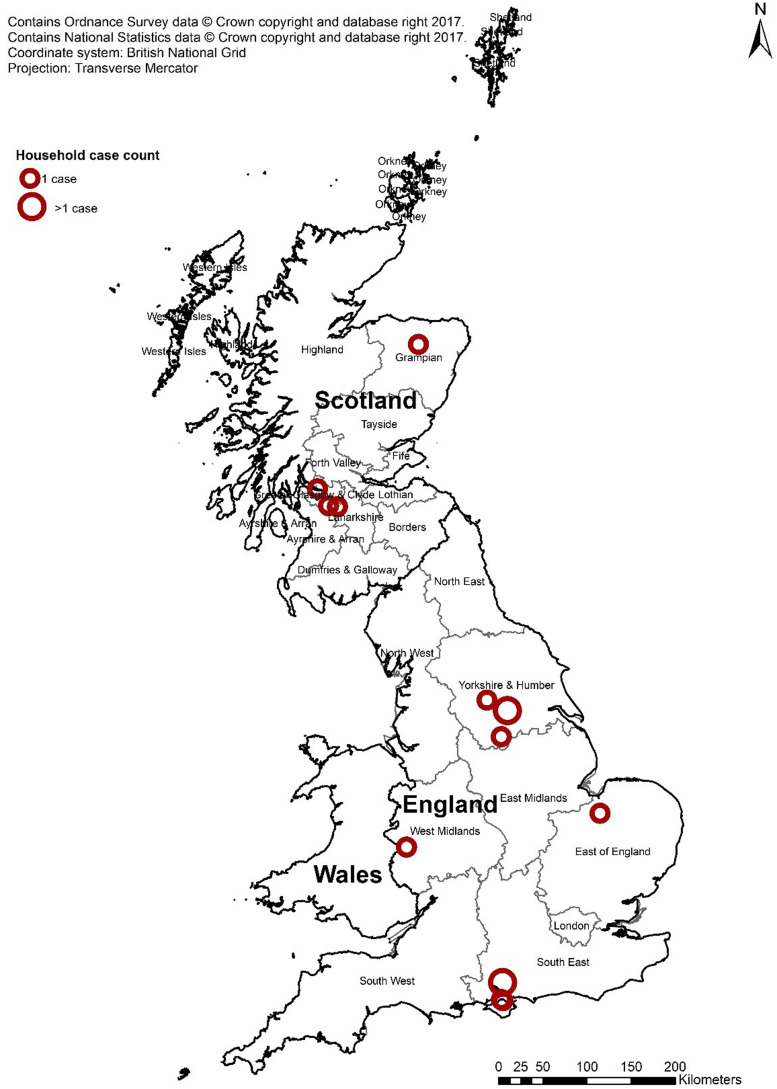
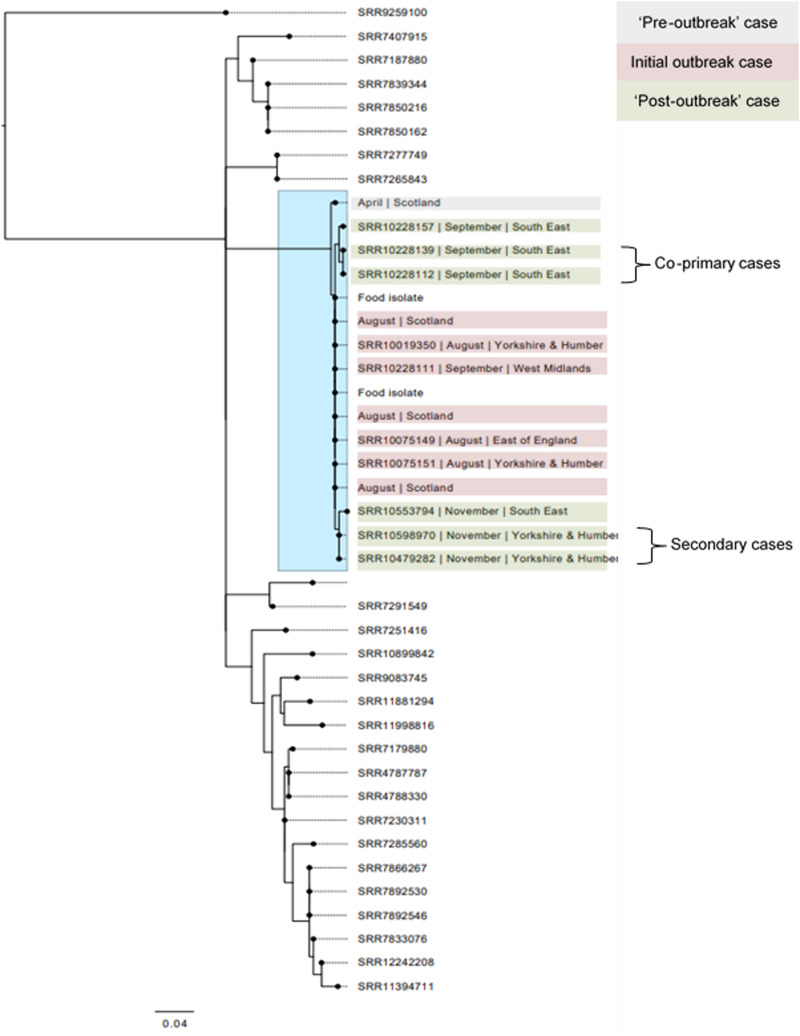
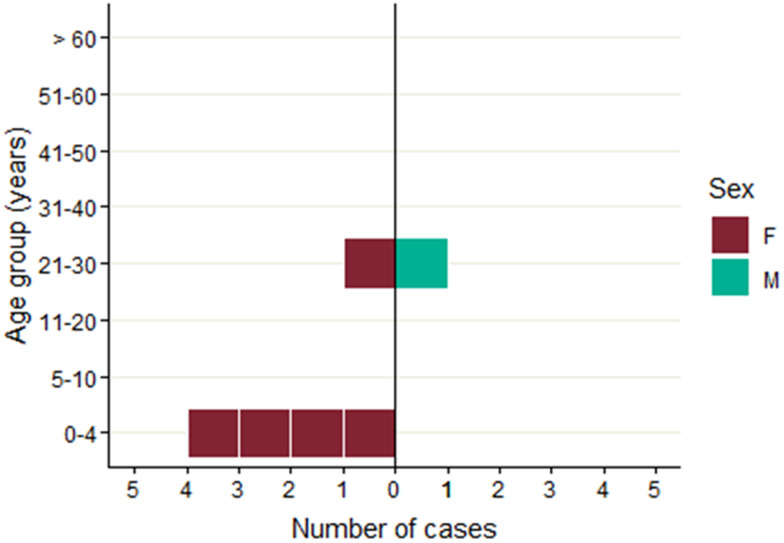
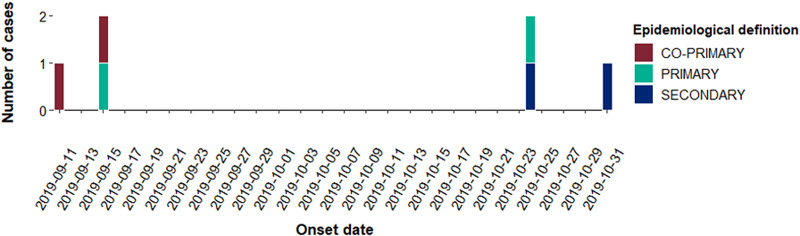
In August 2019, public health surveillance systems in Scotland and England identified seven, geographically dispersed cases infected with the same strain (defined as isolates that fell within the same five single nucleotide polymorphism single linage cluster) of Shiga toxin-producing Escherichia coli O157:H7. Epidemiological analysis of enhanced surveillance questionnaire data identified handling raw beef and shopping from the same national retailer (retailer A) as the common exposure. Concurrently, a microbiological survey of minced beef at retail identified the same strain in a sample of minced beef sold by retailer A, providing microbiological evidence of the link. Between September and November 2019, a further four primary and two secondary cases infected with the same strain were identified; two cases developed haemolytic uraemic syndrome. None of the four primary cases reported consumption of beef from retailer A and the transmission route of these subsequent cases was not identified, although all four primary cases visited the same petting farm. Generally, outbreaks of STEC O157:H7 in the UK appear to be distinct, short-lived events; however, on-going transmission linked to contaminated food, animals or environmental exposures and person-to-person contact do occur. Although outbreaks of STEC caused by contaminated fresh produce are increasingly common, undercooked meat products remain a risk of infection.
Overview
The claims and statistics of this paper haven’t been checked yet.
Free: it reads the open-access text and checks the first 5 claims that cite a source we can check. Create a free account to check every claim.
Integrity signals
Registry
Cites
Statistics
Figures
Verification
Claims the paper makes
The claims and statistics of this paper haven’t been checked yet.
Free: it reads the open-access text and checks the first 5 claims that cite a source we can check. Create a free account to check every claim.
Claims other papers make about this one
Each is checked against this paper’s own text: does it say what the citing paper says it does?
The source backs part of the claim, not all of it — or backs it for a different population, condition or comparison.
In the citing paper
“Undercooked meat consumption is also linked to the transmission of Escherichia coli pathogenic strains responsible for gastrointestinal symptoms, such as E. coli O157:H7 and other Shiga toxin-producing E. coli (STEC).”
From Assessing food safety practices and foodborne illness risk factors in Brazilian households. (2025) · cites this paper as [65]
Experimental — accuracy not yet measured
Self-check
Percentages, sums and reported differences re-computed from the paper’s own numbers.
The self-check needs the paper’s full text.
Citations
Cites
Childhood Hemolytic Uremic Syndrome, United Kingdom and Ireland
Lynn, R. M., O'Brien, S. J., Taylor, C. M., Adak, G. K., Chart, H., Cheasty, T., Coia, J. E., Gillespie, I. A., Locking, M. E., Reilly, W. J., et al. (2005) · Emerging Infectious Diseases · doi:10.3201/eid1104.040833 · Cited by 199 · cited 1×
“In England, over one third of cases are hospitalised, and a subset of patients develop haemolytic uraemic syndrome (HUS) characterised by renal dysfunction, and/or cardiac and neurological complications, that can be fatal (2, 3).”
BackgroundWhole-Genome Sequencing for National Surveillance of Shiga Toxin–Producing Escherichia coli O157
Dallman, T. J., Byrne, L., Ashton, P. M., Cowley, L. A., Perry, N. T., Adak, G., Petrovska, L., Ellis, R. J., Elson, R., Underwood, A., et al. (2015) · Clinical Infectious Diseases · doi:10.1093/cid/civ318 · Cited by 190 · cited 3×
“For every laboratory-confirmed case of STEC O157:H7, a detailed history is obtained for the 7 days prior to onset of illness using an enhanced surveillance questionnaire (ESQ), and isolates of STEC O157:H7 linked to each confirmed case are genome sequenced [6, 7].”
BackgroundMethodInfluentialSelf-citationPijnacker, R., Dallman, T. J., Tijsma, A. S. L., Hawkins, G., Larkin, L., Kotila, S., Amore, G., Amato, E., Suzuki, P. M., Denayer, S., et al. (2019) · The Lancet Infectious Diseases · doi:10.1016/s1473-3099(19)30047-7 · Cited by 141 · cited 1×
“On-going transmission of “outbreak” strains of Salmonella species has also been observed (21, 22).”
BackgroundSelf-citationBYRNE, L., JENKINS, C., LAUNDERS, N., ELSON, R., & ADAK, G. K. (2015) · Epidemiology and Infection · doi:10.1017/s0950268815000746 · Cited by 117
Self-citationHaemolytic-uraemic syndrome: clinical experience of an outbreak in the West Midlands.
Taylor, C. M., White, R. H. R., Winterborn, M. H., & Rowe, B. (1986) · BMJ · doi:10.1136/bmj.292.6534.1513 · Cited by 108 · cited 1×
“Shiga toxin-producing Escherichia coli (STEC) O157:H7 emerged as a gastrointestinal pathogen of public health concern in the early 1980s (1).”
BackgroundMikhail, A. F. W., Jenkins, C., Dallman, T. J., Inns, T., Douglas, A., Martín, A. I. C., FOX, A., Cleary, P. R., Elson, R., & Hawker, J. I. (2017) · Epidemiology and Infection · doi:10.1017/s0950268817002874 · Cited by 79 · cited 1×
“For the most part, outbreaks of STEC O157:H7 in the UK appear to be distinct, short-lived events; however, the phenomenon of transient on-going transmission has been observed previously in outbreaks linked to both contaminated food and environmental exposures [13, 15, 20].”
BackgroundSelf-citationChattaway, M. A., Dallman, T. J., Gentle, A., Wright, M. J., Long, S. E., Ashton, P., Perry, N. T., & Jenkins, C. (2016) · Frontiers in Microbiology · doi:10.3389/fmicb.2016.00258 · Cited by 78 · cited 1×
“WGS was undertaken as described previously (7, 8).”
MethodSelf-citationShiga Toxin–ProducingEscherichia coliO157, England and Wales, 1983–2012
Adams, N. L., Byrne, L., Smith, G. A., Elson, R., Harris, J. P., Salmon, R. L., Smith, R. M. M., O’Brien, S. J., Adak, G. K., & Jenkins, C. (2016) · Emerging infectious diseases · doi:10.3201/eid2204.151485 · Cited by 77 · cited 2×
“The relative importance of different vehicles in causing outbreaks in England has changed over time (10).”
BackgroundSelf-citationGobin, M., Hawker, J. I., Cleary, P. R., Inns, T., Gardiner, D., Mikhail, A. F. W., McCormick, J., Elson, R., Ready, D. R., Dallman, T. J., et al. (2018) · Eurosurveillance · doi:10.2807/1560-7917.es.2018.23.18.17-00197 · Cited by 61
Self-citationJenkins, C., Dallman, T. J., & Grant, K. (2019) · Eurosurveillance · doi:10.2807/1560-7917.es.2019.24.4.1800346 · Cited by 61 · cited 2×
“This approach has led to the resolution of outbreaks of STEC O157:H7 caused by a wide range of contaminated food vehicles, and common animal/environmental exposures, mostly associated with relatively large temporally related clusters of cases [4].”
BackgroundSelf-citationKanagarajah, S., Waldram, A., Dolan, G., Jenkins, C., Ashton, P. M., Carrion Martin, A. I., Davies, R., Frost, A., Dallman, T. J., De Pinna, E. M., et al. (2018) · Food Microbiology · doi:10.1016/j.fm.2017.04.005 · Cited by 57 · cited 1×
“On-going transmission of ‘outbreak’ strains of Salmonella species has also been observed [21, 22].”
BackgroundSelf-citationButcher, H. L., Elson, R., Chattaway, M. A., FEATHERSTONE, C. A., Willis, C., Jorgensen, F., Dallman, T. J., Jenkins, C., McLauchlin, J., Beck, C., et al. (2016) · Epidemiology and Infection · doi:10.1017/s0950268816000509 · Cited by 55 · cited 1×
“On-farm sampling of cattle has proven useful for establishing farm to fork transmission during previous outbreak investigations (15, 18, 19), however, information tracing the animals back to individual farms was not made available to the IMT.”
BackgroundSelf-citationTreacy, J., Jenkins, C., Paranthaman, K., Jorgensen, F., Mueller-Doblies, D., Anjum, M. F., Kaindama, L., Hartman, H. B., Kirchner, M. J., Carson, T., et al. (2019) · Eurosurveillance · doi:10.2807/1560-7917.es.2019.24.16.1800191 · Cited by 49
Self-citationEscherichia coliO157 Infection and Secondary Spread, Scotland, 1999–2008
Locking, M. E., Pollock, K. G. J., Allison, L. J., Rae, L., Hanson, M., & Cowden, J. M. (2011) · Emerging infectious diseases · doi:10.3201/eid1703.100167 · Cited by 43 · cited 3×
“WGS was undertaken as described previously (7, 8).”
BackgroundMethodSelf-citationE. coli O157 outbreaks in the United Kingdom: past, present, and future
Pennington, H. (2014) · Infection and Drug Resistance · doi:10.2147/idr.s49081 · Cited by 41
Farm-to-fork investigation of an outbreak of Shiga toxin-producing Escherichia coli O157
Wilson, D., Dolan, G. P., Aird, H. C., Sorrell, S., Dallman, T. J., Jenkins, C., Robertson, L. J., & Gorton, R. (2018) · Microbial Genomics · doi:10.1099/mgen.0.000160 · Cited by 39 · cited 2×
“On-farm sampling of cattle has proven useful for establishing farm to fork transmission during previous outbreak investigations (15, 18, 19), however, information tracing the animals back to individual farms was not made available to the IMT.”
BackgroundSelf-citationHolmes, A. M., Dallman, T. J., Shaaban, S., Hanson, M., & Allison, L. J. (2017) · Journal of Clinical Microbiology · doi:10.1128/jcm.01388-17 · Cited by 28 · cited 1×
“Prior to the implementation of WGS in the UK, the relatedness of isolates of STEC O157:H7 epidemiologically linked to the same outbreak was evaluated (5, 6).”
BackgroundSelf-citationSinclair, C., Jenkins, C., Warburton, F. G., Adak, G. K., & Harris, J. P. (2016) · Epidemiology and Infection · doi:10.1017/s0950268816003009 · Cited by 27
Self-citationHenry, M. K., Tongue, S. C., Evans, J. A., Webster, C. A., McKendrick, I. J., Morgan, M., Willett, A., Reeves, A., Humphry, R. W., Gally, D. L., et al. (2017) · Epidemiology and Infection · doi:10.1017/s0950268817002151 · Cited by 27
Investigation into a national outbreak of STEC O157:H7 associated with frozen beef burgers, UK, 2017
Byrne, L., Kaindama, L., Bentley, M., Jenkins, C., Aird, H. C., Oliver, I., & Paranthaman, K. (2020) · Epidemiology and Infection · doi:10.1017/s0950268820001582 · Cited by 24 · cited 1×
“However, outbreaks linked to meat products do still occur in the UK, including outbreaks linked to venison, beef burgers and cross-contamination of raw and cooked meat products on a butcher’s premise (15-17).”
BackgroundSelf-citationOutbreak ofEscherichia coliO157 Phage Type 32 linked to the consumption of venison products
Smith‐Palmer, A., Hawkins, G., Browning, L., Allison, L. J., Hanson, M., Bruce, R., McElhiney, J., & Horne, J. H. (2018) · Epidemiology and Infection · doi:10.1017/s0950268818001784 · Cited by 14 · cited 1×
“However, outbreaks linked to meat products do still occur in the UK, including outbreaks linked to venison, beef burgers and cross-contamination of raw and cooked meat products on a butcher’s premise (15-17).”
BackgroundSelf-citationSharp, A., Smout, E. M., Byrne, L., Greenwood, R., Abdoollah, R., Hutchinson, C. E., Jenkins, C., Arunachalam, N., Padfield, S., Hughes, G., et al. (2020) · Zoonoses and Public Health · doi:10.1111/zph.12744 · Cited by 9 · cited 1×
“For the most part, outbreaks of STEC O157:H7 in the UK appear to be distinct, short-lived events; however, the phenomenon of transient on-going transmission has been observed previously in outbreaks linked to both contaminated food and environmental exposures [13, 15, 20].”
BackgroundSelf-citation
Cited by
Forinová, M., Pilipenco, A., Lynn, N. S., Jr., Obořilová, R., Šimečková, H., Vrabcová, M., Spasovová, M., Jack, R. L., Horák, P., Houška, M., et al. (2024) · Food Control · doi:10.1016/j.foodcont.2024.110695 · Cited by 38
Advancements in nanozyme-enhanced lateral flow assay platforms for precision in food authentication
Wu, Q., & Kamruzzaman, M. (2024) · Trends in Food Science & Technology · doi:10.1016/j.tifs.2024.104472 · Cited by 36
Chan, Y.-W., Hoban, A., Moore, H. L., Greig, D. R., Painset, A., Jorgensen, F., Chattaway, M. A., Jenkins, C., Balasegaram, S., McCormick, J., et al. (2022) · Journal of Food Protection · doi:10.1016/j.jfp.2022.100027 · Cited by 19
Self-citationHolzer, K., Marongiu, L., Detert, K., Venturelli, S., Schmidt, H., & Hoelzle, L. E. (2025) · International Journal of Food Microbiology · doi:10.1016/j.ijfoodmicro.2025.111267 · Cited by 17
Kintz, E. N., Brainard, J. S., Vanderes, M., Vivancos, R., Byrne, L., Butt, S., Jenkins, C., Elson, R., LAKE, I. R., & Hunter, P. R. (2023) · Pathogens and Global Health · doi:10.1080/20477724.2023.2197672 · Cited by 11
Self-citation
Metadata
- Authors
- Butt, S., Smith-Palmer, A., Shand, A., McDonald, E., Allison, L., Maund, J., Fernandes, A., Vishram, B., Greig, D. R., Jenkins, C., & Elson, R.
- Affiliations
- Public Health England (GB)
- Food Standards Scotland (GB)
- Health Protection Scotland (GB)
- Corresponding author
- Elson, Richard
- ORCID
- Venue
- Epidemiology and Infection
- Publisher
- Cambridge University Press (CUP)
- Published
- 2021
- Volume
- 149
- Pages
- e147-e147
- ISSN
- 0950-2688 (ISSN-L)
- 1469-4409
- PMC
- PMC8251666
- OpenAlex
- W3169736604
- Cited by
- 11
- References
- 25
- Citations by year
- 2026: 1 · 2025: 3 · 2024: 5 · 2023: 1 · 2022: 1
- FWCI
- 1.09
- Type
- journal article
- Language
- en
- Open access
- gold
- doi.org
- Locations
- Epidemiology and Infection (publishedVersion, cc-by)
- PubMed Central (publishedVersion, cc-by)
- PubMed (publishedVersion)
- UEA Digital Repository (University of East Anglia) (submittedVersion)
- Funders
- National Institute for Health Research Health Protection Research Unit
- National Institute for Health and Care Research (NIHR-INF-1681)
- Department of Health and Social Care
- University of Warwick
- Public Health England
- Topics
- Life Sciences › Immunology and Microbiology › Microbiology › Escherichia coli research studies
- Life Sciences › Agricultural and Biological Sciences › Food Science › Salmonella and Campylobacter epidemiology
- Life Sciences › Agricultural and Biological Sciences › Food Science › Listeria monocytogenes in Food Safety
- Keywords
- Shiga toxin-producing Escherichia coli O157:H7, foodborne outbreak, raw beef, ground beef, retail food contamination, hemolytic uremic syndrome, human-to-human transmission, undercooked meat, disease surveillance
- MeSH terms
- Red Meat, Adolescent, Adult, Animals, Cattle, Child, Child, Preschool, Disease Outbreaks, DNA, Bacterial, England, Escherichia coli Infections, Female, Food Microbiology, Foodborne Diseases, Humans, Infant, Male, Middle Aged, Phylogeny, Scotland, Molecular Epidemiology, Escherichia coli O157, Young Adult, Epidemiological Monitoring
About these checks
Registry, retraction, Cites and statistics results are computed, not judged, with one exception: a printed reference that no index lists is read once by a model before it counts as a citation error. Claims are extracted by a model and kept only when their quote appears verbatim in the text; each cited source is then checked, with a model’s help, for whether it says what the claim relies on. Those verdicts can be wrong — read the claim’s quote and the cited source before relying on one.
Statistics and arithmetic are recomputed, not judged.
Confidence bands are shown only for fields calibrated on our annotated test set. None is calibrated yet, so no band is shown.
What counts as a claim ›How we measure confidence ›How we check this ›
Are you an author, or do you see a problem with this page? Request a review
Data sources
Bibliographic data: Semantic Scholar, OpenAlex, Crossref.
Contains information from the Semantic Scholar Academic Graph Datasets, made available under the ODC Attribution License (ODC-BY 1.0).
Semantic Scholar’s data is described in: Kinney, R., et al. (2023). The Semantic Scholar Open Data Platform. arXiv:2301.10140.
