

Alternative Pasts and Colonial Engagements in the North: The Materiality and Meanings of the Pajala ‘Runestone’ (Vinsavaara Stone), Northern Sweden
Open accessThe DOI matches its Crossref record; 37 of the 43 references it cites were found in a registry or an index, and 4 are not checked yet; none of the 65 sources its claims cite is checked for support yet.
Abstract
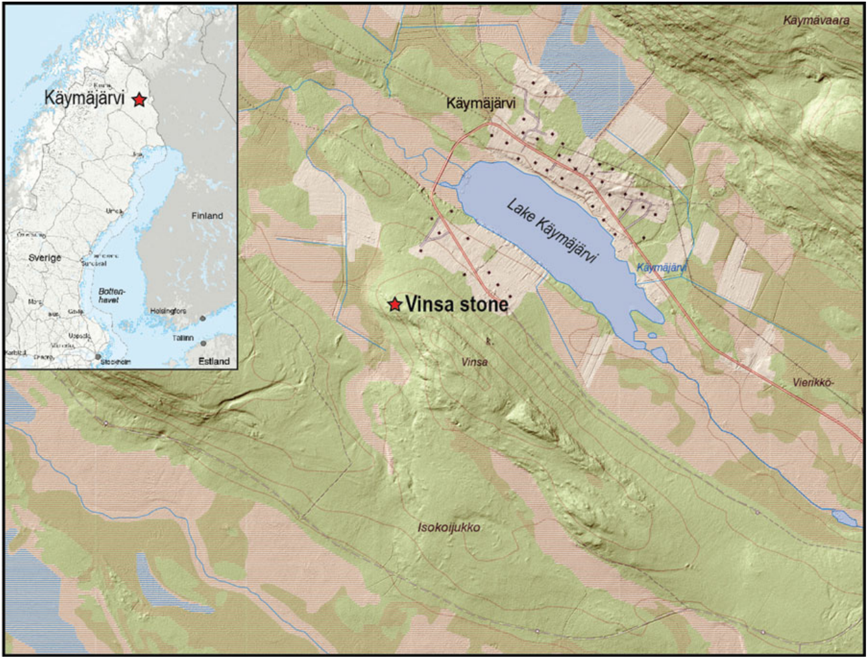
The unknown and exotic North fascinated European minds in the early modern period. A land of natural and supernatural wonders, and of the indigenous Sámi people, the northern margins of Europe stirred up imagination and a plethora of cultural fantasies, which also affected early antiquarian research and the period understanding of the past. This article employs an alleged runestone discovered in northernmost Sweden in the seventeenth century to explore how ancient times and northern margins of the continent were understood in early modern Europe. We examine how the peculiar monument of the Vinsavaara stone was perceived and signified in relation to its materiality, landscape setting, and the cultural-cosmological context of the Renaissance–Baroque world. On a more general level, we use the Vinsavaara stone to assess the nature and character of early modern antiquarianism in relation to the period's nationalism, colonialism and classicism.
Checked 2026-11-22 · 4 references not checked yet
Overview
CoChat Summary
## TL;DR
The paper reinterprets the Pajala/Vinsavaara “runestone” as a natural dolostone formation whose apparent inscriptions come from geology and weathering, not human carving. It uses the stone’s long reception history to show how early modern Swedish antiquarianism in the North was shaped by nationalism, colonialism, and classicizing ideas.
## Key findings
- The Vinsavaara stone is described as a natural formation: “a natural rock with no physical traces of human manipulation,” with the “script” resulting from weathering.
- The stone’s apparent runes are linked to its geology: layered dolostone, tectonic history, skarn-related alteration, and ongoing weathering; the paper concludes that “the rock does not show any trace of human intervention.”
- Early modern observers interpreted the stone through Gothicist and classical frameworks, seeing it as possible evidence for ancient writing, sun worship, or a deep past, while later visitors alternated between naturalistic and “alternative historical” readings.
- The case is used to argue that northern Lapland/Sápmi was treated as a “symbolic resource” in Swedish nation-building and colonial discourse, with antiquarian work helping to assimilate northern pasts into southern/European narratives.
## Methods
- The paper is a historical-interpretive case study of the Vinsavaara stone, combining early modern textual reception with analysis of the site’s material and landscape context.
- It draws on descriptions of the stone from the 1687 expedition, later visits and interpretations, and the authors’ own site visit and observations.
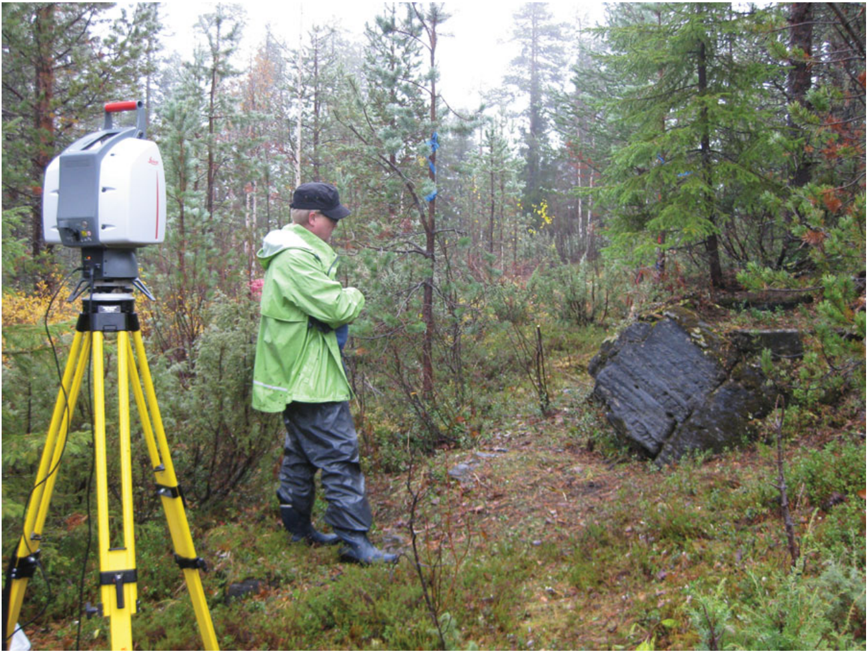
- The authors report visual inspection of the rock faces and in situ chemical analysis using a Bruker SD-IV portable XRF spectrometer, alongside geological contextualization from published regional studies.
## Limitations
- The paper says the presumed significance of the stone to the Sámi is “a more difficult question to answer without carrying out archaeological excavations around the stone.”
- The nature of a nearby moss-covered cairn or heap of rocks is “currently unknown.”
- The text also makes evident that early modern interpretations relied on second-hand reports and cultural frameworks rather than direct evidence of human making; this is an evident limitation of the historical record, not stated as a formal study limitation.
Model-written summary. Check it against the paper before relying on it.
Integrity signals
Registry
Cites
Statistics
Figures
Verification
Claims the paper makes
0 Valid · 2 Not valid · 52 Not checked · 48 Own results and interpretations
A result the paper reports from its own data — it cites no other source for it, so there is none to check. The quote shows it is in the paper.
In the paper
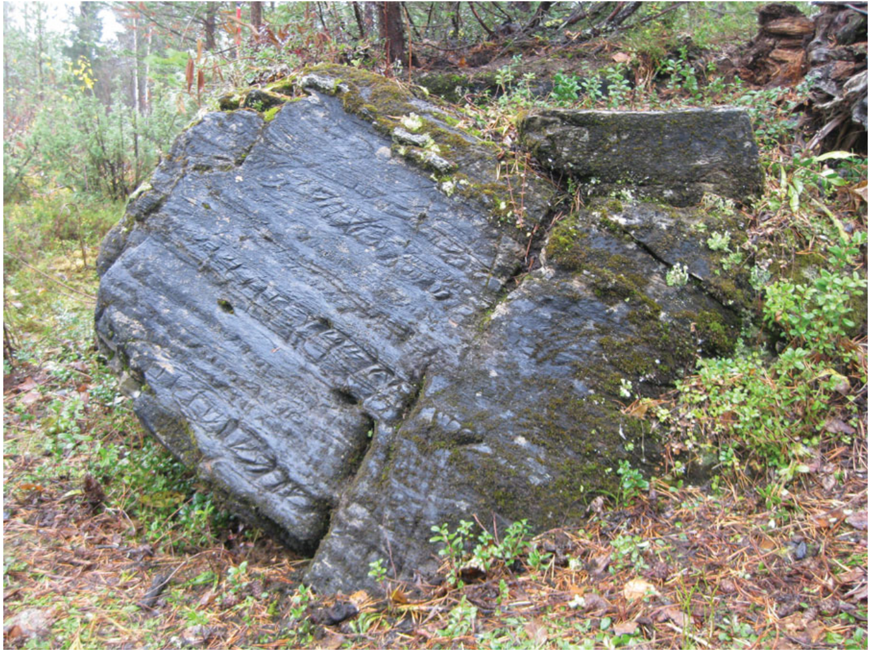
“The Vinsavaara stone is characterized by 2-6 cm thick layers of beige dolostone with alternating thinner layers of light grey rock containing somewhat elevated quantities of silicon, potassium and iron with substantially lower quantities of calcium and phosphorus.”
plainSingle case- Asserted: passes — The authors put it forward as true.
- Checkable: passes — It can be checked against evidence.
- Load-bearing: unclear — It is unclear whether the paper’s conclusions depend on it.
- Based: passes — The paper gives a reason why it holds.
In the paper
“RudbeckandMaupertuisreported that the locals believed the stone to contain secret (ancient) knowledge (Pekonen 2005, 26).”
What the sources say
- Not matchedcites Pekonen 2005, 26
An author–year citation the paper’s reference list doesn’t settle. We don’t search these by name.
plain- Asserted: passes — The authors put it forward as true.
- Checkable: passes — It can be checked against evidence.
- Load-bearing: unclear — It is unclear whether the paper’s conclusions depend on it.
- Based: passes — The paper gives a reason why it holds.
- Not matched
A result the paper reports from its own data — it cites no other source for it, so there is none to check. The quote shows it is in the paper.
In the paper
“The surface is also characterized by horizontal, vertical and diagonal cracks that bear witness to the complicated geological history of the Käymäjärvi area.”
plainstates a causeSingle case- Asserted: passes — The authors put it forward as true.
- Checkable: passes — It can be checked against evidence.
- Load-bearing: unclear — It is unclear whether the paper’s conclusions depend on it.
- Based: passes — The paper gives a reason why it holds.
A result the paper reports from its own data — it cites no other source for it, so there is none to check. The quote shows it is in the paper.
In the paper
“On this side the c. 3 cm high 'rune-grooves' are more pronounced and either vertical or diagonal in orientation.”
plainSingle case- Asserted: passes — The authors put it forward as true.
- Checkable: passes — It can be checked against evidence.
- Load-bearing: unclear — It is unclear whether the paper’s conclusions depend on it.
- Based: passes — The paper gives a reason why it holds.
A result the paper reports from its own data — it cites no other source for it, so there is none to check. The quote shows it is in the paper.
In the paper
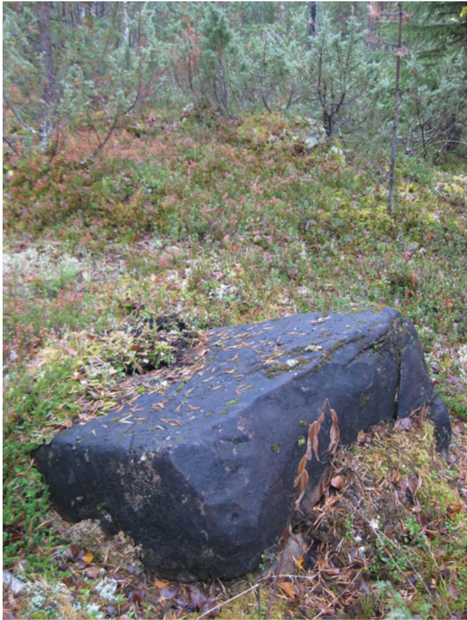
“It is quite similar in appearance to rock surface B, but completely lacks markings that could have been mistaken for runes.”
hedgedSingle case- Asserted: passes — The authors put it forward as true.
- Checkable: passes — It can be checked against evidence.
- Load-bearing: unclear — It is unclear whether the paper’s conclusions depend on it.
- Based: passes — The paper gives a reason why it holds.
31 more claims
Create a free account to see all 102 claims and every source verdict.
- Probably not a substantial claim. 39
- It may state two separate claims as one. 37
Citations
Cites
The Perception of the Environment
Ingold, T. (2002) · doi:10.4324/9780203466025 · Cited by 3,356
Ringmar, E. (1996) · Cambridge University Press eBooks · doi:10.1017/cbo9780511557705 · Cited by 308
Historia de gentibus septentrionalibus, 1558
(2023) · doi:10.1163/9789004525863-cp011681 · Cited by 171
Assimilating New Worlds in the Sixteenth and Seventeenth Centuries
Ryan, M. T. (1981) · Comparative Studies in Society and History · doi:10.1017/s0010417500013542 · Cited by 160 · cited 3×
“…increasingly into contact with ‘Otherness’, as represented by peoples and cultures fundamentally different from the European world, which conceivably triggered the interest in roots and origins in the Old World, as expressed in the fascination with the ancient Graeco-Roman world (Ryan 1981, 532).”
BackgroundInfluentialJasper, J. M., & Ringmar, E. (1997) · Contemporary Sociology A Journal of Reviews · doi:10.2307/2654682 · Cited by 129
Toward a New Model of Renaissance Anachronism
Nagel, A., & Wood, C. S. (2005) · The Art Bulletin · doi:10.1080/00043079.2005.10786249 · Cited by 104 · cited 1×
“By means of artifacts, the past participated in the present’ (Nagel & Wood 2005, 408).”
BackgroundImages as Evidence in Seventeenth-Century Europe
Burke, P. (2003) · Journal of the History of Ideas · doi:10.1353/jhi.2003.0023 · Cited by 102 · cited 2×
“By modern standards, early modern antiquarians knew very little about ancient cultures, classical or otherwise, and their visions of the past worlds can appear fabulous and even downright strange today, as illustrated by the ‘alternative histories’ that scholars weaved in seventeenth-century Europe (Burke 2003).”
BackgroundÅkerman, S. (1991) · doi:10.1163/9789004246706 · Cited by 101
The dark side of the grid: power and urban design
Grant, J. (2001) · Planning Perspectives · doi:10.1080/02665430152469575 · Cited by 100
Scandinavian Colonialism and the Rise of Modernity: Small Time Agents in a Global Arena
(2013) · Contributions To Global Historical Archaeology · doi:10.1007/978-1-4614-6202-6 · Cited by 92
Sörlin, S. (2000) · Osiris · doi:10.1086/649318 · Cited by 84
Amber, Avallon, and Apollo's Singing Swan
Ahl, F. M. (1982) · The American Journal of Philology · doi:10.2307/294518 · Cited by 73 · cited 1×
“The association of northerners with Apollo is not coincidental in that there is a classical tradition that regards Apollo as a Hyperborean god originating in the North, as reflected in, for instance, his ‘northern’ emblems amber and the whooper swan (Ahl 1982; Davidson 2005, 24).”
BackgroundMarble Past, Monumental Present: Building With Antiquities in the Mediaeval Mediterranean
Greenhalgh, M. (2009) · doi:10.1163/ej.9789004170834.i-634 · Cited by 73
Colonization and the Commodification of Nature
Mrozowski, S. A. (1999) · International Journal of Historical Archaeology · doi:10.1023/a:1021957902956 · Cited by 72 · cited 1×
“Both practices emphasized the separation of, and the boundary between, nature and culture, as well as the objectification and commodification of the environment, hence mediating a modern western way of seeing, categorizing and understanding the world (cf. Ingold 2000; Mrozowski 1999).”
BackgroundEgyptian Oedipus: Athanasius Kircher and the Secrets of Antiquity
Stolzenberg, D. (2013) · doi:10.7208/chicago/9780226924151.001.0001 · Cited by 68
Ottenheym, K. A. (2003) · Scandinavian Journal of History · doi:10.1080/03468750310003802 · Cited by 66
The Renaissance in national context
(1992) · Choice Reviews Online · doi:10.5860/choice.30-0483 · Cited by 38
Historical Archaeologies of Capitalism
Leone, M. P., & Knauf, J. E. (2015) · Contributions To Global Historical Archaeology/Contributions to global historical archaeology · doi:10.1007/978-3-319-12760-6 · Cited by 34
Akkerman, A. (2000) · Journal of Urban Design · doi:10.1080/713683970 · Cited by 32 · cited 1×
“A striving for regularity, symmetry and geometric order—as exemplified by the grid plan— characterized Renaissance urban planning (e.g. Akkerman 2000).”
BackgroundFinding Atlantis: a true story of genius, madness, and an extraordinary quest for a lost world
(2006) · Choice Reviews Online · doi:10.5860/choice.43-5420 · Cited by 31
Gothicism and Early Modern Historical Ethnography
Neville, K. (2009) · Journal of the History of Ideas · doi:10.1353/jhi.0.0036 · Cited by 27
Kuusela, J.-M., Nurmi, R., & Hakamäki, V. (2016) · Norwegian Archaeological Review · doi:10.1080/00293652.2016.1260048 · Cited by 27
Between Utopia and Dystopia: Colonial Ambivalence and Early Modern Perception of Sápmi
Naum, M. (2016) · Itinerario · doi:10.1017/s016511531600067x · Cited by 25 · cited 12×
“Lapland/Sápmi thus emerged as an arena for the Crown’s dreams of transforming an ‘uncultivated’ land and its ‘savage’ inhabitants into a civilized and productive part of the realm (see Naum 2016).”
BackgroundInfluentialThe Pagan Dream Of The Renaissance
(2003) · Choice Reviews Online · doi:10.5860/choice.40-5749 · Cited by 25
Nordin, J. M. (2012) · Post-Medieval Archaeology · doi:10.1179/0079423612z.0000000007 · Cited by 22 · cited 6×
“Classicizing tendencies in cultural landscapes are in evidence also in Lapland/Sápmi from early on in, for instance, the spatial organization of the town that the Swedish Crown planned to found in Arjeplog and in the silver and ironworks established following the discovery of silver ore in Nasafjäll (Nordin 2012, 150–…”
BackgroundInfluentialMaps and magic in Renaissance Europe
Herva, V.-P. (2010) · Journal of Material Culture · doi:10.1177/1359183510373979 · Cited by 22 · cited 1×
“…aspects of antiquarianism, including the study of ancient languages and scripts, must be considered within this broader cosmological view in which reality was pregnantwith correspondences, analogies and sympathies (e.g. Herva 2010; Karlsson 2009, 212–13; Livingstone 1988, 277; Thomas 1971, 337–8).”
BackgroundSelf-citationLivingstone, D. N. (1988) · History of Science · doi:10.1177/007327538802600302 · Cited by 19 · cited 1×
“…aspects of antiquarianism, including the study of ancient languages and scripts, must be considered within this broader cosmological view in which reality was pregnantwith correspondences, analogies and sympathies (e.g. Herva 2010; Karlsson 2009, 212–13; Livingstone 1988, 277; Thomas 1971, 337–8).”
BackgroundWhat's on the Map?: re-assessing the first urban map of Torneå and early map-making in Sweden
Herva, V.-P., & Ylimaunu, T. (2010) · Scandinavian Journal of History · doi:10.1080/03468750903381613 · Cited by 18
Self-citationGothic Patriotism and Olof Rudbeck
Ekman, E. (1962) · The Journal of Modern History · doi:10.1086/238996 · Cited by 17
Nordin, J. M. (2013) · Journal of Material Culture · doi:10.1177/1359183513483910 · Cited by 16 · cited 4×
“While conventionally ignored or overlooked in Scandinavian historical narratives, the Swedish perceptions of, attitudes to, and activities in Lapland/Sápmiwere essentially colonialist in character, especially from the seventeenth century onwards (Naum&Nordin 2013).”
BackgroundInfluentialGeographies of the Romantic North
Byrne, A. (2013) · doi:10.1057/9781137311320 · Cited by 15
Nordin, J. M. (2015) · Contributions To Global Historical Archaeology · doi:10.1007/978-3-319-12760-6_11 · Cited by 14
Swedish Cadastral Mapping 1628-1700: A Neglected Legacy
Baigent, E. (1990) · The Geographical Journal · doi:10.2307/635437 · Cited by 11 · cited 1×
“Tresk’s survey was but a part of a much more extensive map-making campaign that the Crown had launched with the founding of the Swedish land survey in 1628 (Baigent 1990).”
BackgroundPhysical and Cultural Space in Pre-Industrial Europe
(2011) · Nordic Academic Press eBooks · doi:10.2307/jj.919504 · Cited by 8
Geographies of the Romantic north: science, antiquarianism, and travel, 1790-1830
Byrne, A. (2014) · Choice Reviews Online · doi:10.5860/choice.51-4808 · Cited by 8
Herva, V.-P., & Nordin, J. M. (2015) · Journal of Social Archaeology · doi:10.1177/1469605314550743 · Cited by 7 · cited 2×
“…urban planning and architecture especially from around the mid seventeenth century onwards, whereas linguists and antiquarians were uncovering the connections between Scandinavian and classical languages, mythologies, religions, histories and geographies (see e.g. Herva & Nordin 2013; 2015).”
BackgroundSelf-citationBiermann, V. (2001) · Art History · doi:10.1111/1467-8365.00261 · Cited by 6 · cited 1×
“Queen Christina, for instance, presented herself as Pallas Athena and identified closely with Alexander the Great (Biermann 2001; McKeown 2009, 149).”
Reading and writing the Swedish Renaissance
McKeown, S. (2009) · Renaissance Studies · doi:10.1111/j.1477-4658.2009.00556.x · Cited by 6 · cited 2×
“Queen Christina, for instance, presented herself as Pallas Athena and identified closely with Alexander the Great (Biermann 2001; McKeown 2009, 149).”
BackgroundAlchemy of the Ancient Goths: Johannes Bureus’ Search for the Lost Wisdom of Scandinavia
Håkansson, H. (2012) · Early Science and Medicine · doi:10.1163/10.1163/15733823-175000a3 · Cited by 4 · cited 2×
“…Bureus, for instance, had developed ideas similar to Rudbeck in arguing that Abaris Hyperboreos, a sage and priest of Apollo in the Greek classical tradition, was a Swede from whom Pythagoras learned philosophy, linking rune staffs to the wand of Abaris (Anttila 2014, 61; Håkansson 2012, 511).”
BackgroundOliver, J., & Curtis, N. G. W. (2015) · Historical Archaeology · doi:10.1007/bf03376969 · Cited by 4
Puhakka, I. (2011) · Physical and Cultural Space in Pre-Industrial Europe · doi:10.2307/jj.919504.6
Twenty-five notes on pseudoscript in Italian art
NAGEL, A. (2011) · Res: Anthropology and aesthetics · doi:10.1086/resvn1ms23647792
Greenhalgh, C. M. B. (2008) · Marble Past, Monumental Present · doi:10.1163/ej.9789004170834.i-634.143
Research works printed but not linked: 37
- Bäärnhielm, 1976, I Norrland hava vi ett Indien: gruvdrift och kolonisation i Lappmarken under 1600-talet
- Baudou, E., 2004. Den nordiska arkeologin: historia och tolkningar . Stockholm: Kungl. Vitterhets-, Historieoch Antikvitetsakademien.
- Kihlstedt, P.G., P.G. Broman, B. Alm & J. Siira, 1973: Undersökning av karbonatbergarter inom Pajala kommun [A study of carboniferous rock in the Pajala area]. Stockholm: Kungliga Tekniska Högskolan, Institutionen för mineralberedning.
- Karlsson, T., 2009. Götisk kabbala och runisk alkemi: Johannes Bureus och den götiska esoterismen [The Gothic Kabbalah and runic alchemy: Johannes Bureus and Gothicist esotericism]. PhD thesis, University of Stockholm.
- Tacitus, 1914. Agricola. Germania. Dialogue on Oratory (trans. M. Hutton & W. Peterson, rev. R.M. Ogilvie, E.H. Warmington & M. Winterbottom). (Loeb Classical Library L035.) London: Heinemann.
- Anttila, T., 2014. The Power of Antiquity: The Hyperborean research tradition in early modern Swedish research on national antiquity . Oulu: University of Oulu. - Bäärnhielm, G., 1976. I Norrland hava vi ett Indien: gruvdrift och kolonisation i Lappmarken under 1600-talet [In Norrland we will have a West Indies: mining and colonization in Lapland in the 17th century]. Stockholm: Ordfront.
- Martinsson, O. & C. Wanhainen, 2013. Fe Oxide and Cu-Au Deposits in the Northern Norrbotten Ore District . (Excursion guidebook SWE5.) Uppsala: Sveriges geologiska undersökning.
- Enbuske, M., 2011. Tornionlaakson Käymäjärven riimukivi -tieteenhistorian fantasiaa [The runestone of Käymäjärvi in the River Tornio valley - on a fantasy in the history of science], in Harmaata näkyvissä: Kirsti Paavolan juhlakirja [Grey in sight: Festschrift to Kirsti Paavola], eds. J. Ikäheimo, R. Nurmi & R. Satokangas. Oulu: Kirsti Paavolan juhlakirjatoimikunta, 95-106.
- Wood, C.S., 2008. Forgery, Replica, Fiction: Temporalities of German Renaissance art . Chicago (IL): University of Chicago Press.
- Grigull, S., R. Berggren & C. Jönsson, 2014. Background information Käymäjärvi-Ristimella key area . (SGU-rapport 2014:30.) Uppsala: Sveriges geologiska undersökning.
- Andersson, B., 1997. Runor, magi, ideology: en idéhistorisk studie [Runes, magic, ideology: a study in the history of ideas]. Umeå: Umeå University.
- Dahlgren, S. & H. Norman, 1988. The Rise and Fall of New Sweden: Governor Risingh's journal 1654-1655 in its historical context . Uppsala: Almqvist & Wiksell.
- Carlson, L., M. Fjellström, A. Lundqvist & B. Niva, 1984. Käymäjärvi områdets geologi och malmuppslag [The geologyandorebodiesoftheKäymäjärviregion]. Sveriges geologiska AB, Division prospektering.
- Håkansson, H., 2014. Vid tidens ände: om stormaktstidens vidunderliga drömvärld och en profet vid dess yttersta rand [At the end of time: the monstrous dream-world of the era of greatness and a prophet on its extreme fringe]. Gothenburg: Makadam förlag.
- Knapp, A.B. & W. Ashmore, 1999. Archaeological landscapes: constructed, conceptualized, ideational, in Archaeologies of Landscape: Contemporary perspectives , eds. W. Ashmore & A.B. Knapp. Oxford: Blackwell, 1-30. - Kuusela, J.-M., R. Nurmi & V. Hakamäki, 2016. Co-existence and colonisation: re-assessing the settlement history of the pre-Christian Bothnian Bay coast. Norwegian Archaeological Review 49(2), 177-203.
- Schefferus, J., 1956 [1673]. Lappland [Latin original: Lapponia]. Uppsala: Gebers.
- Herva, V.-P. & J.M. Nordin, 2013. Classicism and knowing the world in early modern Sweden, in Relational Archaeologies: People, animals, things , ed. C. Watts. New York (NY): Routledge, 209-27. - Herva, V.-P. & J.M. Nordin, 2015. Unearthing Atlantis and performing the past: ancient things, alternative histories and the present past in the Baroque world. Journal of Social Archaeology 15(1), 116-35.
- Pekonen, O. & A. Vasak, 2014. Maupertuis en Laponie: à la recherche de la figure de la Terre [Maupertuis in Lapland: in search of the shape of the Earth]. Paris: Hermann Éditeurs.
- Sayre, G.M., 1998. The mound builders and the imagination of American antiquity in Jefferson, Bartram, and Chateaubriand. Early American Literature 33(3), 225-49.
- Nieminen, J., 2015. Vaiettu muinaisuus [The silenced antiquity]. Helsinki: Kirjaparoni.
- Davidson, P., 2005. The Idea of North . London: Reaktion Books.
- Schück, H., 1933. Torneåstenen [The Torneå stone]. Fornvännen 28, 257-62.
- Tobé, E., 1999. Maupertuis' 'Berättelse om en färd till det inre av Lappland för att finna ett gammalt minnesmärke' [Maupertuis's 'Account of a trip to the interior of Lapland in a pursuit of an ancient site']. Oknytt: Johan Nordlander-sällskapets tidskrift 1-4/1999, 1-46.
- SGU (Sveriges geologiska undersökning), 1977. Berggrundskartan 28 M Pajala NV. 1: 50 000 . Stockholm: LiberKartor.
- Gosden, C., 2004. Archaeology and Colonialism: Cultural contact from 5000 BC to the present . Cambridge: Cambridge University Press.
- Eriksson, G., 2002. Rudbeck 1630-1702: Liv, lärdom, dröm i barockens sverige [Rudbeck 1630-1702: Life, scholarship and dream in baroque Sweden]. Stockholm: Atlantis. - Godwin, J., 1996. Arktos: The polar myth in science, symbolism, and Nazi survival . Kempton (IL): Adventures Unlimited Press.
- Barkan, L., 1999. Unearthing the Past: Archaeology and aesthetics in the making of Renaissance culture . New Haven (CT): Yale University Press.
- Ahlberg, N., 2005. Stadsgrundningar och planförändringar: svensk stadsplanering 1521-1721 [Founding towns and altering town-plans: Swedish urban planning in 1521-1721]. Uppsala: University of Uppsala.
- Urry, J., 2002. The Tourist Gaze . London: Sage.
- Sarmela, M., 1994. Suomen perinneatlas [Finnish folklore atlas]. Helsinki: Finnish Literature Society.
- Andersson Burnett, L., 2010. Abode of Satan: the appeal of the magical and superstitious north in eighteenthcentury Britain. Northern Studies 41, 67-77.
- Diodorus Siculus, 1935. Library of History , vol. II: books 2.354.58 (trans. C.H. Oldfather). (Loeb Classical Library L303.) Cambridge (MA): Harvard University Press.
- Bergman, T., F. Hellström & M. Ripa, 2015. Norrbottens malm och mineral [Ores and minerals in Norrbotten]. (SGUrapport 2015:08.) Uppsala: Sveriges geologiska undersökning.
- Pekonen, O., 2005. Käymäjärven merkillinen kivi [The curious stone of Käymäjärvi]. Tieteessä tapahtuu 1/2005, 24-7.
- Eriksson, 2002, Rudbeck 1630–1702: Liv, lärdom, dröm i barockens sverige
- Thomas, K., 1971. Religion and the Decline of Magic . London: Penguin.
- Äikäs, T., 2015. From Boulders to Fells - Sacred places in the Sámi ritual landscape (trans. S. Silvonen). Helsinki: Archaeological Society of Finland.
Cited by
Bad Santa: cultural heritage, mystification of the Arctic, and tourism as an extractive industry
Herva, V., Varnajot, A., & Pashkevich, A. (2020) · The Polar Journal · doi:10.1080/2154896x.2020.1783775 · Cited by 47
Self-citationNorthern Archaeology and Cosmology: A Relational View
Herva, V., & Lahelma, A. (2019) · Routledge eBooks · doi:10.4324/9780429433948 · Cited by 52
Self-citationStünkel, K. M. (2020) · Entangled Religions · doi:10.46586/er.11.2020.8711 · Cited by 1
“40 In fact, Herva et al. (2018) consider the lines to be of natural origin.”
BackgroundInfluentialLapponia: a legitimação do estado sueco na obra de Johannes Schefferus (1648 - 1673)
Menini, V. B. (2020) · doi:10.47749/t/unicamp.2020.1128960 · Cited by 3
1736. La figure de la Terre : Maupertuis en Laponie
Vasak, A. (2019) · Seuil eBooks · doi:10.3917/ls.bertr.2007.01.0313
Metadata
- Authors
- Herva, V.-P., Ikäheimo, J., Enbuske, M., & Okkonen, J.
- Affiliations
- University of Oulu (FI)
- Venue
- Cambridge Archaeological Journal
- Publisher
- Cambridge University Press (CUP)
- Published
- 2018-04-22
- Volume
- 28
- Issue
- 4
- Pages
- 613-628
- ISSN
- 0959-7743 (ISSN-L)
- 1474-0540
- OpenAlex
- W2801746944
- Cited by
- 5
- References
- 29
- Citations by year
- 2020: 3 · 2019: 2
- FWCI
- 22.44
- Type
- journal article
- Language
- en
- Open access
- hybrid
- doi.org
- Licence
- Locations
- Cambridge Archaeological Journal (publishedVersion, cc-by-nc-nd)
- Funders
- Academy of Finland
- Vetenskapsrådet (421-2013-1917)
- Oulun Yliopisto
- Topics
- Social Sciences › Arts and Humanities › History › Viking Age and Medieval Scandinavia
- Social Sciences › Arts and Humanities › History › Philosophy, History, and Historiography
- Social Sciences › Arts and Humanities › History and Philosophy of Science › History of Science and Natural History
- Keywords
- runestones, Sami, northern Scandinavia, colonialism, nationalism, classicism, materiality, landscape, cosmology, indigenous peoples
About these checks
Registry, retraction, Cites and statistics results are computed, not judged, with one exception: a printed reference that no index lists is read once by a model before it counts as a citation error. Claims are extracted by a model and kept only when their quote appears verbatim in the text; each cited source is then checked, with a model’s help, for whether it says what the claim relies on. Those verdicts can be wrong — read the claim’s quote and the cited source before relying on one.
A language model drew the claims from the paper on 2026-10-10, under version 3 of the claim definition (model deepseek-v4.1-flash, prompt extract-v3).
A second model labelled each claim on 2026-10-10 (model jev-1.13-20260917, definition revision gold-guideline-v0.2).
Statistics and arithmetic are recomputed, not judged.
Confidence bands are shown only for fields calibrated on our annotated test set. None is calibrated yet, so no band is shown.
What counts as a claim ›How we measure confidence ›How we check this ›
Are you an author, or do you see a problem with this page? Request a review
Data sources
Bibliographic data: Semantic Scholar, OpenAlex, Crossref.
Contains information from the Semantic Scholar Academic Graph Datasets, made available under the ODC Attribution License (ODC-BY 1.0).
Semantic Scholar’s data is described in: Kinney, R., et al. (2023). The Semantic Scholar Open Data Platform. arXiv:2301.10140.
