

Depolymerization within a Circular Plastics System
Open accessThe DOI matches its Crossref record; 334 of the 335 references it cites were found in a registry or an index.
Abstract
The societal importance of plastics contrasts with the carelessness with which they are disposed. Their superlative properties lead to economic and environmental efficiency, but the linearity of plastics puts the climate, human health, and global ecosystems at risk. Recycling is fundamental to transitioning this linear model into a more sustainable, circular economy. Among recycling technologies, chemical depolymerization offers a route to virgin quality recycled plastics, especially when valorizing complex waste streams poorly served by mechanical methods. However, chemical depolymerization exists in a complex and interlinked system of end-of-life fates, with the complementarity of each approach key to environmental, economic, and societal sustainability. This review explores the recent progress made into the depolymerization of five commercial polymers: poly(ethylene terephthalate), polycarbonates, polyamides, aliphatic polyesters, and polyurethanes. Attention is paid not only to the catalytic technologies used to enhance depolymerization efficiencies but also to the interrelationship with other recycling technologies and to the systemic constraints imposed by a global economy. Novel polymers, designed for chemical depolymerization, are also concisely reviewed in terms of their underlying chemistry and potential for integration with current plastic systems.
Overview
The claims and statistics of this paper haven’t been checked yet.
Free: it reads the open-access text and checks the first 5 claims that cite a source we can check. Create a free account to check every claim.
Integrity signals
Registry
Cites
Statistics
Figures
Verification
Claims the paper makes
The claims and statistics of this paper haven’t been checked yet.
Free: it reads the open-access text and checks the first 5 claims that cite a source we can check. Create a free account to check every claim.
Self-check
Percentages, sums and reported differences re-computed from the paper’s own numbers.
The self-check needs the paper’s full text.
Citations
Cites
Items 201–334 of 334
Yu, Y., Fang, L.-M., Liu, Y., & Lu, X. (2021) · ACS Catalysis · doi:10.1021/acscatal.1c01376 · Cited by 91
Yu, Y., Gao, B., Liu, Y., & Lu, X. (2022) · Angewandte Chemie International Edition · doi:10.1002/anie.202204492 · Cited by 91
Nature-inspired methylated polyhydroxybutyrates from C1 and C4 feedstocks
Zhou, Z., LaPointe, A. M., Shaffer, T. D., & Coates, G. W. (2023) · Nature Chemistry · doi:10.1038/s41557-023-01187-0 · Cited by 90
Lee, S.-W., Kim, C.-M., Youn, H., & Choi, K. (2017) · Toxicology in Vitro · doi:10.1016/j.tiv.2017.02.004 · Cited by 90
Carrodeguas, L. P., Chen, T. T. D., Gregory, G. L., Sulley, G. S., & Williams, C. K. (2020) · Green Chemistry · doi:10.1039/d0gc02295k · Cited by 88
Chen, X., Hu, S., Li, L., & Torkelson, J. M. (2020) · ACS Applied Polymer Materials · doi:10.1021/acsapm.0c00378 · Cited by 87
Zinc Complexes for PLA Formation and Chemical Recycling: Towards a Circular Economy
McKeown, P., Román‐Ramírez, L. A., Bates, S., Wood, J., & Jones, M. D. (2019) · ChemSusChem · doi:10.1002/cssc.201902755 · Cited by 85
Aryan, V., Maga, D., Majgaonkar, P., & Hanich-Spahn, R. (2021) · Resources Conservation and Recycling · doi:10.1016/j.resconrec.2021.105670 · Cited by 85
Godinho, B., Gama, N., Barros-Timmons, A. M., & Ferreira, A. R. (2021) · Sustainable materials and technologies · doi:10.1016/j.susmat.2021.e00330 · Cited by 85
Tanaka, S., Sato, J., & Nakajima, Y. (2021) · Green Chemistry · doi:10.1039/d1gc02298a · Cited by 84
Shao, L., Chang, Y., Hao, C., Fei, M., Zhao, B., Bliss, B. J., & Zhang, J. (2022) · Green Chemistry · doi:10.1039/d2gc01745h · Cited by 84
Tarazona, N. A., Wei, R., Brott, S., Pfaff, L., Bornscheuer, U. T., Lendlein, A., & Machatschek, R. (2022) · Chem Catalysis · doi:10.1016/j.checat.2022.11.004 · Cited by 84
Uncatalyzed Neutral Hydrolysis of Waste PET Bottles into Pure Terephthalic Acid
Onwucha, C. N., Ehi‐Eromosele, C. O., Ajayi, S. O., Schaller, M., Indris, S., & Ehrenberg, H. (2023) · Industrial & Engineering Chemistry Research · doi:10.1021/acs.iecr.2c04117 · Cited by 82
Kyriacos, D. (2016) · Elsevier eBooks · doi:10.1016/b978-0-323-35824-8.00017-7 · Cited by 80
Deep eutectic solvent as effective catalyst for aminolysis of polyethylene terephthalate (PET) waste
Musale, R. M., & Shukla, S. R. (2016) · International Journal of Plastics Technology · doi:10.1007/s12588-016-9134-7 · Cited by 79
PET recycling under mild conditions via substituent-modulated intramolecular hydrolysis
Zhang, S., Xue, Y., Wu, Y., Zhang, Y., Tan, T., & Niu, Z. (2023) · Chemical Science · doi:10.1039/d3sc01161e · Cited by 77
Yang, R., Xu, G., Lv, C., Dong, B., Zhou, L., & Wang, Q. (2020) · ACS Sustainable Chemistry & Engineering · doi:10.1021/acssuschemeng.0c07595 · Cited by 75
Qin, Y. F., Li, C., Yan, T., Shen, Y., & Li, Z. (2022) · Macromolecules · doi:10.1021/acs.macromol.2c00439 · Cited by 75
Motokucho, S., Nakayama, Y., Morikawa, H., & Nakatani, H. (2017) · Journal of Applied Polymer Science · doi:10.1002/app.45897 · Cited by 74
Chemical recycling of poly(lactic acid) by water-ethanol solutions
Iñiguez‐Franco, F., Auras, R. A., Dolan, K. D., Selke, S. E. M., Holmes, D., Rubino, M. I., & Soto‐Valdez, H. (2018) · Polymer Degradation and Stability · doi:10.1016/j.polymdegradstab.2018.01.016 · Cited by 74
Shin, S., Kim, H., Liang, J., Lee, S., & Lee, D.-S. (2019) · Journal of Applied Polymer Science · doi:10.1002/app.47916 · Cited by 74
Life cycle assessment of polycarbonate production: Proposed optimization toward sustainability
Zhou, X., Zhai, Y., Ren, K., Cheng, Z., Shen, X., Zhang, T., Bai, Y., Jia, Y., & Hong, J. (2022) · Resources Conservation and Recycling · doi:10.1016/j.resconrec.2022.106765 · Cited by 74
Ramasubramanian, B., Tan, J., Chellappan, V., & Ramakrishna, S. (2023) · Materials Circular Economy · doi:10.1007/s42824-023-00076-8 · Cited by 73
Liu, X., de Vries, J. G., & Werner, T. (2019) · Green Chemistry · doi:10.1039/c9gc02052g · Cited by 72
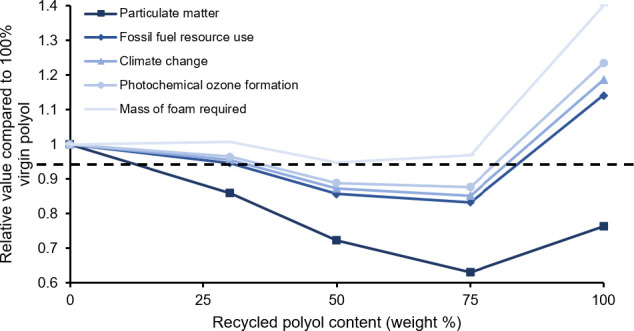
Life Cycle Assessment of Polyurethane Foams from Polyols Obtained through Chemical Recycling
Marson, A., Masiero, M., Modesti, M., Scipioni, A., & Manzardo, A. (2021) · ACS Omega · doi:10.1021/acsomega.0c05844 · Cited by 72
tert-Amyl Alcohol-Mediated Deconstruction of Polyurethane for Polyol and Aniline Recovery
Johansen, M. B., Donslund, B. S., Kristensen, S. K., Lindhardt, A. T., & Skrydstrup, T. (2022) · ACS Sustainable Chemistry & Engineering · doi:10.1021/acssuschemeng.2c02797 · Cited by 72
Qu, M., Wang, H., Chen, Q., Wu, L. H., Tang, P., Fan, M., Guo, Y., Fan, H., & Bin, Y. (2021) · Chemical Engineering Journal · doi:10.1016/j.cej.2021.131648 · Cited by 71
MgO/NaY as modified mesoporous catalyst for methanolysis of polyethylene terephthalate wastes
Tang, S., Li, F., Liu, J., Guo, B. K., Tian, Z., & Lv, J. (2022) · Journal of environmental chemical engineering · doi:10.1016/j.jece.2022.107927 · Cited by 71
Rapid Synthesis of Chemically Recyclable Polycarbonates from Renewable Feedstocks
Saxon, D. J., Gormong, E. A., Shah, V. M., & Reineke, T. M. (2020) · ACS Macro Letters · doi:10.1021/acsmacrolett.0c00747 · Cited by 70
Recycling Polyurethanes through Transcarbamoylation
Zhao, L., & Semetey, V. (2021) · ACS Omega · doi:10.1021/acsomega.0c04855 · Cited by 70
Quantitative Determination of PA6 and/or PA66 Content in Polyamide-Containing Wastes
Žagar, E., Češarek, U., Drinčić, A., Sitar, S., Shlyapnikov, I. M., & Pahovnik, D. (2020) · ACS Sustainable Chemistry & Engineering · doi:10.1021/acssuschemeng.0c04190 · Cited by 67
Zhang, Q., Huang, R., Yao, H., Lü, X., Yan, D., & Xin, J. (2021) · Journal of environmental chemical engineering · doi:10.1016/j.jece.2021.105326 · Cited by 67
Bashirgonbadi, A., Saputra Lase, I., Delva, L., Van Geem, K. M., De Meester, S., & Ragaert, K. (2022) · Waste Management · doi:10.1016/j.wasman.2022.08.018 · Cited by 67
Mechanistic Insights of Cosolvent Efficient Enhancement of PET Methanol Alcohololysis
Tang, J., Meng, X., Cheng, X., Zhu, Q., Yan, D., Zhang, Y., Lü, X., Shi, C., & Liu, X. (2023) · Industrial & Engineering Chemistry Research · doi:10.1021/acs.iecr.2c04419 · Cited by 67
Cao, J., Lin, Y., Jiang, W., Wang, W., Li, X., Zhou, T., Sun, P., Pan, B., Li, A., & Zhang, Q. (2022) · ACS Sustainable Chemistry & Engineering · doi:10.1021/acssuschemeng.1c08656 · Cited by 66
Godinho, B., Gama, N., Barros-Timmons, A. M., & Ferreira, A. R. (2021) · Journal of Polymer Science · doi:10.1002/pol.20210066 · Cited by 66
A new strategy for sustainable polymer recycling using an enzyme: poly(ɛ-caprolactone)
Matsumura, S., Ebata, H., & Toshima, K. (2000) · Macromolecular Rapid Communications · doi:10.1002/1521-3927(20000801)21:12<860::aid-marc860>3.0.co;2-u · Cited by 65
Theoretical studies on glycolysis of poly(ethylene terephthalate) in ionic liquids
Ju, Z., Xiao, W., Lü, X., Liu, X., Yao, X., Zhang, X., & Zhang, S. (2018) · RSC Advances · doi:10.1039/c7ra13173a · Cited by 65
Attallah, O. A., Janssens, A., Azeem, M., & Fournet, M. B. (2021) · ACS Sustainable Chemistry & Engineering · doi:10.1021/acssuschemeng.1c07159 · Cited by 64
Closed-Loop Polymer Upcycling by Installing Property-Enhancing Comonomer Sequences and Recyclability
Liu, X., Hong, M., Falivene, L., Cavallo, L., & Chen, E. Y.-X. (2019) · Macromolecules · doi:10.1021/acs.macromol.9b00817 · Cited by 62
Efficient chemical recycling of waste polyethylene terephthalate
Khan, A., Naveed, M., Aayanifard, Z., & Rabnawaz, M. (2022) · Resources Conservation and Recycling · doi:10.1016/j.resconrec.2022.106639 · Cited by 61
Catalytic Fabric Recycling: Glycolysis of Blended PET with Carbon Dioxide and Ammonia
Yang, Y., Sharma, S., Bernardo, C. D., Rossi, E. M., Lima, R. J. S., Kamounah, F. S., Poderyte, M., Enemark‐Rasmussen, K., Ciancaleoni, G., & Lee, J. (2023) · ACS Sustainable Chemistry & Engineering · doi:10.1021/acssuschemeng.3c03114 · Cited by 61
Hong, M., & Chen, E. Y. ‐. (2016) · Angewandte Chemie · doi:10.1002/ange.201601092 · Cited by 60
Life cycle considerations of solvents
Jiménez‐González, C. (2019) · Current Opinion in Green and Sustainable Chemistry · doi:10.1016/j.cogsc.2019.02.004 · Cited by 60
Fuentes, C., Gallegos, M. V., García, J. R., Sambeth, J. E., & Peluso, M. A. (2019) · Waste and Biomass Valorization · doi:10.1007/s12649-019-00807-6 · Cited by 59
Zinc(II) acetate Catalyzed Depolymerization of Poly(ethylene terephthalate)
Hofmann, M., Sundermeier, J., Alberti, C., & Enthaler, S. (2020) · ChemistrySelect · doi:10.1002/slct.202002260 · Cited by 59
Cywar, R. M., Zhu, J.-B., & Chen, E. Y.-X. (2019) · Polymer Chemistry · doi:10.1039/c9py00190e · Cited by 58
Jiang, T.-W., Reddy, K. S. K., Chen, Y., Wang, M.-W., Chang, H.-C., Abu‐Omar, M. M., & Lin, C. H. (2022) · ACS Sustainable Chemistry & Engineering · doi:10.1021/acssuschemeng.1c07247 · Cited by 58
A sustainable approach for the synthesis of recyclable cyclic CO 2 -based polycarbonates
Liao, X., Cui, F., He, J., Ren, W., Lu, X., & Zhang, Y. (2022) · Chemical Science · doi:10.1039/d2sc01387h · Cited by 58
Johansen, M. B., Donslund, B. S., Larsen, E., Olsen, M. B., Pedersen, J. A. L., Boye, M., Smedsgård, J. K. C., Heck, R., Kristensen, S. K., & Skrydstrup, T. (2023) · ACS Sustainable Chemistry & Engineering · doi:10.1021/acssuschemeng.3c01469 · Cited by 58
Ultrafast microwave assisted recycling of PET to a family of functional precursors and materials
Bäckström, E., Odelius, K., & Hakkarainen, M. (2021) · European Polymer Journal · doi:10.1016/j.eurpolymj.2021.110441 · Cited by 57
Adsorption of enzymes with hydrolytic activity on polyethylene terephthalate
Badino, S. F., Bååth, J. A., Borch, K., Jensen, K., & Westh, P. (2021) · Enzyme and Microbial Technology · doi:10.1016/j.enzmictec.2021.109937 · Cited by 57
Block Poly(carbonate‐ester) Ionomers as High‐Performance and Recyclable Thermoplastic Elastomers
Gregory, G. L., Sulley, G. S., Kimpel, J., Łagodzińska, M., Häfele, L., Carrodeguas, L. P., & Williams, C. K. (2022) · Angewandte Chemie International Edition · doi:10.1002/anie.202210748 · Cited by 56
The upcycling of polyethylene terephthalate using protic ionic liquids as catalyst
Wang, T., Shen, C., Yu, G., & Chen, X. (2022) · Polymer Degradation and Stability · doi:10.1016/j.polymdegradstab.2022.110050 · Cited by 55
Lee, C., Lin, C.-H., Wang, L.-Y., & Lee, Y. (2023) · Chemical Engineering Journal · doi:10.1016/j.cej.2023.143447 · Cited by 55
Zinc‐Catalyzed Chemical Recycling of Poly(ϵ‐caprolactone) Applying Transesterification Reactions
Cheung, E., Alberti, C., Bycinskij, S., & Enthaler, S. (2021) · ChemistrySelect · doi:10.1002/slct.202004294 · Cited by 54
Parodi, A., D’Ambrosio, M., Mazzocchetti, L., Martínez, G. A., Samorì, C., Torri, C., & Galletti, P. (2021) · ACS Sustainable Chemistry & Engineering · doi:10.1021/acssuschemeng.1c03299 · Cited by 54
Liu, L., Yao, H., Zhou, Q., Yao, X., Yan, D., Xu, J., & Lü, X. (2022) · Journal of environmental chemical engineering · doi:10.1016/j.jece.2022.107512 · Cited by 53
Closed-loop chemical recycling of poly(ε-caprolactone) by tuning reaction parameters
Su, J., Xu, G., Dong, B., Yang, R., Sun, H., & Wang, Q. (2022) · Polymer Chemistry · doi:10.1039/d2py00953f · Cited by 52
McCaffrey, W. C., Cooper, D. G., & Kamal, M. R. (1998) · Polymer Degradation and Stability · doi:10.1016/s0141-3910(98)00036-6 · Cited by 52
Deng, L., Li, R., Chen, Y., Wang, J., & Song, H. (2021) · Journal of Molecular Liquids · doi:10.1016/j.molliq.2021.116419 · Cited by 51
Liu, F., Guo, J., Zhao, P., Jia, M., Liu, M., & Gao, J. (2019) · Polymer Degradation and Stability · doi:10.1016/j.polymdegradstab.2019.108996 · Cited by 50
Microwave-assisted chemical recycling of polylactide (PLA) by alcoholysis with various diols
Nim, B., Opaprakasit, M., Petchsuk, A., & Opaprakasit, P. (2020) · Polymer Degradation and Stability · doi:10.1016/j.polymdegradstab.2020.109363 · Cited by 50
Tawfik, M. E., Ahmed, N. M., & Eskander, S. B. (2011) · Journal of Applied Polymer Science · doi:10.1002/app.33350 · Cited by 49
Mishra, S., Goje, A. S., & Zope, V. S. (2003) · Polymer-Plastics Technology and Engineering · doi:10.1081/ppt-120023097 · Cited by 49
Efficient glycolysis of PET catalyzed by a metal-free phosphazene base: the important role of EG −
Fan, C., Zhang, L., Zhu, C., Cao, J., Xu, Y., Sun, P., Zeng, G., Jiang, W., & Zhang, Q. (2022) · Green Chemistry · doi:10.1039/d1gc03885k · Cited by 49
Liu, J., & Yin, J. (2022) · Industrial & Engineering Chemistry Research · doi:10.1021/acs.iecr.2c00572 · Cited by 49
Tan, J. P. K., Tan, J., Park, N. H., Xu, K., Chan, E. D., Yang, C. H., Piunova, V. A., Ji, Z., Lim, A., Shao, J., et al. (2019) · Macromolecules · doi:10.1021/acs.macromol.9b01333 · Cited by 48
Tollini, F., Brivio, L., Innocenti, P., Sponchioni, M., & Moscatelli, D. (2022) · Chemical Engineering Science · doi:10.1016/j.ces.2022.117875 · Cited by 47
Mechanical recycling of PLA : Effect of weathering, extrusion cycles, and chain extender
Ramos‐Hernández, T., Robledo‐Ortíz, J. R., González‐López, M. E., del Campo, A. S. M., González‐Núñez, R., Rodrigue, D., & Pérez‐Fonseca, A. A. (2023) · Journal of Applied Polymer Science · doi:10.1002/app.53759 · Cited by 47
Cederholm, L., Olsén, P., Hakkarainen, M., & Odelius, K. (2023) · Macromolecules · doi:10.1021/acs.macromol.3c00274 · Cited by 47
Yao, H., Lü, X., Ji, L., Tan, X., & Zhang, S. (2021) · Industrial & Engineering Chemistry Research · doi:10.1021/acs.iecr.0c06073 · Cited by 46
Wang, Z., Yang, R., Xu, G., Liu, T., & Wang, Q. (2022) · ACS Sustainable Chemistry & Engineering · doi:10.1021/acssuschemeng.1c08408 · Cited by 46
Samorì, C., Martínez, G. A., Bertin, L., Pagliano, G., Parodi, A., Torri, C., & Galletti, P. (2021) · Resources Conservation and Recycling · doi:10.1016/j.resconrec.2021.106082 · Cited by 45
Dubelley, F., Planès, É., Bas, C., Pons, E., Yrieix, B., & Flandin, L. (2018) · Polymer · doi:10.1016/j.polymer.2018.03.043 · Cited by 45
Shen, C., Zhao, X. S., Long, Y., An, W., Zhou, X., Liu, X., Xu, S., & Wang, Y. (2023) · ACS Sustainable Chemistry & Engineering · doi:10.1021/acssuschemeng.2c07413 · Cited by 45
Song, X., Liu, F., Wang, H., Wang, C., Yu, S., & Liu, S. (2017) · Polymer Degradation and Stability · doi:10.1016/j.polymdegradstab.2017.12.009 · Cited by 44
Catalytic Transformation of PET and CO2 into High‐Value Chemicals
Li, Y., Wang, M., Liu, X., Hu, C., Xiao, D., & Ma, D. (2022) · Angewandte Chemie · doi:10.1002/ange.202117205 · Cited by 44
Zirconium-catalysed hydrosilylation of esters and depolymerisation of polyester plastic waste
Kobylarski, M., Donnelly, L. J., Berthet, J. ‐., & Cantat, T. (2022) · Green Chemistry · doi:10.1039/d2gc02186b · Cited by 44
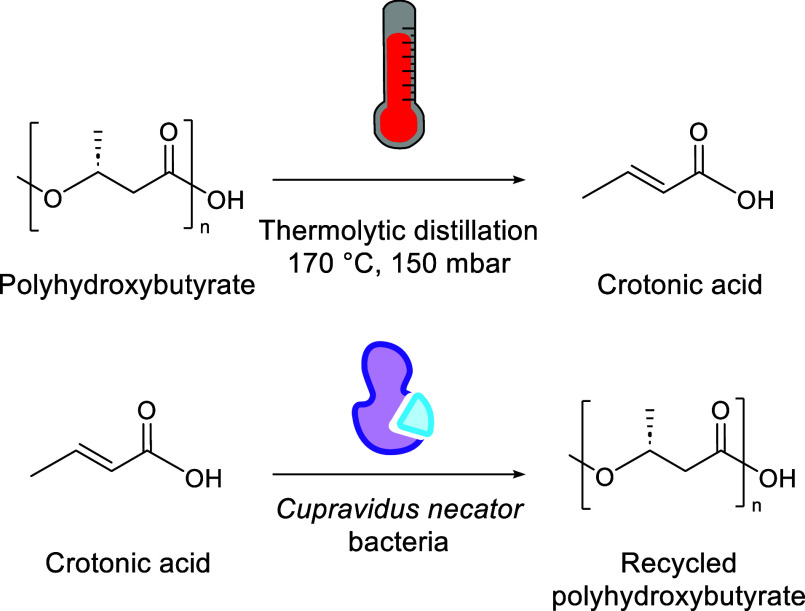
Bio-based crotonic acid from polyhydroxybutyrate: synthesis and photocatalyzed hydroacylation
Parodi, A., Jorea, A., Fagnoni, M., Ravelli, D., Samorì, C., Torri, C., & Galletti, P. (2021) · Green Chemistry · doi:10.1039/d1gc00421b · Cited by 43
Zheng, W., Liu, C., Wei, X., Sun, W., & Zhao, L. (2022) · Chemical Engineering Science · doi:10.1016/j.ces.2022.118329 · Cited by 43
Recycling of aramid fiber using subcritical and supercritical water
Okajima, I., Okamoto, H., & Sako, T. (2019) · Polymer Degradation and Stability · doi:10.1016/j.polymdegradstab.2019.01.034 · Cited by 43
Ju, Z., Zhou, L., Lü, X., Li, Y., Yao, X., Cheng, S., Chen, G., & Ge, C. (2021) · Physical Chemistry Chemical Physics · doi:10.1039/d1cp02038b · Cited by 43
Aminolytic Depolymerization of Polyethylene Terephthalate Wastes Using Sn-Doped ZnO Nanoparticles
Vinitha, V., Preeyanghaa, M., Anbarasu, M., Jeya, G., Neppolian, B., & Sivamurugan, V. (2022) · Journal of Polymers and the Environment · doi:10.1007/s10924-022-02455-9 · Cited by 43
Challenges and Opportunities in Sustainable Polymers
Korley, L. T. J., McNeil, A. J., & Coates, G. W. (2022) · Accounts of Chemical Research · doi:10.1021/acs.accounts.2c00534 · Cited by 43
Xu, L., Zhang, L.-Y., He, S., Dong, Q., Dong, G.-H., Kong, X. L., & Fang, Z. Y. (2019) · Waste Management · doi:10.1016/j.wasman.2019.05.011 · Cited by 42
Zhu, C., Fan, C., Hao, Z., Jiang, W., Zhang, L., Zeng, G., Sun, P., & Zhang, Q. (2022) · Applied Catalysis A General · doi:10.1016/j.apcata.2022.118681 · Cited by 42
Ultrasound assisted methanolysis of polycarbonate at room temperature
Bhogle, C. S., & Pandit, A. B. (2019) · Ultrasonics Sonochemistry · doi:10.1016/j.ultsonch.2019.104667 · Cited by 41
From Aminolysis Product of Pet Waste to Value-Added Products of Polymer and Assistants
Zhang, L.-N., Liu, L., Yue, Q., & Zhu, C. (2014) · Polymers and Polymer Composites · doi:10.1177/096739111402200102 · Cited by 39
Najafi-Shoa, S., Barikani, M., Ehsani, M., & Ghaffari, M. (2021) · Polymer Degradation and Stability · doi:10.1016/j.polymdegradstab.2021.109691 · Cited by 39
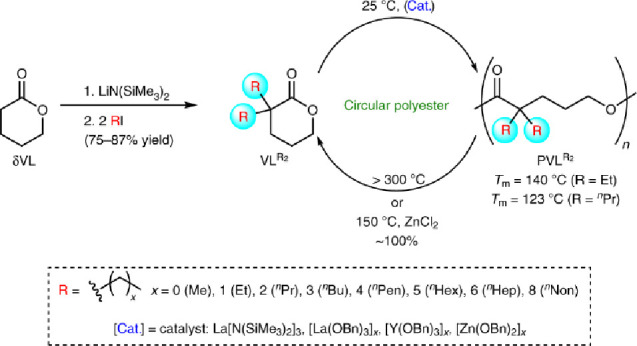
Turning natural δ-lactones to thermodynamically stable polymers with triggered recyclability
Cederholm, L., Olsén, P., Hakkarainen, M., & Odelius, K. (2020) · Polymer Chemistry · doi:10.1039/d0py00270d · Cited by 37
Chen, X., Luo, Y., & Bai, X. (2021) · Waste Management · doi:10.1016/j.wasman.2021.06.031 · Cited by 37
D’Anna, F., Sbacchi, M., Infurna, G., Dintcheva, N. T., & Marullo, S. (2021) · Green Chemistry · doi:10.1039/d1gc02239c · Cited by 36
Jeswani, H. K., Perry, M. R., Shaver, M. P., & Azapagic, A. (2023) · The Science of The Total Environment · doi:10.1016/j.scitotenv.2023.166311 · Cited by 35
Self-citationChemical recycling of polyhydroxybutyrate and polylactic acid over supported Ru catalysts
Lehnertz, M. S., Mensah, J. B., & Palkovits, R. (2022) · Green Chemistry · doi:10.1039/d2gc00216g · Cited by 34
Jeya, G., Elumalai, G., Tajuddin, A. A. H., Ito, Y., Sivamurugan, V., & Dhanalakshmi, R. (2022) · Journal of Polymers and the Environment · doi:10.1007/s10924-022-02386-5 · Cited by 34
DeFrancesco, L. (2020) · Nature Biotechnology · doi:10.1038/s41587-020-0541-0 · Cited by 33
Chemical recycling of multi-materials from glycol-modified poly(ethylene terephthalate)
Huang, P., Pitcher, J., Mushing, A., Lourenço, F., & Shaver, M. P. (2023) · Resources Conservation and Recycling · doi:10.1016/j.resconrec.2022.106854 · Cited by 33
Self-citationHe, H., Du, K.-M., Yu, H., Zhu, Y., Su, H., Yang, F., Ma, M., Shi, Y., Zhang, X., Chen, S., et al. (2023) · Green Chemistry · doi:10.1039/d3gc01244a · Cited by 33
Li, M., Chen, W., Chen, W., & Chen, S. (2023) · Industrial & Engineering Chemistry Research · doi:10.1021/acs.iecr.3c01071 · Cited by 32
Song, X., Wang, H., Wang, C., Liu, F., Yu, S., Liu, S., & Song, Z. (2019) · Journal of Polymers and the Environment · doi:10.1007/s10924-018-1347-8 · Cited by 30
Synthesis and characterization of isophorondiamine based epoxy hardeners from aminolysis of PET
Karpati, L., Fejer, M., Kalocsai, D., Molnár, J., & Vargha, V. (2019) · eXPRESS Polymer Letters · doi:10.3144/expresspolymlett.2019.52 · Cited by 30
Kinetic Investigation for Chemical Depolymerization of Post-Consumer PET Waste Using Sodium Ethoxide
Javed, S., Fisse, J., & Vogt, D. (2023) · Industrial & Engineering Chemistry Research · doi:10.1021/acs.iecr.2c04308 · Cited by 29
Cederholm, L., Olsén, P., Hakkarainen, M., & Odelius, K. (2023) · Polymer Chemistry · doi:10.1039/d3py00535f · Cited by 29
Emori, M., Numoto, N., Senga, A., Bekker, G., Kamiya, N., Kobayashi, Y., Ito, N., Kawai, F., & Oda, M. (2020) · Proteins Structure Function and Bioinformatics · doi:10.1002/prot.26034 · Cited by 28
From Waste to Schiff Base: Upcycling of Aminolysed Poly(ethylene terephthalate) Product
Al-Otaibi, A., Alsukaibi, A. K. D., Rahman, M. A., Mushtaque, M., & Haque, A. (2022) · Polymers · doi:10.3390/polym14091861 · Cited by 28
Wang, M., Shi, S., Li, F., Hou, W., Guo, H., Wang, S., Jia, H., & Dai, J. (2022) · Chemical Papers · doi:10.1007/s11696-022-02246-5 · Cited by 27
Circularizing PET-G Multimaterials: Life Cycle Assessment and Techno-Economic Analysis
Huang, P., Ahamed, A., Sun, R., Hoe, G. X. D., Pitcher, J., Mushing, A., Lourenço, F., & Shaver, M. P. (2023) · ACS Sustainable Chemistry & Engineering · doi:10.1021/acssuschemeng.3c04047 · Cited by 27
Self-citationGubbels, E., Heitz, T., Yamamoto, M., Chilekar, V., Zarbakhsh, S., Geprägs, M., Köpnick, H., Schmidt, M., Brügging, W., Ruter, J., et al. (2018) · Ullmann's Encyclopedia of Industrial Chemistry · doi:10.1002/14356007.a21_227.pub2 · Cited by 25
Gallin, C. F., Lee, W., & Byers, J. A. (2023) · Angewandte Chemie · doi:10.1002/ange.202303762 · Cited by 24
Amarasekara, A. S., Gonzalez, J. A., & Nwankwo, V. C. (2022) · Journal of Ionic Liquids · doi:10.1016/j.jil.2022.100021 · Cited by 22
Liu, L., Yao, H., Zhou, Q., Yan, D., Xu, J., & Lü, X. (2022) · ACS Engineering Au · doi:10.1021/acsengineeringau.1c00039 · Cited by 21
N‐Heterocyclic Phosphines as Precatalysts for the Highly Selective Degradation of Poly(lactic acid)
English, L. E., Jones, M. D., & Liptrot, D. J. (2021) · ChemCatChem · doi:10.1002/cctc.202101904 · Cited by 20
Arias, J. J. R., Barnard, E., & Thielemans, W. (2022) · ChemSusChem · doi:10.1002/cssc.202200625 · Cited by 20
Lee, P. S., & Jung, S. M. (2022) · Journal of Applied Polymer Science · doi:10.1002/app.53205 · Cited by 20
Closed‐Loop Recycling of Poly(Imine‐Carbonate) Derived from Plastic Waste and Bio‐based Resources
Saito, K., Eisenreich, F., Türel, T., & Tomović, Ž. (2022) · Angewandte Chemie · doi:10.1002/ange.202211806 · Cited by 19
Liu, C., Ling, Y., Wang, Z., Zheng, W., Sun, W., & Zhao, L. (2021) · Chemical Engineering Science · doi:10.1016/j.ces.2021.117024 · Cited by 18
Preparation and Degradation of Waste Polycarbonate-Derived Epoxy Thermosets and Composites
Yeh, R.-Y., Reddy, K. S. K., Chen, Y., Wang, M.-W., Chang, H.-C., Abu‐Omar, M. M., & Lin, C. H. (2021) · ACS Applied Polymer Materials · doi:10.1021/acsapm.1c01336 · Cited by 18
Highly Active MgP Catalyst for Biodiesel Production and Polyethylene Terephthalate Depolymerization
Gangotena, P. A., Ponce, S., Gallo‐Córdova, Á., Streitwieser, D. A., & Mora, J. R. (2022) · ChemistrySelect · doi:10.1002/slct.202103765 · Cited by 17
Siragusa, F., Habets, T., Méreau, R., Evano, G., Grignard, B., & Detrembleur, C. (2022) · ACS Sustainable Chemistry & Engineering · doi:10.1021/acssuschemeng.2c01891 · Cited by 17
Kohan, M. I., Mestemacher, S. A., Pagilagan, R. U., & Redmond, K. (2003) · Ullmann's Encyclopedia of Industrial Chemistry · doi:10.1002/14356007.a21_179.pub2 · Cited by 15
Wang, Y., Li, Y., Wang, W., Lv, L., Li, C., & Zhang, J. (2019) · Journal of Applied Polymer Science · doi:10.1002/app.47537 · Cited by 14
Abedsoltan, H., & Coleman, M. R. (2022) · Journal of Applied Polymer Science · doi:10.1002/app.52451 · Cited by 14
Yu, Y., Gao, B., Liu, Y., & Lu, X. (2022) · Angewandte Chemie · doi:10.1002/ange.202204492 · Cited by 14
Abe, T., Kamiya, T., Otsuka, H., & Aoki, D. (2023) · Polymer Chemistry · doi:10.1039/d3py00079f · Cited by 14
Wang, Y., Yang, R., Xu, G., Guo, X., Dong, B., Zhang, Q., Li, R., & Wang, Q. (2023) · Polymer Degradation and Stability · doi:10.1016/j.polymdegradstab.2023.110413 · Cited by 14
Chemically recyclable glycerol-biobased polyether thermosets
Gallastegui, A., Gabirondo, E., Elizalde, F., Aranburu, N., Mecerreyes, D., & Sardón, H. (2020) · European Polymer Journal · doi:10.1016/j.eurpolymj.2020.110174 · Cited by 12
Hou, W., Li, Y., Xu, S., Wang, Q., Song, K., Liu, J., Wang, N., Zhou, Q., Yan, D., & Lü, X. (2023) · Journal of environmental chemical engineering · doi:10.1016/j.jece.2023.110126 · Cited by 10
Efficient synthesis of camphor-based polycarbonates: a direct route to recyclable polymers
Jiang, B., & Thomas, C. M. (2023) · Catalysis Science & Technology · doi:10.1039/d3cy00423f · Cited by 10
Block Poly(carbonate‐ester) Ionomers as High‐Performance and Recyclable Thermoplastic Elastomers
Gregory, G. L., Sulley, G. S., Kimpel, J., Szewczyk‐Łagodzińska, M., Häfele, L., Carrodeguas, L. P., & Williams, C. K. (2022) · Angewandte Chemie · doi:10.1002/ange.202210748 · Cited by 9
Li, X., Clarke, R. W., An, H., Gowda, R. R., Jiang, J., Xu, T., & Chen, E. Y. ‐. (2023) · Angewandte Chemie · doi:10.1002/ange.202303791 · Cited by 8
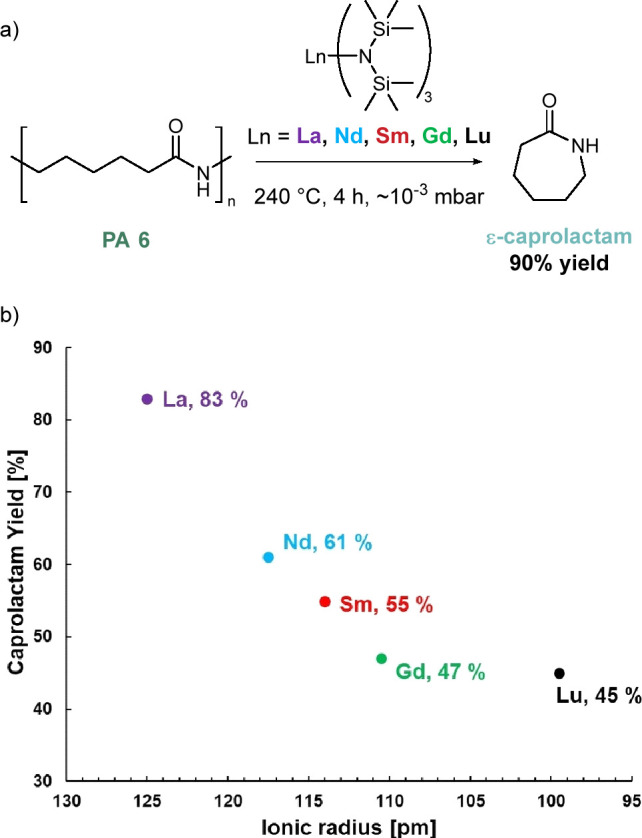
Selective Lanthanide‐Organic Catalyzed Depolymerization of Nylon‐6 to ϵ‐Caprolactam
Wursthorn, L., Beckett, K., Rothbaum, J. O., Cywar, R. M., Lincoln, C. L., Kratish, Y., & Marks, T. J. (2022) · Angewandte Chemie · doi:10.1002/ange.202212543 · Cited by 7
A plastics hierarchy of fates: sustainable choices for a circular futurePreprint
Kortsen, K., Kilbride, S., Lowe, S. R., Peirce, A., & Shaver, M. P. (2023) · arXiv (Cornell University) · doi:10.48550/arxiv.2303.14664 · Cited by 6
Self-citationRescuing the Ocean with Skateboards and Sunglasses
Breuer, G. (2016) · Plastics Engineering · doi:10.1002/j.1941-9635.2016.tb01527.x · Cited by 2
Research works printed but not linked: 9
- Global Plastics Outlook: Policy Scenarios to 2060 ; OECD, 2022; https://www.oecd-ilibrary.org/content/publication/aa1edf33-en (accessed 2024-01-17).
- Global Plastics Outlook: Economic Drivers, Environmental Impacts and Policy Options ; OECD, 2022; https://www.oecd-ilibrary.org/content/publication/de747aef-en (accessed 2024-01-17).
- Hamilton L. A., 2019, Plastic & Climate: The Hidden Costs of a Plastic Planet
- Holmes H. S., 2023, Tackling Household Plastic Waste: Best Practice for a Circular Economy
- ICI Services Launches the World’s First Interactive Global Database of Chemical Recycling Projects , ICIS, 2021; https://www.icis.com/explore/press-releases/icis-launches-the-worlds-first-interactive-global-database-of-chemical-recycling-projects/ (accessed 2023-05-19).
- CEN Report on Eastman Plant . CEN, 2021; https://cen.acs.org/environment/recycling/Eastman-build-250-million-plastics/99/web/2021/02 (accessed 2024-01-15).
- 2022, Eunomia
- 2022, Bioplastics Market Development Update 2022
- 10.1023/a:1022826528673 · doi:10.1023/a:1022826528673
Cited by
Recent advances in oxidative degradation of plastics
Oh, S., & Stache, E. E. (2024) · Chemical Society Reviews · doi:10.1039/d4cs00407h · Cited by 227
Depolymerization mechanisms and closed-loop assessment in polyester waste recycling
Cao, J., Liang, H., Yang, J. W., Zhu, Z., Deng, J. G., Li, X., Elimelech, M., & Lu, X. (2024) · Nature Communications · doi:10.1038/s41467-024-50702-5 · Cited by 190
Sustainable Solutions Through Innovative Plastic Waste Recycling Technologies
Alaghemandi, M. (2024) · Sustainability · doi:10.3390/su162310401 · Cited by 163
Umdagas, L. B., Orozco, R., Heeley, K., Thom, W., & Al‐Duri, B. (2025) · Polymer Degradation and Stability · doi:10.1016/j.polymdegradstab.2025.111246 · Cited by 150
Fundamental, technical and environmental overviews of plastic chemical recycling
Luo, H., Tyrrell, H., Bai, J., Muazu, R. I., & Long, X. (2024) · Green Chemistry · doi:10.1039/d4gc03127j · Cited by 118
Metadata
- Authors
- Clark, R. A., & Shaver, M. P.
- Affiliations
- University of Manchester (GB)
- Corresponding author
- Shaver, Michael P.
- Venue
- Chemical Reviews
- Publisher
- American Chemical Society (ACS)
- Published
- 2024-02-22
- Volume
- 124
- Issue
- 5
- Pages
- 2617-2650
- ISSN
- 0009-2665 (ISSN-L)
- 1520-6890
- PMC
- PMC10941197
- OpenAlex
- W4392023863
- Cited by
- 408
- References
- 335
- Citations by year
- 2026: 186 · 2025: 173 · 2024: 49
- FWCI
- 9.22
- Type
- journal article
- Language
- en
- Open access
- hybrid
- doi.org
- Licence
- Locations
- Chemical Reviews (publishedVersion, cc-by)
- PubMed Central (publishedVersion, cc-by)
- PubMed (publishedVersion)
- Research Explorer (The University of Manchester) (submittedVersion, cc-by)
- Funders
- Engineering and Physical Sciences Research Council (EP/S023755/1)
- Innovate UK (NE/V01045X/1)
- Topics
- Physical Sciences › Materials Science › Polymers and Plastics › Polymer crystallization and properties
- Physical Sciences › Environmental Science › Waste Management and Disposal › Waste Management and Recycling
- Physical Sciences › Materials Science › Biomaterials › biodegradable polymer synthesis and properties
- Keywords
- chemical depolymerization, plastic recycling, circular economy, polyethylene terephthalate, polycarbonate, polyamide, aliphatic polyesters, polyurethane, catalytic depolymerization, end-of-life plastics, mechanical recycling
About these checks
Registry, retraction, Cites and statistics results are computed, not judged, with one exception: a printed reference that no index lists is read once by a model before it counts as a citation error. Claims are extracted by a model and kept only when their quote appears verbatim in the text; each cited source is then checked, with a model’s help, for whether it says what the claim relies on. Those verdicts can be wrong — read the claim’s quote and the cited source before relying on one.
Statistics and arithmetic are recomputed, not judged.
Confidence bands are shown only for fields calibrated on our annotated test set. None is calibrated yet, so no band is shown.
What counts as a claim ›How we measure confidence ›How we check this ›
Are you an author, or do you see a problem with this page? Request a review
Data sources
Bibliographic data: Semantic Scholar, OpenAlex, Crossref.
Contains information from the Semantic Scholar Academic Graph Datasets, made available under the ODC Attribution License (ODC-BY 1.0).
Semantic Scholar’s data is described in: Kinney, R., et al. (2023). The Semantic Scholar Open Data Platform. arXiv:2301.10140.
