

The DOI matches its Crossref record; 35 of the 35 references it cites were found in a registry or an index.
Characterization of Phenethyl Cinnamamide Compounds from Hemp Seed and Determination of Their Melanogenesis Inhibitory Activity
Open accessAbstract
High Resolution Image Download MS PowerPoint Slide Hyperpigmentation is induced by the overactivation of tyrosinase, which is a rate-limiting enzyme in melanogenesis. The defatted extract of hemp ( Cannabis sativa L.) seed is known to have inhibitory effects on melanogenesis; however, effective compounds in the extract have not been identified yet. In this study, three phenethyl cinnamamides present in hemp seed extract were prepared by purification and chemical synthesis and were assessed for their inhibitory effect on melanogenesis in B16F10 melanoma cells. A comparison of the anti-melanogenesis and anti-tyrosinase activity of hemp seed solvent fractions revealed that the ethyl acetate fraction possessed the greatest potential for suppressing melanogenesis in melanoma cells by decreasing tyrosinase activity. We tentatively identified 26 compounds in the ethyl acetate fraction by comparing spectroscopic data with the literature. Three phenethyl cinnamamides such as N - trans -caffeoyltyramine, N - trans -coumaroyltyramine, and N - trans -feruloyltyramine present abundantly in the ethyl acetate fraction were prepared and their anti-melanogenesis and anti-tyrosinase activities in melanoma cells were evaluated. We found that N - trans -caffeoyltyramine and N - trans -feruloyltyramine inhibited alpha melanocyte stimulating hormone (α-MSH)-induced melanogenesis without cytotoxicity, while N - trans -coumaroyltyramine inhibited melanogenesis with cytotoxicity. IC 50 values of N - trans -caffeoyltyramine, N - trans -feruloyltyramine, and N - trans -coumaroyltyramine for inhibition of α-MSH-mediated tyrosinase activation were 0.8, 20.2, and 6.3 μM, respectively. Overall, N - trans -caffeoyltyramine possessed the strongest anti-melanogenesis activity among the three phenethyl cinnamamides evaluated. The inhibitory effect of N - trans -caffeoyltyramine was verified by determining the melanin content and tyrosinase activity in melanoma after treating the cells with synthetic compounds. Thus, N - trans -caffeoyltyramine isolated from hemp seed extract could be useful in cosmetics as a skin-whitening agent.
Overview
The claims and statistics of this paper haven’t been checked yet.
Run the check — free, no account needed. It reads the open-access text and checks the sources it cites.
Integrity signals
Registry
Cites
Statistics
Figures
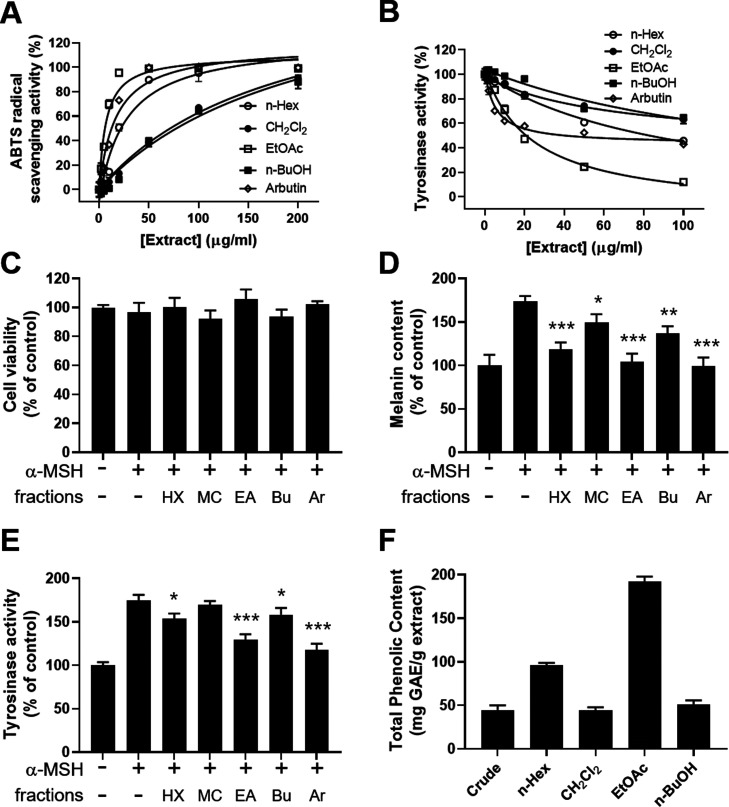
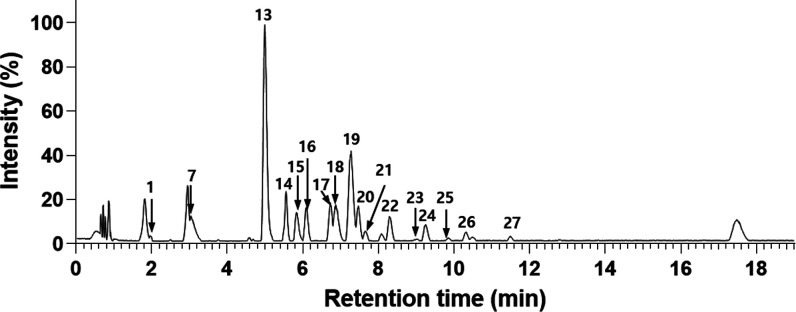
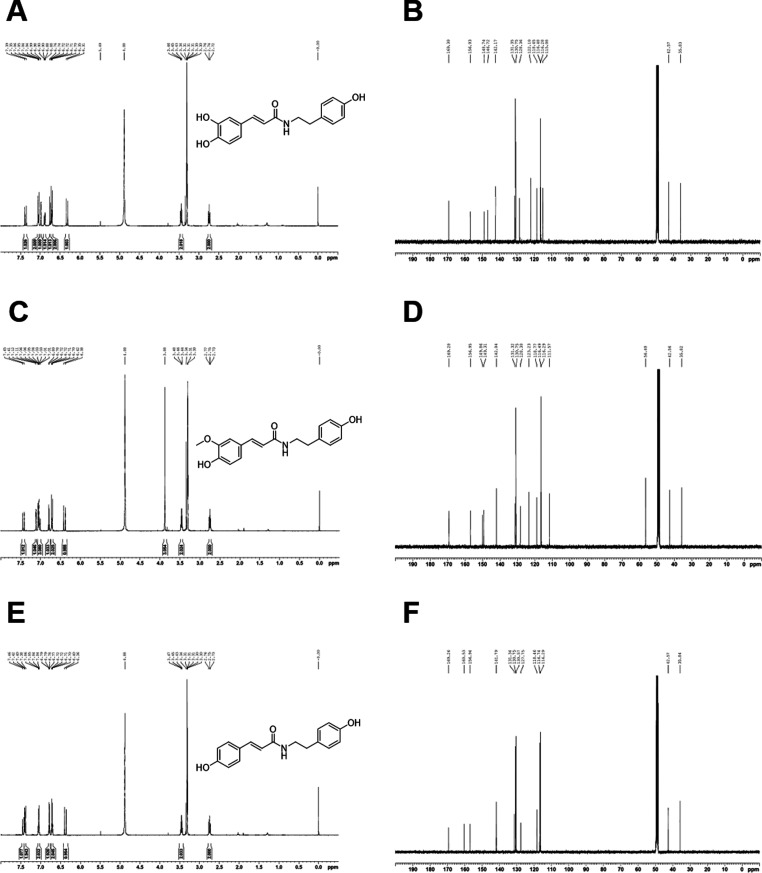
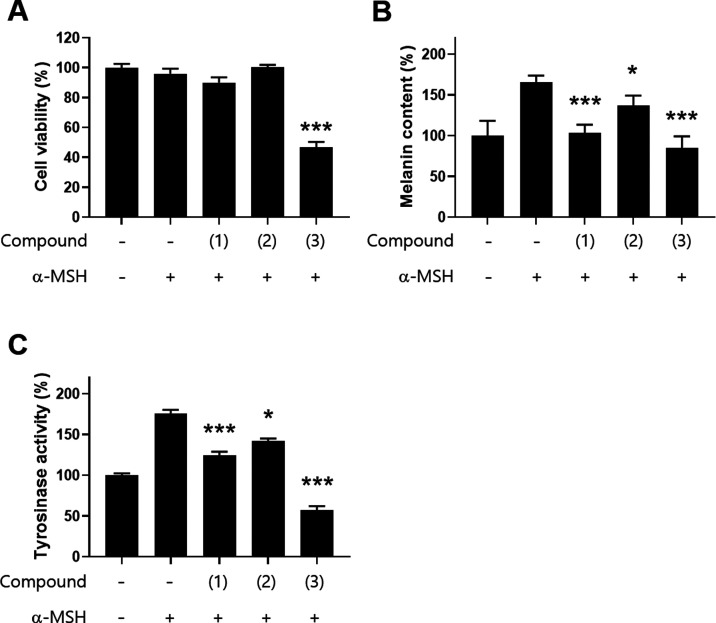
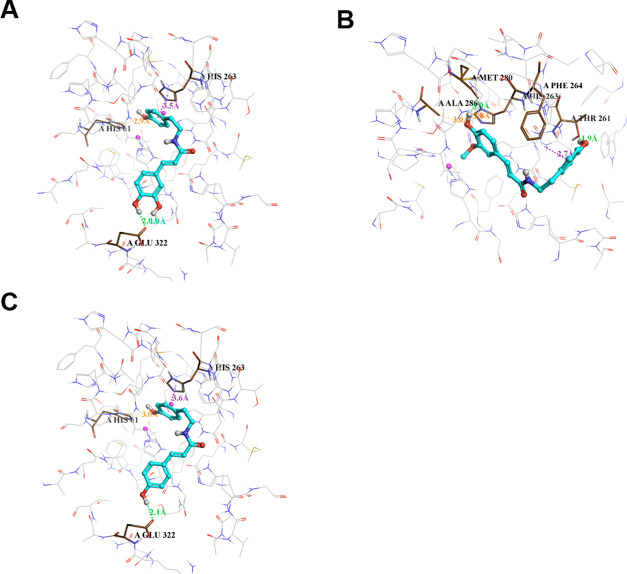
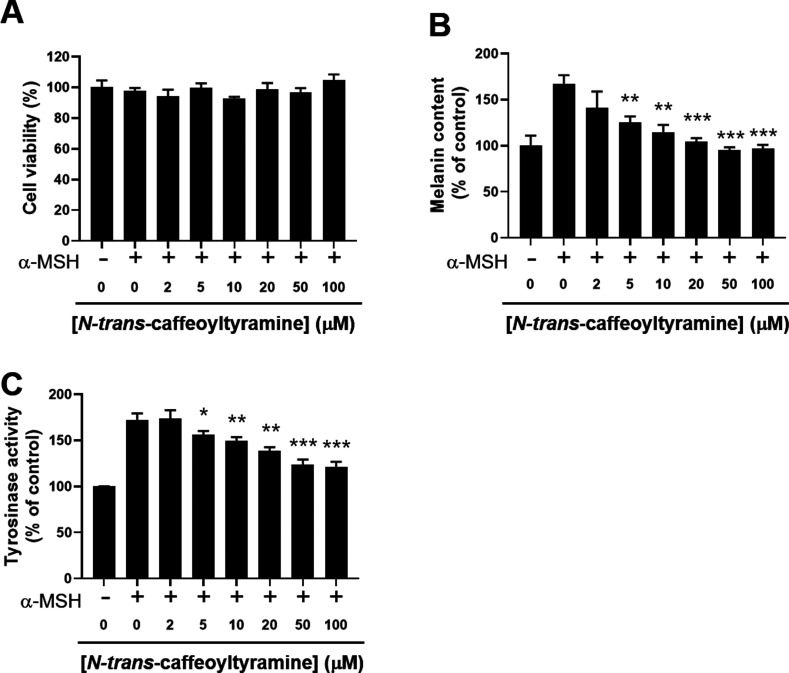
Verification
Claims the paper makes
The claims and statistics of this paper haven’t been checked yet.
Run the check — free, no account needed. It reads the open-access text and checks the sources it cites.
Claims other papers make about this one
Each is checked against this paper’s own text: does it say what the citing paper says it does?
The source backs part of the claim, not all of it — or backs it for a different population, condition or comparison.
In the citing paper
“Anti-melanogenesis activity is ranked as follows: N-trans-caffeoyltyramine (IC50 = 0.8 μM), N-p-trans-coumaroyltyramine (IC50 = 6.3 μM), and N-trans-feruloyltyramine (IC50 = 20.2 μM).”
From Exploring the Lesser-Known Bioactive Natural Products of Plant Species of the Genus Cannabis L.: Alkaloids, Phenolic Compounds, and Their Therapeutic Potential (2025) · cites this paper as [85]
Experimental — accuracy not yet measuredThe cited source says what the claim attributes to it.
In the citing paper
“It is worth noting that N-p-trans-coumaroyltyramine at 50 μM decreased B16F10 cell viability by more than 50% [85].”
Self-check
Percentages, sums and reported differences re-computed from the paper’s own numbers.
The self-check needs the paper’s full text.
Citations
Cites
Antioxidant activity applying an improved ABTS radical cation decolorization assay
Re, R., Pellegrini, N., Proteggente, A. R., Pannala, A. S., Yang, M. H., & Rice-Evans, C. A. (1999) · Free Radical Biology and Medicine · doi:10.1016/s0891-5849(98)00315-3 · Cited by 26,986
Ainsworth, E. A., & Gillespie, K. M. (2007) · Nature Protocols · doi:10.1038/nprot.2007.102 · Cited by 3,375
Cannabis sativa: The Plant of the Thousand and One Molecules
Andre, C. M., Hausman, J.-F., & Guerriero, G. (2016) · Frontiers in Plant Science · doi:10.3389/fpls.2016.00019 · Cited by 1,544
Recent advances in understanding the antibacterial properties of flavonoids
Cushnie, T. P. T., & Lamb, A. J. (2011) · International Journal of Antimicrobial Agents · doi:10.1016/j.ijantimicag.2011.02.014 · Cited by 1,411
A comprehensive review on tyrosinase inhibitors
Zolghadri, S., Bahrami, A., Khan, M. T. H., Muñoz-Muñoz, J., García-Molina, F., García-Cánovas, F., & Saboury, A. A. (2019) · Journal of Enzyme Inhibition and Medicinal Chemistry · doi:10.1080/14756366.2018.1545767 · Cited by 1,140
Fabre, N., Rustan, I., de Hoffmann, E., & Quetin‐Leclercq, J. (2001) · Journal of the American Society for Mass Spectrometry · doi:10.1016/s1044-0305(01)00226-4 · Cited by 874
Enzymatic control of pigmentation in mammals
Hearing, V. J., & Tsukamoto, K. (1991) · The FASEB Journal · doi:10.1096/fasebj.5.14.1752358 · Cited by 754
The Color Loci of Mice – A Genetic Century
Bennett, D. C., & Lamoreux, M. L. (2003) · Pigment Cell Research · doi:10.1034/j.1600-0749.2003.00067.x · Cited by 486
Flavonoids: Prospective Drug Candidates
Cazarolli, L. H., Zanatta, L. C. B., Alberton, E., Figueiredo, M. S. R. B., Folador, P., Damazio, R. G., Pizzolatti, M. G., & Silva, F. R. B. (2008) · Mini-Reviews in Medicinal Chemistry · doi:10.2174/138955708786369564 · Cited by 407
Baron, R., Zayats, M., & Willner, I. (2005) · Analytical Chemistry · doi:10.1021/ac048691v · Cited by 376
Cited by
Sorted by citations
Hourfane, S., Mechqoq, H., Bekkali, A. Y., Rocha, J. M., & Aouad, N. E. (2023) · Plants · doi:10.3390/plants12061245 · Cited by 133
A Frontier Review of Nutraceutical Chinese Yam
Khol, M., Ma, F., Lei, L., Liu, W., & Liu, X. (2024) · Foods · doi:10.3390/foods13101426 · Cited by 47
García‐Molina, P., García-Molina, F., Teruel, J. A., Rodríguez‐López, J. N., García-Cánovas, F., & Muñoz-Muñoz, J. (2022) · Molecules · doi:10.3390/molecules27103141 · Cited by 37
Boucher, R., Germain, H., & Desgagné-Penix, I. (2025) · Plants · doi:10.3390/plants14091372 · Cited by 23
Stasiłowicz-Krzemień, A., Sip, S., Szulc, P. M., Walkowiak, J., & Cielecka‐Piontek, J. (2023) · Antioxidants · doi:10.3390/antiox12101827 · Cited by 17
Bakrim, S., Elouafy, Y., Touhtouh, J., Aanniz, T., El Kadri, K., Khalid, A., Fawzy, S., Mesaik, M. A., Lee, L.-H., Chamkhi, I., et al. (2024) · Fitoterapia · doi:10.1016/j.fitote.2024.106182 · Cited by 12
Du, L., Zheng, L.-Y., Pan, Y., Sheng, Z.-K., Zhang, S., Lin, H., Zhang, A., Xie, H.-J., & Luo, X. (2022) · Catalysts · doi:10.3390/catal12101265 · Cited by 11
Muller, M., & de Villiers, A. J. (2025) · Journal of Chromatography A · doi:10.1016/j.chroma.2025.466023 · Cited by 11
Liu, W. X., Wang, X., Fan, X., Zhou, D., Hu, W., Liu, X., & Zhu, J. (2023) · Langmuir · doi:10.1021/acs.langmuir.3c00734 · Cited by 8
Exploring the historical, botanical, and taxonomical foundations of cannabis
Pant, S. P., Joshi, S. S., Bisht, D., & Bisht, M. (2024) · Elsevier eBooks · doi:10.1016/b978-0-443-15489-8.00001-3 · Cited by 9
Inhibitory effects of phenylpropionamides from the hemp seed husk on tyrosinase
Kim, J. H., Han, K.-S., Lee, E.-S., Kim, Y.-G., Kim, Y.-I., Cheon, J.-Y., Jung, H.-J., Kim, K. M., & Lee, I. S. (2024) · International Journal of Biological Macromolecules · doi:10.1016/j.ijbiomac.2024.136939 · Cited by 6
Self-citationSangkanu, S., Pitakbut, T., Phoopha, S., Khanansuk, J., Chandarajoti, K., & Dej-adisai, S. (2025) · Foods · doi:10.3390/foods14213739 · Cited by 5
Shlisky, J., Kalgaonkar, S., Bloszies, C. S., van Kinken, J.-W., & Ferruzzi, M. G. (2025) · Journal of Dietary Supplements · doi:10.1080/19390211.2025.2597203 · Cited by 5
Comprehensive review on cannabis seed phenolic compounds from extraction to functional applications
Benkirane, C., Ati, R. E., Abid, M., Nkengurutse, J., Serghini‐Caid, H., Elamrani, A., & Mansouri, F. (2026) · Journal of Cannabis Research · doi:10.1186/s42238-026-00401-3 · Cited by 5
Zhao, B., Micklefield, J., Wang, Y., & Wang, F. (2025) · Applied Biochemistry and Biotechnology · doi:10.1007/s12010-025-05250-z · Cited by 4
Li, J., Wang, S., Wan, H., He, R., Li, Z., An, R., Yue, Z., Mi, Y., Chen, W., Cao, X., et al. (2026) · Journal of Pharmaceutical Analysis · doi:10.1016/j.jpha.2025.101545 · Cited by 2
Kongtananeti, P., Liana, D., Myo, H., Phanumartwiwath, A., & Areesantichai, C. (2025) · Sci · doi:10.3390/sci7020077 · Cited by 2
Komane, B. M., & Kaye, T. A. N. (2026) · Molecules · doi:10.3390/molecules31122017 · Cited by 1
Ross, I. A. (2023) · Springer eBooks · doi:10.1007/978-3-031-35155-6_12
BANSKOTA, A. H., Jones, A., Vansickle, R., & Ellis, L. (2026) · Natural Product Research · doi:10.1080/14786419.2026.2613343
Benkirane, C., Ati, R. E., Maabiche, O. E., Fauconnier, M., Abid, M., Rhazi, L., Gotor, A. A., Serghini‐Caid, H., Elamrani, A., & Mansouri, F. (2026) · Scientific African · doi:10.1016/j.sciaf.2026.e03332
Metadata
- Authors
- Kim, J. K., Heo, H.-Y., Park, S., Kim, H., Oh, J. J., Sohn, E.-H., Jung, S.-H., & Lee, K.
- Affiliations
- Kangwon National University (KR)
- Korea Basic Science Institute (KR)
- Corresponding author
- Jung, Se-Hui
- Lee, Kooyeon
- Venue
- ACS Omega
- Publisher
- American Chemical Society (ACS)
- Published
- 2021-11-19
- Volume
- 6
- Issue
- 47
- Pages
- 31945-31954
- ISSN
- 2470-1343 (ISSN-L)
- PMC
- PMC8637947
- OpenAlex
- W3216645237
- Cited by
- 20
- References
- 35
- Citations by year
- 2026: 4 · 2025: 6 · 2024: 4 · 2023: 4 · 2022: 2
- FWCI
- 1.31
- Type
- journal article
- Language
- en
- Open access
- gold
- doi.org
- Licence
- Locations
- ACS Omega (publishedVersion, cc-by-nc-nd)
- PubMed Central (publishedVersion, cc-by-nc-nd)
- PubMed (publishedVersion)
- DOAJ (DOAJ: Directory of Open Access Journals) (submittedVersion, cc-by-sa)
- Funders
- Ministry of Land, Infrastructure and Transport (B0070128000223)
- Presidential Committee for Balanced National Development (B0070128000223)
- Research and Development of Chuncheon Hemp
- Topics
- Life Sciences › Biochemistry, Genetics and Molecular Biology › Cell Biology › melanin and skin pigmentation
- Life Sciences › Pharmacology, Toxicology and Pharmaceutics › Drug Discovery › Bioactive natural compounds
- Life Sciences › Agricultural and Biological Sciences › Plant Science › Phytochemistry and Biological Activities
- Keywords
- hemp seeds, Cannabis sativa, melanogenesis inhibition, tyrosinase inhibition, N-trans-feruloyltyramine, alpha-melanocyte-stimulating hormone, B16F10 melanoma cells, skin whitening products, hyperpigmentation, ethyl acetate fraction, natural product isolation
About these checks
Registry, retraction, Cites and statistics results are computed, not judged, with one exception: a printed reference that no index lists is read once by a model before it counts as a citation error. Claims are extracted by a model and kept only when their quote appears verbatim in the text; each cited source is then checked, with a model’s help, for whether it says what the claim relies on. Those verdicts can be wrong — read the claim’s quote and the cited source before relying on one.
Statistics and arithmetic are recomputed, not judged.
Confidence bands are shown only for fields calibrated on our annotated test set. None is calibrated yet, so no band is shown.
What counts as a claim ›How we measure confidence ›How we check this ›
Are you an author, or do you see a problem with this page? Request a review
