

The DOI matches its Crossref record; 4 of the 4 references it cites were found in a registry or an index.
Stable knockdown of CREB, HIF-1 and HIF-2 by replication-competent retroviruses abrogates the responses to hypoxia in hepatocellular carcinoma
Open accessAbstract
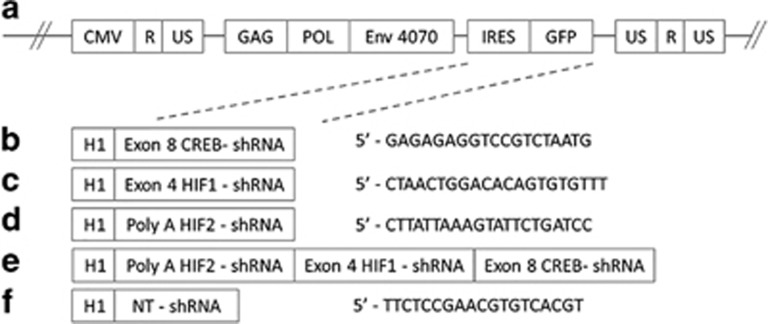
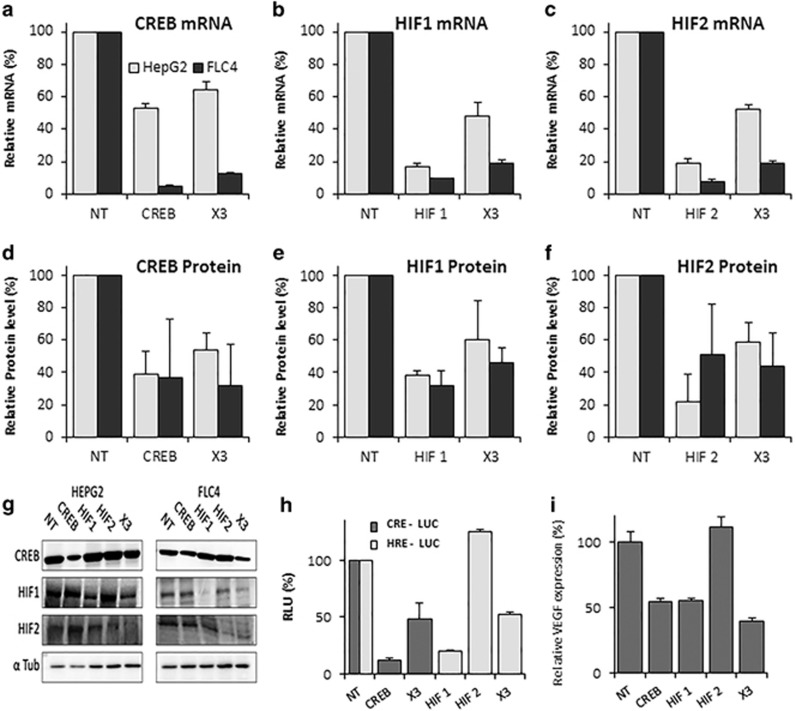
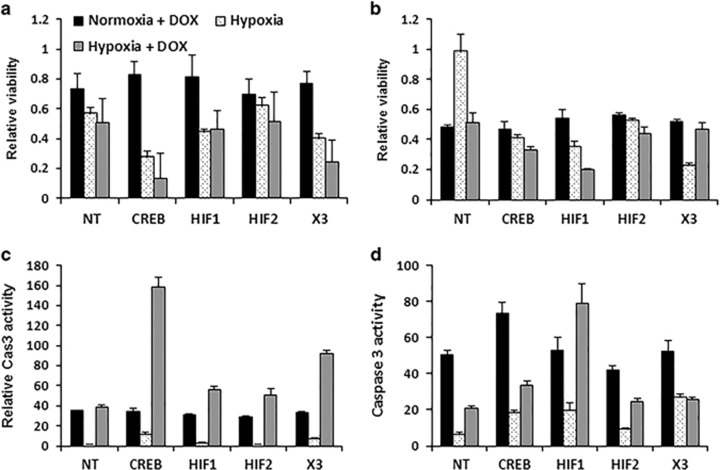
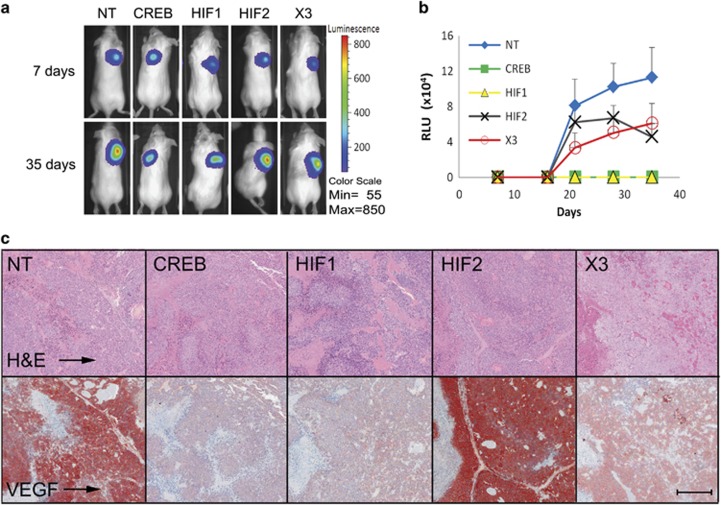
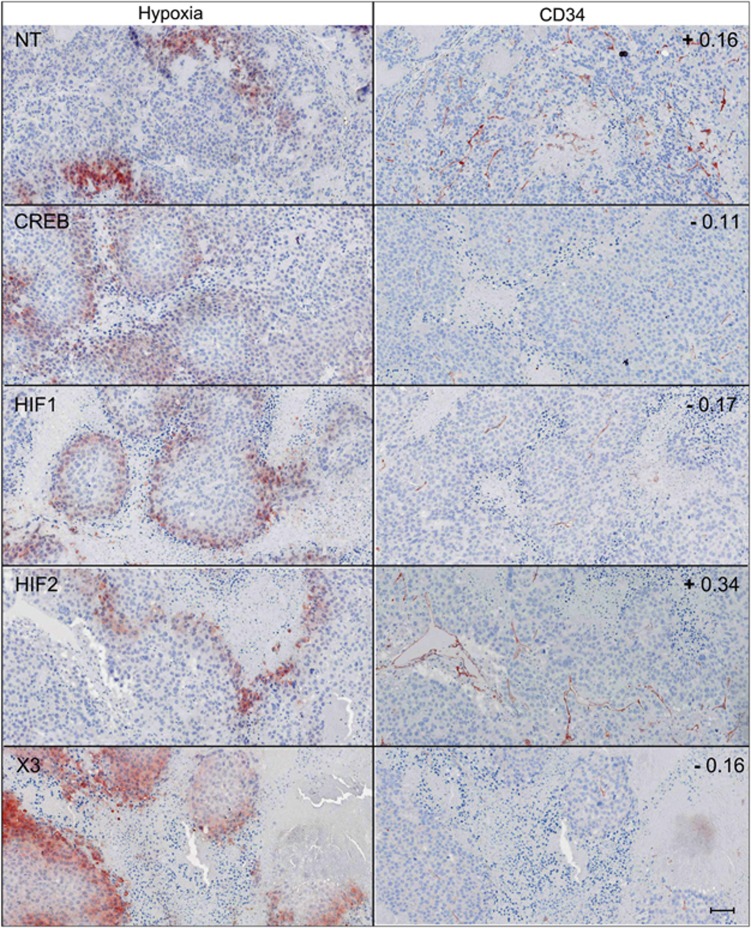
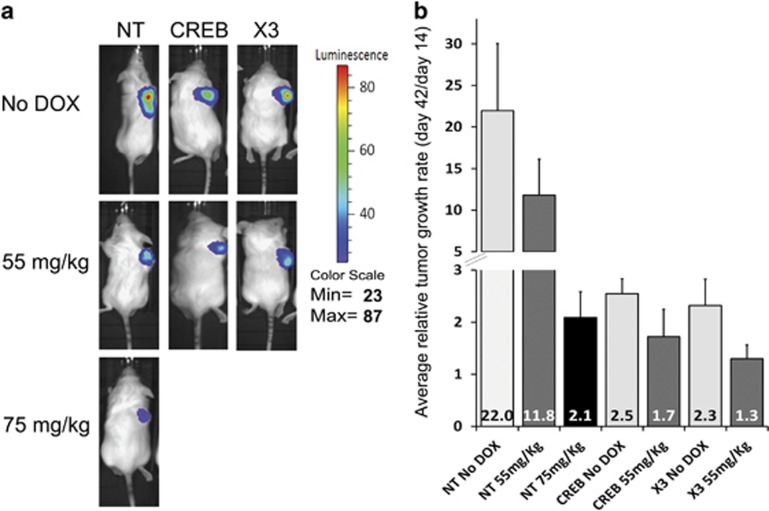
The fast proliferation of tumor cells develops faster than the vasculature, resulting, in most malignant tumors, in generation of hypoxic regions. Hypoxia renders solid tumors resistant to radiation and chemotherapeutics while providing opportunities for tumor-selective therapies targeting tumor hypoxia. Here we exploit two properties of tumors: propagation of tumor cells and ongoing generation of hypoxic regions to construct a system that preferentially leads to the death of tumor cells and thus hinders tumor growth. We constructed murine leukemia virus replication-competent (RCR) viruses that infect only propagating cells. These viruses express small hairpin RNAs (shRNAs) targeting cyclic AMP-response-element binding protein (CREB), hypoxia-inducible factors 1 (HIF)-1 or HIF-2 individually or all three together (X3). These viruses efficiently infected in vitro human hepatocellular carcinoma (HepG2 and FLC4) cells and established persistence of the virus and knocked down the expression of the regulators of the hypoxia-responding genes. Knockdown of either HIF-1 or CREB or both in hypoxia reduced the expression of hypoxia-response elements- and CRE-mediated gene expression, diminished cell proliferation and increased caspase-3 activity. We did not detect any significant effect of the efficiently knocked down HIF-2 on any of the functions tested in vitro. Moreover, severe combined immunodeficiency mice implanted subcutaneously with HepG2 stably infected with recombinant RCRs showed reduction of tumor growth and vascular endothelial growth factor expression, and no hypoxia-guided neovascularization. Combined treatment (RCRs+doxorubicin) improved efficacy in the context of in vitro hypoxia and in vivo (with either vACE-CREB or vACE-X3). This synergistic effect may lead to an improved efficacy and safety profile of the treatment that may result in fewer side effects.
Overview
The claims and statistics of this paper haven’t been checked yet.
Run the check — free, no account needed. It reads the open-access text and checks the sources it cites.
Integrity signals
Registry
Cites
Statistics
Figures
Verification
Claims the paper makes
The claims and statistics of this paper haven’t been checked yet.
Run the check — free, no account needed. It reads the open-access text and checks the sources it cites.
Claims other papers make about this one
Each is checked against this paper’s own text: does it say what the citing paper says it does?
The source backs part of the claim, not all of it — or backs it for a different population, condition or comparison.
In the citing paper
“Genetic and pharmacological studies using inducible RNA interference against HIF-1α or HIF-2α demonstrated potent inhibition of tumor growth in animal models [276,277].”
From HIF inhibition: Current strategies and clinical challenges (2026) · cites this paper as [276]
Experimental — accuracy not yet measured
Self-check
Percentages, sums and reported differences re-computed from the paper’s own numbers.
The self-check needs the paper’s full text.
Citations
Cites
Differential Roles of Hypoxia-Inducible Factor 1α (HIF-1α) and HIF-2α in Hypoxic Gene Regulation
Hu, C.-J., Wang, L.-Y., Chodosh, L. A., Keith, B., & Simon, M. C. (2003) · Molecular and Cellular Biology · doi:10.1128/mcb.23.24.9361-9374.2003 · Cited by 1,386
Wenger, R. H. (2002) · The FASEB Journal · doi:10.1096/fj.01-0944rev · Cited by 1,135
Tanaka, T., Yamaguchi, J., Shoji, K., & Nangaku, M. (2012) · Journal of Biological Chemistry · doi:10.1074/jbc.m112.374587 · Cited by 50
Meyuhas, R., Pikarsky, E., Tavor, E., Klar, A., Abramovitch, R., Hochman, J., Lago, T. G., & Honigman, A. (2008) · Molecular Cancer Research · doi:10.1158/1541-7786.mcr-07-2086 · Cited by 39
Self-citation
Research works printed but not linked: 49
- Dhanasekaran R, Limaye A, Cabrera R . Hepatocellular carcinoma: current trends in worldwide epidemiology, risk factors, diagnosis, and therapeutics. Hepat Med 2012; 4: 19–37.
- Abramovitch R, Tavor E, Jacob-Hirsch J, Zeira E, Amariglio N, Pappo O et al. A pivotal role of cyclic AMP-responsive element binding protein in tumor progression. Cancer Res 2004; 64: 1338–1346. · DOI
- Lu X, Kang Y . Hypoxia and hypoxia-inducible factors: master regulators of metastasis. Clin Cancer Res 2010; 16: 5928–5935. · DOI · Paper page
- Rhim T, Lee DY, Lee M . Hypoxia as a target for tissue specific gene therapy. J Control Release 2013; 172: 484–494. · DOI
- Durand RE, Sham E . The lifetime of hypoxic human tumor cells. Int J Radiat Oncol Biol Phys 1998; 42: 711–715. · DOI
- Wu XZ, Xie GR, Chen D . Hypoxia and hepatocellular carcinoma: the therapeutic target for hepatocellular carcinoma. J Gastroenterol Hepatol 2007; 22: 1178–1182. · DOI
- Harris AL . Hypoxia—a key regulatory factor in tumour growth. Nat Rev Cancer 2002; 2: 38–47. · DOI · Paper page
- Le QT, Denko NC, Giaccia AJ . Hypoxic gene expression and metastasis. Cancer Metastasis Rev 2004; 23: 293–310. · DOI
- Majmundar AJ, Wong WJ, Simon MC . Hypoxia-inducible factors and the response to hypoxic stress. Mol Cell 2010; 40: 294–309. · DOI · Paper page
- Choi SH, Shin HW, Park JY, Yoo JY, Kim do Y, Ro WS et al. Effects of the knockdown of hypoxia inducible factor-1 alpha expression by adenovirus-mediated shRNA on angiogenesis and tumor growth in hepatocellular carcinoma cell lines. Korean J Hepatol 2010; 16: 280–287. · DOI
- Holmquist-Mengelbier L, Fredlund E, Lofstedt T, Noguera R, Navarro S, Nilsson H et al. Recruitment of HIF-1alpha and HIF-2alpha to common target genes is differentially regulated in neuroblastoma: HIF-2alpha promotes an aggressive phenotype. Cancer Cell 2006; 10: 413–423. · DOI · Paper page
- White PC, Shore AM, Clement M, McLaren J, Soeiro I, Lam EW et al. Regulation of cyclin D2 and the cyclin D2 promoter by protein kinase A and CREB in lymphocytes. Oncogene 2006; 25: 2170–2180. · DOI
- Mayr B, Montminy M . Transcriptional regulation by the phosphorylation-dependent factor CREB. Nat Rev Mol Cell Biol 2001; 2: 599–609. · DOI · Paper page
- Aggarwal S, Kim SW, Ryu SH, Chung WC, Koo JS . Growth suppression of lung cancer cells by targeting cyclic AMP response element-binding protein. Cancer Res 2008; 68: 981–988. · DOI
- Belkhiri A, Dar AA, Zaika A, Kelley M, El-Rifai W . t-Darpp promotes cancer cell survival by up-regulation of Bcl2 through Akt-dependent mechanism. Cancer Res 2008; 68: 395–403. · DOI
- Signorelli S, Jennings P, Leonard MO, Pfaller W . Differential effects of hypoxic stress in alveolar epithelial cells and microvascular endothelial cells. Cell Physiol Biochem 2010; 25: 135–144. · DOI
- Park SI, Park SJ, Lee J, Kim HE, Sohn JW, Park YG . Inhibition of cyclic AMP response element-directed transcription by decoy oligonucleotides enhances tumor-specific radiosensitivity. Biochem Biophys Res Commun 2016; 469: 363–369. · DOI
- Kovach SJ, Price JA, Shaw CM, Theodorakis NG, McKillop IH . Role of cyclic-AMP responsive element binding (CREB) proteins in cell proliferation in a rat model of hepatocellular carcinoma. J Cell Physiol 2006; 206: 411–419. · DOI
- Yu L, Guo X, Zhang P, Qi R, Li Z, Zhang S . Cyclic adenosine monophosphate-responsive element-binding protein activation predicts an unfavorable prognosis in patients with hepatocellular carcinoma. OncoTargets Ther 2014; 7: 873–879.
- Block A, Freund CT, Chen SH, Nguyen KP, Finegold M, Windler E et al. Gene therapy of metastatic colon carcinoma: regression of multiple hepatic metastases by adenoviral expression of bacterial cytosine deaminase. Cancer Gene Ther 2000; 7: 438–445. · DOI
- Chen SH, Chen XH, Wang Y, Kosai K, Finegold MJ, Rich SS et al. Combination gene therapy for liver metastasis of colon carcinoma in vivo. Proc Natl Acad Sci USA 1995; 92: 2577–2581. · DOI
- Nyati MK, Symon Z, Kievit E, Dornfeld KJ, Rynkiewicz SD, Ross BD et al. The potential of 5-fluorocytosine/cytosine deaminase enzyme prodrug gene therapy in an intrahepatic colon cancer model. Gene Ther 2002; 9: 844–849. · DOI
- Zhang M, Li S, Nyati MK, DeRemer S, Parsels J, Rehemtulla A et al. Regional delivery and selective expression of a high-activity yeast cytosine deaminase in an intrahepatic colon cancer model. Cancer Res 2003; 63: 658–663.
- Sung MW, Yeh HC, Thung SN, Schwartz ME, Mandeli JP, Chen SH et al. Intratumoral adenovirus-mediated suicide gene transfer for hepatic metastases from colorectal adenocarcinoma: results of a phase I clinical trial. Mol Ther 2001; 4: 182–191. · DOI
- Logg CR, Robbins JM, Jolly DJ, Gruber HE, Kasahara N . Retroviral replicating vectors in cancer. Methods Enzymol 2012; 507: 199–228. · DOI
- Roe T, Reynolds TC, Yu G, Brown PO . Integration of murine leukemia virus DNA depends on mitosis. EMBO J 1993; 12: 2099–2108. · DOI · Paper page
- Miller DG, Adam MA, Miller AD . Gene transfer by retrovirus vectors occurs only in cells that are actively replicating at the time of infection. Mol Cell Biol 1990; 10: 4239–4242. · DOI
- Hiraoka K, Kimura T, Logg CR, Tai CK, Haga K, Lawson GW et al. Therapeutic efficacy of replication-competent retrovirus vector-mediated suicide gene therapy in a multifocal colorectal cancer metastasis model. Cancer Res 2007; 67: 5345–5353. · DOI
- Tai CK, Kasahara N . Replication-competent retrovirus vectors for cancer gene therapy. Front Biosci 2008; 13: 3083–3095. · DOI
- Logg CR, Logg A, Matusik RJ, Bochner BH, Kasahara N . Tissue-specific transcriptional targeting of a replication-competent retroviral vector. J Virol 2002; 76: 12783–12791. · DOI
- Logg CR, Tai CK, Logg A, Anderson WF, Kasahara N . A uniquely stable replication-competent retrovirus vector achieves efficient gene delivery in vitro and in solid tumors. Hum Gene Ther 2001; 12: 921–932. · DOI
- Sliva K, Schnierle BS . Selective gene silencing by viral delivery of short hairpin RNA. Virol J 2010; 7: 248. · DOI
- McIntyre GJ, Arndt AJ, Gillespie KM, Mak WM, Fanning GC . A comparison of multiple shRNA expression methods for combinatorial RNAi. Genet Vaccines Ther 2011; 9: 9. · DOI
- Sliva K, Schnierle BS . Stable integration of a functional shRNA expression cassette into the murine leukemia virus genome. Virology 2006; 351: 218–225. · DOI
- Li T, Liu Z, Jiang K, Ruan Q . Angiopoietin2 enhances doxorubicin resistance in HepG2 cells by upregulating survivin and Ref-1 via MSK1 activation. Cancer Lett 2013; 337: 276–284. · DOI
- Sayan M, Shukla A, MacPherson MB, Macura SL, Hillegass JM, Perkins TN et al. Extracellular signal-regulated kinase 5 and cyclic AMP response element binding protein are novel pathways inhibited by vandetanib (ZD6474) and doxorubicin in mesotheliomas. Am J Respir Cell Mol Biol 2014; 51: 595–603. · DOI
- Gilliam LA, Moylan JS, Ann Callahan L, Sumandea MP, Reid MB . Doxorubicin causes diaphragm weakness in murine models of cancer chemotherapy. Muscle Nerve 2011; 43: 94–102. · DOI
- Yang ZF, Poon RT . Vascular changes in hepatocellular carcinoma. Anat Rec 2008; 291: 721–734. · DOI
- Ryan HE, Lo J, Johnson RS . HIF-1 alpha is required for solid tumor formation and embryonic vascularization. EMBO J 1998; 17: 3005–3015. · DOI · Paper page
- Jeon SH, Chae BC, Kim HA, Seo GY, Seo DW, Chun GT et al. The PKA/CREB pathway is closely involved in VEGF expression in mouse macrophages. Mol Cells 2007; 23: 23–29. · DOI
- Zhu AX, Duda DG, Sahani DV, Jain RK . HCC and angiogenesis: possible targets and future directions. Nat Rev Clin Oncol 2011; 8: 292–301. · DOI
- Kizaka-Kondoh S, Inoue M, Harada H, Hiraoka M . Tumor hypoxia: a target for selective cancer therapy. Cancer Sci 2003; 94: 1021–1028. · DOI
- Tai CK, Wang W, Lai YH, Logg CR, Parker WB, Li YF et al. Enhanced efficiency of prodrug activation therapy by tumor-selective replicating retrovirus vectors armed with the Escherichia coli purine nucleoside phosphorylase gene. Cancer Gene Ther 2010; 17: 614–623. · DOI
- Tai CK, Wang WJ, Chen TC, Kasahara N . Single-shot, multicycle suicide gene therapy by replication-competent retrovirus vectors achieves long-term survival benefit in experimental glioma. Mol Ther 2005; 12: 842–851. · DOI
- Wang WJ, Tai CK, Kasahara N, Chen TC . Highly efficient and tumor-restricted gene transfer to malignant gliomas by replication-competent retroviral vectors. Hum Gene Ther 2003; 14: 117–127. · DOI
- Takahashi M, Valdes G, Hiraoka K, Inagaki A, Kamijima S, Micewicz E et al. Radiosensitization of gliomas by intracellular generation of 5-fluorouracil potentiates prodrug activator gene therapy with a retroviral replicating vector. Cancer Gene Ther 2014; 21: 405–410. · DOI
- Huang TT, Hlavaty J, Ostertag D, Espinoza FL, Martin B, Petznek H et al. Toca 511 gene transfer and 5-fluorocytosine in combination with temozolomide demonstrates synergistic therapeutic efficacy in a temozolomide-sensitive glioblastoma model. Cancer Gene Ther 2013; 20: 544–551. · DOI
- He C, Sun XP, Qiao H, Jiang X, Wang D, Jin X et al. Downregulating hypoxia-inducible factor-2alpha improves the efficacy of doxorubicin in the treatment of hepatocellular carcinoma. Cancer Sci 2012; 103: 528–534. · DOI
- Ye CG, Yeung JH, Huang GL, Cui P, Wang J, Zou Y et al. Increased glutathione and mitogen-activated protein kinase phosphorylation are involved in the induction of doxorubicin resistance in hepatocellular carcinoma cells. Hepatol Res 2013; 43: 289–299. · DOI
Cited by
Sorted by citations
HIF inhibition: Current strategies and clinical challenges
Więch-Walów, A., Bartoszewska, S., Barton, A., Czechowicz, P., Dudzik, J., Wielockx, B., Collawn, J. F., & Bartoszewski, R. (2026) · Redox biology · doi:10.1016/j.redox.2026.104220 · Cited by 3
“Genetic and pharmacological studies using inducible RNA interference against HIF-1 α or HIF-2 α demonstrated potent inhibition of tumor growth in animal models [276,277].”
Metadata
- Authors
- Shneor, D., Folberg, R., Pe'er, J., Honigman, A., & Frenkel, S.
- Affiliations
- Hebrew University of Jerusalem (IL)
- Oakland University (US)
- Hadassah Medical Center (IL)
- Corresponding author
- Frenkel, S
- ORCID
- Venue
- Cancer Gene Therapy
- Published
- 2016-12-09
- Volume
- 24
- Issue
- 2
- Pages
- 64-74
- ISSN
- 0929-1903 (ISSN-L)
- 1476-5500
- PMC
- PMC5339434
- OpenAlex
- W2560657110
- Cited by
- 16
- References
- 4
- Citations by year
- 2026: 1 · 2024: 1 · 2023: 3 · 2021: 2 · 2020: 2 · 2019: 5 · 2018: 1 · 2017: 1
- FWCI
- 1.89
- Type
- journal article
- Language
- en
- Open access
- hybrid
- doi.org
- Licence
- Locations
- Cancer Gene Therapy (publishedVersion, cc-by-nc-nd)
- PubMed Central (publishedVersion, cc-by-nc-nd)
- PubMed (publishedVersion)
- Funders
- Hebrew University of Jerusalem
- Israel Cancer Association
- Israel Science Foundation
- Topics
- Life Sciences › Biochemistry, Genetics and Molecular Biology › Genetics › Virus-based gene therapy research
- Life Sciences › Biochemistry, Genetics and Molecular Biology › Cancer Research › Cancer, Hypoxia, and Metabolism
- Life Sciences › Biochemistry, Genetics and Molecular Biology › Molecular Biology › Angiogenesis and VEGF in Cancer
- Keywords
- hepatocellular carcinoma, tumor hypoxia, CREB, HIF-1, HIF-2, murine leukemia virus, shRNA, gene knockdown, vascular endothelial growth factor, tumor angiogenesis, doxorubicin combination therapy, caspase-3, tumor growth inhibition
- MeSH terms
- Endothelial PAS Domain-Containing Protein 1, Animals, Hypoxia, Disease Models, Animal, Genetic Vectors, Carcinoma, Hepatocellular, Humans, Liver Neoplasms, Neovascularization, Pathologic, Retroviridae, Biomarkers, Gene Expression Regulation, Neoplastic, Cyclic AMP Response Element-Binding Protein, Xenograft Model Antitumor Assays, Gene Order, RNA, Small Interfering, Cell Line, Tumor, Tumor Burden, Cell Proliferation, Mice, Basic Helix-Loop-Helix Transcription Factors, Basic Helix-Loop-Helix Proteins, Hypoxia-Inducible Factor 1, Gene Knockdown Techniques
About these checks
Registry, retraction, Cites and statistics results are computed, not judged, with one exception: a printed reference that no index lists is read once by a model before it counts as a citation error. Claims are extracted by a model and kept only when their quote appears verbatim in the text; each cited source is then checked, with a model’s help, for whether it says what the claim relies on. Those verdicts can be wrong — read the claim’s quote and the cited source before relying on one.
Statistics and arithmetic are recomputed, not judged.
Confidence bands are shown only for fields calibrated on our annotated test set. None is calibrated yet, so no band is shown.
What counts as a claim ›How we measure confidence ›How we check this ›
Are you an author, or do you see a problem with this page? Request a review
How to cite
Cite CoChat for the checks on this page, and the paper for its own findings.
- This page
- CoChat. (2026). Citation check: Stable knockdown of CREB, HIF-1 and HIF-2 by replication-competent retroviruses abrogates the responses to hypoxia in hepatocellular carcinoma. https://app.cochat.ai/papers/10.1038/cgt.2016.68
- The paper
- Shneor, D., Folberg, R., Pe'er, J., Honigman, A., & Frenkel, S. (2017). Stable knockdown of CREB, HIF-1 and HIF-2 by replication-competent retroviruses abrogates the responses to hypoxia in hepatocellular carcinoma. Cancer Gene Therapy. https://doi.org/10.1038/cgt.2016.68
