

The DOI matches its Crossref record; 1 of the 1 references it cites were found in a registry or an index.
Microbial stratification in low pH oxic and suboxic macroscopic growths along an acid mine drainage
Abstract
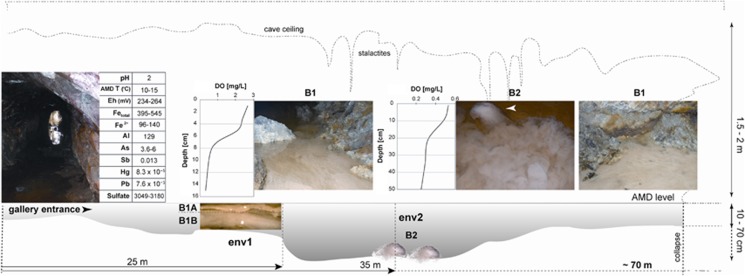
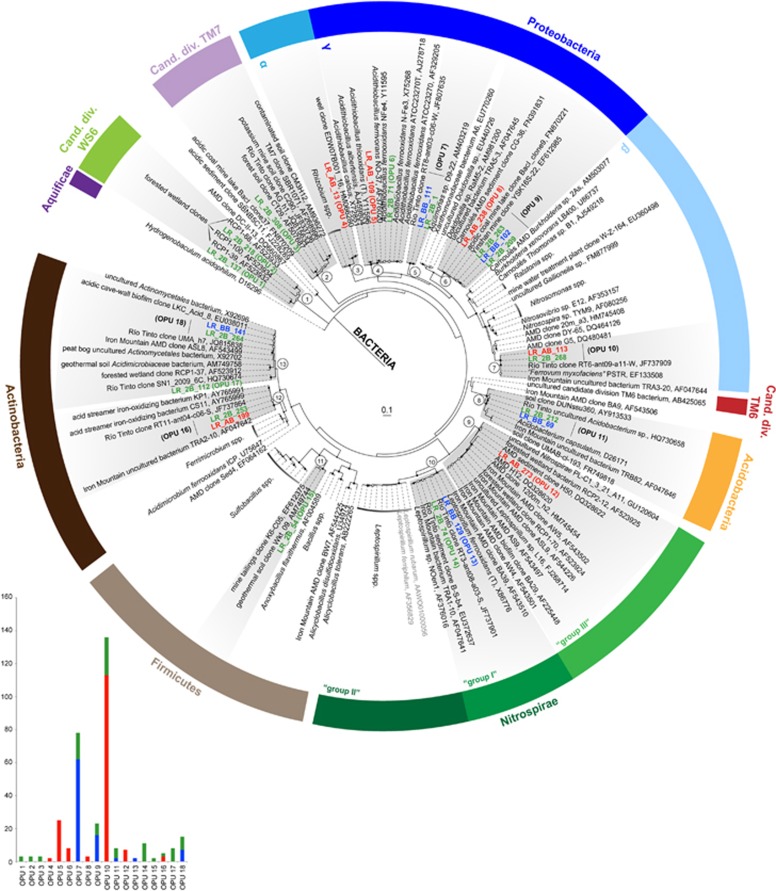
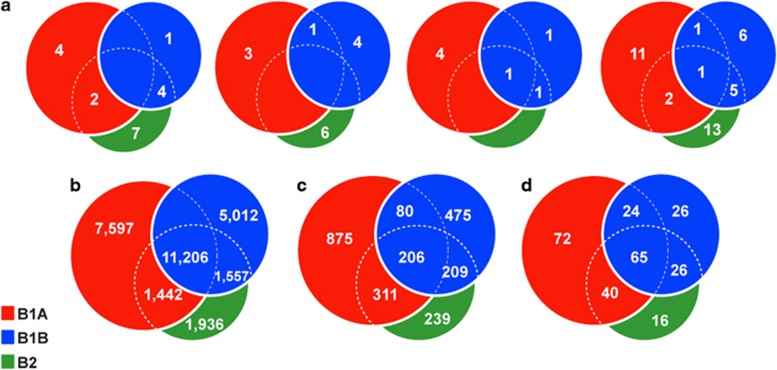
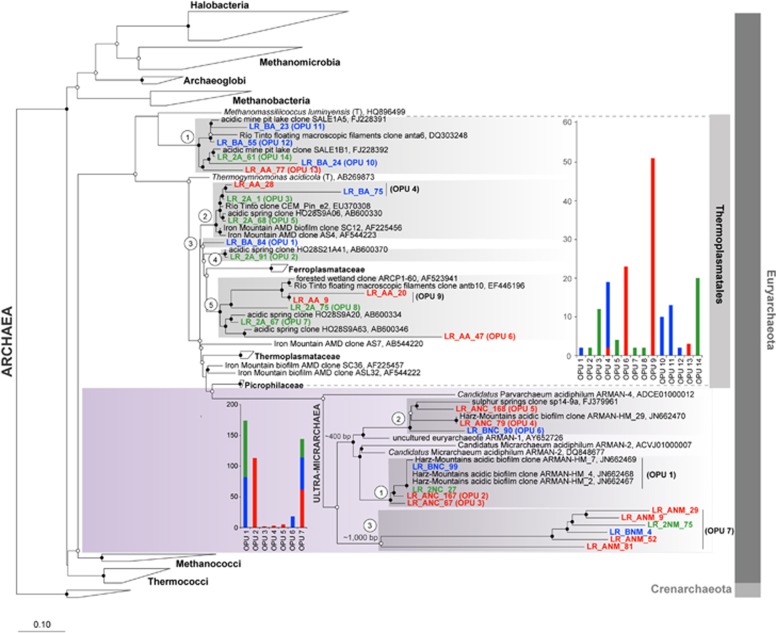
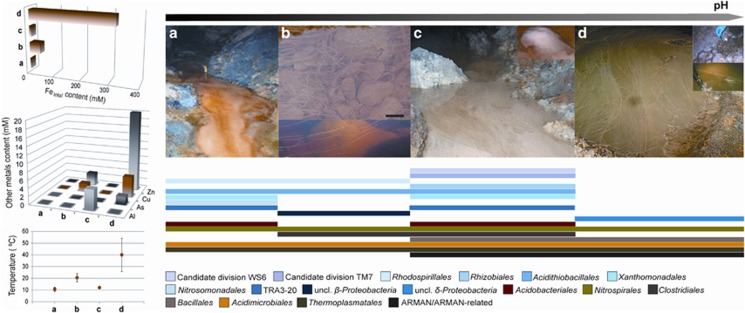
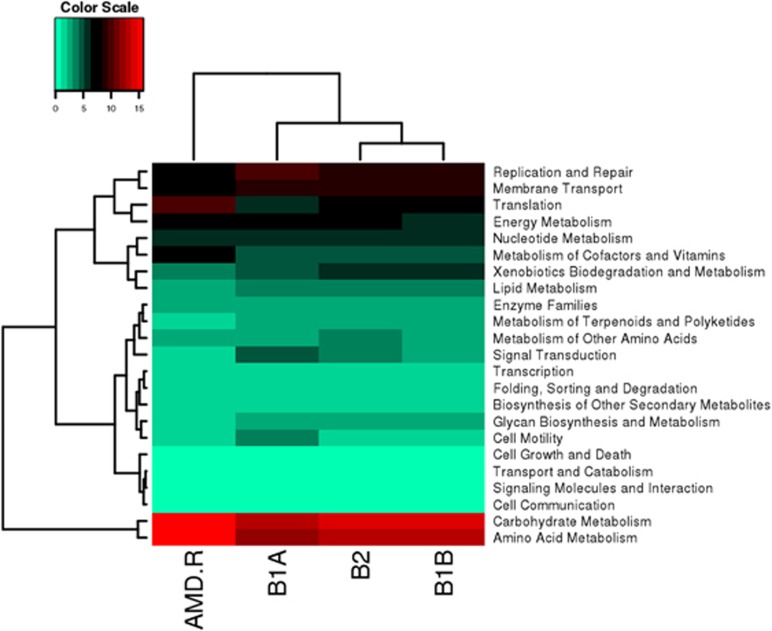
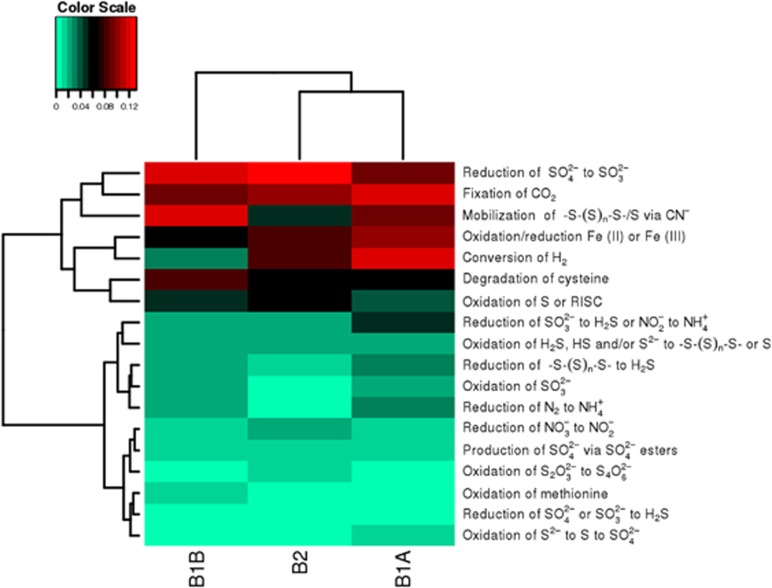
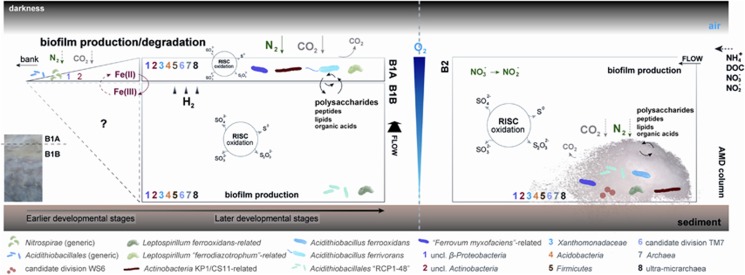
Macroscopic growths at geographically separated acid mine drainages (AMDs) exhibit distinct populations. Yet, local heterogeneities are poorly understood. To gain novel mechanistic insights into this, we used OMICs tools to profile microbial populations coexisting in a single pyrite gallery AMD (pH ∼2) in three distinct compartments: two from a stratified streamer (uppermost oxic and lowermost anoxic sediment-attached strata) and one from a submerged anoxic non-stratified mat biofilm. The communities colonising pyrite and those in the mature formations appear to be populated by the greatest diversity of bacteria and archaea (including ‘ARMAN’ (archaeal Richmond Mine acidophilic nano-organisms)-related), as compared with the known AMD, with ∼44.9% unclassified sequences. We propose that the thick polymeric matrix may provide a safety shield against the prevailing extreme condition and also a massive carbon source, enabling non-typical acidophiles to develop more easily. Only 1 of 39 species were shared, suggesting a high metabolic heterogeneity in local microenvironments, defined by the O2 concentration, spatial location and biofilm architecture. The suboxic mats, compositionally most similar to each other, are more diverse and active for S, CO2, CH4, fatty acid and lipopolysaccharide metabolism. The oxic stratum of the streamer, displaying a higher diversity of the so-called ‘ARMAN’-related Euryarchaeota, shows a higher expression level of proteins involved in signal transduction, cell growth and N, H2, Fe, aromatic amino acids, sphingolipid and peptidoglycan metabolism. Our study is the first to highlight profound taxonomic and functional shifts in single AMD formations, as well as new microbial species and the importance of H2 in acidic suboxic macroscopic growths.
Overview
The claims and statistics of this paper haven’t been checked yet.
Run the check — free, no account needed. It reads the open-access text and checks the sources it cites.
Integrity signals
Registry
Cites
Statistics
Figures
Verification
Claims the paper makes
The claims and statistics of this paper haven’t been checked yet.
Run the check — free, no account needed. It reads the open-access text and checks the sources it cites.
Claims other papers make about this one
Each is checked against this paper’s own text: does it say what the citing paper says it does?
In the citing paper
“M. luminyensis were also detected in low-pH environments impacted by acid mine drainage (Mendez-Garcia et al., 2014).”
From Microbial Diversity in Sulfate-Reducing Marine Sediment Enrichment Cultures Associated with Anaerobic Biotransformation of Coastal Stockpiled Phosphogypsum (Sfax, Tunisia) (2017) · cites this paper as Mendez-Garcia et al., 2014
Self-check
Percentages, sums and reported differences re-computed from the paper’s own numbers.
The self-check needs the paper’s full text.
Citations
Cites
Community structure and metabolism through reconstruction of microbial genomes from the environment
Tyson, G. W., Chapman, J., Hugenholtz, P., Allen, E. E., Ram, R. J., Richardson, P. M., Solovyev, V. V., Rubin, E. M., Rokhsar, D. S., & Banfield, J. F. (2004) · Nature · doi:10.1038/nature02340 · Cited by 2,417
Research works printed but not linked: 58
- Aguilera, 2006, Eukaryotic community distribution and its relationship to water physicochemical parameters in an extreme acidic environment, Rio Tinto (southwestern Spain), Appl Environ Microbiol, 72, 5325, 10.1128/AEM.00513-06 · DOI
- Amaral-Zettler, 2011, Microbial community structure across the tree of life in the extreme Río Tinto, ISME J, 5, 42, 10.1038/ismej.2010.101 · DOI
- Amils, 2011, From río tinto to Mars: the terrestrial and extraterrestrial ecology of acidophiles, Adv Appl Microbiol, 77, 41, 10.1016/B978-0-12-387044-5.00002-9 · DOI
- Baker, 2003, Microbial communities in acid mine drainage, FEMS Microbiol Ecol, 44, 139, 10.1016/S0168-6496(03)00028-X · DOI
- Baker, 2010, Enigmatic, ultrasmall, uncultivated Archaea, Proc Natl Acad Sci USA, 107, 8806, 10.1073/pnas.0914470107 · DOI
- Baker, 2009, Insights into the diversity of eukaryotes in acid mine drainage biofilm communities, Appl Environ Microbiol, 75, 2192, 10.1128/AEM.02500-08 · DOI
- Baker, 2006, Lineages of acidophilic archaea revealed by community genomic analysis, Science, 314, 1933, 10.1126/science.1132690 · DOI
- Baker-Austin, 2010, Biofilm development in the extremely acidophilic archaeon ‘Ferroplasma acidarmanus’ Fer1, Extremophiles, 14, 485, 10.1007/s00792-010-0328-1 · DOI
- Belnap, 2011, Quantitative proteomic analyses of the response of acidophilic microbial communities to different pH conditions, ISME J, 5, 1152, 10.1038/ismej.2010.200 · DOI
- Belnap, 2010, Cultivation and quantitative proteomic analyses of acidophilic microbial communities, ISME J, 4, 520, 10.1038/ismej.2009.139 · DOI
- Bertin, 2011, Metabolic diversity among main microorganisms inside an arsenic-rich ecosystem revealed by meta- and proteo-genomics, ISME J, 5, 1735, 10.1038/ismej.2011.51 · DOI
- Bohorquez, 2012, In-depth characterization via complementing culture-independent approaches of the microbial community in an acidic hot spring of the Colombian Andes, Microb Ecol, 63, 103, 10.1007/s00248-011-9943-3 · DOI
- Bond, 2000, Comparison of acid mine drainage microbial communities in physically and geochemically distinct ecosystems, Appl Environ Microbiol, 66, 4962, 10.1128/AEM.66.11.4962-4971.2000 · DOI
- Bond, 2000, Phylogeny of microorganisms populating a thick, subaerial, predominantly lithotrophic biofilm at an extreme acid mine drainage site, Appl Environ Microbiol, 66, 3842, 10.1128/AEM.66.9.3842-3849.2000 · DOI
- Comolli, 2009, Three-dimensional analysis of the structure and ecology of a novel, ultra-small archaeon, ISME J, 3, 159, 10.1038/ismej.2008.99 · DOI
- Denef, 2010, Proteogenomic basis for ecological divergence of closely related bacteria in natural acidophilic microbial communities, Proc Natl Acad Sci USA, 107, 2383, 10.1073/pnas.0907041107 · DOI
- Dojka, 2000, Expanding the known diversity and environmental distribution of an uncultured phylogenetic division of bacteria, Appl Environ Microbiol, 66, 1617, 10.1128/AEM.66.4.1617-1621.2000 · DOI
- García-Moyano, 2007, Prokaryotic community composition and ecology of floating macroscopic filaments from an extreme acidic environment, Rio Tinto (SW, Spain), Syst Appl Microbiol, 30, 601, 10.1016/j.syapm.2007.08.002 · DOI
- Golyshina, 2011, Environmental, biogeographic, and biochemical patterns of archaea of the family Ferroplasmaceae, Appl Environ Microbiol, 77, 5071, 10.1128/AEM.00726-11 · DOI
- González-Toril, 2011, Geomicrobiology of La Zarza-Perrunal acid mine effluent (Iberian Pyritic Belt, Spain), Appl Environ Microbiol, 77, 2685, 10.1128/AEM.02459-10 · DOI
- Hallberg, 2010, New perspectives in acid mine drainage microbiology, Hydrometallurgy, 104, 448, 10.1016/j.hydromet.2009.12.013 · DOI
- Hallberg, 2006, Macroscopic streamer growths in acidic, metal-rich mine waters in north wales consist of novel and remarkably simple bacterial communities, Appl Environ Microbiol, 72, 2022, 10.1128/AEM.72.3.2022-2030.2006 · DOI
- He, 2008, Microbial diversity in acid mineral bioleaching systems of Dongxiang copper mine and Yinshan lead-zinc mine, Extremophiles, 12, 225, 10.1007/s00792-007-0130-x · DOI
- Hedlund, 2011, Phylum XXII. Lentisphaerae, Bergey’s Manual Syst Bacteriol, 4, 785
- Hernández, 2013, Functional consequences of microbial shifts in the human gastrointestinal tract linked to antibiotic treatment and obesity, Gut Microbes, 4, 306, 10.4161/gmic.25321 · DOI
- Iino, 2013, Candidatus Methanogranum caenicola: a novel methanogen from the anaerobic digested sludge, and proposal of Methanomassiliicoccaceae fam. Nov. and Methanomassiliicoccales ord. nov., for a methanogenic lineage of the class Thermoplasmata, Microbes Environ, 28, 244, 10.1264/jsme2.ME12189 · DOI
- Johnson, 2012, Geomicrobiology of extremely acidic subsurface environments, FEMS Microbiol Ecol, 81, 2, 10.1111/j.1574-6941.2011.01293.x · DOI
- Jones, 2012, Community genomic analysis of an extremely acidophilic sulfur-oxidizing biofilm, ISME J, 6, 158, 10.1038/ismej.2011.75 · DOI
- Juottonen, 2008, Seasonality of rDNA- and rRNA-derived archaeal communities and methanogenic potential in a boreal mire, ISME J, 2, 1157, 10.1038/ismej.2008.66 · DOI
- Kimura, 2005, Microbial community in a geothermal aquifer associated with the subsurface of the Great Artesian Basin, Australia, Extremophiles, 9, 407, 10.1007/s00792-005-0454-3 · DOI
- Kuang, 2013, Contemporary environmental variation determines microbial diversity patterns in acid mine drainage, ISME J, 7, 1038, 10.1038/ismej.2012.139 · DOI
- Liljeqvist, 2013, Gene identification and substrate regulation provide insights into sulfur accumulation during bioleaching with the psychrotolerant acidophile Acidithiobacillus ferrivorans, Appl Environ Microbiol, 79, 951, 10.1128/AEM.02989-12 · DOI
- Liljeqvist, 2011, Draft genome of the psychrotolerant acidophile Acidithiobacillus ferrivorans SS3, J Bacteriol, 193, 4304, 10.1128/JB.05373-11 · DOI
- López-Archilla, 2004, Macrofilamentous microbial communities in the metal-rich and acidic River Tinto, Spain, FEMS Microbiol Lett, 235, 221, 10.1111/j.1574-6968.2004.tb09592.x · DOI
- López-López, 2010, Extremely halophilic microbial communities in anaerobic sediments from a solar saltern, Environ Microbiol Rep, 2, 258, 10.1111/j.1758-2229.2009.00108.x · DOI
- Loredo, 2005, Release of toxic metals and metalloids from Los Rueldos mercury mine (Asturias, Spain), Sci Total Environ, 340, 247, 10.1016/j.scitotenv.2004.08.019 · DOI
- Macalady, 2007, Extremely acidic, pendulous cave wall biofilms from the Frasassi cave system, Italy, Environ Microbiol, 9, 1402, 10.1111/j.1462-2920.2007.01256.x · DOI
- Moreno-Paz, 2010, Environmental transcriptome analysis reveals physiological differences between biofilm and planktonic modes of life of the iron oxidizing bacteria Leptospirillum spp. in their natural microbial community, BMC Genom, 11, 404, 10.1186/1471-2164-11-404 · DOI
- Mueller, 2011, Proteome changes in the initial bacterial colonist during ecological succession in an acid mine drainage biofilm community, Environ Microbiol, 13, 2279, 10.1111/j.1462-2920.2011.02486.x · DOI
- Muller, 2010, eggNOG v2.0: extending the evolutionary genealogy of genes with enhanced non-supervised orthologous groups, species and functional annotations, Nucleic Acids Res, 38, D190, 10.1093/nar/gkp951 · DOI
- Nancucheo, 2010, Production of glycolic acid by chemolithotrophic iron- and sulfur-oxidizing bacteria and its role in delineating and sustaining acidophilic sulfide mineral-oxidizing consortia, Appl Environ Microbiol, 76, 461, 10.1128/AEM.01832-09 · DOI
- Paul, 2012, ‘Methanoplasmatales,’ Thermoplasmatales-related archaea in termite guts and other environments, are the seventh order of methanogens, Appl Environ Microbiol, 78, 8245, 10.1128/AEM.02193-12 · DOI · Paper page
- Pruesse, 2012, SINA: accurate high-throughput multiple sequence alignment of ribosomal RNA genes, Bioinformatics, 28, 1823, 10.1093/bioinformatics/bts252 · DOI
- Quatrini, 2009, Extending the models for iron and sulfur oxidation in the extreme acidophile Acidithiobacillus ferrooxidans, BMC Genom, 10, 394, 10.1186/1471-2164-10-394 · DOI
- Ram, 2005, Community proteomics of a natural microbial biofilm, Science, 308, 1915, 10.1126/science.1109070 · DOI
- Rawlings, 2002, Heavy metal mining using microbes, Annu Rev Microbiol, 56, 65, 10.1146/annurev.micro.56.012302.161052 · DOI
- Rowe, 2007, Microbial communities and geochemical dynamics in an extremely acidic, metal-rich stream at an abandoned sulfide mine (Huelva, Spain) underpinned by two functional primary production systems, Environ Microbiol, 9, 1761, 10.1111/j.1462-2920.2007.01294.x · DOI
- Sakai, 2012, Methanolinea mesophila sp. nov., a hydrogenotrophic methanogen isolated from rice field soil, and proposal of the archaeal family Methanoregulaceae fam. nov. within the order Methanomicrobiales, Int J Syst Evol Microbiol, 62, 1389, 10.1099/ijs.0.035048-0 · DOI
- Sánchez-Andrea, 2011, Microbial diversity in anaerobic sediments at Río Tinto, a naturally acidic environment with a high heavy metal content, Appl Environ Microbiol, 77, 6085, 10.1128/AEM.00654-11 · DOI
- Sunna, 2003, A gene encoding a novel extremely thermostable 1,4-beta-xylanase isolated directly from an environmental DNA sample, Extremophiles, 7, 63, 10.1007/s00792-002-0296-1 · DOI
- Tyson, 2005, Genome-directed isolation of the key nitrogen fixer Leptospirillum ferrodiazotrophum sp. nov. from an acidophilic microbial community, Appl Environ Microbiol, 71, 6319, 10.1128/AEM.71.10.6319-6324.2005 · DOI
- Valdés, 2008, Acidithiobacillus ferrooxidans metabolism: from genome sequence to industrial applications, BMC Genom, 9, 597, 10.1186/1471-2164-9-597 · DOI
- Wilmes, 2009, Natural acidophilic biofilm communities reflect distinct organismal and functional organization, ISME J, 3, 266, 10.1038/ismej.2008.90 · DOI
- Yarza, 2008, The All-Species Living Tree Project: a 16S rDNA-based phylogenetic tree of all sequenced type strains, Syst Appl Microbiol, 31, 241, 10.1016/j.syapm.2008.07.001 · DOI
- Yin, 2008, Bacterial diversity based on 16S rRNA and gyrB genes at Yinshan mine, China, Syst Appl Microbiol, 31, 302, 10.1016/j.syapm.2008.05.003 · DOI
- Zhou, 2003, Bacterial phylogenetic diversity and a novel candidate division of two humid region, sandy surface soils, Soil Biol Biochem, 35, 915, 10.1016/S0038-0717(03)00124-X · DOI
- Ziegler, 2009, Matrix composition and community structure analysis of a novel bacterial pyrite leaching community, Environ Microbiol, 11, 2329, 10.1111/j.1462-2920.2009.01959.x · DOI
- Ziegler, 2013, Oxygen-dependent niche formation of a pyrite-dependent acidophilic consortium built by archaea and bacteria, ISME J, 7, 1725, 10.1038/ismej.2013.64 · DOI
Cited by
Sorted by citations
Zouch, H., Karray, F., Armougom, F., Chifflet, S., Hirschler-Réa, A., Kharrat, H., Kamoun, L., Ben Hania, W., Ollivier, B., Sayadi, S., et al. (2017) · Frontiers in Microbiology · doi:10.3389/fmicb.2017.01583 · Cited by 37
Parker, C. W., Senko, J. M., Auler, A. S., Sasowsky, I. D., Schulz, F., Woyke, T., & Barton, H. A. (2022) · Scientific Reports · doi:10.1038/s41598-022-21365-3 · Cited by 12
Metadata
- Authors
- Méndez-García, C., Mesa, V., Sprenger, R. R., Richter, M., Diez, M. S., Solano, J., Bargiela, R., Golyshina, O. V., Manteca, Á., Ramos, J. L., Gallego, J. R., Llorente, I., Martins dos Santos, V. A. P., Jensen, O. N., Peláez, A. I., Sánchez, J., & Ferrer, M.
- Affiliations
- Departamento de Biología Funcional—IUBA, Universidad de Oviedo , Oviedo, Spain
- Department of Biochemistry and Molecular Biology, University of Southern Denmark , Odense, Denmark
- Ribocon GmbH , Bremen, Germany
- Chair of Systems and Synthetic Biology, Wageningen University , Wageningen, The Netherlands
- Department of Bioremediation, Bio-Iliberis R&D , Granada, Spain
- Department of Applied Biocatalysis, Consejo Superior de Investigaciones Científicas (CSIC), Institute of Catalysis , Madrid, Spain
- School of Biological Sciences, Bangor University , Gwynedd, UK
- Consejo Superior de Investigaciones Científicas (CSIC), Estación Experimental del Zaidín , Granada, Spain
- Departamento de Explotación y Prospección de Minas—IUBA, Universidad de Oviedo , Oviedo, Spain
- Centro Nacional de Investigaciones Metalúrgicas, CSIC , Madrid, Spain
- Venue
- The ISME Journal
- Publisher
- Oxford University Press (OUP)
- Published
- 2014-01-16
- Volume
- 8
- Issue
- 6
- Pages
- 1259-1274
- ISSN
- 1751-7362
- 1751-7370
- PMC
- PMC4030236
- Cited by
- 101
- References
- 1
- Language
- en
About these checks
Registry, retraction, Cites and statistics results are computed, not judged, with one exception: a printed reference that no index lists is read once by a model before it counts as a citation error. Claims are extracted by a model and kept only when their quote appears verbatim in the text; each cited source is then checked, with a model’s help, for whether it says what the claim relies on. Those verdicts can be wrong — read the claim’s quote and the cited source before relying on one.
Statistics and arithmetic are recomputed, not judged.
Confidence bands are shown only for fields calibrated on our annotated test set. None is calibrated yet, so no band is shown.
What counts as a claim ›How we measure confidence ›How we check this ›
Are you an author, or do you see a problem with this page? Request a review
