

Interconnected microbiomes and resistomes in low-income human habitats
Open accessThe DOI matches its Crossref record; 50 of the 50 references it cites were found in a registry or an index.
Abstract
Antibiotic-resistant infections annually claim hundreds of thousands of lives worldwide. This problem is exacerbated by exchange of resistance genes between pathogens and benign microbes from diverse habitats. Mapping resistance gene dissemination between humans and their environment is a public health priority. Here we characterized the bacterial community structure and resistance exchange networks of hundreds of interconnected human faecal and environmental samples from two low-income Latin American communities. We found that resistomes across habitats are generally structured by bacterial phylogeny along ecological gradients, but identified key resistance genes that cross habitat boundaries and determined their association with mobile genetic elements. We also assessed the effectiveness of widely used excreta management strategies in reducing faecal bacteria and resistance genes in these settings representative of low- and middle-income countries. Our results lay the foundation for quantitative risk assessment and surveillance of resistance gene dissemination across interconnected habitats in settings representing over two-thirds of the world's population.
Overview
The claims and statistics of this paper haven’t been checked yet.
Free: it reads the open-access text and checks the first 5 claims that cite a source we can check. Create a free account to check every claim.
Integrity signals
Registry
Cites
Statistics
Figures
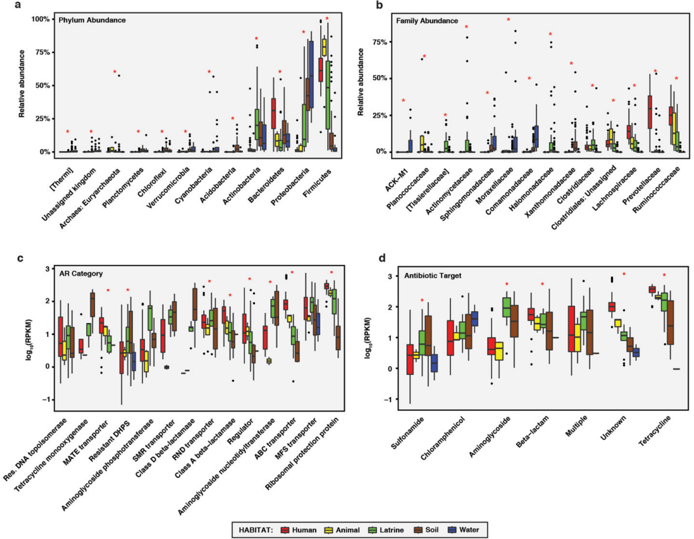
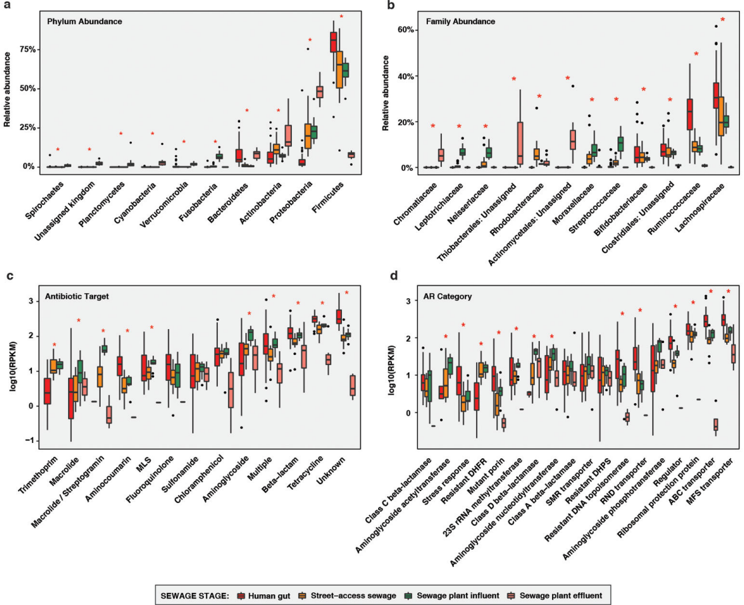
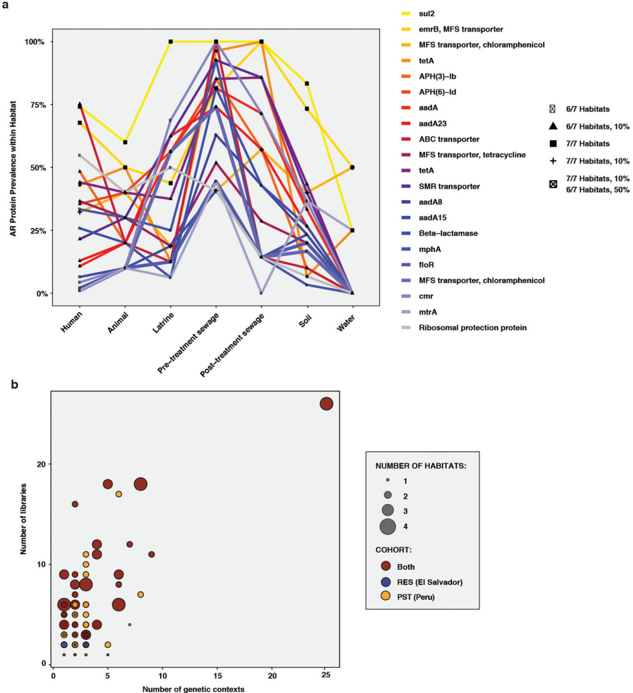
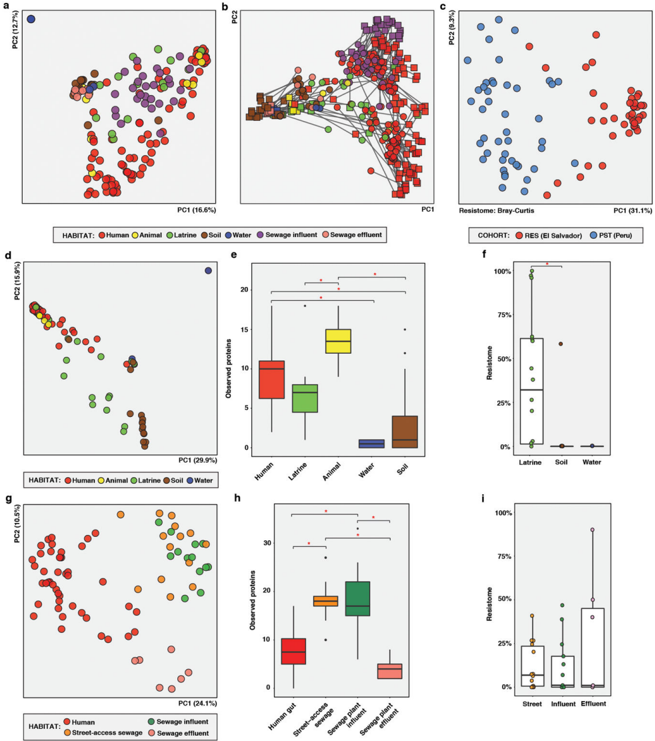
Verification
Claims the paper makes
The claims and statistics of this paper haven’t been checked yet.
Free: it reads the open-access text and checks the first 5 claims that cite a source we can check. Create a free account to check every claim.
Claims other papers make about this one
Each is checked against this paper’s own text: does it say what the citing paper says it does?
The source backs part of the claim, not all of it — or backs it for a different population, condition or comparison.
In the citing paper
“Raw sewage may contain antibiotic residues (originating from human waste, animal waste, or drug manufacturing effluent) at concentrations that can support the horizontal transfer of resistance genes among human pathogens, or theoretically, the mobilization of antibiotic resistance genes from environmental bacteria to human pathogens (directly or via gut commensals) 51-53 .”
From Urban informal settlements as hotspots of antimicrobial resistance and the need to curb environmental transmission. (2020) · cites this paper as [52]
Experimental — accuracy not yet measuredThe source backs part of the claim, not all of it — or backs it for a different population, condition or comparison.
In the citing paper
“Characterization of the resistome - or the collection of all antimicrobial resistance genes from bacteria - in humans, animals, and sewage in a shantytown in Lima, Peru, demonstrated that that AMR genes harbored by pathogenic and non-pathogenic bacteria are diverse and shared between humans and their environment 52 .”
From Urban informal settlements as hotspots of antimicrobial resistance and the need to curb environmental transmission. (2020) · cites this paper as [52]
Experimental — accuracy not yet measured
Self-check
Percentages, sums and reported differences re-computed from the paper’s own numbers.
The self-check needs the paper’s full text.
Citations
Cites
QIIME allows analysis of high-throughput community sequencing data
Caporaso, J. G., Kuczynski, J., Stombaugh, J., Bittinger, K., Bushman, F. D., Costello, E. K., Fierer, N., Peña, A. G., Goodrich, J. K., Gordon, J. I., et al. (2010) · Nature Methods · doi:10.1038/nmeth.f.303 · Cited by 34,887
Search and clustering orders of magnitude faster than BLAST
Edgar, R. C. (2010) · Bioinformatics · doi:10.1093/bioinformatics/btq461 · Cited by 20,826
UPARSE: highly accurate OTU sequences from microbial amplicon reads
Edgar, R. C. (2013) · Nature Methods · doi:10.1038/nmeth.2604 · Cited by 16,707
Metagenomic biomarker discovery and explanation
Segata, N., Izard, J., Waldron, L., Gevers, D., Miropolsky, L., Garrett, W. S., & Huttenhower, C. (2011) · Genome Biology · doi:10.1186/gb-2011-12-6-r60 · Cited by 16,192 · cited 1×
“LEfSe 55 was used to identify taxa that were discriminative between categories.”
Ultra-high-throughput microbial community analysis on the Illumina HiSeq and MiSeq platforms
Caporaso, J. G., Lauber, C. L., Walters, W. A., Berg-Lyons, D., Huntley, J., Fierer, N., Owens, S. M., Betley, J., Fraser, L., Bauer, M., et al. (2012) · The ISME Journal · doi:10.1038/ismej.2012.8 · Cited by 8,839
Human gut microbiome viewed across age and geography
Yatsunenko, T., Rey, F. E., Manary, M. J., Trehan, I., Dominguez-Bello, M. G., Contreras, M., Magris, M., Hidalgo, G., Baldassano, R. N., Anokhin, A. P., et al. (2012) · Nature · doi:10.1038/nature11053 · Cited by 7,815 · cited 4×
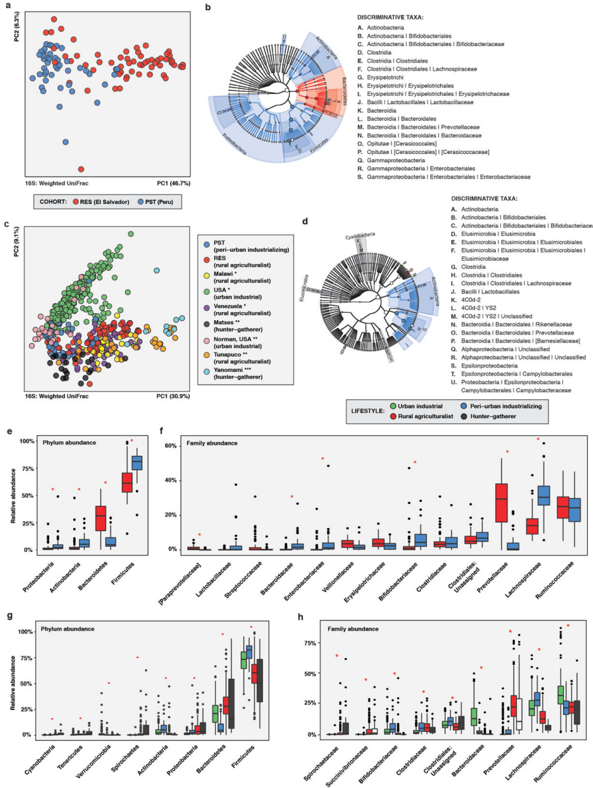
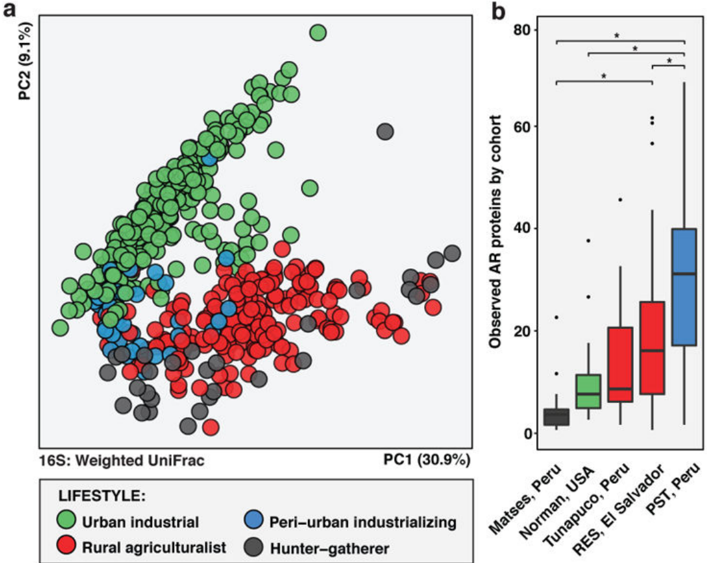
“…compared the RES and PST human fecal microbiota to published microbiota datasets from the USA, Malawi, Venezuela, and Peru (Amazonian hunter-gatherers and Andean highlands agriculturalists) (see Methods) 14,19,25 , classifying PST as “peri-urban industrializing” and RES as “rural agriculturalist”.”
InfluentialAntibiotic resistance threats in the United States, 2019
(U.S.), C. F. D. C. A. P. (2019) · doi:10.15620/cdc:82532 · Cited by 5,782
The Millennium Development Goals Report
(2018) · Human Rights Documents Online · doi:10.1163/2210-7975_hrd-9927-2015002 · Cited by 3,592
Antibiotic resistance is ancient
D’Costa, V. M., King, C. E., Kalan, L., Morar, M., Sung, W. W. L., Schwarz, C., Froese, D., Zazula, G., Calmels, F., Debruyne, R., et al. (2011) · Nature · doi:10.1038/nature10388 · Cited by 2,720 · cited 2×
“Most resistome studies have focused on either industrialized 11–13 or remote, ‘pristine’ settings 8,9,14 .”
Call of the wild: antibiotic resistance genes in natural environments
Allen, H. K., Donato, J., Wang, H. H., Cloud-Hansen, K. A., Davies, J., & Handelsman, J. (2010) · Nature Reviews Microbiology · doi:10.1038/nrmicro2312 · Cited by 2,361 · cited 1×
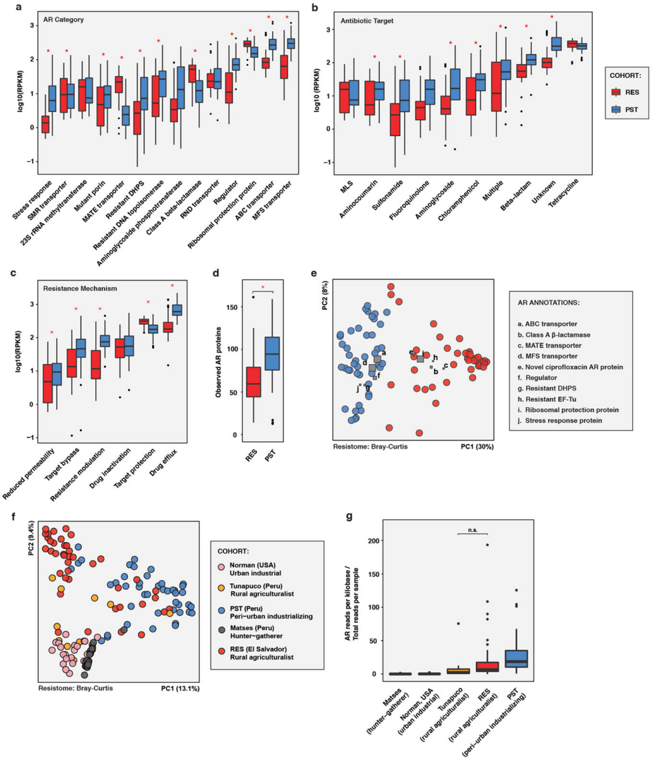
“We used ShortBRED 24 to quantify translated AR gene abundance in all sequenced metagenomes using a custom AR database that included AR genes identified here (see Methods; Supplementary Tables 3–5).”
Research works printed but not linked: 1
- 3. The Review on Antimicrobial Resistance, C. b. J. O. N. Review on Antimicrobial Resistance. Antimicrobial Resistance: Tackling a Crisis for the Health and Wealth of Nations. 2014; 2014
Cited by
Items 601–624 of 624
Pan, Z., Nguyen, M. N., Xie, Z., Wang, Q., Jia, W., Chen, X., Chen, C., & Lin, Q. (2026) · Waste Management · doi:10.1016/j.wasman.2026.115590 · Cited by 1
Yang, W., & Guo, J. (2026) · Environmental Microbiology · doi:10.1111/1462-2920.70330
Regional and Management-driven Variation in Apple Microbiome and ResistomePreprint
Kiplimo, D., Sperber, S., Nata’ala, M. K., Wisniewski, M., Droby, S., Höhne, M., Mwirichia, R., Berg, G., & Abdelfattah, A. (2026) · Research Square · doi:10.21203/rs.3.rs-9344661/v1
Linh, L. T. K., My, T. N., TRAN, N. T., Song, L. H., Nurjadi, D., Boutin, S., & Velavan, T. P. (2026) · npj Antimicrobials and Resistance · doi:10.1038/s44259-026-00223-6
“These differences were likely shaped by variation in bacterial community structure 21,22 , dominant host-associated taxa, and differing antimicrobialexposurepatterns 16 .”
Moss-associated metabolites decrease antibiotic-resistant Enterobacterales in urban environment
Zhang, S.-Y., (45927), L. W., Zhang, T.-L., (163802), Q. C., Ma, B., (55634), X. W., Wu, D., Convey, P., & Zhu, D. (2026) · Journal of Hazardous Materials · doi:10.1016/j.jhazmat.2026.142629
Heidrich, V., Fackelmann, G., Ricci, L., Spadazzi, R., Baldanzi, G., Punčochář, M., Catassi, G. N., Marchi, P., Modesto, M., Piccinno, G., et al. (2026) · Cell Press Blue · doi:10.1016/j.cpblue.2026.100034 · Cited by 2
From gene detection to resistome ecology: targeted hybrid capture in AMR surveillance
Santarelli, G., Fiori, B., Mannavola, C. M., Rosato, R., Cafaro, G., Monzo, F. R., Sanguinetti, M., & Maio, F. D. (2026) · mSphere · doi:10.1128/msphere.00221-26
“Furthermore, resistome composition varies across anatomical niches and is influenced by antibiotic exposure, inflammation, and anthropo metric factors (27, 28).”
Sparagon, W. J., Lary, S., Ioh, M., Lin, A., Dhungana, I., Fullmer, C., Handel, C. R., Paudel, R., Burden, J., Deubel, J., et al. (2026) · bioRxiv (Cold Spring Harbor Laboratory) · doi:10.64898/2026.06.18.733189
Early-life microbiome trajectories as biomarkers to predict health outcomes
Joos, R., Lavelle, A., Dempsey, E. M., Stanton, C., & Ross, R. P. (2026) · Microbiome Research Reports · doi:10.20517/mrr.2026.03
Zhou, Y., Zhong, W.-J., An, X., Huang, F.-Y., Guo, X., Gao, M.-K., Xu, M., Huang, X., Li, H., Zhang, B., et al. (2026) · Environmental Pollution · doi:10.1016/j.envpol.2026.128649
Raval, N. P., Roy, D., Ansari, A., Goswami, S., Regonda, V., Shete, O., Adhikary, K., Verma, S., & Ghosh, T. S. (2026) · FEBS Letters · doi:10.1002/1873-3468.70391
Distribution, transmission and drivers of antibiotic resistance genes in soil-plant system
Song, Y. (2026) · Research at the University of Copenhagen (University of Copenhagen)
Effect of heterogeneous bioaerosols on airborne microbial transports and their eco-health impacts
Maki, T., Sadakane, K., Ichinose, T., Noda, J., Yamano, S., Komano, J. A., Huang, Z., & Okuda, T. (2026) · Atmospheric Environment · doi:10.1016/j.atmosenv.2026.122265
Feng, G., Long, Z., Jin, F., Li, Y., Xue, W., Xi, J., & Chen, Z. (2026) · Science China Chemistry · doi:10.1007/s11426-026-3610-2
Farming practices exert selection pressures on the resistome of natural populations of house mice
Gicquel, M., Planillo, A., Heitlinger, E. G., Forslund, S. K., Kramer‐Schadt, S., Ferreira, S. C. M., & Jarquín‐Díaz, V. H. (2026) · Nature Communications · doi:10.1038/s41467-026-76403-9 · Cited by 1
“Such high throughput approaches have been instrumental to identifying socio-economic, genetic and environmental factors associated with resistance potential, and the dynamics of clinically relevant ARGs from environmental reservoirs to humans 10,23 – 26 .”
Cheng, Z., Xue, D., Xu, H., Sun, Y., Shen, G., Fan, M., & Chen, Q. (2026) · Separation and Purification Technology · doi:10.1016/j.seppur.2026.139942
Menasria, T., & Zaatout, N. (2026) · Water · doi:10.3390/w18172148
Jiang, Y., Gao, K., Wang, D., Zhu, Y., Yu, Y., Liu, Z., Huang, K., & You, S. (2026) · Applied Catalysis B: Environmental · doi:10.1016/j.apcatb.2026.127480
Senok, A. C., Alghafri, R., Shouqair, D., Verma, S., Mohammed, L., Naji, M., Albastaki, A., Nassar, R., Everett, D., Goering, R., et al. (2026) · Microorganisms · doi:10.3390/microorganisms14091988
“The consistent detection of Enterobacterales , including E. coli , K. pneumoniae , and S. enterica , further reflects their central role as contributors to the human-associated resistome in wastewater environments [24].”
Al-Judaibi, E. A. (2026) · Microbiology Research · doi:10.3390/microbiolres17090177
Pateriya, D., Tanwar, A., & Sharma, V. K. (2026) · Gut Pathogens · doi:10.1186/s13099-026-00860-2
“Among the 857 gut species representatives, the most prevalent AMR families included tetracycline-resistant ribosomal protection proteins (355 species) and Erm 23 S ribosomal RNA methyltransferases (138 species).”
InfluentialEvolution, Mechanisms, and Therapeutic Implications of Mobile Tetracycline Destructases
Xue, Y.-P., Li, R., Gillespie, V. J., Yang, Z., Tang, W. K., Tolia, N. H., Wencewicz, T. A., & Dantas, G. (2026) · BioEssays · doi:10.1002/bies.70183
“Finally, this integrated knowledge informs strategies to counter TDase activity, including inhibitor development and the design of next-generation Tets less vulnerable to enzymatic inactivation.”
Self-citationPredicting resistance evolution to guide antibiotic development
Pál, C., Szili, P. É., & Juhász, S. (2026) · Nature Reviews Microbiology · doi:10.1038/s41579-026-01373-0
Metadata
- Authors
- Pehrsson, E. C., Tsukayama, P., Patel, S., Mejía-Bautista, M., Sosa-Soto, G., Navarrete, K. M., Calderon, M., Cabrera, L., Hoyos-Arango, W., Bertoli, M. T., Berg, D. E., Gilman, R. H., & Dantas, G.
- Affiliations
- Washington University in St. Louis (US)
- Jose Matias Delgado University (SV)
- Universidad Peruana Cayetano Heredia (PE)
- Prisma (PE)
- Johns Hopkins University (US)
- Corresponding author
- Dantas, Gautam
- ORCID
- Venue
- Nature
- Published
- 2016-05-11
- Volume
- 533
- Issue
- 7602
- Pages
- 212-216
- ISSN
- 0028-0836 (ISSN-L)
- 1476-4687
- PMC
- PMC4869995
- OpenAlex
- W2380447136
- Cited by
- 607
- References
- 49
- Citations by year
- 2026: 42 · 2025: 62 · 2024: 53 · 2023: 55 · 2022: 73 · 2021: 91 · 2020: 82 · 2019: 57 · 2018: 43 · 2017: 39 · 2016: 9
- FWCI
- 26.94
- Type
- journal article
- Language
- en
- Open access
- green
- www.ncbi.nlm.nih.gov
- Licence
- www.springer.com/tdm (tdm)
- www.springer.com/tdm (vor)
- Locations
- Nature (publishedVersion)
- PubMed (publishedVersion)
- Europe PMC (PubMed Central) (acceptedVersion)
- PubMed Central (acceptedVersion)
- RePEc: Research Papers in Economics (submittedVersion)
- Universidad Peruana Cayetano Heredia Institutional Repository (submittedVersion, cc-by-nc-nd)
- Funders
- Medical Research Council (MR/K007467/1)
- National Institute of General Medical Sciences (R01GM099538)
- Topics
- Physical Sciences › Environmental Science › Pollution › Pharmaceutical and Antibiotic Environmental Impacts
- Health Sciences › Medicine › Microbiology (medical) › Antibiotic Resistance in Bacteria
- Health Sciences › Medicine › Infectious Diseases › Antibiotic Use and Resistance
- Keywords
- antibiotic resistance genes, resistome, human microbiome, fecal bacteria, environmental microbiome, resistance gene dissemination, mobile genetic elements, bacterial community structure, excreta management, low-income communities, informal settlements, ecological gradients, Latin America, disease surveillance
- MeSH terms
- Agriculture, Bacteria, Developing Countries, Drug Resistance, Microbial, El Salvador, Environmental Monitoring, Feces, Humans, Peru, Phylogeny, Residence Characteristics, Sewage, Socioeconomic Factors, Molecular Epidemiology, Ecosystem, Risk Assessment, Gene Transfer, Horizontal, Metagenomics, Microbiota
About these checks
Registry, retraction, Cites and statistics results are computed, not judged, with one exception: a printed reference that no index lists is read once by a model before it counts as a citation error. Claims are extracted by a model and kept only when their quote appears verbatim in the text; each cited source is then checked, with a model’s help, for whether it says what the claim relies on. Those verdicts can be wrong — read the claim’s quote and the cited source before relying on one.
Statistics and arithmetic are recomputed, not judged.
Confidence bands are shown only for fields calibrated on our annotated test set. None is calibrated yet, so no band is shown.
What counts as a claim ›How we measure confidence ›How we check this ›
Are you an author, or do you see a problem with this page? Request a review
Data sources
Bibliographic data: Semantic Scholar, OpenAlex, Crossref.
Contains information from the Semantic Scholar Academic Graph Datasets, made available under the ODC Attribution License (ODC-BY 1.0).
Semantic Scholar’s data is described in: Kinney, R., et al. (2023). The Semantic Scholar Open Data Platform. arXiv:2301.10140.
