

The DOI matches its Crossref record; 281 of the 281 references it cites were found in a registry or an index.
Th17 cell pathogenicity in autoimmune disease
Open accessAbstract
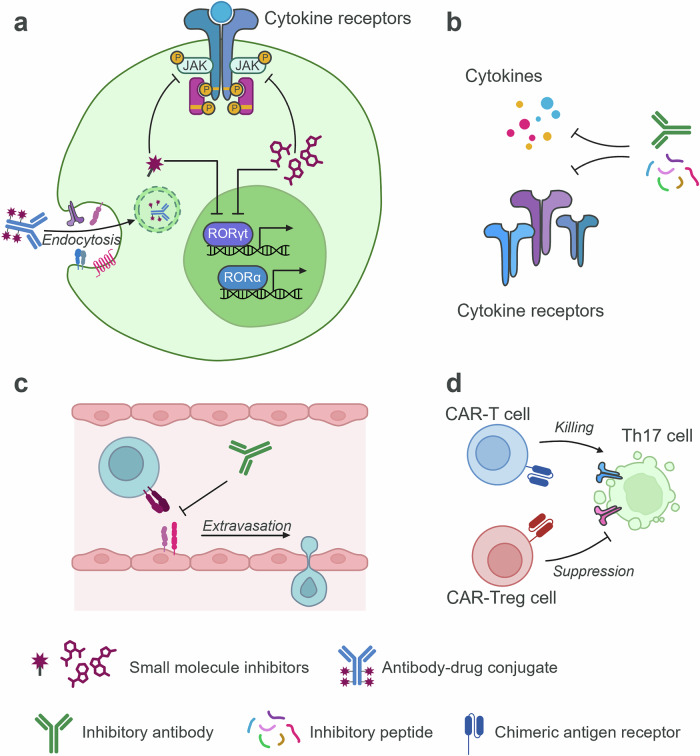
T helper 17 (Th17) cells have been implicated in numerous inflammatory autoimmune diseases. Clinical benefits from targeting Th17 cell-related cytokines, such as IL-17 and IL-23, highlight how knowledge of Th17 cell development and effector function can be translated into treatments for inflammatory disease. Here we discuss the pathogenic roles of Th17 cells in autoimmune diseases such as multiple sclerosis, inflammatory bowel disease and psoriasis, with emphasis on the cytokines, transcriptional regulators and metabolites that influence Th17 cell differentiation and pathogenicity. Moreover, we address how intestinal environments and physiological responses affect Th17 cells in autoimmune diseases. We also examine current and emerging therapeutic strategies aimed at regulating Th17 cell-driven inflammation to mitigate autoimmune diseases.
Overview
The claims and statistics of this paper haven’t been checked yet.
Run the check — free, no account needed. It reads the open-access text and checks the sources it cites.
Integrity signals
Registry
Cites
Statistics
Figures
Verification
Claims the paper makes
The claims and statistics of this paper haven’t been checked yet.
Run the check — free, no account needed. It reads the open-access text and checks the sources it cites.
Claims other papers make about this one
Each is checked against this paper’s own text: does it say what the citing paper says it does?
The source backs part of the claim, not all of it — or backs it for a different population, condition or comparison.
In the citing paper
“Factors such as VEGF induce endothelial activation, vascular dilation, and neovascularization in the papillary dermis, facilitating sustained leukocyte migration into the skin [27].”
From The Cutaneous Immune Microenvironment in Selected Inflammatory Skin Diseases: Linking Histopathology, Mechanisms, and Targeted Therapy (2026) · cites this paper as [27]
Experimental — accuracy not yet measuredThe source backs part of the claim, not all of it — or backs it for a different population, condition or comparison.
In the citing paper
“Increasing real-world evidence also supports the durable efficacy and favorable long-term disease control achieved with selective IL-23 inhibitors [27,28].”
From The Cutaneous Immune Microenvironment in Selected Inflammatory Skin Diseases: Linking Histopathology, Mechanisms, and Targeted Therapy (2026) · cites this paper as [27]
Experimental — accuracy not yet measuredThe source backs part of the claim, not all of it — or backs it for a different population, condition or comparison.
In the citing paper
“Throughout this process, continuous exchange between keratinocytes and immune cells maintains a loop in which IL-23 sustains pathogenic T cells, IL-17 and IL-22 perpetuate epidermal alterations, and TNF-α amplifies inflammation across multiple cell types.”
From The Cutaneous Immune Microenvironment in Selected Inflammatory Skin Diseases: Linking Histopathology, Mechanisms, and Targeted Therapy (2026) · cites this paper as [27]
Experimental — accuracy not yet measured
Self-check
Percentages, sums and reported differences re-computed from the paper’s own numbers.
The self-check needs the paper’s full text.
Citations
Cites
Bettelli, E., Carrier, Y., Gao, W., Korn, T., Strom, T. B., Oukka, M., Weiner, H. L., & Kuchroo, V. K. (2006) · Nature · doi:10.1038/nature04753 · Cited by 6,992
Ivanov, I. I., McKenzie, B. S., Zhou, L., Tadokoro, C. E., Lepelley, A., Lafaille, J. J., Cua, D. J., & Littman, D. R. (2006) · Cell · doi:10.1016/j.cell.2006.07.035 · Cited by 5,145
Metabolites produced by commensal bacteria promote peripheral regulatory T-cell generation
Arpaia, N., Campbell, C., Fan, X., Dikiy, S., van der Veeken, J., deRoos, P., Liu, H., Cross, J. R., Pfeffer, K., Coffer, P. J., et al. (2013) · Nature · doi:10.1038/nature12726 · Cited by 4,838
Cytokine-mediated regulation of CXCR4 expression in human neutrophils
Nagase, H., Miyamasu, M., Yamaguchi, M., Imanishi, M., Tsuno, N. H., Matsushima, K., Yamamoto, K., Morita, Y., & Hirai, K. (2002) · Journal of Leukocyte Biology · doi:10.1189/jlb.71.4.711 · Cited by 4,713
Chen, W., Jin, W., Hardegen, N. J., Lei, K.-J., Li, L., Marinos, N. J., McGrady, G., & Wahl, S. M. (2003) · The Journal of Experimental Medicine · doi:10.1084/jem.20030152 · Cited by 4,678
Induction of Intestinal Th17 Cells by Segmented Filamentous Bacteria
Ivanov, I. I., Atarashi, K., Manel, N., Brodie, E. L., Shima, T., Karaoz, U., Wei, D., Goldfarb, K. C., Santee, C. A., Lynch, S. V., et al. (2009) · Cell · doi:10.1016/j.cell.2009.09.033 · Cited by 4,554
A distinct lineage of CD4 T cells regulates tissue inflammation by producing interleukin 17
Park, H., Li, Z., Yang, X. O., Chang, S. H., Nurieva, R., Wang, Y.-H., Wang, Y., Hood, L., Zhu, Z., Tian, Q., et al. (2005) · Nature Immunology · doi:10.1038/ni1261 · Cited by 4,265
IL-23 drives a pathogenic T cell population that induces autoimmune inflammation
Langrish, C. L., Chen, Y., Blumenschein, W. M., Mattson, J., Basham, B., Sedgwick, J. D., McClanahan, T., Kastelein, R. A., & Cua, D. J. (2005) · The Journal of Experimental Medicine · doi:10.1084/jem.20041257 · Cited by 4,099
Transforming growth factor-β induces development of the TH17 lineage
Mangan, P. R., Harrington, L. E., O'Quinn, D. B., Helms, W. S., Bullard, D. C., Elson, C. O., Hatton, R. D., Wahl, S. M., Schoeb, T. R., & Weaver, C. T. (2006) · Nature · doi:10.1038/nature04754 · Cited by 3,087
A Genome-Wide Association Study Identifies IL23R as an Inflammatory Bowel Disease Gene
Duerr, R. H., Taylor, K. D., Brant, S. R., Rioux, J. D., Silverberg, M. S., Daly, M. J., Steinhart, A. H., Abraham, C., Regueiro, M., Griffiths, A., et al. (2006) · Science · doi:10.1126/science.1135245 · Cited by 3,039
Research works printed but not linked: 1
- Thakore, P. I. et al. BACH2 regulates diversification of regulatory and proinflammatory chromatin states in TH17 cells. Nat. Immunol. 25, 1395–1410 (2024). · DOI · Paper page
Cited by
Sorted by citations
Single-cell analysis of the human immune system reveals sex-specific dynamics of immunosenescence
Sopena-Rios, M., Ripoll-Cladellas, A., Omidi, F., Ballouz, S., Alquicira-Hernández, J., Oelen, R., Hewitt, A. W., Franke, L., van der Wijst, M. G. P., Powell, J. E., et al. (2026) · Nature Aging · doi:10.1038/s43587-026-01099-x · Cited by 13
Lu, Y., Xu, F., Qi, F., & Pan, Y. (2026) · Biomolecules · doi:10.3390/biom16030414 · Cited by 5
Xu, Q., Chen, Y., Dong, Y., Li, G., & Yan, M. (2025) · Phytomedicine · doi:10.1016/j.phymed.2025.157597 · Cited by 3
Lee, J., 권수안, Yang, Y., & Choi, J. H. (2026) · Pharmaceutics · doi:10.3390/pharmaceutics18060697 · Cited by 3
Kulyar, M. F., Naqvi, S. U. A. S., Bernotienė, E., & Akhtar, M. (2026) · Probiotics and Antimicrobial Proteins · doi:10.1007/s12602-026-11135-2 · Cited by 3
Metadata
- Authors
- Park, E., & Ciofani, M.
- Affiliations
- AstraZeneca (United States) (US)
- Duke University (US)
- Corresponding author
- Ciofani, Maria
- Venue
- Experimental & Molecular Medicine
- Published
- 2025-09-01
- Volume
- 57
- Issue
- 9
- Pages
- 1913-1927
- ISSN
- 1226-3613 (ISSN-L)
- 2092-6413
- PMC
- PMC12508148
- OpenAlex
- W4413865457
- Cited by
- 75
- References
- 280
- Citations by year
- 2026: 70 · 2025: 5
- FWCI
- 6.71
- Type
- journal article
- Language
- en
- Open access
- gold
- doi.org
- Locations
- Experimental & Molecular Medicine (publishedVersion, cc-by)
- Europe PMC (PubMed Central) (publishedVersion, cc-by)
- PubMed (publishedVersion)
- PubMed Central (publishedVersion, cc-by)
- DOAJ (DOAJ: Directory of Open Access Journals) (submittedVersion, cc-by-sa)
- Funders
- U.S. Department of Health & Human Services | NIH | National Institute of Allergy and Infectious Diseases (AI156186)
- U.S. Department of Health & Human Services | NIH | National Institute of General Medical Sciences (GM115474)
- Topics
- Life Sciences › Immunology and Microbiology › Immunology › Psoriasis: Treatment and Pathogenesis
- Life Sciences › Immunology and Microbiology › Immunology › T-cell and B-cell Immunology
- Health Sciences › Medicine › Rheumatology › Rheumatoid Arthritis Research and Therapies
- Keywords
- Th17 cells, autoimmune disease, IL-17, IL-23, Th17 cell differentiation, multiple sclerosis, inflammatory bowel disease, psoriasis, transcription factors, metabolites, intestinal environment, anti-inflammatory therapy
- MeSH terms
- Animals, Autoimmune Diseases, Cell Differentiation, Disease Susceptibility, Humans, Cytokines, Th17 Cells
About these checks
Registry, retraction, Cites and statistics results are computed, not judged, with one exception: a printed reference that no index lists is read once by a model before it counts as a citation error. Claims are extracted by a model and kept only when their quote appears verbatim in the text; each cited source is then checked, with a model’s help, for whether it says what the claim relies on. Those verdicts can be wrong — read the claim’s quote and the cited source before relying on one.
Statistics and arithmetic are recomputed, not judged.
Confidence bands are shown only for fields calibrated on our annotated test set. None is calibrated yet, so no band is shown.
What counts as a claim ›How we measure confidence ›How we check this ›
Are you an author, or do you see a problem with this page? Request a review
