

Patient-derived pancreatic cancer-on-a-chip recapitulates the tumor microenvironment
Open accessThe DOI matches its Crossref record; 59 of the 59 references it cites were found in a registry or an index.
Abstract
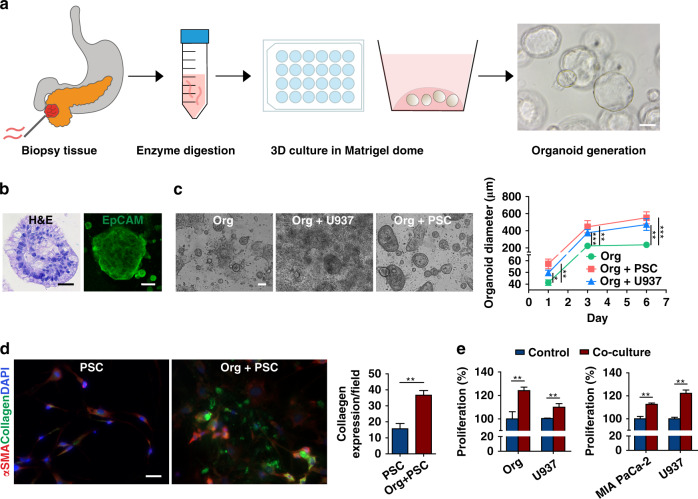
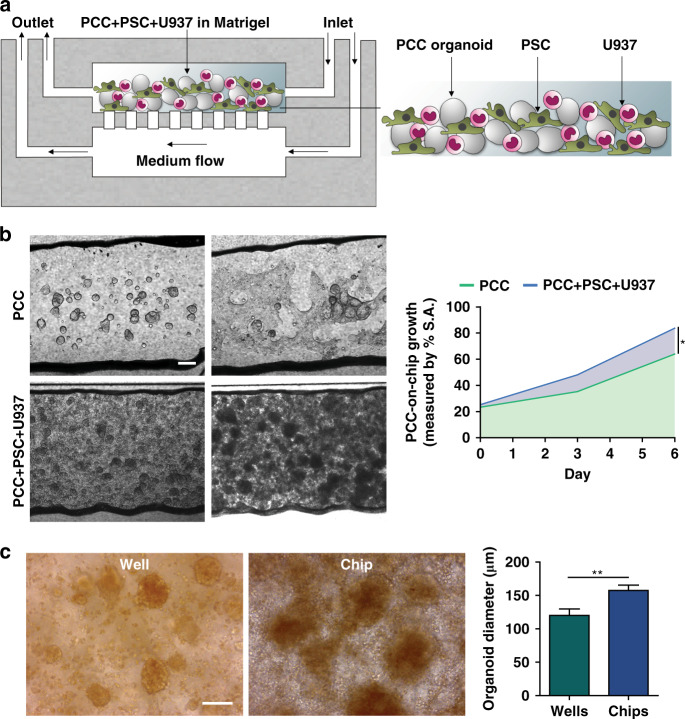
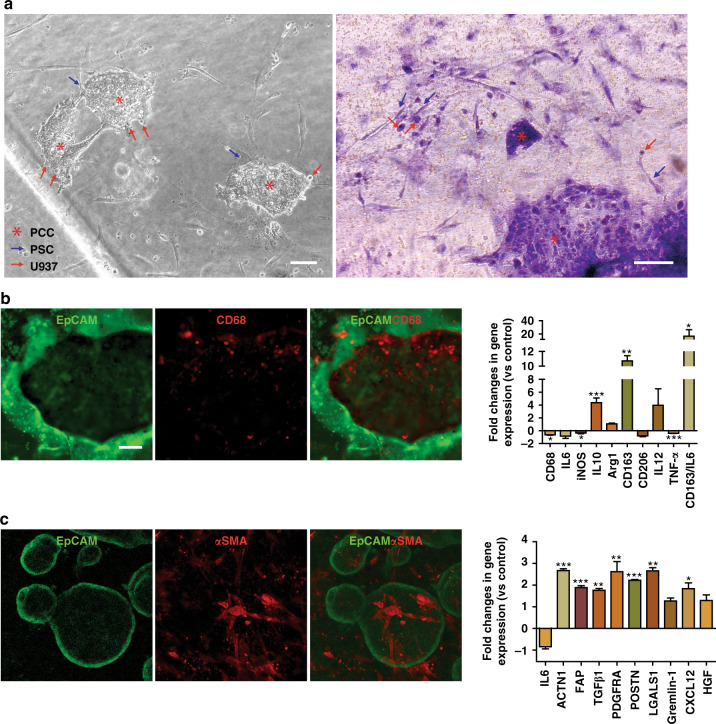
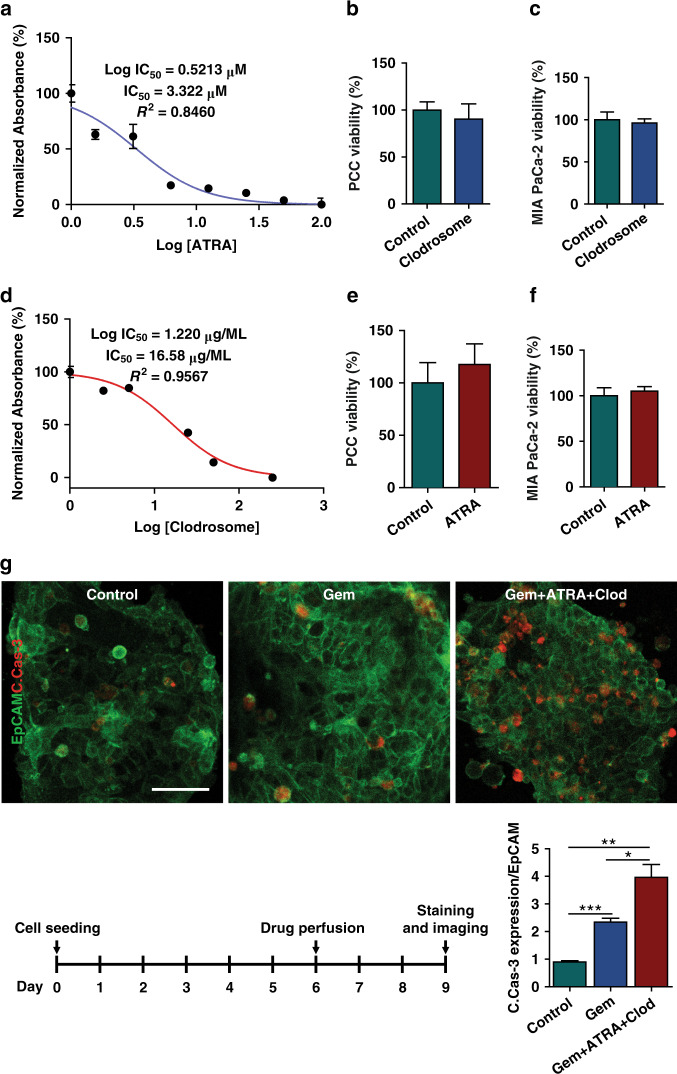
The patient population suffering from pancreatic ductal adenocarcinoma (PDAC) presents, as a whole, with a high degree of molecular tumor heterogeneity. The heterogeneity of PDAC tumor composition has complicated treatment and stalled success in clinical trials. Current in vitro techniques insufficiently replicate the intricate stromal components of PDAC tumor microenvironments (TMEs) and fail to model a given tumor's unique genetic phenotype. The development of patient-derived organoids (PDOs) has opened the door for improved personalized medicine since PDOs are derived directly from patient tumors, thus preserving the tumors' unique behaviors and genetic phenotypes. This study developed a tumor-chip device engineered to mimic the PDAC TME by incorporating PDOs and stromal cells, specifically pancreatic stellate cells and macrophages. Establishing PDOs in a multicellular microfluidic chip device prolongs cellular function and longevity and successfully establishes a complex organotypic tumor environment that incorporates desmoplastic stroma and immune cells. When primary cancer cells in monoculture were subjected to stroma-depleting agents, there was no effect on cancer cell viability. However, targeting stroma in our tumor-chip model resulted in a significant increase in the chemotherapy effect on cancer cells, thus validating the use of this tumor-chip device for drug testing.
Overview
The claims and statistics of this paper haven’t been checked yet.
Free: it reads the open-access text and checks the first 5 claims that cite a source we can check. Create a free account to check every claim.
Integrity signals
Registry
Cites
Statistics
Figures
Verification
Claims the paper makes
The claims and statistics of this paper haven’t been checked yet.
Free: it reads the open-access text and checks the first 5 claims that cite a source we can check. Create a free account to check every claim.
Claims other papers make about this one
Each is checked against this paper’s own text: does it say what the citing paper says it does?
The source backs part of the claim, not all of it — or backs it for a different population, condition or comparison.
In the citing paper
“Tumor chips have been developed to model a broad variety of cancers, including primary lung cancer, prostate cancer, breast cancer, colorectal cancer, pancreatic cancer, melanoma, liver cancer and glioblastoma (among other cancers), as well as cancer metastasis to the bone, the brain, the liver and the lung (Hachey et al. (2021; 2024); Jiang et al. (2024); Haque et al. (2022); Shen et al. (2023);”
From Microphysiological systems as models for immunologically ‘cold’ tumors (2024) · cites this paper as Haque et al., 2022
Experimental — accuracy not yet measuredThe cited source says what the claim attributes to it.
In the citing paper
“| PDAC | Haque et al. (2022) | Device with 2 chambers separated by porous membrane, pump | Patient-derived PDAC organoids, PSCs and macrophages | Anti-stromal compounds enhance PDAC chemotherapy response in tumor chip |”
From Microphysiological systems as models for immunologically ‘cold’ tumors (2024) · cites this paper as Haque et al. (2022)
The cited source says what the claim attributes to it.
In the citing paper
“The study unveiled reciprocal interactions between neoplastic pancreatic organoids and stromal cells, which fostered synergistic growth.”
From Microphysiological systems as models for immunologically ‘cold’ tumors (2024) · cites this paper as Haque et al., 2022
The cited source says what the claim attributes to it.
In the citing paper
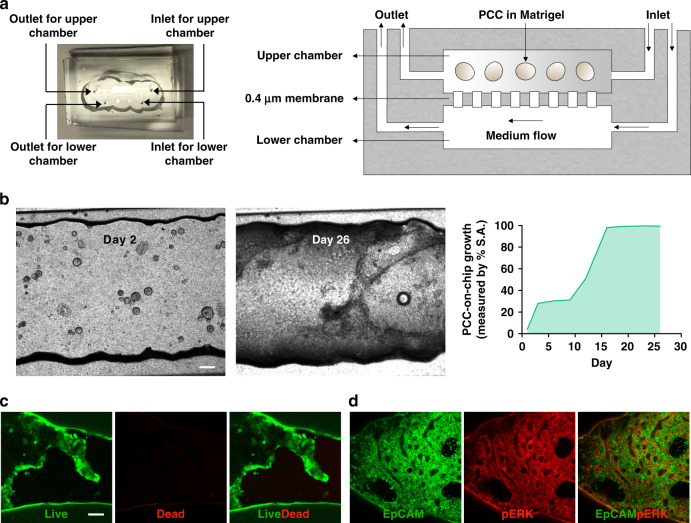
“Additionally, Haque and colleagues designed a two-chamber microfluidic device with continuous perfusion to replicate the PDAC TME (Haque et al., 2022).”
From Microphysiological systems as models for immunologically ‘cold’ tumors (2024) · cites this paper as Haque et al., 2022
The cited source says what the claim attributes to it.
In the citing paper
“This underscores the tumor-chip’s potential for identifying novel drugs targeting the stroma to enhance chemotherapy efficacy in PDAC.”
From Microphysiological systems as models for immunologically ‘cold’ tumors (2024) · cites this paper as Haque et al., 2022
Self-check
Percentages, sums and reported differences re-computed from the paper’s own numbers.
The self-check needs the paper’s full text.
Citations
Cites
Siegel, R. L., Miller, K. D., & Jemal, A. (2020) · CA: A Cancer Journal for Clinicians · doi:10.3322/caac.21590 · Cited by 20,444
Siegel, R. L., Miller, K. D., Fuchs, H. E., & Jemal, A. (2021) · CA: A Cancer Journal for Clinicians · doi:10.3322/caac.21654 · Cited by 16,522
DrugBank 5.0: a major update to the DrugBank database for 2018
Wishart, D. S., Feunang, Y. D., Guo, A. C., Lo, E. J., Marcu, A., Grant, J. R., Sajed, T., Johnson, D., Li, C., Sayeeda, Z., et al. (2018) · Nucleic Acids Research · doi:10.1093/nar/gkx1037 · Cited by 8,404
FOLFIRINOX versus Gemcitabine for Metastatic Pancreatic Cancer
Conroy, T., Desseigne, F., Ychou, M., Bouché, O., Guimbaud, R., Bécouarn, Y., Adenis, A., Raoul, J.-L., Gourgou-Bourgade, S., de la Fouchardière, C., et al. (2011) · New England Journal of Medicine · doi:10.1056/nejmoa1011923 · Cited by 7,810
Orimo, A., Gupta, P. B., Sgroi, D. C., Arenzana-Seisdedos, F., Delaunay, T., Naeem, R., Carey, V. J., Richardson, A. L., & Weinberg, R. A. (2005) · Cell · doi:10.1016/j.cell.2005.02.034 · Cited by 3,759
Approaches to treat immune hot, altered and cold tumours with combination immunotherapies
Galon, J., & Bruni, D. (2019) · Nature Reviews Drug Discovery · doi:10.1038/s41573-018-0007-y · Cited by 3,409
Tumour-cell invasion and migration: diversity and escape mechanisms
Friedl, P., & Wolf, K. (2003) · Nature Reviews Cancer · doi:10.1038/nrc1075 · Cited by 3,222
FOLFIRINOX or Gemcitabine as Adjuvant Therapy for Pancreatic Cancer
Conroy, T., Hammel, P., Hebbar, M., Ben Abdelghani, M., Wei, A. C., Raoul, J.-L., Choné, L., Francois, E., Artru, P., Biagi, J. J., et al. (2018) · New England Journal of Medicine · doi:10.1056/nejmoa1809775 · Cited by 2,874
Özdemir, B. C., Pentcheva-Hoang, T., Carstens, J. L., Zheng, X., Wu, C.-C., Simpson, T. R., Laklai, H., Sugimoto, H., Kahlert, C., Novitskiy, S. V., et al. (2014) · Cancer Cell · doi:10.1016/j.ccr.2014.04.005 · Cited by 2,681
Distinct populations of inflammatory fibroblasts and myofibroblasts in pancreatic cancer
Öhlund, D., Handly-Santana, A., Biffi, G., Elyada, E., Almeida, A. S., Ponz-Sarvise, M., Corbo, V., Oni, T. E., Hearn, S. A., Lee, E. J., et al. (2017) · Journal of Experimental Medicine · doi:10.1084/jem.20162024 · Cited by 2,590
Cited by
Items 101–137 of 137
Aćimović, I., Gabrielová, V., Martínková, S., Eid, M., Vlažný, J., Moravčík, P., Hlavsa, J., Moráň, L., Cakmakci, R. C., Staňo, P., et al. (2024) · Pancreas · doi:10.1097/mpa.0000000000002393 · Cited by 3
Engineered tools to study endocrine dysfunction of pancreas
Alver, C. G., Domínguez‐Bendala, J., & Agarwal, A. (2024) · Biophysics Reviews · doi:10.1063/5.0220396 · Cited by 1
Novel paradigms in KRAS targeting: Unveiling strategies to combat drug resistance
Luo, X., Zhou, F., Tang, Y., Liu, X., Xiao, R., Gu, M., Bai, J., Jiang, D., Yang, G., You, L., et al. (2025) · Chinese Medical Journal · doi:10.1097/cm9.0000000000003776 · Cited by 2
Targeting Tumor‐Immune Microenvironment with Organoid and Organ‐on‐a‐Chip: An Updated Review
Madani, S., Holman, J. B., Rajput, M. U., Ali, S. W., Shi, Z., Qiu, B., Zhang, A., Li, C., & Ding, W. (2025) · Advanced Materials Technologies · doi:10.1002/admt.202501704 · Cited by 1
Yu, Y., Li, Y., Wang, J., Zhu, Y.-J., Zhang, Z., Xiao, Z., Chen, Y., Qu, Y., Han, L., & Zhang, H. (2026) · Experimental Hematology and Oncology · doi:10.1186/s40164-026-00757-5 · Cited by 3
Biomechanical 3D tumor models on a micro-milled high-throughput force sensor array
Emon, B., Kashefi, A., Rahman, M. H., Adnan, D., Ospina-Muñoz, N., Mellican, S., Santiago, S., Drennan, W. C., Joy, M. S. H., Phan, A. A., et al. (2026) · Biofabrication · doi:10.1088/1758-5090/ae5347 · Cited by 2
Tumor-on-chip platforms for transport phenotyping: decoding CAF-driven barriers to drug delivery
Manach, D. L., Senez, V., & Nees, M. (2026) · Lab on a Chip · doi:10.1039/d5lc01131k · Cited by 2
Jaiswal, C., Bhar, B., Sugihara, S., & Mandal, B. B. (2026) · Small · doi:10.1002/smll.202513199 · Cited by 2
Ko, Y. R., Park, C. W., Kim, J., Jung, D. J., Kim, S. M., Park, H. S., Ahn, B., Hwang, H. S., Sung, C. O., & Jang, S. J. (2026) · Journal of Translational Medicine · doi:10.1186/s12967-026-08487-2 · Cited by 1
Decoding drug resistance and apoptosis in biliary tract cancers using 3D tumor models
Gill, G. S., Sahoo, O. S., Nayek, A., Sarkar, S. K., Kurdia, K. C., Bhardwaj, N., Das, C. J., Galodha, S., Goyal, G., Karmakar, S., et al. (2026) · Frontiers in Cell Death · doi:10.3389/fceld.2026.1819303 · Cited by 1
Sawan, M., Zhang, H., Wang, P., Huang, N., Zhao, L., Su, Y., Li, L., & Bian, S. (2022) · Research Square · doi:10.21203/rs.3.rs-2157182/v1
Vascularization of organoids in microfluidic chips
Raji, R. G., Anjali, K., & Kumar, V. B. S. (2024) · Elsevier eBooks · doi:10.1016/b978-0-443-13782-2.00026-7
Human organs-on-a-chip for cancer modeling
Hegde, M., Girisa, S., & Harsha, C. (2024) · Elsevier eBooks · doi:10.1016/b978-0-443-13782-2.00005-x
Nanoparticle Delivery in a Human Pancreatic Ductal Adenocarcinoma-on-a-Chip Model
Goluba, K., Parfejevs, V., Jēkabsons, K., Rostoka, E., Blāķe, I., Kunrade, L., Neimane, A., Rimša, R., Pčolkins, A., & Riekstiņa, U. (2024) · IEEE International Conference Nanomaterials: Applications & Properties (NAP) · doi:10.1109/nap62956.2024.10739728
Shen, N., Fan, C., Ying, H., Li, X., Zhang, W., Yu, J., Zheng, J., & Li, Y. (2025) · Frontiers in Oncology · doi:10.3389/fonc.2024.1511240
Breast-on-a-Chip Technology Application Using Acacia Gums (AGs) Secondary Metabolites Extract (SME)
Elnour, A. A. M., Nour, A. H., & Ashammakhi, N. A. (2025) · Springer eBooks · doi:10.1007/978-981-97-8518-6_10
Organotypic on-chip models: Bridging the gap between traditional in vitro culture and animal testing
Charelli, L. E., & Balbino, T. A. (2025) · Elsevier eBooks · doi:10.1016/b978-0-443-13403-6.00003-9
Husain, S. Z., & Swaminathan, G. (2025) · Elsevier eBooks · doi:10.1016/b978-0-443-11760-2.00081-1
Editorial for the Special Issue on the Application of Microfluidic Technology in Bioengineering
Wang, S., & Shen, Y. (2025) · Micromachines · doi:10.3390/mi16091022
Tumor-on-a-Chip: From Biomimetic Tumor-Immune Microenvironments to Therapeutic Insights
Çetin, Y. (2025) · Biochemistry · doi:10.5772/intechopen.1012047
Hypoxia-on-chip : from technological developments to biological applications
Bouquerel, C. (2023) · theses.fr (ABES) · doi:10.70675/d7d58b5dzd927z4235z8c54z8dbb6fd4757e · Cited by 1
Engineering ethical test systems: Tissue-engineered and in vitro alternatives to in vivo experiments
Sanattalab, E., Zourazema, S., Zendeh, Z., Kaya, K., Çeçen, B., & Kozacı, L. D. (2026) · NAM journal. · doi:10.1016/j.namjnl.2026.100094 · Cited by 2
Pancreatic organoids and organoid-on-a-chip platforms: from disease modeling to precision therapy
Lin, M., Ma, W., Ma, T., He, Y., Shi, H., Ge, N., Guo, J., Xie, Y., Sun, S., & Yang, F. (2026) · Journal of Translational Medicine · doi:10.1186/s12967-026-08489-0
Sheng, Y., Chen, W., Zhang, Z., Cui, Z., Zhong, P., Xia, Y., & Yang, Z. (2026) · Biosensors · doi:10.3390/bios16080413
Sporn, K., Kumar, R., & Caplan, R. M. (2026) · Springer eBooks · doi:10.1007/978-3-032-26761-0_40
Patient-derived organoids in pancreatic cancer: Advances and applications in precision oncology
Lee, H. S., & Koo, B. (2026) · Cancer Biome and Targeted Therapy · doi:10.66505/cbtt.v1i3.46
Dabaghi, M., & Fazio, P. D. (2026) · Gastroenterology Insights · doi:10.3390/gastroent17040055
Wei, X., Lan, X., Pan, Y., Wang, L., Chen, K., & Xu, M. (2026) · Microsystems & Nanoengineering · doi:10.1038/s41378-026-01437-4 · Cited by 1
Bülbül, M. V., & Demircan, T. (2026) · Organoids · doi:10.3390/organoids5030030
Wang, X., Wang, Q., Wang, J., Ding, G., Huang, Y., Feng, Y., & Zou, B. (2026) · Materials Today Advances · doi:10.1016/j.mtadv.2026.100976
Mechanoresponsive reprogramming of tumor-associated macrophages during cancer progression
Kim, D., Kim, Y., Lee, J., Bajpai, S. K., & Kim, D. (2026) · Frontiers in Cell and Developmental Biology · doi:10.3389/fcell.2026.1915582
Wu, Y., Govindaraju, D. T., Lakshmikanthacharya, G. M., Hsu, T.-Y., Lin, C.-F., Sharma, S., & Anilkumar, T. S. (2026) · Pharmaceutics · doi:10.3390/pharmaceutics18101227
Cancer Cell Metastasis: From Molecular Mechanisms to Therapeutic Strategies
Zhao, Y., Xu, W., Wang, Y., Huang, H., Su, Y., Zhou, L., Liu, J., & Guo, J. (2026) · MedComm · doi:10.1002/mco2.71026
“PDAC-derived organoids cultured with pancreatic stellate cells and macrophage-like cells recreate key features of a fibrotic and immunosuppressive TME and show that stromal targeting can enhance gemcitabine-induced cancer cell apoptosis [ 273 ].”
Siciliano, A. C., Forciniti, S., Iuele, H., Carnevali, F., Gigli, G., & del Mercato, L. L. (2026) · Frontiers in Bioengineering and Biotechnology · doi:10.3389/fbioe.2026.1926254
Systematic Evaluation of Organoid Fidelity for ADME and Toxicity Assessment
RuoXuan, X. I. A. O., Zheng, Y., Huang, S., Liang, J., Fang, W., Li, J., Wang, Y., & Chen, L. (2026) · Drug Metabolism and Disposition · doi:10.1016/j.dmd.2026.100422
Anderle, N., van der Moolen, M., Teufel, C., Weghofer, A., Spangenberger, C., Cipriano, M., & Loskill, P. (2026) · Elsevier eBooks · doi:10.1016/b978-0-443-16110-0.00001-7
Additive manufacturing as a unifying platform across drug discovery, drug delivery, and theranostics
Fadzil, A. F. B. A., Liu, X., Zhang, Y. S., & Kang, L. (2026) · Advanced Drug Delivery Reviews · doi:10.1016/j.addr.2026.115983
Metadata
- Authors
- Haque, M. R., Wessel, C. R., Leary, D. D., Wang, C., Bhushan, A., & Bishehsari, F.
- Affiliations
- Rush University Medical Center (US)
- University of Louisville (US)
- Illinois Institute of Technology (US)
- Corresponding author
- Bishehsari, Faraz
- ORCID
- Venue
- Microsystems & Nanoengineering
- Published
- 2022-03-31
- Volume
- 8
- Issue
- 1
- Pages
- 36-36
- ISSN
- 2055-7434 (ISSN-L)
- PMC
- PMC8971446
- OpenAlex
- W4220755377
- Cited by
- 137
- References
- 59
- Citations by year
- 2026: 25 · 2025: 33 · 2024: 38 · 2023: 31 · 2022: 10
- FWCI
- 8.14
- Type
- journal article
- Language
- en
- Open access
- gold
- doi.org
- Licence
- cc-by
- creativecommons.org/licenses/by/4.0 (tdm)
- creativecommons.org/licenses/by/4.0 (vor)
- Locations
- Microsystems & Nanoengineering (publishedVersion, cc-by)
- PubMed Central (publishedVersion, cc-by)
- PubMed (publishedVersion)
- DOAJ (DOAJ: Directory of Open Access Journals) (submittedVersion)
- Funders
- Brinson Foundation
- Topics
- Physical Sciences › Engineering › Biomedical Engineering › 3D Printing in Biomedical Research
- Health Sciences › Medicine › Oncology › Pancreatic and Hepatic Oncology Research
- Physical Sciences › Engineering › Biomedical Engineering › Microfluidic and Capillary Electrophoresis Applications
- Keywords
- pancreatic ductal adenocarcinoma, tumor microenvironment, patient-derived organoids, organ-on-a-chip, microfluidics, pancreatic stellate cells, tumor-associated macrophages, desmoplastic stroma, tumor heterogeneity, personalized medicine
About these checks
Registry, retraction, Cites and statistics results are computed, not judged, with one exception: a printed reference that no index lists is read once by a model before it counts as a citation error. Claims are extracted by a model and kept only when their quote appears verbatim in the text; each cited source is then checked, with a model’s help, for whether it says what the claim relies on. Those verdicts can be wrong — read the claim’s quote and the cited source before relying on one.
Statistics and arithmetic are recomputed, not judged.
Confidence bands are shown only for fields calibrated on our annotated test set. None is calibrated yet, so no band is shown.
What counts as a claim ›How we measure confidence ›How we check this ›
Are you an author, or do you see a problem with this page? Request a review
Data sources
Bibliographic data: Semantic Scholar, OpenAlex, Crossref.
Contains information from the Semantic Scholar Academic Graph Datasets, made available under the ODC Attribution License (ODC-BY 1.0).
Semantic Scholar’s data is described in: Kinney, R., et al. (2023). The Semantic Scholar Open Data Platform. arXiv:2301.10140.
