

Exosomes secreted from cancer-associated fibroblasts elicit anti-pyrimidine drug resistance through modulation of its transporter in malignant lymphoma
Open accessThe DOI matches its Crossref record; 34 of the 35 references it cites were found in a registry or an index.
Abstract
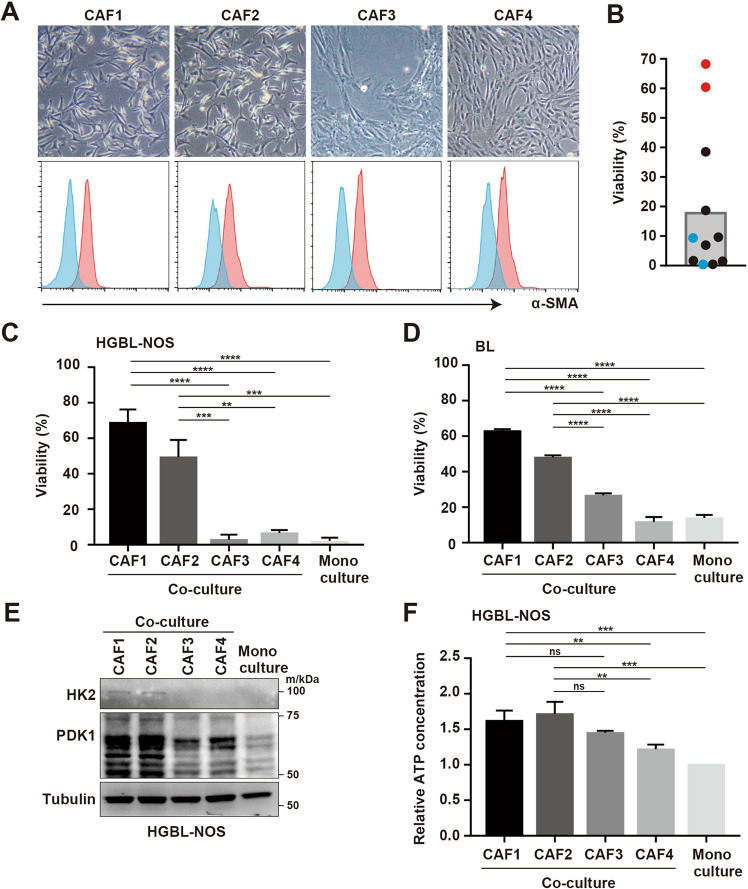
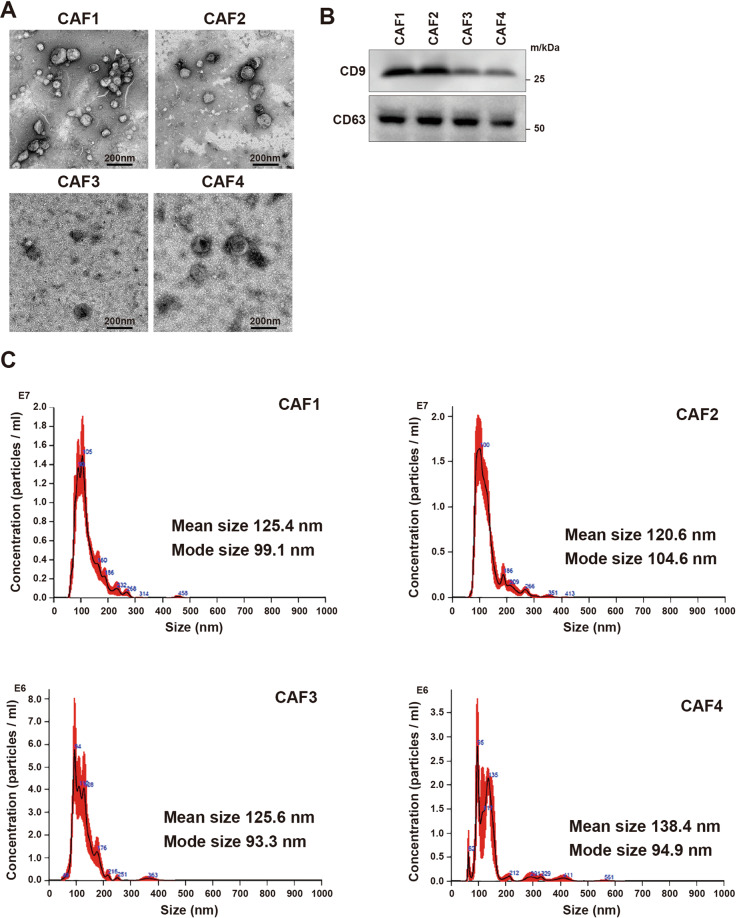
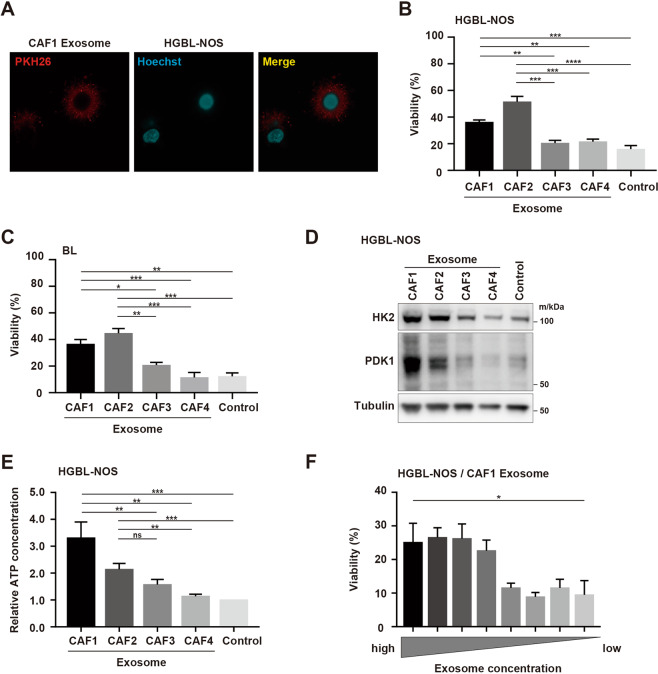
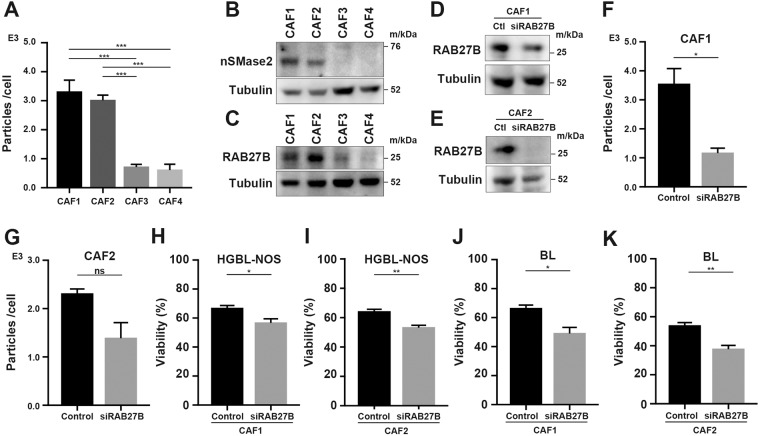
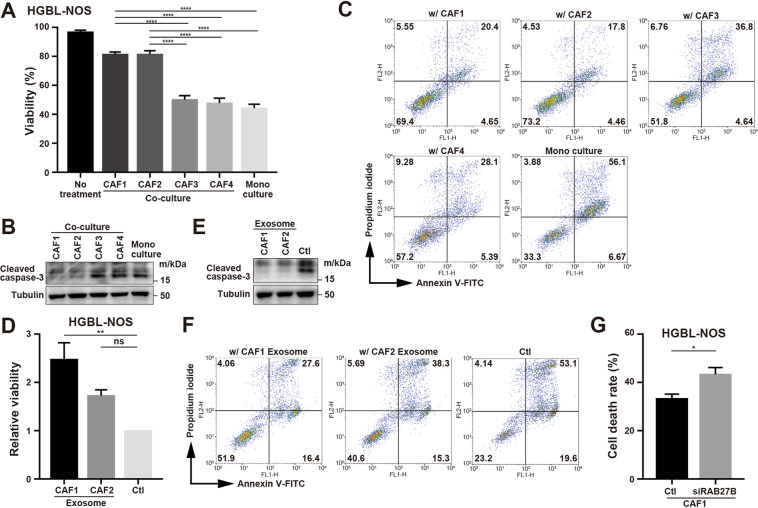
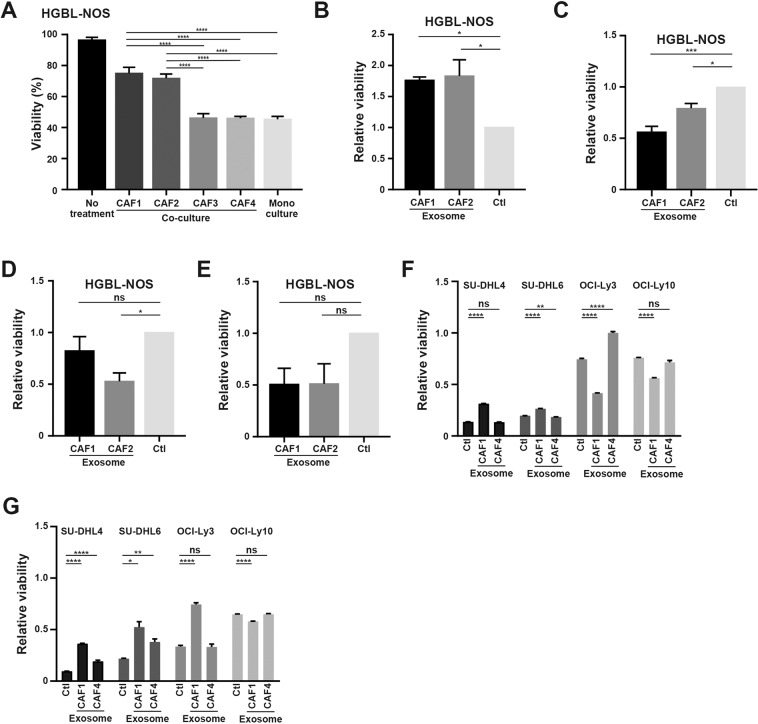
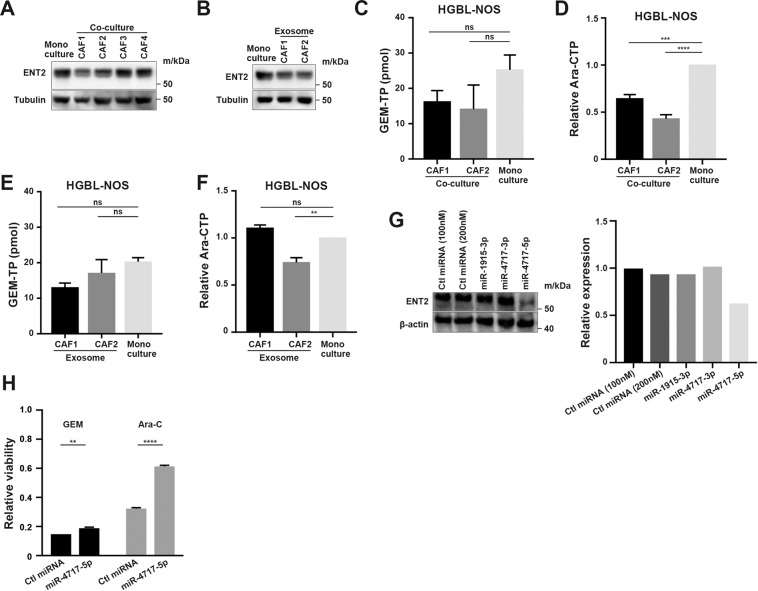
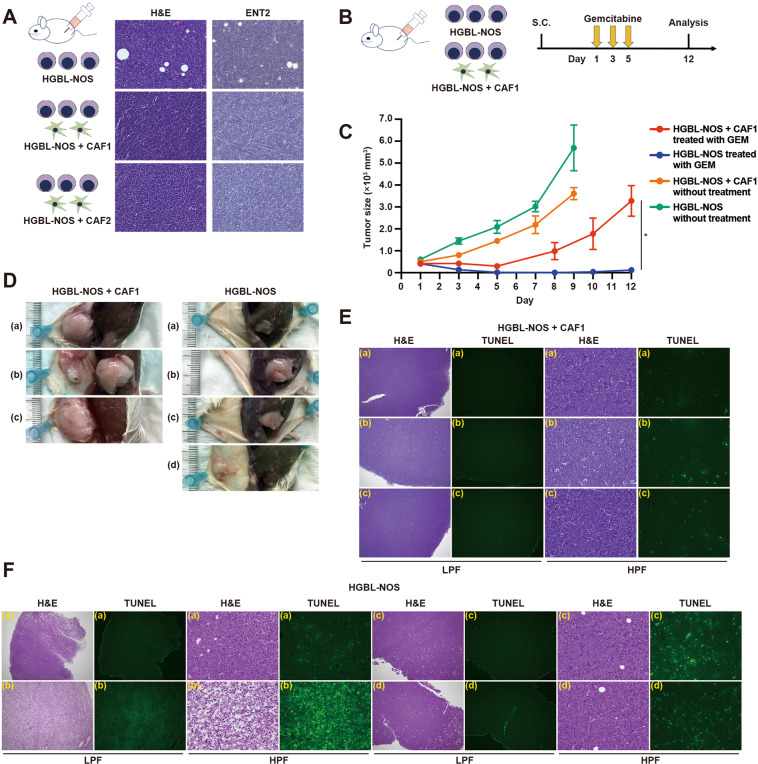
The tumor microenvironment is deeply involved in the process of tumor growth and development. In this study, we focused on cancer-associated fibroblasts (CAFs) and their derived exosomes on the lymphoma microenvironment to uncover their clinical significance. CAFs were established from primary lymphoma samples, and exosomes secreted from CAFs were obtained by standard procedures. We then investigated the roles of CAFs and their derived exosomes in the survival and drug resistance of lymphoma cells. CAFs supported the survival of lymphoma cells through increased glycolysis, and the extent differed among CAFs. Exosomes were identified as a major component of the extracellular vesicles from CAFs, and they also supported the survival of lymphoma cells. The suppression of RAB27B, which is involved in the secretion of exosomes, using a specific siRNA resulted in reduced exosome secretion and decreased survival of lymphoma cells. Moreover, anti-pyrimidine drug resistance was induced in the presence of exosomes through the suppression of the pyrimidine transporter, equilibrative nucleoside transporter 2 (ENT2), and the suppression of ENT2 was significant in in vivo experiments and clinical samples. RNA sequencing analysis of miRNAs in exosomes identified miR-4717-5p as one of the most abundant miRNAs in the exosome, which suppressed the expression of ENT2 and induced anti-pyrimidine drug resistance in vitro. Our results suggest that exosomes including miR-4717-5p secreted from CAFs play a pivotal role in the lymphoma microenvironment, indicating that they are a promising therapeutic target.
Overview
The claims and statistics of this paper haven’t been checked yet.
Free: it reads the open-access text and checks the first 5 claims that cite a source we can check. Create a free account to check every claim.
Integrity signals
Registry
Cites
Statistics
Figures
Verification
Claims the paper makes
The claims and statistics of this paper haven’t been checked yet.
Free: it reads the open-access text and checks the first 5 claims that cite a source we can check. Create a free account to check every claim.
Claims other papers make about this one
Each is checked against this paper’s own text: does it say what the citing paper says it does?
The source backs part of the claim, not all of it — or backs it for a different population, condition or comparison.
In the citing paper
“Thus, exosomes are produced by almost all cell types [21,22,23,24,25,26].”
From The Impact of Neurotoxin Proteins Trafficked by Primary Cilia and Extracellular Vesicles in Neurodegenerative Diseases (2025) · cites this paper as [25]
Experimental — accuracy not yet measured
Self-check
Percentages, sums and reported differences re-computed from the paper’s own numbers.
The self-check needs the paper’s full text.
Citations
Cites
Axicabtagene Ciloleucel CAR T-Cell Therapy in Refractory Large B-Cell Lymphoma
Neelapu, S. S., Locke, F. L., Bartlett, N. L., Lekakis, L. J., Miklos, D. B., Jacobson, C. A., Braunschweig, I., Oluwole, O. O., Siddiqi, T., Lin, Y., et al. (2017) · New England Journal of Medicine · doi:10.1056/nejmoa1707447 · Cited by 6,030
Skog, J., Würdinger, T., van Rijn, S., Meijer, D. H., Gainche, L., Curry, W. T., Carter, B. S., Krichevsky, A. M., & Breakefield, X. O. (2008) · Nature Cell Biology · doi:10.1038/ncb1800 · Cited by 5,001 · cited 2×
“Although the clinical significance of exosomes secreted from tumor cells has been investigated previously [16, 28, 32], we demonstrated that exosomes secreted from CAFs were involved in the survival of lymphoma cells and in drug resistance to anti-pyrimidine drugs in the present study.”
BackgroundResultRevised Response Criteria for Malignant Lymphoma
Cheson, B. D., Pfistner, B., Juweid, M. E., Gascoyne, R. D., Specht, L., Horning, S. J., Coiffier, B., Fisher, R. I., Hagenbeek, A., Zucca, E., et al. (2007) · Journal of Clinical Oncology · doi:10.1200/jco.2006.09.2403 · Cited by 4,426
Orimo, A., Gupta, P. B., Sgroi, D. C., Arenzana-Seisdedos, F., Delaunay, T., Naeem, R., Carey, V. J., Richardson, A. L., & Weinberg, R. A. (2005) · Cell · doi:10.1016/j.cell.2005.02.034 · Cited by 3,759
Melanoma exosomes educate bone marrow progenitor cells toward a pro-metastatic phenotype through MET
Peinado, H., Alečković, M., Lavotshkin, S., Matei, I., Costa-Silva, B., Moreno-Bueno, G., Hergueta-Redondo, M., Williams, C., García-Santos, G., Ghajar, C. M., et al. (2012) · Nature Medicine · doi:10.1038/nm.2753 · Cited by 3,715 · cited 1×
“Although the clinical significance of exosomes secreted from tumor cells has been investigated previously [16, 28, 32], we demonstrated that exosomes secreted from CAFs were involved in the survival of lymphoma cells and in drug resistance to anti-pyrimidine drugs in the present study.”
BackgroundRab27a and Rab27b control different steps of the exosome secretion pathway
Ostrowski, M., Carmo, N. B., Krumeich, S., Fanget, I., Raposo, G., Savina, A., Moita, C. F., Schauer, K., Hume, A. N., Freitas, R. P., et al. (2010) · Nature Cell Biology · doi:10.1038/ncb2000 · Cited by 2,750 · cited 2×
“We further analyzed the relationship between the exosome amount with the expressions of neutral sphingomyelinase 2 (nSMase2), which is an enzyme that synthesizes ceramide, and RAB27B, which is an exosome secretion-associated protein of the small Rab GTPase family [25, 28].”
BackgroundMethodOutcomes in refractory diffuse large B-cell lymphoma: results from the international SCHOLAR-1 study
Crump, M., Neelapu, S. S., Farooq, U., Van Den Neste, E., Kuruvilla, J., Westin, J., Link, B. K., Hay, A., Cerhan, J. R., Zhu, L., et al. (2017) · Blood · doi:10.1182/blood-2017-03-769620 · Cited by 1,703 · cited 1×
“However, about half of patients with malignant lymphoma show intractable disease; in particular, the prognoses of patients with insufficient responses to initial treatment are very poor [6].”
BackgroundCoiffier, B., Thieblemont, C., Van Den Neste, E., Lepeu, G., Plantier, I., Castaigne, S., Lefort, S., Marit, G., Macro, M., Sebban, C., et al. (2010) · Blood · doi:10.1182/blood-2010-03-276246 · Cited by 1,540
Dave, S. S., Wright, G., Tan, B., Rosenwald, A., Gascoyne, R. D., Chan, W. C., Fisher, R. I., Braziel, R. M., Rimsza, L. M., Grogan, T. M., et al. (2004) · New England Journal of Medicine · doi:10.1056/nejmoa041869 · Cited by 1,418 · cited 7×
“In the TME, components of EVs are associated with various biological processes.”
BackgroundInfluentialExosomes Mediate Stromal Mobilization of Autocrine Wnt-PCP Signaling in Breast Cancer Cell Migration
Luga, V., Zhang, L., Viloria-Petit, A. M., Ogunjimi, A. A., Inanlou, M. R., Chiu, E., Buchanan, M., Hosein, A. N., Basik, M., & Wrana, J. L. (2012) · Cell · doi:10.1016/j.cell.2012.11.024 · Cited by 1,311 · cited 1×
“In breast cancer, fibroblast-derived exosomes promote metastasis by activating Wnt-PCP signaling in tumor cells [19].”
Background
Cited by
Emerging role of exosomes in cancer progression and tumor microenvironment remodeling
Paskeh, M. D. A., Entezari, M., Mirzaei, S., Zabolian, A., Saleki, H., Naghdi, M. J., Sabet, S., Khoshbakht, M. A., Hashemi, M., Hushmandi, K., et al. (2022) · Journal of Hematology & Oncology · doi:10.1186/s13045-022-01305-4 · Cited by 563
Metabolic reprogramming of cancer-associated fibroblasts and its effect on cancer cell reprogramming
Li, Z., Sun, C., & Qin, Z. (2021) · Theranostics · doi:10.7150/thno.62378 · Cited by 390
“investigated the roles of CAFs and their exosomes in the survival and drug resistance of lymphoma cells [63].”
BackgroundApoptosis Deregulation and the Development of Cancer Multi-Drug Resistance
Neophytou, C. M., Trougakos, I. P., Erin, N., & Papageorgis, P. (2021) · Cancers · doi:10.3390/cancers13174363 · Cited by 371
Roles of cancer-associated fibroblasts (CAFs) in anti- PD-1/PD-L1 immunotherapy for solid cancers
Pei, L., Liu, Y., Liu, L., Gao, S., Gao, X., Feng, Y., Sun, Z., Zhang, Y., & Wang, C. (2023) · Molecular Cancer · doi:10.1186/s12943-023-01731-z · Cited by 257
“efficacy Exosomes are the main components of extracellular vesicles, with a diameter of 30–150 nm, which contain complex RNA components and proteins [104].”
BackgroundPeng, Z., Tong, Z., Ren, Z., Ye, M., & Hu, K. (2023) · Molecular Medicine · doi:10.1186/s10020-023-00665-y · Cited by 92
Lin, Z., Li, G., Jiang, K., Li, Z., & Liu, T. (2024) · Molecular Cancer · doi:10.1186/s12943-024-02106-8 · Cited by 68
“Besides, CAF-derived exo-somal miR-4717-5p can induce anti-pyrimidine drug resistance by directly targeting ENT2 in lymphoma [57].”
BackgroundKang, S. H., Oh, S. Y., Lee, K.-Y., Lee, H., Kim, M.-S., Kwon, T., Kim, J., Lee, S., Choi, S., & Hong, S. (2023) · Theranostics · doi:10.7150/thno.87329 · Cited by 55
“Notably, extracellular vehicle (EV) released from CAFs increase the chemoresistance of various cancer types [19, 20].”
BackgroundImodoye, S. O., Adedokun, K. A., & Bello, I. O. (2024) · Histochemistry and Cell Biology · doi:10.1007/s00418-023-02258-6 · Cited by 50
“A recent study showed that exosomes secreted by CAFs suppress the pyrimidine transporter and equilibrative nucleoside transporter 2 (ENT2), resulting in anti-pyrimidine drug resistance in malignant lymphoma in both animal model experiments and clinical samples (Kunou et al. 2021).”
Advances in exosomes utilization for clinical applications in cancer
Batista, I. A., Machado, J. C., & Melo, S. A. (2024) · Trends in cancer · doi:10.1016/j.trecan.2024.07.010 · Cited by 54
Fan, M., Sun, W., Gu, X., Lu, S., Shen, Q., Liu, X., & Zhang, X. (2022) · Oncogene · doi:10.1038/s41388-021-02151-3 · Cited by 48
“Exosomes secreted by tumor cells can travel through the body fluids to deliver their contents (lipids, mRNAs, microRNAs, proteins or DNA) to the target cells without degradation [9, 11–13] thus regulating cancer progression, metastasis, organotropism, chemoresistance as well as inducing cancer cachexia [4, 14, 15].”
BackgroundCancer-on-a-chip for precision cancer medicine
Liu, L., Wang, H., Chen, R., Song, Y., Wei, W., Baek, D. S. H., Gillin, M., Kurabayashi, K., & Chen, W. (2025) · Lab on a Chip · doi:10.1039/d4lc01043d · Cited by 52
Ceramide Metabolism Enzymes—Therapeutic Targets against Cancer
Gómez-Larrauri, A., Adhikari, U. D., Aramburu-Núñez, M., Custodia, A., & Ouro, A. (2021) · Medicina · doi:10.3390/medicina57070729 · Cited by 44
“In recent years, their involvement as a biomarker and therapeutic target has gained great interest [110,111].”
BackgroundNaito, Y., Yoshioka, Y., & Ochiya, T. (2022) · Cancer Cell International · doi:10.1186/s12935-022-02784-8 · Cited by 44
Vokurka, M., Lacina, L., Brábek, J., Kolář, M., Ng, Y. Z., & Smetana, K. (2022) · International Journal of Molecular Sciences · doi:10.3390/ijms23020964 · Cited by 44
Mito, I., Takahashi, H., Kawabata‐Iwakawa, R., Horikawa, M., Ida, S., Tada, H., Matsuyama, T., Misawa, K., Takeda, S., & Chikamatsu, K. (2022) · Oral Oncology · doi:10.1016/j.oraloncology.2022.106270 · Cited by 42
Panda, S. S., Sahoo, R. K., Patra, S. K., Biswal, S., & Biswal, B. K. (2024) · Drug Discovery Today · doi:10.1016/j.drudis.2024.104061 · Cited by 40
Extracellular Vesicles—The Next Frontier in Endocrinology
Gupta, A. D., Krawczyńska, N., & Nelson, E. R. (2021) · Endocrinology · doi:10.1210/endocr/bqab133 · Cited by 29
Sato, S., Hiruma, T., Koizumi, M., Yoshihara, M., Nakamura, Y., Tadokoro, H., Motomatsu, S., Yamanaka, T., Washimi, K., Okubo, Y., et al. (2023) · Cancer Science · doi:10.1111/cas.15786 · Cited by 31
Drug Resistance: The Role of Exosomal miRNA in the Microenvironment of Hematopoietic Tumors
Cariello, M., Squilla, A., Piacente, M., Venutolo, G., & Fasano, A. (2022) · Molecules · doi:10.3390/molecules28010116 · Cited by 32
“In particular, the extent of infiltration of microenvironmental cells, including lymphocytes and macrophages, is associated with clinical outcomes [35,161].”
BackgroundInfluentialThe role and clinical applications of exosomes in cancer drug resistance
Pan, W., Miao, Q., Yin, W., Li, X., Ye, W., Zhang, D., Deng, L., Zhang, J., & Chen, M. (2024) · Cancer Drug Resistance · doi:10.20517/cdr.2024.97 · Cited by 33
Liu, G., Liu, J., Li, S., Zhang, Y., & Ren, H. (2025) · Biomolecules · doi:10.3390/biom15050685 · Cited by 32
Zhang, X., Wang, Y., Cui, W., Li, D., Song, J., Liu, Y., Liu, Y., & Yang, S. (2025) · Drug Resistance Updates · doi:10.1016/j.drup.2025.101273 · Cited by 30
Wang, H., Min, J., Liu, J., Xu, C., Liu, Y., Yu, Z., Gong, A., & Xu, M. (2023) · Journal of Cancer · doi:10.7150/jca.81320 · Cited by 23
“Additionally, exosomes secreted from cancer-associated fibroblasts induced drug resistance in malignant lymphoma [28].”
BackgroundDing, Z., Shi, R., Hu, W., Tian, L., Sun, R., Wu, Y., & Zhang, X. (2023) · Frontiers in Oncology · doi:10.3389/fonc.2023.1193978 · Cited by 23
Extracellular vesicles and the tumour microenvironment
Belényesi, S.-K., Patmore, S., & O’Driscoll, L. (2025) · Biochimica et Biophysica Acta (BBA) - Reviews on Cancer · doi:10.1016/j.bbcan.2025.189275 · Cited by 27
Lactate metabolism and lactylation in cancer: from pathogenesis to therapeutic advances
Fang, C., Zhou, S., Yu, K., Zhang, L., Lian, W., Tie, X., Chen, S., Dai, J., Li, Q. H., & Wang, X. (2026) · Signal Transduction and Targeted Therapy · doi:10.1038/s41392-026-02672-x · Cited by 209
Li, H., Xie, C., Lu, Y., Chang, K., Guan, F., & Li, X. (2022) · Biomolecules · doi:10.3390/biom12101448 · Cited by 18
“Accumulating evidence supports the idea that the continuous cross-talk between cancer cell and local/distant environments is required for effective tumor growth and systemic dissemination, having an important role in the development of drug resistance [6,7].”
BackgroundZhou, L., Zhang, W., Hu, X., Wang, D., & Tang, D. (2024) · Clinical Medicine Insights Oncology · doi:10.1177/11795549241287058 · Cited by 17
“51 However, the metabolites carried by lymphoma CAF-derived sEVs and their relationship with glycolysis have not been investigated; this may be demonstrated in the future.”
BackgroundZhang, H., Xia, J., Wang, X., Wang, Y., Chen, J., He, L., & Dai, J. (2024) · International Journal of Nanomedicine · doi:10.2147/ijn.s479697 · Cited by 14
Extracellular Vesicles and Cell Pathways Involved in Cancer Chemoresistance
Console, L., & Scalise, M. (2022) · Life · doi:10.3390/life12050618 · Cited by 13
“ENT2 is a ubiquitous protein mainly localized at the plasma membrane but has also been detected in nuclear membranes.”
BackgroundInfluentialColella, F., Calapà, F., Artemi, G., Pazzaglia, E., Colonna, R., Vitale, S., Lazzarino, G., Vincenzoni, F., Fiori, M. E., Maria, R. D., et al. (2025) · Journal of Extracellular Biology · doi:10.1002/jex2.70039 · Cited by 15
Molodtsova, D., Guryev, D. V., & Osipov, A. N. (2023) · International Journal of Molecular Sciences · doi:10.3390/ijms242216498 · Cited by 9
“A growing number of studies are showing the role of CAE secretome in the chemoresistance of cancer cells, involving reduction of apoptosis, drug transporters, autophagy, and increase in proliferation [49,59–63].”
BackgroundCancer associated fibroblasts in tumors: focusing on solid tumors and hematological malignancies
Pan, C., Zheng, L., & Wang, J. (2025) · Frontiers in Oncology · doi:10.3389/fonc.2025.1596947 · Cited by 9
Li, J., Huang, Y. Y., Fu, L., Shi, M., Hu, G., Du, F., Wang, Z., Xiao, Y., Zhang, Y., & Li, Y. (2025) · International Journal of Oncology · doi:10.3892/ijo.2025.5774 · Cited by 13
“…cells through balanced uptake by nucleoside transporter 2 (ENT2). miR‑4717‑5p, one of the most abundant miRNAs in CAF‑derived exosomes in lymphoma, enters lymphoma cells and inhibits ENT2 expres‑ sion to reduce gemcitabine uptake, thereby decreasing the sensitivity of lymphoma to gemcitabine (238).”
Unraveling the role of cancer-associated fibroblasts in B cell lymphoma
Mukherjee, P., Ansell, S. M., & Mondello, P. (2024) · Frontiers in Immunology · doi:10.3389/fimmu.2024.1451791 · Cited by 7
Klungsaeng, S., Hongsrichan, N., Chaidee, A., Intuyod, K., Pinlaor, P., Roytrakul, S., Vaeteewoottacharn, K., Charoenlappanit, S., Dangtakot, R., Mahaamnad, N., et al. (2025) · Scientific Reports · doi:10.1038/s41598-025-99980-z · Cited by 6
“Previous studies have reported that accumulation of CAFs in the tumor microenvironment is associated with tumor progression and drug resistance in several cancers 20,21 .”
The extracellular RNA and drug resistance in cancer: a narrative review
Cao, M. (2023) · ExRNA · doi:10.21037/exrna-22-19 · Cited by 9
Leivonen, S., Karihtala, K., Pellinen, T. S., Karjalainen‐Lindsberg, M., Aoki, T., Steidl, C., & Leppä, S. (2025) · HemaSphere · doi:10.1002/hem3.70145 · Cited by 7
“20 – 22 In this study, we aimed to delineate the phenotypic attributes of CAFs in cHL, with a focus on their interactions with HRS cells.”
Self-citationExosomal heterogeneity and functional zonation in cancer drug resistance
Panda, S. S., Sahoo, R. K., Patra, S. K., Behera, S., Khamari, A. K., & Biswal, B. K. (2025) · Drug Discovery Today · doi:10.1016/j.drudis.2025.104587 · Cited by 5
Exosome-Based Sensor: A Landmark of the Precision Cancer Diagnostic Era
Sonar, S., Das, A., Zher, L. Y., Ravi, R. N., Kong, E. Q. Z., Dhar, R., Narayanan, K., Gorai, S., & Subramaniyan, V. (2025) · ACS Applied Bio Materials · doi:10.1021/acsabm.5c00288 · Cited by 8
Han, Y., Gong, W.-S., Xing, X.-S., Zhou, H., Wang, X., Yi, X., Zhou, X., & Xue, W.-L. (2025) · Frontiers in Oncology · doi:10.3389/fonc.2025.1532239 · Cited by 9
Bazı, A., Rashidi-Juybari, F. Z., Hosseini, S. M., Khazaee‐Nasirabadi, M. H., Biregani, K. G., Peymaninezhad, F., Zahedi, A. M., Khanahmad, A., & Khalilabadi, R. M. (2025) · European Journal of Cancer Care · doi:10.1155/ecc/5512907 · Cited by 8
Role of the RAB27 / SYTL Axis in Tumor Microenvironment Construction
Tanaka, M., & Nakamura, T. (2025) · Cancer Science · doi:10.1111/cas.70096 · Cited by 3
Jalilivand, S., Yazdanparast, S., Bakhtiyaridovvombaygi, M., Izadirad, M., Mikanik, F., & Gharehbaghian, A. (2025) · Clinical and Experimental Medicine · doi:10.1007/s10238-025-01908-4 · Cited by 4
“Further investigations demonstrated that CAFs’ miR-4717-5p, transported to lymphoma cells by exosomes, reduced the expression of ENT2, a pyrimidine transporter protein, leading to the chemoresist-ance to gemcitabine and cytarabine [98].”
Danna, R., Kondle, S., Amar, O., Mabourakh, M., Chen, G., Fadol, W. B., & Mohieldin, A. M. (2025) · Biology · doi:10.3390/biology14121787 · Cited by 2
CAF-derived exosomes: orchestrators of dysregulated signaling pathways in breast cancer progression
Hameed, A. K., Rab, S. O., Ahmed, T. A., Chandra, M., Mohammed, J. S., RenukaJyothi, S., Nayak, P. P., Tomar, P., Hussn, A., & Ali, A. F. (2025) · Naunyn-Schmiedeberg s Archives of Pharmacology · doi:10.1007/s00210-025-04635-5 · Cited by 3
Spheroid culture to select theoretical therapeutic drugs in intravascular large B‐cell lymphoma
Takai, M., Shimada, K., Furukawa, K., Yamaga, Y., Yoshiyama, S., Kagaya, Y., SUZUKI, T. A., Hayashi, K., Shimada, S., Karube, K., et al. (2024) · Cancer Science · doi:10.1111/cas.16310 · Cited by 2
“26–28 Given the characteristics of IVLBCL, it is hypothesized that IVLBCL tumor cells rely on vascular or sinusoidal endothelial cell niches for survival.”
Self-citationLiang, C., Wang, M., Huang, Y., Yam, J. W. P., Zhang, X., & Zhang, X. (2024) · International Journal of Molecular Sciences · doi:10.3390/ijms252312548 · Cited by 7
“Other studies have suggested that the CAF-derived sEVs may promote resistance to other chemotherapy drugs of tumor cells as well, such as paclitaxel [138], gemcitabine [120], tamoxifen [107], and anti-pyrimidine drugs [110,131].”
Yang, J., Cheng, C., Luo, W., He, X., Li, Y., Hu, X., Cai, S., Zou, H., Mo, S., & Peng, J. (2026) · MedComm · doi:10.1002/mco2.70741 · Cited by 4
“Significantly, microRNAs transported by EVs from CAFs contribute to drug resistance [ 109 ].”
Sahashi, S., Shimada, K., Takagi, Y., Aoki, T., Kunou, S., Sakamoto, A., Murase, A., Furukawa, K., Kagaya, Y., Yamaga, Y., et al. (2023) · International Journal of Hematology · doi:10.1007/s12185-023-03604-z · Cited by 1
Self-citationYuan, D., Zheng, B., Zheng, B., Niu, H.-Q., Zou, M., Liu, S., & Liu, F. (2023) · European journal of medical research · doi:10.1186/s40001-023-01527-3 · Cited by 2
Extracellular Vesicles in Hematological Malignancies
Zuberi, S., & Khalife, J. (2025) · Physiology · doi:10.5772/intechopen.1009285
Cancer-associated Fibroblasts (CAFs)-derived Exosomes Regulating Chemoresistance
Khan, G., & Hussain, M. S. (2025) · Current Topics in Medicinal Chemistry · doi:10.2174/0115680266384380250603112353
Yuan, D., Zheng, B.-W., Zheng, B.-Y., Niu, H.-Q., Zou, M.-X., Liu, S.-L., & Liu, F.-S. (2024) · Figshare · doi:10.6084/m9.figshare.24670283
Yuan, D., Zheng, B.-W., Zheng, B.-Y., Niu, H.-Q., Zou, M.-X., Liu, S.-L., & Liu, F.-S. (2024) · Figshare · doi:10.6084/m9.figshare.26646796
Yuan, D., Zheng, B.-W., Zheng, B.-Y., Niu, H.-Q., Zou, M.-X., Liu, S.-L., & Liu, F.-S. (2023) · Figshare · doi:10.6084/m9.figshare.24669897
Gargiulo, E. (2021) · theses.fr (ABES) · doi:10.70675/6478ae68zac8bz4d6dz994cz48cf61b11fc3
CAF enhances pancreatic cancer EMT and chemo-resistance
Zhang, S., Ceng, Q., & Liu, M. (2026) · Scientia Sinica Vitae · doi:10.1360/ssv-2026-0104
Chen, F., Wu, Z., Zhang, F. C., Meng, Y., Liao, H., & Hu, Y. (2026) · Interdisciplinary medicine · doi:10.1002/inmd.70147 · Cited by 1
El‐Sehrawy, A. A. M. A., Hussein, H. Y., Nematov, O. N., Baig, M. R., Patel, D. N., Nayak, P. P., Alkayyat, S., Bainsal, N., Singh, G., & Basunduwah, T. S. (2026) · DARU Journal of Pharmaceutical Sciences · doi:10.1007/s40199-026-00631-z
“Exosomes secreted from CAFs have been found to convey resistance to pyrimidine drug treatment in malignant lymphoma by altering transporter expression, further stressing the role of exosomes in RNA-mediated resistance to therapy [ 60 ].”
Luo, Z., Hu, Y., Li, J., Xu, D., Xu, J., Li, H., & Zou, F. (2026) · Cellular Signalling · doi:10.1016/j.cellsig.2026.112876
Extracellular vesicle-mediated drug resistance in cancer
Zhao, B., Chen, Y., Khan, H., Wang, Y., Tang, H., Swati, K., Anand, K., Parvez, S., Lin, Y., & Wu, H. (2026) · Drug Resistance Updates · doi:10.1016/j.drup.2026.101474
Metadata
- Authors
- Kunou, S., Shimada, K., Takai, M., Sakamoto, A., Aoki, T., Hikita, T., Kagaya, Y., Iwamoto, E., Sanada, M., Shimada, S., Hayakawa, F., Oneyama, C., & Kiyoi, H.
- Affiliations
- Nagoya University (JP)
- Aichi Cancer Center (JP)
- National Hospital Organization (JP)
- Nagoya University Hospital (JP)
- Corresponding author
- Shimada, Kazuyuki
- ORCID
- Venue
- Oncogene
- Published
- 2021-05-16
- Volume
- 40
- Issue
- 23
- Pages
- 3989-4003
- ISSN
- 0950-9232 (ISSN-L)
- 1476-5594
- PMC
- PMC8195743
- OpenAlex
- W3160330004
- Cited by
- 62
- References
- 35
- Citations by year
- 2026: 7 · 2025: 19 · 2024: 12 · 2023: 11 · 2022: 8 · 2021: 5
- FWCI
- 2.83
- Type
- journal article
- Language
- en
- Open access
- hybrid
- doi.org
- Licence
- cc-by
- creativecommons.org/licenses/by/4.0 (tdm)
- creativecommons.org/licenses/by/4.0 (vor)
- Locations
- Oncogene (publishedVersion, cc-by)
- PubMed Central (publishedVersion, cc-by)
- PubMed (publishedVersion)
- Institutional Repositories DataBase (IRDB) (submittedVersion)
- Funders
- MEXT | Japan Society for the Promotion of Science (17K09922, 20K08751)
- MEXT | Japan Science and Technology Agency
- Japan Agency for Medical Research and Development
- Takeda Science Foundation
- Hori Sciences and Arts Foundation
- Topics
- Life Sciences › Biochemistry, Genetics and Molecular Biology › Molecular Biology › Extracellular vesicles in disease
- Life Sciences › Biochemistry, Genetics and Molecular Biology › Cancer Research › MicroRNA in disease regulation
- Health Sciences › Medicine › Oncology › Cancer Cells and Metastasis
- Keywords
- cancer-associated fibroblasts, exosomes, lymphoma, ENT2, Rab27b, exosome secretion, tumor microenvironment, lymphoma cell survival, glycolysis, extracellular vesicles, microRNA
- MeSH terms
- Cancer-Associated Fibroblasts, Gemcitabine, Animals, Antimetabolites, Antineoplastic, Cytarabine, Deoxycytidine, Humans, Lymphoma, Male, Mice, SCID, Mice, Inbred NOD, Drug Resistance, Neoplasm, Xenograft Model Antitumor Assays, Equilibrative-Nucleoside Transporter 2, MicroRNAs, Cell Line, Tumor, Cell Proliferation, Mice, Exosomes, Tumor Microenvironment, Primary Cell Culture
About these checks
Registry, retraction, Cites and statistics results are computed, not judged, with one exception: a printed reference that no index lists is read once by a model before it counts as a citation error. Claims are extracted by a model and kept only when their quote appears verbatim in the text; each cited source is then checked, with a model’s help, for whether it says what the claim relies on. Those verdicts can be wrong — read the claim’s quote and the cited source before relying on one.
Statistics and arithmetic are recomputed, not judged.
Confidence bands are shown only for fields calibrated on our annotated test set. None is calibrated yet, so no band is shown.
What counts as a claim ›How we measure confidence ›How we check this ›
Are you an author, or do you see a problem with this page? Request a review
Data sources
Bibliographic data: Semantic Scholar, OpenAlex, Crossref.
Contains information from the Semantic Scholar Academic Graph Datasets, made available under the ODC Attribution License (ODC-BY 1.0).
Semantic Scholar’s data is described in: Kinney, R., et al. (2023). The Semantic Scholar Open Data Platform. arXiv:2301.10140.
