

Downregulation of MEIS1 mediated by ELFN1-AS1/EZH2/DNMT3a axis promotes tumorigenesis and oxaliplatin resistance in colorectal cancer
Open accessThe DOI matches its Crossref record; 53 of the 53 references it cites were found in a registry or an index.
Abstract
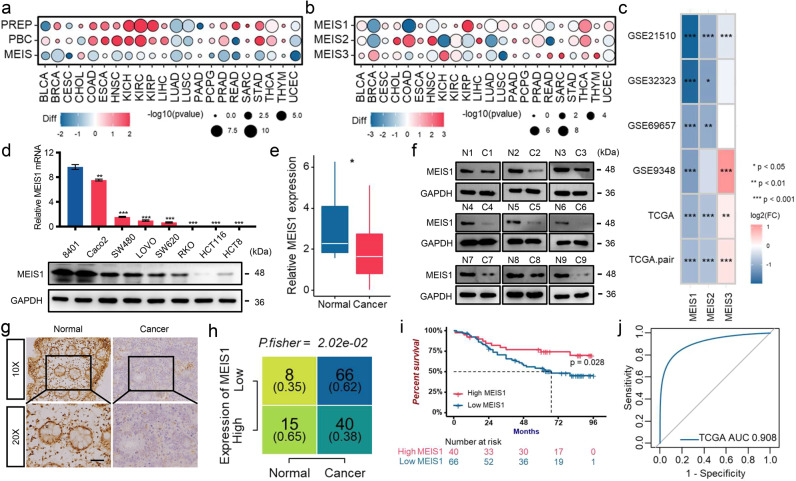
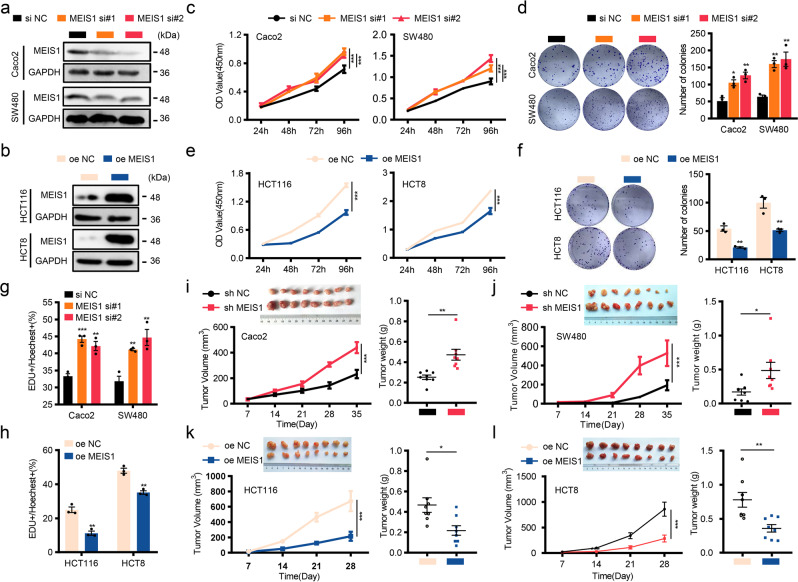
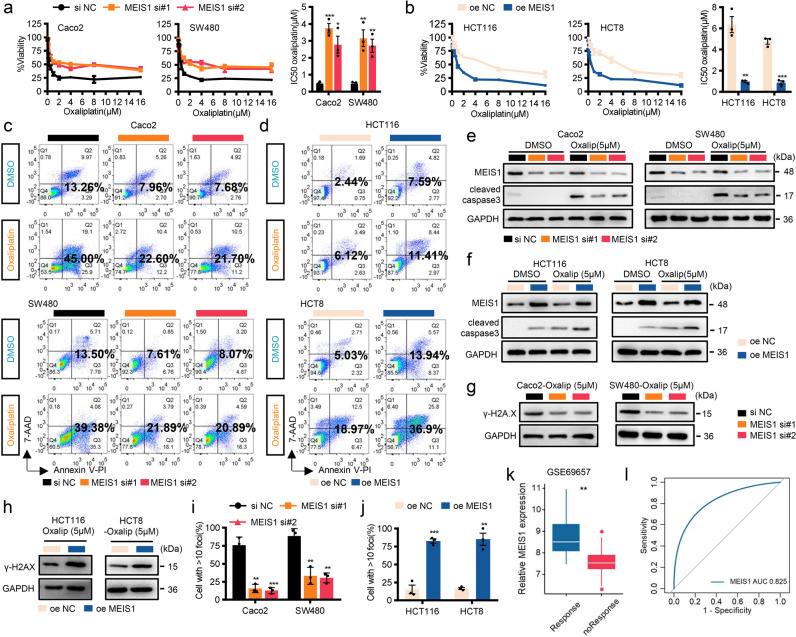
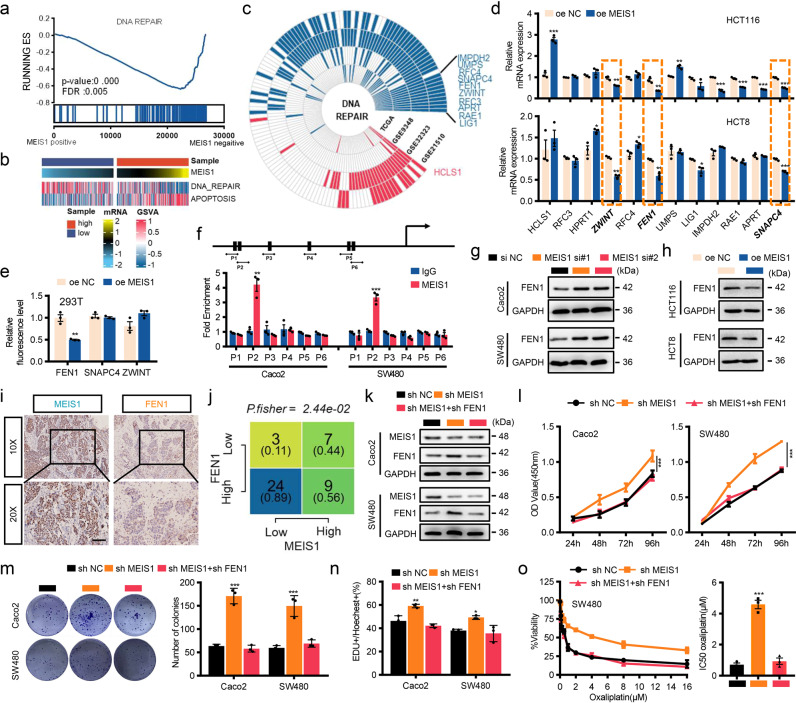
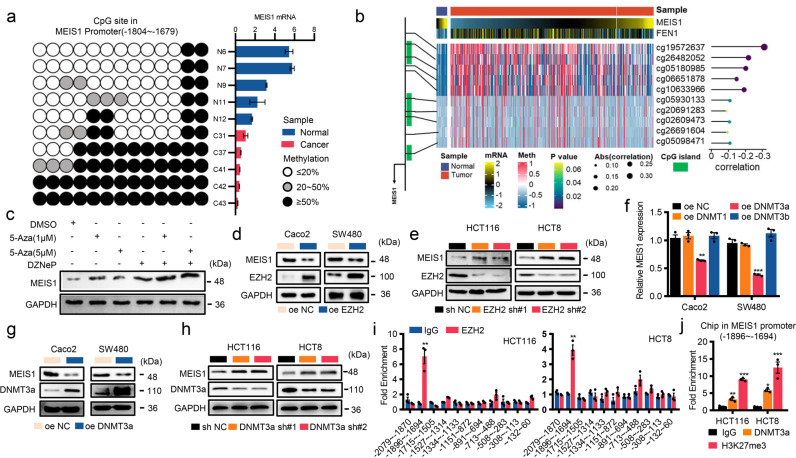
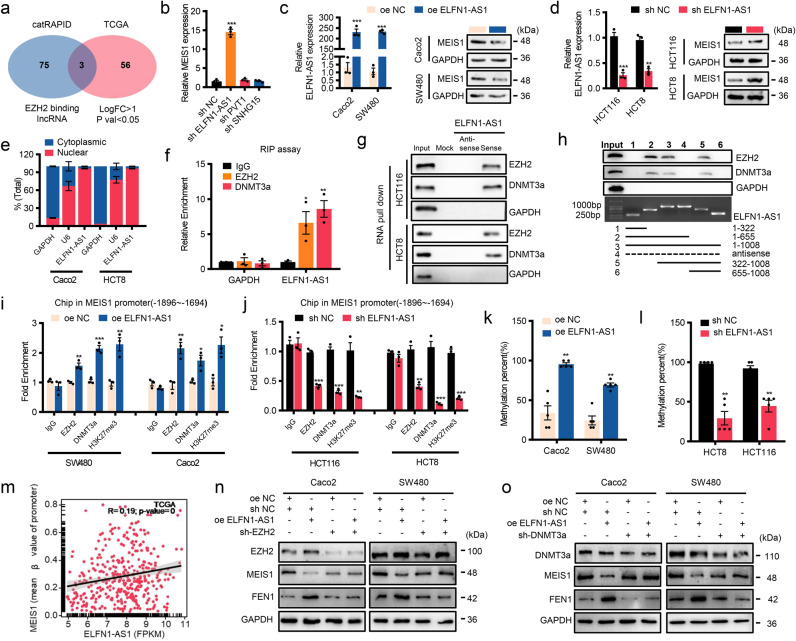
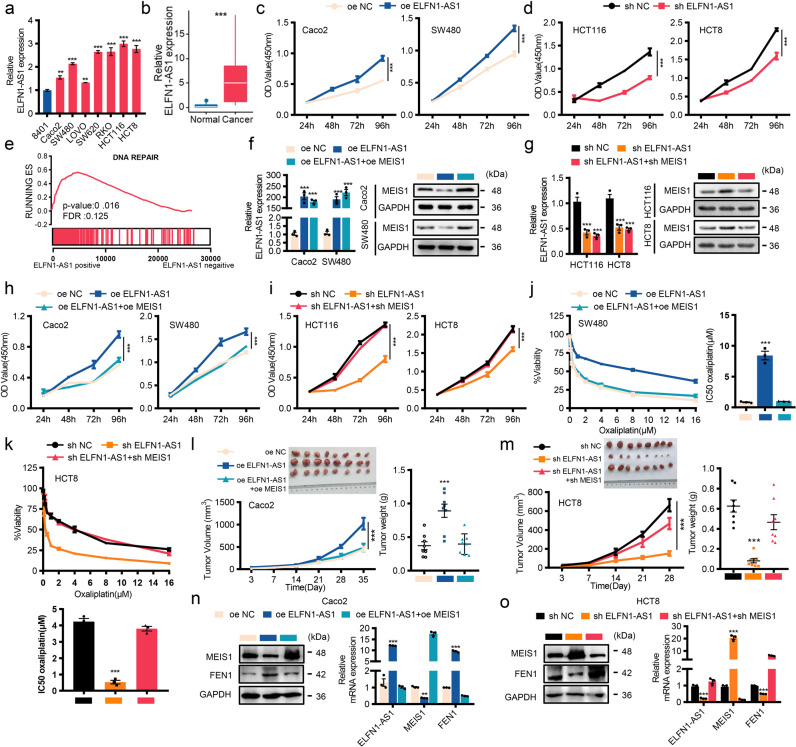
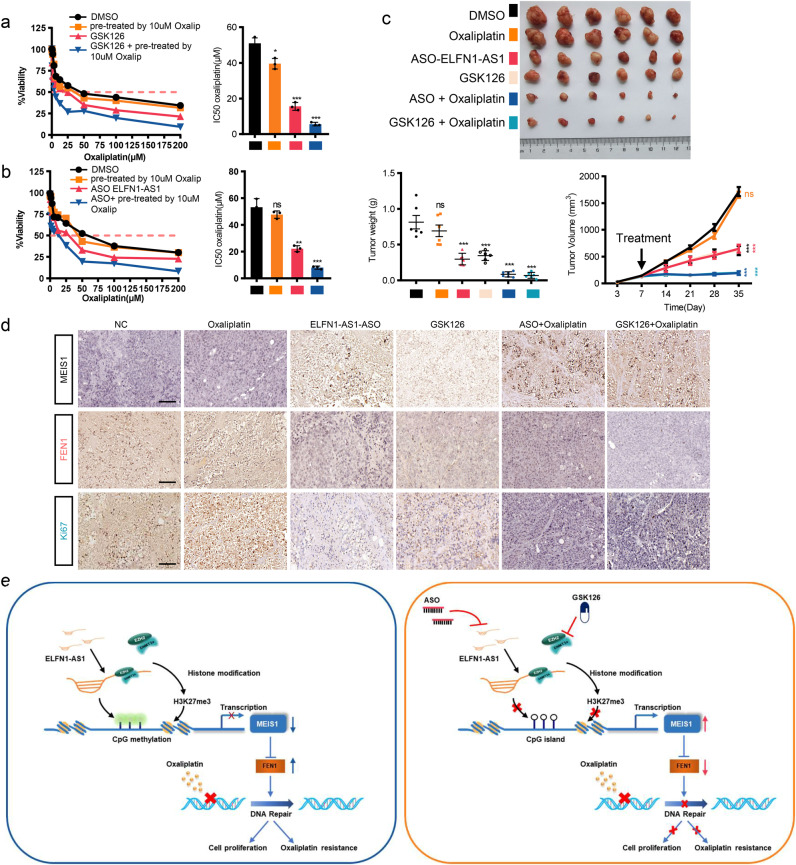
Oxaliplatin is widely used in the frontline treatment of colorectal cancer (CRC), but an estimated 50% of patients will eventually stop responding to treatment due to acquired resistance. This study revealed that diminished MEIS1 expression was detected in CRC and harmed the survival of CRC patients. MEIS1 impaired CRC cell viabilities and tumor growth in mice and enhanced CRC cell sensitivity to oxaliplatin by preventing DNA damage repair. Mechanistically, oxaliplatin resistance following MEIS1 suppression was critically dependent on enhanced FEN1 expression. Subsequently, we confirmed that EZH2-DNMT3a was assisted by lncRNA ELFN1-AS1 in locating the promoter of MEIS1 to suppress MEIS1 transcription epigenetically. Based on the above, therapeutics targeting the role of MEIS1 in oxaliplatin resistance were developed and our results suggested that the combination of oxaliplatin with either ELFN1-AS1 ASO or EZH2 inhibitor GSK126 could largely suppress tumor growth and reverse oxaliplatin resistance. This study highlights the potential of therapeutics targeting ELFN1-AS1 and EZH2 in cell survival and oxaliplatin resistance, based on their controlling of MEIS1 expression, which deserve further verification as a prospective therapeutic strategy.
Overview
The claims and statistics of this paper haven’t been checked yet.
Free: it reads the open-access text and checks the first 5 claims that cite a source we can check. Create a free account to check every claim.
Integrity signals
Registry
Cites
Statistics
Figures
Verification
Claims the paper makes
The claims and statistics of this paper haven’t been checked yet.
Free: it reads the open-access text and checks the first 5 claims that cite a source we can check. Create a free account to check every claim.
Claims other papers make about this one
Each is checked against this paper’s own text: does it say what the citing paper says it does?
The cited source says what the claim attributes to it.
In the citing paper
“Targeting EZH2 may also be an effective strategy to overcome oxaliplatin resistance, since EZH2 was shown to promote oxaliplatin resistance in CRC cells, while EZH2 inhibitor suppressed tumor growth and sensitized CRC cells to oxaliplatin [172,173].”
From Mechanisms and Strategies to Overcome Drug Resistance in Colorectal Cancer (2025) · cites this paper as [173]
Self-check
Percentages, sums and reported differences re-computed from the paper’s own numbers.
The self-check needs the paper’s full text.
Citations
Cites
Sung, H., Ferlay, J., Siegel, R. L., Laversanne, M., Soerjomataram, I., Jemal, A., & Bray, F. (2021) · CA: A Cancer Journal for Clinicians · doi:10.3322/caac.21660 · Cited by 108,699
Shrestha, S., & Offer, S. M. (2016) · Medical Epigenetics · doi:10.1159/000444713 · Cited by 8,914
lincRNAs: Genomics, Evolution, and Mechanisms
Ulitsky, I., & Bartel, D. P. (2013) · Cell · doi:10.1016/j.cell.2013.06.020 · Cited by 2,608
Chemokines in the cancer microenvironment and their relevance in cancer immunotherapy
Nagarsheth, N., Wicha, M. S., & Zou, W. (2017) · Nature Reviews Immunology · doi:10.1038/nri.2017.49 · Cited by 2,206
The Polycomb group protein EZH2 directly controls DNA methylation
Viré, E., Brenner, C., Deplus, R., Blanchon, L., Fraga, M., Didelot, C., Morey, L., Van Eynde, A., Bernard, D., Vanderwinden, J.-M., et al. (2006) · Nature · doi:10.1038/nature04431 · Cited by 2,204
EZH2 inhibition as a therapeutic strategy for lymphoma with EZH2-activating mutations
McCabe, M. T., Ott, H. M., Ganji, G., Korenchuk, S., Thompson, C., Van Aller, G. S., Liu, Y., Graves, A. P., III, A. D. P., Diaz, E., et al. (2012) · Nature · doi:10.1038/nature11606 · Cited by 1,786 · cited 1×
“Among them, GSK126 with a highly selective and inhibitory effect on EZN2 was investigated further in this study.(25) GSK126 did increased the protein level of MEIS1 in HCT116/L-OHP cells in a dose-dependent manner (Supplementary Fig.”
BackgroundKogo, R., Shimamura, T., Mimori, K., Kawahara, K., Imoto, S., Sudo, T., Tanaka, F., Shibata, K., Suzuki, A., Komune, S., et al. (2011) · Cancer Research · doi:10.1158/0008-5472.can-11-1021 · Cited by 1,238
Xiang, J.-F., Yin, Q.-F., Chen, T., Zhang, Y., Zhang, X.-O., Wu, Z., Zhang, S., Wang, H.-B., Ge, J., Lu, X., et al. (2014) · Cell Research · doi:10.1038/cr.2014.35 · Cited by 726
DNA Methyltransferases, DNA Damage Repair, and Cancer
Jin, B., & Robertson, K. D. (2013) · Advances in Experimental Medicine and Biology · doi:10.1007/978-1-4419-9967-2_1 · Cited by 519
Advanced colorectal cancer: ESMO Clinical Practice Guidelines for treatment
Van Cutsem, E., Nordlinger, B., & Cervantes, A. (2010) · Annals of Oncology · doi:10.1093/annonc/mdq222 · Cited by 479
Molecular aspects of cancer cell resistance to chemotherapy
Rebucci, M., & Michiels, C. (2013) · Biochemical Pharmacology · doi:10.1016/j.bcp.2013.02.017 · Cited by 407
DNA methyltransferases and their roles in tumorigenesis
Zhang, W., & Xu, J. (2017) · Biomarker Research · doi:10.1186/s40364-017-0081-z · Cited by 382
Nie, F.-Q., Sun, M., Yang, J.-S., Xie, M., Xu, T.-P., Xia, R., Liu, Y.-W., Liu, X.-H., Zhang, E.-B., Lu, K.-H., et al. (2015) · Molecular Cancer Therapeutics · doi:10.1158/1535-7163.mct-14-0492 · Cited by 375
Targeting the Notch-regulated non-coding RNA TUG1 for glioma treatment
Katsushima, K., Natsume, A., Ohka, F., Shinjo, K., Hatanaka, A., Ichimura, N., Sato, S., Takahashi, S., Kimura, H., Totoki, Y., et al. (2016) · Nature Communications · doi:10.1038/ncomms13616 · Cited by 352
Hong, Y., Downey, T., Eu, K. W., Koh, P. K., & Cheah, P. Y. (2010) · Clinical & Experimental Metastasis · doi:10.1007/s10585-010-9305-4 · Cited by 319
Balakrishnan, L., & Bambara, R. A. (2013) · Annual Review of Biochemistry · doi:10.1146/annurev-biochem-072511-122603 · Cited by 280
Reilley, M. J., McCoon, P., Cook, C., Lyne, P., Kurzrock, R., Kim, Y., Woessner, R., Younes, A., Nemunaitis, J., Fowler, N., et al. (2018) · Journal for ImmunoTherapy of Cancer · doi:10.1186/s40425-018-0436-5 · Cited by 245
Functional regulation of FEN1 nuclease and its link to cancer
Zheng, L., Jia, J., Finger, L. D., Guo, Z., Zer, C., & Shen, B. (2011) · Nucleic Acids Research · doi:10.1093/nar/gkq884 · Cited by 227
Celecoxib and Curcumin Synergistically Inhibit the Growth of Colorectal Cancer Cells
Lev-Ari, S., Strier, L., Kazanov, D., Madar-Shapiro, L., Dvory-Sobol, H., Pinchuk, I., Marian, B., Lichtenberg, D., & Arber, N. (2005) · Clinical Cancer Research · doi:10.1158/1078-0432.ccr-05-0171 · Cited by 221
Culy, C. R., Clemett, D., & Wiseman, L. R. (2000) · Drugs · doi:10.2165/00003495-200060040-00005 · Cited by 217
Feedback modulation of cholesterol metabolism by the lipid-responsive non-coding RNA LeXis
Sallam, T., Jones, M. C., Gilliland, T., Zhang, L., Wu, X., Eskin, A., Sandhu, J., Casero, D., Vallim, T. Q. D. A., Hong, C., et al. (2016) · Nature · doi:10.1038/nature17674 · Cited by 212
Chen, X., Xie, R., Gu, P., Huang, M., Han, J., Dong, W., Xie, W., Wang, B., He, W., Zhong, G., et al. (2019) · Clinical Cancer Research · doi:10.1158/1078-0432.ccr-18-1656 · Cited by 211
Clinical Significance of Osteoprotegerin Expression in Human Colorectal Cancer
Tsukamoto, S., Ishikawa, T., Iida, S., Ishiguro, M., Mogushi, K., Mizushima, H., Uetake, H., Tanaka, H., & Sugihara, K. (2011) · Clinical Cancer Research · doi:10.1158/1078-0432.ccr-10-2884 · Cited by 210
Berdasco, M., Ropero, S., Setien, F., Fraga, M. F., Lapunzina, P., Losson, R., Alaminos, M., Cheung, N.-K., Rahman, N., & Esteller, M. (2009) · Proceedings of the National Academy of Sciences · doi:10.1073/pnas.0906831106 · Cited by 206
Ozawa, T., Matsuyama, T., Toiyama, Y., Takahashi, N., Ishikawa, T., Uetake, H., Yamada, Y., Kusunoki, M., Calin, G., & Goel, A. (2017) · Annals of Oncology · doi:10.1093/annonc/mdx248 · Cited by 170
Li, W., Zheng, J., Deng, J., You, Y., Wu, H., Li, N., Lu, J., & Zhou, Y. (2014) · Gastroenterology · doi:10.1053/j.gastro.2014.03.002 · Cited by 168
Khamas, A., Ishikawa, T., Shimokawa, K., Mogushi, K., Iida, S., Ishiguro, M., Mizushima, H., Tanaka, H., Uetake, H., & Sugihara, K. (2012) · PubMed · Cited by 141
Implementing prognostic and predictive biomarkers in CRC clinical trials
Schaeybroeck, S. V., Allen, W. L., Turkington, R. C., & Johnston, P. G. (2011) · Nature Reviews Clinical Oncology · doi:10.1038/nrclinonc.2011.15 · Cited by 141
Lee, S.-R., Roh, Y.-G., Kim, S., Lee, J., Seol, S., Lee, H.-H., Kim, W.-T., Kim, W., Heo, J., Cha, H., et al. (2015) · Clinical Cancer Research · doi:10.1158/1078-0432.ccr-14-2680 · Cited by 141
The Best Screening Test for Colorectal Cancer — A Personal Choice
Woolf, S. H. (2000) · New England Journal of Medicine · doi:10.1056/nejm200011303432211 · Cited by 127
Oxaliplatin in the era of personalized medicine: from mechanistic studies to clinical efficacy
Perego, P., & Robert, J. (2015) · Cancer Chemotherapy and Pharmacology · doi:10.1007/s00280-015-2901-x · Cited by 117
Lu, X. J., Liu, R., Wang, M., Kumar, A. K., Pan, F., He, L., Hu, Z., & Guo, Z. (2019) · Oncogene · doi:10.1038/s41388-019-0986-0 · Cited by 108
Adjuvant colon cancer chemotherapy: where we are and where we'll go
Lombardi, L., Morelli, F., Cinieri, S., Santini, D., Silvestris, N., Fazio, N., Orlando, L., Tonini, G., Colucci, G., & Maiello, E. (2010) · Cancer Treatment Reviews · doi:10.1016/s0305-7372(10)70018-9 · Cited by 97
Role of EZH2 in cancer stem cells: from biological insight to a therapeutic target
Wen, Y., Cai, J., Hou, Y., Huang, Z., & Wang, Z. (2017) · Oncotarget · doi:10.18632/oncotarget.16467 · Cited by 90
Celecoxib and Curcumin Additively Inhibit the Growth of Colorectal Cancer in a Rat Model
Shpitz, B., Giladi, N., Sagiv, E., Lev‐Ari, S., Liberman, E., Kazanov, D., & Arber, N. (2006) · Digestion · doi:10.1159/000098655 · Cited by 81
Bhanvadia, R. R., VanOpstall, C., Brechka, H., Barashi, N. S., Gillard, M., McAuley, E. M., Vasquez, J. M., Paner, G. P., Chan, W., Andrade, J., et al. (2018) · Clinical Cancer Research · doi:10.1158/1078-0432.ccr-17-3673 · Cited by 80
Vastrad, B. M., Vastrad, C. M., Godavarthi, A., & Hariharapura, R. C. (2017) · Medical Oncology · doi:10.1007/s12032-017-1043-x · Cited by 77
The Polycomb group protein EZH2 directly controls DNA methylation
Marker, P. C. (2007) · Urologic Oncology Seminars and Original Investigations · doi:10.1016/j.urolonc.2007.02.005 · Cited by 70
A tale of TALE, PREP1, PBX1, and MEIS1: Interconnections and competition in cancer
Blasi, F., Bruckmann, C., Penkov, D., & Dardaei, L. (2017) · BioEssays · doi:10.1002/bies.201600245 · Cited by 64
Fognani, C., Kilstrup-Nielsen, C., Berthelsen, J., Ferretti, E., Zappavigna, V., & Blasi, F. (2002) · Nucleic Acids Research · doi:10.1093/nar/30.9.2043 · Cited by 60
Yokoyama, T., Nakatake, M., Kuwata, T., Couzinet, A., Goitsuka, R., Tsutsumi, S., Aburatani, H., Valk, P. J. M., Delwel, R., & Nakamura, T. (2016) · Journal of Clinical Investigation · doi:10.1172/jci81516 · Cited by 48
Synergistic antitumor effect of combined paclitaxel with FEN1 inhibitor in cervical cancer cells
He, L., Yang, H., Zhou, S., Zhu, H., Mao, H., Ma, Z., Wu, T., Kumar, A. K., Kathera, C., Janardhan, A., et al. (2018) · DNA repair · doi:10.1016/j.dnarep.2018.01.003 · Cited by 46
Current status of pharmacological treatment of colorectal cancer
Akhtar, R., Chandel, S., Sarotra, P., & Medhi, B. (2014) · World Journal of Gastrointestinal Oncology · doi:10.4251/wjgo.v6.i6.177 · Cited by 45
Ba, M.-C., Long, H., Cui, S., Gong, Y., Yan, Z., Wu, Y., & Tu, Y. (2017) · Oncotarget · doi:10.18632/oncotarget.20980 · Cited by 41
Zhu, J., Cui, L., Xu, A., Yin, X., Li, F., & Gao, J. (2017) · BMC Cancer · doi:10.1186/s12885-017-3155-2 · Cited by 41
Whitlock, N. C., Trostel, S. Y., Wilkinson, S. C., Terrigino, N. T., Hennigan, S. T., Lake, R. G., Carrabba, N. V., Atway, R., Walton, E. D., Gryder, B. E., et al. (2020) · Oncogene · doi:10.1038/s41388-020-01389-7 · Cited by 35
A Conserved Tissue-Specific Homeodomain-Less Isoform of MEIS1 Is Downregulated in Colorectal Cancer
Crist, R. C., Roth, J. J., Waldman, S. A., & Buchberg, A. M. (2011) · PLoS ONE · doi:10.1371/journal.pone.0023665 · Cited by 35
Li, S., Lu, X., Chi, P., & Pan, J. (2012) · Cancer Biology & Therapy · doi:10.4161/cbt.19298 · Cited by 32
Li, S., Lu, X., Chi, P., & Pan, J. (2013) · Future Oncology · doi:10.2217/fon.13.25 · Cited by 28
Homeobox gene Meis1 modulates cardiovascular regeneration
Paul, S., Zhang, X., & He, J. (2019) · Seminars in Cell and Developmental Biology · doi:10.1016/j.semcdb.2019.10.003 · Cited by 26
Tong, M., Zheng, W., Lu, X., Ao, L., Li, X., Guan, Q., Cai, H., Li, M., Yan, H., Guo, Y., et al. (2015) · Oncotarget · doi:10.18632/oncotarget.5649 · Cited by 25
The Homeobox Gene MEIS1 Is Methylated in BRAFp.V600E Mutated Colon Tumors
Dihal, A. A., Boot, A., Roon, E. H. J. V., Schrumpf, M., Sarasqueta, A. F., Fiocco, M. F., Zeestraten, E. C. M., Kuppen, P. J. K., Morreau, H. M., van Wezel, T., et al. (2013) · PLoS ONE · doi:10.1371/journal.pone.0079898 · Cited by 16
Paço, A., & Freitas, R. (2019) · Epigenomics · doi:10.2217/epi-2019-0090 · Cited by 11
Cited by
Targeting epigenetic regulators to overcome drug resistance in cancers
Wang, N., Ma, T., & Yu, B. (2023) · Signal Transduction and Targeted Therapy · doi:10.1038/s41392-023-01341-7 · Cited by 311
New clinical trial design in precision medicine: discovery, development and direction
Duan, X.-P., Qin, B.-D., Jiao, X.-D., Liu, K., Wang, Z., & Zang, Y.-S. (2024) · Signal Transduction and Targeted Therapy · doi:10.1038/s41392-024-01760-0 · Cited by 197
Huang, Y., Yang, W., Yang, L., Wang, T., Li, C., Yu, J., Zhang, P., Yin, Y., Li, R., & Tao, K. (2023) · Scientific Reports · doi:10.1038/s41598-023-41490-x · Cited by 85
Mechanisms and Strategies to Overcome Drug Resistance in Colorectal Cancer
Haynes, J., & Manogaran, P. (2025) · International Journal of Molecular Sciences · doi:10.3390/ijms26051988 · Cited by 82
“Targeting EZH2 may also be an effective strategy to overcome oxaliplatin resistance, since EZH2 was shown to promote oxaliplatin resistance in CRC cells, while EZH2 inhibitor suppressed tumor growth and sensitized CRC cells to oxaliplatin [172,173].”
LncRNAs and the cancer epigenome: Mechanisms and therapeutic potential
Nadhan, R., Isidoro, C., Song, Y. S., & Dhanasekaran, D. N. (2024) · Cancer Letters · doi:10.1016/j.canlet.2024.217297 · Cited by 58
Metadata
- Authors
- Li, Y., Gan, Y., Liu, J., Li, J., Zhou, Z., Tian, R., Sun, R., Liu, J., Xiao, Q., Li, Y., Lu, P., Peng, Y., Peng, Y., Shu, G., & Yin, G.
- Affiliations
- Central South University (CN)
- Corresponding author
- Yin, Gang
- ORCID
- Venue
- Signal Transduction and Targeted Therapy
- Published
- 2022-03-30
- Volume
- 7
- Issue
- 1
- Pages
- 87-87
- ISSN
- 2059-3635 (ISSN-L)
- PMC
- PMC8964798
- OpenAlex
- W4220837638
- Cited by
- 153
- References
- 53
- Citations by year
- 2026: 19 · 2025: 38 · 2024: 50 · 2023: 36 · 2022: 10
- FWCI
- 14.09
- Type
- journal article
- Language
- en
- Open access
- gold
- doi.org
- Licence
- cc-by
- creativecommons.org/licenses/by/4.0 (tdm)
- creativecommons.org/licenses/by/4.0 (vor)
- Locations
- Signal Transduction and Targeted Therapy (publishedVersion, cc-by)
- PubMed Central (publishedVersion, cc-by)
- PubMed (publishedVersion)
- DOAJ (DOAJ: Directory of Open Access Journals) (submittedVersion, cc-by-sa)
- Funders
- National Natural Science Foundation of China (82173376)
- Key Project of Hunan Province
- Topics
- Life Sciences › Biochemistry, Genetics and Molecular Biology › Cancer Research › Cancer-related molecular mechanisms research
- Life Sciences › Biochemistry, Genetics and Molecular Biology › Molecular Biology › Epigenetics and DNA Methylation
- Health Sciences › Medicine › Oncology › Colorectal Cancer Treatments and Studies
- Keywords
- MEIS1, EZH2, DNMT3A, oxaliplatin resistance, colorectal cancer, FEN1, DNA repair, long non-coding RNA, transcriptional repression, GSK126, antisense oligonucleotides, tumor growth
- MeSH terms
- Enhancer of Zeste Homolog 2 Protein, Oxaliplatin, Animals, Cell Transformation, Neoplastic, Humans, Colorectal Neoplasms, Down-Regulation, Cell Proliferation, Mice, Carcinogenesis
About these checks
Registry, retraction, Cites and statistics results are computed, not judged, with one exception: a printed reference that no index lists is read once by a model before it counts as a citation error. Claims are extracted by a model and kept only when their quote appears verbatim in the text; each cited source is then checked, with a model’s help, for whether it says what the claim relies on. Those verdicts can be wrong — read the claim’s quote and the cited source before relying on one.
Statistics and arithmetic are recomputed, not judged.
Confidence bands are shown only for fields calibrated on our annotated test set. None is calibrated yet, so no band is shown.
What counts as a claim ›How we measure confidence ›How we check this ›
Are you an author, or do you see a problem with this page? Request a review
Data sources
Bibliographic data: Semantic Scholar, OpenAlex, Crossref.
Contains information from the Semantic Scholar Academic Graph Datasets, made available under the ODC Attribution License (ODC-BY 1.0).
Semantic Scholar’s data is described in: Kinney, R., et al. (2023). The Semantic Scholar Open Data Platform. arXiv:2301.10140.
