

Neural substrates of smoking and reward cue reactivity in smokers: a meta-analysis of fMRI studies
Open accessThe DOI matches its Crossref record; 37 of the 38 references it cites were found in a registry or an index.
Abstract
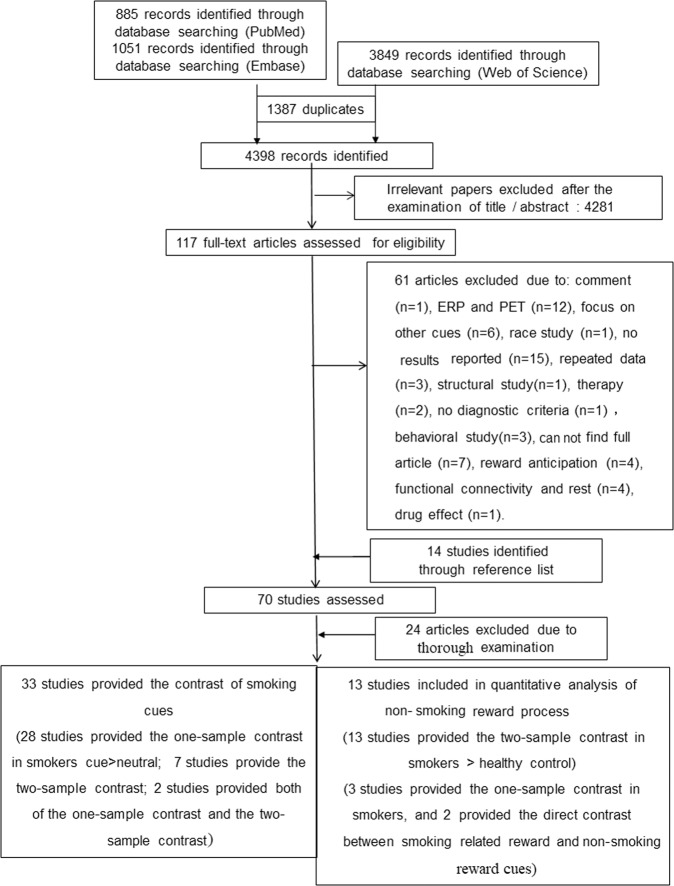
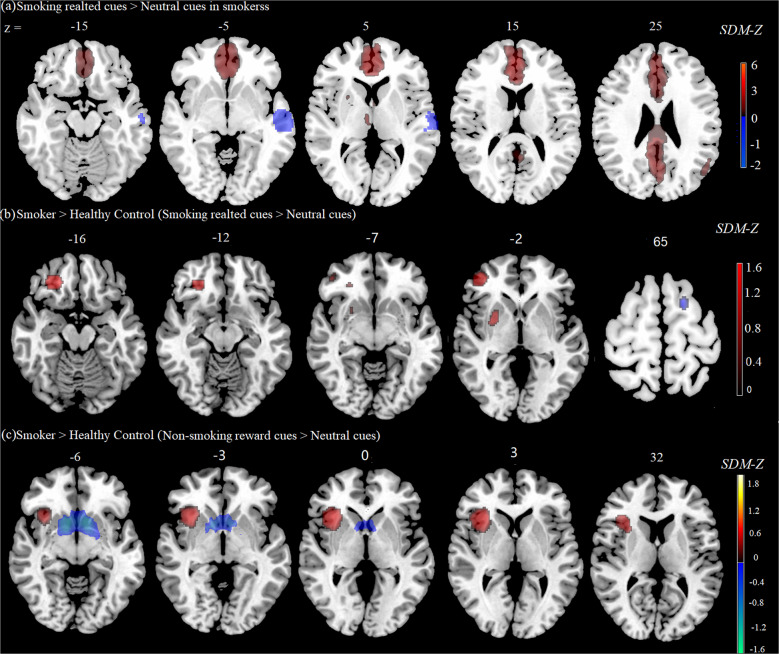
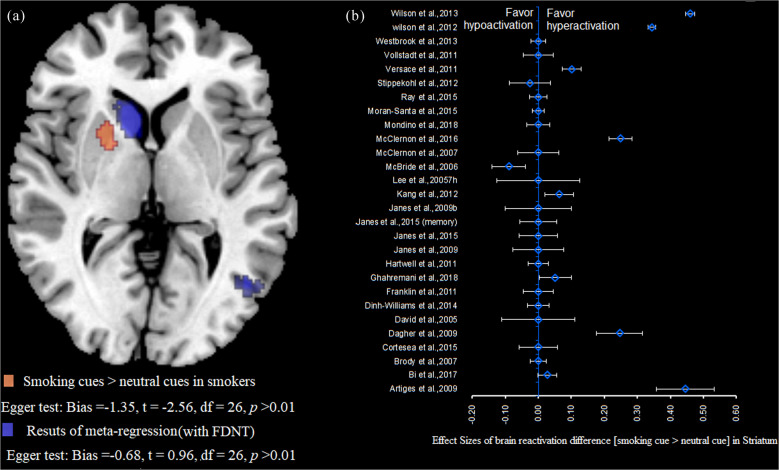
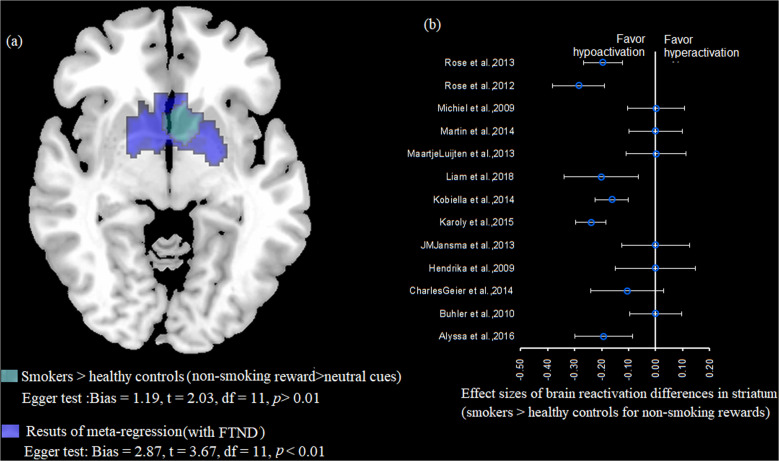
Smoking is partly attributed to alterations of reward processing. However, findings on the neurobiological mechanisms that underlie smoking-related and smoking-unrelated reward processing in smokers have been inconsistent. Neuroimaging experiments that used functional magnetic resonance imaging (fMRI) and reported brain responses to smoking-related cues and nonsmoking reward-related cues in smokers and healthy controls as coordinates in a standard anatomic reference space were identified by searching the PubMed, Embase, and Web of Science databases up to December 2018. Three meta-analyses were performed using random-effect nonparametric statistics with Seed-based d Mapping software, with brain activity contrast from individual studies as the input. The striatum showed higher activation in response to smoking-related cues compared with neutral cues in 816 smokers from 28 studies and lower activation in response to nonsmoking reward-related cues in 275 smokers compared with 271 healthy control individuals from 13 studies. The relative reactivity of the putamen to smoking-related cues increased in 108 smokers compared with 107 healthy controls from seven studies. Meta-regression showed that smokers with a greater severity of nicotine dependence exhibited less engagement of the striatum in response to both smoking-related cues and nonsmoking reward-related cues. The present results reveal the disruption of reward system function in smokers and provide new insights into diverging theories of addiction. With the escalation of nicotine dependence, nicotine appears to exert dynamic effects on reward processing, based on incentive sensitization theory and reward deficiency syndrome theory.
Overview
The claims and statistics of this paper haven’t been checked yet.
Free: it reads the open-access text and checks the first 5 claims that cite a source we can check. Create a free account to check every claim.
Integrity signals
Registry
Cites
Statistics
Figures
Verification
Claims the paper makes
The claims and statistics of this paper haven’t been checked yet.
Free: it reads the open-access text and checks the first 5 claims that cite a source we can check. Create a free account to check every claim.
Claims other papers make about this one
Each is checked against this paper’s own text: does it say what the citing paper says it does?
The source backs part of the claim, not all of it — or backs it for a different population, condition or comparison.
In the citing paper
“Smoking-related cues have repeatedly been shown to induce craving on a physiological, neural and subjective level (Betts et al., 2021; Cui et al., 2012; Lin et al., 2020), of which the extent of craving has been associated with the severity of nicotine use and dependence (Lin et al., 2020; Vollst ¨ adt-Klein et al., 2011).”
From Age-dependent Effects of Tobacco Smoke and Nicotine on Cognition and the Brain: A Systematic Review of the Human and Animal Literature Comparing Adolescents and Adults. (2023) · cites this paper as Lin et al., 2020
Experimental — accuracy not yet measured
Self-check
Percentages, sums and reported differences re-computed from the paper’s own numbers.
The self-check needs the paper’s full text.
Citations
Cites
The neural basis of drug craving: An incentive-sensitization theory of addiction
Robinson, T. (1993) · Brain Research Reviews · doi:10.1016/0165-0173(93)90013-p · Cited by 7,346
NEURAL MECHANISMS OF ADDICTION: The Role of Reward-Related Learning and Memory
Hyman, S. E., Malenka, R. C., & Nestler, E. J. (2006) · Annual Review of Neuroscience · doi:10.1146/annurev.neuro.29.051605.113009 · Cited by 2,647
The incentive sensitization theory of addiction: some current issues
Robinson, T. E., & Berridge, K. C. (2008) · Philosophical Transactions of the Royal Society B: Biological Sciences · doi:10.1098/rstb.2008.0093 · Cited by 1,717
Neural mechanisms of autonomic, affective, and cognitive integration
Critchley, H. D. (2005) · Journal of Comparative Neurology · doi:10.1002/cne.20749 · Cited by 1,214
Blum, K., Braverman, E. R., Holder, J. M., Lubar, J. F., Monastra, V. J., Miller, D., Lubar, J. O., Chen, T. J. H., & Comings, D. E. (2000) · Journal of Psychoactive Drugs · doi:10.1080/02791072.2000.10736099 · Cited by 973
Voxel-wise meta-analysis of grey matter changes in obsessive-compulsive disorder
Radua, J., & Mataix-Cols, D. (2009) · British Journal of Psychiatry · doi:10.1192/bjp.bp.108.055046 · Cited by 863
Radua, J., Mataix-Cols, D., Phillips, M. L., El-Hage, W., Kronhaus, D. M., Cardoner, N., & Surguladze, S. (2012) · European Psychiatry · doi:10.1016/j.eurpsy.2011.04.001 · Cited by 765
Current Cigarette Smoking Among Adults — United States, 2016
Jamal, A., Phillips, E., Gentzke, A. S., Homa, D. M., Babb, S. D., King, B. A., & Neff, L. J. (2018) · MMWR. Morbidity and Mortality Weekly Report · doi:10.15585/mmwr.mm6702a1 · Cited by 737
Echoes of the brain within the posterior cingulate cortex
Leech, R., Braga, R., & Sharp, D. J. (2012) · The Journal of Neuroscience · doi:10.1523/jneurosci.3689-11.2012 · Cited by 595
The Anterior Cingulate Gyrus and Social Cognition: Tracking the Motivation of Others
Apps, M. A. J., Rushworth, M. F. S., & Chang, S. W. C. (2016) · Neuron · doi:10.1016/j.neuron.2016.04.018 · Cited by 559
Self-citation
Research works printed but not linked: 1
- World Health Organization. WHO Report on the Global Tobacco Epidemic, 2008. The MPOWER package. 2008 Geneva World Health Organization
Cited by
A neuromarker for drug and food craving distinguishes drug users from non-users
Koban, L., Wager, T. D., & Kober, H. (2022) · Nature Neuroscience · doi:10.1038/s41593-022-01228-w · Cited by 166
Hill-Bowen, L. D., Riedel, M. C., Poudel, R., Salo, T., Flannery, J. S., Camilleri, J. A., Eickhoff, S. B., Laird, A. R., & Sutherland, M. T. (2021) · Neuroscience & Biobehavioral Reviews · doi:10.1016/j.neubiorev.2021.08.010 · Cited by 79
Colyer-Patel, K., Kuhns, L., Weidema, A., Lesscher, H., & Cousijn, J. (2023) · Neuroscience & Biobehavioral Reviews · doi:10.1016/j.neubiorev.2023.105038 · Cited by 54
Long, Y., Pan, N., Ji, S., Qin, K., Chen, Y., Zhang, X., He, M., Suo, X., Yu, Y., Wang, S., et al. (2022) · Translational Psychiatry · doi:10.1038/s41398-022-02130-6 · Cited by 53
Ni, H., Wang, H., Ma, X., Li, S., Liu, C., Song, X., Potenza, M. N., & Dong, G. (2024) · JAMA Network Open · doi:10.1001/jamanetworkopen.2024.16684 · Cited by 49
Bel‐Bahar, T., Khan, A. A., Shaik, R., & Parvaz, M. A. (2022) · Frontiers in Human Neuroscience · doi:10.3389/fnhum.2022.995534 · Cited by 37
“Current models of SUD, mainly based on functional magnetic resonance imaging (fMRI; Devoto et al., 2020; Lin et al., 2020; Hill-Bowen et al., 2021; KlugahBrown et al., 2021; Le et al., 2021; Sehl et al., 2021; Tolomeo and Yu, 2022) suggest chronic alterations in brain systems associated with reward processing (Luijten…”
MethodNeuroimaging biomarkers of addiction
Ekhtiari, H., Sangchooli, A., Carmichael, O. T., Moeller, F. G., O’Donnell, P., Oquendo, M. A., Paulus, M. P., Pizzagalli, D. A., Ramey, T., Schacht, J. P., et al. (2024) · Nature Mental Health · doi:10.1038/s44220-024-00334-x · Cited by 32
Association between vmPFC gray matter volume and smoking initiation in adolescents
Xiang, S., Jia, T., Xie, C., Cheng, W., Chaarani, B., Banaschewski, T., Barker, G. J., Bokde, A. L. W., Büchel, C., Desrivières, S., et al. (2023) · Nature Communications · doi:10.1038/s41467-023-40079-2 · Cited by 40
Disrupted Circadian Rhythms and Substance Use Disorders: A Narrative Review
Sharma, P., & Nelson, R. J. (2024) · Clocks & Sleep · doi:10.3390/clockssleep6030030 · Cited by 30
“Over 16 million Americans suffer from ailments related to smoking, and more than 480,000 individuals die due to smoking each year [117].”
BackgroundMarkert, C., Klein, S., Strahler, J., Kruse, O., & Stark, R. M. (2021) · Journal of Behavioral Addictions · doi:10.1556/2006.2021.00018 · Cited by 27
“…showed an increased cue reactivity in the reward system (Chase, Eickhoff, Laird, & Hogarth, 2011; K € uhn & Gallinat, 2011b; Schacht, Anton, & Myrick, 2012), but some studies could not con fi rm these fi ndings (Engelmann et al., 2012; Lin et al., 2020; Zilberman, Lavidor, Yadid, & Rassovsky, 2019).”
BackgroundDugre, J. R., Orban, P., & Potvin, S. (2022) · Addiction Biology · doi:10.1111/adb.13257 · Cited by 26
Pollard, A. A., Hauson, A. O., Lackey, N. S., Zhang, E., Khayat, S., Carson, B., Fortea, L., Raduà, J., & Grant, I. (2023) · The American Journal of Drug and Alcohol Abuse · doi:10.1080/00952990.2023.2172423 · Cited by 22
Abnormal resting‐state effective connectivity in reward network among long‐term male smokers
Zhang, M., Gao, X., Yang, Z., Han, S., Zhou, B., Niu, X., Wang, W., Wei, Y., Cheng, J., & Zhang, Y. (2022) · Addiction Biology · doi:10.1111/adb.13221 · Cited by 17
“decreased whole-brain connectivity with several regions, including medial prefrontal cortex (mPFC), hippocampus, posterior cingulate cortex (PCC), and supplemental motor area (SMA).(20,21) However, such findings on reward network did not support sequitur about directed”
BackgroundLin, Q., Li, D., Hu, C., Shen, Z., & Wang, Y. (2022) · Frontiers in Psychiatry · doi:10.3389/fpsyt.2022.891719 · Cited by 16
Li, S., Ma, X., Chen, H., Wang, M., Zheng, Y., Yang, B., Ni, H., Potenza, M. N., & Dong, G. (2024) · Journal of Affective Disorders · doi:10.1016/j.jad.2024.01.048 · Cited by 15
Gupta, A., Bowirrat, A., Llanos-Gomez, L., Baron, D. A., Elman, I., Giordano, J., Jalali, R., Badgaiyan, R. D., Modestino, E. J., Gold, M. S., et al. (2022) · International Journal of Environmental Research and Public Health · doi:10.3390/ijerph19010552 · Cited by 16
Prenatal Effects of Nicotine on Obesity Risks: A Narrative Review
White, O., Roeder, N. M., Blum, K., Eiden, R. D., & Thanos, P. K. (2022) · International Journal of Environmental Research and Public Health · doi:10.3390/ijerph19159477 · Cited by 17
Ceceli, A. O., Huang, Y., Kronberg, G., McClain, N. E., King, S. G., Butelman, E. R., Alia‐Klein, N., & Goldstein, R. Z. (2025) · Annual Review of Psychology · doi:10.1146/annurev-psych-040725-025923 · Cited by 24
“…Huang et al. 2018a, MacNiven et al. 2018), and opioid (heroin and prescription opioid) (Ekhtiari et al. 2021, Shi et al. 2021) use disorders as largely associated with (and potentially exacerbated by) drug craving (for meta-analyses, see Lin et al. 2020, Pollard et al. 2023, Zeng et al. 2021).”
Marques, R. C., Marques, D., Vieira, L., & Cantilino, A. (2022) · Drug and Alcohol Dependence · doi:10.1016/j.drugalcdep.2022.109450 · Cited by 12
Serre, F., Moriceau, S., Donnadieu, L., Forcier, C., Garnier, H., Alexandre, J., Dupuy, L., Philip, P., Levavasseur, Y., de Sevin, É., et al. (2023) · Frontiers in Psychiatry · doi:10.3389/fpsyt.2023.1143167 · Cited by 15
Lor, C. S., Haugg, A., Zhang, M., Schneider, L. M., Herdener, M., Quednow, B. B., Golestani, N., & Scharnowski, F. (2022) · Addiction Biology · doi:10.1111/adb.13261 · Cited by 15
“In human neuroimaging studies, some cue-reactivity paradigms (10) revealed enhanced activation in the thalamus (as well as other brain regions) when smokers were exposed to smoking-related cues compared to neutral cues.”
BackgroundMurray, L., Scavnicky, M. K., Korponay, C. H., Lukas, S. E., Frederick, B. B., & Janes, A. C. (2025) · Neuropsychopharmacology · doi:10.1038/s41386-025-02083-6 · Cited by 11
“Neuroimaging research using cue-reactivity tasks containing images of combustible cigarettes has shown that exposure to smoking cues activates regions of the default mode network (DMN) and salience network (SN) [5, 12, 13].”
Krikova, K., Klein, S., Kampa, M., Walter, B., Stark, R. M., & Klucken, T. (2024) · Human Brain Mapping · doi:10.1002/hbm.26711 · Cited by 11
“Previous studies have shown that nicotine consumption (and nicotine dependence) could impact the processing of other types of rewards (e.g., monetary reward) (Lin et al., 2020; Peters et al., 2011).”
BackgroundKunas, S. L., Stuke, H., Heinz, A., Ströhle, A., & Bermpohl, F. (2021) · Addiction · doi:10.1111/add.15651 · Cited by 9
Associations between polygenic risk scores and accelerated brain ageing in smokers
Yang, Z., Zhao, W. D., Linli, Z., Guo, S., & Feng, J. (2023) · Psychological Medicine · doi:10.1017/s0033291723001812 · Cited by 8
“Although many previous studies have reported widespread abnormalities of brain structure and function in smokers (Elbejjani et al., 2019; Lin et al., 2020; Yang, Zhang, Cheng, & Zheng, 2020), the neurobiological mechanisms with smoking remain to be elucidated.”
Cofresí, R. U., Upton, S., Brown, A. A., Piasecki, T. M., Bartholow, B. D., & Froeliger, B. (2024) · Addiction Neuroscience · doi:10.1016/j.addicn.2024.100156 · Cited by 7
Grundinger, N., Andreas, M., Lohner, V., Schneider, S. O., Mons, U., & Vollstädt‐Klein, S. (2024) · Nicotine & Tobacco Research · doi:10.1093/ntr/ntae273 · Cited by 7
Hobkirk, A. L., Houser, K. R., Hoglen, B., Bitzer, Z. T., Fendrich, A., Bordner, C. R., Foulds, J., Wang, J., Mukherjee, D., Yingst, J. M., et al. (2022) · Experimental and Clinical Psychopharmacology · doi:10.1037/pha0000488 · Cited by 10
Therapeutic Potential of Glucagon-Like Peptide-1 Receptor Agonists for Smoking Cessation
Hendershot, C. S., Simmons, W. K., Jha, M. K., McKee, S. A., & Yammine, L. (2026) · Biological Psychiatry · doi:10.1016/j.biopsych.2026.04.002 · Cited by 6
Dieleman, J., Sescousse, G., Kleinjan, M., Otten, R., & Luijten, M. (2021) · Addiction Biology · doi:10.1111/adb.13070 · Cited by 6
“confirmed this pattern of striatal hypoactivation among dependent daily smokers.(17) Furthermore, in daily adult smokers, VS hypoactivity has been associated with higher plasma nicotine levels(18) and a greater number of cigarettes smoked per day,(19) pointing towards a doseresponse relationship between striatal hypoa…”
BackgroundRakesh, G., Adams, T. G., Morey, R. A., Alcorn, J. L., Khanal, R., Su, A. E., Himelhoch, S. S., & Rush, C. R. (2024) · Frontiers in Psychiatry · doi:10.3389/fpsyt.2024.1315854 · Cited by 6
Vollstädt‐Klein, S., Grundinger, N., Görig, T., Szafran, D., Althaus, A., Mons, U., & Schneider, S. O. (2021) · BMC Psychology · doi:10.1186/s40359-021-00682-8 · Cited by 8
Hill-Bowen, L. D., Riedel, M. C., Poudel, R., Salo, T., Flannery, J. S., Camilleri, J. A., Eickhoff, S. B., Laird, A. R., & Sutherland, M. T. (2020) · bioRxiv (Cold Spring Harbor Laboratory) · doi:10.1101/2020.02.26.966549 · Cited by 7
Fascher, M., Thomsen, H., & Muehlhan, M. (2025) · Neuroscience & Biobehavioral Reviews · doi:10.1016/j.neubiorev.2025.106537 · Cited by 6
Gilley, E., Bowirrat, A., Gupta, A., Giordano, J., Dennen, C. A., Braverman, E. R., Badgaiyan, R. D., McLaughlin, T., Baron, D. A., & Blum, K. (2023) · Current Pharmaceutical Biotechnology · doi:10.2174/1389201024666230427111117 · Cited by 5
Liu, Y., Li, L., Chen, Z., Ren, S., He, R., Liang, Y., Tan, Y., Shao, X., Chen, S., Chen, X., et al. (2025) · BMC Public Health · doi:10.1186/s12889-025-21457-5 · Cited by 12
Tan, Q., Li, S., Niu, J., Liu, S., Li, Y., Lu, Y., Wang, Z., Xu, W., Wei, Y., & Guo, Z. (2021) · Neuropsychiatric Disease and Treatment · doi:10.2147/ndt.s334403 · Cited by 5
“This suggests that addicts show deficits in the recruitment of brain reward pathways.(20) A study on the neurological effects of electronic cigarette smoking using task-state fMRI showed brain activation in the motor cortex, cingulate cortex, putamen, thalamus, globus pallidum, and cerebellum, and relative inactivatio…”
Odor imagery but not perception drives risk for food cue reactivity and increased adiposityPreprint
Perszyk, E. E., Davis, X. S., Djordjevic, J., Jones‐Gotman, M., Trinh, J., Hutelin, Z., Veldhuizen, M. G., Koban, L., Wager, T. D., Hedy Kober, A., et al. (2023) · bioRxiv (Cold Spring Harbor Laboratory) · doi:10.1101/2023.02.06.527292 · Cited by 4
Boparai, K., Lin, H., Selby, P. L., & Zawertailo, L. A. (2025) · Neuropsychopharmacology · doi:10.1038/s41386-025-02086-3 · Cited by 5
Abdullah, M., Lin, S., Huang, L.-C., Khan, M. I., Kung, C., & Yang, Y. K. (2025) · Clinical Psychopharmacology and Neuroscience · doi:10.9758/cpn.24.1254 · Cited by 3
“The most frequently reported findings include the activation of anterior cingulate cortex (ACC) and striatum [20,21].”
Reinhardt, P., Zacharias, N., Fislage, M., Böhmer, J., Hollunder, B., Reppmann, Z. C., Wiehe, A., Rajwich, R., Dominick, N., Ritter, K., et al. (2025) · Addiction Biology · doi:10.1111/adb.70056 · Cited by 2
“These findings align with a large body of converging evidence from neuroimaging and non-invasive brain stimulation (NIBS) research, underscoring the central role of prefrontal circuits in the neurobiological mechanisms underlying nicotine addiction [27, 32, 33].”
Luo, X., Wang, H., Xu, X., Wei, M., Ni, H., Li, S., Liu, C., Song, X., Potenza, M. N., & Dong, G. (2025) · PNAS Nexus · doi:10.1093/pnasnexus/pgaf277 · Cited by 3
“In general, the heightened MFG activation during cue exposure could reflect compensatory inhibitory efforts (52), its covariance with nucleus accumbens activity rather suggests prefrontal co-option by incentive salience networks — a pattern repeatedly observed in addiction neuroimaging…”
Kunas, S. L., Bermpohl, F., Plank, I. S., Ströhle, A., & Stuke, H. (2021) · Addiction Biology · doi:10.1111/adb.13091 · Cited by 3
“, Lin et al.(11)): the ventral striatum (NAc), thalamus, pallidum, caudate and midbrain (including ventral tegmental area [VTA]).”
Lin, J., Liu, R., Ding, Y., Yang, Y., Jiang, S., & Ding, Z. (2023) · Computers & Education · doi:10.1016/j.compedu.2023.104816 · Cited by 3
Rakesh, G., Alcorn, J. L., Khanal, R., Himelhoch, S. S., & Rush, C. R. (2023) · Health Psychology and Behavioral Medicine · doi:10.1080/21642850.2023.2255028 · Cited by 3
da Silva, G. A., Silva, L. C., Filho, E. M. T., Damasceno, M. V., Monte-Silva, K. K., & Ximenes-da-Silva, A. (2025) · Scientific Reports · doi:10.1038/s41598-025-85877-4 · Cited by 3
Li, Z., Sha, X., Zhang, Q., Li, S., Xie, M., Wang, T., Chen, D., Xin, E., & Zhang, J. (2025) · Psychiatry Research Neuroimaging · doi:10.1016/j.pscychresns.2025.112077 · Cited by 3
Li, Q., Du, M., Xiao, J., Li, T., Hu, K., Tu, S., Liu, X., Wang, L., & Dai, W. (2026) · NeuroImage · doi:10.1016/j.neuroimage.2026.121735 · Cited by 4
Altered Brain Dynamics in Heavy Smokers Revealed by Dynamic Functional Network Connectivity Analysis
Qiu, X., Wu, G., Kang, Y., Zhu, L., & Lin, F. (2026) · Brain Topography · doi:10.1007/s10548-026-01174-x · Cited by 2
“…addiction entails fundamental disruptions in reward processing, as evidenced by a meta-analysis showing that smokers exhibit striatal hyper-reactivity to smoking-related cues but hypo-activity to non-drug rewards, with both effects modulated by the severity of dependence (Lin et al. 2020).”
Liu, H., Zhang, Y., Zhang, B., Zhang, S., Han, Y., & Xu, Z. (2026) · Frontiers in Sports and Active Living · doi:10.3389/fspor.2026.1751338 · Cited by 2
“As a result, smoking-related cues more readily capture attention and elicit craving-related responses (2).”
Neural Correlates of Cue Reactivity and the Regulation of Craving in Substance Use Disorders
Dieterich, R., & Endraß, T. (2022) · Zeitschrift für Klinische Psychologie und Psychotherapie · doi:10.1026/1616-3443/a000680 · Cited by 4
Goutal, S., Tran, T., Leroy, C., Benhamouda, N., Leterrier, S., Saba, W., Lafont, B., Tartour, É., Roelens, M., & Tournier, N. (2024) · ACS Chemical Neuroscience · doi:10.1021/acschemneuro.4c00204 · Cited by 2
Blunted midbrain reward activation during smoking withdrawal: a preliminary study
Conti, A. A., Tolomeo, S., Baldacchino, A., & Steele, J. D. (2024) · Frontiers in Pharmacology · doi:10.3389/fphar.2024.1426506 · Cited by 2
“Furthermore, neuroimaging studies have reported sex differences pertaining to the structure and the functional connectivity of the smokers ’ frontostriatal system (McCarthy et al., 2019; Lin et al., 2020).”
BackgroundMa, L., Zhang, M., Niu, X., Tao, Q., Dang, J., Sun, J., Mei, B., Wang, W., Han, S., Cheng, J., et al. (2024) · Journal of Affective Disorders · doi:10.1016/j.jad.2024.10.055 · Cited by 2
Roberge, M., Dugre, J. R., Boisvert, M., & Potvin, S. (2025) · Neuroscience & Biobehavioral Reviews · doi:10.1016/j.neubiorev.2025.106437 · Cited by 4
Cue Labeling Reduces Cigarette Craving and Associated Neural Activity
Tabibnia, G., Ghahremani, D. G., Tindle, H. A., Creswell, J. D., Westbrook, C. A., Kraynak, T. E., Julson, E., & London, E. D. (2025) · Biological Psychiatry · doi:10.1016/j.biopsych.2026.03.607 · Cited by 1
Shin, S., Kim, K., Kim, J., Nam, H., Seok, J. W., & Pak, K. (2026) · Neuroscience Letters · doi:10.1016/j.neulet.2026.138523 · Cited by 1
Cabral, D. A. R., Rego, M., Lemos, R. F., & Buckman, J. F. (2026) · Current Addiction Reports · doi:10.1007/s40429-026-00732-4 · Cited by 1
Hussein, M., Hassan, A., Magdy, R., Dahshan, A., Yacoub, O., Abdelghaffar, M., Taha, N. A., Essmat, A., Fayez, M. M., Merghany, N., et al. (2026) · Cephalalgia · doi:10.1177/03331024261453544 · Cited by 1
“53 – 55 Among smokers, greater nicotine dependence was associated with higher headache frequency, increased acute medication use, greater headache-related disability, higher psychological distress, and elevated maladaptive personality traits.”
Modestino, E. J., Bowirrat, A., Baron, D. A., Thanos, P. K., Hanna, C., Bagchi, D., Braverman, E. R., Dennen, C. A., Badgaiyan, R. D., Pollack, A. R., et al. (2024) · PubMed · Cited by 1
Tan, Q., Li, S., Yu, M., Zhao, J., Chi, X., Han, Y., & Guo, Z. (2023) · Brain and Behavior · doi:10.1002/brb3.3059
Oliver, J. A., & Sweitzer, M. M. (2021) · Addiction · doi:10.1111/add.15678 · Cited by 1
Rakesh, G., Alcorn, J. L., Khanal, R., Himelhoch, S. S., & Rush, C. R. (2022) · medRxiv · doi:10.1101/2022.09.30.22280501 · Cited by 1
Kunas, S. L., Stuke, H., & Bermpohl, F. (2021) · European Neuropsychopharmacology · doi:10.1016/j.euroneuro.2021.01.089
Nicotine dependence and functional connectivity of insular cortex subregionsPreprint
Ghahremani, D. G., Pochon, J.-B. F., Diaz, M. P., Tyndale, R. F., Dean, A. C., & London, E. D. (2021) · bioRxiv (Cold Spring Harbor Laboratory) · doi:10.1101/2021.07.07.451360
Rakesh, G., Adams, T. G., Morey, R. A., Alcorn, J. L., Khanal, R., Su, A. E., Himelhoch, S. S., & Rush, C. R. (2023) · medRxiv · doi:10.1101/2023.05.08.23289662
Shin, S., Kim, K., Kim, J., Nam, H., Seok, J. W., & Pak, K. (2024) · medRxiv · doi:10.1101/2024.04.29.24306507
“According to a meta-analysis, activation of the striatum and anterior cingulate gyrus increases in response to smoking-related vs . neutral cues in smokers 8 .”
Xu, K., Yu, M., Lin, L., Xu, M., Ren, J., Lv, Q., Zhang, M., Han, S., Wang, W., Cheng, J., et al. (2025) · Frontiers in Neuroscience · doi:10.3389/fnins.2025.1647427
Abdullah, M., Lin, S., Huang, L.-C., Lin, R.-Y., Chen, P. S., Tseng, H., & Yang, Y. K. (2025) · Journal of Addiction Medicine · doi:10.1097/adm.0000000000001610 · Cited by 1
Motka, F., Tan, H., Levine, S. M., Vollstädt‐Klein, S., Danböck, S. K., Bertsch, K., Winkler, M. H., & Wittekind, C. E. (2025) · Addiction · doi:10.1111/add.70283
“The negative association between thalamic activity and heavier smoking (non-significant after FDR-correction) aligns with prior research linking greater dependence severity to reduced activation in subcortical mesolimbic structures (e.g. striatum, amygdala and putamen) [17, 55].”
InfluentialPeter, J., Pritz, A., Hiebler‐Ragger, M., Mahmoudi, M., Fuchshuber, J., Mörkl, S., Holasek, S. J., Humer, E. C., & Unterrainer, H. (2026) · Frontiers in Psychiatry · doi:10.3389/fpsyt.2026.1677235 · Cited by 1
“Functional alterations of the reward system are also supported by brain imaging studies (60).”
Herlinger, K., Long, Y. Y., Nestor, L. J., Pannekoek, J. N., Lababidi, M. A., Ertl, N., Vanelli, F., Alabdulkader, S., Chhibbar, P., Guerrero, E., et al. (2026) · medRxiv · doi:10.64898/2026.03.13.26348339
Do response times add to self-reported craving? A secondary analysis of a neuromodulation trial
Vieira, L., Melo, L., Marques, R. C., Silva, M. M., & Diniz, P. R. B. (2026) · Frontiers in Psychiatry · doi:10.3389/fpsyt.2026.1777646 · Cited by 1
Motka, F., Tan, H., Vollstädt‐Klein, S., Bertsch, K., & Wittekind, C. E. (2026) · Scientific Reports · doi:10.1038/s41598-026-45748-y · Cited by 1
“…cingulate cortex, left angular gyrus, right thalamus, dorsal striatum, nucleus accumbens, amygdala, and medial prefrontal cortex were selected based on prior research on smoking cue-reactivity 6 , as well as on neural correlates of alcohol approach biases 40 and effects of alcohol ApBM 19 .”
Treutlein, J., Krämer, B., Keil, M., & Gruber, O. (2026) · The World Journal of Biological Psychiatry · doi:10.1080/15622975.2026.2672703
“This suggests that a general deficiency in recruitment of reward circuits results in a chronic hypoactivation in response to rewards, i.e. the development of nicotine tolerance where a dose of nicotine no longer induces the same activation (Lin et al. 2020).”
Mercante, B., Zorzi, F., Uccula, A. F., Meloni, C., Besharati, S. N., & Enrico, P. (2026) · Nicotine & Tobacco Research · doi:10.1093/ntr/ntag161
Herlinger, K., Ling, Y. Y., Nestor, L. J., Pannekoek, J. N., Lababidi, M. A., Ertl, N., Vanelli, F., Alabdulkader, S., Chhibbar, P., Guerrero, E., et al. (2026) · Frontiers in Psychiatry · doi:10.3389/fpsyt.2026.1830228
“Compared with controls, a recent meta-analysis reported that smokers exhibited increased BOLD signal to smoking cues in the striatum and putamen (15).”
Feng, X., Haoran, H. O. U., Cong, W. A. N. G., & Strelnikov, K. (2026) · Biological Psychiatry Cognitive Neuroscience and Neuroimaging · doi:10.1016/j.bpsc.2026.08.009
Metadata
- Authors
- Lin, X., Deng, J., Shi, L., Wang, Q., Li, P., Li, H., Liu, J., Que, J., Chang, S., Bao, Y., Shi, J., Weinberger, D. R., Wu, P., & Lu, L.
- Affiliations
- Peking University (CN)
- Johns Hopkins University (US)
- Corresponding author
- Wu, Ping
- ORCID
- Venue
- Translational Psychiatry
- Published
- 2020-03-17
- Volume
- 10
- Issue
- 1
- Pages
- 97-97
- ISSN
- 2158-3188 (ISSN-L)
- PMC
- PMC7078287
- OpenAlex
- W3011382407
- Cited by
- 78
- References
- 38
- Citations by year
- 2026: 15 · 2025: 15 · 2024: 13 · 2023: 11 · 2022: 12 · 2021: 11 · 2020: 1
- FWCI
- 1.12
- Type
- journal article
- Language
- en
- Open access
- gold
- doi.org
- Licence
- cc-by
- creativecommons.org/licenses/by/4.0 (tdm)
- creativecommons.org/licenses/by/4.0 (vor)
- Locations
- Translational Psychiatry (publishedVersion, cc-by)
- Europe PMC (PubMed Central) (publishedVersion, cc-by)
- PubMed Central (publishedVersion, cc-by)
- PubMed (publishedVersion)
- Funders
- National Natural Science Foundation of China (81761128036, 2019YFA0706200, 81821092, 81821092 and 81761128036)
- China Scholarship Council
- Beijing Municipal Science and Technology Commission (Z181100001718051, 81821092, 2019YFA0706200)
- National Key Research and Development Program of China (2019YFA0706200], 81821092, No. 2019YFA0706200)
- Topics
- Health Sciences › Medicine › Public Health, Environmental and Occupational Health › Smoking Behavior and Cessation
- Life Sciences › Neuroscience › Cellular and Molecular Neuroscience › Neurotransmitter Receptor Influence on Behavior
- Life Sciences › Biochemistry, Genetics and Molecular Biology › Molecular Biology › Nicotinic Acetylcholine Receptors Study
- Keywords
- smoking, nicotine dependence, striatum, putamen, reward processing, incentive-sensitization theory, reward deficiency syndrome, addiction, smoking-related cues
- MeSH terms
- Smokers, Brain, Cues, Humans, Magnetic Resonance Imaging, Reward, Smoking
About these checks
Registry, retraction, Cites and statistics results are computed, not judged, with one exception: a printed reference that no index lists is read once by a model before it counts as a citation error. Claims are extracted by a model and kept only when their quote appears verbatim in the text; each cited source is then checked, with a model’s help, for whether it says what the claim relies on. Those verdicts can be wrong — read the claim’s quote and the cited source before relying on one.
Statistics and arithmetic are recomputed, not judged.
Confidence bands are shown only for fields calibrated on our annotated test set. None is calibrated yet, so no band is shown.
What counts as a claim ›How we measure confidence ›How we check this ›
Are you an author, or do you see a problem with this page? Request a review
Data sources
Bibliographic data: Semantic Scholar, OpenAlex, Crossref.
Contains information from the Semantic Scholar Academic Graph Datasets, made available under the ODC Attribution License (ODC-BY 1.0).
Semantic Scholar’s data is described in: Kinney, R., et al. (2023). The Semantic Scholar Open Data Platform. arXiv:2301.10140.
