

The DOI matches its Crossref record; 113 of the 115 references it cites were found in a registry or an index.
Cancer as a disease of old age: changing mutational and microenvironmental landscapes
Open accessAbstract
Why do we get cancer mostly when we are old? According to current paradigms, the answer is simple: mutations accumulate in our tissues throughout life, and some of these mutations contribute to cancers. Although mutations are necessary for cancer development, a number of studies shed light on roles for ageing and exposure-dependent changes in tissue landscapes that determine the impact of oncogenic mutations on cellular fitness, placing carcinogenesis into an evolutionary framework. Natural selection has invested in somatic maintenance to maximise reproductive success. Tissue maintenance not only ensures functional robustness but also prevents the occurrence of cancer through periods of likely reproduction by limiting selection for oncogenic events in our cells. Indeed, studies in organisms ranging from flies to humans are revealing conserved mechanisms to eliminate damaged or oncogenically initiated cells from tissues. Reports of the existence of striking numbers of oncogenically initiated clones in normal tissues and of how this clonal architecture changes with age or external exposure to noxious substances provide critical insight into the early stages of cancer development. A major challenge for cancer biology will be the integration of these studies with epidemiology data into an evolutionary theory of carcinogenesis, which could have a large impact on addressing cancer risk and treatment.
Overview
The claims and statistics of this paper haven’t been checked yet.
Run the check — free, no account needed. It reads the open-access text and checks the sources it cites.
Integrity signals
Registry
Cites
Statistics
Figures
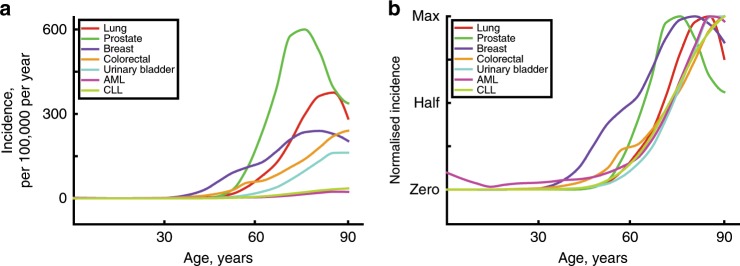
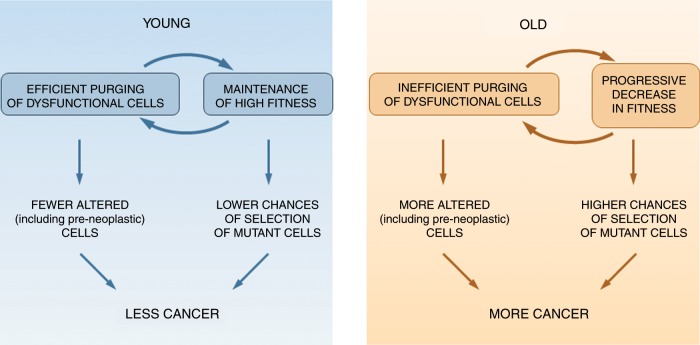
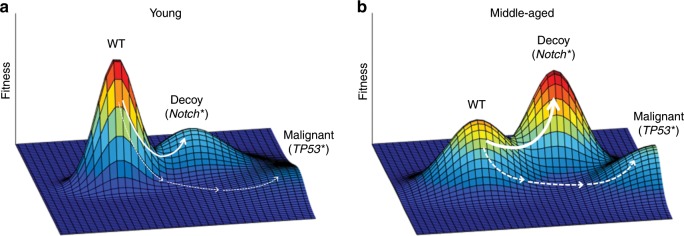
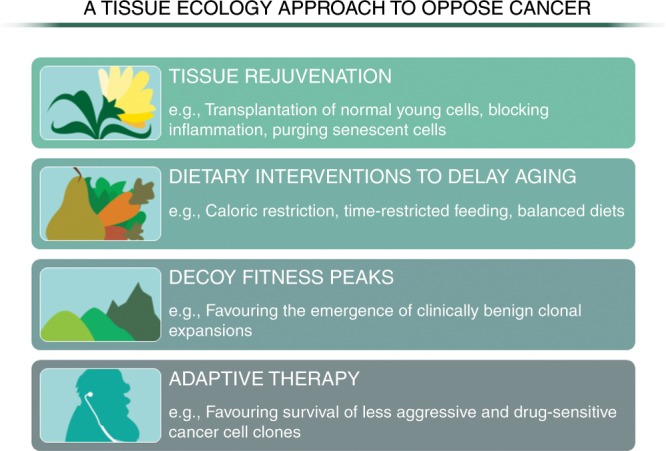
Verification
Claims the paper makes
The claims and statistics of this paper haven’t been checked yet.
Run the check — free, no account needed. It reads the open-access text and checks the sources it cites.
Claims other papers make about this one
Each is checked against this paper’s own text: does it say what the citing paper says it does?
The cited source says what the claim attributes to it.
In the citing paper
“the theory of adaptive oncogenesis, which stipulates that environmental factors associated with tissue decline, such as inflammation, are crucial drivers of oncogenesis by selecting for emergent phenotypes, such as increased proliferation, self-renewal, or survival, that are linked cancer-associated mutations (Henry et al., 2015; Laconi et al., 2020).”
From PU.1 enforces quiescence and limits hematopoietic stem cell expansion during inflammatory stress (2021) · cites this paper as Laconi et al., 2020
Self-check
Percentages, sums and reported differences re-computed from the paper’s own numbers.
The self-check needs the paper’s full text.
Citations
Cites
1 retracted
The Evolution and Ecology of Resistance in Cancer TherapyPreprint
Gatenby, R. A., & Brown, J. S. (2017) · Cold Spring Harbor Perspectives in Medicine · doi:10.1101/cshperspect.a033415 · Cited by 135
RetractedSiegel, R. L., Miller, K. D., & Jemal, A. (2018) · CA A Cancer Journal for Clinicians · doi:10.3322/caac.21442 · Cited by 16,632
Age-related clonal hematopoiesis associated with adverse outcomes
Jaiswal, S., Fontanillas, P., Flannick, J., Manning, A., Grauman, P. V., Mar, B. G., Lindsley, R. C., Mermel, C. H., Burtt, N., Chavez, A., et al. (2014) · New England Journal of Medicine · doi:10.1056/nejmoa1408617 · Cited by 4,841
Pleiotropy, natural selection, and the evolution of senescence.
Williams, G. C. (1957) · Evolution · doi:10.1111/j.1558-5646.1957.tb02911.x · Cited by 4,279
Rapamycin fed late in life extends lifespan in genetically heterogeneous mice
Harrison, D. E., Strong, R., Sharp, Z. D., Nelson, J. F., Astle, C. M., Flurkey, K., Nadon, N. L., Wilkinson, J. E., Frenkel, K., Carter, C. S., et al. (2009) · Nature · doi:10.1038/nature08221 · Cited by 3,766
Clonal hematopoiesis and blood-cancer risk inferred from blood DNA sequence
Genovese, G., Kähler, A. K., Handsaker, R. E., Lindberg, J., Rose, S. A., Bakhoum, S. F., Chambert, K., Mick, E., Neale, B. M., Fromer, M., et al. (2014) · New England Journal of Medicine · doi:10.1056/nejmoa1409405 · Cited by 3,531
Naturally occurring p16Ink4a-positive cells shorten healthy lifespan
Baker, D. J., Childs, B. G., Durik, M., Wijers, M. E., Sieben, C. J., Zhong, J., A. Saltness, R., Jeganathan, K. B., Verzosa, G. C., Pezeshki, A., et al. (2016) · Nature · doi:10.1038/nature16932 · Cited by 2,876
The moulding of senescence by natural selection
Hamilton, W. D. O. (1966) · Journal of Theoretical Biology · doi:10.1016/0022-5193(66)90184-6 · Cited by 2,289
Understanding the odd science of aging
Kirkwood, T. B. L. (2005) · Cell · doi:10.1016/j.cell.2005.01.027 · Cited by 1,984
Variation in cancer risk among tissues can be explained by the number of stem cell divisions
Tomasetti, C., & Vogelstein, B. (2015) · Science · doi:10.1126/science.1260825 · Cited by 1,927
Research works printed but not linked: 1
- Martincorena, I., Fowler, J. C., Wabik, A., Lawson, A. R. J., Abascal, F., Hall, M. W. J. et al. Somatic mutant clones colonize the human esophagus with age. Science 362, 911–917 (2018). · DOI · Paper page
Cited by
Sorted by citations
Items 301–347 of 347
An Introduction to Cancer Cell Biology and Genetics
Vickers, E. (2024) · Wiley eBooks · doi:10.1002/9781119834090.ch1
Sato, T., Sano, T., Adachi, H., Ikeda, Y., Takemoto, J., Myoen, S., Mitsuzuka, K., Kyan, A., Aoki, H., Tokuyama, S., et al. (2024) · The Tohoku Journal of Experimental Medicine · doi:10.1620/tjem.2024.j109
Oktariyanto, E. E., Yasin, N. M., & Puspitasari, I. (2024) · Academic Hospital Journal · doi:10.22146/ahj.v6i2.99663
Disease as a Mediator of Somatic Mutation - Lifespan Coevolution: Model Analysis and Empirical TestsPreprint
Hochberg, M. (2025) · bioRxiv (Cold Spring Harbor Laboratory) · doi:10.1101/2025.02.05.636604 · Cited by 1
Senescence: Definition, mechanisms of occurence and detection in tissues
Mijajlović, V., Luka, S. R. D., & Manojlović-Gačić, E. (2024) · Medicinski podmladak · doi:10.5937/mp75-46623
Quintela-Fandiño, M., Garma, L. D., Pernas, S., Baz, D. V., García-Campelo, R., Terrasa, J., Colomer, R., Jiménez, D., Vera, R., Bermejo, B., et al. (2025) · Research Square · doi:10.21203/rs.3.rs-6222303/v1
Centa, A., & Cervini, R. (2025) · Even3 Publicações eBooks · doi:10.29327/5548072
Mechanistic Insights into Cancer Risk from the Circulating ProteomePreprint
Emilsson, V., Guðmundsdóttir, V., Bankier, S., Frick, E. A., Jónmundsson, Þ., Arnarson, K., Ingvarsdottir, H. K., Bjarnadottir, H., Loureiro, J., Jacobsen, E., et al. (2025) · medRxiv · doi:10.1101/2025.06.04.25328977
The NLRP3 inflammasome and its role in acute myeloid leukemia onset and development
Macedo, B., de Melo, M. A., Pereira‐Martins, D. A., Machado‐Neto, J. A., & Traina, F. (2025) · Biochimica et Biophysica Acta (BBA) - Reviews on Cancer · doi:10.1016/j.bbcan.2025.189371
A patient co-led project to set care and research priorities for older adults with cancer
Dhillon, S., Leung, B. O., Sanghera, D., Sattar, S., Culbertson, S., Hedges, P., Renouf, D. J., Wong, S. T., Newton, L. J., Mariano, C. J., et al. (2025) · Journal of Geriatric Oncology · doi:10.1016/j.jgo.2025.102300
Kitsera, N., Двуліт, З., Shparyk, Y. V., & Tril, O. (2025) · Exploration of Medicine · doi:10.37349/emed.2025.1001343
Wu, H., & Pan, D. (2025) · bioRxiv (Cold Spring Harbor Laboratory) · doi:10.1101/2025.07.09.663827
Schalk, M., Seiler, M., Maurer, M., Ebrahimian, A., Feldhofer, B., Rumbold, K., & Kühnel, H. (2025) · Preprints.org · doi:10.20944/preprints202507.1693.v1
SBRT in the Very Elderly: A Viable Option for Pulmonary Oligometastases?
Vorbach, S. M., Nevinny‐Stickel, M., Ganswindt, U., & Seppi, T. (2025) · Cancers · doi:10.3390/cancers17152512
Zorlutuna, P., Ronan, G., Hawthorne, L., Yang, J., Zhou, R., & Liu, F. (2025) · SSRN Electronic Journal · doi:10.2139/ssrn.5374553
Puhr, H. C., Berchtold, L., Zingerle, L., Korpan, M., Berger, J. M., Jomrich, G., Asari, R., SCHOPPMANN, S. F., Prager, G. W., Bergen, E. S., et al. (2025) · Clinical & Translational Oncology · doi:10.1007/s12094-025-04036-3
Projected cancer burden attributable to population aging: Insight from a rapidly aging society
Tu, M., Kwon, H., Choi, Y., & Cho, H. (2025) · International Journal of Cancer · doi:10.1002/ijc.70125
Peng, L.-P., Li, W.-Z., Liu, F., & Hu, T. (2025) · Hematology · doi:10.1080/16078454.2025.2552428
Baba, A. Y., Ahmad, A., Baba, O. Y., & Shahid, M. (2025) · Journal of Radiation and Cancer Research · doi:10.4103/jrcr.jrcr_21_25
Data profile: cancer sample cohorts (stomach, breast, colorectal, and liver) in Korea
Pak, D., Jang, S., Yoon, J., Kim, D. W., Noh, J., Choi, D., Guk, M., Kim, H., Oh, J. K., Chae, H., et al. (2025) · Epidemiology and Health · doi:10.4178/epih.e2025058
How grey hair may be a sign of the body’s cancer defences
Stebbing, J. (2025) · doi:10.64628/ab.nt4ctxugj
Lee, Y., Kim, M., Ahn, S. M., Hong, S.-C., Oh, J. S., Lee, C., Yoo, B., & Kim, Y. (2025) · Journal of Clinical Medicine · doi:10.3390/jcm14227959
Mensah, A. B. B., Mikare, M. D., Mensah, K. B., Okyere, J., Amaniampong, E.-M., Poku, A. A., Apiribu, F., & Lamptey, J.-N. C. (2024) · Figshare · doi:10.6084/m9.figshare.26615374
Mensah, A. B. B., Mikare, M. D., Mensah, K. B., Okyere, J., Amaniampong, E.-M., Poku, A. A., Apiribu, F., & Lamptey, J.-N. C. (2024) · Figshare · doi:10.6084/m9.figshare.26615377
Safrastyan, A., zu Siederdissen, C. H., & Wollny, D. (2023) · Figshare · doi:10.6084/m9.figshare.24257533
Safrastyan, A., zu Siederdissen, C. H., & Wollny, D. (2024) · Figshare · doi:10.6084/m9.figshare.24257607
Cui, J., Ding, R., Liu, H., Ma, M., Zuo, R., & Liu, X. (2024) · Figshare · doi:10.6084/m9.figshare.24940493
Optimizing Membrane Composition With C15 and Choline: A Novel Hypothesis to Mitigate Cancer Risk
Mercola, J. M. (2025) · Cureus · doi:10.7759/cureus.99954
Homeodynamic Laws and Life Principles
Paul, D. (2025) · Springer eBooks · doi:10.1007/978-3-032-08808-6_9 · Cited by 1
Why Do Patients with Cancer Die? Insights from the COVID-19 Pandemic
Paul, D. (2025) · Springer eBooks · doi:10.1007/978-3-032-08808-6_3
Hansen-Sackey, E. B., & Dapaah-Siakwan, F. M. (2026) · Clinical Immunology Communications · doi:10.1016/j.clicom.2026.01.002
How Somatic Mutations cause Aging without Causing AgingPreprint
Wolf, A. M. (2026) · SSRN Electronic Journal · doi:10.2139/ssrn.6431458
Tumor heterogeneity and therapeutic resistance
Gupta, R., Sharma, S., Veeraraghavan, V. P., Kumar, A., & Sharma, A. (2026) · Elsevier eBooks · doi:10.1016/b978-0-443-41551-7.00016-3
Tothanarungroj, P., Suparan, K., Danpanichkul, P., Wijarnpreecha, K., Yang, J. D., & Singal, A. G. (2026) · Journal of Gastroenterology and Hepatology · doi:10.1111/jgh.70404 · Cited by 2
Wang, R., Chen, H., Huang, B., Feng, Y., Zhong, W., Li, W., Xinmo, F., Qin, A., Yu, M., Ji, Z., et al. (2026) · Genes & Diseases · doi:10.1016/j.gendis.2026.102248
Temporal trends in the probability of melanoma diagnosis in four Nordic countries, 1973–1999
Moro, O., Schopf, T. R., Veierød, M. B., & Sebastiani, G. (2026) · Cancer Causes & Control · doi:10.1007/s10552-026-02181-w
Liu, B.-X., Zhou, H., Ge, X., Zhang, Z., Jiang, W., Liu, W. T., Yu, P., Liu, J., Li, Y., Wu, Q., et al. (2026) · Research Square · doi:10.21203/rs.3.rs-9884549/v1
Yaşlanma Kader mi? Yaşlanma Biyolojisi ve Genetiği
Lüleyap, H. Ü. (2026) · Akademisyen Kitabevi eBooks · doi:10.37609/akya.4073
Hasegawa, T., Nishitani, K., & Kabashima, K. (2026) · International Immunology · doi:10.1093/intimm/dxag037
Age and sex differences in the global cancer burden
Hughes, T., Ibrahim, M., Sung, H., Pilleron, S., & Fidler-Benaoudia, M. M. (2026) · Cancer Causes & Control · doi:10.1007/s10552-026-02224-2
Ghasemi, K., Sabokrouh, A., Noohi, B., & Modarresi, F. (2026) · Naunyn-Schmiedeberg s Archives of Pharmacology · doi:10.1007/s00210-026-05769-w
Lefebvre, M., Cleris, A., Parmentier, M., Loo, P. V., Detours, V., & Tarabichi, M. (2026) · bioRxiv (Cold Spring Harbor Laboratory) · doi:10.64898/2026.09.02.748867
Identifying the Primary Driver of Rising Cancer Incidence—A Path to Prevention
Gao, J. (2026) · International Journal of Environmental Research and Public Health · doi:10.3390/ijerph23091228
Ou, H., Hoffmann, R. J., Smith, R., Devlin, K. L., Dane, M. A., Muñoz‐Espín, D., & Korkola, J. E. (2026) · Cell Death and Disease · doi:10.1038/s41419-026-09309-5
Senescence and tumor immunology: A multifaceted interplay of influence
Xie, Y., Zhang, J., Wang, S., Rao, D., Zhang, J., & Ao, Y. (2026) · iScience · doi:10.1016/j.isci.2026.117849
BindingDB Entry 50021546: SETDB1 as a cancer target: challenges and perspectives in drug design.
BindingDB (2025) · UC San Diego · doi:10.7270/q2f47tsx
Metadata
- Authors
- Laconi, E., Marongiu, F., & DeGregori, J.
- Affiliations
- University of Cagliari (IT)
- University of Colorado Anschutz (US)
- Corresponding author
- Laconi, Ezio
- DeGregori, James
- Venue
- British Journal of Cancer
- Published
- 2020-02-11
- Volume
- 122
- Issue
- 7
- Pages
- 943-952
- ISSN
- 0007-0920 (ISSN-L)
- 1532-1827
- PMC
- PMC7109142
- OpenAlex
- W3005392003
- Cited by
- 348
- References
- 115
- Citations by year
- 2026: 41 · 2025: 68 · 2024: 80 · 2023: 59 · 2022: 57 · 2021: 29 · 2020: 13
- FWCI
- 4.03
- Type
- journal article
- Language
- en
- Open access
- hybrid
- doi.org
- Locations
- British Journal of Cancer (publishedVersion, cc-by)
- PubMed Central (publishedVersion, cc-by)
- PubMed (publishedVersion)
- UNICA IRIS Institutional Research Information System (University of Cagliari) (submittedVersion, other-oa)
- Funders
- Associazione Italiana per la Ricerca sul Cancro (10604)
- U.S. Department of Health & Human Services | National Institutes of Health (U01AG066099)
- American Association for Cancer Research (18-90-52-DEGR)
- J.D. is also supported by the Courtenay C. and Lucy Patten Davis Endowed Chair in Lung Cancer Research.
- Topics
- Life Sciences › Biochemistry, Genetics and Molecular Biology › Cancer Research › Cancer Genomics and Diagnostics
- Life Sciences › Biochemistry, Genetics and Molecular Biology › Aging › Genetics, Aging, and Longevity in Model Organisms
- Life Sciences › Biochemistry, Genetics and Molecular Biology › Genetics › Evolution and Genetic Dynamics
- Keywords
- somatic mutations, tumor microenvironment, clonal architecture, tissue maintenance, natural selection, oncogenic mutations, cell fitness, carcinogenesis, cancer risk
- MeSH terms
- Aged, Aged, 80 and over, Aging, Biological Evolution, Female, Humans, Male, Middle Aged, Mutation, Neoplasms, Tumor Microenvironment
About these checks
Registry, retraction, Cites and statistics results are computed, not judged, with one exception: a printed reference that no index lists is read once by a model before it counts as a citation error. Claims are extracted by a model and kept only when their quote appears verbatim in the text; each cited source is then checked, with a model’s help, for whether it says what the claim relies on. Those verdicts can be wrong — read the claim’s quote and the cited source before relying on one.
Statistics and arithmetic are recomputed, not judged.
Confidence bands are shown only for fields calibrated on our annotated test set. None is calibrated yet, so no band is shown.
What counts as a claim ›How we measure confidence ›How we check this ›
Are you an author, or do you see a problem with this page? Request a review
