

Biological basis for novel mesothelioma therapies
Open accessThe DOI matches its Crossref record; 224 of the 228 references it cites were found in a registry or an index.
Abstract
Mesothelioma is an aggressive cancer that is associated with exposure to asbestos. Although asbestos is banned in several countries, including the UK, an epidemic of mesothelioma is predicted to affect middle-income countries during this century owing to their heavy consumption of asbestos. The prognosis for patients with mesothelioma is poor, reflecting a failure of conventional chemotherapy that has ultimately resulted from an inadequate understanding of its biology. However, recent work has revolutionised the study of mesothelioma, identifying genetic and pathophysiological vulnerabilities, including the loss of tumour suppressors, epigenetic dysregulation and susceptibility to nutrient stress. We discuss how this knowledge, combined with advances in immunotherapy, is enabling the development of novel targeted therapies.
Overview
The claims and statistics of this paper haven’t been checked yet.
Free: it reads the open-access text and checks the first 5 claims that cite a source we can check. Create a free account to check every claim.
Integrity signals
Registry
Cites
Statistics
Figures
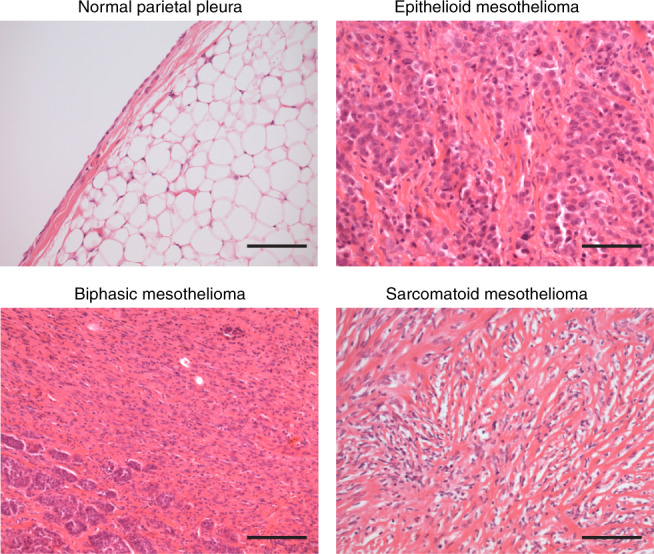
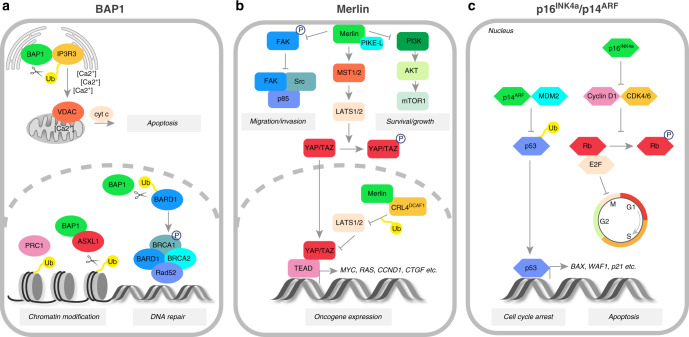
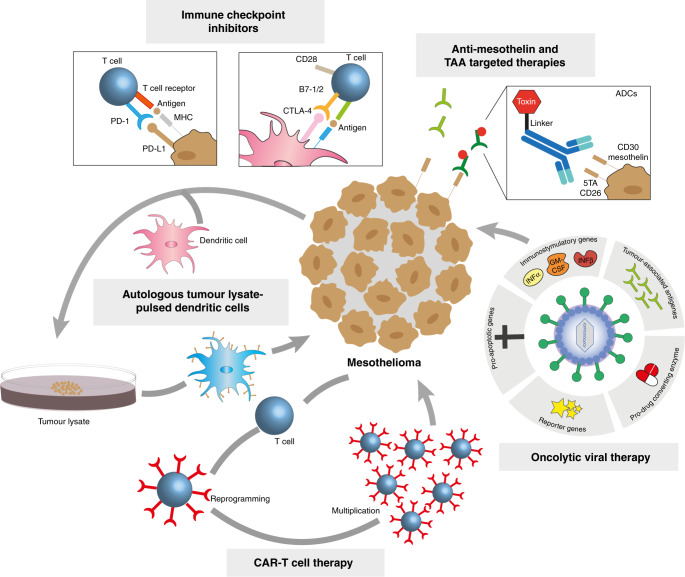
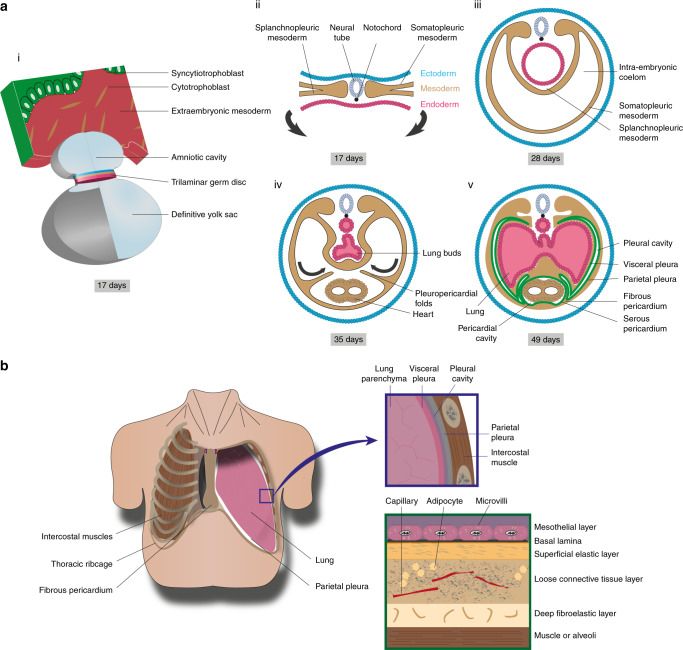
Verification
Claims the paper makes
The claims and statistics of this paper haven’t been checked yet.
Free: it reads the open-access text and checks the first 5 claims that cite a source we can check. Create a free account to check every claim.
Claims other papers make about this one
Each is checked against this paper’s own text: does it say what the citing paper says it does?
The source backs part of the claim, not all of it — or backs it for a different population, condition or comparison.
In the citing paper
“To date, despite the novel and promising strategies targeting its TME, such as immunotherapy and the combination of immuno/chemotherapy, included in ongoing clinical trials on MPM, as recently reviewed in [8,26,148,149,150], the efficacy of these therapeutic approaches remains to be confirmed.”
From Chronic Inflammation, Oxidative Stress and Metabolic Plasticity: Three Players Driving the Pro-Tumorigenic Microenvironment in Malignant Mesothelioma (2023) · cites this paper as [149]
Experimental — accuracy not yet measured
Self-check
Percentages, sums and reported differences re-computed from the paper’s own numbers.
The self-check needs the paper’s full text.
Citations
Cites
Cancer epigenetics: from mechanism to therapy
Dawson, M. A., & Kouzarides, T. (2012) · Cell · doi:10.1016/j.cell.2012.06.013 · Cited by 3,203 · cited 1×
“Post-translational modification of histones and methylation of DNA are often altered in cancers [47] and, in mesothelioma, hypermethylation of tumour suppressor gene (CDK2NA, APC, CCND2 and RASSF1) promoters and upregulation of DNA methyltransferases (DNMTs) have been reported [48], while mutations in histone methyltr…”
BackgroundVogelzang, N. J., Rusthoven, J. J., Symanowski, J., Denham, C., Kaukel, E., Ruffie, P., Gatzemeier, U., Boyer, M., Emri, S., Manegold, C., et al. (2003) · Journal of Clinical Oncology · doi:10.1200/jco.2003.11.136 · Cited by 3,060 · cited 5×
“Histology can be combined with age, gender, probability of diagnosis and leukocyte count in the validated European Organisation for Research and Treatment of Cancer (EORTC) composite score to help predict survival [7, 8].”
BackgroundInfluentialChanging patterns in the incidence of esophageal and gastric carcinoma in the United States
Devesa, S. S., Blot, W. J., & Fraumeni, J. F. (1998) · Cancer · doi:10.1002/(sici)1097-0142(19981115)83:10<2099::aid-cncr8>3.0.co;2-3 · Cited by 2,101
Microenvironmental regulation of tumour angiogenesis
De Palma, M., Biziato, D., & Petrova, T. V. (2017) · Nature Reviews Cancer · doi:10.1038/nrc.2017.51 · Cited by 1,847 · cited 1×
“Most solid cancers promote angiogenesis to support their growth [75].”
BackgroundOncolytic viruses: a new class of immunotherapy drugs
Kaufman, H. L., Kohlhapp, F. J., & Zloza, A. (2015) · Nature Reviews Drug Discovery · doi:10.1038/nrd4663 · Cited by 1,642
Targeted agents and immunotherapies: optimizing outcomes in melanoma
Luke, J. J., Flaherty, K. T., Ribas, A., & Long, G. V. (2017) · Nature Reviews Clinical Oncology · doi:10.1038/nrclinonc.2017.43 · Cited by 1,254
Baas, P., Scherpereel, A., Nowak, A. K., Fujimoto, N., Peters, S., Tsao, A. S., Mansfield, A. S., Popat, S., Jahan, T., Antonia, S., et al. (2021) · The Lancet · doi:10.1016/s0140-6736(20)32714-8 · Cited by 1,215
Germline BAP1 Mutations Predispose to Malignant Mesothelioma
Testa, J. R., Cheung, M., Pei, J., Below, J. E., Tan, Y., Sementino, E., Cox, N. J., Dogan, A. U., Pass, H. I., Trusa, S., et al. (2011) · Nature Genetics · doi:10.1038/ng.912 · Cited by 1,076 · cited 1×
“In humans, germline mutations in BAP1 predispose to malignant mesothelioma [25], and together with other pathogenic mutations linked to cancer accounts for 12% of all cases [26].”
BackgroundHuman CAR T cells with cell-intrinsic PD-1 checkpoint blockade resist tumor-mediated inhibition
Cherkassky, L., Morello, A., Villena-Vargas, J., Feng, Y., Dimitrov, D. S., Jones, D. R., Sadelain, M., & Adusumilli, P. S. (2016) · Journal of Clinical Investigation · doi:10.1172/jci83092 · Cited by 1,074
Engineered T cells: the promise and challenges of cancer immunotherapy
Fesnak, A. D., June, C. H., & Levine, B. L. (2016) · Nature Reviews Cancer · doi:10.1038/nrc.2016.97 · Cited by 1,074
Research works printed but not linked: 1
- Schramm A Opitz I Thies S Seifert B Moch H Weder W Prognostic significance of epithelial–mesenchymal transition in malignant pleural mesothelioma Eur J Cardiothorac Surg 2010 37 566 72 10.1016/j.ejcts.2009.08.027 19781955 · DOI · Paper page
Cited by
Liu, X., Obacz, J., Emanuelli, G., Chambers, J. E., Abreu, S., Chen, X., Linnane, E., Mehta, J. P., Wheatley, A. E. H., Marciniak, S. J., et al. (2024) · Chemistry of Materials · doi:10.1021/acs.chemmater.3c02954 · Cited by 46
Self-citationMesothelioma Malignancy and the Microenvironment: Molecular Mechanisms
Cersosimo, F., Barbarino, M., Lonardi, S., Vermi, W., Giordano, A., Bellan, C., & Giurisato, E. (2021) · Cancers · doi:10.3390/cancers13225664 · Cited by 41
Fiorilla, I., Martinotti, S., Todesco, A. M., Bonsignore, G., Cavaletto, M., Patrone, M., Ranzato, E., & Audrito, V. (2023) · Cells · doi:10.3390/cells12162048 · Cited by 39
Sahu, R. K., Ruhi, S., Jeppu, A. K., Al-Goshae, H. A. A., Syed, A., Nagdev, S. A., Widyowati, R., Ekasari, W., Khan, J., Bhattacharjee, B., et al. (2023) · Frontiers in Oncology · doi:10.3389/fonc.2023.1204722 · Cited by 36
Tsai, Y.-C., Chen, H., Lee, T.-H., Chang, H.-M., Wu, K., Chuang, C., Chang, Y.-C., Tu, Y., Hung, J., Yang, C., et al. (2021) · Cancers · doi:10.3390/cancers14010182 · Cited by 25
Obacz, J., Valer, J. A., Nibhani, R., Adams, T. S., Schupp, J. C., Veale, N., Lewis-Wade, A., Flint, J., Hogan, J., Aresu, G., et al. (2024) · European Respiratory Journal · doi:10.1183/13993003.00143-2023 · Cited by 19
Self-citationGesmundo, I., Pedrolli, F., Vitale, N., Bertoldo, A., Orlando, G., Banfi, D., Granato, G., Kasarla, R., Balzola, F. A., Deaglio, S., et al. (2022) · International Journal of Molecular Sciences · doi:10.3390/ijms231911248 · Cited by 20
Zhu, W., Liu, J., Li, Y., Shi, Z., & Wei, S. (2023) · SSM - Population Health · doi:10.1016/j.ssmph.2023.101441 · Cited by 18
Prognostic Value of EMT Gene Signature in Malignant Mesothelioma
Wu, L., Yoshihara, K., Yun, H., Karim, S., Shokri, N., Zaeimi, F. B., Man, H. S. J., Zia, A., Felley‐Bosco, E., & de Perrot, M. E. (2023) · International Journal of Molecular Sciences · doi:10.3390/ijms24054264 · Cited by 14
Cunningham, R., Jia, S., Purohit, K. P., Salem, O., Hui, N. S., Lin, Y., Carragher, N. O., & Hansen, C. G. (2023) · Clinical and Translational Medicine · doi:10.1002/ctm2.1190 · Cited by 13
Immunotherapy for mesothelioma: Moving beyond single immune check point inhibition
Cantini, L., Laniado, I., Murthy, V., Sterman, D. H., & Aerts, J. G. J. V. (2022) · Lung Cancer · doi:10.1016/j.lungcan.2022.01.016 · Cited by 10
Molecular Pathways in Peritoneal Mesothelioma: A Minireview of New Insights
Fortarezza, F., Pezzuto, F., Marzullo, A., Cavone, D., Romano, D. E., d’Amati, A., Serio, G., & Vimercati, L. (2022) · Frontiers in Oncology · doi:10.3389/fonc.2022.823839 · Cited by 9
Clonal gene signatures predict prognosis in mesothelioma and lung adenocarcinoma
Lin, Y., Burt, B. M., Lee, H., Nguyen, T. T., Jang, H.-J., Lee, C., Hong, W., Ripley, R. T., Amos, C. I., & Cheng, C. (2024) · npj Precision Oncology · doi:10.1038/s41698-024-00531-y · Cited by 5
Offin, M. D., Sauter, J. L., Tischfield, S. E., Egger, J. V., Chavan, S. S., Shah, N., Manoj, P., Ventura, K., Allaj, V., de Stanchina, E., et al. (2022) · Genome Medicine · doi:10.1186/s13073-022-01129-4 · Cited by 5
Zubair, J. M., Iyer, J. R., Korikani, M., Durisetti, S., Bathini, P., & Kancha, R. K. (2024) · Springer eBooks · doi:10.1007/978-981-97-1802-3_25 · Cited by 4
Hwang, Y., Shimamura, Y., Tanaka, J., Miura, A., Sawada, A., Sarmah, H., Shimizu, D., Kondo, Y., Lee, H., Martini, F., et al. (2024) · Frontiers in Cell and Developmental Biology · doi:10.3389/fcell.2024.1387237 · Cited by 4
Offin, M. D., Fitzgerald, B. G., Zauderer, M. G., & Doroshow, D. B. (2023) · Journal of Cancer Metastasis and Treatment · doi:10.20517/2394-4722.2022.140 · Cited by 3
Immunotherapy resistance and strategies in malignant pleural mesothelioma
Xia, W., Li, S., Zeng, Q., Zhang, Y., 赵娟芝, Tan, X., Ju, S., Zou, W., Chen, C., Li, C., et al. (2026) · Cancer Drug Resistance · doi:10.20517/cdr.2025.215 · Cited by 3
Multi-omics integration reveals CYTL1 and H6PD as key regulators of tumor metabolism in mesothelioma
Ma, J., Zhang, H., Yu, L., Guo, Y., Ming, J., & Guo, Z. (2025) · Genes & Genomics · doi:10.1007/s13258-025-01667-2 · Cited by 1
Pleural Mesothelioma: Current Therapeutic Strategies and Future Directions
Tang, H., Lu, X., Wu, S., Lu, G., Wen, J., Wei, M. Q., Sha, X., & Zhang, Z. (2026) · Current Oncology Reports · doi:10.1007/s11912-026-01755-w · Cited by 1
Offin, M. D., Sauter, J. L., Tischfield, S. E., Egger, J. V., Chavan, S. S., Shah, N., Manoj, P., Ventura, K., Allaj, V., de Stanchina, E., et al. (2022) · Figshare · doi:10.6084/m9.figshare.21563847
Offin, M. D., Sauter, J. L., Tischfield, S. E., Egger, J. V., Chavan, S. S., Shah, N., Manoj, P., Ventura, K., Allaj, V., de Stanchina, E., et al. (2022) · Figshare · doi:10.6084/m9.figshare.21563841
Offin, M. D., Sauter, J. L., Tischfield, S. E., Egger, J. V., Chavan, S. S., Shah, N., Manoj, P., Ventura, K., Allaj, V., de Stanchina, E., et al. (2022) · Figshare · doi:10.6084/m9.figshare.21563844
Offin, M. D., Sauter, J. L., Tischfield, S. E., Egger, J. V., Chavan, S. S., Shah, N., Manoj, P., Ventura, K., Allaj, V., de Stanchina, E., et al. (2022) · Figshare · doi:10.6084/m9.figshare.21563829
Offin, M. D., Sauter, J. L., Tischfield, S. E., Egger, J. V., Chavan, S. S., Shah, N., Manoj, P., Ventura, K., Allaj, V., de Stanchina, E., et al. (2022) · Figshare · doi:10.6084/m9.figshare.21563826
Offin, M. D., Sauter, J. L., Tischfield, S. E., Egger, J. V., Chavan, S. S., Shah, N., Manoj, P., Ventura, K., Allaj, V., de Stanchina, E., et al. (2022) · Figshare · doi:10.6084/m9.figshare.21563835
Offin, M. D., Sauter, J. L., Tischfield, S. E., Egger, J. V., Chavan, S. S., Shah, N., Manoj, P., Ventura, K., Allaj, V., de Stanchina, E., et al. (2022) · Figshare · doi:10.6084/m9.figshare.21563823
Offin, M. D., Sauter, J. L., Tischfield, S. E., Egger, J. V., Chavan, S. S., Shah, N., Manoj, P., Ventura, K., Allaj, V., de Stanchina, E., et al. (2022) · Figshare · doi:10.6084/m9.figshare.21563838
(2025) · Acta Scientific Medical Sciences · doi:10.31080/asms.2025.09.2068
Metabolic vulnerabilities in pleural mesothelioma
Plans-Marin, S., Muñoz‐Pinedo, C., & Nadal, E. (2026) · Oncogenesis · doi:10.1038/s41389-026-00625-1
Ziatni, K. K. B. (2025) · theses.fr (ABES) · doi:10.70675/aa8b7b33z3ceez486az946bz31ac39ecf109
VISTA drives tumour-intrinsic proliferation in mesothelioma cells
Kondo‐Ida, L., Sato, T., Mishiro‐Sato, E., Mukai, S., & Sekido, Y. (2026) · British Journal of Cancer · doi:10.1038/s41416-026-03639-z
Metadata
- Authors
- Obacz, J., Yung, H., Shamseddin, M., Linnane, E., Liu, X., Azad, A. A., Rassl, D. M., Fairen-Jimenez, D., Rintoul, R. C., Nikolić, M. Z., & Marciniak, S. J.
- Affiliations
- University of Cambridge (GB)
- University College London (GB)
- Wellcome Sanger Institute (GB)
- Papworth Hospital NHS Foundation Trust (GB)
- Corresponding author
- Marciniak, Stefan J.
- ORCID
- Venue
- British Journal of Cancer
- Published
- 2021-07-05
- Volume
- 125
- Issue
- 8
- Pages
- 1039-1055
- ISSN
- 0007-0920 (ISSN-L)
- 1532-1827
- PMC
- PMC8505556
- OpenAlex
- W3182664105
- Cited by
- 31
- References
- 228
- Citations by year
- 2026: 3 · 2025: 2 · 2024: 5 · 2023: 6 · 2022: 13 · 2021: 2
- FWCI
- 1.05
- Type
- journal article
- Language
- en
- Open access
- hybrid
- doi.org
- Licence
- cc-by
- creativecommons.org/licenses/by/4.0 (tdm)
- creativecommons.org/licenses/by/4.0 (vor)
- Locations
- British Journal of Cancer (publishedVersion, cc-by)
- Europe PMC (PubMed Central) (publishedVersion, other-oa)
- PubMed Central (publishedVersion, cc-by)
- PubMed (publishedVersion)
- UCL Discovery (University College London) (submittedVersion)
- Apollo (University of Cambridge) (submittedVersion)
- Apollo (University of Cambridge) (submittedVersion, cc-by)
- Apollo
- Funders
- British Lung Foundation
- Royal Society through a University Research Fellowship and the Engineering and Physical Sciences Research Council
- China Scholarship Council
- Topics
- Health Sciences › Medicine › Pulmonary and Respiratory Medicine › Occupational and environmental lung diseases
- Health Sciences › Medicine › Surgery › Intraperitoneal and Appendiceal Malignancies
- Life Sciences › Biochemistry, Genetics and Molecular Biology › Molecular Biology › TGF-β signaling in diseases
- Keywords
- mesothelioma, asbestos exposure, tumor suppressor loss, epigenetic dysregulation, nutritional stress, immunotherapy, targeted therapy, cancer therapy development, tumor biology
- MeSH terms
- Asbestos, Combined Modality Therapy, Humans, Mesothelioma, Prognosis, Epigenesis, Genetic, Gene Regulatory Networks
About these checks
Registry, retraction, Cites and statistics results are computed, not judged, with one exception: a printed reference that no index lists is read once by a model before it counts as a citation error. Claims are extracted by a model and kept only when their quote appears verbatim in the text; each cited source is then checked, with a model’s help, for whether it says what the claim relies on. Those verdicts can be wrong — read the claim’s quote and the cited source before relying on one.
Statistics and arithmetic are recomputed, not judged.
Confidence bands are shown only for fields calibrated on our annotated test set. None is calibrated yet, so no band is shown.
What counts as a claim ›How we measure confidence ›How we check this ›
Are you an author, or do you see a problem with this page? Request a review
Data sources
Bibliographic data: Semantic Scholar, OpenAlex, Crossref.
Contains information from the Semantic Scholar Academic Graph Datasets, made available under the ODC Attribution License (ODC-BY 1.0).
Semantic Scholar’s data is described in: Kinney, R., et al. (2023). The Semantic Scholar Open Data Platform. arXiv:2301.10140.
