

Presenilin 1 deficiency suppresses autophagy in human neural stem cells through reducing γ-secretase-independent ERK/CREB signaling
Open accessThe DOI matches its Crossref record; 54 of the 54 references it cites were found in a registry or an index.
Abstract
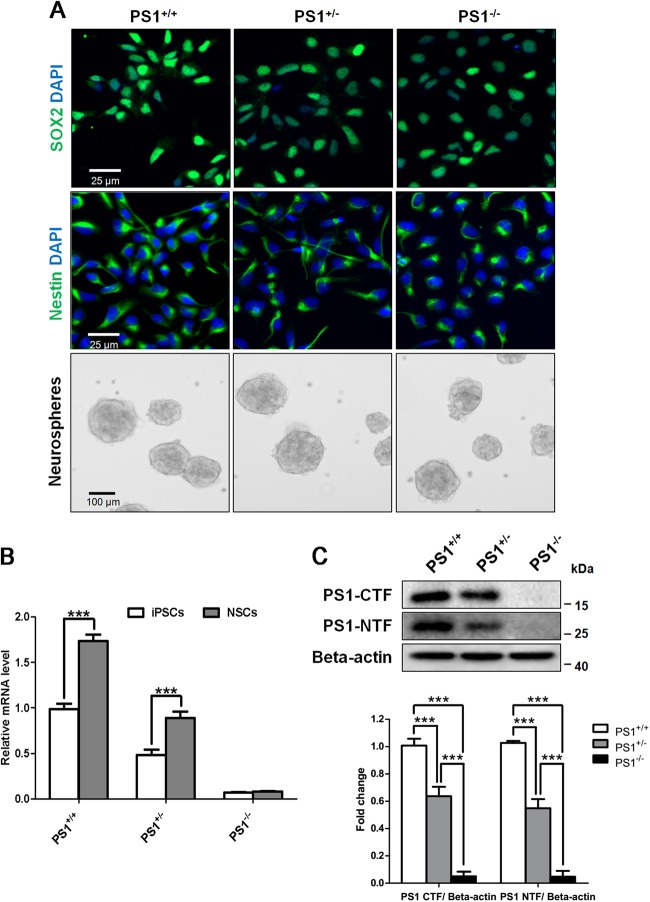
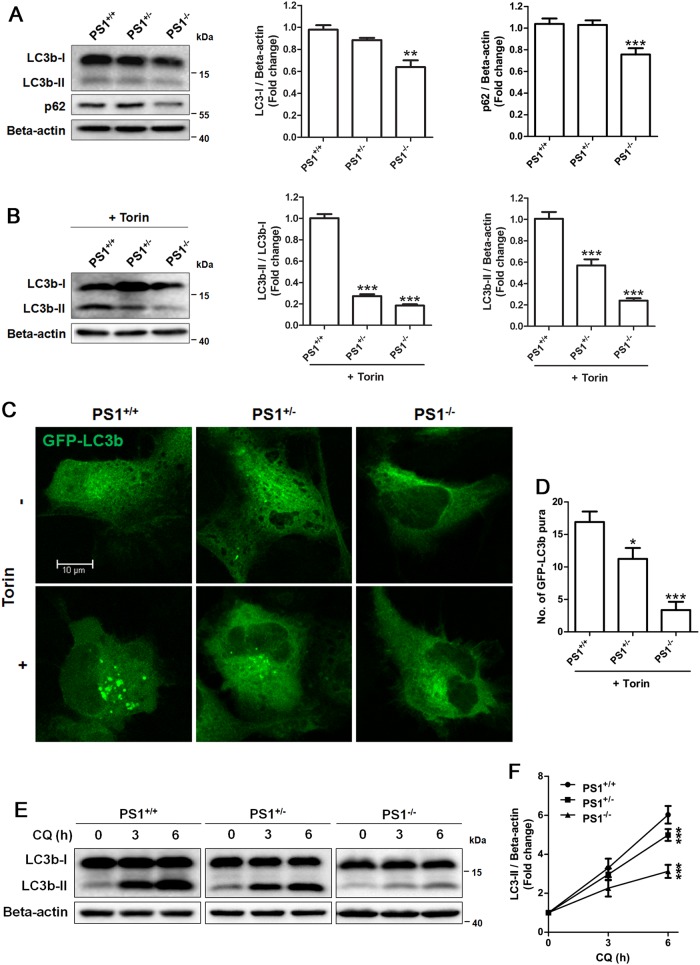
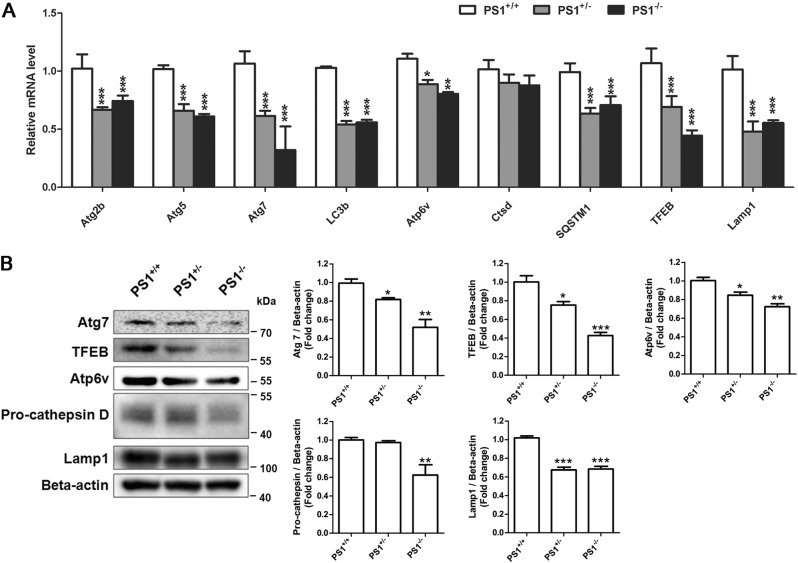
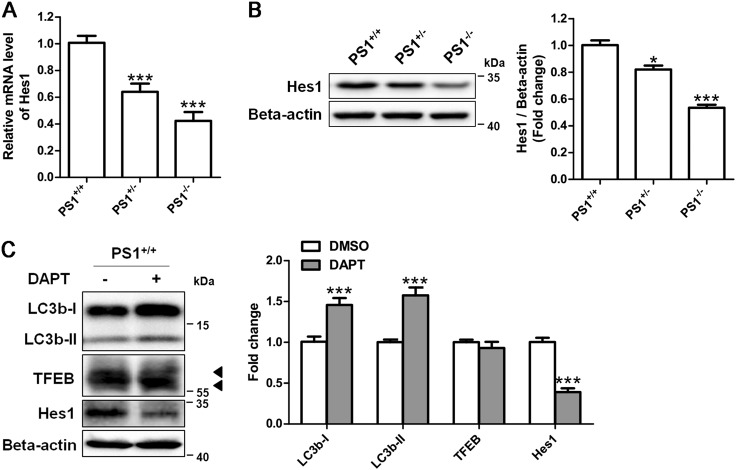
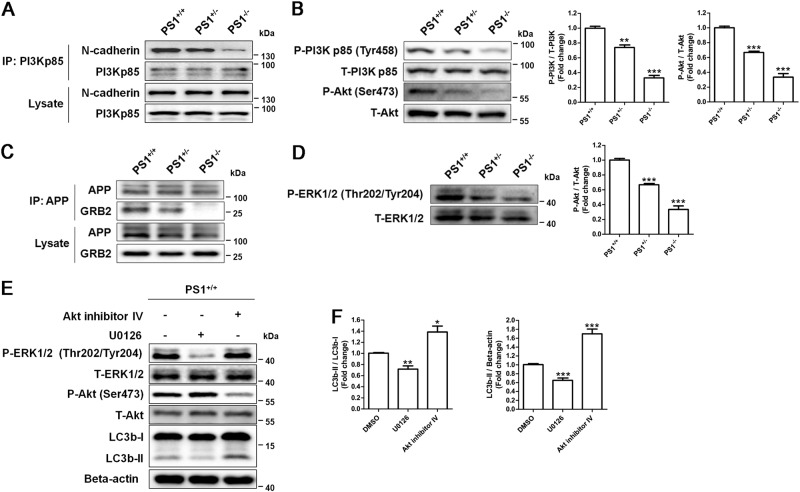
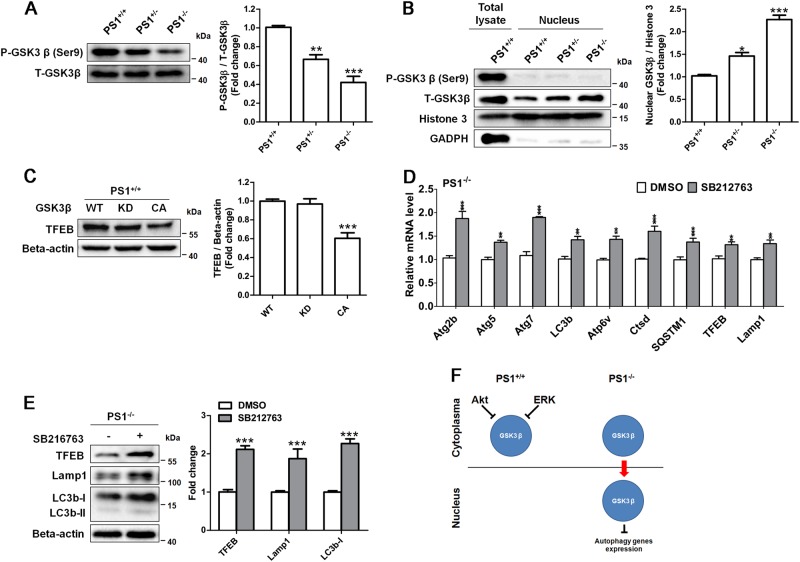
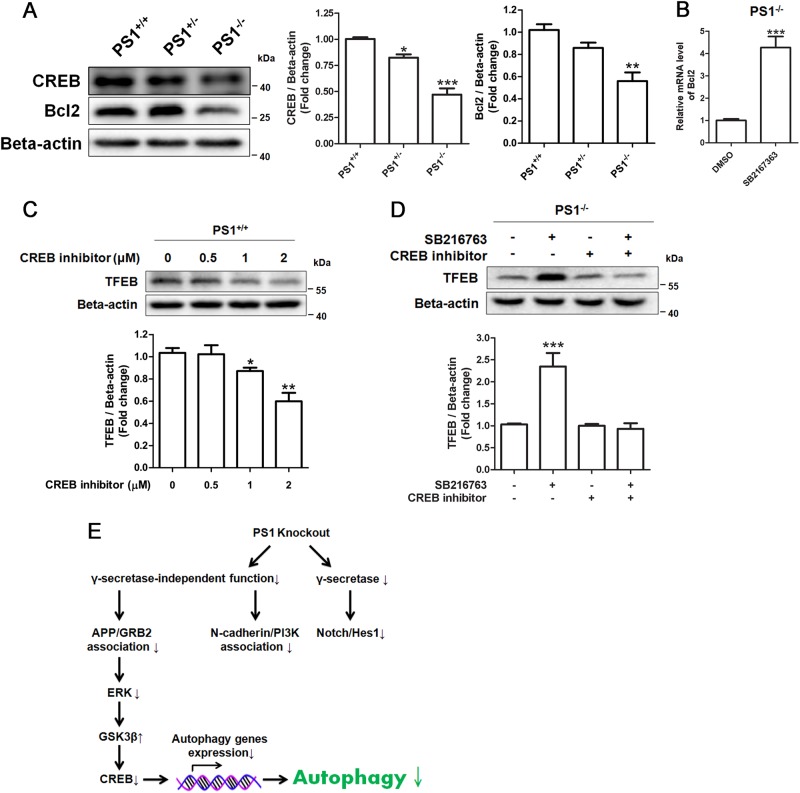
Autophagy impairment is commonly implicated in the pathological characteristic of Alzheimer’s disease (AD). Presenilin 1 (PS1) expression in human brain gradually decreases with age and its mutations account for the most common cases of early-onset familial Alzheimer’s disease (FAD). The dominant autophagy phenotypes occur in PS1-knockout and PS1 mutant neurons; it is still unknown whether PS1 deficiency causes serious autophagy impairment in neural stem cells (NSCs). Herein, we generated the heterozygote and homozygote of PS1 knockout in human induced pluripotent stem cells (iPSCs) via CRISPR/Cas9-based gene editing and differentiated them into human NSCs. In these human PS1-deficient NSCs, reduced autophagosome formation and downregulated expression of autophagy–lysosome pathway (ALP)-related mRNAs, as well as proteins were observed. Mechanistically, ERK/CREB inhibition and GSK3β activation had key roles in reducing TFEB expression in PS1-knockout NSCs. Pharmacological inhibition of GSK3β upregulated the expression of TFEB and ALP-related proteins in PS1-knockout NSCs, whereas this effect could be blocked by CREB inhibition. These findings demonstrate that PS1 deficiency causes autophagy suppression in human NSCs via downregulating ERK/CREB signaling.
Overview
The claims and statistics of this paper haven’t been checked yet.
Free: it reads the open-access text and checks the first 5 claims that cite a source we can check. Create a free account to check every claim.
Integrity signals
Registry
Cites
Statistics
Figures
Verification
Claims the paper makes
The claims and statistics of this paper haven’t been checked yet.
Free: it reads the open-access text and checks the first 5 claims that cite a source we can check. Create a free account to check every claim.
Claims other papers make about this one
Each is checked against this paper’s own text: does it say what the citing paper says it does?
The source backs part of the claim, not all of it — or backs it for a different population, condition or comparison.
In the citing paper
“Mutations that alter PSEN1 function have been associated with defective autophagic vesicle clearance and early‐onset AD, due to impaired autophagosome–lysosome fusion and defective lysosomal acidification (Lee et al, 2010b; Chong et al, 2018).”
From Autophagy in major human diseases (2021) · cites this paper as Chong et al, 2018
Experimental — accuracy not yet measured
Self-check
Percentages, sums and reported differences re-computed from the paper’s own numbers.
The self-check needs the paper’s full text.
Citations
Cites
Development and Applications of CRISPR-Cas9 for Genome Engineering
Hsu, P. D., Lander, E. S., & Zhang, F. (2014) · Cell · doi:10.1016/j.cell.2014.05.010 · Cited by 5,762
2016 Alzheimer's disease facts and figures
Alzheimer's Association (2016) · Alzheimer's & Dementia · doi:10.1016/j.jalz.2016.03.001 · Cited by 5,069
Autophagy: process and function
Mizushima, N. (2007) · Genes & Development · doi:10.1101/gad.1599207 · Cited by 3,967
Suppression of basal autophagy in neural cells causes neurodegenerative disease in mice
Hara, T., Nakamura, K., Matsui, M., Yamamoto, A., Nakahara, Y., Suzuki-Migishima, R., Yokoyama, M., Mishima, K., Saito, I., Okano, H., et al. (2006) · Nature · doi:10.1038/nature04724 · Cited by 3,882
Human induced pluripotent stem cells free of vector and transgene sequences
Yu, J., Hu, K., Smuga-Otto, K., Tian, S., Stewart, R., Slukvin, I. I., & Thomson, J. A. (2009) · Science · doi:10.1126/science.1172482 · Cited by 2,386
Deficiency of presenilin-1 inhibits the normal cleavage of amyloid precursor protein
De Strooper, B., Saftig, P., Craessaerts, K., Vanderstichele, H., Guhde, G., Annaert, W., Von Figura, K., & Van Leuven, F. (1998) · Nature · doi:10.1038/34910 · Cited by 1,818
Liang, H., Liang, P., Xu, Y., Wu, J., Liang, T., & Xu, X. (2009) · Journal of Neurotrauma · doi:10.1089/neu.2008.0850 · Cited by 1,750
Citron, M., Westaway, D., Xia, W., Carlson, G., Diehl, T., Levesque, G., Johnson-wood, K., Lee, M., Seubert, P., Davis, A., et al. (1997) · Nature Medicine · doi:10.1038/nm0197-67 · Cited by 1,271
Lee, J.-H., Yu, W. H., Kumar, A., Lee, S., Mohan, P. S., Peterhoff, C. M., Wolfe, D. M., Martinez-Vicente, M., Massey, A. C., Sovak, G., et al. (2010) · Cell · doi:10.1016/j.cell.2010.05.008 · Cited by 1,212
Generalized Potential of Adult Neural Stem Cells
Clarke, D. L., Johansson, C. B., Wilbertz, J., Veress, B., Nilsson, E., Karlström, H., Lendahl, U., & Frisén, J. (2000) · Science · doi:10.1126/science.288.5471.1660 · Cited by 1,062
Cited by
Autophagy in major human diseases
Klionsky, D. J., Petroni, G., Amaravadi, R. K., Baehrecke, E. H., Ballabio, A., Boya, P., Bravo‐San Pedro, J. M., Cadwell, K., Cecconi, F., Choi, A. M. K., et al. (2021) · The EMBO Journal · doi:10.15252/embj.2021108863 · Cited by 1,585
The different autophagy degradation pathways and neurodegeneration
Fleming, A., Bourdenx, M., Fujimaki, M., Karabiyik, C., Krause, G. J., Lopez, A., Martín-Segura, A., Puri, C., Scrivo, A., Skidmore, J., et al. (2022) · Neuron · doi:10.1016/j.neuron.2022.01.017 · Cited by 480
Autophagy Induction as a Therapeutic Strategy for Neurodegenerative Diseases
Djajadikerta, A., Keshri, S., Pavel, M., Prestil, R., Ryan, L., & Rubinsztein, D. C. (2020) · Journal of Molecular Biology · doi:10.1016/j.jmb.2019.12.035 · Cited by 236
“[62] Chong CM, Ke M, Tan Y, Huang Z, Zhang K, Ai N, et al.”
BackgroundAutophagy in Neurodegenerative Diseases: A Hunter for Aggregates
Park, H., Kang, J.-H., & Lee, S. (2020) · International Journal of Molecular Sciences · doi:10.3390/ijms21093369 · Cited by 207
Alzheimer’s Disease Pathogenesis: Role of Autophagy and Mitophagy Focusing in Microglia
Eshraghi, M., Adlimoghaddam, A., Mahmoodzadeh, A., Sharifzad, F., Yasavoli-Sharahi, H., Lorzadeh, S., Albensi, B. C., & Ghavami, S. (2021) · International Journal of Molecular Sciences · doi:10.3390/ijms22073330 · Cited by 158
“The authors also found that the expression of several autophagy-related genes was diminished in these cells mediated through ERK/CREB signaling pathway in a γ-secretase-independent manner [93].”
BackgroundJurcău, A. (2021) · International Journal of Molecular Sciences · doi:10.3390/ijms222111847 · Cited by 163
Regulation of Adult Neurogenesis in Mammalian Brain
Niklison-Chirou, M. V., Agostini, M., Amelio, I., & Melino, G. (2020) · International Journal of Molecular Sciences · doi:10.3390/ijms21144869 · Cited by 143
“However, it should be noted that CREB mutant mice have increased levels of hippocampal neurogenesis [94,95].”
BackgroundGSK3: A potential target and pending issues for treatment of Alzheimer's disease
Zhao, J., Wei, M., Guo, M., Wang, M., Niu, H., Xu, T., & Zhou, Y. (2024) · CNS Neuroscience & Therapeutics · doi:10.1111/cns.14818 · Cited by 297
Exploring the bi‐directional relationship between autophagy and Alzheimer’s disease
Kuang, H., Tan, C., Tian, H., Liu, L., Yang, M., Hong, F., & Yang, S. (2020) · CNS Neuroscience & Therapeutics · doi:10.1111/cns.13216 · Cited by 90
Enhancing autophagy in Alzheimer's disease through drug repositioning
Eshraghi, M., Ahmadi, M., Afshar, S., Lorzadeh, S., Adlimoghaddam, A., Rezvani Jalal, N., West, R., Dastghaib, S., Igder, S., Torshizi, S. R. N., et al. (2022) · Pharmacology & Therapeutics · doi:10.1016/j.pharmthera.2022.108171 · Cited by 89
“A mutation in presenilin 1 (PSEN1/PS-1), one of the loss-of-function mutations observed in AD, dysregulates lysosomal homeostasis and transcription of autophagy-related genes (Cacace, Sleegers, & Van Broeckhoven, 2016; Chong et al., 2018; Lee et al., 2015).”
BackgroundApelin/APJ system: A novel promising target for neurodegenerative diseases
Luo, H., Han, L., & Xu, J. (2019) · Journal of Cellular Physiology · doi:10.1002/jcp.29001 · Cited by 63
“onset and progression of AD by the induction of autophagy (Chong et al., 2018).”
BackgroundPresenilins and γ-Secretase in Membrane Proteostasis
Oikawa, N., & Walter, J. (2019) · Cells · doi:10.3390/cells8030209 · Cited by 70
“Regarding the CREB-mediated nuclear signaling pathway, reduced ERK activity initiates the activation and translocation of GSK3β to the nucleus, which decreases the expression of CREB and autophagy-related genes in PSEN1-KO neural stem cells [159].”
BackgroundLiang, Q., Guo, R., Tsao, J.-R., He, Y., Wang, C., Jiang, J., Zhang, D., Chen, T., Yue, T., & Hu, K. (2023) · International Immunopharmacology · doi:10.1016/j.intimp.2023.110397 · Cited by 62
Chong, C., Su, H., Lu, J., & Wang, Y. (2019) · Chinese Medicine · doi:10.1186/s13020-019-0242-0 · Cited by 56
Self-citationYang, J., Zhang, W., Zhang, S., Iyaswamy, A., Sun, J., Wang, J., & Yang, C. (2023) · Aging and Disease · doi:10.14336/ad.2022.0927 · Cited by 51
“For example, curcumin, CHIR-99021, GSK3β inhibitor VIII and SB216763 induce TFEB nuclear translocation via inhibiting GSK3β [85, 97, 100, 101].”
BackgroundWang, J., Liu, B., Xu, Y., Yang, M., Wang, C., Song, M., Liu, J., Wang, W., You, J., Sun, F., et al. (2021) · Aging Cell · doi:10.1111/acel.13333 · Cited by 46
“…release from histaminergic neurons via negative feedback way (Arrang et al., 1983; Morisset et al., 2000), as well as a heteroreceptor that regulates the release of other neurotransmitters (Clapham & Kilpatrick, 1992; Dai et al., 2007; Hansen et al., 2010; Schlicker et al., 1988, 1989, 1993).”
BackgroundMolecular Mechanism of Autophagy: Its Role in the Therapy of Alzheimer’s Disease
Zhao, Y., Zhang, Y., Zhang, J., Zhang, X., & Yang, G. (2020) · Current Neuropharmacology · doi:10.2174/1570159x18666200114163636 · Cited by 41
Presenilin 1 phosphorylation regulates amyloid-β degradation by microglia
Ledo, J. H., Liebmann, T., Zhang, R., Chang, J. C., Azevedo, E. P., Wong, E., Silva, H. M., Troyanskaya, O. G., Bustos, V., & Greengard, P. (2021) · Molecular Psychiatry · doi:10.1038/s41380-020-0856-8 · Cited by 39
Ke, M., Chong, C.-M., Zeng, H., Huang, M., Huang, Z., Zhang, K., Cen, X., Lu, J.-H., Yao, X., Qin, D., et al. (2020) · Cell Death & Disease · doi:10.1038/s41419-020-2312-8 · Cited by 39
Self-citationMechanism of ERK/CREB pathway in pain and analgesia
Zhen, W., Zhen, H., Wang, Y., Chen, L., Niu, X., Zhang, B., Yang, Z., & Peng, D. (2023) · Frontiers in Molecular Neuroscience · doi:10.3389/fnmol.2023.1156674 · Cited by 40
“PS1 deficiency in presenilin 1 (PS1) knocked out human neural stem cells (NSCs) based on CRISPR/Cas9 system can also lead to autophagy damage of human neural stem cells by down-regulating ERK/CREB signal pathway, thus exacerbating the process of Alzheimer’s disease (Chong et al., 2018).”
BackgroundGao, Y., Wang, C., Jiang, D. M., An, G., Jin, F. J., Zhang, J., Han, G., Cui, C., & Jiang, P. (2022) · Frontiers in Cell and Developmental Biology · doi:10.3389/fcell.2022.994037 · Cited by 44
“Presenilin 1 deficiency suppresses autophagy in human neural stem cells through reducing γsecretase-independent ERK/CREB (cAMP-response element binding protein) signaling (Chong et al., 2018).”
BackgroundRole of microglia autophagy and mitophagy in age-related neurodegenerative diseases
Lin, M., Yu, H., Xie, Q., Xu, Z., & Shang, P. (2023) · Frontiers in Aging Neuroscience · doi:10.3389/fnagi.2022.1100133 · Cited by 43
Hubbard, E. E., Heil, L. R., Merrihew, G. E., Chhatwal, J. P., Farlow, M. R., McLean, C., Ghetti, B. F., Newell, K. L., Frosch, M. P., Bateman, R. J., et al. (2021) · Journal of Proteome Research · doi:10.1021/acs.jproteome.1c00558 · Cited by 36
Sun, Y., Islam, S., Michikawa, M., & Zou, K. (2024) · International Journal of Molecular Sciences · doi:10.3390/ijms25031757 · Cited by 42
Sun, M.-H., Chen, X., Han, M. H., Yang, Y., Gao, X., Ma, X., Huang, Y., Li, X., Gai, M., Liu, F., et al. (2019) · Biochemical and Biophysical Research Communications · doi:10.1016/j.bbrc.2019.03.008 · Cited by 31
Ryan, K. C., Ashkavand, Z., Sarasija, S., Laboy, J. T., Samarakoon, R., & Norman, K. R. (2021) · Aging Cell · doi:10.1111/acel.13472 · Cited by 28
“…with previous observations of disrupted autophagy in sel- 12 mutants as well as other models studying presenilin function (Ashkavand et al., 2020; Chong et al., 2018; Fedeli et al., 2019; Lee et al., 2010; Reddy et al., 2016) and also implicate a critical role of mitochondrial calcium in this…”
BackgroundAutophagy system as a potential therapeutic target for neurodegenerative diseases
Cui, M., Yoshimori, T., & Nakamura, S. (2022) · Neurochemistry International · doi:10.1016/j.neuint.2022.105308 · Cited by 29
Presenilin 1 Regulates Membrane Homeostatic Pathways that are Dysregulated in Alzheimer’s Disease
Deaton, C. A., & Johnson, G. V. W. (2020) · Journal of Alzheimer s Disease · doi:10.3233/jad-200598 · Cited by 27
Satpati, A., Neylan, T. C., & Grinberg, L. T. (2023) · Alzheimer s & Dementia Translational Research & Clinical Interventions · doi:10.1002/trc2.12379 · Cited by 31
Escalante‐Covarrubias, Q., Mendoza-Viveros, L., González-Suárez, M., Sitten-Olea, R., Velázquez‐Villegas, L. A., Becerril-Pérez, F., Pacheco-Bernal, I., Carreño‐Vázquez, E., Sanchez, P. B. M., Bustamante-Zepeda, M., et al. (2023) · Nature Communications · doi:10.1038/s41467-023-37286-2 · Cited by 28
Lu, J., Florio, D. N. D., Boya, P., Maday, S., Springer, W., & Chu, C. T. (2025) · Autophagy · doi:10.1080/15548627.2025.2581217 · Cited by 25
“Mutant PSEN1 may also result in reduced MAPK/ERK-CREB activation, leading to decreases in TFEB (transcription factor EB; discussed in further detail below) and its lysosomal target genes [314].”
Self-citationZhang, H., Li, X., Li, Y., Yang, X., Liao, R., Wang, H., & Yang, J. (2022) · Frontiers in Cell and Developmental Biology · doi:10.3389/fcell.2021.778941 · Cited by 25
TNF-α Suppresses Autophagic Flux in Acinar Cells in IgG4-Related Sialadenitis
Hong, X., Min, S., Zhang, Y. Y., Lin, Y. T., Wang, F., Huang, Y., Yu, G., Wu, L. L., & Yang, H. (2019) · Journal of Dental Research · doi:10.1177/0022034519871890 · Cited by 19
“TNF-α activates the ERK1/2 pathway in SMG-C6 cells (Mei et al. 2015), and activation of ERK1/2 suppresses autophagy in neural stem cells (Chong et al. 2018).”
BackgroundSeranova, E., Palhegyi, A. M., Verma, S., Dimova, S., Lasry, R., Naama, M., Sun, C., Barrett, T. G., Rosenstock, T. R., Kumar, D., et al. (2020) · Journal of Molecular Biology · doi:10.1016/j.jmb.2020.01.024 · Cited by 23
Autophagy in alzheimer disease pathogenesis and its therapeutic values
Angst, G., Jia, N., Esqueda, L. T., Fan, Y., Cai, Q., & Wang, C. (2025) · Autophagy Reports · doi:10.1080/27694127.2025.2471677 · Cited by 27
Gao, B., Wang, L., Gong, J., Zhu, Z., Liu, Q., Han, Y., & Wang, H. (2025) · Frontiers in Aging Neuroscience · doi:10.3389/fnagi.2025.1579208 · Cited by 19
Alhassan, H. H., Janiyani, K., Surti, M., Adnan, M., & Patel, M. B. (2025) · Frontiers in Pharmacology · doi:10.3389/fphar.2025.1693805 · Cited by 21
Rossin, D., Perrelli, M.-G., Iacono, M. L., Rastaldo, R., & Giachino, C. (2025) · Antioxidants · doi:10.3390/antiox14060691 · Cited by 26
“Mechanistically, inhibition of ERK/CREB signalling and activation of GSK3 β played critical roles in suppressing TFEB expression in PS1-knockout NSCs [66].”
The connection between autophagy and Alzheimer’s disease
Nechushtai, L., Chen, D., Dan, F., & Pinkas‐Kramarski, R. (2025) · Inflammation Research · doi:10.1007/s00011-025-02118-0 · Cited by 22
Multi‐Targeting Phytochemicals for Alzheimer's Disease
Bhattacharya, R. S., Singh, R., Panghal, A., Thakur, A., Singh, L., Verma, R. K., Singh, C., Goyal, M., & Kumar, J. (2025) · Phytotherapy Research · doi:10.1002/ptr.8435 · Cited by 20
“The scientists discovered that the ERK/ CREB signaling pathway reduced the expression of autophagy-related genes in these cells, independent of γ-secretase (Chong et al. 2018).”
Li, A., Huang, S., Cao, S., Lin, J., Zhao, L., Yu, F., Huang, M., Yang, L., Xin, J., Wen, J., et al. (2025) · EMBO Molecular Medicine · doi:10.1038/s44321-025-00323-2 · Cited by 17
Self-citationShi, W., Wu, H., Liu, S., Wu, Z., Wu, H., Liu, J., & Yan-ning, H. (2021) · Brain Research Bulletin · doi:10.1016/j.brainresbull.2021.05.020 · Cited by 15
Chen, S., Wang, W., Tan, H., Lu, Y., Li, Z., Qu, Y., Wang, N., & Wang, D. (2021) · Frontiers in Cell and Developmental Biology · doi:10.3389/fcell.2021.715200 · Cited by 13
Hormonal Regulation of Autophagy in Thyroid PCCL3 Cells and the Thyroids of Male Mice
Kurashige, T., Nakajima, Y., Shimamura, M. I., Yamada, M., & Nagayama, Y. (2020) · Journal of the Endocrine Society · doi:10.1210/jendso/bvaa054 · Cited by 11
“cAMP enhances autophagy in some papers [46, 47] but inhibits in others [48, 49] as do PKC [50, 51] and ERK [46, 52, 53]; CREB stimulates autophagy at transcriptional levels [54, 55]; and mTOR is indeed a well-known inhibitor of autophagy [41].”
BackgroundChong, C., Tan, Y., Tong, J., Ke, M., Zhang, K., Yan, L., Cen, X., Lu, J., Chen, G., Su, H., et al. (2022) · Cell & Bioscience · doi:10.1186/s13578-022-00874-8 · Cited by 11
Self-citationAblation of Gsa impairs renal tubule proliferation after injury via CDK2/cyclin E
Liu, L., Deng, Y., Cai, Y., Lu, P., Guo, Y., Zhang, C., Li, Q., Zhang, T., Han, M. H., & Xu, G. (2020) · American Journal of Physiology-Renal Physiology · doi:10.1152/ajprenal.00367.2019 · Cited by 9
DNA methylation-mediated memory of obesity in CD4 T lymphocytes perpetuates immune dysregulation
Niven, J., Kucuk, S., Gope, A., Certo, M., Cassidy, F. C., Echarri, A. A., Ali, S., Ladoukakis, E., Vidali, S., Macchi, C., et al. (2026) · EMBO Reports · doi:10.1038/s44319-026-00765-w · Cited by 10
“Among the upregulated genes, Smad428, Cd6829, and C1qb30 have been previously associated with immune senescence; Psen1(Chong et al, 2018) and Lrp1 (Aizawa et al, 2017) with autophagy; and Creb1, Ddx58, and Hmgb13 – 38 with both cellular processes (Fig.”
Kolahdouzmohammadi, M., Totonchi, M., & Pahlavan, S. (2020) · Stem Cell Reviews and Reports · doi:10.1007/s12015-020-10077-8 · Cited by 6
Regulatory insights into progression of cancer and Alzheimer’s disorder from autophagy perspective
Sriram, N., & Sah, M. K. (2021) · Molecular Biology Reports · doi:10.1007/s11033-021-06838-4 · Cited by 3
[Progress on loss-of-function hypothesis of presenilin-1 mutations in Alzheimer diseases].
Yan, M., Wang, X., & Guo, X. (2020) · PubMed Central · doi:10.3785/j.issn.1008-9292.2020.08.03 · Cited by 5
Presenilin-dependent regulation of neuronal tau pathology via the autophagy and proteasome pathways
del Ser‐Badia, A., Soto-Faguás, C. M., Vecino, R., Vendrell, C., Molina‐Porcel, L., Sánchez‐Valle, R., Rodríguez-Álvarez, J., Vicario‐Abejón, C., & Saura, C. A. (2026) · Acta Neuropathologica Communications · doi:10.1186/s40478-026-02270-6 · Cited by 3
“These observations are consistent with previous results showing that mutations in PSEN1 impair autophagy flux through defective lysosomal acidification, fusion, or enzymatic activity [ 49 – 76].”
Xue, M., Jiang, Z., Wang, Z., Song, Z., Zhou, Q., Han, H., 马占好, Li, Z., Hu, L., Chen, S., et al. (2026) · Journal of Inflammation Research · doi:10.2147/jir.s583257 · Cited by 2
Schultheis, N., Connell, A., Kapral, A., Becker, R. J., Mueller, R., Shah, S., O’Donnell, M., Roseman, M., Swanson, L., DeGuara, S., et al. (2024) · iScience · doi:10.1016/j.isci.2024.110256 · Cited by 5
Skobeleva, K., Ryazantseva, M., & Kaznacheyeva, E. V. (2022) · Bulletin of Experimental Biology and Medicine · doi:10.1007/s10517-022-05478-3 · Cited by 2
“Furthermore, other non-catalytic functions of PS1 have also been shown [1].”
BackgroundEscalante‐Covarrubias, Q., Mendoza-Viveros, L., González-Suárez, M., Becerril-Pérez, F., Pacheco-Bernal, I., Carreño‐Vázquez, E., Sanchez, P. B. M., Bustamante-Zepeda, M., Orozco-Solís, R., & Aguilar‐Arnal, L. (2022) · bioRxiv (Cold Spring Harbor Laboratory) · doi:10.1101/2022.08.12.503453 · Cited by 2
Correa, N. Q., Mendivil‐Perez, M., Velez‐Pardo, C., Jiménez-Del-Río, M., & Quiroz-Correa, Q. (2025) · Cellular and Molecular Life Sciences · doi:10.1007/s00018-025-05902-7 · Cited by 1
“In addition, PSEN1 deficiency may also decrease autoph - agy in human neural progenitor cells via downregulation of ERK/CREB signaling [ 69].”
Lysosomal dysfunction in neurodegenerative disease
Brooker, S. M., Coukos, R., & Krainc, D. (2026) · Nature Reviews Neurology · doi:10.1038/s41582-026-01262-3 · Cited by 2
“stem cells have been inconsistent 200,201 .”
Crosstalk Between Autophagy and Nutrigenomics in Neurodegenerative Diseases
Russell, A. E., Badr, A., Rai, A., Carafice, C., Rai, A., Daily, K. P., Whitham, O. D., Amer, A. O., Brown, C. M., & Dakhlallah, D. A. (2022) · Nutritional neurosciences · doi:10.1007/978-981-16-9205-5_13 · Cited by 1
Gomez-Sequeda, N., Jiménez-Del-Río, M., & Velez‐Pardo, C. (2025) · medRxiv · doi:10.1101/2025.09.17.25336024 · Cited by 1
Olive oil diet and amyloidosis: focus on Alzheimer’s disease
Lauretti, E. (2021) · Elsevier eBooks · doi:10.1016/b978-0-12-819528-4.00013-4
Presenilin-dependent regulation of tau pathology via the autophagy/proteasome pathwayPreprint
del Ser‐Badia, A., Soto-Faguás, C. M., Vecino, R., Rodrı́guez-Álvarez, J., Vicario‐Abejón, C., & Saura, C. A. (2023) · bioRxiv (Cold Spring Harbor Laboratory) · doi:10.1101/2023.12.21.572822
“PS1 deficiency results in reduced autophagosome formation and autophagy-lysosome related genes by decreasing ERK/CREB signaling and increasing GSK3 b in human neural stem cells (Chong et al., 2018).”
BackgroundWang, L., Cao, J., Chen, H., Ma, Y., Zhang, Y., Su, X., Jing, Y., & Wang, Y. (2024) · Developmental Neuroscience · doi:10.1159/000538656 · Cited by 3
胡, 可. (2025) · Advances in Clinical Medicine · doi:10.12677/acm.2025.151104
Autophagy and Neurodegenerative Diseases
Barbosa, A. D., Palmer, J. E., Li, X., & Rubinsztein, D. C. (2025) · Learning materials in biosciences · doi:10.1007/978-3-031-88121-3_6 · Cited by 1
Chong, C.-M., Tan, Y., Tong, J., Ke, M., Zhang, K., Yan, L., Cen, X., Lu, J., Chen, G., Su, H., et al. (2022) · Figshare · doi:10.6084/m9.figshare.20488689
Self-citationGomez-Sequeda, N., Jiménez-Del-Río, M., & Velez‐Pardo, C. (2026) · Kinases and Phosphatases · doi:10.3390/kinasesphosphatases4030027 · Cited by 1
Metadata
- Authors
- Chong, C.-M., Ke, M., Tan, Y., Huang, Z., Zhang, K., Ai, N., Ge, W., Qin, D., Lu, J.-H., & Su, H.
- Affiliations
- University of Macau (MO)
- Chinese Academy of Sciences (CN)
- Corresponding author
- Qin, Dajiang
- Su, Huanxing
- Venue
- Cell Death & Disease
- Published
- 2018-08-29
- Volume
- 9
- Issue
- 9
- Pages
- 879-879
- ISSN
- 2041-4889 (ISSN-L)
- PMC
- PMC6115391
- OpenAlex
- W2889487737
- Cited by
- 66
- References
- 54
- Citations by year
- 2026: 5 · 2025: 12 · 2024: 4 · 2023: 7 · 2022: 10 · 2021: 10 · 2020: 11 · 2019: 7
- FWCI
- 5.47
- Type
- journal article
- Language
- en
- Open access
- gold
- doi.org
- Licence
- cc-by
- creativecommons.org/licenses/by/4.0 (tdm)
- creativecommons.org/licenses/by/4.0 (vor)
- Locations
- Cell Death and Disease (publishedVersion, cc-by)
- Europe PMC (PubMed Central) (publishedVersion, other-oa)
- PubMed Central (publishedVersion, cc-by)
- PubMed (publishedVersion)
- DOAJ (DOAJ: Directory of Open Access Journals) (submittedVersion)
- Funders
- National Natural Science Foundation of China (2015B020225001, 2016YFA0100801)
- Chinese Academy of Sciences (154144KYSB20160059)
- Universidade de Macau (MYRG2016‐00184‐ICMS‐QRCM)
- Fundo para o Desenvolvimento das Ciências e da Tecnologia (020/2017/A1, 039/2017/AFJ)
- Science and Technology Planning Project of Guangdong Province (2014B050502012, 154144KYSB20160059)
- Topics
- Life Sciences › Biochemistry, Genetics and Molecular Biology › Cell Biology › Autophagy in Disease and Therapy
- Life Sciences › Neuroscience › Cellular and Molecular Neuroscience › Alzheimer's disease research and treatments
- Life Sciences › Biochemistry, Genetics and Molecular Biology › Physiology › Calcium signaling and nucleotide metabolism
- Keywords
- presenilin 1, autophagy, neural stem cells, Alzheimer's disease, ERK/CREB signaling, GSK3β, TFEB, autophagy-lysosome pathway, induced pluripotent stem cells, CRISPR/Cas9 genome editing, autophagosome formation
- MeSH terms
- Autophagosomes, Glycogen Synthase Kinase 3 beta, Alzheimer Disease, Autophagy, Brain, Cells, Cultured, Humans, Lysosomes, Mutation, Neurons, RNA, Messenger, Signal Transduction, Down-Regulation, Up-Regulation, Cyclic AMP Response Element-Binding Protein, MAP Kinase Signaling System, Presenilin-1, Amyloid Precursor Protein Secretases, Induced Pluripotent Stem Cells, Neural Stem Cells, CRISPR-Cas Systems
About these checks
Registry, retraction, Cites and statistics results are computed, not judged, with one exception: a printed reference that no index lists is read once by a model before it counts as a citation error. Claims are extracted by a model and kept only when their quote appears verbatim in the text; each cited source is then checked, with a model’s help, for whether it says what the claim relies on. Those verdicts can be wrong — read the claim’s quote and the cited source before relying on one.
Statistics and arithmetic are recomputed, not judged.
Confidence bands are shown only for fields calibrated on our annotated test set. None is calibrated yet, so no band is shown.
What counts as a claim ›How we measure confidence ›How we check this ›
Are you an author, or do you see a problem with this page? Request a review
Data sources
Bibliographic data: Semantic Scholar, OpenAlex, Crossref.
Contains information from the Semantic Scholar Academic Graph Datasets, made available under the ODC Attribution License (ODC-BY 1.0).
Semantic Scholar’s data is described in: Kinney, R., et al. (2023). The Semantic Scholar Open Data Platform. arXiv:2301.10140.
