

Targeting c-Jun inhibits fatty acid oxidation to overcome tamoxifen resistance in estrogen receptor-positive breast cancer
Open accessThe DOI matches its Crossref record; 66 of the 66 references it cites were found in a registry or an index.
Abstract
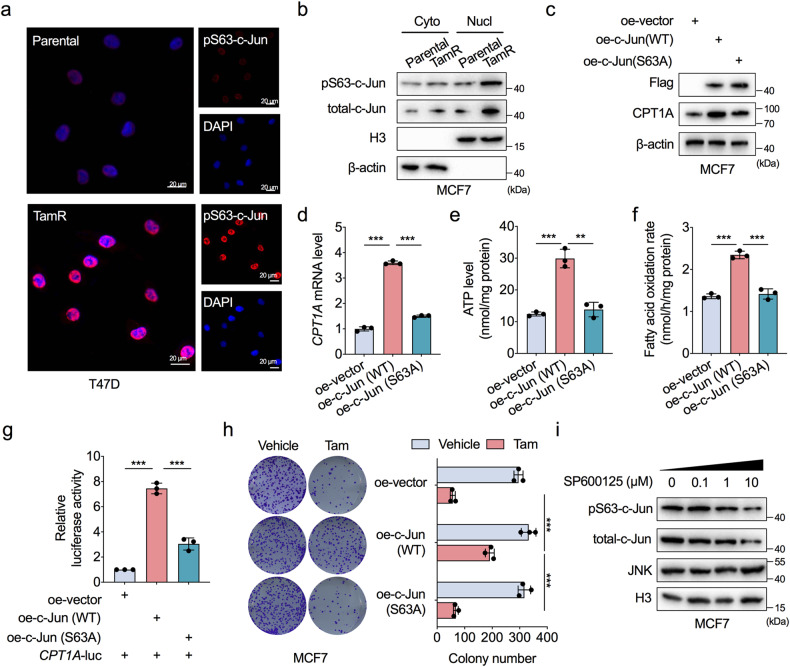
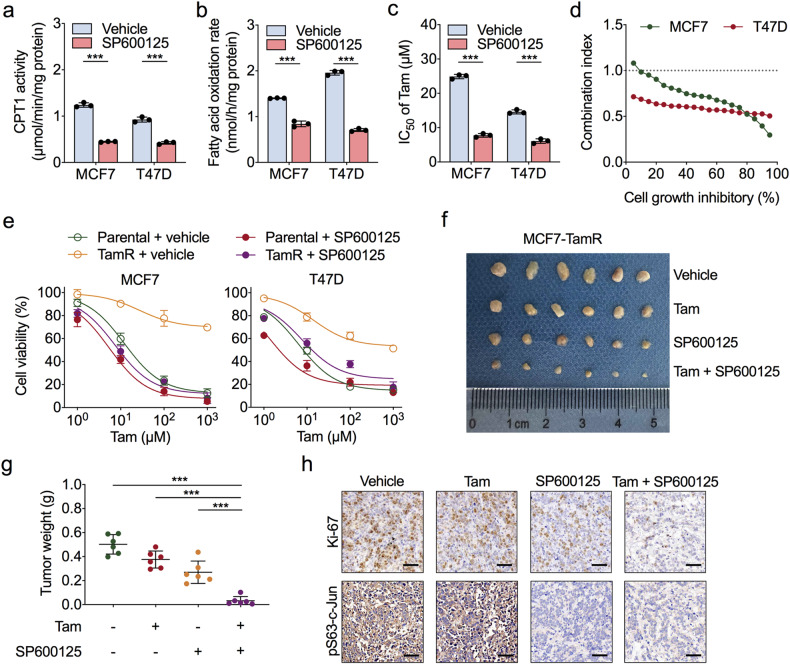
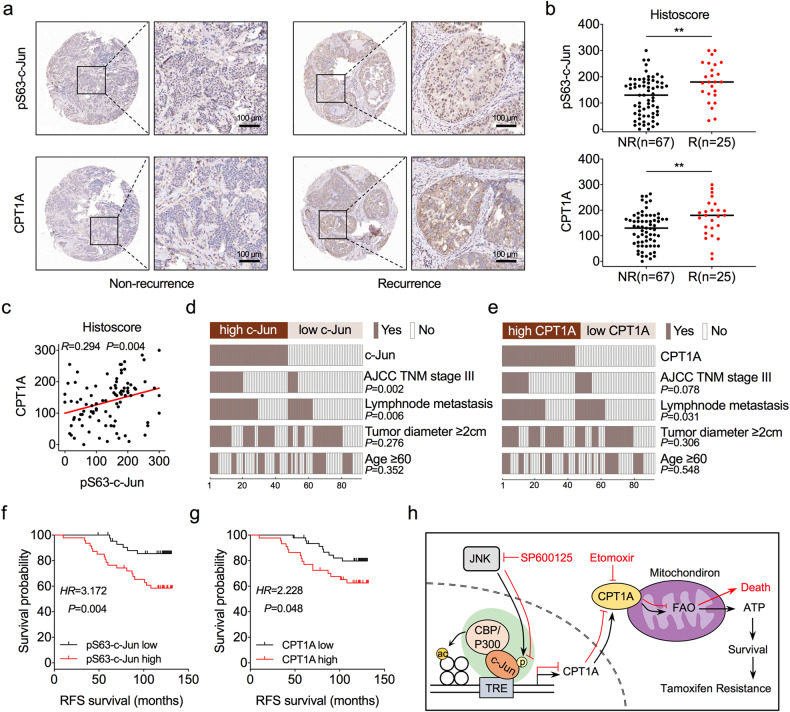
Tamoxifen-based endocrine therapy remains a major adjuvant therapy for estrogen receptor (ER)-positive breast cancer (BC). However, many patients develop tamoxifen resistance, which results in recurrence and poor prognosis. Herein, we show that fatty acid oxidation (FAO) was activated in tamoxifen-resistant (TamR) ER-positive BC cells by performing bioinformatic and functional studies. We also reveal that CPT1A, the rate-limiting enzyme of FAO, was significantly overexpressed and that its enzymatic activity was enhanced in TamR cells. Mechanistically, the transcription factor c-Jun was activated by JNK kinase-mediated phosphorylation. Activated c-Jun bound to the TRE motif in the CPT1A promoter to drive CPT1A transcription and recruited CBP/P300 to chromatin, catalysing histone H3K27 acetylation to increase chromatin accessibility, which ensured more effective transcription of CPT1A and an increase in the FAO rate, eliminating the cytotoxic effects of tamoxifen in ER-positive BC cells. Pharmacologically, inhibiting CPT1A enzymatic activity with the CPT1 inhibitor etomoxir or blocking c-Jun phosphorylation with a JNK inhibitor restored the tamoxifen sensitivity of TamR cells. Clinically, high levels of phosphorylated c-Jun and CPT1A were observed in ER-positive BC tissues in patients with recurrence after tamoxifen therapy and were associated with poor survival. These results indicate that the assessment and targeting of the JNK/c-Jun-CPT1A-FAO axis will provide promising insights for clinical management, increased tamoxifen responses and improved outcomes for ER-positive BC patients.
Overview
The claims and statistics of this paper haven’t been checked yet.
Free: it reads the open-access text and checks the first 5 claims that cite a source we can check. Create a free account to check every claim.
Integrity signals
Registry
Cites
Statistics
Figures
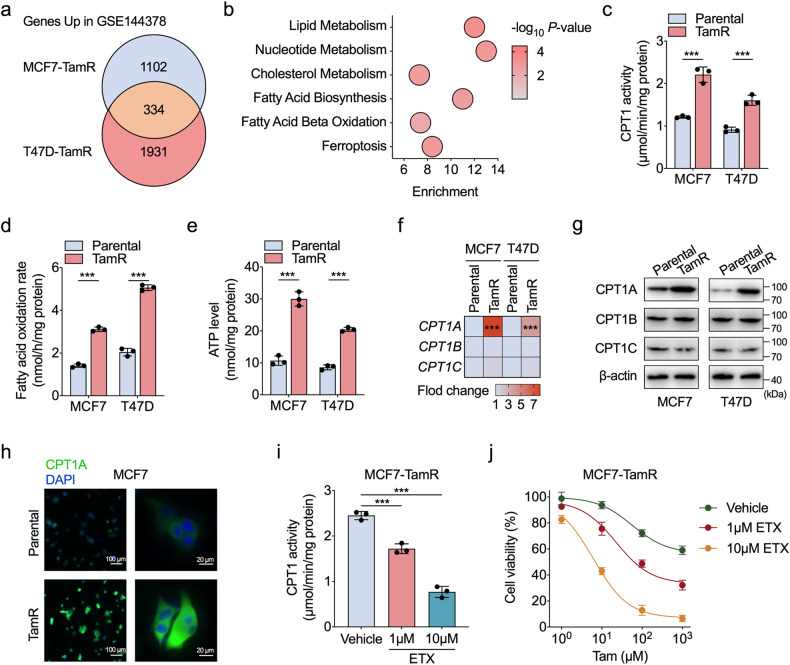
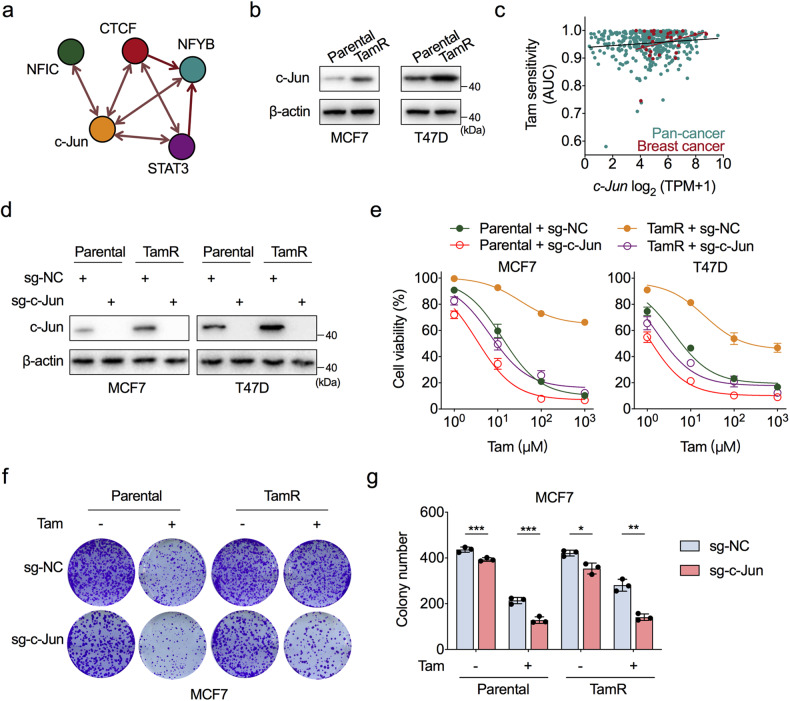
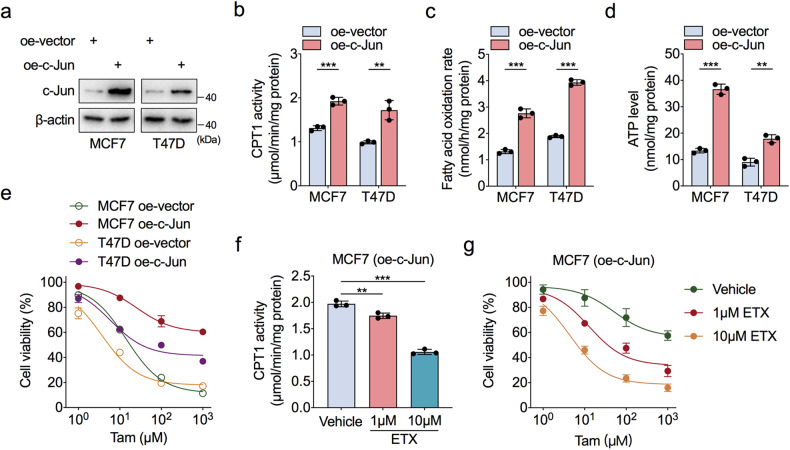
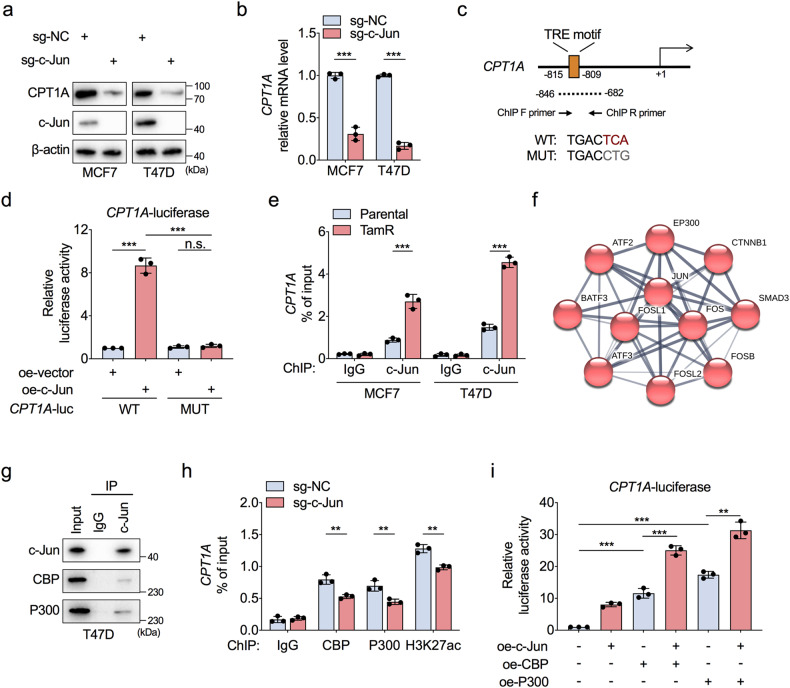
Verification
Claims the paper makes
The claims and statistics of this paper haven’t been checked yet.
Free: it reads the open-access text and checks the first 5 claims that cite a source we can check. Create a free account to check every claim.
Claims other papers make about this one
Each is checked against this paper’s own text: does it say what the citing paper says it does?
The check wasn’t confident either way, so it gives no verdict — never disputed.
In the citing paper
“In this system, HA and 4-OH-TAM mediated the nanomicelle targeting and enrichment in TAM-resistant breast cancer by the overexpression of ER and cluster of differentiation (CD44) receptors28,29.”
From Multifunctional and dual-targeting polymeric prodrug nanomicelles against tamoxifen-resistant breast cancer (2026) · cites this paper as [28]
Experimental — accuracy not yet measured
Self-check
Percentages, sums and reported differences re-computed from the paper’s own numbers.
The self-check needs the paper’s full text.
Citations
Cites
1 retracted
Han, J., Qu, H., Han, M., Ding, Y., Xie, M., Hu, J., Chen, Y., & Dong, H. (2020) · Oncogene · doi:10.1038/s41388-020-01574-8 · Cited by 92 · cited 17×
“The precipitation was collected for protein quanti fi cation, and the supernatant was collected for ATP detection.”
InfluentialRetractedSiegel, R. L., Miller, K. D., Fuchs, H. E., & Jemal, A. (2022) · CA: A Cancer Journal for Clinicians · doi:10.3322/caac.21708 · Cited by 17,196
Metascape provides a biologist-oriented resource for the analysis of systems-level datasets
Zhou, Y., Zhou, B., Pache, L., Chang, M., Khodabakhshi, A. H., Tanaseichuk, O., Benner, C., & Chanda, S. K. (2019) · Nature Communications · doi:10.1038/s41467-019-09234-6 · Cited by 14,611
Hallmarks of Cancer: New Dimensions
Hanahan, D. (2022) · Cancer Discovery · doi:10.1158/2159-8290.cd-21-1059 · Cited by 9,887 · cited 1×
“Tumour cell reprogramming of cellular metabolism supports the molecular interpretation of the malignant biological behaviour of cancer [7].”
Breast cancer statistics, 2019
DeSantis, C. E., Ma, J., Gaudet, M. M., Newman, L. A., Miller, K. D., Goding Sauer, A., Jemal, A., & Siegel, R. L. (2019) · CA: A Cancer Journal for Clinicians · doi:10.3322/caac.21583 · Cited by 3,114 · cited 1×
“Estrogen receptor (ER)-positive BC is the most common BC subtype, accounting for approximately 80% of all BC cases [2].”
SP600125, an anthrapyrazolone inhibitor of Jun N-terminal kinase
Bennett, B. L., Sasaki, D. T., Murray, B. W., O'Leary, E. C., Sakata, S. T., Xu, W., Leisten, J. C., Motiwala, A., Pierce, S., Satoh, Y., et al. (2001) · Proceedings of the National Academy of Sciences · doi:10.1073/pnas.251194298 · Cited by 2,558 · cited 1×
“All the research was carried out in accordance with the provisions of the Helsinki Declaration of 1975.”
AP-1: a double-edged sword in tumorigenesis
Eferl, R., & Wagner, E. F. (2003) · Nature Reviews Cancer · doi:10.1038/nrc1209 · Cited by 2,242 · cited 1×
“In addition, the c-Jun S63A construct induced only minor effects on the promoter activity of CPT1A compared to profound effects mediated by the c-Jun wild-type construct (Fig.”
Loibl, S., Poortmans, P., Morrow, M., Denkert, C., & Curigliano, G. (2021) · The Lancet · doi:10.1016/s0140-6736(20)32381-3 · Cited by 1,648
Cancer metabolism: fatty acid oxidation in the limelight
Carracedo, A., Cantley, L. C., & Pandolfi, P. P. (2013) · Nature Reviews Cancer · doi:10.1038/nrc3483 · Cited by 1,324
ChEA3: transcription factor enrichment analysis by orthogonal omics integration
Keenan, A. B., Torre, D., Lachmann, A., Leong, A. K., Wojciechowicz, M. L., Utti, V., Jagodnik, K. M., Kropiwnicki, E., Wang, Z., & Ma’ayan, A. (2019) · Nucleic Acids Research · doi:10.1093/nar/gkz446 · Cited by 1,136
Cited by
Chromatin accessibility: biological functions, molecular mechanisms and therapeutic application
Chen, Y., Liang, R., Li, Y., Jiang, L., Ma, D., Luo, Q., & Song, G. (2024) · Signal Transduction and Targeted Therapy · doi:10.1038/s41392-024-02030-9 · Cited by 223
Wan, M., Pan, S., Shan, B., Diao, H., Jin, H., Wang, Z., Wang, W., Han, S., Liu, W., He, J., et al. (2025) · Molecular Cancer · doi:10.1186/s12943-025-02258-1 · Cited by 111
“Mechanistically, c-Jun recruits CBP/P300 to the CPT1A promoter, initiating CPT1A transcription in ER-positive BC cells [284].”
Post-translational modifications in drug resistance
Miao, C., Huang, Y., Zhang, C., Wang, X., Wang, B., Zhou, X., Song, Y., Wu, P., Chen, Z., & Feng, Y. (2024) · Drug Resistance Updates · doi:10.1016/j.drup.2024.101173 · Cited by 82
The role and mechanism of fatty acid oxidation in cancer drug resistance
Lei, Y., Cai, S., Zhang, J., Ding, S., Zhang, Z.-H., Zhang, C., Dai, D., & Li, Y. (2025) · Cell Death Discovery · doi:10.1038/s41420-025-02554-1 · Cited by 59
“Inhibition of FAO can restore the sensitivity of resistant cells to tamoxifen [144].”
Lipid metabolism involved in progression and drug resistance of breast cancer
Fu, W., Sun, A., & Dai, H. (2024) · Genes & Diseases · doi:10.1016/j.gendis.2024.101376 · Cited by 35
Metabolic Reprogramming: A Crucial Contributor to Anticancer Drug Resistance
Zhu, Y., Yan, W., Tong, L., Yang, J., Ge, S., Fan, J., Jia, R., & Wen, X. (2025) · MedComm · doi:10.1002/mco2.70358 · Cited by 38
“CBP/P300 acetylates histone H3K27 to increase the transcription of CPT1A, thereby increasing FAO and mitigating the cytotoxic effects of tamoxifen in estrogen receptor (ER) + breast cancer cells [193].”
Self-citationGuo, J., Gu, H., Yin, S., Yang, J., Wang, Q., Xu, W., Wang, Y., Zhang, S., Liu, X., Xian, X., et al. (2024) · Journal of Experimental & Clinical Cancer Research · doi:10.1186/s13046-024-03203-8 · Cited by 20
“Carnitine palmitoyltransferase 1 (CPT1) anchor to the mitochondrial outer membrane and facilitates the entry of long-chain fatty acids into mitochondria by loading fatty acyl groups onto carnitine to support FAO [32].”
BackgroundShi, J., Shen, Y. H., & Zhang, J. (2024) · Cancer Drug Resistance · doi:10.20517/cdr.2024.81 · Cited by 20
Zhang, W., Wang, P., Yuan, G., Liu, F., Jin, G., & Zhang, J. (2025) · Genes & Diseases · doi:10.1016/j.gendis.2025.101772 · Cited by 15
Ferroptosis and circular RNAs: new horizons in cancer therapy
Bhat, A. A., Kukreti, N., Afzal, M., Goyal, A., Thapa, R., Ali, H., Shahwan, M. J., Almalki, W. H., Kazmi, I. A., Alzarea, S. I., et al. (2024) · EXCLI journal · doi:10.17179/excli2024-7005 · Cited by 15
Role of ubiquitination-driven metabolisms in oncogenesis and cancer therapy
Yang, D., Yang, C., Huang, L., Guan, M. Y., & Song, C. (2025) · Seminars in Cancer Biology · doi:10.1016/j.semcancer.2025.02.004 · Cited by 13
Novel therapeutic strategies for targeting fatty acid oxidation in cancer
Wang, Y., Zhang, M., Liu, J., Li, C., Sun, N., Wu, X., Wang, C., Tan, X., Yang, Y., Qi, X., et al. (2025) · Biomarker Research · doi:10.1186/s40364-025-00855-2 · Cited by 12
“In estrogen receptor-positive breast cancer cells, activated c-Jun recruits CBP/P300 to chromatin, catalyzing histone H3K27 acetylation to increase chromatin accessibility and eliminate the cytotoxic effects of tamoxifen [117].”
Ma, X., Zhang, B., Yin, X., Yang, S., Lin, Z., Yang, Y., & Zhou, X. (2025) · Breast Cancer Research · doi:10.1186/s13058-025-02039-0 · Cited by 11
“Furthermore, estrogen mediates hepatoprotective effects through a CPT1A-dependent FAO mechanism and inhibits prostate cancer growth by regulating ROS levels via CPT1A [39].”
Rashed, N., Liu, W., & Luo, X. (2025) · Biochimica et Biophysica Acta (BBA) - Reviews on Cancer · doi:10.1016/j.bbcan.2025.189474 · Cited by 13
Li, Y., Shan, J., Liu, S., Shen, Y., Niu, L., Mao, Q., & Chen, X. (2025) · Biochimica et Biophysica Acta (BBA) - Molecular Basis of Disease · doi:10.1016/j.bbadis.2025.167958 · Cited by 8
Self-citationThe role of histone acetyltransferases in tumorigenesis and their therapeutic potential: A review
Lin, R., Zhang, Y., Li, H., & Liang, F. (2025) · Biochemical and Biophysical Research Communications · doi:10.1016/j.bbrc.2025.153097 · Cited by 8
Targeting fatty acid metabolism for cancer therapy
Zhang, L., Yao, Y., & Liu, S. (2024) · Fundamental Research · doi:10.1016/j.fmre.2024.09.011 · Cited by 12
“Targeting c-Jun in ER-positive breast cancer inhibited the transcription of CPT1A and decreased the FAPO rate, which enhanced the tamox-1176 ifen effects and response [ 143 ].”
Shen, R., Zhou, J., Xin, L., Zhou, H., & Huang, J. (2024) · The Journal of Steroid Biochemistry and Molecular Biology · doi:10.1016/j.jsbmb.2024.106599 · Cited by 5
Noor, N. S., & Hamid, S. B. S. (2025) · Current Molecular Medicine · doi:10.2174/0115665240347014241203065055 · Cited by 6
Pakhira, S., Kundu, S., & Roy, S. S. (2025) · Biochimica et Biophysica Acta (BBA) - Reviews on Cancer · doi:10.1016/j.bbcan.2025.189447 · Cited by 7
Zhang, R., Chen, Y., Xu, S., Gu, X., & Ye, H. (2025) · Journal of Cancer · doi:10.7150/jca.104687 · Cited by 4
“Moreover, targeting c-Jun can overcome tamoxifen resistance in estrogen receptor-positive breast cancer by inhibiting fatty acid oxidation [49].”
Self-citationMythri, C., Jorvekar, S. B., Suraj, N., Pruthiviraj, N., Borkar, R. M., & Selvaraju, S. (2025) · Molecular Omics · doi:10.1039/d5mo00039d · Cited by 2
Wang, Z., Hou, P., Wu, Y., Dai, J., Zhao, P., Cheng, X., Hu, Z., Zhang, L., & Hua, J. (2025) · Cellular Signalling · doi:10.1016/j.cellsig.2025.112119 · Cited by 5
Chung, Y., Chu, J., Do, S., & Kim, H. S. (2024) · Anticancer Research · doi:10.21873/anticanres.17159 · Cited by 2
“…He et al. (43) reported that overexpression of JUN , an AP-1 transcription factor, reduces sensitivity to tamoxifen in patients with ER-positive breast carcinoma, suggesting that inhibiting JUN might improve tamoxifen responsiveness in AP-1-overexpressing ER-positive breast carcinomas (45).”
Role of transcription factors in metastasis of breast cancer
Marada, S., Madu, C. O., & Lu, Y. W. (2024) · Exploration of Medicine · doi:10.37349/emed.2024.00267 · Cited by 3
Yin, R., Gao, J., Liu, Y., & Guo, C. (2025) · Oncology Letters · doi:10.3892/ol.2025.14940 · Cited by 1
“The results of the present study are supported by previous findings reported by Jiang et al (52); this previous study demonstrated that targeting fatty acid metabolism inhibition could overcome TAM resistance in ER + breast cancer.”
Ma, L., Qian, B., Peng, C., Liu, G., & Shen, H. (2025) · BMC Medical Genomics · doi:10.1186/s12920-025-02194-5 · Cited by 1
“Both fatty acid synthase (FASN) and targeting c-Jun induce alterations in fatty acid oxidation, thereby modulating the sensitivity of ER + breast cancer cells to tamoxifen; the former confers resistance[[18], while the latter enhances sensitivity[19].”
Zeng, Y., Ji, Q., Wang, N., Guo, X., Wang, X., Zhang, J., & Wang, X. (2026) · ACS Applied Nano Materials · doi:10.1021/acsanm.5c05586 · Cited by 2
Fatty Acid Metabolism in Health and Cancer: From Fundamental Mechanisms to Therapeutic Application
Hang, N., Zhao, R., Zhang, F., Guo, D., Li, Q., Shen, Z., Gao, R., Gao, C., Xie, Z., Fu, S., et al. (2026) · MedComm · doi:10.1002/mco2.70749 · Cited by 1
“Furthermore, through bioinformatics and functional studies, scientists have found that the activation of FAO and overexpression of CPT1A are associated with c-Jun activation and increased chromatin accessibility [ 207 ].”
Ma, S., Chen, M., Sun, X., Wei, B., Sun, F., Xie, X., Huang, Y., Liu, Z., Xiao, R., Wei, L., et al. (2026) · Cancer Letters · doi:10.1016/j.canlet.2026.218609 · Cited by 1
Ji, Q.-L., Zeng, Y., Zhou, H., Wang, Q.-B., Zhou, R.-Y., Zhang, J.-J., & Wang, X. (2026) · Scientific reports · doi:10.1038/s41598-026-49617-6 · Cited by 1
“In this system, HA and 4-OH-TAM mediated the nanomicelle targeting and enrichment in TAM-resistant breast cancer by the overexpression of ER and cluster of differentiation (CD44) receptors 28,29 .”
Breast Cancer and Metabolic Dysfunction-Associated Steatotic Liver Disease
Nieva-Ramírez, D. G., Luna-Pérez, D., Uribe, M., & Nuño‐Lámbarri, N. (2026) · International Journal of Molecular Sciences · doi:10.3390/ijms27114919
“…pharmacologic inhibition of CPT1A delayed tumor onset, reduced metastatic burden, and enhanced the efficacy of anti-HER2 therapy, partly through remodeling of the tumor immune microenvironment, supporting FAO blockade as a rational combinatorial strategy beyond triple-negative breast cancer [95].”
Role of post-translational modifications in cancer metabolic reprogramming
Yuan, Y., Guo, Z., Xie, J., Zhou, J., Gao, S., & Ma, Y. (2026) · Genes & Diseases · doi:10.1016/j.gendis.2026.102372
Obacunone attenuates Cholestatic liver disease via PPARα activation and gut microbiota remodeling
Meng, X., Zeng, C., Deng, H., Jiang, S., Du, X., Xiao, Y., & Liu, C. (2026) · Phytomedicine · doi:10.1016/j.phymed.2026.158648
Chen, S.-J., Yue, S.-W., Zhang, Y.-P., Liang, H., Wu, H.-X., Chen, X., Zhang, B.-X., & Zhang, W. (2026) · Signal Transduction and Targeted Therapy · doi:10.1038/s41392-026-02862-7 · Cited by 2
“218 Notably, FAO itself can be epigenetically reinforced, as FAO-derived acetyl-CoA fuels H3K27 acetylation at stemness and metastasis genes, stabilizing an invasive phenotype.”
Self-citationGong, L., Zhao, Y., Che, M., Zhang, X., Zhang, D., & Lü, W. (2026) · Frontiers in Immunology · doi:10.3389/fimmu.2026.1911296
“…studies suggest that distinct upstream signaling pathways, including JNK/c-Jun-CPT1A-FAO, AMPK-ERR a /PGC-1 b -MCAD/CPT1, FDXR-CPT1A-FAO, and PPAR a -CPT1, may converge on FAO regulation through different regulatory levels, collectively contributing to a metabolic adaptive phenotype (44, 56 – 58).”
Zeng, F., Chen, X., Long, K., Yu, B., Cai, Y., Cai, Y., & Liu, C. (2026) · Frontiers in Oncology · doi:10.3389/fonc.2026.1959579
“CPT1A is ampli fi ed or over-expressed in a subset of aggressive luminal tumors and supports mammosphere formation (11). c-Jun, FDXR and AMPK – Src programs increase CPT1A/FAO during endocrine resistance (16, 17, 31).”
InfluentialSelf-citation
Metadata
- Authors
- Jiang, C., Zhu, Y., Chen, H., Lin, J., Xie, R., Li, W., Xue, J., Chen, L., Chen, X., & Xu, S.
- Affiliations
- Union Hospital (CN)
- Fujian Medical University (CN)
- Corresponding author
- Chen, Xiangjin
- Xu, Sunwang
- Venue
- Cell Death & Disease
- Published
- 2023-10-06
- Volume
- 14
- Issue
- 10
- Pages
- 653-653
- ISSN
- 2041-4889 (ISSN-L)
- PMC
- PMC10558541
- OpenAlex
- W4387399646
- Cited by
- 36
- References
- 66
- Citations by year
- 2026: 9 · 2025: 17 · 2024: 10
- FWCI
- 4.57
- Type
- journal article
- Language
- en
- Open access
- gold
- doi.org
- Licence
- cc-by
- creativecommons.org/licenses/by/4.0 (tdm)
- creativecommons.org/licenses/by/4.0 (vor)
- Locations
- Cell Death and Disease (publishedVersion, cc-by)
- PubMed Central (publishedVersion, cc-by)
- PubMed (publishedVersion)
- DOAJ (DOAJ: Directory of Open Access Journals) (submittedVersion, cc-by-sa)
- Funders
- National Natural Science Foundation of China (82103549, 82273367)
- Topics
- Life Sciences › Biochemistry, Genetics and Molecular Biology › Cancer Research › Cancer, Lipids, and Metabolism
- Life Sciences › Biochemistry, Genetics and Molecular Biology › Endocrinology › Estrogen and related hormone effects
- Life Sciences › Biochemistry, Genetics and Molecular Biology › Cancer Research › Breast Cancer Treatment Studies
- Keywords
- tamoxifen resistance, estrogen receptor-positive breast cancer, fatty acid oxidation, c-Jun, JNK phosphorylation, CPT1A, endoplasmic reticulum stress, CBP/p300, histone H3K27 acetylation, chromatin accessibility, etomoxir, endocrine therapy resistance, tumor recurrence
- MeSH terms
- Breast Neoplasms, Chromatin, Fatty Acids, Female, Humans, Receptors, Estrogen, Tamoxifen, Gene Expression Regulation, Neoplastic, Antineoplastic Agents, Hormonal, Drug Resistance, Neoplasm
About these checks
Registry, retraction, Cites and statistics results are computed, not judged, with one exception: a printed reference that no index lists is read once by a model before it counts as a citation error. Claims are extracted by a model and kept only when their quote appears verbatim in the text; each cited source is then checked, with a model’s help, for whether it says what the claim relies on. Those verdicts can be wrong — read the claim’s quote and the cited source before relying on one.
Statistics and arithmetic are recomputed, not judged.
Confidence bands are shown only for fields calibrated on our annotated test set. None is calibrated yet, so no band is shown.
What counts as a claim ›How we measure confidence ›How we check this ›
Are you an author, or do you see a problem with this page? Request a review
Data sources
Bibliographic data: Semantic Scholar, OpenAlex, Crossref.
Contains information from the Semantic Scholar Academic Graph Datasets, made available under the ODC Attribution License (ODC-BY 1.0).
Semantic Scholar’s data is described in: Kinney, R., et al. (2023). The Semantic Scholar Open Data Platform. arXiv:2301.10140.
