

TRIM26 deficiency enhancing liver regeneration through macrophage polarization and β-catenin pathway activation
Open accessThe DOI matches its Crossref record; 40 of the 40 references it cites were found in a registry or an index.
Abstract
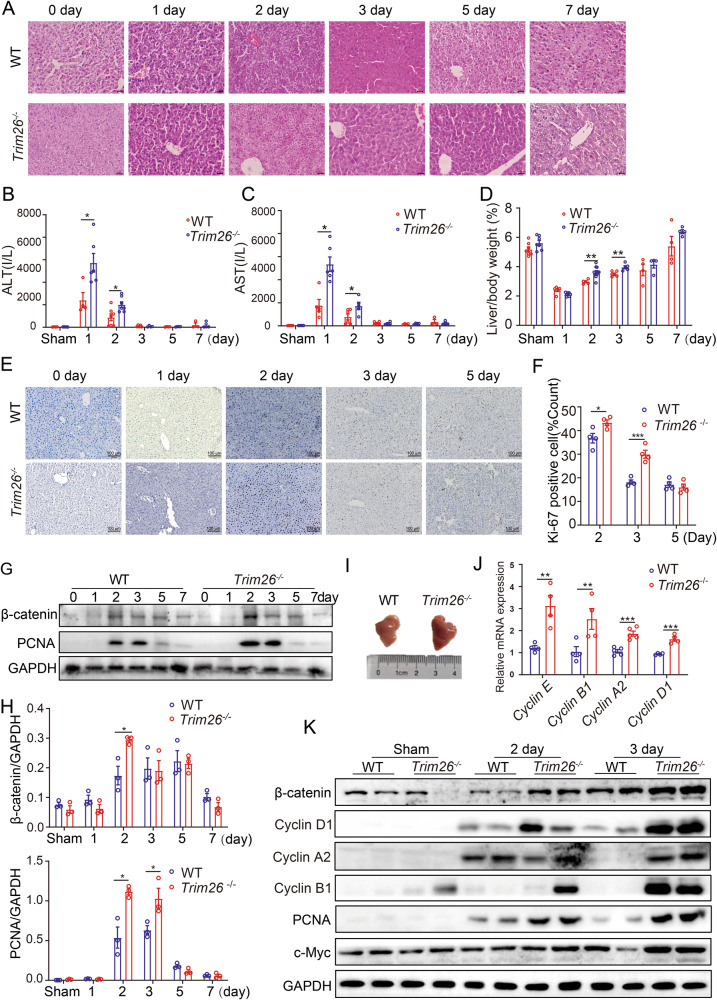
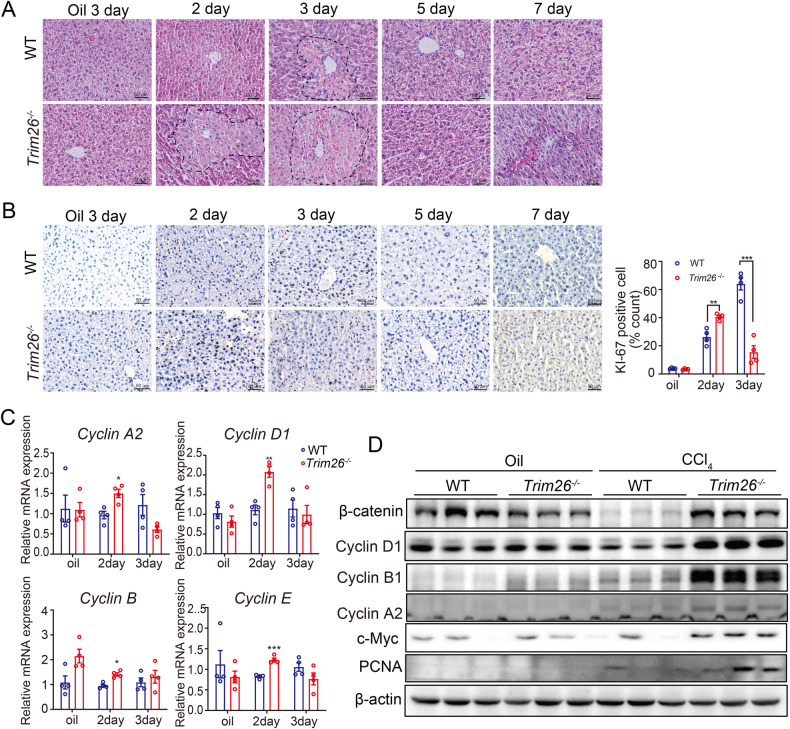
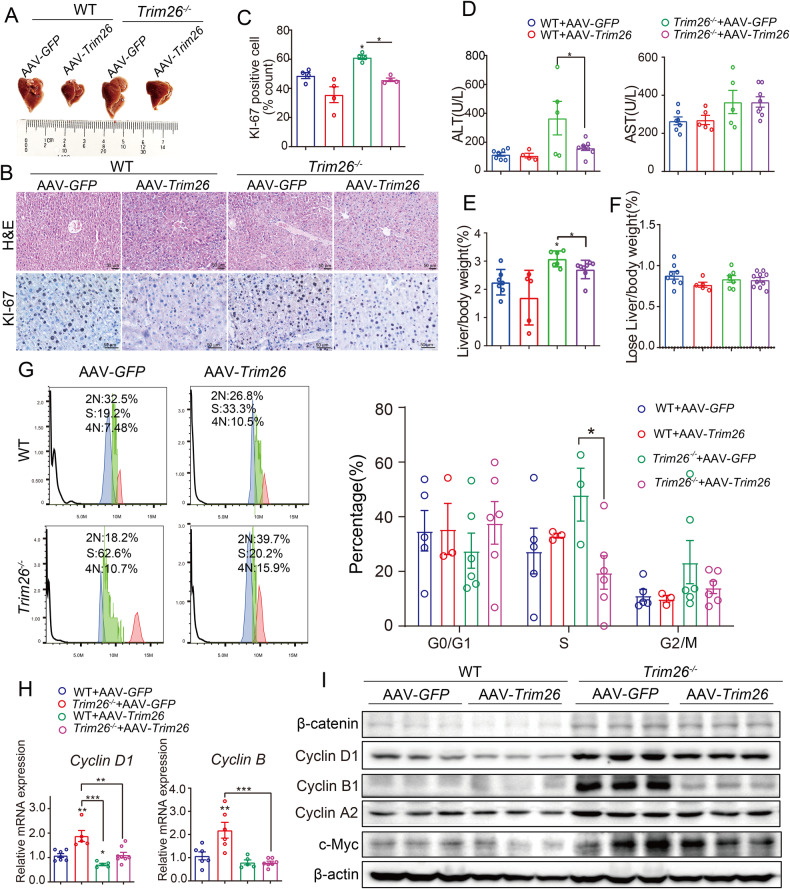
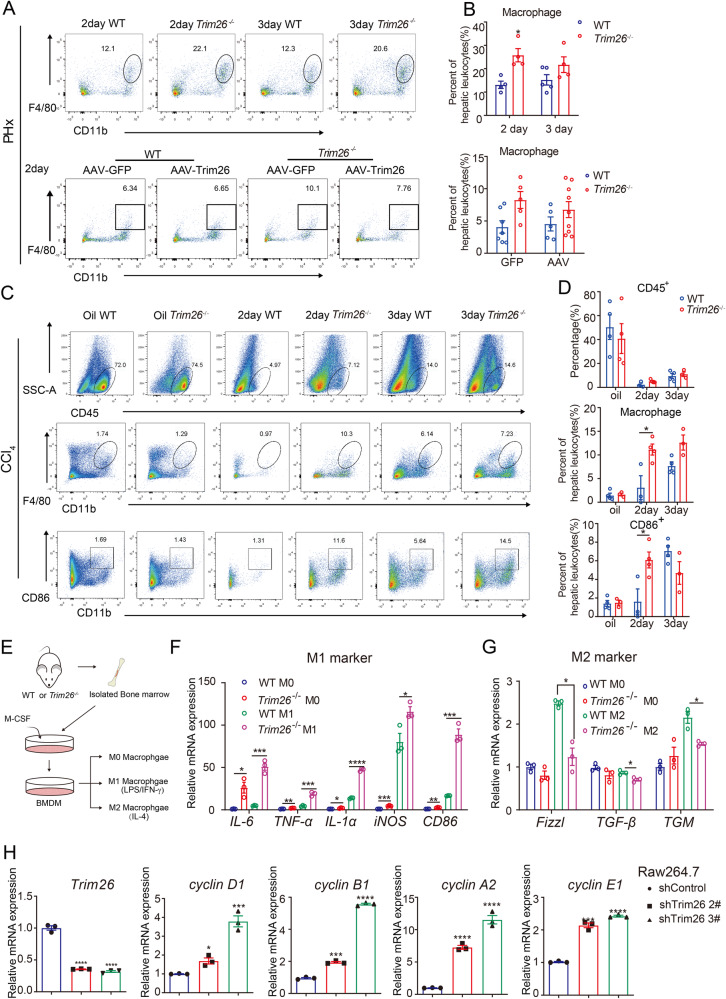
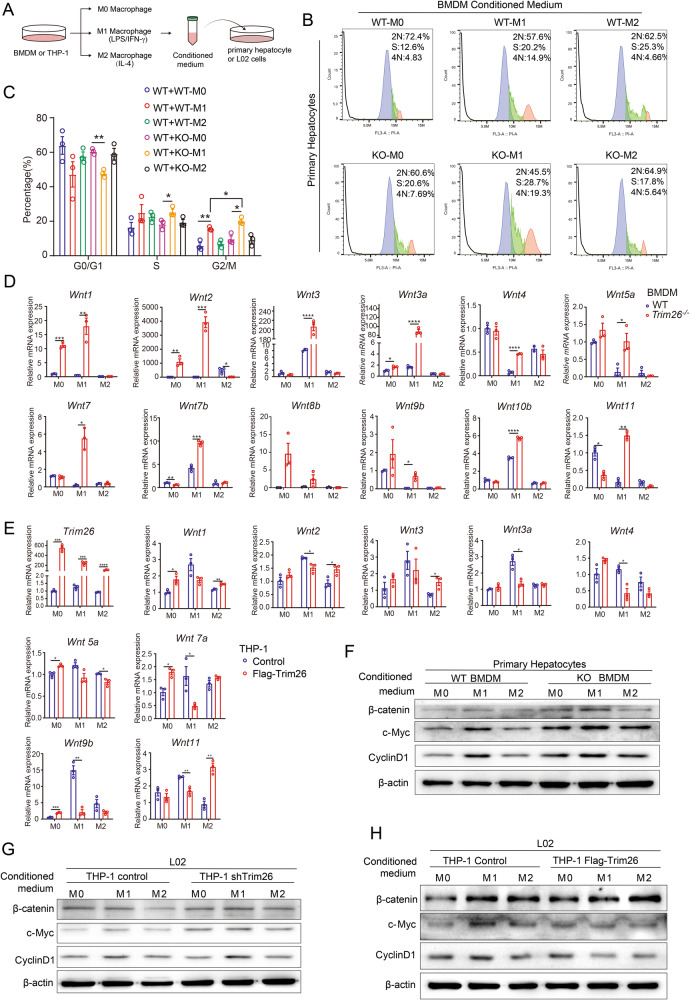
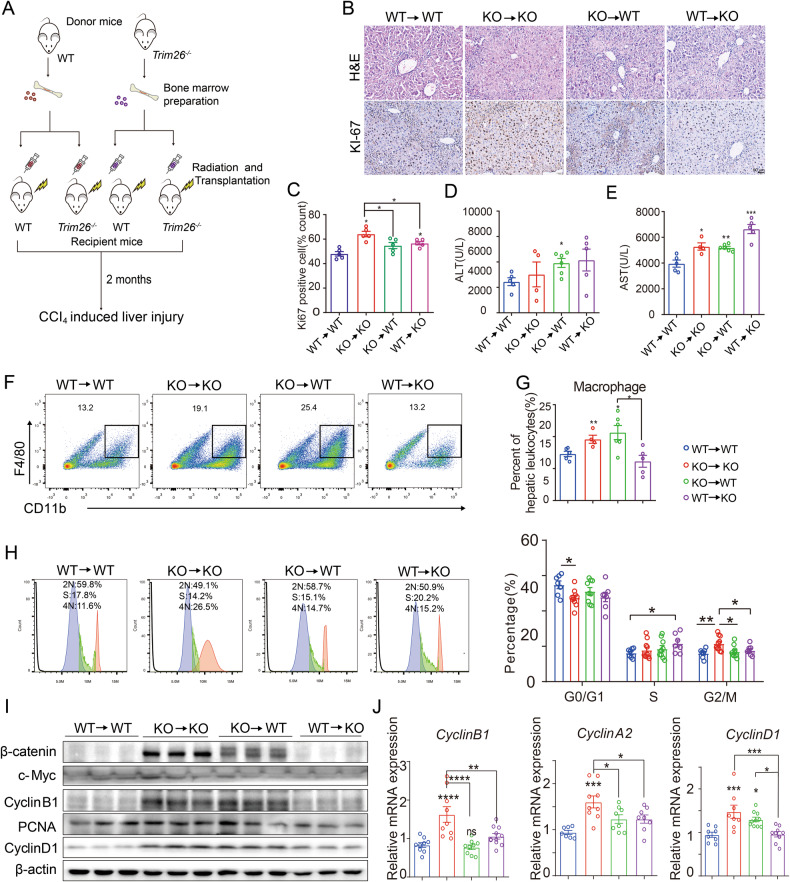
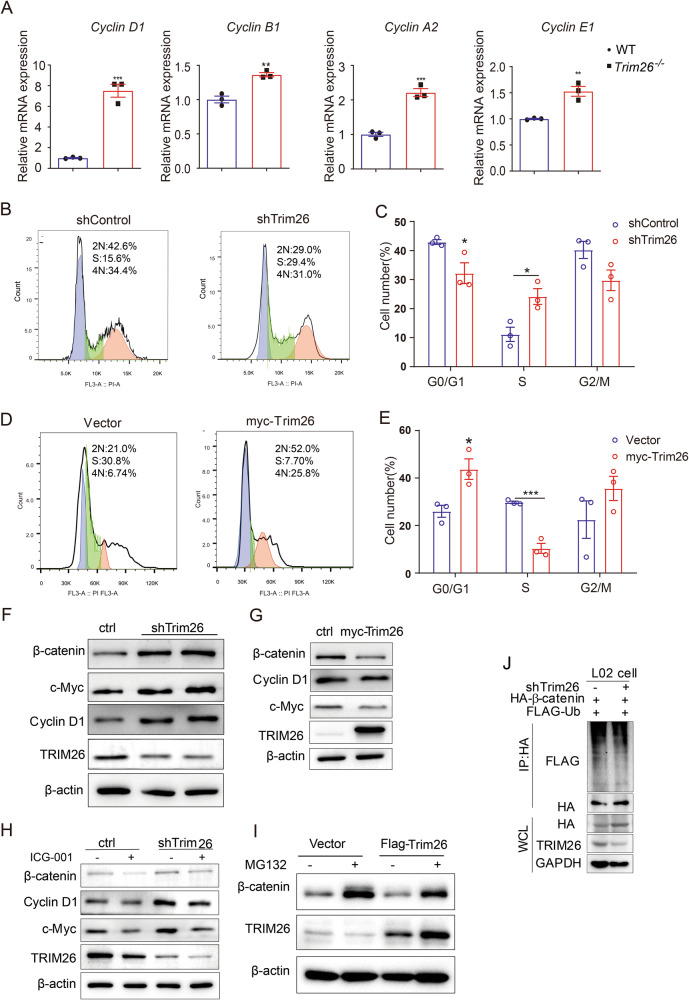
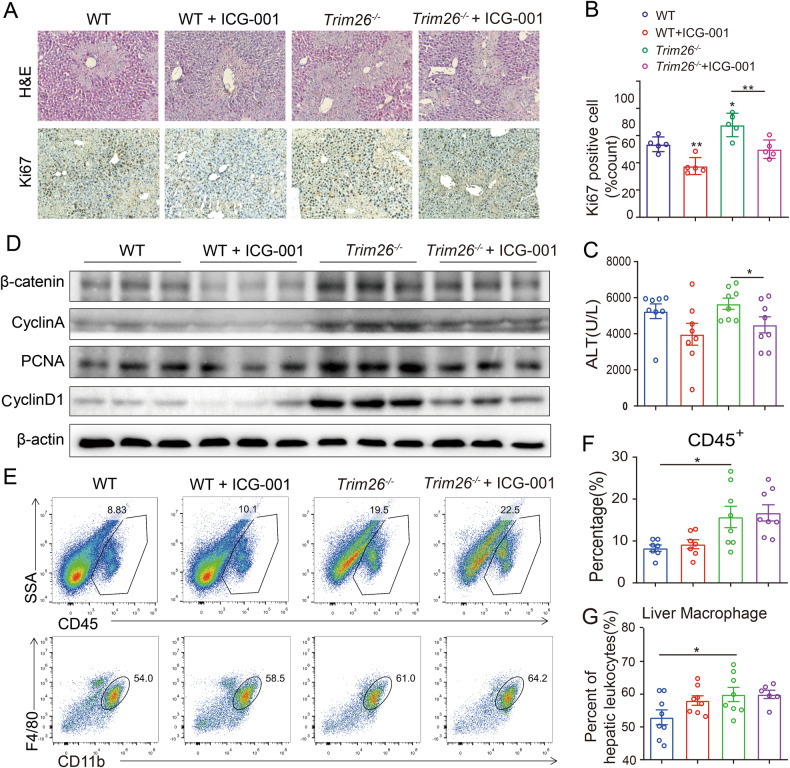
Liver regeneration is a complex process involving the crosstalk between parenchymal and non-parenchymal cells, especially macrophages. However, the underlying mechanisms remain incompletely understood. Here, we identify the E3 ubiquitin ligase TRIM26 as a crucial regulator of liver regeneration. Following partial hepatectomy or acute liver injury induced by carbon tetrachloride, Trim26 knockout mice exhibit enhanced hepatocyte proliferation compared to wild-type controls, while adeno-associated virus (AAV)-mediated overexpression of Trim26 reverses the promotional effects. Mechanistically, Trim26 deficiency promotes the recruitment of macrophages to the liver and their polarization towards pro-inflammatory M1 phenotype. These M1 macrophages secrete Wnts, including Wnt2, which subsequently stimulate hepatocyte proliferation through the activation of Wnt/β-catenin signaling. In hepatocytes, Trim26 knockdown reduces the ubiquitination and degradation of β-catenin, thereby further enhancing Wnt/β-catenin signaling. Pharmacological inhibition of Wnt/β-catenin pathway by ICG-001 or depletion of macrophages by clodronate liposomes diminishes the pro-regenerative effects of Trim26 deficiency. Moreover, bone marrow transplantation experiments provide evidence that Trim26 knockout in myeloid cells alone can also promote liver regeneration, highlighting the critical role of macrophage Trim26 in this process. Taken together, our study uncovers TRIM26 as a negative regulator of liver regeneration by modulating macrophage polarization and Wnt/β-catenin signaling in hepatocytes, providing a potential therapeutic target for promoting liver regeneration in clinical settings.
Overview
The claims and statistics of this paper haven’t been checked yet.
Free: it reads the open-access text and checks the first 5 claims that cite a source we can check. Create a free account to check every claim.
Integrity signals
Registry
Cites
Statistics
Figures
Verification
Claims the paper makes
The claims and statistics of this paper haven’t been checked yet.
Free: it reads the open-access text and checks the first 5 claims that cite a source we can check. Create a free account to check every claim.
Self-check
Percentages, sums and reported differences re-computed from the paper’s own numbers.
The self-check needs the paper’s full text.
Citations
Cites
Michalopoulos, G. K., & DeFrances, M. C. (1997) · Science · doi:10.1126/science.276.5309.60 · Cited by 2,828
Liver Macrophages in Tissue Homeostasis and Disease
Krenkel, O., & Tacke, F. (2017) · Nature Reviews Immunology · doi:10.1038/nri.2017.11 · Cited by 1,424
Liver regeneration: biological and pathological mechanisms and implications
Michalopoulos, G. K., & Bhushan, B. (2021) · Nature Reviews Gastroenterology & Hepatology · doi:10.1038/s41575-020-0342-4 · Cited by 998
Self-renewing diploid Axin2+ cells fuel homeostatic renewal of the liver
Wang, B., Zhao, L., Fish, M., Logan, C. Y., & Nusse, R. (2015) · Nature · doi:10.1038/nature14863 · Cited by 674 · cited 1×
“Labeling experiments have demonstrated that approximately 30% of hepatocytes originate from the pericentral AXIN2 population after one year of liver homeostasis [13].”
A reproducible and well-tolerated method for 2/3 partial hepatectomy in mice
Mitchell, C., & Willenbring, H. (2008) · Nature Protocols · doi:10.1038/nprot.2008.80 · Cited by 577
Acetaminophen hepatotoxicity and repair: the role of sterile inflammation and innate immunity
Jaeschke, H., Williams, C. D., Ramachandran, A., & Bajt, M. L. (2012) · Liver International · doi:10.1111/j.1478-3231.2011.02501.x · Cited by 478
Liver regeneration and inflammation: from fundamental science to clinical applications
Campana, L., Esser, H., Huch, M., & Forbes, S. (2021) · Nature Reviews Molecular Cell Biology · doi:10.1038/s41580-021-00373-7 · Cited by 307
Changes in Wnt/β–Catenin Pathway During Regulated Growth in Rat Liver Regeneration
Monga, S. P. S., Pediaditakis, P., Mule, K., Stolz, D. B., & Michalopoulos, G. K. (2001) · Hepatology · doi:10.1053/jhep.2001.23786 · Cited by 292
Beta-catenin signaling in murine liver zonation and regeneration: A Wnt-Wnt situation!
Yang, J., Mowry, L. E., Nejak-Bowen, K. N., Okabe, H., Diegel, C. R., Lang, R. A., Williams, B. O., & Monga, S. P. (2014) · Hepatology · doi:10.1002/hep.27082 · Cited by 244
Li, M., Sun, X., Zhao, J., Xia, L., Li, J., Xu, M., Wang, B., Guo, H., Yu, C., Gao, Y., et al. (2020) · Cellular & Molecular Immunology · doi:10.1038/s41423-019-0279-0 · Cited by 225
Self-citationXiang, X., Feng, D., Hwang, S., Ren, T., Wang, X., Trojnar, E., Matyas, C., Mo, R., Shang, D., He, Y., et al. (2020) · Journal of Hepatology · doi:10.1016/j.jhep.2019.11.013 · Cited by 189
Wang, P., Zhao, W., Zhao, K., Zhang, L., & Gao, C. (2015) · PLOS Pathogens · doi:10.1371/journal.ppat.1004726 · Cited by 187
Regulation of Wnt Signaling through Ubiquitination and Deubiquitination in Cancers
Park, H.-B., Kim, J.-W., & Baek, K.-H. (2020) · International Journal of Molecular Sciences · doi:10.3390/ijms21113904 · Cited by 169
Severgnini, M., Sherman, J., Sehgal, A., Jayaprakash, N. K., Aubin, J., Wang, G., Zhang, L., Peng, C. G., Yucius, K., Butler, J., et al. (2012) · Cytotechnology · doi:10.1007/s10616-011-9407-0 · Cited by 167
Li, X., Yuan, J., Song, C., Lei, Y., Xu, J., Zhang, G., Wang, W., & Song, G. (2021) · Cell Death and Differentiation · doi:10.1038/s41418-021-00754-7 · Cited by 146
Self-citationNon-parenchymal TREM-2 protects the liver from immune-mediated hepatocellular damage
Perugorria, M. J., Esparza-Baquer, A., Oakley, F., Labiano, I., Korosec, A., Jais, A., Mann, J., Tiniakos, D., Santos-Laso, A., Arbelaiz, A., et al. (2019) · Gut · doi:10.1136/gutjnl-2017-314107 · Cited by 144 · cited 1×
“However, excessive in fl ammation can have detrimental effects on various liver diseases by exacerbating liver damage [7].”
(2001) · PubMed · Cited by 136
Yuan, R., Wang, K., Hu, J., Chen, Y., Li, M., Yu, X., Liu, X., Lei, J., Guo, W.-H., Wu, L., et al. (2014) · Cancer Research · doi:10.1158/0008-5472.can-14-0284 · Cited by 129
Self-citationHu, S., Liu, S., Bian, Y., Poddar, M., Singh, S., Cao, C., McGaughey, J., Bell, A., Blazer, L. L., Adams, J. J., et al. (2022) · Cell Reports Medicine · doi:10.1016/j.xcrm.2022.100754 · Cited by 118 · cited 2×
“Deletion of Wnt2 and Wnt9b or Wntless in liver endothelial cells, or β -catenin or LRP 5-6 in liver cells, resulted in the absence of pericentral genes and alteration of periportal gene expression [14].”
IL‐6 Trans‐signaling Controls Liver Regeneration After Partial Hepatectomy
Fazel Modares, N., Polz, R., Haghighi, F., Lamertz, L., Behnke, K., Zhuang, Y., Kordes, C., Häussinger, D., Sorg, U. R., Pfeffer, K., et al. (2019) · Hepatology · doi:10.1002/hep.30774 · Cited by 113 · cited 1×
“These cytokines play signi fi cant roles in the initiation of the priming phase and increased G1/S transition in the hepatocyte cell cycle [31].”
Zhao, L., Jin, Y., Donahue, K., Tsui, M., Fish, M., Logan, C. Y., Wang, B., & Nusse, R. (2019) · Hepatology · doi:10.1002/hep.30563 · Cited by 111
Izumi, T., Imai, J., Yamamoto, J., Kawana, Y., Endo, A., Sugawara, H., Kohata, M., Asai, Y., Takahashi, K., Kodama, S., et al. (2018) · Nature Communications · doi:10.1038/s41467-018-07747-0 · Cited by 109 · cited 1×
“Vagal signaling-mediated production of IL-6 in hepatic macrophages plays a crucial role in liver regeneration and ensures survival [37].”
FBXO32 suppresses breast cancer tumorigenesis through targeting KLF4 to proteasomal degradation
Zhou, H., Liu, Y., Zhu, R., Ding, F., Wan, Y., Li, Y., & Liu, Z. (2017) · Oncogene · doi:10.1038/onc.2016.479 · Cited by 107
The various roles of ubiquitin in Wnt pathway regulation
Tauriello, D. V. F., & Maurice, M. M. (2010) · Cell Cycle · doi:10.4161/cc.9.18.13204 · Cited by 94
Nishiyama, K., Nakashima, H., Ikarashi, M., Kinoshita, M., Nakashima, M., Aosasa, S., Seki, S., & Yamamoto, J. (2015) · PLOS ONE · doi:10.1371/journal.pone.0136774 · Cited by 82 · cited 2×
“Moreover, macrophage depletion impairs liver regeneration after partial hepatectomy [35].”
The microenvironment in hepatocyte regeneration and function in rats with advanced cirrhosis
Liu, L., Yannam, G. R., Nishikawa, T., Yamamoto, T., Basma, H., Ito, R., Nagaya, M., Dutta-Moscato, J., Stolz, D. B., Duan, F., et al. (2012) · Hepatology · doi:10.1002/hep.24815 · Cited by 74
Wang, W., Lei, Y., Zhang, G., Li, X., Yuan, J., Li, T., Zhong, W., Zhang, Y., Tan, X., & Song, G. (2023) · Cell Death and Disease · doi:10.1038/s41419-023-05593-7 · Cited by 67
Self-citationGoikoetxea‐Usandizaga, N., Serrano‐Maciá, M., Delgado, T. C., Simón, J., Fernández Ramos, D., Barriales, D., Cornide, M. E., Jiménez, M., Pérez‐Redondo, M., Lachiondo‐Ortega, S., et al. (2022) · Hepatology · doi:10.1002/hep.32149 · Cited by 64
Jung, Y., Stratton, S. A., Lee, S. H., Kim, M., Jun, S., Zhang, J., Zheng, B., Cervantes, C. L., Cha, J., Barton, M. C., et al. (2021) · Hepatology · doi:10.1002/hep.31305 · Cited by 59
ATP redirects cytokine trafficking and promotes novel membrane TNF signaling via microvesicles
Soni, S., O'Dea, K. P., Tan, Y. Y., Cho, K., Abe, E., Romano, R., Jiang, C., Ma, D., Sarathchandra, P., Wilson, M. R., et al. (2019) · The FASEB Journal · doi:10.1096/fj.201802386r · Cited by 41
Wang, K., Chai, L., Qiu, Z., Zhang, Y., Gao, H., & Zhang, X. (2019) · Journal of Cellular Physiology · doi:10.1002/jcp.28541 · Cited by 41
Xie, X., Li, H., Pan, J., & Han, X. (2021) · Chemico-Biological Interactions · doi:10.1016/j.cbi.2021.109366 · Cited by 41
Sterile inflammation in acute liver injury: myth or mystery?
Woolbright, B. L., & Jaeschke, H. (2015) · Expert Review of Gastroenterology & Hepatology · doi:10.1586/17474124.2015.1060855 · Cited by 40
Wild, S. L., Elghajiji, A., Rodriguez, C. G., Weston, S. D., Burke, Z. D., & Tosh, D. (2020) · Genes · doi:10.3390/genes11101163 · Cited by 40
Ishimaru, M., Negishi, Y., Tsukimoto, M., Harada, H., Takenouchi, T., Kitani, H., & Kojima, S. (2014) · The Journal of Toxicological Sciences · doi:10.2131/jts.39.413 · Cited by 36
Ishikawa, M., Brooks, A. J., Fernandez-Rojo, M. A., Medina, J., Chhabra, Y., Minami, S., Tunny, K. A., Parton, R. G., Vivian, J. P., Rossjohn, J., et al. (2020) · Hepatology · doi:10.1002/hep.31297 · Cited by 36
Lyu, X., Zhu, X., Zhao, M., Zuo, X., Huang, Z., Liu, X., Jiang, T., Yang, X., Li, X., Long, X., et al. (2018) · Cancer Medicine · doi:10.1002/cam4.1537 · Cited by 23
Xie, J., Liao, G., Feng, Z., Liu, B., Li, X., & Qiu, M. (2022) · Molecular Carcinogenesis · doi:10.1002/mc.23441 · Cited by 23
Guo, Y., Zeng, W., Li, R., Zeng, M., Chen, R., Liu, Y., Jiang, R., & Wang, Y. (2022) · Cellular and Molecular Gastroenterology and Hepatology · doi:10.1016/j.jcmgh.2022.07.016 · Cited by 13
Wnt2 knock down by RNAi inhibits the proliferation of in vitro-cultured human keloid fibroblasts
Cai, Y., Yang, W., Pan, M., Wang, C., Wu, W., & Zhu, S. (2018) · Medicine · doi:10.1097/md.0000000000012167 · Cited by 11
Cited by
Huang, B., Shu-Ru, L., Le-xin, C., Liang-Liang, B., Li, C., Xu, C., Ming-Jun, L., Jia-Xin, Z., En-Xin, Z., & Zhang, X. (2024) · Phytomedicine · doi:10.1016/j.phymed.2024.156043 · Cited by 23
Zhang, Y. L., Yang, J., Min, J., Huang, S. H., Li, Y., & Liu, S. (2025) · Journal of Translational Medicine · doi:10.1186/s12967-025-06255-2 · Cited by 18
Macrophage heterogeneity and plasticity in liver injury and repair mechanisms
Zhang, T., Horn, P., Peiseler, M., & Tacke, F. (2025) · Stem Cells · doi:10.1093/stmcls/sxaf072 · Cited by 16
Zhong, W., Zhang, Y., Wang, W., Shao, Z., Xu, Z., Zhang, G., Gao, Z., Zheng, Z., Zhang, Y., Chen, H., et al. (2025) · British Journal of Cancer · doi:10.1038/s41416-025-03072-8 · Cited by 14
Self-citationRole of mitogens in normal and pathological liver regeneration
Vosough, M., Shokouhian, B., Sharbaf, M. A., Solhi, R., Heidari, Z., Seydi, H., Hassan, M., Ezhilarasan, D., & Najimi, M. (2025) · Hepatology Communications · doi:10.1097/hc9.0000000000000692 · Cited by 9
Metadata
- Authors
- Li, T., Zhong, W., Li, M., Shao, Z., Zhang, G., Wang, W., Gao, Z., Tan, X., Xu, Z., Luo, F., & Song, G.
- Affiliations
- Xiamen University (CN)
- Corresponding author
- Song, Gang
- Venue
- Cell Death & Disease
- Published
- 2024-06-26
- Volume
- 15
- Issue
- 6
- Pages
- 453-453
- ISSN
- 2041-4889 (ISSN-L)
- PMC
- PMC11208526
- OpenAlex
- W4400031035
- Cited by
- 14
- References
- 40
- Citations by year
- 2026: 9 · 2025: 5
- FWCI
- 3.67
- Type
- journal article
- Language
- en
- Open access
- gold
- doi.org
- Licence
- cc-by
- creativecommons.org/licenses/by/4.0 (tdm)
- creativecommons.org/licenses/by/4.0 (vor)
- Locations
- Cell Death and Disease (publishedVersion, cc-by)
- PubMed Central (publishedVersion, cc-by)
- PubMed (publishedVersion)
- DOAJ (DOAJ: Directory of Open Access Journals) (submittedVersion)
- Funders
- National Natural Science Foundation of China (82372809, 81872045)
- Topics
- Health Sciences › Medicine › Hepatology › Liver physiology and pathology
- Life Sciences › Biochemistry, Genetics and Molecular Biology › Molecular Biology › Wnt/β-catenin signaling in development and cancer
- Health Sciences › Medicine › Surgery › Wound Healing and Treatments
- Keywords
- TRIM26, liver regeneration, hepatic macrophages, macrophage polarization, M1 macrophages, Wnt/β-catenin signaling, hepatocyte proliferation, E3 ubiquitin ligase, Wnt2, carbon tetrachloride-induced liver injury, partial hepatectomy, myeloid cells, ICG-001, clodronate liposomes, bone marrow transplantation
- MeSH terms
- Tripartite Motif Proteins, Animals, Liver, Liver Regeneration, Macrophages, Male, Mice, Inbred C57BL, Cell Polarity, Mice, Knockout, Hepatocytes, Ubiquitin-Protein Ligases, Cell Proliferation, beta Catenin, Mice, Ubiquitination, Wnt Signaling Pathway
About these checks
Registry, retraction, Cites and statistics results are computed, not judged, with one exception: a printed reference that no index lists is read once by a model before it counts as a citation error. Claims are extracted by a model and kept only when their quote appears verbatim in the text; each cited source is then checked, with a model’s help, for whether it says what the claim relies on. Those verdicts can be wrong — read the claim’s quote and the cited source before relying on one.
Statistics and arithmetic are recomputed, not judged.
Confidence bands are shown only for fields calibrated on our annotated test set. None is calibrated yet, so no band is shown.
What counts as a claim ›How we measure confidence ›How we check this ›
Are you an author, or do you see a problem with this page? Request a review
Data sources
Bibliographic data: Semantic Scholar, OpenAlex, Crossref.
Contains information from the Semantic Scholar Academic Graph Datasets, made available under the ODC Attribution License (ODC-BY 1.0).
Semantic Scholar’s data is described in: Kinney, R., et al. (2023). The Semantic Scholar Open Data Platform. arXiv:2301.10140.
