

HES1 promotes aerobic glycolysis and cancer progression of colorectal cancer via IGF2BP2-mediated GLUT1 m6A modification
Open accessThe DOI matches its Crossref record; 37 of the 39 references it cites were found in a registry or an index.
Abstract
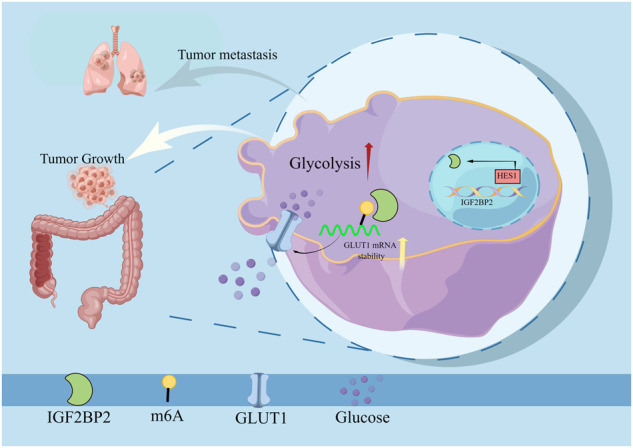
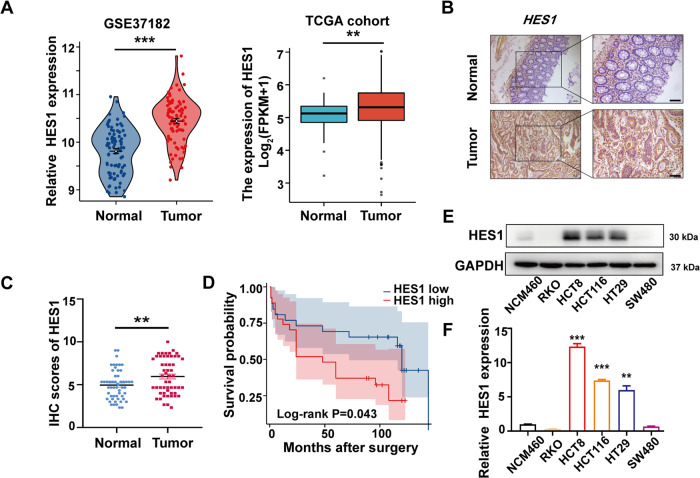
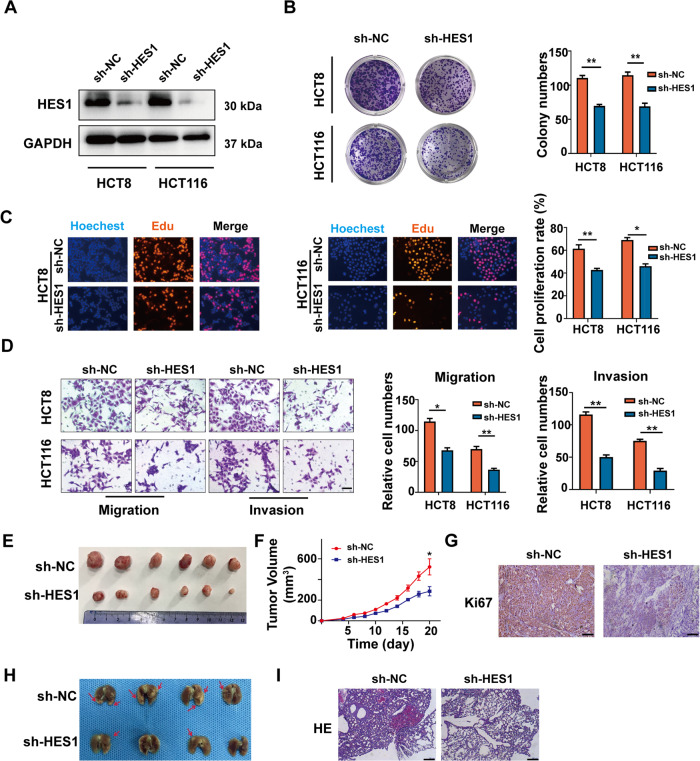
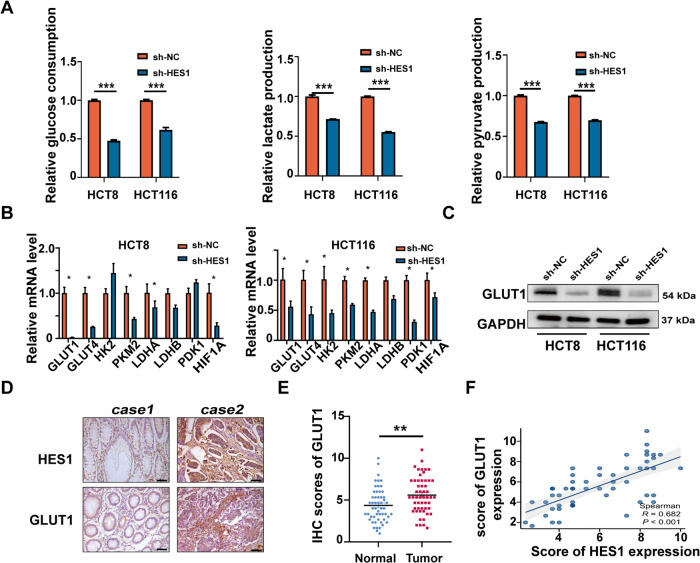
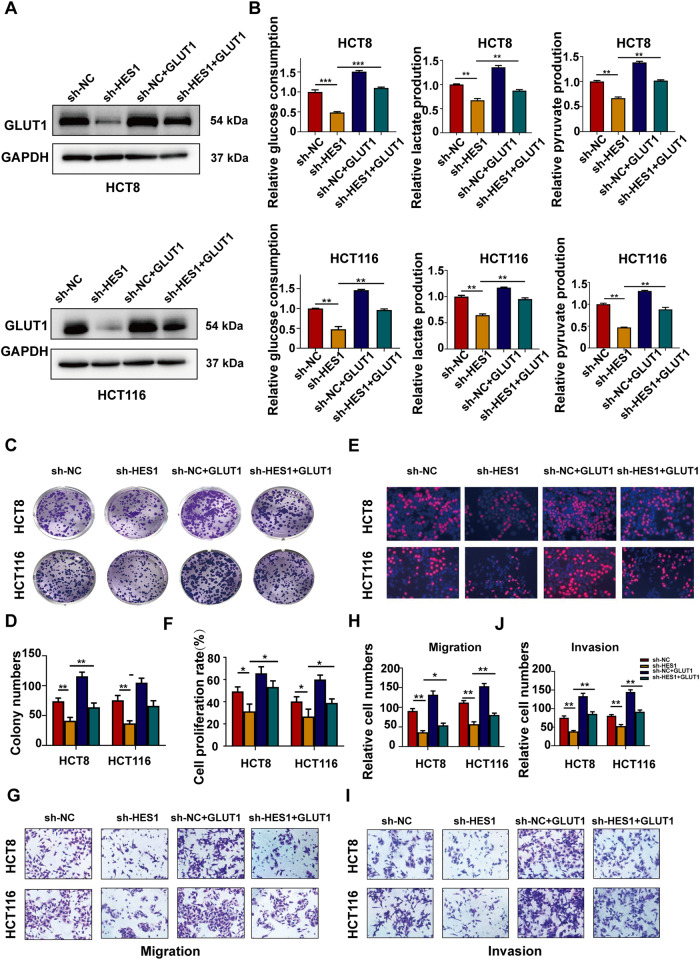
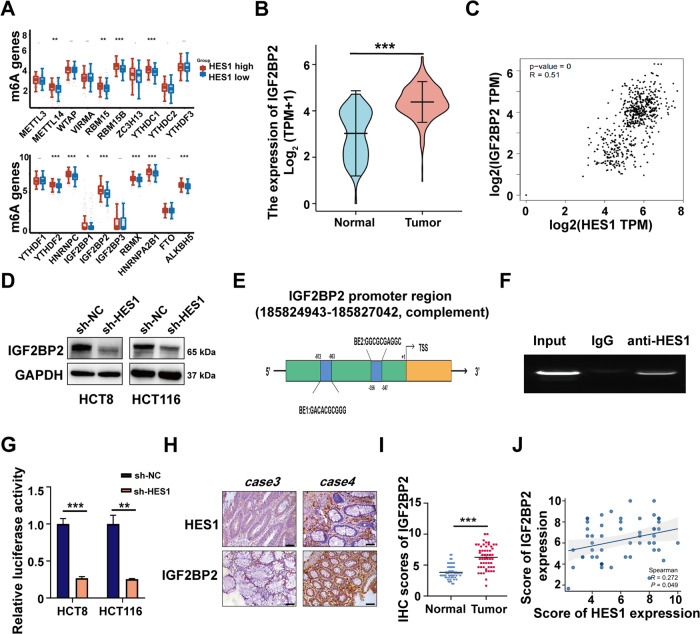
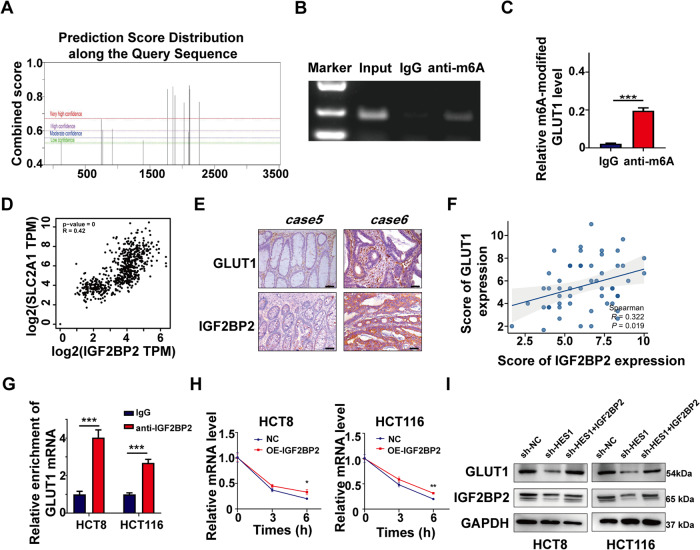
Aerobic glycolysis has been shown to play a key role in tumor cell proliferation and metastasis. However, how it is directly regulated is largely unknown. Here, we found that HES1 expression was significantly higher in CRC tissues than that in adjacent normal tissues. Moreover, high HES1 expression is associated with poor survival in CRC patients. HES1 knockdown markedly inhibited cell growth and metastasis both in vitro and in vivo. Additionally, silencing of HES1 suppressed aerobic glycolysis of CRC cells. Mechanistic studies revealed that HES1 knockdown decreased the expression of GLUT1, a key gene of aerobic glycolysis, in CRC cells. GLUT1 overexpression abolished the effects of HES1 knockdown on cell aerobic glycolysis, proliferation, migration and invasion. ChIP-PCR and dual-luciferase reporter gene assay showed that HES1 directly bound the promoter of IGF2BP2 and promoted IGF2BP2 expression. Furthermore, our data indicated that IGF2BP2 recognized and bound the m 6 A site in the GLUT1 mRNA and enhanced its stability. Taken together, our findings suggest that HES1 has a significant promotion effect on CRC aerobic glycolysis and progression by enhancing the stability of m 6 A-modified GLUT1 mRNA in an IGF2BP2-dependent manner, which may become a viable therapeutic target for the treatment of CRC in humans.
Overview
The claims and statistics of this paper haven’t been checked yet.
Free: it reads the open-access text and checks the first 5 claims that cite a source we can check. Create a free account to check every claim.
Integrity signals
Registry
Cites
Statistics
Figures
Verification
Claims the paper makes
The claims and statistics of this paper haven’t been checked yet.
Free: it reads the open-access text and checks the first 5 claims that cite a source we can check. Create a free account to check every claim.
Claims other papers make about this one
Each is checked against this paper’s own text: does it say what the citing paper says it does?
The cited source says what the claim attributes to it.
In the citing paper
“HES1 acts as an upstream regulator of IGF2BP2 in CRC by directly binding to its promoter and increasing IGF2BP2 mRNA levels.”
From IMPlications of IMP2 in RNA Biology and Disease (2025) · cites this paper as [95]
Self-check
Percentages, sums and reported differences re-computed from the paper’s own numbers.
The self-check needs the paper’s full text.
Citations
Cites
Cancer statistics in China and United States, 2022: profiles, trends, and determinants
Xia, C., Dong, X., Li, H., Cao, M., Sun, D., He, S., Yang, F., Yan, X., Zhang, S., Li, N., et al. (2022) · Chinese Medical Journal · doi:10.1097/cm9.0000000000002108 · Cited by 3,402
Self-citationAerobic glycolysis: Meeting the metabolic requirements of cell proliferation
Lunt, S. Y., & Vander Heiden, M. G. (2011) · Annual Review of Cell and Developmental Biology · doi:10.1146/annurev-cellbio-092910-154237 · Cited by 3,057 · cited 1×
“Ample evidence indicated that abnormal glycolysis levels promote cancer cell proliferation and metastasis [11], but the molecular mechanisms modulating aerobic glycolysis have not been elucidated.”
BackgroundMETTL3 facilitates tumor progression via an m6A-IGF2BP2-dependent mechanism in colorectal carcinoma
Li, T., Hu, P.-S., Zuo, Z., Lin, J.-F., Li, X., Wu, Q.-N., Chen, Z.-H., Zeng, Z.-L., Wang, F., Zheng, J., et al. (2019) · Molecular Cancer · doi:10.1186/s12943-019-1038-7 · Cited by 799
Emerging roles and the regulation of aerobic glycolysis in hepatocellular carcinoma
Feng, J., Li, J., Wu, L., Yu, Q., Ji, J., Wu, J., Dai, W., & Guo, C. (2020) · Journal of Experimental & Clinical Cancer Research · doi:10.1186/s13046-020-01629-4 · Cited by 699
Self-citationIGF2BP2 regulates DANCR by serving as an N6-methyladenosine reader
Hu, X., Peng, W.-X., Zhou, H., Jiang, J., Zhou, X., Huang, D., Mo, Y.-Y., & Yang, L. (2020) · Cell Death & Differentiation · doi:10.1038/s41418-019-0461-z · Cited by 363
Weng, H., Huang, F., Yu, Z., Chen, Z., Prince, E., Kang, Y., Zhou, K., Li, W., Hu, J., Fu, C., et al. (2022) · Cancer Cell · doi:10.1016/j.ccell.2022.10.004 · Cited by 336
Self-citationReview of aerobic glycolysis and its key enzymes – new targets for lung cancer therapy
Li, X., Gu, J., & Zhou, Q. (2015) · Thoracic Cancer · doi:10.1111/1759-7714.12148 · Cited by 331
B7-H3 promotes aerobic glycolysis and chemoresistance in colorectal cancer cells by regulating HK2
Shi, T., Ma, Y., Cao, L., Zhan, S., Xu, Y., Fu, F., Liu, C., Zhang, G., Wang, Z., Wang, R., et al. (2019) · Cell Death & Disease · doi:10.1038/s41419-019-1549-6 · Cited by 228
Self-citationThe Warburg metabolism fuels tumor metastasis
Lu, J. (2019) · Cancer and Metastasis Reviews · doi:10.1007/s10555-019-09794-5 · Cited by 218
Ganapathy-Kanniappan, S. (2018) · Critical Reviews in Biochemistry and Molecular Biology · doi:10.1080/10409238.2018.1556578 · Cited by 216
Cited by
Pang, B., & Wu, H. (2025) · Cell Death Discovery · doi:10.1038/s41420-025-02623-5 · Cited by 79
IGF2BP2: an m6A reader that affects cellular function and disease progression
Liu, S., Liao, S., He, J., Zhou, Y., & He, Q. (2025) · Cellular & Molecular Biology Letters · doi:10.1186/s11658-025-00723-9 · Cited by 52
Liu, S., Ma, Q., Zeng, C., Li, H., Su, J., Song, Z., Yan, R., Zhao, Z., Tian, S., & Huang, W. (2025) · Biomarker Research · doi:10.1186/s40364-025-00824-9 · Cited by 25
Li, D., Hu, S., Ye, J., Zhai, C., Liu, J., Wang, Z., Zhou, X., Chen, L., & Zhou, F. (2024) · International Journal of Molecular Sciences · doi:10.3390/ijms252212150 · Cited by 23
Wang, J., He, Y., Zhu, X., Zhu, J., Deng, Z., Zhang, H., Chen, Y., Zhang, G., Shi, T., & Chen, W. (2025) · Advanced Science · doi:10.1002/advs.202409419 · Cited by 21
Self-citationZhu, X., & Zhang, P. (2024) · Journal of Translational Medicine · doi:10.1186/s12967-024-05716-4 · Cited by 19
Self-citationDisrupting Notch signaling related HES1 in myeloid cells reinvigorates antitumor T cell responses
Kim, M. S., Kang, H.-G., Baek, J.-H., Cho, M.-G., Chung, E. J., Kim, S., Chung, J., & Chun, K. (2024) · Experimental Hematology and Oncology · doi:10.1186/s40164-024-00588-2 · Cited by 19
Peptide Drug: Design and Clinical Applications
Han, Y., Zhang, Y., Han, L., Ma, Z., & Wang, Y. (2025) · MedComm · doi:10.1002/mco2.70287 · Cited by 13
Multifaceted roles of insulin‑like growth factor 2 mRNA binding protein 2 in human cancer (Review)
Shen, J., & Ding, Y. (2025) · Molecular Medicine Reports · doi:10.3892/mmr.2025.13441 · Cited by 12
Hes1 in malignant tumors: from molecular mechanism to therapeutic potential
Zhang, L., Zhang, Q., Guo, C., Ru, Z., Yang, Z., Geng, Y., Yang, J., Zhang, D.-G., Yang, Z., & Huang, S. (2025) · Frontiers in Immunology · doi:10.3389/fimmu.2025.1585624 · Cited by 11
Li, L., Zhang, R., & Li, Y. (2025) · BMC Cancer · doi:10.1186/s12885-025-13532-2 · Cited by 8
Exploring the Link Between Noncoding RNAs and Glycolysis in Colorectal Cancer
Xu, L., Shen, Y., Zhang, C., Shi, T., & Sheng, X. (2025) · Journal of Cellular and Molecular Medicine · doi:10.1111/jcmm.70443 · Cited by 8
Self-citationH2S-activated near-infrared fluorescent probe for detecting colon cancer and rapid fecal analysis
Yang, K., Zheng, B., Wu, F., Zhou, B., Li, L., & Xiong, H. (2025) · Chinese Chemical Letters · doi:10.1016/j.cclet.2025.111235 · Cited by 8
Self-citationHES1 in cancer: a key player in tumorigenesis and its prognostic significance
Magesh, V., Sekar, R., Alzahrani, A. M., Balasubramanian, R., Abdelsalam, S. A., & Rajendran, P. (2025) · Molecular Genetics and Genomics · doi:10.1007/s00438-025-02259-1 · Cited by 7
Sonkodi, B. (2025) · International Journal of Molecular Sciences · doi:10.3390/ijms26157160 · Cited by 7
Notch signaling pathway in cervical cancer: From molecular mechanism to therapeutic potential
Wang, J., Zhang, J., Wang, T., & Rong, C. (2025) · Cellular Signalling · doi:10.1016/j.cellsig.2025.112042 · Cited by 7
Self-citationThe role of m6A reader IGF2BPs in tumor metabolic reprogramming
Zhou, X., Li, G., Su, X., Wang, Y., Liu, L., Yang, C., Xu, Y., He, J., & Zhang, J. (2025) · Biochemical Pharmacology · doi:10.1016/j.bcp.2025.117452 · Cited by 6
Inhibition of DOCK1 suppresses Notch signalling pathway and impairs leukaemogenesis
Lin, M., Hsu, Y.-C., Chiu, H., Yao, C., Liu, C., Kao, C., Yuan, C., Hsu, C., Yang, Y., Hou, H., et al. (2025) · British Journal of Haematology · doi:10.1111/bjh.20140 · Cited by 5
Hidmi, O., Shatleh, D., Flayshman, S. O., Monin, J., & Aqeilan, R. I. (2026) · Science Advances · doi:10.1126/sciadv.aeb6379 · Cited by 5
Mechanisms of lipopolysaccharide-driven progression and metastasis of colorectal cancer
Zhang, M., & Liu, K. (2025) · International Journal of Biological Macromolecules · doi:10.1016/j.ijbiomac.2025.147856 · Cited by 5
IMPlications of IMP2 in RNA Biology and Disease
Das, J., Busia-Bourdain, O., Khan, K. M., & Wolfe, A. L. (2025) · International Journal of Molecular Sciences · doi:10.3390/ijms26062415 · Cited by 3
“HES1 knockdown reduces GLUT1 levels, aerobic glycolysis, and CRC proliferation, while IMP2 is required for HES1-mediated stabilization of m6A-modified GLUT1 mRNA, underscoring the importance of the HES1-IMP2 axis in CRC progression [95].”
Luo, X., Li, G., Chen, Y., & Li, T. (2025) · Immunology · doi:10.1111/imm.70039 · Cited by 3
Si, Y., Tian, B., Zhang, R., Xuan, M., Liu, K., Jiao, J., Han, S., Li, H., Hu, Y., Zhao, H., et al. (2025) · World Journal of Gastroenterology · doi:10.3748/wjg.v31.i46.111631 · Cited by 3
Self-citationKong, F., Feng, J., Shan, H., Zhu, Y., & Zhu, L.-J. (2026) · Experimental Biology and Medicine · doi:10.3389/ebm.2025.10776 · Cited by 3
Zhu, Y., Zhang, J., Zhao, X., Guo, M., Chen, C., Zhou, Y., & Xu, L. (2025) · Pharmacological Research · doi:10.1016/j.phrs.2025.107822 · Cited by 3
Wen, J., Liang, Y., Mo, L., Sun, W., Qin, Y., Yue, H., & Zhu, H. (2025) · Ecotoxicology and Environmental Safety · doi:10.1016/j.ecoenv.2025.119504 · Cited by 2
Du, J., Li, L., Chen, B., Chen, Y., Wang, Q., & Ma, J. (2025) · Cellular Signalling · doi:10.1016/j.cellsig.2025.112234 · Cited by 1
Majumdar, N., Pokharel, B. R., Williams, F., Rajput, S., Cook, P., & Akula, S. M. (2026) · Journal of Translational Medicine · doi:10.1186/s12967-026-07922-8 · Cited by 1
miR‑223‑3p promotes microglial lactylation and M1 polarization via the FBXW7/Notch1/Hes1/SIRT1 axis
Wang, X., Song, L., Wang, J., Xie, Q., Wang, Y., Li, C., Wang, T., & Du, Y. (2026) · International Journal of Molecular Medicine · doi:10.3892/ijmm.2026.5849 · Cited by 1
Self-citationIGF2BP2-driven serine metabolism promotes the progression of thyroid carcinoma via m6A-PHGDH
zhang, Y., Xiao, Z., Dong, X., & Wang, Q. Z. A. G. (2026) · Journal of Translational Medicine · doi:10.1186/s12967-026-08316-6 · Cited by 1
Jin, L., Yang, W., Liu, G., & 程春松 (2026) · Letters in Drug Design & Discovery · doi:10.1016/j.lddd.2026.100440 · Cited by 1
Cheung, A. H. K., Wong, K. Y., Li, G. Y.-H., Xie, F., Wu, Q., Yuen, T. T. H., Hui, P. L., Huang, P., Liu, X. Z., Chen, B., et al. (2026) · Journal of Experimental & Clinical Cancer Research · doi:10.1186/s13046-026-03771-x · Cited by 1
Self-citationYun, W., Mao, C., & Yuan, Y. (2025) · Journal of Bioenergetics and Biomembranes · doi:10.1007/s10863-025-10066-x · Cited by 1
Single-cell transcriptomics reveals a conserved embryonic progenitor in different human cancersPreprint
Khozyainova, A. A., Subrakova, V. G., Menyailo, M. E., Жигалина, Д. И., Kireeva, T. N., Galiakberova, A. A., Berestovoy, M. A., Kopantseva, E., Korobeynikova, A. A., Dashinimaev, E. B., et al. (2025) · bioRxiv (Cold Spring Harbor Laboratory) · doi:10.64898/2025.12.11.693590
Liu, Z., Li, J., Meng, K., Su, Y., Zhang, Y., & Xiu, J. (2026) · International Journal of Molecular Sciences · doi:10.3390/ijms27219803
Self-citationGarcía-Valdeavero, O. M., González‐Flores, E., Ortiz, R., Jiménez-López, J., Jiménez‐Luna, C., Caba, O., Prados, J., & Melguizo, C. (2026) · Gastroenterology report · doi:10.1093/gastro/goag012
Glycolytic Enzymes Are Part of an Oncogenic Network in AML
Nagel, S., Meyer, C., & Pommerenke, C. (2026) · Cells · doi:10.3390/cells15060569
Function and regulatory mechanism of RNA-binding protein IGF2BP2 in obesity and cancers
Yi, R., Wu, R., & Jiang, Q. (2026) · Molecular Biology Reports · doi:10.1007/s11033-026-11740-y
Yun, J., Wang, X., & Hu, H. (2026) · European journal of medical research · doi:10.1186/s40001-026-04425-6
Targeting colorectal cancer and T‑cell metabolism for the treatment of colorectal cancer (Review)
Yu, Q., Luan, P., Liang, J., & Wang, L. (2026) · Oncology Reports · doi:10.3892/or.2026.9147
Vastrad, B. M., Patil, S., & Vastrad, C. M. (2026) · Research Square · doi:10.21203/rs.3.rs-10369268/v1
Glucose Transporter 1 in Health and Disease
Tai, Y., Chen, Z., Zhu, Y. C., & Han, W. (2026) · MedComm · doi:10.1002/mco2.70874
Wiseman, L. (2026) · Repository@Hull (Worktribe) (University of Hull)
Zhao, L., Yin, Z., Ji, C., Wu, Y., Gao, H., & Yuan, H. (2026) · Frontiers in Immunology · doi:10.3389/fimmu.2026.1911067
Metabolism in Tumor: Mechanisms and Therapeutic Perspectives
Cheng, J.-C., Hu, Y., Huang, X.-C., Jiang, S., Wang, J., Zhao, Y., & Chen, S. (2026) · MedComm · doi:10.1002/mco2.70928 · Cited by 1
Self-citationChen, Y., Huang, L., Zhan, S., Huang, D., Lin, Y., & Chen, S. (2026) · The Tohoku Journal of Experimental Medicine · doi:10.1620/tjem.2026.j118
Metadata
- Authors
- Wang, J., Zhu, M., Zhu, J., Li, J., Zhu, X., Wang, K., Shen, K., Yang, K., Ni, X., Liu, X., Zhang, G., Xi, Q., Shi, T., & Chen, W.
- Affiliations
- Soochow University (CN)
- First Affiliated Hospital of Soochow University (CN)
- Corresponding author
- Xi, Qinhua
- Shi, Tongguo
- Chen, Weichang
- Venue
- Cell Death Discovery
- Published
- 2023-11-13
- Volume
- 9
- Issue
- 1
- Pages
- 411-411
- ISSN
- 2058-7716 (ISSN-L)
- PMC
- PMC10643658
- OpenAlex
- W4388638132
- Cited by
- 41
- References
- 39
- Citations by year
- 2026: 14 · 2025: 23 · 2024: 4
- FWCI
- 3.65
- Type
- journal article
- Language
- en
- Open access
- gold
- doi.org
- Licence
- cc-by
- creativecommons.org/licenses/by/4.0 (tdm)
- creativecommons.org/licenses/by/4.0 (vor)
- Locations
- Cell Death Discovery (publishedVersion, cc-by)
- Research Square (acceptedVersion, cc-by)
- PubMed Central (publishedVersion, cc-by)
- PubMed (publishedVersion)
- DOAJ (DOAJ: Directory of Open Access Journals) (submittedVersion, cc-by-sa)
- Funders
- Jiangsu Commission of Health
- National Natural Science Foundation of China (82073156, ZD2021050, 82270561)
- Government of Jiangsu Province
- Topics
- Life Sciences › Biochemistry, Genetics and Molecular Biology › Molecular Biology › RNA modifications and cancer
- Life Sciences › Biochemistry, Genetics and Molecular Biology › Cancer Research › Cancer, Hypoxia, and Metabolism
- Life Sciences › Biochemistry, Genetics and Molecular Biology › Molecular Biology › Metabolism, Diabetes, and Cancer
- Keywords
- Hes1, colorectal cancer, aerobic glycolysis, GLUT1, IGF2BP2, m6A RNA methylation, mRNA stability, tumor progression, metastasis, tumor cell proliferation, transcriptional regulation, therapeutic target
About these checks
Registry, retraction, Cites and statistics results are computed, not judged, with one exception: a printed reference that no index lists is read once by a model before it counts as a citation error. Claims are extracted by a model and kept only when their quote appears verbatim in the text; each cited source is then checked, with a model’s help, for whether it says what the claim relies on. Those verdicts can be wrong — read the claim’s quote and the cited source before relying on one.
Statistics and arithmetic are recomputed, not judged.
Confidence bands are shown only for fields calibrated on our annotated test set. None is calibrated yet, so no band is shown.
What counts as a claim ›How we measure confidence ›How we check this ›
Are you an author, or do you see a problem with this page? Request a review
Data sources
Bibliographic data: Semantic Scholar, OpenAlex, Crossref.
Contains information from the Semantic Scholar Academic Graph Datasets, made available under the ODC Attribution License (ODC-BY 1.0).
Semantic Scholar’s data is described in: Kinney, R., et al. (2023). The Semantic Scholar Open Data Platform. arXiv:2301.10140.
