

Variants in PRKAR1B cause a neurodevelopmental disorder with autism spectrum disorder, apraxia, and insensitivity to pain
Published version of a preprint
The DOI matches its Crossref record; 13 of the 13 references it cites were found in a registry or an index.
Overview
The claims and statistics of this paper haven’t been checked yet.
Free: it reads the open-access text and checks the first 5 claims that cite a source we can check. Create a free account to check every claim.
Integrity signals
Registry
Cites
Statistics
Figures
Verification
Claims the paper makes
The claims and statistics of this paper haven’t been checked yet.
Free: it reads the open-access text and checks the first 5 claims that cite a source we can check. Create a free account to check every claim.
Claims other papers make about this one
Each is checked against this paper’s own text: does it say what the citing paper says it does?
In the citing paper
“Several reports have documented mutations in other pathway components, including PRKAR1B, a mutation thought to disrupt catalytic or AKAP binding, as well as gain-of-function mutations in ADCY5 (Fig. 7A; Supplemental Table 2).”
From Gαs–Protein Kinase A (PKA) Pathway Signalopathies: The Emerging Genetic Landscape and Therapeutic Potential of Human Diseases Driven by Aberrant Gαs-PKA Signaling (2021) · cites this paper as Marbach et al., 2021
Self-check
Percentages, sums and reported differences re-computed from the paper’s own numbers.
The self-check needs the paper’s full text.
Citations
Cites
CADD: predicting the deleteriousness of variants throughout the human genome
Rentzsch, P., Witten, D., Cooper, G. M., Shendure, J., & Kircher, M. (2019) · Nucleic Acids Research · doi:10.1093/nar/gky1016 · Cited by 3,534
An atlas of the protein-coding genes in the human, pig, and mouse brain
Sjöstedt, E., Zhong, W., Fagerberg, L., Karlsson, M., Mitsios, N., Adori, C., Oksvold, P., Edfors, F., Limiszewska, A., Hikmet, F., et al. (2020) · Science · doi:10.1126/science.aay5947 · Cited by 1,151 · cited 1×
“The subunit RIβ is primarily expressed in the brain,(4,5) with the highest levels of expression in the cerebral cortex and hypothalamus.(6) The first functional study of R1β involving R1β-deficient mice was completed 25 years ago, with mice deficient of the murine ortholog of R1β showing altered hippocampal long-term…”
Regulation of histone acetylation during memory formation in the hippocampus
Levenson, J. M., O'Riordan, K. J., Brown, K. D., Trinh, M. A., Molfese, D. L., & Sweatt, J. D. (2004) · Journal of Biological Chemistry · doi:10.1074/jbc.m402229200 · Cited by 1,131 · cited 1×
“As the cAMP/PKA/CREB cascade is instrumental for the transcription of memory-associated genes and long-term memory formation, 9,30 further studies might demonstrate functional impacts of PRKAR1B variants by measuring CREBP phosphorylation and expression of target genes in human IPSC-derived neurons…”
Evidence for 28 genetic disorders discovered by combining healthcare and research data
Kaplanis, J., Samocha, K. E., Wiel, L., Zhang, Z., Arvai, K. J., Eberhardt, R. Y., Gallone, G., Lelieveld, S. H., Martin, H. C., McRae, J. F., et al. (2020) · Nature · doi:10.1038/s41586-020-2832-5 · Cited by 615 · cited 1×
“Another recent study found a significant enrichment of de novo missense variants in PRKAR1B in a large sample of 31,058 trio exomes of children with developmental disorders and their unaffected parents.(16) PRKAR1B is therefore a promising candidate gene for NDDs, including autism spectrum disorder (ASD),(17) although…”
Inherited and de novo genetic risk for autism impacts shared networks
Ruzzo, E. K., Pérez-Cano, L., Jung, J.-Y., Wang, L.-K., Kashef-Haghighi, D., Hartl, C., Singh, C., Xu, J., Hoekstra, J. N., Leventhal, O., et al. (2019) · Cell · doi:10.1016/j.cell.2019.07.015 · Cited by 457
Neurodevelopmental disease genes implicated by de novo mutation and copy number variation morbidity
Coe, B. P., Stessman, H. A. F., Sulovari, A., Geisheker, M. R., Bakken, T. E., Lake, A. M., Dougherty, J. D., Lein, E. S., Hormozdiari, F., Bernier, R. A., et al. (2019) · Nature Genetics · doi:10.1038/s41588-018-0288-4 · Cited by 330 · cited 1×
“An analysis of expression profiles and protein–protein interaction(14) of 253 NDD candidate genes based on the same data set positioned PRKAR1B among a network of genes related to c-Jun N-terminal kinase and mitogen-activated protein kinase cascades, which contained several previously identified NDD candidate genes.(1…”
Epigenomic annotation of enhancers predicts transcriptional regulators of human neural crest
Rada-Iglesias, A., Bajpai, R., Prescott, S., Brugmann, S. A., Swigut, T., & Wysocka, J. (2012) · Cell stem cell · doi:10.1016/j.stem.2012.07.006 · Cited by 314 · cited 2×
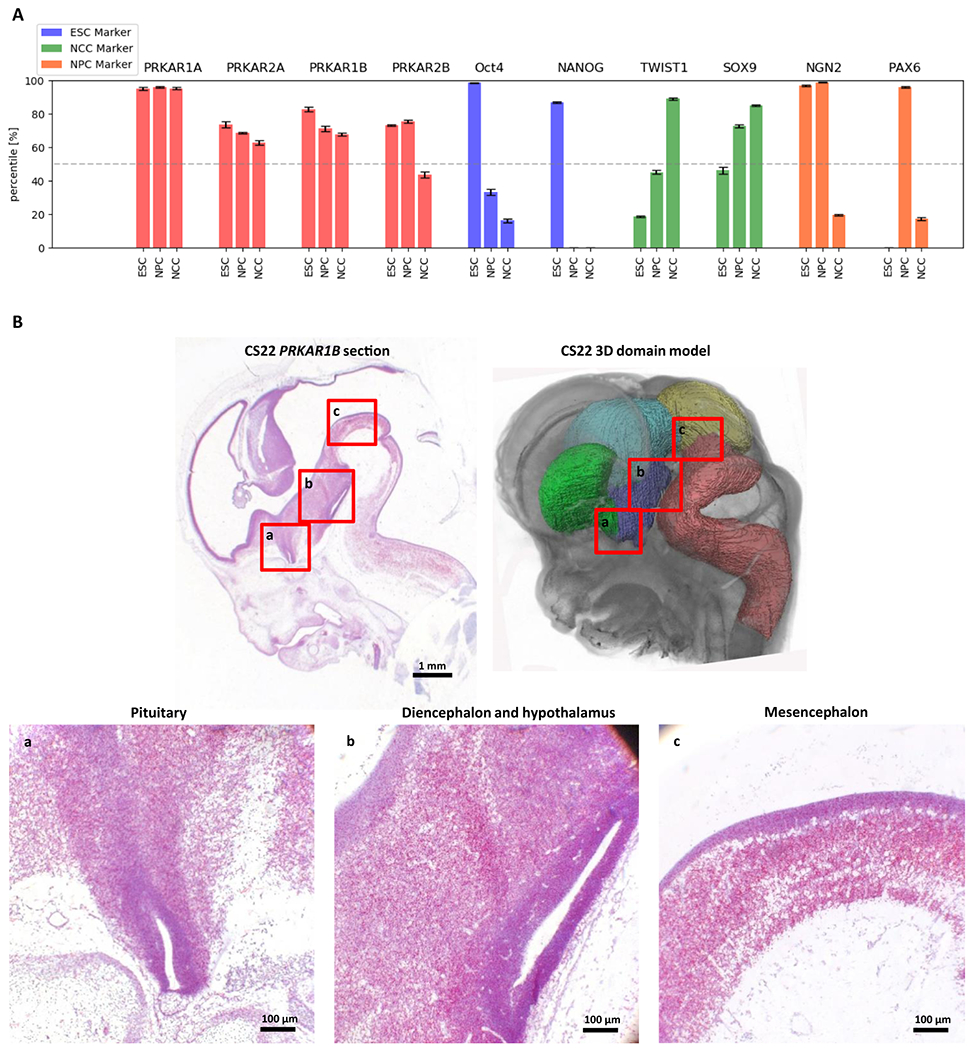
“23–25 Additionally, an in situ hybridization assay to detect PRKAR1B messenger RNA (mRNA) (RNAscope) revealed high PRKAR1B expression in the pituitary, diencephalon, mesencephalon, and hypothalamus in human embryos at Carnegie stage 22 (Fig.”
Distinct patterns of cAMP-dependent protein kinase gene expression in mouse brain
Cadd, G., & Stanley McKnight, G. (1989) · Neuron · doi:10.1016/0896-6273(89)90116-5 · Cited by 255
The discovery of integrated gene networks for autism and related disorders
Hormozdiari, F., Penn, O., Borenstein, E., & Eichler, E. E. (2015) · Genome Research · doi:10.1101/gr.178855.114 · Cited by 249
Evolution of the eukaryotic protein kinases as dynamic molecular switches
Taylor, S. S., Keshwani, M. M., Steichen, J. M., & Kornev, A. P. (2012) · Philosophical Transactions of the Royal Society B: Biological Sciences · doi:10.1098/rstb.2012.0054 · Cited by 233
Research works printed but not linked: 17
- Soberg K & Skalhegg BS The molecular basis for specificity at the level of the protein kinase a catalytic subunit. Front. Endocrinol. (Lausanne). 9, 538 (2018). 30258407 PMC6143667
- Autenrieth K, Bendzunas NG, Bertinetti DD, FWPD, Herberg & EJPD, Kennedy Defining a-kinase anchoring protein (AKAP) specificity for the protein kinase A subunit RI (PKA-RI). Chembiochem. 17, 693– 697 (2016). 26611881 PMC4836982
- Uhlen M Proteomics. Tissue-based map of the human proteome. Science. 347, 1260419 (2015). 25613900
- Ilouz R Isoform-specific subcellular localization and function of protein kinase A identified by mosaic imaging of mouse brain. Elife. 6, e17681 (2017). 28079521 PMC5300705 · DOI · Paper page
- Kandel ER The molecular biology of memory: cAMP, PKA, CRE, CREB-1, CREB-2, and CPEB. Mol. Brain 5, 14 (2012). 22583753 PMC3514210
- Malmberg AB, Brandon EP, Idzerda RL, Liu H, McKnight GS & Basbaum AI Diminished inflammation and nociceptive pain with preservation of neuropathic pain in mice with a targeted mutation of the type I regulatory subunit of cAMP-dependent protein kinase. J. Neurosci 17, 7462– 7470 (1997). 9295392 PMC6573437
- Wong TH PRKAR1B mutation associated with a new neurodegenerative disorder with unique pathology. Brain. 137, 1361– 1373 (2014). 24722252
- Pottier C, Baker M, Dickson DW & Rademakers R PRKAR1B mutations are a rare cause of FUS negative neuronal intermediate filament inclusion disease. Brain. 138, e357 (2015). 25414037 PMC4614132
- Espiard S Activating PRKACB somatic mutation in cortisol-producing adenomas. JCI Insight. 3, e98296 (2018). PMC5931119 29669941 · DOI · Paper page
- Schernthaner-Reiter MH, Trivellin G & Stratakis CA Interaction of AIP with protein kinase A (cAMP-dependent protein kinase). Hum. Mol. Genet 27, 2604– 2613 (2018). 29726992 PMC6048987
- Drougat L Genomic and sequence variants of protein kinase A regulatory subunit type 1beta (PRKAR1B) in patients with adrenocortical disease and Cushing syndrome. Genet. Med 23, 174– 182 (2021). 32895490 PMC7796991 · DOI
- Nesterova M, Yokozaki H, McDuffie E & Cho-Chung YS Overexpression of RII beta regulatory subunit of protein kinase A in human colon carcinoma cell induces growth arrest and phenotypic changes that are abolished by site-directed mutation of RII beta. Eur. J. Biochem 235, 486– 494 (1996). 8654392
- Mavrakis M, Lippincott-Schwartz J, Stratakis CA & Bossis I Depletion of type IA regulatory subunit (RIalpha) of protein kinase A (PKA) in mammalian cells and tissues activates mTOR and causes autophagic deficiency. Hum. Mol. Genet 15, 2962– 2971 (2006). 16963469
- Zhang K Imbalance of excitatory/inhibitory neuron differentiation in neurodevelopmental disorders with an NR2F1 point mutation. Cell. Rep 31, 107521 (2020). 32320667
- Laugsch M Modeling the pathological long-range regulatory effects of human structural variation with patient-specific hiPSCs. Cell Stem Cell. 24, 736– 52.e712 (2019). 30982769
- Ilouz R Localization and quaternary structure of the PKA RIbeta holoenzyme. Proc. Natl. Acad. Sci. U.S.A 109, 12443– 12448 (2012). 22797896 PMC3411989
- Karczewski KJ The mutational constraint spectrum quantified from variation in 141,456 humans. Nature. 581, 434– 443 (2020). 32461654 PMC7334197
Cited by
Ramms, D. J., Raimondi, F., Arang, N., Herberg, F. W., Taylor, S. S., & Gutkind, J. S. (2021) · Pharmacological Reviews · doi:10.1124/pharmrev.120.000269 · Cited by 79
Metadata
- Authors
- Marbach, F., Stoyanov, G., Erger, F., Stratakis, C. A., Settas, N., London, E., Rosenfeld, J. A., Torti, E., Haldeman-Englert, C., Sklirou, E., Kessler, E., Ceulemans, S., Nelson, S. F., Martinez-Agosto, J. A., Palmer, C. G. S., Signer, R. H., Acosta, M. T., Adam, M., Adams, D. R., Agrawal, P. B., Alejandro, M. E., Alvey, J., Amendola, L., Andrews, A., Ashley, E. A., Azamian, M. S., Bacino, C. A., Bademci, G., Baker, E., Balasubramanyam, A., Baldridge, D., Bale, J., Bamshad, M., Barbouth, D., Bayrak-Toydemir, P., Beck, A., Beggs, A. H., Behrens, E., Bejerano, G., Bennett, J., Berg-Rood, B., Bernstein, J. A., Berry, G. T., Bican, A., Bivona, S., Blue, E., Bohnsack, J., Bonnenmann, C., Bonner, D., Botto, L., Boyd, B., Briere, L. C., Brokamp, E., Brown, G., Burke, E. A., Burrage, L. C., Butte, M. J., Byers, P., Byrd, W. E., Carey, J., Carrasquillo, O., Chang, T. C. P., Chanprasert, S., Chao, H.-T., Clark, G. D., Coakley, T. R., Cobban, L. A., Cogan, J. D., Coggins, M., Cole, F. S., Colley, H. A., Cooper, C. M., Cope, H., Craigen, W. J., Crouse, A. B., Cunningham, M., D’Souza, P., Dai, H., Dasari, S., Davis, J., Daya, J. G., Deardorff, M., Dell’Angelica, E. C., Dhar, S. U., Dipple, K., Doherty, D., Dorrani, N., Doss, A. L., Douine, E. D., Draper, D. D., Duncan, L., Earl, D., Eckstein, D. J., Emrick, L. T., Eng, C. M., Esteves, C., Falk, M., Fernandez, L., Ferreira, C., Fieg, E. L., Findley, L. C., Fisher, P. G., Fogel, B. L., Forghani, I., Fresard, L., Gahl, W. A., Glass, I., Gochuico, B., Godfrey, R. A., Golden-Grant, K., Goldman, A. M., Goldrich, M. P., Goldstein, D. B., Grajewski, A., Groden, C. A., Gutierrez, I., Hahn, S., Hamid, R., Hanchard, N. A., Hassey, K., Hayes, N., High, F., Hing, A., Hisama, F. M., Holm, I. A., Hom, J., Horike-Pyne, M., Huang, A., Huang, Y., Huryn, L., Isasi, R., Jamal, F., Jarvik, G. P., Jarvik, J., Jayadev, S., Karaviti, L., Kennedy, J., Kiley, D., Kohane, I. S., Kohler, J. N., Korrick, S., Kozuira, M., Krakow, D., Krasnewich, D. M., Kravets, E., Krier, J. B., LaMoure, G. L., Lalani, S. R., Lam, B., Lam, C., Lanpher, B. C., Lanza, I. R., Latham, L., LeBlanc, K., Lee, B. H., Lee, H., Levitt, R., Lewis, R. A., Lincoln, S. A., Liu, P., Liu, X. Z., Longo, N., Loo, S. K., Loscalzo, J., Maas, R. L., MacDowall, J., MacRae, C. A., Macnamara, E. F., Maduro, V. V., Majcherska, M. M., Mak, B. C., Malicdan, M. C. V., Mamounas, L. A., Manolio, T. A., Mao, R., Maravilla, K., Markello, T. C., Marom, R., Marth, G., Martin, B. A., Martin, M. G., Martinez-Agosto, J. A., Marwaha, S., McCauley, J., McConkie-Rosell, A., McCormack, C. E., McCray, A. T., McGee, E., Mefford, H., Merritt, J. L., Might, M., Mirzaa, G., Morava, E., Moretti, P. M., Moretti, P., Mosbrook-Davis, D., Mulvihill, J. J., Murdock, D. R., Nagy, A., Nakano-Okuno, M., Nath, A., Nelson, S. F., Newman, J. H., Nicholas, S. K., Nickerson, D., Nieves-Rodriguez, S., Novacic, D., Oglesbee, D., Orengo, J. P., Pace, L., Pak, S., Pallais, J. C., Palmer, C. G. S., Papp, J. C., Parker, N. H., Phillips, J. A., Posey, J. E., Potocki, L., Power, B., Pusey, B. N., Quinlan, A., Raja, A. N., Rao, D. A., Raskind, W., Renteria, G., Reuter, C. M., Rives, L., Robertson, A. K., Rodan, L. H., Rosenfeld, J. A., Rosenwasser, N., Rossignol, F., Ruzhnikov, M., Sacco, R., Sampson, J. B., Samson, S. L., Saporta, M., Schaechter, J., Schedl, T., Schoch, K., Scott, C. R., Scott, D. A., Shashi, V., Shin, J., Signer, R. H., Silverman, E. K., Sinsheimer, J. S., Sisco, K., Smith, E. C., Smith, K. S., Solem, E., Solnica-Krezel, L., Solomon, B., Spillmann, R. C., Stoler, J. M., Sullivan, J. A., Sullivan, K., Sun, A., Sutton, S., Sweetser, D. A., Sybert, V., Tabor, H. K., Tan, A. L. M., Tan, Q. K.-G., Tekin, M., Telischi, F., Thorson, W., Thurm, A., Tifft, C. J., Toro, C., Tran, A. A., Tucker, B. M., Urv, T. K., Vanderver, A., Velinder, M., Viskochil, D., Vogel, T. P., Wahl, C. E., Walker, M., Wallace, S., Walley, N. M., Walsh, C. A., Wambach, J., Wan, J., Wang, L.-K., Wangler, M. F., Ward, P. A., Wegner, D., Wener, M., Wenger, T., Perry, K. W., Westerfield, M., Wheeler, M. T., Whitlock, J., Wolfe, L. A., Woods, J. D., Yamamoto, S., Yang, J., Yousef, M., Zastrow, D. B., Zein, W., Zhao, C., Zuchner, S., Andrews, M. V., Grange, D. K., Willaert, R., Person, R., Telegrafi, A., Sievers, A., Laugsch, M., Theiß, S., Cheng, Y., Lichtarge, O., Katsonis, P., Stocco, A., & Schaaf, C. P.
- Venue
- Genetics in Medicine
- Publisher
- Elsevier BV
- Published
- 2021-08
- Volume
- 23
- Issue
- 8
- Pages
- 1465-1473
- ISSN
- 1098-3600
- PMC
- PMC8354857
- Cited by
- 29
- References
- 13
- Language
- en
- Licence
- www.elsevier.com/tdm/userlicense/1.0/ (tdm)
- www.elsevier.com/legal/tdmrep-license (tdm)
- creativecommons.org/licenses/by/4.0/ (vor, 115 d)
About these checks
Registry, retraction, Cites and statistics results are computed, not judged, with one exception: a printed reference that no index lists is read once by a model before it counts as a citation error. Claims are extracted by a model and kept only when their quote appears verbatim in the text; each cited source is then checked, with a model’s help, for whether it says what the claim relies on. Those verdicts can be wrong — read the claim’s quote and the cited source before relying on one.
Statistics and arithmetic are recomputed, not judged.
Confidence bands are shown only for fields calibrated on our annotated test set. None is calibrated yet, so no band is shown.
What counts as a claim ›How we measure confidence ›How we check this ›
Are you an author, or do you see a problem with this page? Request a review
Data sources
Bibliographic data: Semantic Scholar, OpenAlex, Crossref.
Contains information from the Semantic Scholar Academic Graph Datasets, made available under the ODC Attribution License (ODC-BY 1.0).
Semantic Scholar’s data is described in: Kinney, R., et al. (2023). The Semantic Scholar Open Data Platform. arXiv:2301.10140.
