

The DOI matches its Crossref record; 57 of the 57 references it cites were found in a registry or an index.
HDAC6 inhibition reverses axonal transport defects in motor neurons derived from FUS-ALS patients
Open accessAbstract
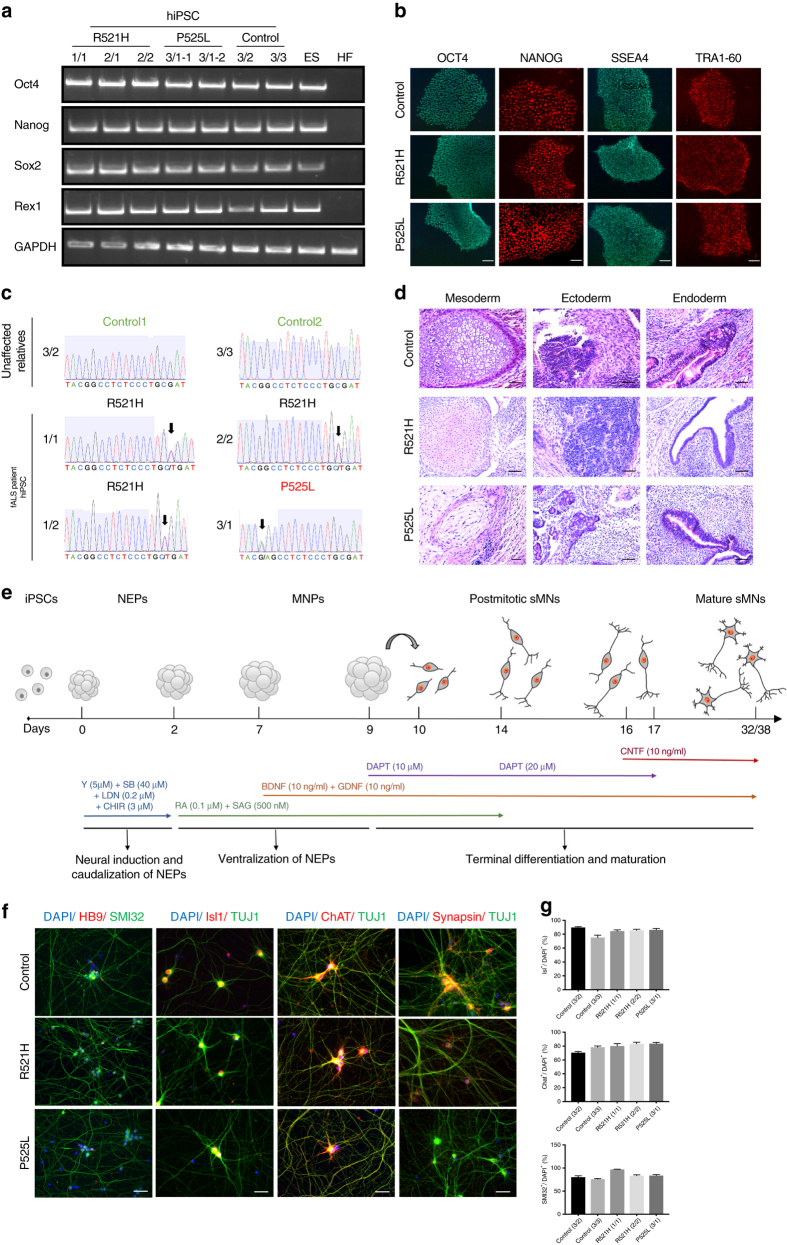
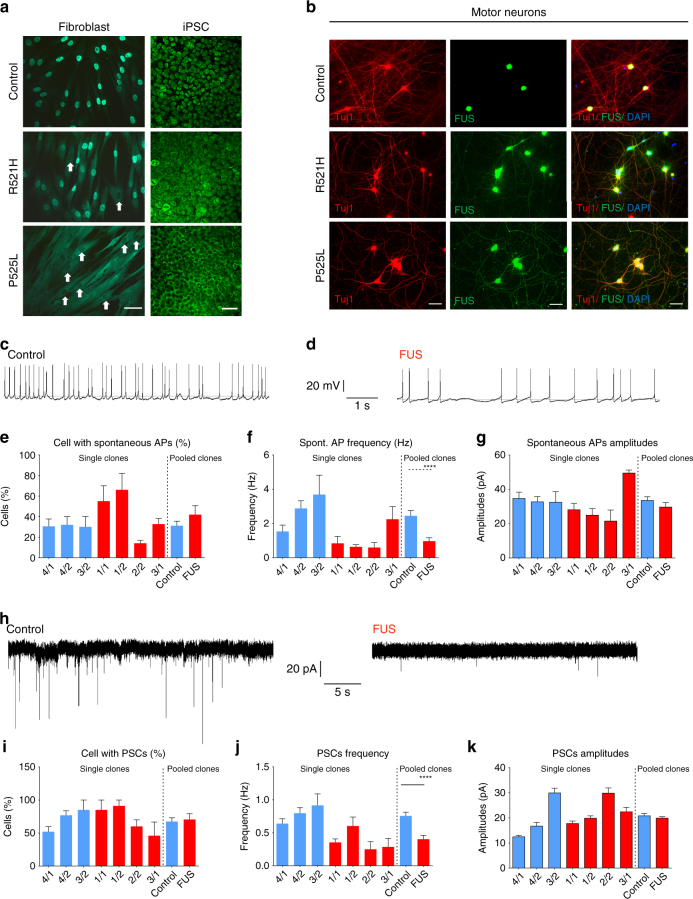
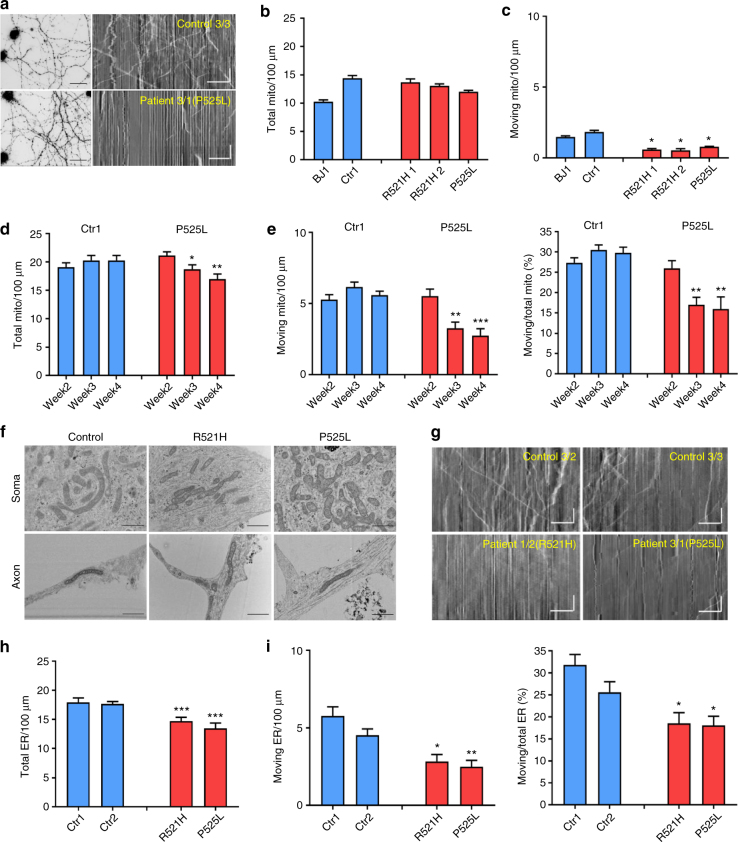
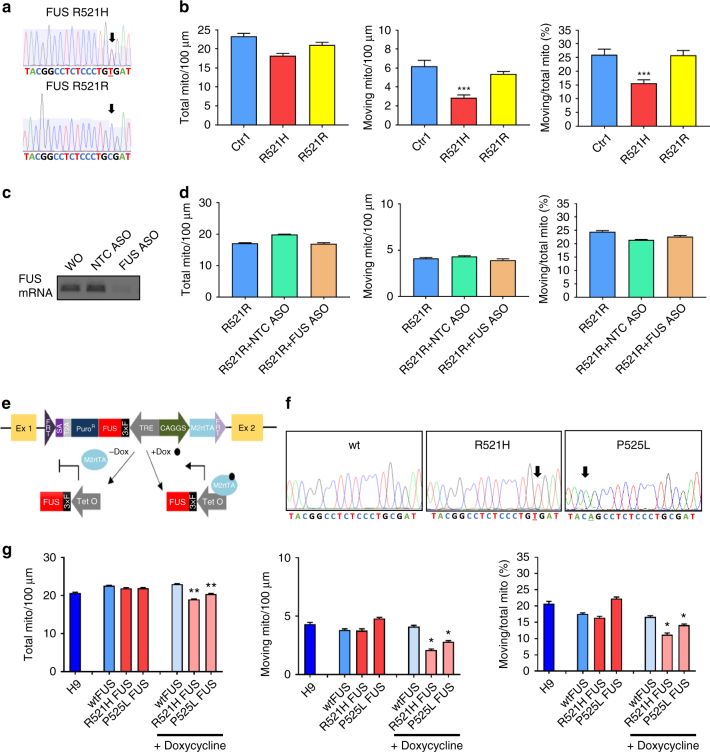
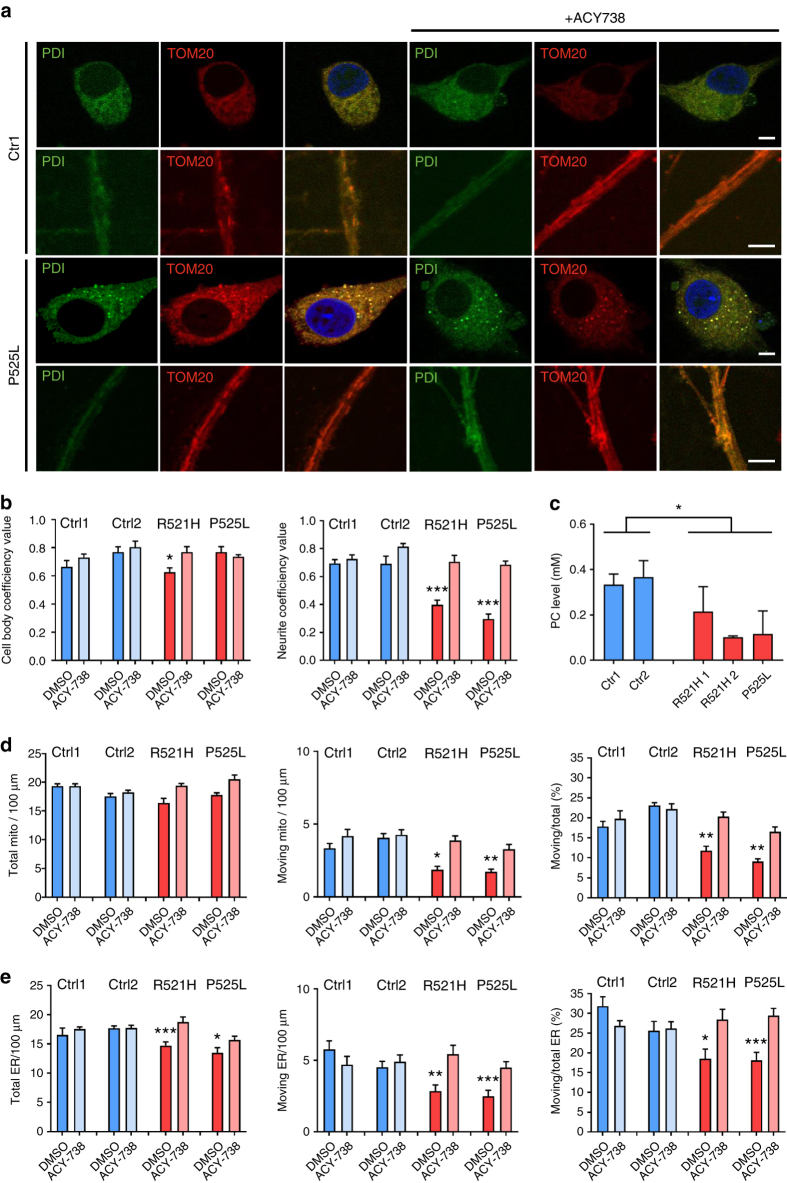
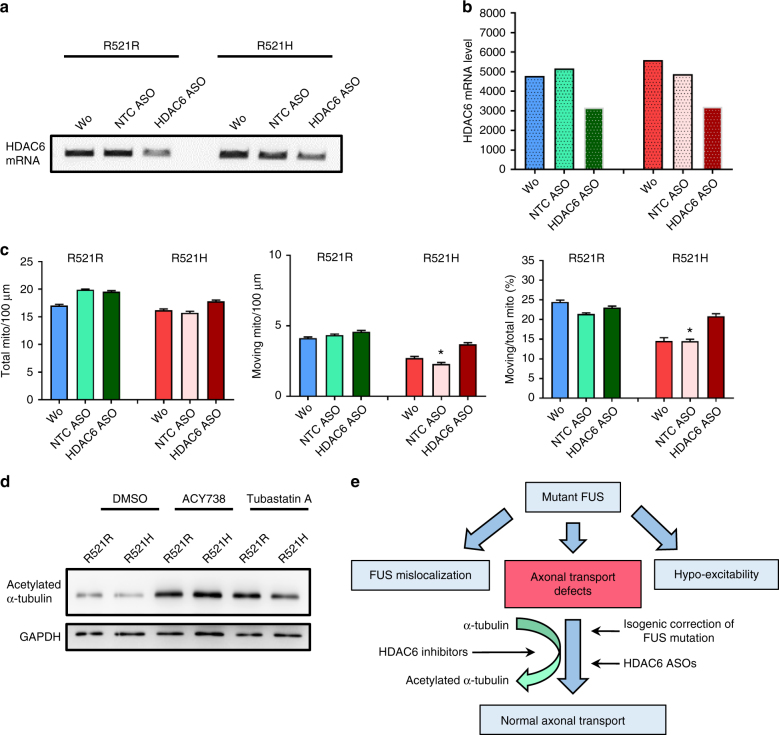
Amyotrophic lateral sclerosis (ALS) is a rapidly progressive neurodegenerative disorder due to selective loss of motor neurons (MNs). Mutations in the fused in sarcoma (FUS) gene can cause both juvenile and late onset ALS. We generated and characterized induced pluripotent stem cells (iPSCs) from ALS patients with different FUS mutations, as well as from healthy controls. Patient-derived MNs show typical cytoplasmic FUS pathology, hypoexcitability, as well as progressive axonal transport defects. Axonal transport defects are rescued by CRISPR/Cas9-mediated genetic correction of the FUS mutation in patient-derived iPSCs. Moreover, these defects are reproduced by expressing mutant FUS in human embryonic stem cells (hESCs), whereas knockdown of endogenous FUS has no effect, confirming that these pathological changes are mutant FUS dependent. Pharmacological inhibition as well as genetic silencing of histone deacetylase 6 (HDAC6) increase α-tubulin acetylation, endoplasmic reticulum (ER)–mitochondrial overlay, and restore the axonal transport defects in patient-derived MNs.
Overview
The claims and statistics of this paper haven’t been checked yet.
Run the check — free, no account needed. It reads the open-access text and checks the sources it cites.
Integrity signals
Registry
Cites
Statistics
Figures
Verification
Claims the paper makes
The claims and statistics of this paper haven’t been checked yet.
Run the check — free, no account needed. It reads the open-access text and checks the sources it cites.
Claims other papers make about this one
Each is checked against this paper’s own text: does it say what the citing paper says it does?
In the citing paper
“Notably, genetic knockdown and pharmacological inhibition of HDACs have been shown to ameliorate ALS pathology in different ALS models.341–344”
From Microbiota–gut–brain axis and its therapeutic applications in neurodegenerative diseases (2024) · cites this paper as [342]
Self-check
Percentages, sums and reported differences re-computed from the paper’s own numbers.
The self-check needs the paper’s full text.
Citations
Cites
Mutations in FUS, an RNA Processing Protein, Cause Familial Amyotrophic Lateral Sclerosis Type 6
Vance, C. A., Rogelj, B., Hortobágyi, T., Vos, K. J. D., Nishimura, A. L., Sreedharan, J., Hu, X., Smith, B. N., Ruddy, D., Wright, P. D., et al. (2009) · Science · doi:10.1126/science.1165942 · Cited by 2,625
Mutations in the FUS/TLS Gene on Chromosome 16 Cause Familial Amyotrophic Lateral Sclerosis
Kwiatkowski, T. J., Bosco, D. A., LeClerc, A. L., Tamrazian, E., Vanderburg, C. R., Russ, C., Davis, A., Gilchrist, J. M., Kasarskis, E. J., Munsat, T. L., et al. (2009) · Science · doi:10.1126/science.1166066 · Cited by 2,624
HDAC6 is a microtubule-associated deacetylase
Hubbert, C., Guardiola, A., Shao, R., Kawaguchi, Y., Ito, A., Nixon, A., Yoshida, M., Wang, X.-F., & Yao, T.-P. (2002) · Nature · doi:10.1038/417455a · Cited by 2,403
A Controlled Trial of Riluzole in Amyotrophic Lateral Sclerosis
Bensimon, G., Lacomblez, L., & Meininger, V. (1994) · New England Journal of Medicine · doi:10.1056/nejm199403033300901 · Cited by 2,239
State of play in amyotrophic lateral sclerosis genetics
Renton, A. E., Chiò, A., & Traynor, B. J. (2013) · Nature Neuroscience · doi:10.1038/nn.3584 · Cited by 1,626
Histone deacetylases and their inhibitors in cancer, neurological diseases and immune disorders
Falkenberg, K. J., & Johnstone, R. W. (2014) · Nature Reviews Drug Discovery · doi:10.1038/nrd4360 · Cited by 1,564
Amyotrophic lateral sclerosis is a distal axonopathy: evidence in mice and man
Fischer, L. R., Culver, D. G., Tennant, P., Davis, A. A., Wang, M.-S., Castellano-Sanchez, A. A., Khan, J., Polak, M. A., & Glass, J. D. (2004) · Experimental Neurology · doi:10.1016/j.expneurol.2003.10.004 · Cited by 1,383
An ER-Mitochondria Tethering Complex Revealed by a Synthetic Biology Screen
Kornmann, B., Currie, E., Collins, S. R., Schuldiner, M., Nunnari, J., Weissman, J. S., & Walter, P. (2009) · Science · doi:10.1126/science.1175088 · Cited by 1,275
Microtubule Acetylation Promotes Kinesin-1 Binding and Transport
Reed, N. A., Cai, D., Blasius, T. L., Jih, G. T., Meyhofer, E., Gaertig, J., & Verhey, K. J. (2006) · Current Biology · doi:10.1016/j.cub.2006.09.014 · Cited by 919
Rational Design and Simple Chemistry Yield a Superior, Neuroprotective HDAC6 Inhibitor, Tubastatin A
Butler, K. V., Kalin, J., Brochier, C., Vistoli, G., Langley, B., & Kozikowski, A. P. (2010) · Journal of the American Chemical Society · doi:10.1021/ja102758v · Cited by 801
Cited by
Sorted by citations
Microbiota–gut–brain axis and its therapeutic applications in neurodegenerative diseases
Loh, J. S., Mak, W. Q., Tan, L. K. S., Ng, C. X., Chan, H. H., Yeow, S. H., Foo, J. B., Ong, Y. S., How, C. W., & Khaw, K. Y. (2024) · Signal Transduction and Targeted Therapy · doi:10.1038/s41392-024-01743-1 · Cited by 1,193
The tubulin code and its role in controlling microtubule properties and functions
Janke, C., & Magiera, M. M. (2020) · Nature Reviews Molecular Cell Biology · doi:10.1038/s41580-020-0214-3 · Cited by 956
ALS Genetics, Mechanisms, and Therapeutics: Where Are We Now?
Mejzini, R., Flynn, L. L., Pitout, I. L., Fletcher, S., Wilton, S. D., & Akkari, P. A. (2019) · Frontiers in Neuroscience · doi:10.3389/fnins.2019.01310 · Cited by 803
Genome-Wide Analyses Identify KIF5A as a Novel ALS Gene
Nicolas, A., Kenna, K. P., Renton, A. E., Ticozzi, N., Faghri, F., Chia, R., Dominov, J. A., Kenna, B., Nalls, M. A., Keagle, P. J., et al. (2018) · Neuron · doi:10.1016/j.neuron.2018.02.027 · Cited by 686
Role of Tau as a Microtubule-Associated Protein: Structural and Functional Aspects
Barbier, P., Zejneli, O., Martinho, M., Lasorsa, A., Belle, V., Smet‐Nocca, C., Tsvetkov, P. O., Devred, F., & Landrieu, I. (2019) · Frontiers in Aging Neuroscience · doi:10.3389/fnagi.2019.00204 · Cited by 655
Metadata
- Authors
- Guo, W., Naujock, M., Fumagalli, L., Vandoorne, T., Baatsen, P., Boon, R., Ordovás, L., Patel, A., Welters, M., Vanwelden, T., Geens, N., Tricot, T., Benoy, V., Steyaert, J., Lefebvre-Omar, C., Boesmans, W., Jarpe, M., Sterneckert, J., Wegner, F., Petri, S., Bohl, D., Vanden Berghe, P., Robberecht, W., Van Damme, P., Verfaillie, C., & Van Den Bosch, L.
- Affiliations
- VIB-KU Leuven Center for Brain & Disease Research (BE)
- Boehringer Ingelheim (Germany) (DE)
- Leuven Stem Cell Institute (BE)
- Universidad de Zaragoza (ES)
- Centre National de la Recherche Scientifique (FR)
- KU Leuven (BE)
- Acetylon Pharmaceuticals (United States) (US)
- Center for Regenerative Therapies Dresden (DE)
- Medizinische Hochschule Hannover (DE)
- Universitair Ziekenhuis Leuven (BE)
- Corresponding author
- Verfaillie, Catherine
- ORCID
- Venue
- Nature Communications
- Published
- 2017-10-11
- Volume
- 8
- Issue
- 1
- Pages
- 861-861
- ISSN
- 2041-1723 (ISSN-L)
- PMC
- PMC5636840
- OpenAlex
- W2763212735
- Cited by
- 373
- References
- 57
- Citations by year
- 2026: 26 · 2025: 40 · 2024: 44 · 2023: 47 · 2022: 46 · 2021: 52 · 2020: 45 · 2019: 51 · 2018: 20 · 2017: 2
- FWCI
- 22.46
- Type
- journal article
- Language
- en
- Open access
- gold
- doi.org
- Locations
- Nature Communications (publishedVersion, cc-by)
- Europe PMC (PubMed Central) (publishedVersion, cc-by)
- PubMed Central (publishedVersion, cc-by)
- PubMed (publishedVersion)
- HAL (submittedVersion, cc-by)
- Lirias (KU Leuven) (submittedVersion, other-oa)
- RePEc: Research Papers in Economics (submittedVersion)
- DOAJ (DOAJ: Directory of Open Access Journals) (submittedVersion)
- DOAJ (DOAJ: Directory of Open Access Journals) (submittedVersion, cc-by-sa)
- Document Server@UHasselt (UHasselt) (submittedVersion, other-oa)
- Zaguan (University of Zaragoza Repository) (submittedVersion, cc-by)
- Funders
- Association Belge contre les Maladies Neuro-Musculaires
- EU Joint Programme – Neurodegenerative Disease Research
- E-Rare
- Agence Nationale de la Recherche (ANR-10-LABX73, ANR-13-JPRF-0003, ANR-13-JPRF-0004, ANR-10, ANR-10-LABX, ANR-10-LABX-0073, 10-LABX-73)
- Belgian Federal Science Policy Office (P7/16)
- Fonds Wetenschappelijk Onderzoek
- KU Leuven (KU Leuven (C1)
- China Scholarship Council
- Deutsche Gesellschaft für Muskelkranke
- Vlaamse regering
- FP7 Ideas: European Research Council (340429)
- Topics
- Health Sciences › Medicine › Clinical Neurology › Amyotrophic Lateral Sclerosis Research
- Life Sciences › Biochemistry, Genetics and Molecular Biology › Molecular Biology › Pluripotent Stem Cells Research
- Life Sciences › Neuroscience › Cellular and Molecular Neuroscience › Hereditary Neurological Disorders
- Keywords
- amyotrophic lateral sclerosis, FUS mutations, HDAC6 inhibition, motor neurons, induced pluripotent stem cells, alpha-tubulin acetylation, CRISPR/Cas9 gene correction, patient-derived iPSCs
- MeSH terms
- Histone Deacetylase 6, Adolescent, Adult, Aged, Amyotrophic Lateral Sclerosis, Axonal Transport, Female, Humans, Hydroxamic Acids, Indoles, Male, Motor Neurons, Pyrimidines, Point Mutation, RNA-Binding Protein FUS, Induced Pluripotent Stem Cells, Primary Cell Culture, CRISPR-Cas Systems
About these checks
Registry, retraction, Cites and statistics results are computed, not judged, with one exception: a printed reference that no index lists is read once by a model before it counts as a citation error. Claims are extracted by a model and kept only when their quote appears verbatim in the text; each cited source is then checked, with a model’s help, for whether it says what the claim relies on. Those verdicts can be wrong — read the claim’s quote and the cited source before relying on one.
Statistics and arithmetic are recomputed, not judged.
Confidence bands are shown only for fields calibrated on our annotated test set. None is calibrated yet, so no band is shown.
What counts as a claim ›How we measure confidence ›How we check this ›
Are you an author, or do you see a problem with this page? Request a review
