

The DOI matches its Crossref record; 72 of the 72 references it cites were found in a registry or an index.
Chemical and structural studies provide a mechanistic basis for recognition of the MYC G-quadruplex
Open accessAbstract
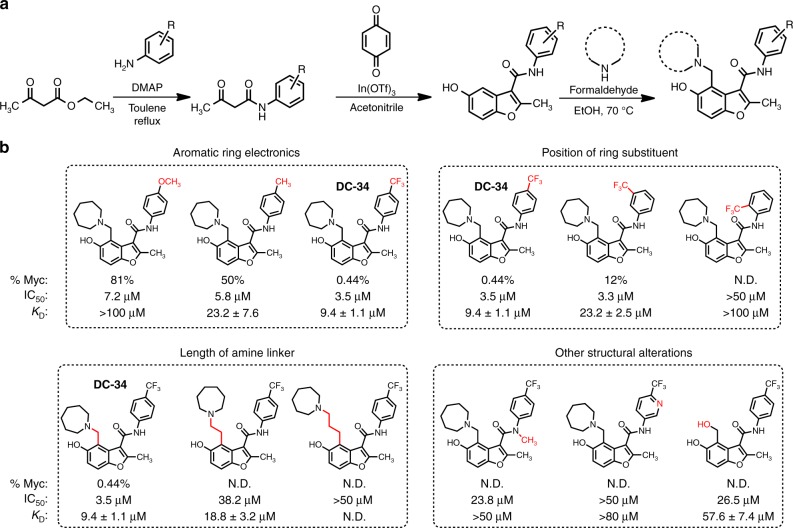
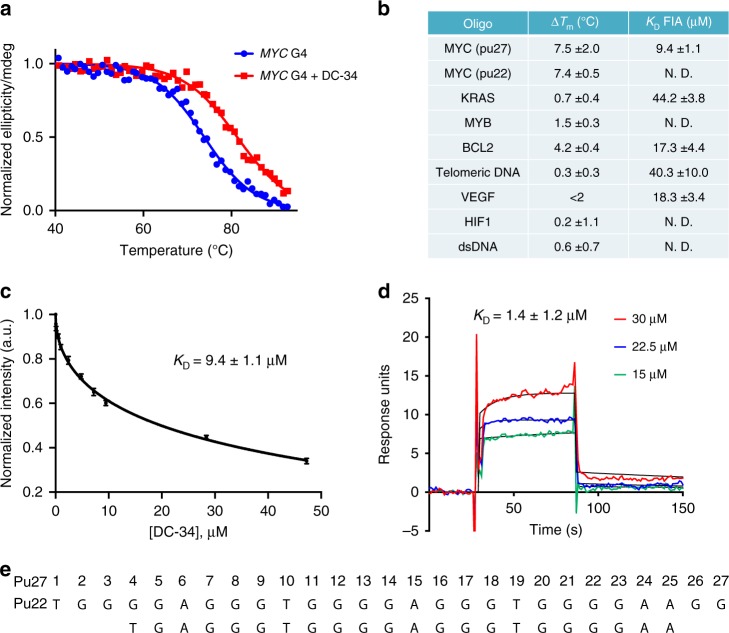
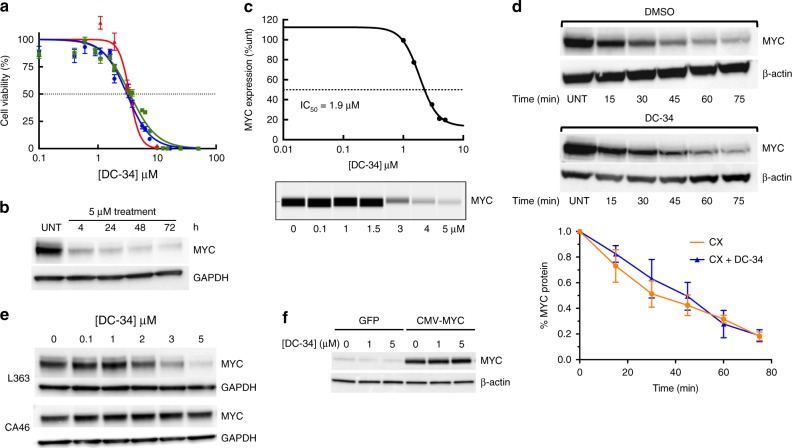
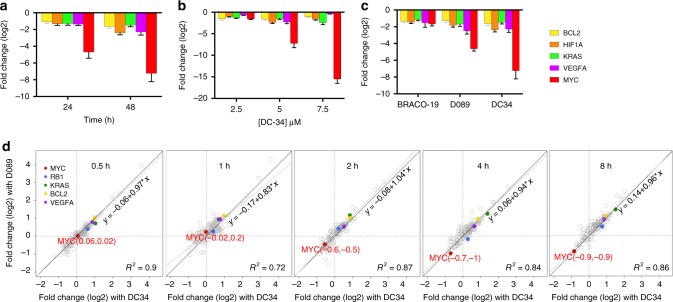
G-quadruplexes (G4s) are noncanonical DNA structures that frequently occur in the promoter regions of oncogenes, such as MYC , and regulate gene expression. Although G4s are attractive therapeutic targets, ligands capable of discriminating between different G4 structures are rare. Here, we describe DC-34, a small molecule that potently downregulates MYC transcription in cancer cells by a G4-dependent mechanism. Inhibition by DC-34 is significantly greater for MYC than other G4-driven genes. We use chemical, biophysical, biological, and structural studies to demonstrate a molecular rationale for the recognition of the MYC G4. We solve the structure of the MYC G4 in complex with DC-34 by NMR spectroscopy and illustrate specific contacts responsible for affinity and selectivity. Modification of DC-34 reveals features required for G4 affinity, biological activity, and validates the derived NMR structure. This work advances the design of quadruplex-interacting small molecules to control gene expression in therapeutic areas such as cancer.
Overview
The claims and statistics of this paper haven’t been checked yet.
Run the check — free, no account needed. It reads the open-access text and checks the sources it cites.
Integrity signals
Registry
Cites
Statistics
Figures
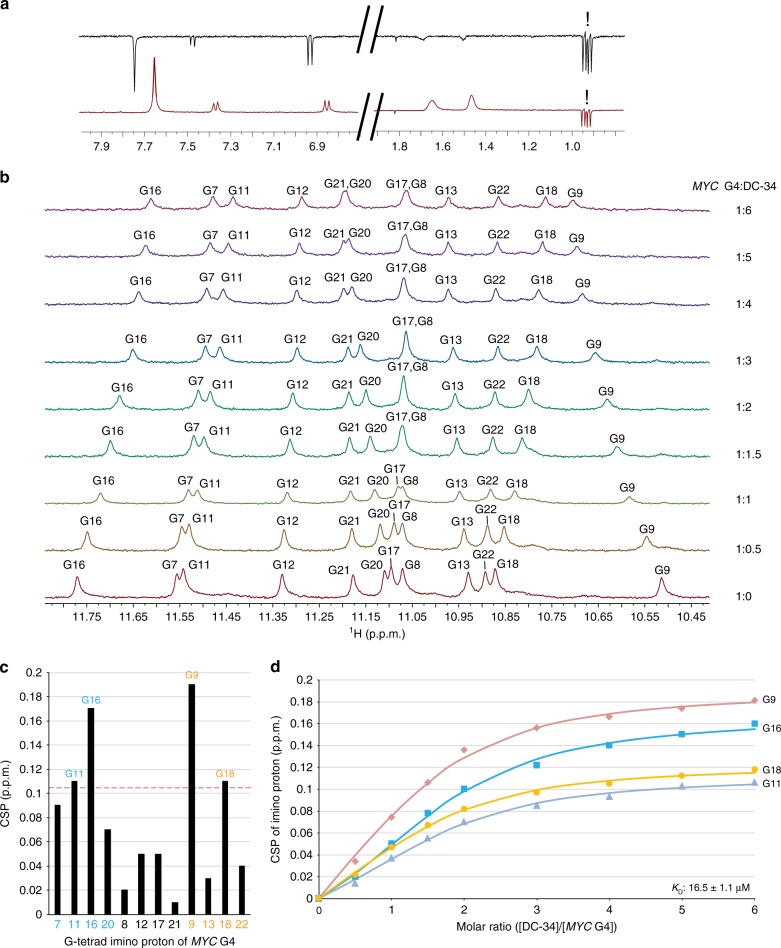
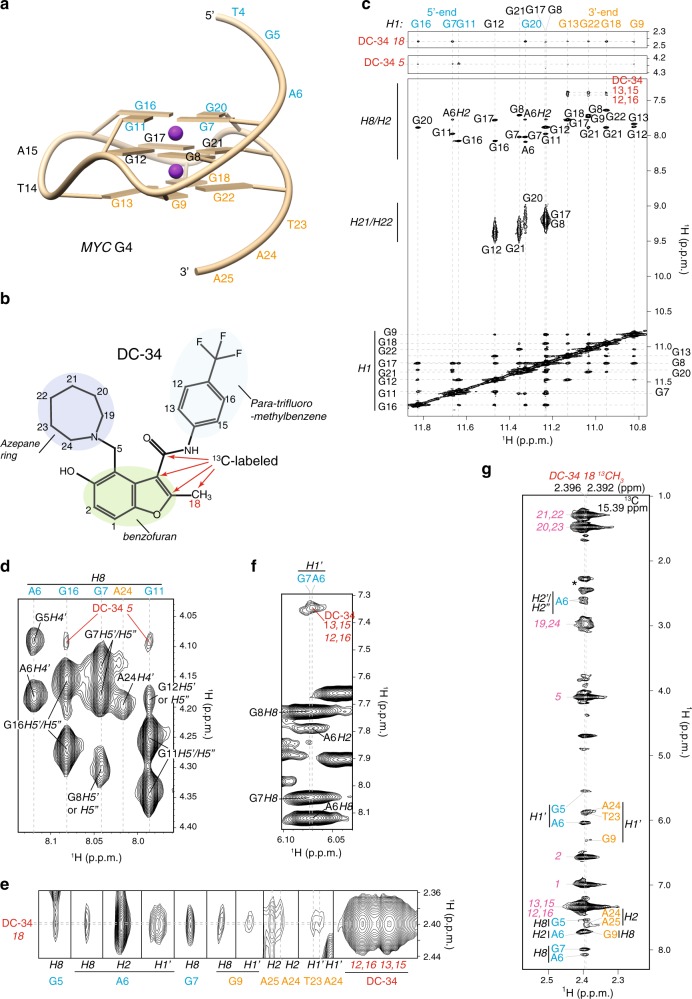
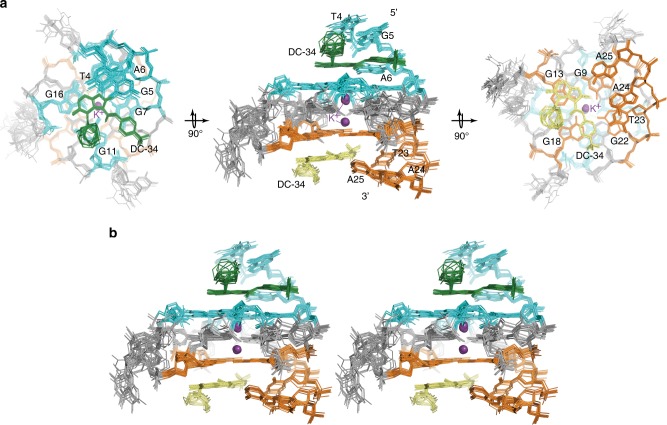
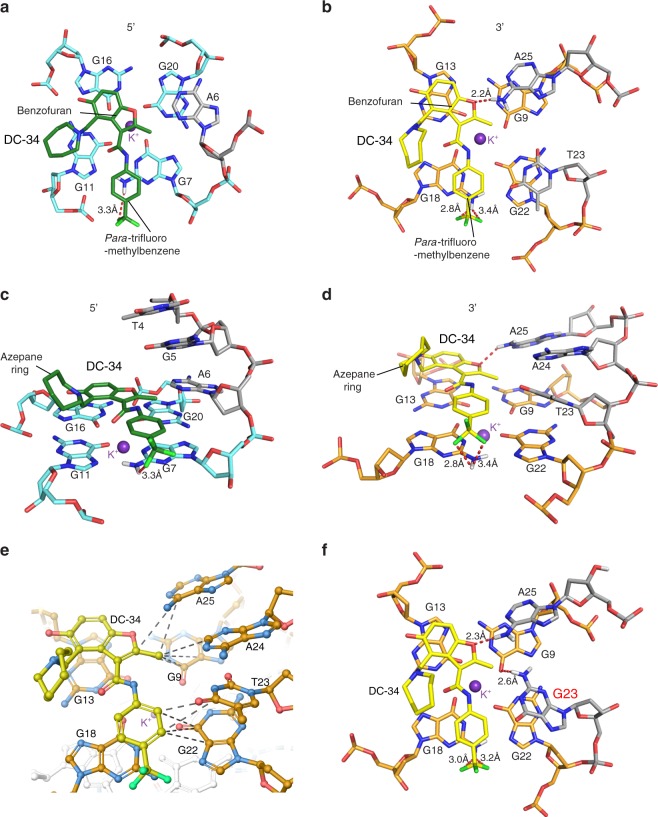
Verification
Claims the paper makes
The claims and statistics of this paper haven’t been checked yet.
Run the check — free, no account needed. It reads the open-access text and checks the sources it cites.
Claims other papers make about this one
Each is checked against this paper’s own text: does it say what the citing paper says it does?
In the citing paper
“In 2018, Walters, Mock and Schneekloth Jr’s group synthesized a library of drug-like compounds and reported a small molecule, named DC-34 (249), which showed impressive inhibitory activity on Myc at the transcriptional level only when a G4 is present in the promoter.584”
From Recent advances in targeting the “undruggable” proteins: from drug discovery to clinical trials (2023) · cites this paper as [584]
Self-check
Percentages, sums and reported differences re-computed from the paper’s own numbers.
The self-check needs the paper’s full text.
Citations
Cites
UCSF Chimera—A visualization system for exploratory research and analysis
Pettersen, E. F., Goddard, T. D., Huang, C. C., Couch, G. S., Greenblatt, D. M., Meng, E. C., & Ferrin, T. E. (2004) · Journal of Computational Chemistry · doi:10.1002/jcc.20084 · Cited by 46,061
NMRPipe: A multidimensional spectral processing system based on UNIX pipes
Delaglio, F., Grzesiek, S., Vuister, G. W., Zhu, G., Pfeifer, J., & Bax, A. (1995) · Journal of Biomolecular NMR · doi:10.1007/bf00197809 · Cited by 15,961
PRODRG: a tool for high-throughput crystallography of protein–ligand complexes
Schüttelkopf, A. W., & van Aalten, D. M. F. (2004) · Acta Crystallographica Section D Biological Crystallography · doi:10.1107/s0907444904011679 · Cited by 4,837
Dang, C. V. (2012) · Cell · doi:10.1016/j.cell.2012.03.003 · Cited by 3,390
Determining association constants from titration experiments in supramolecular chemistry
Thordarson, P. (2010) · Chemical Society Reviews · doi:10.1039/c0cs00062k · Cited by 2,431
Quadruplex DNA: sequence, topology and structure
Burge, S., Parkinson, G. N., Hazel, P., Todd, A. K., & Neidle, S. (2006) · Nucleic Acids Research · doi:10.1093/nar/gkl655 · Cited by 2,404
Cation-π interactions in structural biology
Gallivan, J. P., & Dougherty, D. A. (1999) · Proceedings of the National Academy of Sciences · doi:10.1073/pnas.96.17.9459 · Cited by 2,005
A Medicinal Chemist’s Guide to Molecular Interactions
Bissantz, C., Kuhn, B., & Ståhl, M. (2010) · Journal of Medicinal Chemistry · doi:10.1021/jm100112j · Cited by 1,810
Targeting G-quadruplexes in gene promoters: a novel anticancer strategy?
Balasubramanian, S., Hurley, L. H., & Neidle, S. (2011) · Nature Reviews Drug Discovery · doi:10.1038/nrd3428 · Cited by 1,720
The program XEASY for computer-supported NMR spectral analysis of biological macromolecules
Bartels, C., Xia, T.-H., Billeter, M., Güntert, P., & Kurt Wüthrich, A. (1995) · Journal of Biomolecular NMR · doi:10.1007/bf00417486 · Cited by 1,636
Cited by
Sorted by citations
G-quadruplexes: a promising target for cancer therapy
Kosiol, N., Juranek, S., Brossart, P., Heine, A., & Paeschke, K. (2021) · Molecular Cancer · doi:10.1186/s12943-021-01328-4 · Cited by 561
Recent advances in targeting the “undruggable” proteins: from drug discovery to clinical trials
Xie, X., Yu, T., Li, X., Zhang, N., Foster, L. J., Peng, C., Huang, W., & He, G. (2023) · Signal Transduction and Targeted Therapy · doi:10.1038/s41392-023-01589-z · Cited by 396
Alternative approaches to target Myc for cancer treatment
Wang, C., Zhang, J., Yin, J., Gan, Y., Xu, S., Gu, Y., & Huang, W. (2021) · Signal Transduction and Targeted Therapy · doi:10.1038/s41392-021-00500-y · Cited by 251
Carabet, L. A., Rennie, P. S., & Cherkasov, A. (2018) · International Journal of Molecular Sciences · doi:10.3390/ijms20010120 · Cited by 172
“In a follow-up study, Calabrese et al. (2018) [189], aiming at understanding the molecular determinants of binding affinity and selectivity for G4 structures, synthesized a focused library of 25 analogs of compound 1, as reported earlier by the group [188].”
BackgroundMission Possible: Advances in MYC Therapeutic Targeting in Cancer
Allen-Petersen, B. L., & Sears, R. C. (2019) · BioDrugs · doi:10.1007/s40259-019-00370-5 · Cited by 150
Metadata
- Authors
- Calabrese, D. R., Chen, X., Leon, E. C., Gaikwad, S. M., Phyo, Z., Hewitt, W. M., Alden, S., Hilimire, T. A., He, F., Michalowski, A. M., Simmons, J. K., Saunders, L. B., Zhang, S., Connors, D., Walters, K. J., Mock, B. A., & Schneekloth, J. S.
- Affiliations
- National Cancer Institute (US)
- National Institutes of Health (US)
- Corresponding author
- Walters, Kylie J.
- Mock, Beverly A.
- Schneekloth, John S.
- ORCID
- Venue
- Nature Communications
- Published
- 2018-10-12
- Volume
- 9
- Issue
- 1
- Pages
- 4229-4229
- ISSN
- 2041-1723 (ISSN-L)
- PMC
- PMC6185959
- OpenAlex
- W2896637864
- Cited by
- 172
- References
- 72
- Citations by year
- 2026: 8 · 2025: 17 · 2024: 23 · 2023: 23 · 2022: 20 · 2021: 36 · 2020: 25 · 2019: 17 · 2018: 2
- FWCI
- 7.11
- Type
- journal article
- Language
- en
- Open access
- gold
- doi.org
- Locations
- Nature Communications (publishedVersion, cc-by)
- Europe PMC (PubMed Central) (publishedVersion, other-oa)
- PubMed Central (publishedVersion, cc-by)
- PubMed (publishedVersion)
- RePEc: Research Papers in Economics (submittedVersion)
- DOAJ (DOAJ: Directory of Open Access Journals) (submittedVersion)
- DOAJ (DOAJ: Directory of Open Access Journals) (submittedVersion, cc-by-sa)
- Funders
- U.S. Department of Health & Human Services | NIH | National Cancer Institute (1 ZIA BC011065, 1 ZIA BC011490)
- Topics
- Life Sciences › Biochemistry, Genetics and Molecular Biology › Molecular Biology › DNA and Nucleic Acid Chemistry
- Health Sciences › Medicine › Oncology › Metal complexes synthesis and properties
- Life Sciences › Biochemistry, Genetics and Molecular Biology › Molecular Biology › Advanced biosensing and bioanalysis techniques
- Keywords
- c-Myc, G-quadruplex, small-molecule ligands, oncogene promoters, ligand selectivity, structure-activity relationship
- MeSH terms
- Binding Sites, Cell Line, Cell Survival, Humans, Hydrogen Bonding, Magnetic Resonance Spectroscopy, Promoter Regions, Genetic, Protein Binding, Structure-Activity Relationship, Blotting, Western, Molecular Structure, Proto-Oncogene Proteins c-myc, Protein Structure, Secondary, Surface Plasmon Resonance, Cell Line, Tumor, G-Quadruplexes
About these checks
Registry, retraction, Cites and statistics results are computed, not judged, with one exception: a printed reference that no index lists is read once by a model before it counts as a citation error. Claims are extracted by a model and kept only when their quote appears verbatim in the text; each cited source is then checked, with a model’s help, for whether it says what the claim relies on. Those verdicts can be wrong — read the claim’s quote and the cited source before relying on one.
Statistics and arithmetic are recomputed, not judged.
Confidence bands are shown only for fields calibrated on our annotated test set. None is calibrated yet, so no band is shown.
What counts as a claim ›How we measure confidence ›How we check this ›
Are you an author, or do you see a problem with this page? Request a review
