

The DOI matches its Crossref record; 77 of the 77 references it cites were found in a registry or an index.
Experimental band structure spectroscopy along a synthetic dimension
Open accessAbstract
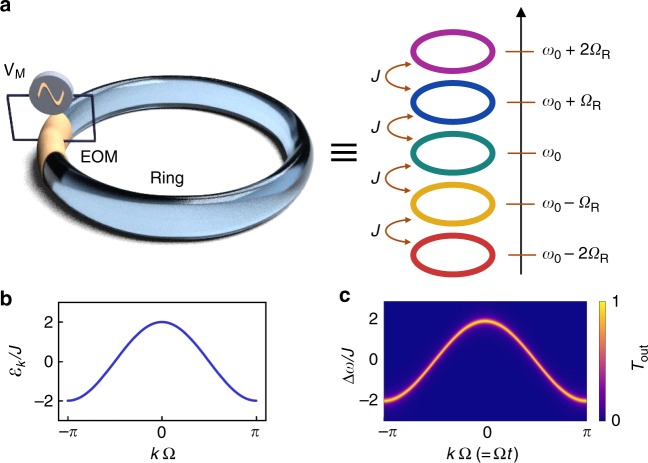
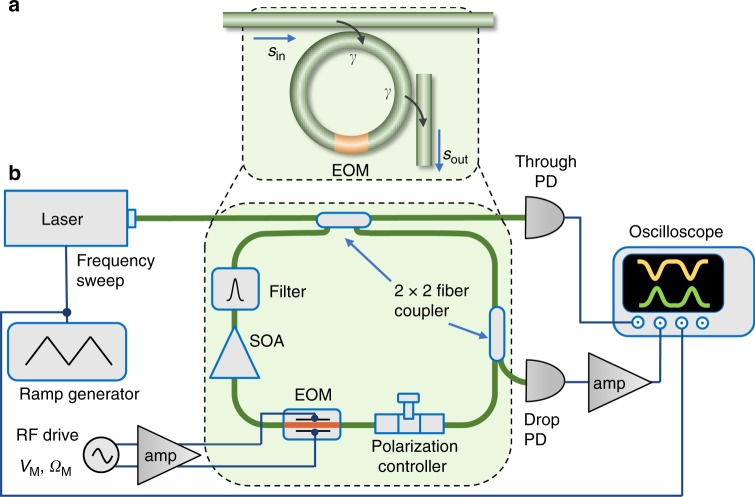
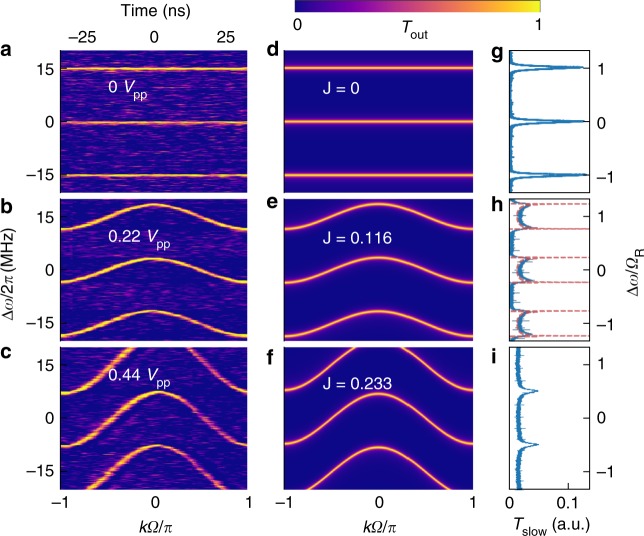
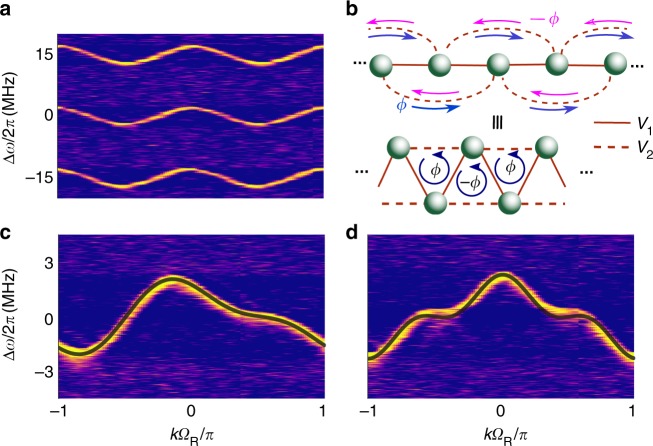
There has been significant recent interest in synthetic dimensions, where internal degrees of freedom of a particle are coupled to form higher-dimensional lattices in lower-dimensional physical structures. For these systems, the concept of band structure along the synthetic dimension plays a central role in their theoretical description. Here we provide a direct experimental measurement of the band structure along the synthetic dimension. By dynamically modulating a resonator at frequencies commensurate with its mode spacing, we create a periodically driven lattice of coupled modes in the frequency dimension. The strength and range of couplings can be dynamically reconfigured by changing the modulation amplitude and frequency. We show theoretically and demonstrate experimentally that time-resolved transmission measurements of this system provide a direct readout of its band structure. We also realize long-range coupling, gauge potentials and nonreciprocal bands by simply incorporating additional frequency drives, enabling great flexibility in band structure engineering.
Overview
The claims and statistics of this paper haven’t been checked yet.
Run the check — free, no account needed. It reads the open-access text and checks the sources it cites.
Integrity signals
Registry
Cites
Statistics
Figures
Verification
Claims the paper makes
The claims and statistics of this paper haven’t been checked yet.
Run the check — free, no account needed. It reads the open-access text and checks the sources it cites.
Claims other papers make about this one
Each is checked against this paper’s own text: does it say what the citing paper says it does?
The check wasn’t confident either way, so it gives no verdict — never disputed.
In the citing paper
“If such a closed loop in the Brillouin zone encircles a Dirac point, the winding of the trajectory can be associated with the topological charge of the Dirac point [44,45].”
From Non-Abelian lattice gauge fields in photonic synthetic frequency dimensions (2025) · cites this paper as [45]
Experimental — accuracy not yet measured
Self-check
Percentages, sums and reported differences re-computed from the paper’s own numbers.
The self-check needs the paper’s full text.
Citations
Cites
Ozawa, T., Price, H. M., Amo, A., Goldman, N., Hafezi, M., Lu, L., Rechtsman, M. C., Schuster, D., Simon, J., Zilberberg, O., et al. (2019) · Reviews of Modern Physics · doi:10.1103/revmodphys.91.015006 · Cited by 3,722
Lu, L., Joannopoulos, J. D., & Soljačić, M. (2014) · Nature Photonics · doi:10.1038/nphoton.2014.248 · Cited by 3,655
Parity–time synthetic photonic lattices
Regensburger, A., Bersch, C., Miri, M.-A., Onishchukov, G., Christodoulides, D. N., & Peschel, U. (2012) · Nature · doi:10.1038/nature11298 · Cited by 2,019
The Occurrence of Singularities in the Elastic Frequency Distribution of a Crystal
Hove, L. V. (1953) · Physical Review · doi:10.1103/physrev.89.1189 · Cited by 1,466
Realizing effective magnetic field for photons by controlling the phase of dynamic modulation
Fang, K., Yu, Z., & Fan, S. (2012) · Nature Photonics · doi:10.1038/nphoton.2012.236 · Cited by 1,169
Self-citationTopological States and Adiabatic Pumping in Quasicrystals
Kraus, Y. E., Lahini, Y., Ringel, Z., Verbin, M., & Zilberberg, O. (2012) · Physical Review Letters · doi:10.1103/physrevlett.109.106402 · Cited by 1,165
Non-reciprocal photonics based on time modulation
Sounas, D. L., & Alù, A. (2017) · Nature Photonics · doi:10.1038/s41566-017-0051-x · Cited by 989
Broadband electro-optic frequency comb generation in a lithium niobate microring resonator
Zhang, M., Buscaino, B., Wang, C., Shams-Ansari, A., Reimer, C., Zhu, R., Kahn, J. M., & Lončar, M. (2019) · Nature · doi:10.1038/s41586-019-1008-7 · Cited by 980
Topological bands for ultracold atoms
Cooper, N. R., Dalibard, J., & Spielman, I. B. (2019) · Reviews of Modern Physics · doi:10.1103/revmodphys.91.015005 · Cited by 940
Observation of chiral edge states with neutral fermions in synthetic Hall ribbons
Mancini, M., Pagano, G., Cappellini, G., Livi, L. F., Rider, M. S., Catani, J., Sias, C., Zoller, P., Inguscio, M., Dalmonte, M., et al. (2015) · Science · doi:10.1126/science.aaa8736 · Cited by 777
Research works printed but not linked: 3
- Ashcroft, N. W. & Mermin, N. D. Solid State Physics. (Holt, Rinehart and Winston, New York, 1976).
- Martin, I., Refael, G. & Halperin, B. Topological frequency conversion in strongly driven quantum systems. Phys. Rev. X 7, 041008 (2017).
- Goldman, N. & Dalibard, J. Periodically driven quantum systems: effective Hamiltonians and engineered gauge fields. Phys. Rev. X 4, 031027 (2014).
Cited by
Sorted by citations
Items 101–179 of 179
Programmable photonic unitary circuits for light computing
Kim, K., Park, K., Park, H., Yu, S., Park, N., & Piao, X. (2025) · Nanophotonics · doi:10.1515/nanoph-2024-0602 · Cited by 9
Reconfigurable Chiral Edge States in Synthetic Dimensions on an Integrated Photonic Chip
Liu, W., Su, X., Li, C., Zeng, C., Wang, B., Wang, Y., Ding, Y., Qin, C., Xia, J., & Lu, P. (2025) · Physical Review Letters · doi:10.1103/physrevlett.134.143801 · Cited by 11
PT-symmetric non-Hermitian AB-stacked bilayer honeycomb photonic lattice
Zhang, D., Li, X., Zhang, L.-L., Fan, D.-Z., Jin, Z., & Gong, W. (2020) · Journal of the Optical Society of America B · doi:10.1364/josab.398686 · Cited by 7
Versatile photonic frequency synthetic dimensions using a single programmable on-chip device
Wang, Z., Zeng, X., Wang, Y., Ren, J.-M., Ao, C., Ли, Ж., Liu, W., Guo, N., Xie, L.-K., Liu, J., et al. (2025) · Nature Communications · doi:10.1038/s41467-025-63114-w · Cited by 10
Mock, A. (2021) · IEEE Transactions on Microwave Theory and Techniques · doi:10.1109/tmtt.2021.3072741 · Cited by 7
Spectral shaping of fast-gain frequency combs through phases in synthetic dimensions
Piciocchi, D., Dikopoltsev, A., Heckelmann, I., Beck, M., Scalari, G., & Faist, J. (2026) · Optica · doi:10.1364/optica.583150 · Cited by 6
Classical analog of quantum models in synthetic dimensions
Cohen, M., Casebolt, M., Zhang, Y., Hazzard, K. R. A., & Scalettar, R. T. (2024) · Physical Review A · doi:10.1103/physreva.109.013303 · Cited by 8
Quantized topological phases beyond square lattices in Floquet synthetic dimensions [Invited]
Sriram, S., Sridhar, S. K., & Dutt, A. (2025) · Optical Materials Express · doi:10.1364/ome.546801 · Cited by 5
Self-citationObservation of frequency diffraction management in spoof plasmonic waveguides
Cheng, Q., Ma, Q., Jiang, Z., Tie, Z., Zhuang, J., & Zhuang, S. (2025) · Physical review. B./Physical review. B · doi:10.1103/physrevb.111.035420 · Cited by 5
Technologically feasible quasi-edge states and topological Bloch oscillation in the synthetic space
Wu, X., Wang, L., Li, G., Cheng, D., Yu, D., Zheng, Y., Yakovlev, V. V., Yuan, L., & Chen, X. (2022) · Optics Express · doi:10.1364/oe.462156 · Cited by 5
Self-citationFrequency manipulation of topological surface states by Weyl phase transitions
Liu, Z., Qin, C., Liu, W., Zheng, L., Ren, S., Wang, B., & Lu, P. (2021) · Optics Letters · doi:10.1364/ol.442890 · Cited by 5
Controlled manipulation of solitons in a recirculating fiber loop using external potentials
Copie, F., Suret, P., & Randoux, S. (2025) · Physical Review Research · doi:10.1103/qcts-whtp · Cited by 4
Creating high-dimensional topological physics using a single ring resonator
Cheng, D., Wang, H., Roques‐Carmes, C., Zhong, J., & Fan, S. (2025) · Newton · doi:10.1016/j.newton.2025.100163 · Cited by 4
Self-citationXiongwei, 吴. W., Jianan, 张. Z., Chen, L., Zhuochen, 娄. L., Qian, 马. M., Shuo, 刘. L., & You, J. W. (2023) · ACTA PHOTONICA SINICA · doi:10.3788/gzxb20235208.0826001 · Cited by 4
Polarization‐Locked Floquet Higher‐Order Topological Insulators in Synthetic Dimension
Liu, Z., Liu, W., Zheng, L., Ren, S., Su, X., Ding, Y., Wang, B., & Lu, P. (2025) · Laser & Photonics Review · doi:10.1002/lpor.202401156 · Cited by 4
Experimental observation of energy-band Riemann surface
Cheng, D., Wang, H., Zhong, J., Lustig, E., Roques‐Carmes, C., & Fan, S. (2026) · Science Advances · doi:10.1126/sciadv.aec8239 · Cited by 3
Self-citationReconfigurable and programmable integrated topological photonics
Ma, A., Dai, T., Li, G. Y., Yuan, L., Capmany, J., Chen, Z. Q., Gong, Q., & Wang, J. (2026) · Nature Reviews Physics · doi:10.1038/s42254-026-00936-7 · Cited by 4
Self-citationGuan, Y., & Yao, J. (2025) · Journal of Lightwave Technology · doi:10.1109/jlt.2025.3579197 · Cited by 3
Chen, Y., Zhang, P., Hong, C., Song, Y., Ke, S., Wang, M., Liu, W., & Lu, P. (2024) · Applied Physics Letters · doi:10.1063/5.0193233 · Cited by 3
Scalable and Programmable Emulation of Photonic Hyperbolic Lattices
Park, H., Piao, X., & Yu, S. (2024) · ACS Photonics · doi:10.1021/acsphotonics.4c01184 · Cited by 4
Dynamic Control of Non‐Hermitian On‐Site Potential in the Lithium Niobate Microresonator
Wang, P., Wan, S., Zhang, M., Ma, R., Fang, B., Shen, Z., Wan, W., Sun, F., Guo, G., & Dong, C. (2025) · Laser & Photonics Review · doi:10.1002/lpor.202500552 · Cited by 3
Real-time measurement of non-Hermitian Landau–Zener tunneling near band crossings
Zhao, L., Wang, S., Qin, C., Wang, B., Han, Y., Liu, W., Longhi, S., & Lu, P. (2025) · Advanced Photonics · doi:10.1117/1.ap.7.3.036002 · Cited by 2
Reconfigurable high-dimensional synthetic photonic lattices
Huang, H., Du, Z., Liao, K., Hu, X., & Gong, Q. (2025) · Science Advances · doi:10.1126/sciadv.adw7198 · Cited by 2
Dynamic realization of emergent high-dimensional optical vortices
Kim, D., Park, G., Choi, Y., Baucour, A., Hwang, J., Kim, J., Park, S., Yun, H. S., Shin, J., Wang, H., et al. (2025) · Nature Communications · doi:10.1038/s41467-025-65087-2 · Cited by 2
Self-citationControlling frequency-comb generation via non-Hermitian dynamics in synthetic frequency dimension
Yang, Y., Wang, L., Dong, Z., Wu, X., Yu, D., Chen, X., Dutt, A., & Yuan, L. (2025) · Physical Review Applied · doi:10.1103/physrevapplied.23.044029 · Cited by 3
Self-citationSynthetic frequency dimension state coupling in modulated LNOI ring cavity devices
Balčytis, A., Dinh, X. H., Ozawa, T., Ota, Y., Baba, T., Iwamoto, S., Mitchell, A., & Nguyen, T. G. (2023) · Conference on Lasers and Electro-Optics · doi:10.1364/cleo_si.2023.sw3o.1 · Cited by 2
Non-Abelian Electric Field and Zitterbewegung on a Photonic Frequency Chain
Yang, S., Wong, B. T. T., Hu, J., & Yang, Y. (2026) · Physical Review Letters · doi:10.1103/qy4y-171h · Cited by 1
Role of chiral symmetry in a kicked Jaynes-Cummings model
Qin, P., & Park, H. C. (2023) · Physical Review A · doi:10.1103/physreva.107.013712 · Cited by 1
Synthetic frequency dimension in a spatiotemporally driven phononic ring resonator
Kyung, M., Park, J., Kim, Y., Lee, K., & Min, B. (2025) · Applied Physics Letters · doi:10.1063/5.0228315 · Cited by 1
Exceptional-point-based flat spectrum generation in frequency lattices
Zheng, L., Qian, L., Hong, C., Lv, W., Ke, S., Liu, Z., Ren, S., Wang, M., & Song, Y. (2025) · Physical Review A · doi:10.1103/physreva.111.053522 · Cited by 1
Slow Light by Topological Routing in Synthetic Dimensions
Kim, S., Mann, S. A., Ni, X., & Alù, A. (2025) · ACS Photonics · doi:10.1021/acsphotonics.5c02204 · Cited by 2
Realizing Non-Hermitian Skin Effects in 1-D and 2-D Synthetic Frequency Lattices
Srikanth, R., Sridhar, S. K., & Dutt, A. (2026) · doi:10.1364/cleo_fs.2026.fw1e.4 · Cited by 1
Self-citationHomogeneous electron liquid in arbitrary dimensions beyond the random phase approximation
Pham, L. V. D., Sattler, P., Marques, M. A. L., & Benavides-Riveros, C. L. (2023) · New Journal of Physics · doi:10.1088/1367-2630/acef4c · Cited by 1
High-order spectral filtering based on photonic synthetic dimensions
Liao, Y.-W., Yang, M., Zhang, H.-Q., Luo, X.-W., Zhou, Z.-W., Xu, J., Li, C., & Guo, G. (2025) · Optics Letters · doi:10.1364/ol.546410 · Cited by 1
Quantized Hall drift in a frequency-encoded photonic Chern insulator
Chénier, A., d'Aligny, B., Pellerin, F., Blanchard, P.-É., Ozawa, T., Carusotto, I., & St-Jean, P. (2025) · doi:10.1364/cleo_fs.2025.ff148_4 · Cited by 1
Synthetic Dimension Photonics on a Si CMOS Platform
Balčytis, A., Ozawa, T., Ota, Y., Iwamoto, S., Maeda, J., & Baba, T. (2021) · Conference on Lasers and Electro-Optics · doi:10.1364/cleo_si.2021.stu1f.4 · Cited by 1
Observation of temporal cavity solitons in a synthetic photonic lattice
Englebert, N., Gorza, S.-P., Léo, F., Erkintalo, M. J., & Fatome, J. (2021) · Conference on Lasers and Electro-Optics Europe & European Quantum Electronics Conference (CLEO/Europe-EQEC) · doi:10.1109/cleo/europe-eqec52157.2021.9542045 · Cited by 1
Bloch oscillations of temporal cavity solitons in a synthetic frequency dimension
Englebert, N., Goldman, N., Mostaan, N., Erkintalo, M. J., Gorza, S.-P., Léo, F., & Fatome, J. (2022) · Conference on Lasers and Electro-Optics · doi:10.1364/cleo_qels.2022.fw5j.1 · Cited by 1
Programmable large-scale simulation of lattices with photonic synthetic frequency dimensions
Senanian, A., Wright, L. G., Wade, P. F., Doyle, H., & McMahon, P. L. (2023) · doi:10.1364/cleo_fs.2023.fw4h.2 · Cited by 1
Negative Extinction and Broadband Light-matter Interactions in High-Q Time-variant Metasurfaces
Shcherbakov, M. R., Lemasters, R., Song, J., Shafirin, P., Lian, T. T., Harutyunyan, H., & Shvets, G. B. (2020) · Conference on Lasers and Electro-Optics · doi:10.1364/cleo_qels.2020.fth4q.1
Constructing an effective Hamiltonian with local interaction in the synthetic space for photons
Yuan, L., Dutt, A., Qin, M., Fan, S., & Chen, X. (2020) · Frontiers in Optics · doi:10.1364/fio.2020.fth5d.2
Self-citationTusnin, A. K., Tikan, A. M., & Kippenberg, T. J. (2020) · International Conference Laser Optics (ICLO) · doi:10.1109/iclo48556.2020.9285393
Control of photons with the effective magnetic flux in synthetic dimensions with rings including GVD
Yuan, L., Yu, D., Shan, Q., Li, G., & Chen, X. (2021) · Conference on Lasers and Electro-Optics · doi:10.1364/cleo_qels.2021.fm4j.8
Self-citationExperimental Demonstration of Dynamic Band Structure Measurement along a Synthetic Dimension
Li, G., Zheng, Y., Dutt, A., Yu, D., Shan, Q., Liu, S., Yuan, L., Fan, S., & Chen, X. (2021) · Conference on Lasers and Electro-Optics · doi:10.1364/cleo_qels.2021.fm1j.2
Self-citationCollective dynamics in nonlinear resonators coupled in spatial and synthetic dimensions
Tusnin, A., Tikan, A. M., & Kippenberg, T. J. (2021) · Conference on Lasers and Electro-Optics · doi:10.1364/cleo_qels.2021.fw2l.2
(2020) · SciPost Physics · doi:10.21468/scipost.report.2082
(2021) · SciPost Physics · doi:10.21468/scipost.report.2494
(2021) · SciPost Physics · doi:10.21468/scipost.report.2518
(2021) · SciPost Physics · doi:10.21468/scipost.report.3287
Boundary-induced trapped state in electro-optic frequency combs
Hu, Y., Yu, M., Sinclair, N. E., Zhu, D., Cheng, R., Wang, C., & Lončar, M. (2022) · Conference on Lasers and Electro-Optics · doi:10.1364/cleo_qels.2022.fw1b.4
Extracting the Berry Phase of Dimer Chains in a Synthetic Dimension
Pellerin, F., Mayeu, J. D. L., Boisvert, M., Coish, W. A., Carusotto, I., & St-Jean, P. (2023) · Conference on Lasers and Electro-Optics Europe & European Quantum Electronics Conference (CLEO/Europe-EQEC) · doi:10.1109/cleo/europe-eqec57999.2023.10232163
Frequency-encoded synthetic dimensions for Hamiltonian simulation and topological photonics
Dutt, A. (2024) · Quantum Computing, Communication, and Simulation · doi:10.1117/12.3008887
Self-citationBand structure measurements in multi-dimensional synthetic frequency lattices
Cheng, D., Lustig, E., Wang, K., & Fan, S. (2024) · doi:10.1364/cleo_fs.2024.fth4d.6
Self-citationMeasurement of Synthetic-Dimension Band Structures in Silicon Coupled Ring Resonators
Zhang, R., Li, L., Kamata, M., Baba, T., Ozawa, T., Yasutomo, O., & Iwamoto, S. (2024) · Conference on Lasers and Electro-Optics Pacific Rim (CLEO-PR) · doi:10.1109/cleo-pr60912.2024.10676941
Photonic Frequency Space Simulation of Tight-Binding Lattices Using Integrated LNOI Ring Resonators
Balčytis, A., Dinh, X. H., Ozawa, T., Ota, Y., Baba, T., Iwamoto, S., Mitchell, A., & Nguyen, T. G. (2024) · Conference on Lasers and Electro-Optics Pacific Rim (CLEO-PR) · doi:10.1109/cleo-pr60912.2024.10676650
Revised Perturbation Theory for Shifting Geometric Interfaces in High-Contrast Nanophotonics
Fried, N. R., & Dutt, A. (2024) · ACS Photonics · doi:10.1021/acsphotonics.4c01130
Self-citationTime-reversed Landau-Zener tunneling in synthetic temporal lattices
Zhao, L., Wang, S., Qin, C., Liu, Z., Zheng, L., Wang, B., & Lu, P. (2025) · Physical Review A · doi:10.1103/jv83-xgvs
Nonlinear manipulation of optical coupling in synthetic temporal waveguides
Liu, C., Wang, B., Wang, S., Zhao, L., Liu, Z., Hu, X., Li, Y., Ma, H., Li, J., Qin, C., et al. (2025) · Physical Review Applied · doi:10.1103/vnff-cy63
Quantum Anomalous Hall phases beyond square lattices in Floquet synthetic dimensions
Sriram, S., Sridhar, S. K., & Dutt, A. (2025) · Conference on Lasers and Electro-Optics · doi:10.1364/cleo_fs.2025.ff153_5
Self-citationWinding number measurement of synthetic dimer lattices through cascaded heterodyning
Srikanth, R., Sridhar, S. K., Miller, A. R., McComb, F. J., & Dutt, A. (2025) · Conference on Lasers and Electro-Optics · doi:10.1364/cleo_fs.2025.ff148_2
Self-citationModal Theory of Phase‐Modulated and Frequency‐Shifting Ring Cavities
Cuenca, M., Maestre, H., & Fernández‐Pousa, C. R. (2025) · Advanced Photonics Research · doi:10.1002/adpr.202500098
Driven flux-induced Floquet topological insulators
Wang, Z., Wu, C., Kang, J., & Liu, N. (2025) · Physical review. B./Physical review. B · doi:10.1103/4yt8-ll9l
Efficient modeling of resonant electro-optic phase modulator dynamics through a mean-field equation
Alshaykh, M. S. (2026) · Optics Express · doi:10.1364/oe.587762
On-chip frequency space lattices in modulated thin-film lithium niobate microresonators
Balčytis, A., Nguyễn, T. G., Dinh, X. H., & Mitchell, A. (2026) · Laser Resonators, Microresonators, and Beam Control · doi:10.1117/12.3079434
Driving Thermal Vacuum Photons by Time-Modulated Media
Zhang, C., Yuan, T., Xu, H., & Pan, D. (2026) · Physical Review Letters · doi:10.1103/5dvp-9q61
Photonic Convolutional Paradigm in Synthetic Frequency Dimensions
Ye, K., Zhang, L., Zhang, J., Lyu, Z., Wang, Z., Pang, X., Ozoliņš, O., & Yu, X. (2026) · Journal of Lightwave Technology · doi:10.1109/jlt.2026.3681287
Two-dimensional topological properties of photonic mesh lattices subject to discrete step walks
Sokhen, R. E. (2024) · theses.fr (ABES) · doi:10.70675/64dde291z69a6z4a6az8c7bz448d4922bf48
A hybrid-frequency programmable synthetic-dimension simulator with rich coupling on a single chip
Zeng, X.-D., Wang, Z.-A., Ren, J.-M., Wang, Y., Ao, C., Liu, W. T., Guo, N., Xie, L.-K., Liu, J., Ma, Y.-H., et al. (2026) · Light Science & Applications · doi:10.1038/s41377-026-02309-2
Pump-threshold-free frequency comb via cavity Floquet engineering
Wang, S., Wang, C., de Jong, M. H. J., de Lépinay, L. M., Zhou, J., Sillanpää, M. A., & Liu, Y. (2026) · Nature Communications · doi:10.1038/s41467-026-72320-z
Wu, Z.-Y., Zhang, W., Lin, Y.-B., Chen, W.-J., Chen, X.-D., & Dong, J. (2026) · Journal of the Optical Society of America B · doi:10.1364/josab.598860
Quantum dynamics of microwave photons in a synthetic frequency dimension
Xie, Z., Wang, L., Qiu, J., Zhang, L., Zhou, Y., Tao, Z., Huang, W., Liang, Y., Zhang, J., Chen, Y., et al. (2026) · Physical Review Applied · doi:10.1103/k1cj-srpb
Self-citationSynthetic frequency dimensions for scalable classical and quantum information processing
Dutt, A. (2026) · Reconfigurable Photonic Computing and Heterogeneous Architectures for AI and RF Defense Systems · doi:10.1117/12.3115907
Self-citationOne-dimensional emulation of high-dimensional disclination topology
Wang, J., Lei, S., Song, D., Tang, L., Xia, S., & Chen, Z. (2026) · Photonics Research · doi:10.1364/prj.599128
Temporal coupled-mode theory for a single Floquet-sheet resonator
Wang, Y., & Chou, H.-H. (2026) · Physical Review A · doi:10.1103/r7qr-7jh5
Emergent nonlocal interactions induced by quantized gauge fields in topological systems
Anonymous, & Belyanin, A. A. (2026) · Physical review. B./Physical review. B · doi:10.1103/bd3s-5fg9 · Cited by 1
Liu, K., Shu, A., Zhao, L., Qiu, B., & Wang, J. (2026) · Research Square · doi:10.21203/rs.3.rs-10340093/v1
Bounded Frequency Lattices in Coupled Lithium Niobate Ring Cavities
Dinh, X. H., Balčytis, A., Ren, G., Low, M. X., Mitchell, A., & Nguyen, T. G. (2026) · Laser & Photonics Review · doi:10.1002/lpor.71745
Engineering Dirac points with hybrid photonic synthetic dimensions in a cavity
Yang, M., Wei, X.-H., Luo, X.-W., Xu, J., Li, C., & Guo, G. (2026) · Science Advances · doi:10.1126/sciadv.aef2406
Chengting, 沈. S., Song, W., & Tao, 李. L. (2026) · Infrared and Laser Engineering · doi:10.3788/irla20250573
Metadata
- Authors
- Dutt, A., Minkov, M., Lin, Q., Yuan, L., Miller, D. A. B., & Fan, S.
- Affiliations
- Stanford University (US)
- Shanghai Jiao Tong University (CN)
- Corresponding author
- Yuan, Luqi
- Fan, Shanhui
- Venue
- Nature Communications
- Published
- 2019-07-16
- Volume
- 10
- Issue
- 1
- Pages
- 3122-3122
- ISSN
- 2041-1723 (ISSN-L)
- PMC
- PMC6635488
- OpenAlex
- W2951236500
- Cited by
- 178
- References
- 75
- Citations by year
- 2026: 22 · 2025: 37 · 2024: 23 · 2023: 21 · 2022: 17 · 2021: 30 · 2020: 22 · 2019: 5
- FWCI
- 8.13
- Type
- journal article
- Language
- en
- Open access
- gold
- doi.org
- Locations
- Nature Communications (publishedVersion, cc-by)
- Europe PMC (PubMed Central) (publishedVersion, cc-by)
- PubMed Central (publishedVersion, cc-by)
- PubMed (publishedVersion)
- arXiv (Cornell University) (submittedVersion, cc-by-nc-sa)
- DOAJ (DOAJ: Directory of Open Access Journals) (submittedVersion, cc-by-sa)
- DOAJ (DOAJ: Directory of Open Access Journals) (submittedVersion)
- Figshare (submittedVersion, cc-by)
- arXiv (Cornell University)
- Funders
- United States Department of Defense | United States Navy | Office of Naval Research (N00014-17-1-3030)
- United States Department of Defense | United States Air Force | AFMC | Air Force Office of Scientific Research (FA9550-17-1-0002)
- Schweizerischer Nationalfonds zur Förderung der Wissenschaftlichen Forschung (P300P2_177721)
- Topics
- Physical Sciences › Physics and Astronomy › Atomic and Molecular Physics, and Optics › Quantum Mechanics and Non-Hermitian Physics
- Physical Sciences › Physics and Astronomy › Condensed Matter Physics › Topological Materials and Phenomena
- Physical Sciences › Physics and Astronomy › Acoustics and Ultrasonics › Acoustic Wave Phenomena Research
- Keywords
- synthetic dimensions, electronic band structure, long-range coupling, gauge potential, band structure engineering
About these checks
Registry, retraction, Cites and statistics results are computed, not judged, with one exception: a printed reference that no index lists is read once by a model before it counts as a citation error. Claims are extracted by a model and kept only when their quote appears verbatim in the text; each cited source is then checked, with a model’s help, for whether it says what the claim relies on. Those verdicts can be wrong — read the claim’s quote and the cited source before relying on one.
Statistics and arithmetic are recomputed, not judged.
Confidence bands are shown only for fields calibrated on our annotated test set. None is calibrated yet, so no band is shown.
What counts as a claim ›How we measure confidence ›How we check this ›
Are you an author, or do you see a problem with this page? Request a review
