

Over-activation of primate subgenual cingulate cortex enhances the cardiovascular, behavioral and neural responses to threat
Open accessThe DOI matches its Crossref record; 61 of the 61 references it cites were found in a registry or an index.
Abstract
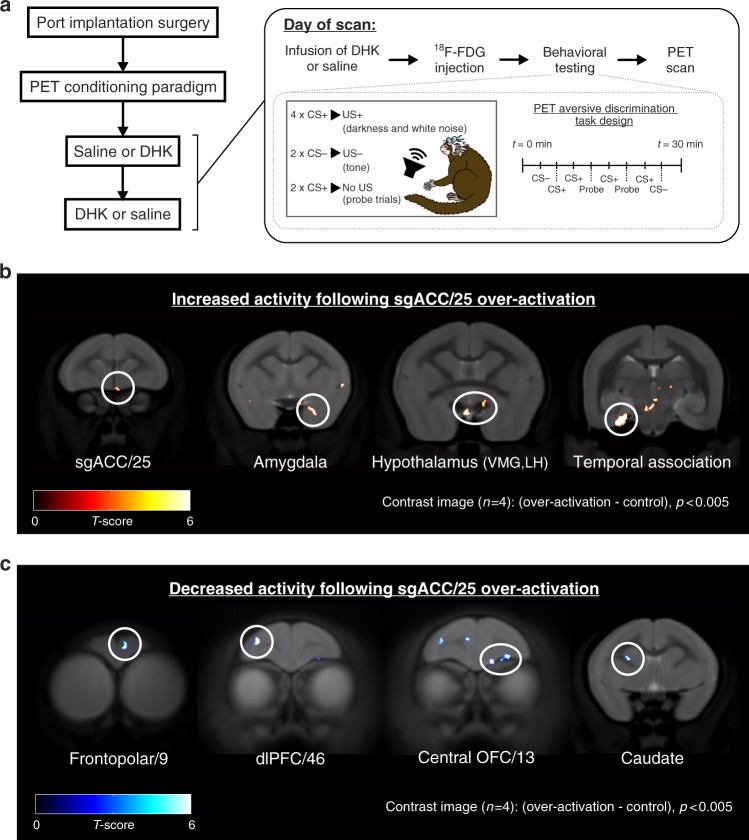
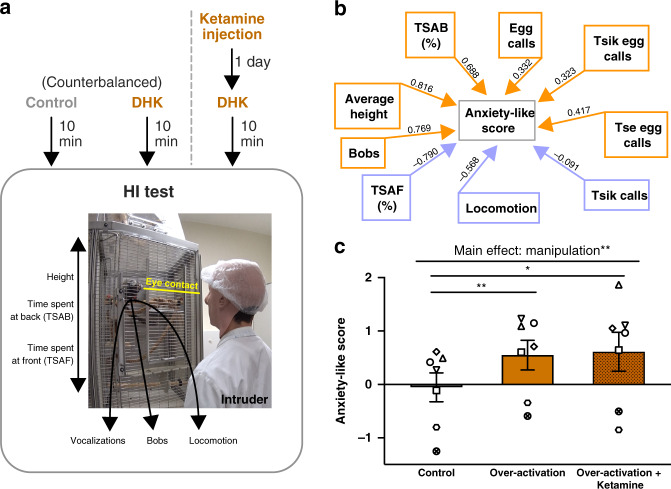
Stress-related disorders such as depression and anxiety are characterized by enhanced negative emotion and physiological dysfunction. Whilst elevated activity within area 25 of the subgenual anterior cingulate cortex (sgACC/25) has been implicated in these illnesses, it is unknown whether this over-activity is causal. By combining targeted intracerebral microinfusions with cardiovascular and behavioral monitoring in marmosets, we show that over-activation of sgACC/25 reduces vagal tone and heart rate variability, alters cortisol dynamics during stress and heightens reactivity to proximal and distal threat.18 F-FDG PET imaging shows these changes are accompanied by altered activity within a network of brain regions including the amygdala, hypothalamus and dorsolateral prefrontal cortex. Ketamine, shown to have rapid antidepressant effects, fails to reverse elevated arousal to distal threat contrary to the beneficial effects we have previously demonstrated on over-activation induced reward blunting, illustrating the symptom-specificity of its actions.
Overview
The claims and statistics of this paper haven’t been checked yet.
Free: it reads the open-access text and checks the first 5 claims that cite a source we can check. Create a free account to check every claim.
Integrity signals
Registry
Cites
Statistics
Figures
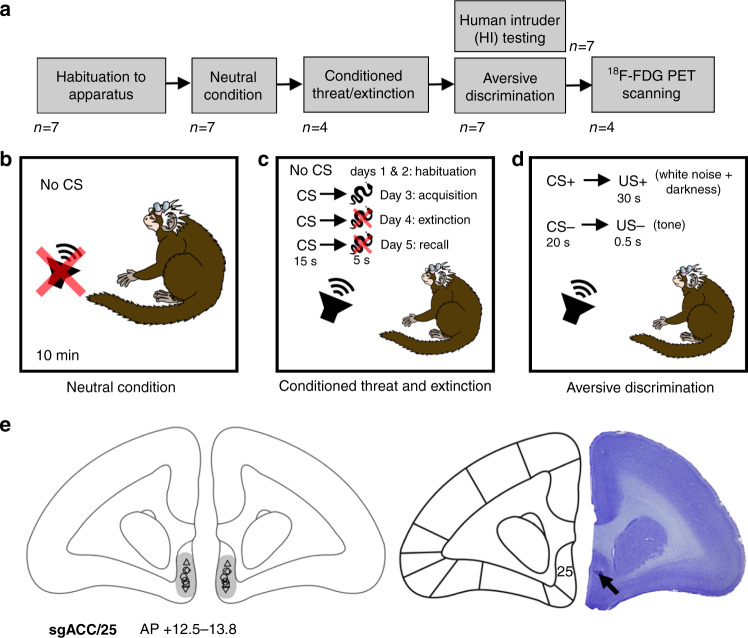
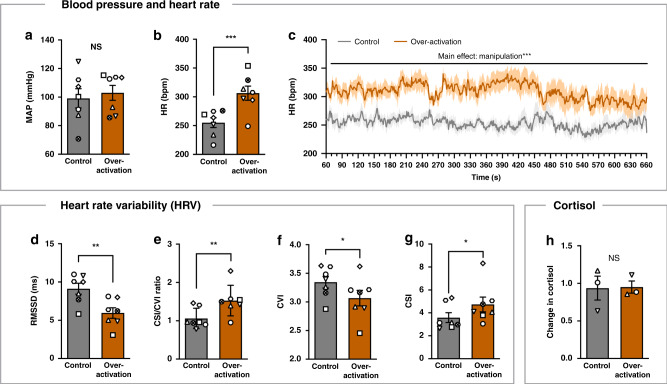
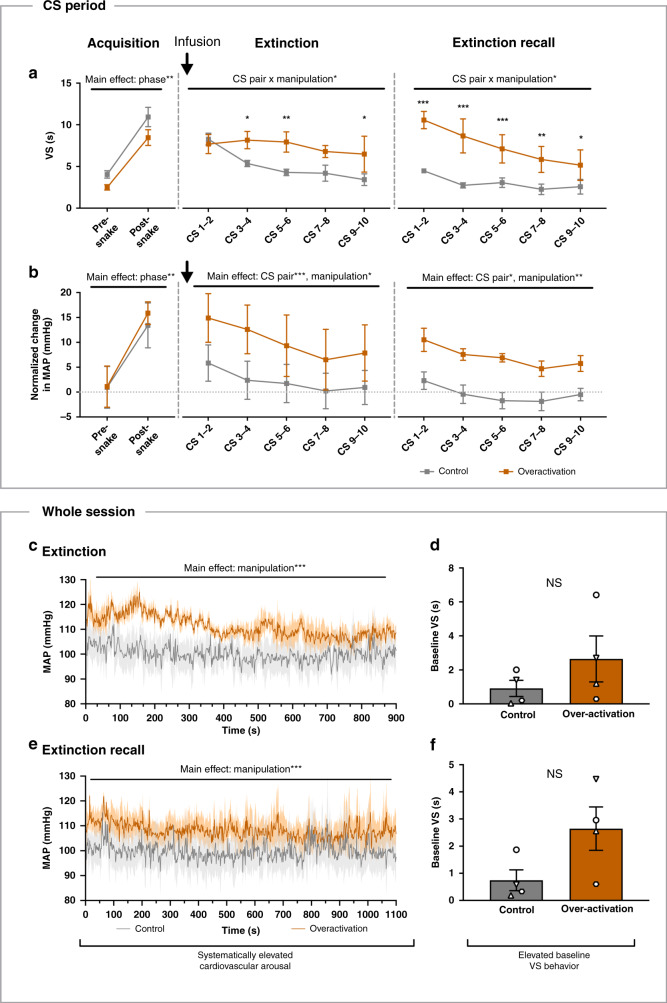
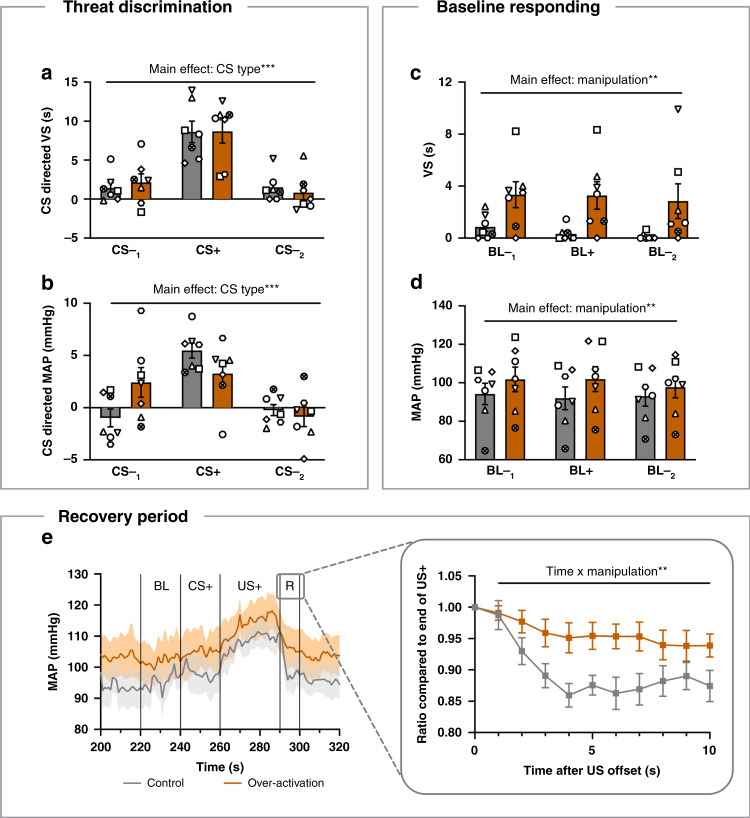
Verification
Claims the paper makes
The claims and statistics of this paper haven’t been checked yet.
Free: it reads the open-access text and checks the first 5 claims that cite a source we can check. Create a free account to check every claim.
Claims other papers make about this one
Each is checked against this paper’s own text: does it say what the citing paper says it does?
The cited source says what the claim attributes to it.
In the citing paper
“Its over-activation not only blunted appetitive processing but also enhanced responsivity to both uncertain threat and Pavlovian conditioned, certain threat [144], consistent with the high comorbidity of anxiety with MDD [145, 146]; but inconsistent with the role of ILc in inhibiting conditioned fear responses in rats [147].”
From Prefrontal cortex and depression (2022) · cites this paper as [144]
The cited source says what the claim attributes to it.
In the citing paper
“It also reduced basal heart rate variability and increased sympathetic activity [144], consistent with sympathetically-driven alterations in cardiovascular activity in MDD [148, 149].”
From Prefrontal cortex and depression (2022) · cites this paper as [144]
Self-check
Percentages, sums and reported differences re-computed from the paper’s own numbers.
The self-check needs the paper’s full text.
Citations
Cites
AVANTS, B., EPSTEIN, C., GROSSMAN, M., & GEE, J. (2008) · Medical Image Analysis · doi:10.1016/j.media.2007.06.004 · Cited by 5,669
Deep Brain Stimulation for Treatment-Resistant Depression
Mayberg, H. S., Lozano, A. M., Voon, V., McNeely, H. E., Seminowicz, D., Hamani, C., Schwalb, J. M., & Kennedy, S. H. (2005) · Neuron · doi:10.1016/j.neuron.2005.02.014 · Cited by 4,059
Antidepressant effects of ketamine in depressed patients
Berman, R. M., Cappiello, A., Anand, A., Oren, D. A., Heninger, G. R., Charney, D. S., & Krystal, J. H. (2000) · Biological Psychiatry · doi:10.1016/s0006-3223(99)00230-9 · Cited by 3,856
Functional neuroanatomy of emotion: A meta-analysis of emotion activation studies in PET and fMRI
Phan, K. L., Wager, T., Taylor, S. F., & Liberzon, I. (2002) · NeuroImage · doi:10.1006/nimg.2002.1087 · Cited by 3,502
Neurons in medial prefrontal cortex signal memory for fear extinction
Milad, M. R., & Quirk, G. J. (2002) · Nature · doi:10.1038/nature01138 · Cited by 1,836
Phelps, E. A., Delgado, M. R., Nearing, K. I., & LeDoux, J. E. (2004) · Neuron · doi:10.1016/j.neuron.2004.08.042 · Cited by 1,753
Limbic-cortical dysregulation: a proposed model of depression
(1997) · The Journal of Neuropsychiatry and Clinical Neurosciences · doi:10.1176/jnp.9.3.471 · Cited by 1,585
The Central Autonomic Network: Functional Organization, Dysfunction, and Perspective
BENARROCH, E. E. (1993) · Mayo Clinic Proceedings · doi:10.1016/s0025-6196(12)62272-1 · Cited by 1,534
Rauch, S. L., Shin, L. M., & Phelps, E. A. (2006) · Biological Psychiatry · doi:10.1016/j.biopsych.2006.06.004 · Cited by 1,397
Milad, M. R., Wright, C. I., Orr, S. P., Pitman, R. K., Quirk, G. J., & Rauch, S. L. (2007) · Biological Psychiatry · doi:10.1016/j.biopsych.2006.10.011 · Cited by 1,197
Cited by
Prefrontal cortex and depression
Pizzagalli, D. A., & Roberts, A. C. (2022) · Neuropsychopharmacology · doi:10.1038/s41386-021-01101-7 · Cited by 667
Self-citationThe self in context: brain systems linking mental and physical health
Koban, L., Gianaros, P. J., Kober, H., & Wager, T. D. (2021) · Nature Reviews Neuroscience · doi:10.1038/s41583-021-00446-8 · Cited by 237
Sezer, I., Pizzagalli, D. A., & Sacchet, M. D. (2022) · Neuroscience & Biobehavioral Reviews · doi:10.1016/j.neubiorev.2022.104583 · Cited by 214
“…coupling to rACC are aberrant in MDD (Disner et al., 2011), and connectivity dysfunctions of rACC and the amygdala component of limbic circuitry are prevalent in mood disorders (Alexander et al., 2020; Connolly et al., 2013; Hakamata et al., 2020; Kamphausen et al., 2012; Scharnowski et al., 2020).”
BackgroundThe stressed synapse 2.0: pathophysiological mechanisms in stress-related neuropsychiatric disorders
Sanacora, G., Yan, Z., & Popoli, M. (2022) · Nature Reviews Neuroscience · doi:10.1038/s41583-021-00540-x · Cited by 197
Joyce, M. K. P., Uchendu, S., & Arnsten, A. F. T. (2024) · Biological Psychiatry · doi:10.1016/j.biopsych.2024.06.016 · Cited by 102
Understanding anxiety symptoms as aberrant defensive responding along the threat imminence continuum
Abend, R. (2023) · Neuroscience & Biobehavioral Reviews · doi:10.1016/j.neubiorev.2023.105305 · Cited by 97
Combining brain perturbation and neuroimaging in non-human primates
Klink, P. C., Aubry, J., Ferrera, V. P., Fox, A. S., Froudist‐Walsh, S., Jarraya, B., Konofagou, E. E., Krauzlis, R. J., Messinger, A., Mitchell, A. S., et al. (2021) · NeuroImage · doi:10.1016/j.neuroimage.2021.118017 · Cited by 87
Self-citationThe anterior cingulate cortex as a key locus of ketamine’s antidepressant action
Alexander, L., Jelen, L. A., Mehta, M. A., & Young, A. H. (2021) · Neuroscience & Biobehavioral Reviews · doi:10.1016/j.neubiorev.2021.05.003 · Cited by 78
Self-citationA Decision Architecture for Safety Computations
Tashjian, S. M., Zbozinek, T. D., & Mobbs, D. (2021) · Trends in Cognitive Sciences · doi:10.1016/j.tics.2021.01.013 · Cited by 68
Miranda, L. (2025) · Brain Research · doi:10.1016/j.brainres.2024.149226 · Cited by 66
“The sgACC has been fundamentally linked to autonomic arousal in response to positive and negative stimuli (Alexander et al., 2020).”
BackgroundArnsten, A., Joyce, M. K. P., & Roberts, A. C. (2022) · Neuroscience and Biobehavioral Reviews · doi:10.1016/j.neubiorev.2022.105000 · Cited by 51
Self-citationIntensification of functional neural control on heartbeat dynamics in subclinical depression
Catrambone, V., Benvenuti, S. M., Gentili, C., & Valenza, G. (2021) · Translational Psychiatry · doi:10.1038/s41398-021-01336-4 · Cited by 62
Zhou, Z., Gao, Y., Bao, W., Liang, K., Cao, L., Tang, M., Li, H., Hu, X., Zhang, L., Sun, H., et al. (2024) · Neuroscience & Biobehavioral Reviews · doi:10.1016/j.neubiorev.2024.105583 · Cited by 56
The ventromedial prefrontal cortex and emotion regulation: lost in translation?
Alexander, L., Wood, C., & Roberts, A. (2022) · Journal of Physiology · doi:10.1113/jp282627 · Cited by 39
Self-citationVase, L., Wager, T. D., & Eccleston, C. (2025) · The Lancet · doi:10.1016/s0140-6736(25)00404-0 · Cited by 48
Hanson, J. L., & Nacewicz, B. M. (2021) · Frontiers in Human Neuroscience · doi:10.3389/fnhum.2021.624705 · Cited by 45
Dong, T. S., Gee, G. C., Beltrán‐Sánchez, H., Wang, M. D., Osadchiy, V., Kilpatrick, L. A., Chen, Z., Subramanyam, V., Zhang, Y., Guo, Y., et al. (2022) · Biological Psychiatry · doi:10.1016/j.biopsych.2022.10.011 · Cited by 43
Mind body medicine: a modern bio-psycho-social model forty-five years after Engel
Fricchione, G. L. (2023) · BioPsychoSocial Medicine · doi:10.1186/s13030-023-00268-3 · Cited by 41
Neural network of social interaction observation in marmosets
Cléry, J. C., Hori, Y., Schaeffer, D. J., Menon, R. S., & Everling, S. (2021) · eLife · doi:10.7554/elife.65012 · Cited by 39
Working memory function in patients with major depression disorder: A narrative review
Chen, L., Wang, Q., & Xu, T. (2022) · Clinical Psychology & Psychotherapy · doi:10.1002/cpp.2811 · Cited by 37
Anterior Cingulate Cortex Ablation Disrupts Affective Vigor and Vigilance
Bliss‐Moreau, E., Santistevan, A. C., Bennett, J., Moadab, G., & Amaral, D. G. (2021) · Journal of Neuroscience · doi:10.1523/jneurosci.0673-21.2021 · Cited by 37
Deletion of the clock gene Period2 (Per2) in glial cells alters mood-related behavior in mice
Martini, T., Ripperger, J. A., Stalin, J., Kores, A., Stumpe, M., & Albrecht, U. (2021) · Scientific Reports · doi:10.1038/s41598-021-91770-7 · Cited by 33
Silk, J. S., Sequeira, S. L., Jones, N. P., Lee, K. H., Dahl, R. E., Forbes, E. E., Ryan, N. D., & Ladouceur, C. D. (2022) · Journal of Clinical Child & Adolescent Psychology · doi:10.1080/15374416.2021.2019048 · Cited by 32
Prefrontal cortical circuits in anxiety and fear: an overview
Chen, Y., Hu, N.-Y., Yang, J., & Gao, T. (2022) · Frontiers of Medicine · doi:10.1007/s11684-022-0941-2 · Cited by 32
Modelling behaviors relevant to brain disorders in the nonhuman primate: Are we there yet?
Scott, J. T., & Bourne, J. A. (2021) · Progress in Neurobiology · doi:10.1016/j.pneurobio.2021.102183 · Cited by 30
Network-specific metabolic and haemodynamic effects elicited by non-invasive brain stimulation
Eldaief, M. C., McMains, S. A., Izquierdo‐Garcia, D., Daneshzand, M., Nummenmaa, A. R., & Braga, R. M. (2023) · Nature Mental Health · doi:10.1038/s44220-023-00046-8 · Cited by 28
Sexually divergent cortical control of affective-autonomic integration
Wallace, T., Schaeuble, D., Pace, S. A., Schackmuth, M. K., Hentges, S. T., Chicco, A. J., & Myers, B. (2021) · Psychoneuroendocrinology · doi:10.1016/j.psyneuen.2021.105238 · Cited by 27
Multiple faces of anxiety: a frontal lobe perspective
Roberts, A., & Mulvihill, K. G. (2024) · Trends in Neurosciences · doi:10.1016/j.tins.2024.07.001 · Cited by 26
Self-citationWood, C. M., Alexander, L., Alsiö, J., Santangelo, A. M., McIver, L. B., Cockcroft, G. J., & Roberts, A. (2023) · Science Translational Medicine · doi:10.1126/scitranslmed.ade1779 · Cited by 27
Self-citationSpatiotemporal Dynamics of Stress-Induced Network Reconfigurations Reflect Negative Affectivity
Kühnel, A., Czisch, M., Sämann, P. G., Brückl, T. M., Spoormaker, V. I., Erhardt, A., Grandi, N. C., Ziebula, J., Elbau, I., Namendorf, T., et al. (2022) · Biological Psychiatry · doi:10.1016/j.biopsych.2022.01.008 · Cited by 26
Amemori, S., Graybiel, A. M., & Amemori, K. (2024) · Nature Communications · doi:10.1038/s41467-024-48375-1 · Cited by 26
Eldaief, M. C., Brickhouse, M. J., Katsumi, Y., Rosen, H. J., Carvalho, N., Touroutoglou, A., & Dickerson, B. C. (2023) · Brain · doi:10.1093/brain/awad167 · Cited by 27
Ruffini, G., Castaldo, F., Lopez-Sola, E., Sanchez-Todo, R., & Vohryzek, J. (2024) · Entropy · doi:10.3390/e26110953 · Cited by 28
Tolin, D. F., Levy, H. C., Hallion, L. S., Wootton, B. M., Jaccard, J. J., Diefenbach, G. J., & Stevens, M. C. G. (2023) · Journal of Consulting and Clinical Psychology · doi:10.1037/ccp0000804 · Cited by 24
Zeisler, Z. R., London, L., Janssen, W., Fredericks, J., Elorette, C., Fujimoto, A., Zhan, H.-Q., Russ, B., Clem, R. L., Hof, P., et al. (2023) · Neuron · doi:10.1016/j.neuron.2023.09.024 · Cited by 13
Banihashemi, L., Peng, C. W., Rangarajan, A., Karim, H. T., Wallace, M. L., Sibbach, B. M., Singh, J., Stinley, M. M., Germain, A., & Aizenstein, H. J. (2022) · Frontiers in Psychology · doi:10.3389/fpsyg.2022.805049 · Cited by 22
A new perspective on HIV: effects of HIV on brain-heart axis
Shao, H., & Li, S. (2023) · Frontiers in Cardiovascular Medicine · doi:10.3389/fcvm.2023.1226782 · Cited by 20
Amemori, S., Graybiel, A. M., & Amemori, K. (2021) · Frontiers in Neuroscience · doi:10.3389/fnins.2021.649167 · Cited by 20
NMDAR Neurotransmission Needed for Persistent Neuronal Firing: Potential Roles in Mental Disorders
Yang, S.-T., Seo, H., Wang, M., & Arnsten, A. (2021) · Frontiers in Psychiatry · doi:10.3389/fpsyt.2021.654322 · Cited by 17
Dysfunction in primate dorsolateral prefrontal area 46 affects motivation and anxiety
Wood, C. M., Tizkar, R. B., Fort, M., Zhang, X., Mulvihill, K. G., Liao, N., Cockcroft, G. J., McIver, L. B., Sawiak, S. J., & Roberts, A. (2025) · Science · doi:10.1126/science.adx4142 · Cited by 20
Self-citationChen, Y., Menegas, W., Zhang, Q., & Feng, G. (2025) · Current Opinion in Neurobiology · doi:10.1016/j.conb.2025.102998 · Cited by 20
Lear, A., Baker, S. N., Clarke, H. F., Roberts, A., Schmid, M. C., & Jarrett, W. (2022) · Current Research in Neurobiology · doi:10.1016/j.crneur.2022.100049 · Cited by 19
Self-citationZeisler, Z. R., Heslin, K. A., Stoll, F. M., Hof, P. R., Clem, R. L., & Rudebeck, P. H. (2024) · Current Biology · doi:10.1016/j.cub.2024.06.012 · Cited by 17
Subgenual and Hippocampal Pathways in Amygdala Are Set to Balance Affect and Context Processing
Joyce, M. K. P., Wang, J., & Barbas, H. (2023) · Journal of Neuroscience · doi:10.1523/jneurosci.2066-22.2023 · Cited by 16
Neural networks of the mouse visceromotor cortex
Hintiryan, H., Zhu, M., Zhao, P., Zhang, M., Barry, J., Nanda, S., Rudd, M., Wong, A., Miller, S. M., Gou, L., et al. (2025) · Nature · doi:10.1038/s41586-025-09360-w · Cited by 16
Osborne, N. R., Anastakis, D. J., Kim, J. A., El‐Sayed, R., Cheng, J. C., Rogachov, A., Hemington, K. S., Bosma, R. L., Fauchon, C., & Davis, K. D. (2021) · Frontiers in Pain Research · doi:10.3389/fpain.2021.673538 · Cited by 15
Popa, N., Bachar, D., Roberts, A., Santangelo, A. M., & Gascon, E. (2022) · EBioMedicine · doi:10.1016/j.ebiom.2022.104159 · Cited by 14
Self-citationRahman, S., Mulvihill, K. G., Wood, C., Quah, S., Horst, N. K., Clarke, H. F., Cockcroft, G. J., Santangelo, A., & Roberts, A. (2021) · Cerebral Cortex · doi:10.1093/cercor/bhab121 · Cited by 8
Self-citationCentriole Biogenesis Constrains Whole Body Regeneration in Planarians
Tqemaladze, J. (2026) · Longevity Horizon · doi:10.65649/jx8mqx13 · Cited by 12
Stawicka, Z. M., Massoudi, R., Oikonomidis, L., McIver, L. B., Mulvihill, K. G., Quah, S. K. L., Cockcroft, G. J., Clarke, H. F., Horst, N. K., Wood, C. M., et al. (2021) · Cerebral Cortex · doi:10.1093/cercor/bhab240 · Cited by 11
Self-citationMalamud, J., Lewis, G., Moutoussis, M., Duffy, L., Bone, J. K., Srinivasan, R., Lewis, G., & Huys, Q. J. M. (2024) · Psychological Medicine · doi:10.1017/s0033291724000837 · Cited by 9
Wang, J., Chen, G., Hou, J., Wei, D., Liu, P., Nie, L., Fan, K., Wang, L., Xu, Q., Song, Y., et al. (2022) · Ecotoxicology and Environmental Safety · doi:10.1016/j.ecoenv.2022.113945 · Cited by 9
Intracranial electrical stimulation of corticolimbic sites modulates arousal in humans
Fan, J. M., Lee, A. M., Sellers, K. K., Woodworth, K., Makhoul, G. S., Liu, T. X., Henderson, C., Maya, D. A., Martinez, R., Zamanian, H., et al. (2023) · Brain stimulation · doi:10.1016/j.brs.2023.06.017 · Cited by 9
Evaluation of advances in cortical development using model systems
Nano, P. R., & Bhaduri, A. (2022) · Developmental Neurobiology · doi:10.1002/dneu.22879 · Cited by 8
A prosocial function of head-gaze aversion and head-cocking in common marmosets
Spadacenta, S., Dicke, P. W., & Thier, P. (2022) · Primates · doi:10.1007/s10329-022-00997-z · Cited by 8
Nakamura, S., Kishimoto, Y., Sekino, M., Nakamura, M., & Tsutsui, K. (2022) · Experimental Neurology · doi:10.1016/j.expneurol.2022.114168 · Cited by 7
Psychiatric and Neurological Disorders
Catrambone, V., & Valenza, G. (2021) · Springer eBooks · doi:10.1007/978-3-030-79934-2_5 · Cited by 6
Folloni, D., Roumazeilles, L., Bryant, K., Manger, P. R., Bertelsen, M. F., Khrapitchev, A. A., Rudebeck, P. H., & Mars, R. B. (2026) · Journal of Neuroscience · doi:10.1523/jneurosci.0377-25.2026 · Cited by 6
The Organization of Anxiety Symptoms Along the Threat Imminence Continuum
Somerville, Y., & Abend, R. (2024) · Current topics in behavioral neurosciences · doi:10.1007/7854_2024_548 · Cited by 5
Tizkar, R. B., McIver, L. B., Wood, C. M., & Roberts, A. (2024) · Neurobiology of Stress · doi:10.1016/j.ynstr.2024.100637 · Cited by 6
Self-citationFernandes-Henriques, C., Guetta, Y., Sclar, M., Zhang, R., Miura, Y., Surrence, K., Friedman, A. K., & Likhtik, E. (2025) · Journal of Neuroscience · doi:10.1523/jneurosci.1001-24.2025 · Cited by 5
Arousal elevation drives the development of oscillatory vocal output
Zhang, Y. S., Alvarez, J. L., & Ghazanfar, A. A. (2022) · Journal of Neurophysiology · doi:10.1152/jn.00007.2022 · Cited by 4
Human resilience depends on distinctively human brain circuitry and development
Reimers, M. (2024) · Frontiers in Behavioral Neuroscience · doi:10.3389/fnbeh.2024.1370551 · Cited by 4
Dorsolateral Prefrontal Cortex Circuitry at the Intersection of Cognition and Disease
Datta, D., Arnsten, A. F. T., Rizzo, S. J. S., Silva, A. C., Joyce, M. K. P., Tripathy, S. J., Roberts, A., & Lewis, D. A. (2026) · Biological Psychiatry · doi:10.1016/j.biopsych.2026.07.012 · Cited by 3
Self-citationMulvihill, K. G., Cockcroft, G. J., & Roberts, A. (2025) · Biological Psychiatry · doi:10.1016/j.biopsych.2025.06.013 · Cited by 3
Self-citationA Decision Architecture for Safety ComputationsPreprint
Tashjian, S. M., Zbozinek, T. D., & Mobbs, D. (2020) · PsyArXiv (OSF Preprints) · doi:10.31234/osf.io/4s8zb · Cited by 3
Joyce, M. K. P., Datta, D., Arellano, J. I., Duque, A., Morozov, Y. M., Morrison, J. H., & Arnsten, A. F. T. (2025) · Frontiers in Neuroanatomy · doi:10.3389/fnana.2025.1553056 · Cited by 3
Zalasky, N. A., Luo, F., Kim, L. H., Noor, M. S., Brown, E. C., Arantes, A. P., Ramasubbu, R., Gruber, A. J., Kiss, Z. H. T., & Clark, D. (2024) · Molecular Psychiatry · doi:10.1038/s41380-024-02667-6 · Cited by 3
Chen, T., Wang, J., & Mao, Z. (2023) · Metabolites · doi:10.3390/metabo13040553 · Cited by 4
Huang, R., Zhong, X., Tang, P., Huang, Q., Chen, X., Lu, Y., Luo, D., Yang, Y., & Lei, Y. (2024) · Biomedicine & Pharmacotherapy · doi:10.1016/j.biopha.2024.117560 · Cited by 3
Yates, D. M. (2020) · Nature reviews. Neuroscience · doi:10.1038/s41583-020-00417-5 · Cited by 3
Demchenko, I., Sousa-Ho, R. L., Baltazar, V. A., Tailor, I., Roy, N., Schweizer, T. A., Kennedy, S. H., Boutet, A., Lozano, A. M., Dunlop, K., et al. (2026) · Translational Psychiatry · doi:10.1038/s41398-026-04006-5 · Cited by 2
McCallum, M., Hallford, D. J., & Kim, J. H. (2026) · Depression and Anxiety · doi:10.1155/da/6001839 · Cited by 2
Mullins, J. L., Abend, R., & Michalska, K. J. (2024) · Social Cognitive and Affective Neuroscience · doi:10.1093/scan/nsae065 · Cited by 2
Joyce, M. K. P., Wong, R. K., Glavis‐Bloom, C., Vijayraghavan, S., Burkart, J. M., Theodoni, P., Piza, D. B., Perez‐Cruz, C., Datta, D., Everling, S., et al. (2026) · Biological Psychiatry · doi:10.1016/j.biopsych.2026.08.018 · Cited by 2
Self-citationZhang, M., & Zhang, P. (2026) · Frontiers in Neuroscience · doi:10.3389/fnins.2026.1821390 · Cited by 1
The role of the anterior cingulate cortex in anxiety control, from circuits to disorders
Dew, E., Jones, A., Saggu, S., Pozzo‐Miller, L. D., & Wang, Q. (2026) · Frontiers in Psychiatry · doi:10.3389/fpsyt.2026.1719721 · Cited by 1
Adolescent empathy predicts reduced neural responses to social rejection in adulthood
Lin, J., Moore, J., Field, N. H., Stern, J. A., Allen, J. P., & Coan, J. A. (2026) · Development and Psychopathology · doi:10.1017/s095457942610131x · Cited by 1
Singh, A. (2021) · eDiss (Georg-August-Universität Göttingen) · doi:10.53846/goediss-8452 · Cited by 1
Beneficial microbes for One Health in Canada: a review of evidence and a policy proposal
Reid, G., Allen‐Vercoe, E., Al, K. F., Burton, J. P., Daisley, B. A., Dixon, B., Mousavi, H., Sølberg, S. Ø., Peixoto, R. S., Silverman, M., et al. (2025) · FACETS · doi:10.1139/facets-2024-0182 · Cited by 1
Cortical and Thalamic Afferent Connectomes Distinguish ACC Subregions of the Macaque Brain
Myers, D. C., Love, T., & Fudge, J. L. (2026) · Journal of Neuroscience · doi:10.1523/jneurosci.0337-26.2026 · Cited by 1
Hoang, B. N. T., Wright, D. K., Zamani, A., Roberts, A., Rosa, M. G. P., & Reser, D. H. (2025) · Brain Structure and Function · doi:10.1007/s00429-025-03026-z · Cited by 1
Self-citationHwang, J., Noble, P. L., Baldwin, M. K. L., & Murray, E. A. (2025) · Journal of Neuroscience · doi:10.1523/jneurosci.0619-25.2025 · Cited by 1
Torrijos‐Saiz, L. I., Ghibaudi, M., Sharief, M., Brinson, L. L., Álvarez-Buylla, A., García‐Verdugo, J. M., Herranz‐Pérez, V., & Sorrells, S. F. (2026) · The Journal of Comparative Neurology · doi:10.1002/cne.70155 · Cited by 1
Schettino, M., Parrillo, C., Gazzellini, S., Cairone, L., Baldassari, G., Thayer, J. F., Giove, F., Napolitano, A., & Ottaviani, C. (2023) · Research Square · doi:10.21203/rs.3.rs-3015876/v1
Schettino, M., Parrillo, C., Gazzellini, S., Cairone, L., Baldassari, G., Thayer, J. F., Giove, F., Napolitano, A., & Ottaviani, C. (2025) · Journal of Neural Transmission · doi:10.1007/s00702-025-02992-2
Malamud, J., Lewis, G., Moutoussis, M., Duffy, L., Bone, J. K., Srinivasan, R., Lewis, G., & Huys, Q. J. M. (2023) · Research Square · doi:10.21203/rs.3.rs-2776498/v1
Malamud, J., Lewis, G., Moutoussis, M., Duffy, L., Bone, J. K., Srinivasan, R., Lewis, G., & Huys, Q. J. M. (2023) · PsyArXiv (OSF Preprints) · doi:10.31234/osf.io/y4uxq
Alexander, L., Roberts, A., & Wood, C. M. (2020) · The Conversation · doi:10.64628/aak.ash597vp4
Self-citationThe Ladder of Divine Ascent: New Scientific Evidence for an Old Theological Perspective on Crying
Rakićević, T. M., Matić, Z., & Ković, V. (2025) · Journal of Religion and Health · doi:10.1007/s10943-025-02383-7
Dopaminergic neurons linking threat processing to cardiac modulation and locomotor responses
Tsuji, M., Jinkoma, D., Uemura, Y., Ogasawara, A., & Emoto, K. (2026) · eLife · doi:10.64898/2025.12.21.695849
Acevedo-Polo, J., Siebert, E. R., Khan, J., Rough, M. I., Voll, R. J., Chavan, L. N., Goodman, M. M., Nye, J. A., Nader, M. A., & Sánchez, M. M. (2026) · bioRxiv (Cold Spring Harbor Laboratory) · doi:10.64898/2026.01.18.700208
Mørch, N. J. S., Calderón, A. B., Kvamme, T. L., Donskov, J. G., Secher, D. K., Díaz-i-Calvete, J., Pediotidis-Maniatis, D., Zana, B., Durand, S., Rumi, B., et al. (2024) · medRxiv · doi:10.1101/2024.09.01.24312906
Insights into the Neurobiology of Behavioral Inhibition from Nonhuman Primate Models
Campos, L., Drzewiecki, C. M., & Fox, A. S. (2024) · Current topics in behavioral neurosciences · doi:10.1007/7854_2024_561
A Context-Sensitive Neural Hierarchy for Evaluating Temporal Structure in Primate VocalizationsPreprint
Cui, D., Loewith, M., Dureux, A., Zanini, A., & Everling, S. (2025) · bioRxiv (Cold Spring Harbor Laboratory) · doi:10.1101/2025.11.14.688454
Zhu, H. (2025) · OSF Preprints (OSF Preprints) · doi:10.31219/osf.io/vqadg_v3
Exploring non-invasive methods to improve cognition via sleep \nmanipulation
Greco, V. (2023) · ORCA Online Research @Cardiff (Cardiff University)
Schaeuble, D., Myers, B., Chicco, A., Gentile, C., & Tobet, S. A. (2023) · Digital Collections of Colorado (Colorado State University) · doi:10.25675/3.05028
Exploring the Functional Neural Correlates of Perceived Stress: A Machine Learning Approach
Spencer, C. (2023) · D-Scholarship@Pitt (University of Pittsburgh)
Sexual divergence in prefrontal neural regulation and encoding of depression-associated behaviors
Wallace, T., Myers, B., Hentges, S. T., Amberg, G., & Conner, B. (2022) · Digital Collections of Colorado (Colorado State University) · doi:10.25675/3.04872
Metadata
- Authors
- Alexander, L., Wood, C. M., Gaskin, P. L. R., Sawiak, S. J., Fryer, T. D., Hong, Y. T., McIver, L., Clarke, H. F., & Roberts, A. C.
- Affiliations
- St Thomas' Hospital (GB)
- University of Cambridge (GB)
- Corresponding author
- Roberts, Angela C.
- ORCID
- Venue
- Nature Communications
- Published
- 2020-10-26
- Volume
- 11
- Issue
- 1
- Pages
- 5386-5386
- ISSN
- 2041-1723 (ISSN-L)
- PMC
- PMC7588412
- OpenAlex
- W3093545820
- Semantic Scholar
- 03fbddc476637519edc2d76ef2a9067efeecb283
- Cited by
- 100
- References
- 61
- Citations by year
- 2026: 19 · 2025: 13 · 2024: 14 · 2023: 15 · 2022: 15 · 2021: 21 · 2020: 3
- FWCI
- 7.58
- Type
- journal article
- Language
- en
- Open access
- gold
- doi.org
- Licence
- cc-by
- creativecommons.org/licenses/by/4.0 (tdm)
- creativecommons.org/licenses/by/4.0 (vor)
- Locations
- Nature Communications (publishedVersion, cc-by)
- PubMed Central (publishedVersion, cc-by)
- PubMed (publishedVersion)
- RePEc: Research Papers in Economics (submittedVersion)
- DOAJ (DOAJ: Directory of Open Access Journals) (submittedVersion, cc-by-sa)
- Apollo (University of Cambridge) (submittedVersion, cc-by)
- Apollo (cc-by)
- Apollo
- Funders
- Wellcome Trust (108089/Z/15/Z)
- Topics
- Life Sciences › Neuroscience › Behavioral Neuroscience › Stress Responses and Cortisol
- Life Sciences › Neuroscience › Cellular and Molecular Neuroscience › Neurotransmitter Receptor Influence on Behavior
- Life Sciences › Neuroscience › Cognitive Neuroscience › Neural and Behavioral Psychology Studies
- Keywords
- subgenual anterior cingulate cortex, stress-related disorders, depression, anxiety, threat reactivity, vagal tone, heart rate variability, marmoset, ketamine, antidepressant effects, amygdala, hypothalamus, dorsolateral prefrontal cortex, artificial neural networks, 18F-FDG PET
- MeSH terms
- Positron Emission Tomography Computed Tomography, Animals, Arousal, Behavior, Animal, Callithrix, Cardiovascular Physiological Phenomena, Fear, Female, Gyrus Cinguli, Heart Rate, Hydrocortisone, Male, Autonomic Pathways
About these checks
Registry, retraction, Cites and statistics results are computed, not judged, with one exception: a printed reference that no index lists is read once by a model before it counts as a citation error. Claims are extracted by a model and kept only when their quote appears verbatim in the text; each cited source is then checked, with a model’s help, for whether it says what the claim relies on. Those verdicts can be wrong — read the claim’s quote and the cited source before relying on one.
Statistics and arithmetic are recomputed, not judged.
Confidence bands are shown only for fields calibrated on our annotated test set. None is calibrated yet, so no band is shown.
What counts as a claim ›How we measure confidence ›How we check this ›
Are you an author, or do you see a problem with this page? Request a review
Data sources
Bibliographic data: Semantic Scholar, OpenAlex, Crossref.
Contains information from the Semantic Scholar Academic Graph Datasets, made available under the ODC Attribution License (ODC-BY 1.0).
Semantic Scholar’s data is described in: Kinney, R., et al. (2023). The Semantic Scholar Open Data Platform. arXiv:2301.10140.
