

The δ subunit of F1Fo-ATP synthase is required for pathogenicity of Candida albicans
Open accessThe DOI matches its Crossref record; 55 of the 56 references it cites were found in a registry or an index; 19 of the 47 sources its claims cite were checked for support.
Abstract
Fungal infections, especially candidiasis and aspergillosis, claim a high fatality rate. Fungal cell growth and function requires ATP, which is synthesized mainly through oxidative phosphorylation, with the key enzyme being F 1 F o-ATP synthase. Here, we show that deletion of the Candida albicans gene encoding the δ subunit of the F 1 F o-ATP synthase (ATP16) abrogates lethal infection in a mouse model of systemic candidiasis. The deletion does not substantially affect in vitro fungal growth or intracellular ATP concentrations, because the decrease in oxidative phosphorylation-derived ATP synthesis is compensated by enhanced glycolysis. However, the ATP16-deleted mutant displays decreased phosphofructokinase activity, leading to low fructose 1,6-bisphosphate levels, reduced activity of Ras1-dependent and -independent cAMP-PKA pathways, downregulation of virulence factors, and reduced pathogenicity. A structure-based virtual screening of small molecules leads to identification of a compound potentially targeting the δ subunit of fungal F 1 F o-ATP synthases. The compound induces in vitro phenotypes similar to those observed in the ATP16-deleted mutant, and protects mice from succumbing to invasive candidiasis. Our findings indicate that F 1 F o-ATP synthase δ subunit is required for C. albicans lethal infection and represents a potential therapeutic target.
Overview
CoChat Summary
TL;DR
Deletion of ATP16, encoding the δ subunit of Candida albicans F1Fo-ATP synthase, abrogates lethal systemic infection in mice despite preserving intracellular ATP through enhanced glycolysis. The virulence defect is linked to reduced Pfk1 activity/FBP and cAMP-PKA signaling, and a virtual-screening compound mimics the mutant phenotype and protects mice.
Key findings
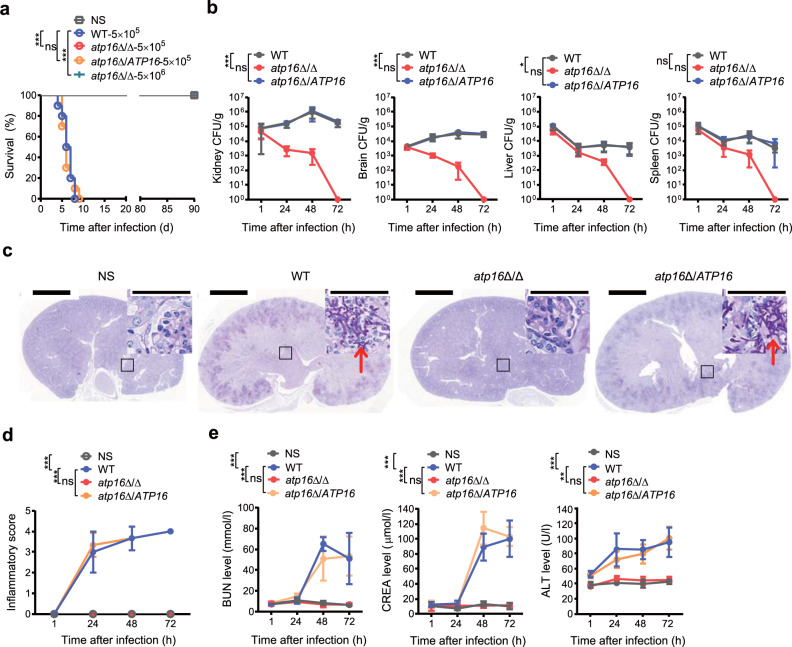
- atp16Δ/Δ-infected mice had 100% survival at 90 days versus 0% survival at 8 days for WT-infected mice, even when the atp16Δ/Δ challenge dose was increased 10-fold; fungal burdens became undetectable at 72 h, and complementation with ATP16 restored WT-like lethality.
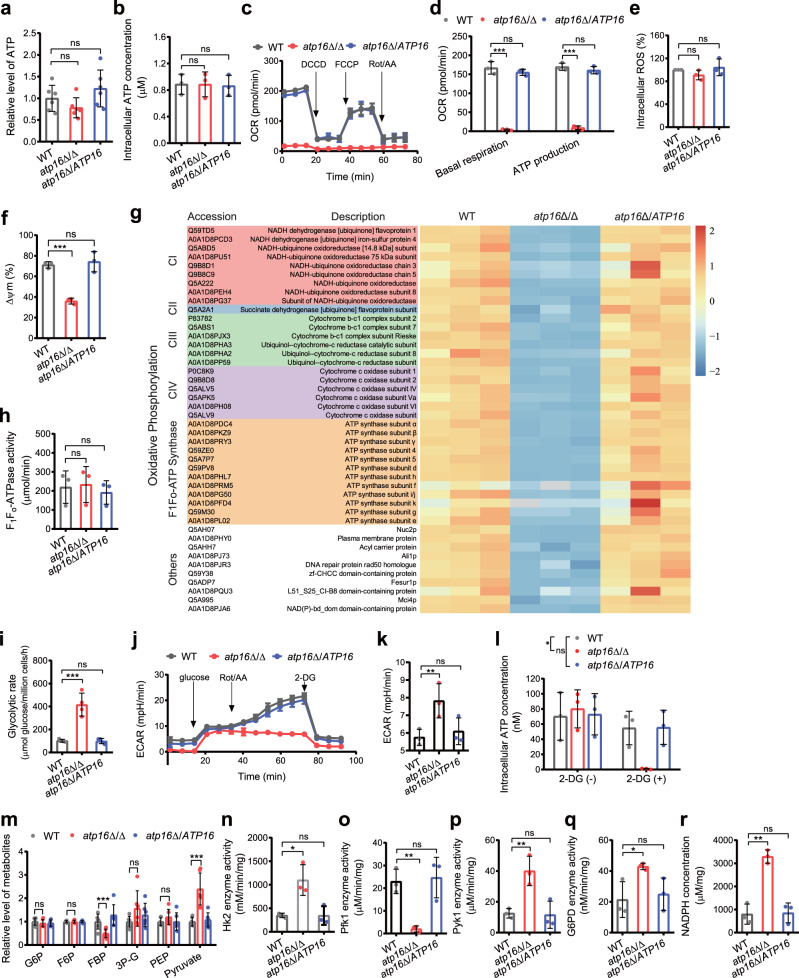
- Intracellular ATP was not perceptibly different from WT, but OXPHOS-derived ATP synthesis in atp16Δ/Δ was ~6% of WT, basal OCR was ~0 nmol O2/min/10^5 cells, glucose uptake was 4-fold higher, ECAR was 1.5-fold higher, and with 2-DG intracellular ATP fell ~84-fold.
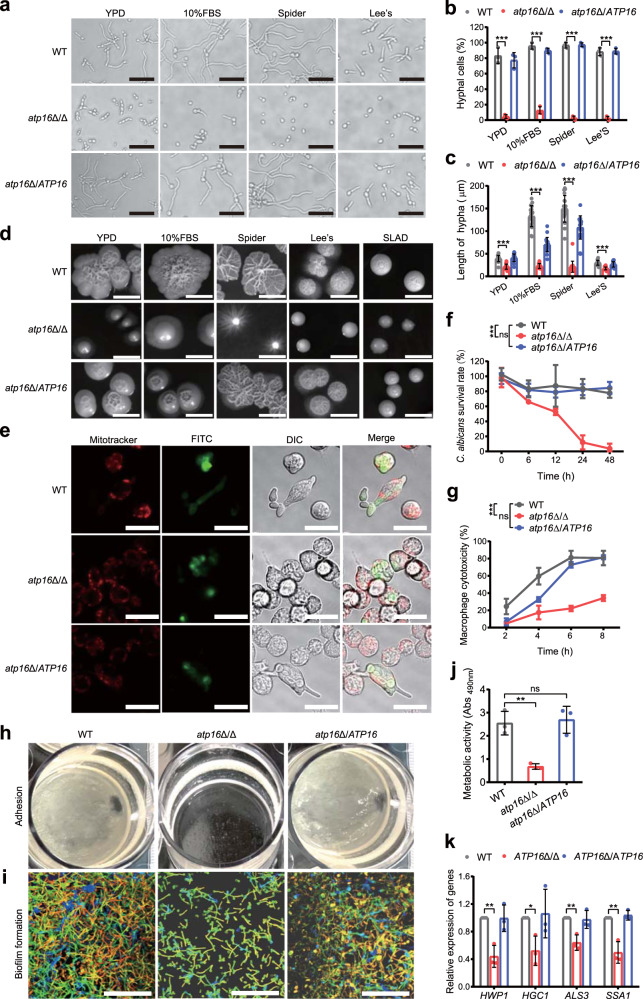
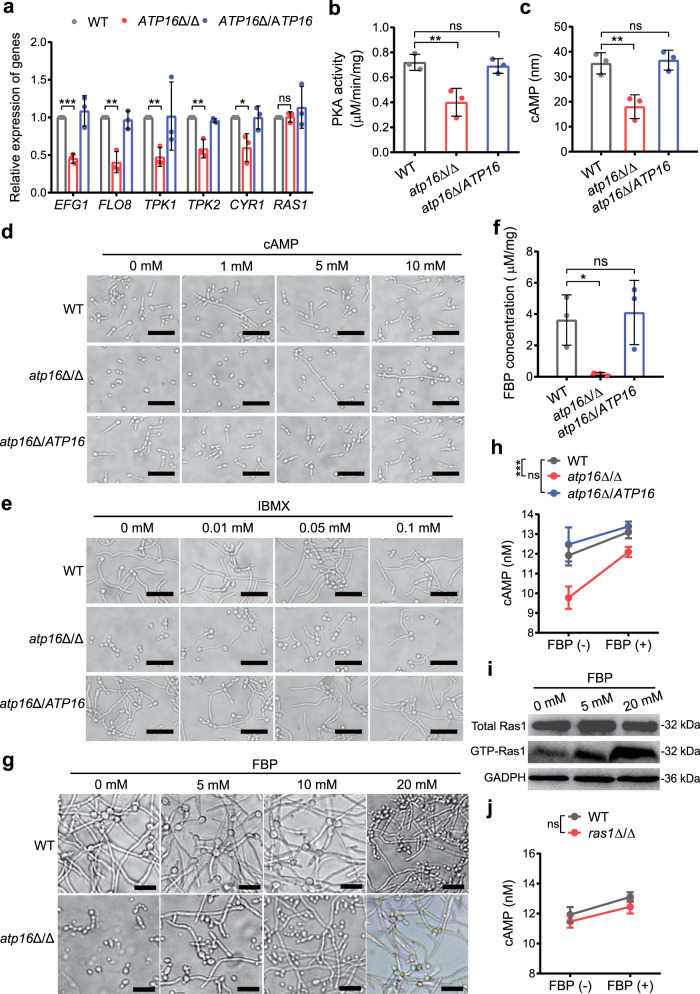
- atp16Δ/Δ showed impaired filamentation, adhesion, biofilm formation, and virulence-gene expression; intracellular FBP was 22-fold lower (4.5% of WT), Pfk1 activity was 9.1% of WT, PKA phosphorylation was reduced by 35%, and GTP-Ras1 activity was reduced by 81%. Exogenous FBP, cAMP, or IBMX restored filamentation.
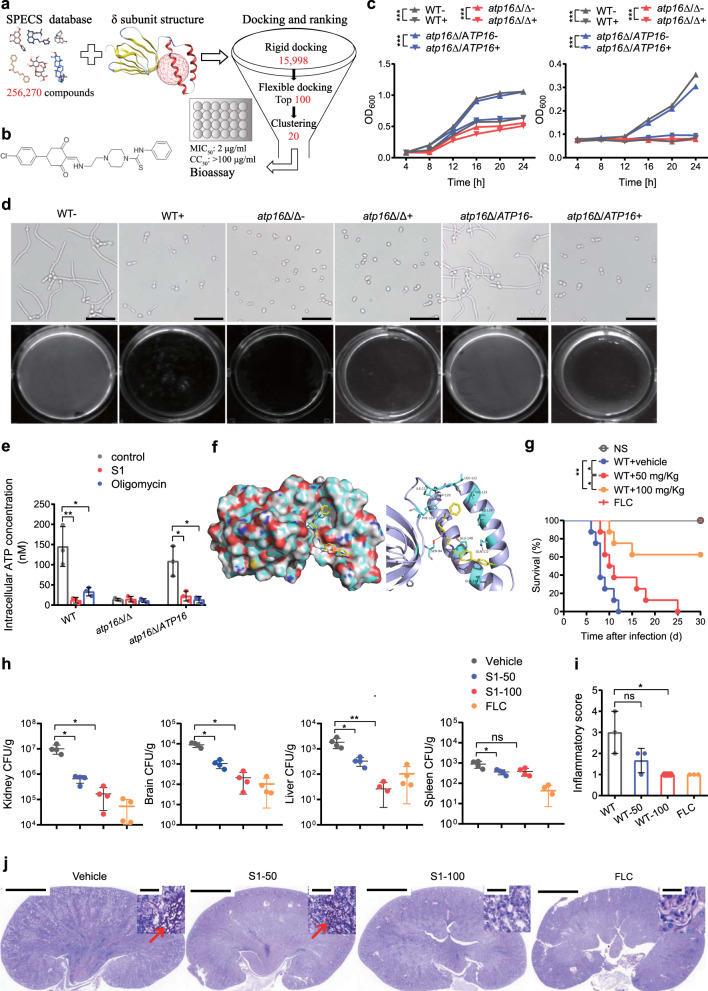
- Compound S1 (JNU-SM919, C26H29ClN4O2S), identified by structure-based virtual screening, inhibited WT growth in YPS and filamentation at 10 μM; S1-treated mice had a 60% survival rate 30 days after systemic WT infection, with reduced fungal burdens and kidney inflammation.
Methods
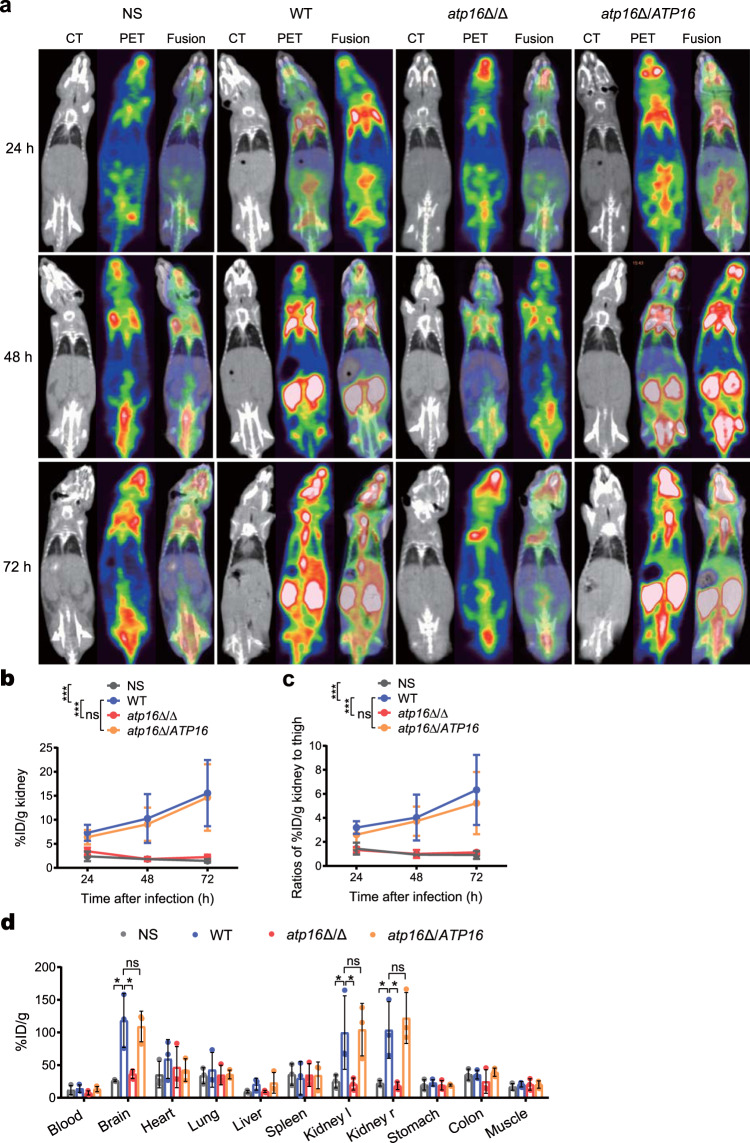
- C. albicans SC5314 WT, atp16Δ/Δ, atp16Δ/ATP16 complemented, and Atp16 O/E strains were tested in female BALB/c mice (8–10 weeks old) by intravenous infection with 5 × 10^5 CFU (or 5 × 10^6 CFU for high-dose atp16Δ/Δ), followed by survival monitoring, organ CFU, histopathology, blood chemistry, and MicroPET/CT with [18F]FDG.
- Mechanistic assays included targeted metabolomics, proteomics, luciferase/luciferin ATP measurement, Seahorse OCR/ECAR, ROS and ΔΨm assays, F1Fo-ATPase activity, RT-qPCR, macrophage co-culture, Pfk1 purification/phosphorylation, and enzyme activity assays.
- Structure-based virtual screening used homology modeling from S. cerevisiae F1Fo-ATP synthase (PDB 6CP3) and docked >250,000 compounds; S1 was tested in vitro and in mice by oral gavage at 50 or 100 mg/kg once daily for 7 days. Statistics used t-tests, one-way or two-way ANOVA, and log-rank tests, with P < 0.05; proteomics/metabolomics used fold change >1.5.
Limitations
- Stated in the paper: the mechanisms by which δ subunit deletion induces reduced Pfk1 phosphorylation and activity remain unknown; S1 provides only indirect evidence that it may act on the δ subunit; and the structure of F1Fo-ATP synthase from human pathogenic fungi has not been elucidated, so the receptor was homology-modeled from S. cerevisiae.
- Evident from the text: all infection and S1 efficacy data are from mouse models, with no human clinical validation; direct target engagement of S1 with the C. albicans δ subunit was not demonstrated; and the paper reports no explicit limitations section beyond the caveats noted above.
Model-written summary. Check it against the paper before relying on it.
Integrity signals
Registry
Cites
Statistics
Figures
Verification
Claims the paper makes
14 Valid · 0 Not valid · 14 Not checked · 127 Own results and interpretations
The cited sources support only part of this claim — read each source’s verdict below.
In the paper
“the proteomics results showed that the expression levels of mitochondrial OXPHOS subunits (including F1Fo-ATP synthase dimer formation contributing subunits i/j, e and g15,16) in atp16∆/∆ were potently reduced (Fig. 3g).”
§ The δ subunit of F1Fo-ATP synthase is required for pathogenicity of Candida albicans > Results > Intracellular ATP levels are not affected by the δ subunit deletion
What the sources say
- Partly supportedcites [15] Guo H Bueler SA Rubinstein JL Atomic model for the dimeric FO region of mitochondrial ATP synthase Science 2017 358 936 940 10.1126/science.aao4815 29074581 PMC6402782 sourceExperimental — accuracy not yet measured
In the section labeled Abstract (page unavailable), the paper identifies i/j and e as contributing to contacts between ATP synthase monomers. It describes g as part of an e–g–b domain that bends the membrane, but does not identify g as a dimer-interface subunit. The citation is attached to the subunit description, not to the citing paper’s proteomics finding of reduced expression in atp16Δ/Δ. (LLM, conf=0.84)
- Partly supportedcites [16] Davies KM Anselmi C Wittig I Faraldo-Gómez JD Kühlbrandt W Structure of the yeast F1Fo-ATP synthase dimer and its role in shaping the mitochondrial cristae Proc. Natl Acad. Sci. USA 2012 109 13602 13607 10.1073/pnas.1204593109 22864911 PMC3427116 sourceExperimental — accuracy not yet measured
The Results identify subunits i, e and g as proposed contributors to dimer formation, and the Discussion says e and g are essential for dimer formation. The citation is attached to that subunit description, not to the citing authors’ proteomics result. Our copy does not identify subunit j as a contributor. (LLM, conf=0.85)
boostedstates a cause- Asserted: passes — The authors put it forward as true.
- Checkable: passes — It can be checked against evidence.
- Load-bearing: passes — The paper’s conclusions depend on it.
- Based: passes — The paper gives a reason why it holds.
- Partly supported
The sources with a verdict support this claim; the rest weren’t checked yet, have no full text we could read, or their verdicts aren’t rated yet.
In the paper
“As phagocytes are the first and central barrier against fungal systemic infection24,25, the filamentation defects of the δ subunit-deleted mutant likely facilitate its elimination by phagocytes.”
§ The δ subunit of F1Fo-ATP synthase is required for pathogenicity of Candida albicans > Results > The δ subunit is required for virulence of C. albicans
What the sources say
- Not checked — no full text of the sourcecites [24] Erwig LP Gow NA Interactions of fungal pathogens with phagocytes Nat. Rev. Microbiol. 2016 14 163 176 10.1038/nrmicro.2015.21 26853116 source
- Supportedcites [25] Netea MG Joosten LA van der Meer JW Kullberg BJ van de Veerdonk FL Immune defence against Candida fungal infections Nat. Rev. Immunol. 2015 15 630 642 10.1038/nri3897 26388329 source
The citation is attached to the background statement about phagocytes, not the citing authors’ inference about their δ subunit-deleted mutant. In Effector mechanisms of defence (pp. 6–7), the review says tissue-resident macrophages first encounter and clear invading Candida and that neutrophils are crucial in disseminated fungal infection. (LLM, conf=0.90)
hedgedstates a possible cause- Asserted: passes — The authors put it forward as true.
- Checkable: passes — It can be checked against evidence.
- Load-bearing: passes — The paper’s conclusions depend on it.
- Based: passes — The paper gives a reason why it holds.
The cited sources support only part of this claim — read each source’s verdict below.
In the paper
“It has been reported that among 674 C. albicans gene-deleted mutants, 59% of these growth-defective mutants were competent for virulence, and 79% of virulence-defective mutants showed a normal growth in vitro, indicating that growth defects were not necessarily correlated to virulence31.”
§ The δ subunit of F1Fo-ATP synthase is required for pathogenicity of Candida albicans > Discussion
What the sources say
- Partly supportedcites [31] Noble SM French S Kohn LA Chen V Johnson AD Systematic screens of a Candida albicans homozygous deletion library decouple morphogenetic switching and pathogenicity Nat. Genet. 2010 42 590 598 10.1038/ng.605 20543849 PMC2893244 sourceExperimental — accuracy not yet measured
The Results section, “Quantitative proliferation screen identifies mutants with slow growth phenotypes” (page unavailable), supports the conclusion that poor in vitro growth does not necessarily correlate with reduced virulence. However, it reports 62% of proliferation-defective mutants as competent for infectivity and 77% of infectivity-defective mutants as growing normally in vitro, not the cited 59% and 79%. (LLM, conf=0.90)
hedged- Asserted: passes — The authors put it forward as true.
- Checkable: passes — It can be checked against evidence.
- Load-bearing: passes — The paper’s conclusions depend on it.
- Based: passes — The paper gives a reason why it holds.
- Partly supported
A result the paper reports from its own data — it cites no other source for it, so there is none to check. The quote shows it is in the paper.
In the paper
“In silico analysis of the proposed interaction between S1 and the δ subunit suggests that the N atom of S1 might form a hydrogen bond with the Ser94 hydroxyl oxygen atom of the δ subunit (Fig. 7f).”
§ The δ subunit of F1Fo-ATP synthase is required for pathogenicity of Candida albicans > Results > A compound potentially targeting the δ subunit inhibits C. albicans virulence in vitro and in vivo
hedgedstates an association- Asserted: passes — The authors put it forward as true.
- Checkable: passes — It can be checked against evidence.
- Load-bearing: unclear — It is unclear whether the paper’s conclusions depend on it.
- Based: passes — The paper gives a reason why it holds.
- Rests on an assumption not shown here.
A result the paper reports from its own data — it cites no other source for it, so there is none to check. The quote shows it is in the paper.
In the paper
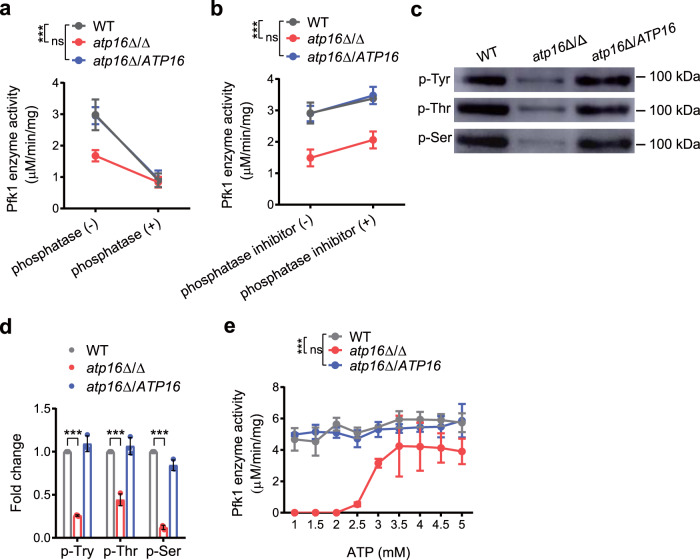
“The serine/threonine and tyrosine phosphorylation of Pfk1 in atp16Δ/Δ were strongly decreased compared with that of WT (Fig. 6c, d), indicating that δ subunit deletion decreases Pfk1 phosphorylation.”
§ The δ subunit of F1Fo-ATP synthase is required for pathogenicity of Candida albicans > Results > δ subunit deletion interferes with Pfk1 activity by phosphorylation
hedgedstates a cause- Asserted: passes — The authors put it forward as true.
- Checkable: passes — It can be checked against evidence.
- Load-bearing: passes — The paper’s conclusions depend on it.
- Based: passes — The paper gives a reason why it holds.
97 more claims
Create a free account to see all 155 claims and to verify the 7 references still open.
- Probably not a substantial claim. 29
- It may state two separate claims as one. 31
- The quote only partly states this claim. 1
Self-check
Percentages, sums and reported differences re-computed from the paper’s own numbers.
Each contradiction between two passages listed here was confirmed by an independent check.
Rated major: it would touch a result — a value a result rests on, reported and recomputed p-values on opposite sides of the significance level, two passages that conflict with no sign which is right, or a cited work retracted before this paper was published.
In the paper
§ The δ subunit of F1Fo-ATP synthase is required for pathogenicity of Candida albicans > Results > The δ subunit is required for virulence of C. albicans
“e RAW264.7 macrophages preloaded with MitoTracker Deep Red FM (red) were cocultured with FITC-stained WT, atp16Δ/Δ and atp16Δ/ATP16 cells (green) at a 1:1 ratio”
§ The δ subunit of F1Fo-ATP synthase is required for pathogenicity of Candida albicans > Methods > C. albicans-macrophage co-culture assays
“FITC-labelled C. albicans were cocultured with macrophages at an MOI of 2 for 3 h.”
Rated major: it would touch a result — a value a result rests on, reported and recomputed p-values on opposite sides of the significance level, two passages that conflict with no sign which is right, or a cited work retracted before this paper was published.
In the paper
§ The δ subunit of F1Fo-ATP synthase is required for pathogenicity of Candida albicans > Results > The δ subunit is required for virulence of C. albicans
“i, j Biofilm formation of WT, atp16Δ/Δ and atp16Δ/ATP16 after 6 h at 37 °C were observed by confocal microscopy in the Ex543/Em557 channel (i), and their metabolic activity was determined by XTT assay (j).”
§ The δ subunit of F1Fo-ATP synthase is required for pathogenicity of Candida albicans > Methods > Biofilm formation assay
“After 24 h of incubation at 37 °C, the resulting biofilms were washed and stained with 25 µg/ml concanavalin A-Alexa Fluor 594 conjugate (Invitrogen) at 37 °C for 1 h.”
Citations
Cites
Understanding the Warburg Effect: The Metabolic Requirements of Cell Proliferation
Vander Heiden, M. G., Cantley, L. C., & Thompson, C. B. (2009) · Science · doi:10.1126/science.1160809 · Cited by 16,197
Hidden Killers: Human Fungal Infections
Brown, G. D., Denning, D. W., Gow, N. A. R., Levitz, S. M., Netea, M. G., & White, T. C. (2012) · Science Translational Medicine · doi:10.1126/scitranslmed.3004404 · Cited by 4,284
Nonfilamentous C. albicans Mutants Are Avirulent
Lo, H.-J., Köhler, J. R., DiDomenico, B., Loebenberg, D., Cacciapuoti, A., & Fink, G. R. (1997) · Cell · doi:10.1016/s0092-8674(00)80358-x · Cited by 1,809
Virulence factors of Candida albicans
Calderone, R. A., & Fonzi, W. A. (2001) · Trends in Microbiology · doi:10.1016/s0966-842x(01)02094-7 · Cited by 1,331
Growth of Candida albicans hyphae
Sudbery, P. E. (2011) · Nature Reviews Microbiology · doi:10.1038/nrmicro2636 · Cited by 1,110
Pierce, C. G., Uppuluri, P., Tristan, A. R., Wormley, F. L., Mowat, E., Ramage, G., & Lopez-Ribot, J. L. (2008) · Nature Protocols · doi:10.1038/nprot.2008.141 · Cited by 1,041
The SAT1 flipper, an optimized tool for gene disruption in Candida albicans
Reuß, O., Vik, Å., Kolter, R., & Morschhäuser, J. (2004) · Gene · doi:10.1016/j.gene.2004.06.021 · Cited by 742
Noble, S. M., French, S., Kohn, L. A., Chen, V., & Johnson, A. D. (2010) · Nature Genetics · doi:10.1038/ng.605 · Cited by 678
Immune defence against Candida fungal infections
Netea, M. G., Joosten, L. A. B., van der Meer, J. W. M., Kullberg, B.-J., & van de Veerdonk, F. L. (2015) · Nature Reviews Immunology · doi:10.1038/nri3897 · Cited by 642
Interactions of fungal pathogens with phagocytes
Erwig, L. P., & Gow, N. A. R. (2016) · Nature Reviews Microbiology · doi:10.1038/nrmicro.2015.21 · Cited by 626
Regulatory circuitry governing fungal development, drug resistance, and disease.
Shapiro, R. S., Robbins, N., & Cowen, L. E. (2011) · Microbiology and Molecular Biology Reviews · doi:10.1128/mmbr.00045-10 · Cited by 576
Zhuang, H., & Alavi, A. (2002) · Seminars in Nuclear Medicine · doi:10.1053/snuc.2002.29278 · Cited by 524
Critical Role of Bcr1-Dependent Adhesins in C. albicans Biofilm Formation In Vitro and In Vivo
Nobile, C. J., Andes, D. R., Nett, J. E., Smith, F. J., Yue, F., Phan, Q.-T., Edwards, J. E., Filler, S. G., & Mitchell, A. P. (2006) · PLoS Pathogens · doi:10.1371/journal.ppat.0020063 · Cited by 507
Structure of the yeast F 1 F o -ATP synthase dimer and its role in shaping the mitochondrial cristae
Davies, K. M., Anselmi, C., Wittig, I., Faraldo-Gómez, J. D., & Kühlbrandt, W. (2012) · Proceedings of the National Academy of Sciences · doi:10.1073/pnas.1204593109 · Cited by 473
The structure of the central stalk in bovine F(1)-ATPase at 2.4 A resolution.
(2000) · Nature Structural Biology · doi:10.1038/80981 · Cited by 448
Mochizuki, T., Tsukamoto, E., Kuge, Y., Kanegae, K., Zhao, S., Hikosaka, K., Hosokawa, M., Kohanawa, M., & Tamaki, N. (2001) · PubMed · Cited by 327
The Pathogen Candida albicans Hijacks Pyroptosis for Escape from Macrophages
Uwamahoro, N., Verma-Gaur, J., Shen, H.-H., Qu, Y., Lewis, R., Lu, J., Bambery, K., Masters, S. L., Vince, J. E., Naderer, T., et al. (2014) · mBio · doi:10.1128/mbio.00003-14 · Cited by 264
Experimental evolution of a fungal pathogen into a gut symbiont
Tso, G. H. W., Reales-Calderon, J. A., Tan, A. S. M., Sem, X., Le, G. T. T., Tan, T. G., Lai, G. C., Srinivasan, K. G., Yurieva, M., Liao, W., et al. (2018) · Science · doi:10.1126/science.aat0537 · Cited by 248
Turning the respiratory flexibility of Mycobacterium tuberculosis against itself
Lamprecht, D. A., Finin, P. M., Rahman, M. A., Cumming, B. M., Russell, S. L., Jonnala, S. R., Adamson, J. H., & Steyn, A. J. C. (2016) · Nature Communications · doi:10.1038/ncomms12393 · Cited by 238
Mice with Disseminated Candidiasis Die of Progressive Sepsis
Spellberg, B., Ibrahim, A. S., Edwards Jr., J. E., & Filler, S. G. (2005) · The Journal of Infectious Diseases · doi:10.1086/430952 · Cited by 230
Candida albicans Triggers NLRP3-Mediated Pyroptosis in Macrophages
Wellington, M., Koselny, K., Sutterwala, F. S., & Krysan, D. J. (2014) · Eukaryotic Cell · doi:10.1128/ec.00336-13 · Cited by 227
Atomic model for the dimeric F O region of mitochondrial ATP synthase
Guo, H., Bueler, S. A., & Rubinstein, J. L. (2017) · Science · doi:10.1126/science.aao4815 · Cited by 225
Fructose-1,6-bisphosphate couples glycolytic flux to activation of Ras
Peeters, K., Van Leemputte, F., Fischer, B., Bonini, B. M., Quezada, H., Tsytlonok, M., Haesen, D., Vanthienen, W., Bernardes, N., Gonzalez-Blas, C. B., et al. (2017) · Nature Communications · doi:10.1038/s41467-017-01019-z · Cited by 203
Kopperschläger, G., & Johansson, G. (1982) · Analytical Biochemistry · doi:10.1016/0003-2697(82)90228-7 · Cited by 139
Sola‐Penna, M., Da Silva, D., Coelho, W. S., Marinho‐Carvalho, M. M., & Zancan, P. (2010) · IUBMB Life · doi:10.1002/iub.393 · Cited by 135
Deng, J., Wang, P., Chen, X., Cheng, H., Liu, J., Fushimi, K., Zhu, L., & Wu, J. Y. (2018) · Proceedings of the National Academy of Sciences · doi:10.1073/pnas.1806655115 · Cited by 135
Self-citationImmunoPET/MR imaging allows specific detection of Aspergillus fumigatus lung infection in vivo
Rolle, A.-M., Hasenberg, M., Thornton, C. R., Solouk-Saran, D., Männ, L., Weski, J., Maurer, A., Fischer, E., Spycher, P. R., Schibli, R., et al. (2016) · Proceedings of the National Academy of Sciences · doi:10.1073/pnas.1518836113 · Cited by 134
Denning, D. W. (2016) · Philosophical Transactions of the Royal Society B: Biological Sciences · doi:10.1098/rstb.2015.0468 · Cited by 117
Multiple roles and diverse regulation of the Ras/cAMP/protein kinase A pathway in Candida albicans
Huang, G., Huang, Q., Wei, Y., Wang, Y., & Du, H. (2019) · Molecular Microbiology · doi:10.1111/mmi.14148 · Cited by 116
Inhibition of CBLB protects from lethal Candida albicans sepsis
Wirnsberger, G., Zwolanek, F., Asaoka, T., Kozieradzki, I., Tortola, L., Wimmer, R. A., Kavirayani, A., Fresser, F., Baier, G., Langdon, W. Y., et al. (2016) · Nature Medicine · doi:10.1038/nm.4134 · Cited by 113
Grahl, N., Demers, E. G., Lindsay, A. K., Harty, C. E., Willger, S. D., Piispanen, A. E., & Hogan, D. A. (2015) · PLOS Pathogens · doi:10.1371/journal.ppat.1005133 · Cited by 111
[10] Phosphofructokinase from yeast
Hofmann, E., & Kopperschläger, G. (1982) · Methods in enzymology on CD-ROM/Methods in enzymology · doi:10.1016/s0076-6879(82)90106-9 · Cited by 103
A family of oligopeptide transporters is required for growth of Candida albicans on proteins
Reuß, O., & Morschhäuser, J. (2006) · Molecular Microbiology · doi:10.1111/j.1365-2958.2006.05136.x · Cited by 101
Candida albicans triggers NADPH oxidase-independent neutrophil extracellular traps through dectin-2
Wu, S.-Y., Weng, C.-L., Jheng, M.-J., Kan, H.-W., Hsieh, S.-T., Liu, F.-T., & Wu-Hsieh, B. A. (2019) · PLOS Pathogens · doi:10.1371/journal.ppat.1008096 · Cited by 91
Tao, L., Zhang, Y., Fan, S., Nobile, C. J., Guan, G., & Huang, G. (2017) · PLOS Genetics · doi:10.1371/journal.pgen.1006949 · Cited by 77
Self-citationAnimal models in the analysis of Candida host–pathogen interactions
de Repentigny, L. (2004) · Current Opinion in Microbiology · doi:10.1016/j.mib.2004.06.001 · Cited by 69
Assembling the mitochondrial ATP synthase
Song, J., Pfanner, N., & Becker, T. (2018) · Proceedings of the National Academy of Sciences · doi:10.1073/pnas.1801697115 · Cited by 68
New tools at the Candida Genome Database: biochemical pathways and full-text literature search
Skrzypek, M. S., Arnaud, M. B., Costanzo, M. C., Inglis, D. O., Shah, P., Binkley, G., Miyasato, S. R., & Sherlock, G. (2010) · Nucleic Acids Research · doi:10.1093/nar/gkp836 · Cited by 67
Experimental mouse models of disseminated Candida auris infection
Xin, H., Mohiuddin, F., Tran, J., Adams, A., & Eberle, K. (2019) · mSphere · doi:10.1128/msphere.00339-19 · Cited by 67
Jagunal homolog 1 is a critical regulator of neutrophil function in fungal host defense
Wirnsberger, G., Zwolanek, F., Stadlmann, J., Tortola, L., Liu, S. W., Perlot, T., Järvinen, P., Dürnberger, G., Kozieradzki, I., Sarao, R., et al. (2014) · Nature Genetics · doi:10.1038/ng.3070 · Cited by 62
The two rotor components of yeast mitochondrial ATP synthase are mechanically coupled by subunit δ
Duvezin-Caubet, S., Caron, M., Giraud, M.-F., Velours, J., & di Rago, J.-P. (2003) · Proceedings of the National Academy of Sciences · doi:10.1073/pnas.2135169100 · Cited by 53
Positron emission tomography imaging of novel AAV capsids maps rapid brain accumulation
Seo, J. W., Ingham, E. S., Mahakian, L. M., Tumbale, S. K., Wu, B., Aghevlian, S., Shams, S., Baikoghli, M., Jain, P., Ding, X., et al. (2020) · Nature Communications · doi:10.1038/s41467-020-15818-4 · Cited by 47
Ruben, S., Garbe, E., Mogavero, S., Albrecht-Eckardt, D., Hellwig, D., Häder, A., Krüger, T., Gerth, K., Jacobsen, I. D., Elshafee, O., et al. (2020) · mBio · doi:10.1128/mbio.00206-20 · Cited by 45
A “Petite Obligate” Mutant of Saccharomyces cerevisiae
Duvezin-Caubet, S., Rak, M., Lefebvre-Legendre, L., Tetaud, E., Bonnefoy, N., & di Rago, J.-P. (2006) · Journal of Biological Chemistry · doi:10.1074/jbc.m513805200 · Cited by 40
Unanticipated Heterogeneity in Growth Rate and Virulence among Candida albicans AAF1 Null Mutants
Rieg, G., Fu, Y., Ibrahim, A. S., Zhou, X., Filler, S. G., & Edwards, J. E. (1999) · Infection and Immunity · doi:10.1128/iai.67.7.3193-3198.1999 · Cited by 36
Gene Deletion in Candida albicans Wild-Type Strains Using the SAT1-Flipping Strategy
Sasse, C., & Morschhäuser, J. (2012) · Methods in Molecular Biology · doi:10.1007/978-1-61779-539-8_1 · Cited by 35
Regulation of rabbit muscle phosphofructokinase by phosphorylation
Cai, G.-Z., Callaci, T. P., Luther, M. A., & Ching Lee, J. (1997) · Biophysical Chemistry · doi:10.1016/s0301-4622(96)02232-6 · Cited by 31
Chauhan, N., Ciudad, T., Rodríguez-Alejandre, A., Larriba, G., Calderone, R., & Andaluz, E. (2005) · Infection and Immunity · doi:10.1128/iai.73.12.8069-8078.2005 · Cited by 31
Ostojić, J., Panozzo, C., Lasserre, J.-P., Nouet, C., Courtin, F., Blancard, C., di Rago, J.-P., & Dujardin, G. (2013) · Cell Metabolism · doi:10.1016/j.cmet.2013.08.017 · Cited by 27
In Vitro Models for Candida Biofilm Development
Krom, B. P., & Willems, H. M. E. (2015) · Methods in molecular biology · doi:10.1007/978-1-4939-3052-4_8 · Cited by 24
Getting to the bottom of the F1-ATPase.
(2000) · Nature Structural Biology · doi:10.1038/80902 · Cited by 19
ATP hydrolysis by ischemic Mitochondria
Classen, J. B., Mergner, W. J., & Costa, M. (1989) · Journal of Cellular Physiology · doi:10.1002/jcp.1041410109 · Cited by 14
Nissler, K., Kessler, R., Schellenberger, W., & Hofmann, E. (1979) · Biochemical and Biophysical Research Communications · doi:10.1016/0006-291x(79)91230-0 · Cited by 10
Zhao, Y., Lyu, Y., Zhang, Y., Li, S., Zhang, Y., Liu, Y., Tang, C., Zhang, Z., Li, D., & Zhang, H. (2021) · Medical Mycology · doi:10.1093/mmy/myaa094 · Cited by 5
Self-citation(2000) · doi:10.1002/1097-0061(20000630)16:9
Cited by
Next-generation antifungal drugs: Mechanisms, efficacy, and clinical prospects
Lu, X., Zhou, J., Ming, Y., Wang, Y., He, R., Li, Y., Feng, L., Zeng, B., Du, Y., & Wang, C. (2025) · Acta Pharmaceutica Sinica B · doi:10.1016/j.apsb.2025.06.013 · Cited by 57
“The identification of a compound potentially targeting the δ subunit of the fungal F 1 F o -ATP synthase induced an in vitro phenotype similar to that observed in the ATP16 deletion mutant and protected mice from death from invasive candidiasis 253 .”
Chen, P., Wu, H., Zhao, Y., Zhong, L., Zhang, Y., Zhan, X., Xiao, A., Huang, Y., Zhang, H., & Guan, B. (2024) · Advanced Materials · doi:10.1002/adma.202312985 · Cited by 31
Self-citationRespiration supports intraphagosomal filamentation and escape of Candida albicans from macrophages
Case, N. T., Westman, J., Hallett, M. T., Plumb, J. D., Farheen, A., Maxson, M. E., MacAlpine, J., Liston, S. D., Hube, B., Robbins, N., et al. (2023) · mBio · doi:10.1128/mbio.02745-23 · Cited by 20
“Previous studies have documented the importance of metabolic flexibility in enabling the virulence of C. albicans in cell culture models and in mice (23, 66, 67).”
BackgroundDeng, Y., Xu, M., Li, S., Bing, J., Zheng, Q., Huang, G., Liao, W., Pan, W., & Tao, L. (2024) · PLOS Pathogens · doi:10.1371/journal.ppat.1012362 · Cited by 16
Self-citationZeng, L., Huang, Y., Tan, J., Peng, J., Hu, N., Liu, Q., Cao, Y., Zhang, Y., Chen, J., & Huang, X. (2023) · Frontiers in Cellular and Infection Microbiology · doi:10.3389/fcimb.2023.1136698 · Cited by 15
Self-citation
Metadata
- Authors
- Li, S., Zhao, Y., Zhang, Y., Zhang, Y., Zhang, Z., Tang, C., Weng, L., Chen, X., Zhang, G., & Zhang, H.
- Affiliations
- Jinan University (CN)
- Third Affiliated Hospital of Sun Yat-sen University (CN)
- Corresponding author
- Zhang, Gehua
- Zhang, Hong
- Venue
- Nature Communications
- Published
- 2021-10-15
- Volume
- 12
- Issue
- 1
- Pages
- 6041-6041
- ISSN
- 2041-1723 (ISSN-L)
- PMC
- PMC8519961
- OpenAlex
- W3205059665
- Cited by
- 21
- References
- 56
- Citations by year
- 2026: 4 · 2025: 6 · 2024: 4 · 2023: 5 · 2022: 2
- FWCI
- 0.87
- Type
- journal article
- Language
- en
- Open access
- gold
- doi.org
- Licence
- cc-by
- creativecommons.org/licenses/by/4.0 (tdm)
- creativecommons.org/licenses/by/4.0 (vor)
- Locations
- Nature Communications (publishedVersion, cc-by)
- Europe PMC (PubMed Central) (publishedVersion, other-oa)
- PubMed Central (publishedVersion, cc-by)
- PubMed (publishedVersion)
- RePEc: Research Papers in Economics (submittedVersion)
- DOAJ (DOAJ: Directory of Open Access Journals) (submittedVersion, cc-by-sa)
- Funders
- China Postdoctoral Science Foundation (2019M653291)
- National Natural Science Foundation of China (81971913, 81903675, 81471995)
- Topics
- Health Sciences › Medicine › Infectious Diseases › Antifungal resistance and susceptibility
- Life Sciences › Biochemistry, Genetics and Molecular Biology › Molecular Biology › Fungal and yeast genetics research
- Life Sciences › Biochemistry, Genetics and Molecular Biology › Molecular Biology › ATP Synthase and ATPases Research
- Keywords
- F1FO-ATP synthase, delta subunit, Candida albicans, systemic candidiasis, fungal pathogenicity, oxidative phosphorylation, glycolysis, phosphofructokinase, cAMP/PKA signaling, Ras1, virulence factors, antifungal drug targets, virtual screening, mouse infection model
- MeSH terms
- RAW 264.7 Cells, Adenosine Triphosphate, Animals, Antifungal Agents, Candida albicans, Candidiasis, Fungal Proteins, Glycolysis, Oxidative Phosphorylation, Virulence, Down-Regulation, Gene Expression Regulation, Fungal, Biofilms, Mitochondrial Proton-Translocating ATPases, Virulence Factors, Proteomics, Mice, Metabolomics
About these checks
Registry, retraction, Cites and statistics results are computed, not judged, with one exception: a printed reference that no index lists is read once by a model before it counts as a citation error. Claims are extracted by a model and kept only when their quote appears verbatim in the text; each cited source is then checked, with a model’s help, for whether it says what the claim relies on. Those verdicts can be wrong — read the claim’s quote and the cited source before relying on one.
The claim verdicts this report counts are experimental: their accuracy is not yet measured.
A language model drew the claims from the paper on 2026-10-10, under version 3 of the claim definition (model deepseek-v4.1-flash, prompt extract-v3).
A second model labelled each claim on 2026-10-10 (model jev-1.13-20260917, definition revision gold-guideline-v0.2).
Cited sources are checked with a language model’s help (gpt-6-sol).
Statistics and arithmetic are recomputed, not judged.
Confidence bands are shown only for fields calibrated on our annotated test set. None is calibrated yet, so no band is shown.
What counts as a claim ›How we measure confidence ›How we check this ›
Are you an author, or do you see a problem with this page? Request a review
Data sources
Bibliographic data: Semantic Scholar, OpenAlex, Crossref.
Contains information from the Semantic Scholar Academic Graph Datasets, made available under the ODC Attribution License (ODC-BY 1.0).
Semantic Scholar’s data is described in: Kinney, R., et al. (2023). The Semantic Scholar Open Data Platform. arXiv:2301.10140.
