

Light-triggered and phosphorylation-dependent 14-3-3 association with NON-PHOTOTROPIC HYPOCOTYL 3 is required for hypocotyl phototropism
Open accessPublished version of a preprint
The DOI matches its Crossref record; 72 of the 73 references it cites were found in a registry or an index.
Abstract
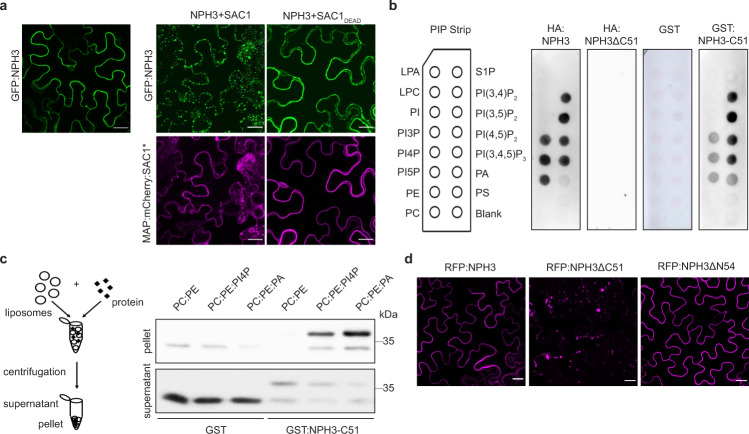
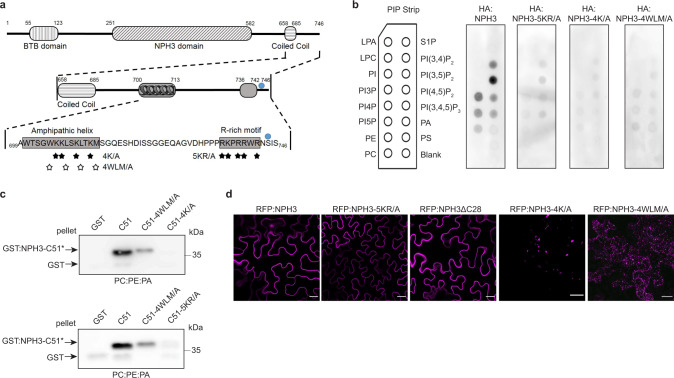
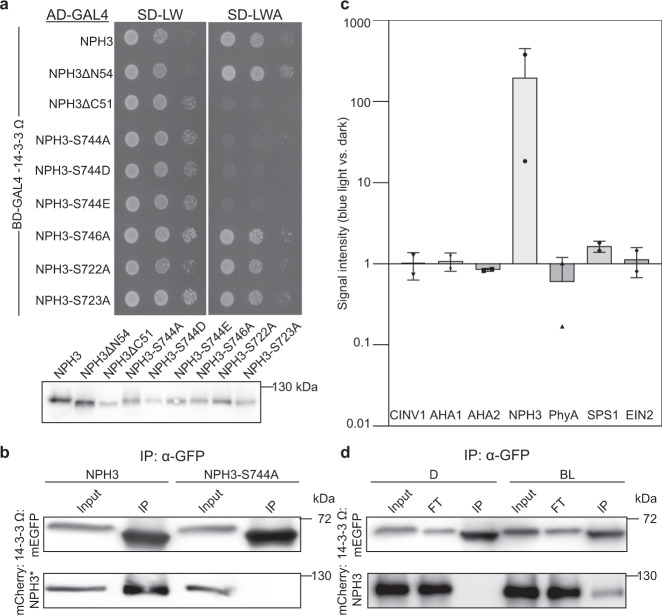
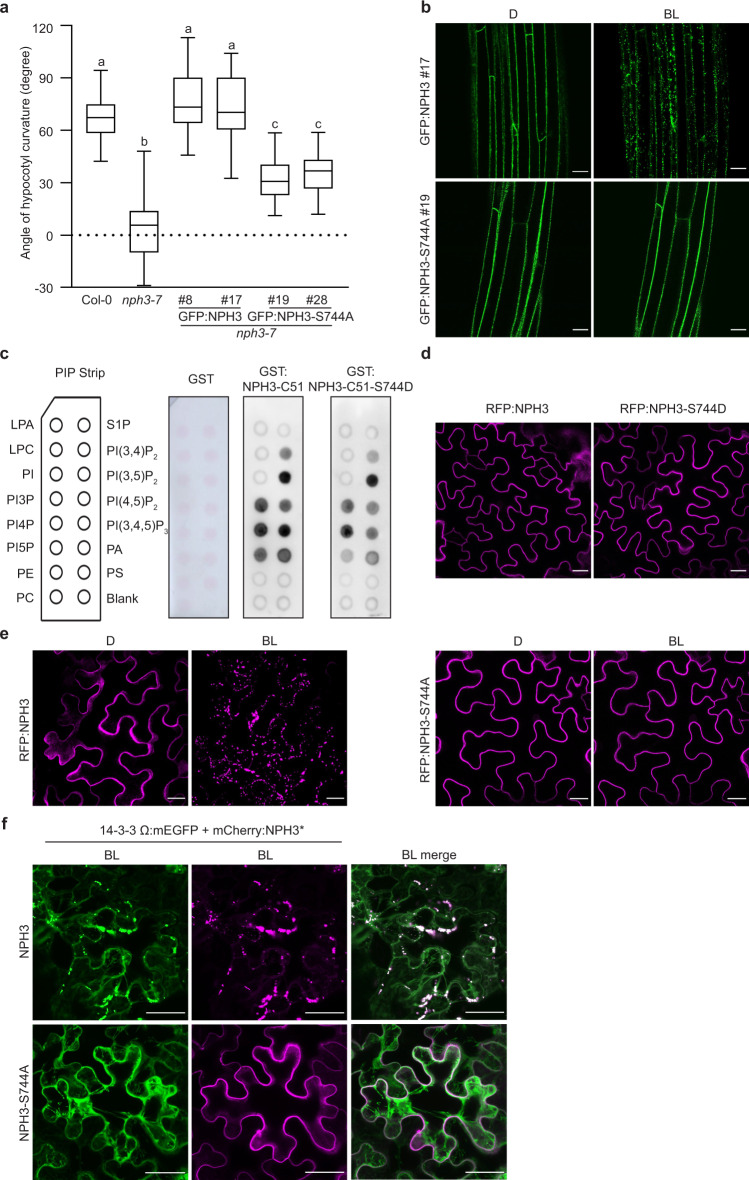
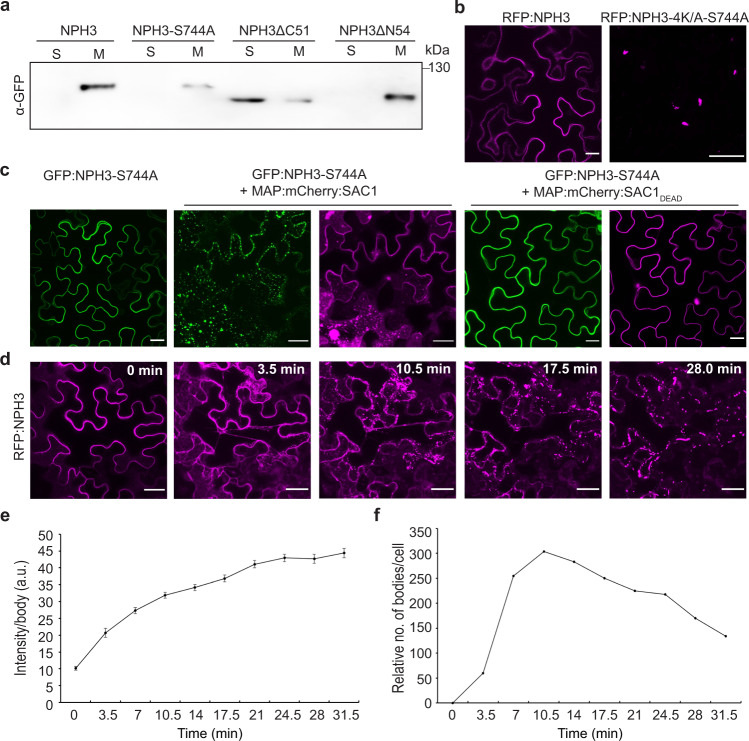
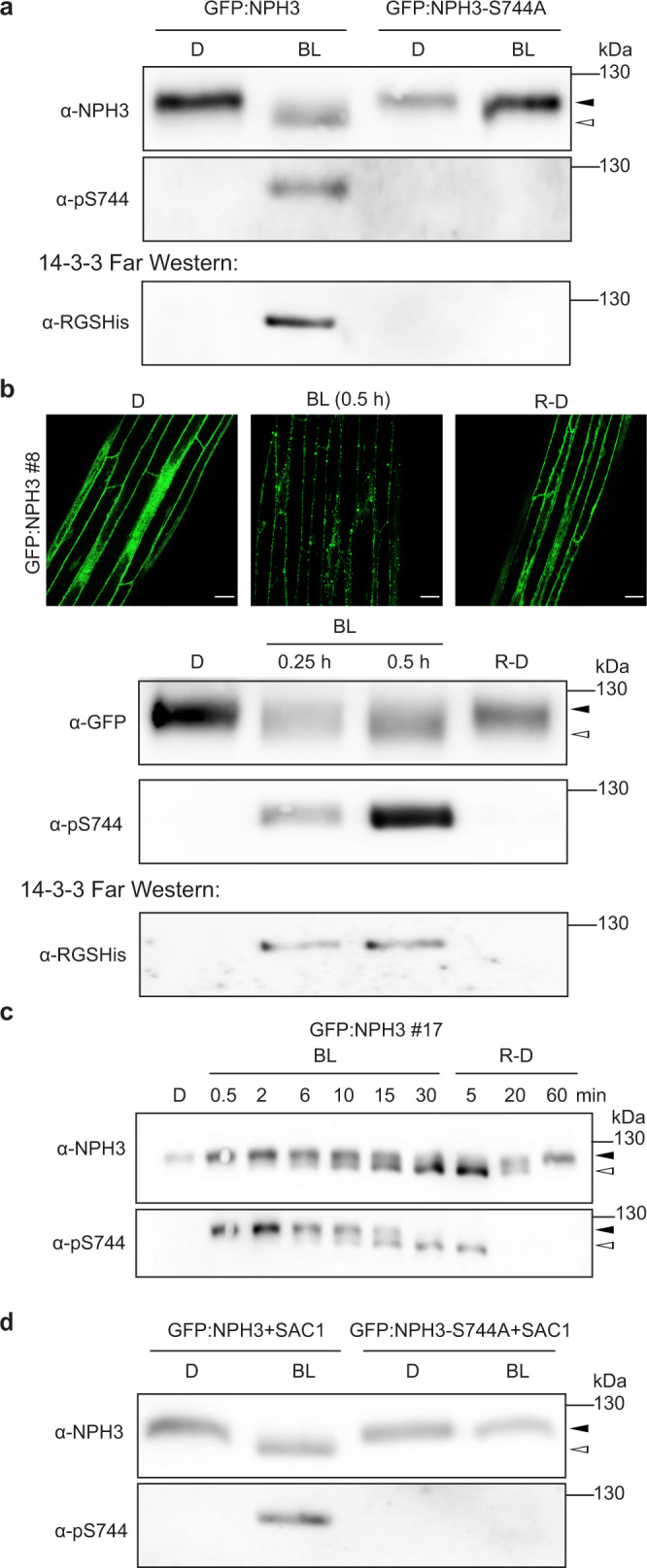
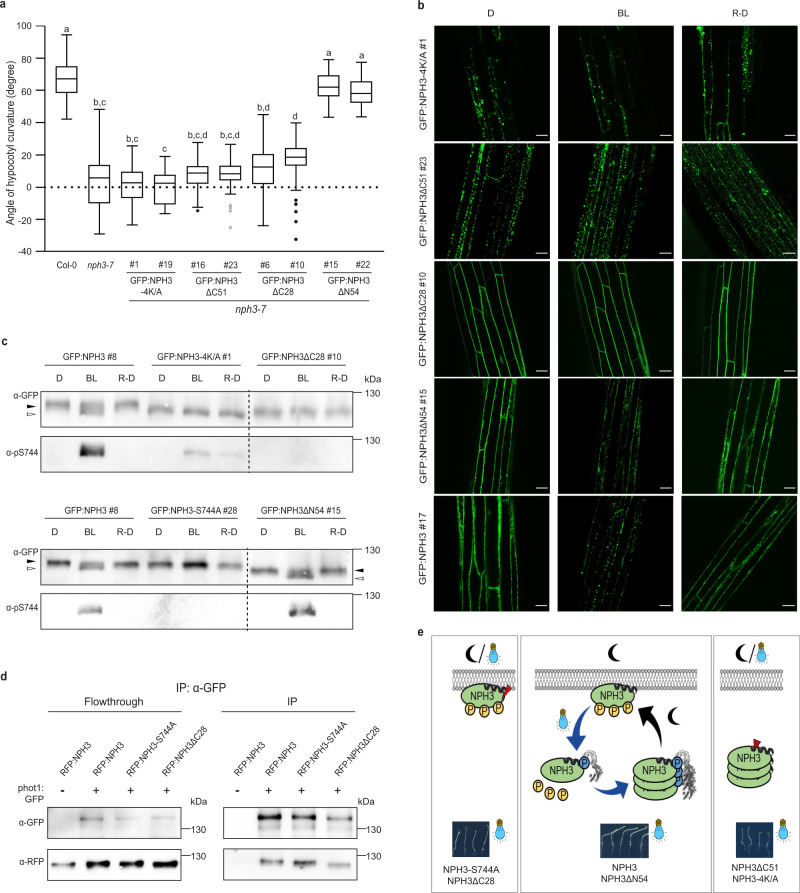
NON-PHOTOTROPIC HYPOCOTYL 3 (NPH3) is a key component of the auxin-dependent plant phototropic growth response. We report that NPH3 directly binds polyacidic phospholipids, required for plasma membrane association in darkness. We further demonstrate that blue light induces an immediate phosphorylation of a C-terminal 14-3-3 binding motif in NPH3. Subsequent association of 14-3-3 proteins is causal for the light-induced release of NPH3 from the membrane and accompanied by NPH3 dephosphorylation. In the cytosol, NPH3 dynamically transitions into membraneless condensate-like structures. The dephosphorylated state of the 14-3-3 binding site and NPH3 membrane recruitment are recoverable in darkness. NPH3 variants that constitutively localize either to the membrane or to condensates are non-functional, revealing a fundamental role of the 14-3-3 mediated dynamic change in NPH3 localization for auxin-dependent phototropism. This regulatory mechanism might be of general nature, given that several members of the NPH3-like family interact with 14-3-3 via a C-terminal motif.
Overview
The claims and statistics of this paper haven’t been checked yet.
Free: it reads the open-access text and checks the first 5 claims that cite a source we can check. Create a free account to check every claim.
Integrity signals
Registry
Cites
Statistics
Figures
Verification
Claims the paper makes
The claims and statistics of this paper haven’t been checked yet.
Free: it reads the open-access text and checks the first 5 claims that cite a source we can check. Create a free account to check every claim.
Claims other papers make about this one
Each is checked against this paper’s own text: does it say what the citing paper says it does?
The cited source says what the claim attributes to it.
In the citing paper
“Subsequent binding of the 14–3-3 protein is responsible for light-induced release of NPH3 from the plasma membrane with accompanying NPH3 dephosphorylation (Reuter et al., 2021; Sullivan et al., 2021).”
From The action of enhancing weak light capture via phototropic growth and chloroplast movement in plants (2022) · cites this paper as Reuter et al., 2021
Self-check
Percentages, sums and reported differences re-computed from the paper’s own numbers.
The self-check needs the paper’s full text.
Citations
Cites
Fiji: an open-source platform for biological-image analysis
Schindelin, J., Arganda-Carreras, I., Frise, E., Kaynig, V., Longair, M., Pietzsch, T., Preibisch, S., Rueden, C., Saalfeld, S., Schmid, B., et al. (2012) · Nature Methods · doi:10.1038/nmeth.2019 · Cited by 66,890
Perez-Riverol, Y., Csordas, A., Bai, J., Bernal-Llinares, M., Hewapathirana, S., Kundu, D. J., Inuganti, A., Griss, J., Mayer, G., Eisenacher, M., et al. (2019) · Nucleic Acids Research · doi:10.1093/nar/gky1106 · Cited by 6,693
Biomolecular condensates: organizers of cellular biochemistry
Banani, S. F., Lee, H. O., Hyman, A. A., & Rosen, M. K. (2017) · Nature Reviews Molecular Cell Biology · doi:10.1038/nrm.2017.7 · Cited by 6,100
14-3-3 proteins act as intracellular receptors for rice Hd3a florigen
Taoka, K.-I., Ohki, I., Tsuji, H., Furuita, K., Hayashi, K., Yanase, T., Yamaguchi, M., Nakashima, C., Purwestri, Y. A., Tamaki, S., et al. (2011) · Nature · doi:10.1038/nature10272 · Cited by 789
Cheng, Y., Dai, X., & Zhao, Y. (2007) · The Plant Cell · doi:10.1105/tpc.107.053009 · Cited by 654
Dynamic interactions between 14-3-3 proteins and phosphoproteins regulate diverse cellular processes
MACKINTOSH, C. (2004) · Biochemical Journal · doi:10.1042/bj20031332 · Cited by 526
An RLP23–SOBIR1–BAK1 complex mediates NLP-triggered immunity
Albert, I., Böhm, H., Albert, M., Feiler, C. E., Imkampe, J., Wallmeroth, N., Brancato, C., Raaymakers, T. M., Oome, S., Zhang, H., et al. (2015) · Nature Plants · doi:10.1038/nplants.2015.140 · Cited by 523
Mass-spectrometry-based draft of the Arabidopsis proteome
Mergner, J., Frejno, M., List, M., Papacek, M., Chen, X., Chaudhary, A., Samaras, P., Richter, S., Shikata, H., Messerer, M., et al. (2020) · Nature · doi:10.1038/s41586-020-2094-2 · Cited by 510
Self-citationRecombinational Cloning with Plant Gateway Vectors
Karimi, M., Depicker, A., & Hilson, P. (2007) · Plant Physiology · doi:10.1104/pp.107.106989 · Cited by 457
Cellular and Subcellular Localization of Phototropin 1
Sakamoto, K., & Briggs, W. R. (2002) · The Plant Cell · doi:10.1105/tpc.003293 · Cited by 405 · cited 1×
“In the past, it has been hypothesized that the light-induced internalization of phot1 – first described in 2002 [46] - may be coupled to light-triggered re-localization of auxin transporters.”
Background
Cited by
The EDS1–PAD4–ADR1 node mediates Arabidopsis pattern-triggered immunity
Pruitt, R. N., Locci, F., Wanke, F., Zhang, L., Saile, S. C., Joe, A., Karelina, D., Hua, C., Fröhlich, K., Wan, W.-L., et al. (2021) · Nature · doi:10.1038/s41586-021-03829-0 · Cited by 455
Self-citationSaile, S. C., Ackermann, F. M., Sunil, S., Keicher, J., Bayless, A. M., Bonardi, V., Wan, L., Doumane, M., Stöbbe, E., Jaillais, Y., et al. (2021) · New Phytologist · doi:10.1111/nph.17788 · Cited by 70
“Microsomal fractionation Microsomal membrane fractions were prepared from transgenic Arabidopsis plants expressing either pADR1-L2::ADR1-L2-HA or pADR1-L2::ADR1-L2DV-HA (Roberts et al., 2013).”
BackgroundMethodInfluentialSelf-citationBRXL4‐LAZY1 interaction at the plasma membrane controls Arabidopsis branch angle and gravitropism
Che, X., Splitt, B. L., Eckholm, M. T., Miller, N. D., & Spalding, E. P. (2022) · The Plant Journal · doi:10.1111/tpj.16055 · Cited by 33
“…Journal, (2023), 113, 211–224 software program (Brzeska et al., 2010; https:// hpcwebapps.cit.nih.gov/bhsearch/) that successfully predicted membrane-associating BH domains in Arabidopsis proteins (Reuter et al., 2021) predicted two BH domains in BRXL4, one in each of the BRX domains (Figure 2a).”
BackgroundPhototropin connects blue light perception to starch metabolism in green algae
Yuan, Y., Iannetta, A. A., Kim, M., Sadecki, P. W., Arend, M., Tsichla, A., Ruiz‐Sola, M. Á., Kepesidis, G., Falconet, D., Thévenon, E., et al. (2025) · Nature Communications · doi:10.1038/s41467-025-57809-3 · Cited by 34
Marković, V., & Jaillais, Y. (2022) · New Phytologist · doi:10.1111/nph.18258 · Cited by 31
Haga, K., & Sakai, T. (2023) · Journal of Experimental Botany · doi:10.1093/jxb/erad015 · Cited by 31
Syntaxin 17 recruitment to mature autophagosomes is temporally regulated by PI4P accumulation
Shinoda, S., Sakai, Y., Matsui, T., Uematsu, M., Koyama‐Honda, I., Sakamaki, J.-I., Yamamoto, H., & Mizushima, N. (2024) · eLife · doi:10.7554/elife.92189 · Cited by 26
Waksman, T., Suetsugu, N., Hermanowicz, P., Ronald, J., Sullivan, S., Łabuz, J., & Christie, J. M. (2023) · The Plant Journal · doi:10.1111/tpj.16144 · Cited by 22
“The Plant Journal published by Society for Experimental Biology and John Wiley & Sons Ltd., The Plant Journal , (2023), 114 , 390–402 seedlings (Reuter et al., 2021, Sullivan et al., 2021).”
BackgroundInfluentialZhang, Y., He, Y., Zhao, H., Wang, Y., Wu, C., Zhao, Y., Xue, H., Zhu, Q., Zhang, J., & Ou, X. (2024) · Plants · doi:10.3390/plants13020245 · Cited by 20
FERONIA is involved in phototropin 1‐mediated blue light phototropic growth in Arabidopsis
Li, C., Chen, J., Li, X., Zhang, X., Liu, Y., Zhu, S., Wang, L., Zheng, H., Luan, S., Li, J., et al. (2022) · Journal of Integrative Plant Biology · doi:10.1111/jipb.13336 · Cited by 20
The action of enhancing weak light capture via phototropic growth and chloroplast movement in plants
Xin, G.-Y., Li, L.-P., Wang, P.-T., Li, X.-Y., Han, Y.-J., & Zhao, X. (2022) · Stress Biology · doi:10.1007/s44154-022-00066-x · Cited by 17
Chien, Y., & Yoon, G. M. (2024) · BioEssays · doi:10.1002/bies.202400043 · Cited by 12
Obergfell, E., Hohmann, U., Moretti, A., Chen, H., & Hothorn, M. (2024) · Plant And Cell Physiology · doi:10.1093/pcp/pcae056 · Cited by 10
Carey, O., Fehilly, J., O’Leary, E. T., O’Shea, S., Juda, K., Fitzel, R., Selvaraj, P., Burk, K., Lindsay, A. J., Young, P. W., et al. (2025) · Journal of Molecular Biology · doi:10.1016/j.jmb.2025.169314 · Cited by 10
Exploring lipid–protein interactions in plant membranes
Škrabálková, E., Pejchar, P., & Potocký, M. (2024) · Journal of Experimental Botany · doi:10.1093/jxb/erae199 · Cited by 11
Experimental manipulation of phosphoinositide lipids: from cells to organisms
Doumane, M., Caillaud, M., & Jaillais, Y. (2022) · Trends in Cell Biology · doi:10.1016/j.tcb.2022.01.009 · Cited by 10
Subcellular trafficking and post-translational modification regulate PIN polarity in plants
Cheng, S., & Wang, Y. (2022) · Frontiers in Plant Science · doi:10.3389/fpls.2022.923293 · Cited by 9
The Cm14-3-3μ protein and CCT transcription factor CmNRRa delay flowering in chrysanthemum
Cheng, H., Zhang, J., Zhang, Y., Si, C., Wang, J., Gao, Z., Cao, P., Cheng, P., He, Y., Chen, S., et al. (2023) · Journal of Experimental Botany · doi:10.1093/jxb/erad130 · Cited by 9
Zhang, Y., He, Y., Zhao, H., Zhang, Y., Yang, J., Ou, X., Zhang, J., & Zhu, Q. (2023) · Plants · doi:10.3390/plants12233975 · Cited by 9
The phytochrome B signaling regulates salt-mediated seedling growth in the dark
Qi, P., Mo, W., & Lin, R. (2025) · Plant and Cell Physiology · doi:10.1093/pcp/pcaf029 · Cited by 8
“Moreover, 14-3-3 proteins are implicated in blue light-induced de-etiolation and phototropic growth (Hloušková et al. 2019, Reuter et al. 2021, Sullivan et al. 2021).”
Nonphototrophic hypocotyl 3 domain proteins: traffic directors, hitchhikers, or both?
Verslues, P. E., & Upadhyay, N. (2024) · New Phytologist · doi:10.1111/nph.20211 · Cited by 7
Manishankar, P., Fernandez, A., Rohr, L. R., Yigit, Y. I., Reuter, L., Schmidt, T., Droste-Borel, I., Keicher, J., Bock, A., & Oecking, C. (2026) · The Plant Cell · doi:10.1093/plcell/koag028 · Cited by 7
Self-citationYan, T., Hu, Z., Zhang, T., Li, R., Bai, Y., Song, H., Wang, C., Dai, C., Deng, Q., Xin, L., et al. (2025) · New Phytologist · doi:10.1111/nph.70410 · Cited by 6
“…localization, and stability across various cellular processes, including metabolism, transport, signal transduction, and plant adaptation to abiotic and biotic stresses (Yang et al ., 2019; Reuter et al ., 2021; Singh et al ., 2021; Sullivan et al ., 2021; Gao et al ., 2022; Qi et al ., 2022).”
Genetic architecture of a light-temperature coincidence detector
Seluzicki, A., & Chory, J. (2025) · Nature Communications · doi:10.1038/s41467-025-62194-y · Cited by 6
“Upon blue light activation, PHOT1 both directly phosphorylates and triggers dephosphorylation of NPH3, releasing it from the plasma membrane into cytoplasmic complexes 62 – 66 .”
Reversible phosphorylation of NPH3/RPT2-like proteins regulates phototropin receptor signaling
Sullivan, S., Hermanowicz, P., Higa, T., Waksman, T., Gotoh, E., Horne, A., Henderson, L., Prochwicz, A., Wada, M., Nakai, M., et al. (2026) · The Plant Cell · doi:10.1093/plcell/koag043 · Cited by 6
“Mutations that prevent or constitutively bind 14-3-3 s severely compromise NPH3 function in photo-tropism, further highlighting the importance of S744 phosphorylation (Reuter et al 2021; Sullivan et al 2021).”
InfluentialBioinformatics and expression analysis of the NRL gene family in Populus trichocarpa
Dzinyela, R., Hwarari, D., Alhassan, A. R., Suglo, P., & Movahedi, A. (2024) · Genetic Resources and Crop Evolution · doi:10.1007/s10722-024-02003-5 · Cited by 6
“Plant-specific genes comprise the NRL ( NPH3/RPT2 -like) gene family (Legris and Boccaccini 2020; Reuter et al. 2021; Tsutsumi et al. 2013).”
The Arabidopsis SPFH protein HIR2 modulates receptor signaling and plasma membrane organization
Weber, H., Ehinger, A., Dagmar, K., Fallahzadeh-Mamaghani, V., Halter, T., Contreras, M. P., Franz, M., Schäfer, N., Oven‐Krockhaus, S. Z., Gronnier, J., et al. (2026) · The EMBO Journal · doi:10.1038/s44318-026-00877-y · Cited by 5
“S1H), as well as HIR2 self-interaction and interaction with a membrane-resident NPH3 S744A variant (Appendix Fig.”
InfluentialSelf-citationPhototropin connects blue light perception to starch metabolism in green algaePreprint
Yuan, Y., Iannetta, A. A., Kim, M., Sadecki, P. W., Arend, M., Tsichla, A., Ruiz‐Sola, M. Á., Kepesidis, G., Falconet, D., Thévenon, E., et al. (2024) · bioRxiv (Cold Spring Harbor Laboratory) · doi:10.1101/2024.02.12.579879 · Cited by 5
Lin, T., Qiu, H., Cheng, D., Sun, Q., Liu, L., & Tian, Z. (2024) · Physiologia Plantarum · doi:10.1111/ppl.14594 · Cited by 4
Cheng, D., Qiu, H., Zhou, D., Lin, T., Liu, L., Nie, J., He, Q., & Tian, Z. (2024) · Physiologia Plantarum · doi:10.1111/ppl.14650 · Cited by 3
Jing, R., Liu, X., Li, R., & Du, L. (2025) · Biochemical Genetics · doi:10.1007/s10528-025-11083-6 · Cited by 3
“This may be associated with perennial adaptive traits such as light adaptation (Gingerich et al. 2007; Reuter et al. 2021).”
Syntaxin 17 recruitment to mature autophagosomes is temporally regulated by PI4P accumulationPreprint
Shinoda, S., Sakai, Y., Matsui, T., Uematsu, M., Koyama‐Honda, I., Sakamaki, J.-I., Yamamoto, H., & Mizushima, N. (2024) · eLife · doi:10.7554/elife.92189.2 · Cited by 3
Zhu, J., Liang, Y.-P., Yan, H.-R., Wu, Q.-Q., Zhang, Y., Zhou, F.-Y., Zhang, X., & Zhao, X. (2024) · PLANT PHYSIOLOGY · doi:10.1093/plphys/kiae537 · Cited by 2
14‐3‐3 proteins: Central hubs in plant development and stress adaptation
Yuan, J., Wang, Q., Cao, J., Wang, F., Zhou, H., Li, J., & Lin, F. (2026) · Journal of Integrative Plant Biology · doi:10.1111/jipb.70350 · Cited by 2
“This interaction triggers NPH3 release from the plasma membrane phospholipids and its subsequent con - densation into cytosolic membraneless compartments, ultimately mediating phototropism in Arabidopsis seedlings (Reuter et al., 2021).”
A singular lipid composition supports the progression of plant autophagyPreprint
Lupette, J., Kosuth, T., Chambaud, C., Buridan, M., Castets, J., Wattelet‐Boyer, V., Moreno, I. T., Yatim, C., Dittrich-Domergue, F., Gros, V., et al. (2025) · bioRxiv (Cold Spring Harbor Laboratory) · doi:10.1101/2025.08.25.671700 · Cited by 2
Zhu, J., Zhou, F., Wang, Y., Liang, Y.-P., Qingping, Z., Han, Y., & Zhao, X. (2023) · The Crop Journal · doi:10.1016/j.cj.2023.04.007 · Cited by 1
ROOT PHOTOTROPISM 2 (RPT2) is a KAT1 potassium channel regulator required for its accumulation
Locascio, A., Montoliu-Silvestre, E., Nieves‐Cordones, M., Petsch, S., Fuchs, A., Puchalt, C. B., Navarro-Martínez, A., Porcel, R., Andrés‐Colás, N., Rubio, F., et al. (2025) · Plant Physiology and Biochemistry · doi:10.1016/j.plaphy.2025.109922 · Cited by 1
The evolution of auxin transport and its contribution to plant morphology
Suemitsu, K., & Naramoto, S. (2024) · PLANT MORPHOLOGY · doi:10.5685/plmorphol.36.5 · Cited by 1
Hřivňacký, M., Rác, M., Miksteinová, T., Luschnig, C., & Pavlovič, A. (2026) · Plant Signaling & Behavior · doi:10.1080/15592324.2026.2700912 · Cited by 1
“Light” as an Environmental Factor for the Well‐Being of the “Plant, Animal, and Human Triad”
Allu, P. R., Badrinarayanan, L., & Elchuri, S. V. (2023) · Wiley eBooks · doi:10.1002/9781119867333.ch29 · Cited by 1
The Arabidopsis 14-3-3 proteins stabilize BRASSINOSTEROID INSENSITIVE1 at the plasma membranePreprint
Liu, D., Yin, C., Yan, C., Hu, Z.-L., Vanhoutte, I., Li, Y., Tang, B., Xiao, G., Feng, X., Cao, W., et al. (2024) · bioRxiv (Cold Spring Harbor Laboratory) · doi:10.1101/2024.12.19.629515 · Cited by 1
Structure-function study of PKS (Phytochrome Kinase Substrate) proteins
Vazquez, A. L. (2022) · IRIS · Cited by 1
Llinás, F. (1994) · Hispana
Novel mechanisms and strategies to fine-tune seed vigor and stress tolerance
Carrera‐Castaño, G. (2023) · UPM Digital Archive (Technical University of Madrid) · doi:10.20868/upm.thesis.74661
Shinoda, S., Sakai, Y., Matsui, T., Uematsu, M., Koyama‐Honda, I., Sakamaki, J.-I., Yamamoto, H., & Mizushima, N. (2024) · eLife · doi:10.7554/elife.92189.2.sa4
Wang, X., Tian, Y. T., & Chen, H. (2024) · Elsevier eBooks · doi:10.1016/b978-0-12-822563-9.00178-5
Small-scale siRNA screen reveals WWC2 as a novel regulator of cardiomyocyte mitosis
Yücel, D., Smith, C., de Araújo, N. F., Souza-Neto, F., Chalise, U., Schuler, G., Garay, B. I., Mikkila, J. L., Mahmoud, O. A. A., Mandal, P., et al. (2025) · Journal of Molecular and Cellular Cardiology · doi:10.1016/j.yjmcc.2025.11.004
AFL1 is a phosphoinositide phosphate‐ and actin‐binding protein
Upadhyay, N., Bau, Y., Cao, T. T., Longkumer, T., & Verslues, P. E. (2025) · The Plant Journal · doi:10.1111/tpj.70648
Manisha, Singh, R., Sharma, S., & Kateriya, S. (2026) · bioRxiv (Cold Spring Harbor Laboratory) · doi:10.64898/2026.02.05.698958
“This spatial regulation is controlled through phosphorylation, interactions with regulatory proteins such as 14-3-3 proteins, and vesicle-mediated intracellular trafficking (Reuter et al., 2021).”
Lights out: PP2C phosphatases reset phototropin signaling in darkness
Bourgade, B. (2026) · The Plant Cell · doi:10.1093/plcell/koag049
“NPH3 belongs to the NPH3/RPT2-like (NRL) protein family and is rapidly and reversibly phosphorylated by phot1 upon blue light activation (Reuter et al. 2021; Sullivan et al. 2021).”
From plasma membrane to cytosol: how NPH3 phase separation shapes phototropism
Zhang, X. (2026) · The Plant Cell · doi:10.1093/plcell/koag045
Shaping shoot organogenesis through ABA-controlled stem cell dynamics
Moreno, S. R., Merelo, P., Meyerowitz, E. M., Locke, J. C. W., & Jönsson, H. (2025) · DIGITAL.CSIC (Spanish National Research Council (CSIC))
Regulation of shoot apical meristem function by abscisic acid in Arabidopsis thaliana
González-Marhuenda, A., Moreno, S. R., Esgueva, A., Saffioti, F., Lozano‐Juste, J., Meyerowitz, E. M., Locke, J. C. W., Jönsson, H., & Merelo, P. (2025) · DIGITAL.CSIC (Spanish National Research Council (CSIC))
Pareek, A., Wardhan, V., Mishra, D., Rathi, D., Khan, I. N., Subba, P., Saxena, H., Jeevaraj, T., Chakraborty, S., & Chakraborty, N. (2026) · Plant Physiology and Biochemistry · doi:10.1016/j.plaphy.2026.111307
Photoreceptors and light quality
Jan, S., & Bhat, G. H. (2026) · Elsevier eBooks · doi:10.1016/b978-0-443-21727-2.00008-3
Qiu, H., Liu, Y., Lin, T., Cheng, D., Sun, Q., Wu, X., Liu, L., Nie, J., Fan, M., Zhou, J., et al. (2026) · Molecular Horticulture · doi:10.1186/s43897-025-00224-5
Franzisky, B. L., Sölter, J., Xue, C., Harter, K., Mark, S., & Geilfus, C. (2026) · Journal of Experimental Botany · doi:10.1093/jxb/erag268
Phosphorylation blues: Cracking the phototropin phosphocode
Sullivan, S., Horne, A., Paliogianni, D., Walters, H., & Christie, J. M. (2026) · Trends in Plant Science · doi:10.1016/j.tplants.2026.05.006
Muthert, L. W. F. (2026) · IRIS
Metadata
- Authors
- Reuter, L., Schmidt, T., Manishankar, P., Throm, C., Keicher, J., Bock, A., Droste-Borel, I., & Oecking, C.
- Affiliations
- University of Tübingen (DE)
- Corresponding author
- Oecking, Claudia
- ORCID
- Venue
- Nature Communications
- Published
- 2021-10-21
- Volume
- 12
- Issue
- 1
- Pages
- 6128-6128
- ISSN
- 2041-1723 (ISSN-L)
- PMC
- PMC8531446
- OpenAlex
- W3152831161
- Cited by
- 56
- References
- 73
- Citations by year
- 2026: 12 · 2025: 10 · 2024: 16 · 2023: 9 · 2022: 6 · 2021: 2
- FWCI
- 4.95
- Type
- journal article
- Language
- en
- Open access
- gold
- doi.org
- Licence
- cc-by
- creativecommons.org/licenses/by/4.0 (tdm)
- creativecommons.org/licenses/by/4.0 (vor)
- Locations
- Nature Communications (publishedVersion, cc-by)
- bioRxiv (Cold Spring Harbor Laboratory) (acceptedVersion, cc-by-nc-nd)
- Research Square (acceptedVersion, cc-by)
- PubMed Central (publishedVersion, cc-by)
- PubMed (publishedVersion)
- RePEc: Research Papers in Economics (submittedVersion)
- DOAJ (DOAJ: Directory of Open Access Journals) (submittedVersion, cc-by-sa)
- Funders
- Deutsche Forschungsgemeinschaft (CRC 1101-B09, INST 37/819-1 FUGG, INST 37/991-1 FUGG)
- Topics
- Life Sciences › Agricultural and Biological Sciences › Plant Science › Light effects on plants
- Life Sciences › Agricultural and Biological Sciences › Plant Science › Plant Molecular Biology Research
- Life Sciences › Biochemistry, Genetics and Molecular Biology › Molecular Biology › 14-3-3 protein interactions
- Keywords
- NPH3, 14-3-3 proteins, blue light signaling, protein phosphorylation, dephosphorylation, plasma membrane association, membraneless condensates, protein localization
- MeSH terms
- Protein Domains, Cell Membrane, Indoleacetic Acids, Light, Phosphorylation, Protein Binding, Arabidopsis, Phototropism, Hypocotyl, Protein Isoforms, Arabidopsis Proteins, 14-3-3 Proteins
About these checks
Registry, retraction, Cites and statistics results are computed, not judged, with one exception: a printed reference that no index lists is read once by a model before it counts as a citation error. Claims are extracted by a model and kept only when their quote appears verbatim in the text; each cited source is then checked, with a model’s help, for whether it says what the claim relies on. Those verdicts can be wrong — read the claim’s quote and the cited source before relying on one.
Statistics and arithmetic are recomputed, not judged.
Confidence bands are shown only for fields calibrated on our annotated test set. None is calibrated yet, so no band is shown.
What counts as a claim ›How we measure confidence ›How we check this ›
Are you an author, or do you see a problem with this page? Request a review
Data sources
Bibliographic data: Semantic Scholar, OpenAlex, Crossref.
Contains information from the Semantic Scholar Academic Graph Datasets, made available under the ODC Attribution License (ODC-BY 1.0).
Semantic Scholar’s data is described in: Kinney, R., et al. (2023). The Semantic Scholar Open Data Platform. arXiv:2301.10140.
